Campaign Overview · Battle of Henan–Hunan–Guangxi (Japanese "Operation Ichi-Go")
The largest offensive in the history of the Japanese Army, and the largest collapse on China's frontal battlefield since 1938: in the year when the whole world was counterattacking, China was retreating in great strides.
Engagement Data
| Item | Content |
|---|---|
| Part of | Fourteen-Year War of Resistance · The Larger Situation of 1944 |
| Time | 1944.4 – 12 |
| Three phases | Battle of Central Henan (1944) (4–6) → Battle of Changsha-Hengyang (5–8) → Battle of Guilin–Liuzhou (9–12) |
| Japanese code name | Operation Ichi-Go (the operation to open a continental line of communication) |
| Objective | Open the continental line of communication along the Pinghan, Yuehan, and Hunan-Guangxi railways; destroy the Chinese and American air bases along the Hunan-Guangxi line that could bomb the Japanese home islands |
| Scale | Japanese forces mobilized more than 500,000 men, the largest offensive in the history of their army |
| Result | The line of communication was opened in name; the Chinese side lost large areas of Henan, Hunan, and Guangxi, 7 air bases, and more than 30 airfields (figures not yet detailed) |
Strategic Situation (1944)
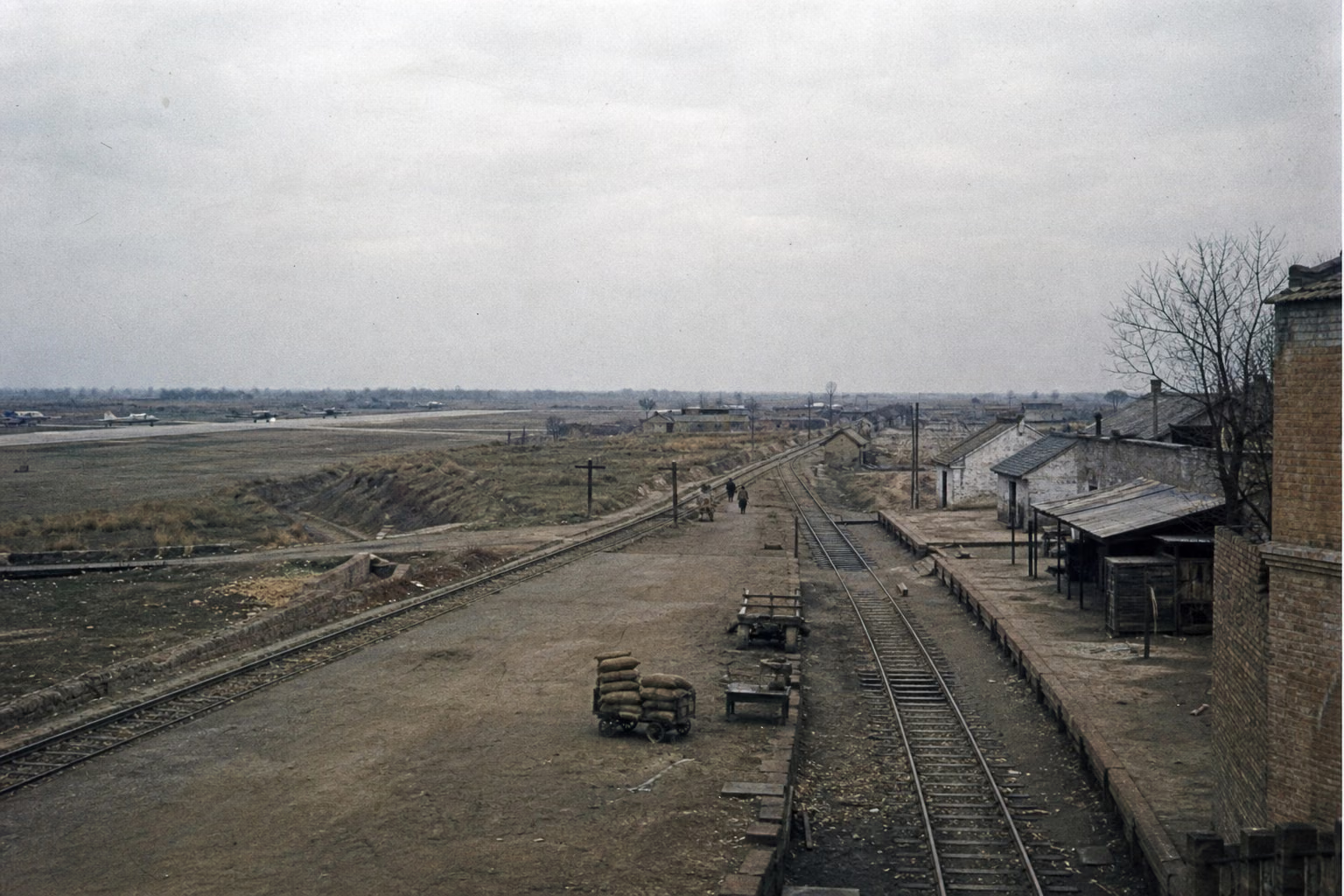
The world: the Axis was losing everywhere. On June 6, Allied forces landed in Normandy; in mid-June, B-29s taking off from Chengdu bombed the Japanese home islands for the first time, and U.S. forces landed on Saipan; in late June, Soviet forces launched a major counteroffensive in Belarus. Across the world, the front lines were pressing toward the Axis. The Chinese battlefield alone was the exception: that year, China was in great retreat, and the contrast was stark.
China: the seventh year of the War of Resistance, and the most exhausted year. Henan had just crawled out of the great famine of 1942–43, in which several hundred thousand to 3 million people died (figures differ widely by basis; accounts vary; unverified); hyperinflation of the fabi, the Nationalist currency, and exhausted manpower left all armies generally and seriously understrength. Half a year earlier, the Cairo Conference had just given China the status of one of the "Four Powers"; the collapse in Henan, Hunan, and Guangxi was stripping that status back to its original shape. American patience was near its limit: in July, Roosevelt cabled Chiang Kai-shek demanding that command of the Chinese armies be handed to Stilwell, and the conflict between the two men moved toward a showdown over the summer and autumn (Stilwell was recalled in October); in late July, the U.S. Army Observer Section flew to Yan'an, and Washington began placing bets on both sides.
Japan: defeat was already visible, and this was a final throw. The Absolute National Defense Zone had been pierced in the Pacific, the home islands had begun to be bombed, and the Tojo cabinet fell in July under the combined pressure of Saipan's fall and the failure to take Hengyang after a prolonged assault. Operation Ichi-Go was the last great wager on the continent: even winning it could not change defeat at sea, and within Imperial General Headquarters this was not unclear to everyone (Japanese decision-making disagreements unverified).
Why It Was Fought
By 1944, the frontal battlefield had already been deadlocked for 6 years. Chinese armies held Japanese forces along the Yellow River, Dongting Lake, and Yichang line not through firepower, but through space and attrition. This year, it was the opponent's turn to rewrite that line.
Tokyo's decision to launch Operation Ichi-Go was forced out by the Pacific. At an imperial conference in late September of the previous year, the "Absolute National Defense Zone" was drawn; occupied territories outside the zone would henceforth have to preserve themselves overland, and the idea of opening a route across the continent thereby entered Imperial General Headquarters' files. After 1943, U.S. submarines strangled Japan's maritime transport line by line, and the connection between the Southern Army and the home islands was visibly approaching severance. If a continental corridor could be opened along the Pinghan, Yuehan, and Hunan-Guangxi railways, the forces in the South Seas would still have an overland lifeline. Another layer of pressure came from the sky: Chinese and American air forces using Guilin and Liuzhou as forward bases could already reach Taiwan and the South Seas shipping routes, while larger bombers were preparing airfields at Chengdu. Tokyo could calculate the day when the home islands would be bombed. In early 1944, Imperial General Headquarters ordered the China Expeditionary Army to launch Operation Ichi-Go (the date and details of the order remain unverified), mobilizing more than 500,000 men: the largest offensive since the Japanese Army's founding. It was not the case that no one in the General Staff understood that opening the railways could not salvage defeat at sea (records of internal Japanese opposition unverified); but by this point in the war, Tokyo had no next card in hand.
On Chongqing's side, before the battle had even begun, the hand was already thin. Henan had only just climbed out of the great famine, and conscription had reached the bottom of the barrel; several of the best-equipped armies, and the Hump tonnage under the greatest strain, were all committed to the Yunnan-Burma counteroffensive in the west. That was the only hope for reopening the international supply line and could not be withdrawn. The forces in Henan, Hunan, and Guangxi were seriously understrength and short of ammunition, while most Allied aid that had been promised was materializing elsewhere. From beginning to end, Chongqing underestimated the scale and direction of the Japanese main attack (records for this judgment of underestimation unverified): in central Henan it thought the attack was local, and only understood after losing ground for more than a month; at Changsha it thought the city could still hold as it had in the previous 3 battles, and it was broken in about 20 days.
For the Chinese side, then, this campaign was not a matter of why to fight, but of what there was to hold with. The forces in central Henan fought and collapsed across famine-stricken ground; Hengyang's defenders received a time limit of 10 days to 2 weeks (time-limit figures vary by basis), and stretched it into 47 days; the Guilin-Liuzhou retreat went all the way back to the Guizhou border. The command layer's mistakes are recorded plainly in this year: disagreements over deployment, preservation and wait-and-see calculations among factions, hopes pinned on the allocation of foreign aid. But these mistakes took place on the premise of a country in its seventh year of war, with manpower and material resources already at the bottom.
The dispute on the Chinese side unfolded at the Allied table: before and after the offensive began, Chiang and Stilwell argued throughout the year over whether to immediately use the western Yunnan Expeditionary Force for a river-crossing counteroffensive, and over whether Hump tonnage should go to the air force or to ground forces. The Lend-Lease materials allocated to ground forces were, year after year, only a fraction of the tonnage (allocation figures unverified).
The Japanese side had also miscalculated: the faster the front line advanced, the slower the railways were repaired; the more airfields were seized, the more severely the troops guarding the airfields went hungry. The line of communication opened by 500,000 men still could not be properly operated by the end of the war (details of traffic and operation unverified).
On the night of April 17, 1944, Japanese forces crossed the Yellow River near Zhongmu, and the Battle of Central Henan began.
Contents
Battle of Central Henan (1944), Fourth Battle of Changsha (1944), and Battle of Guilin–Liuzhou have not yet been written as separate articles.
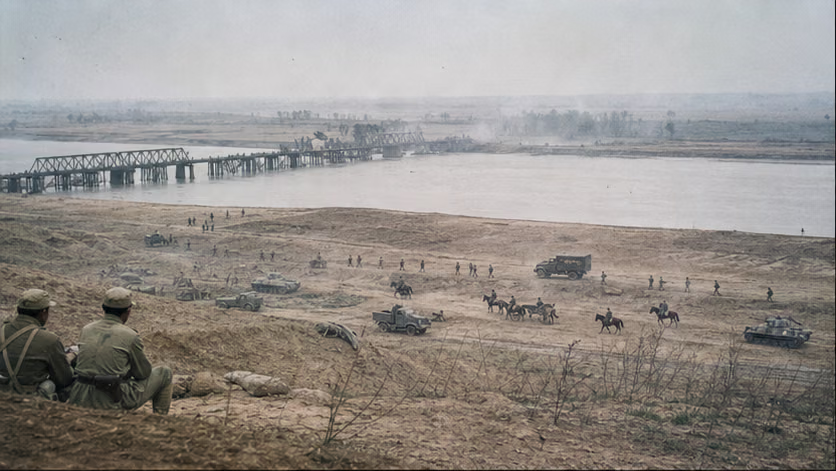 Battle of Central Henan (1944)1944.04.17Henan was lost in thirty-seven days -- in some places, civilians did not help the Nationalist Army, but instead took guns from routed soldiers. The account of popular allegiance had already filled up before the military collapse arrived.
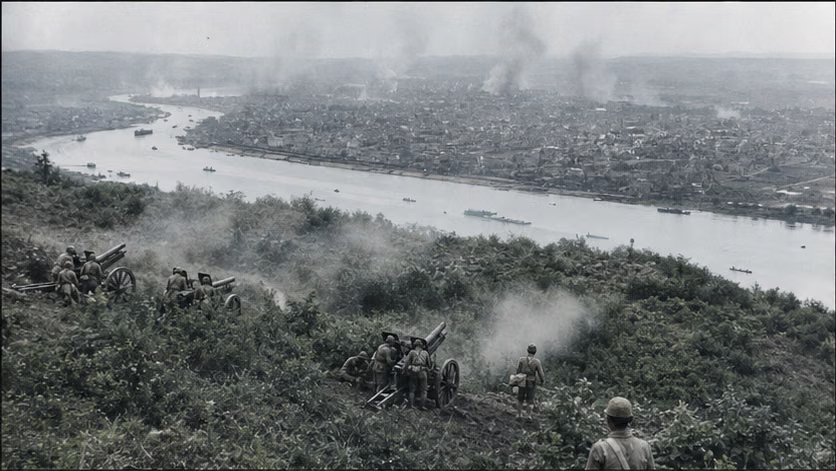 Fourth Battle of Changsha (1944)1944.05.27The same city, the same war-area commander, the same "Heavenly Furnace" - the first three times forged a myth; the fourth burned the city into it.
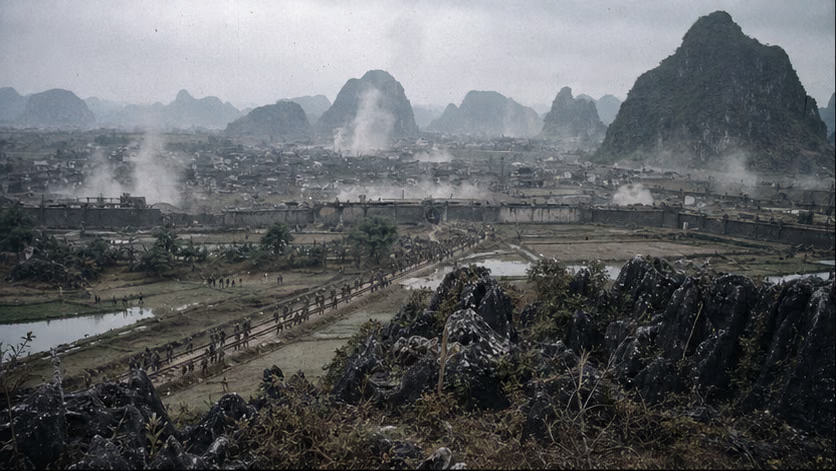 Battle of Guilin–Liuzhou1944.08The final leg of Operation Ichi-Go: Guilin and Liuzhou fell on the same day, Japanese forces once drove as far as Dushan in Guizhou, only a few hundred kilometers from Chongqing; the transport corridor had been "opened," but the war was already nearly lost.
Sources and Open Questions
Henan famine death figures and their statistical bases; number of air bases and airfields lost; internal disagreements within the Japanese General Staff over Operation Ichi-Go; date and details of the Imperial General Headquarters order for Operation Ichi-Go; Chinese records judging the scale and direction of the Japanese main attack; actual traffic and operation of the continental line of communication; the first-day dating basis for the Battle of Central Henan (4.17/4.18); how the imperial conference decision on the "Absolute National Defense Zone" connected to the concept of the operation to open the continental route; Hump tonnage allocation figures between the air force and ground forces; cables between Chiang and Stilwell concerning use of the western Yunnan Expeditionary Force.
All images on this site are AI-generated depictions. They are not historical photographs, not primary sources, and do not depict any real individual.