Campaign Overview · Battle of Wuhan (1938)
One hundred and ten divisions arrayed themselves along both banks of the Yangtze and below the Dabie Mountains, holding against 250,000 Japanese forces advancing upstream - after four and a half months, Wuhan was still abandoned in the end, but the city was handed over intact, and the people withdrew singing; from this battle onward, Japan's four words "quick battle, quick decision" were made void, and the war was dragged into the stalemate it feared most.
Engagement Data
| Item | Content |
|---|---|
| Time | 1938.6 (Madang fell) – 10.25/27 (the three towns of Wuhan were abandoned) |
| Part of | Fourteen-Year War of Resistance (for the larger situation, see *Fourteen-Year War of Resistance · War Overview*; for the Battle of Wanjialing (1938), see the separate article) |
| Place | With Wuhan as the axis: both banks of the middle Yangtze (Madang, Jiujiang, Tianjiazhen), the foothills of the Dabie Mountains (Guangji, Xinyang), and northern Jiangxi (De'an, Wanjialing) |
| Chinese side | Fifth War Area (Li Zongren, northern foothills of the Dabie Mountains) + Ninth War Area (Chen Cheng, southern bank of the Yangtze), committing in sequence about 110 divisions and nearly one million men (statistical bases vary by account) |
| Japanese side | Central China Expeditionary Army (Hata Shunroku), with the Eleventh Army (Okamura Yasuji) and others as the main force, about 9 divisions and 250,000–300,000 men (statistical bases vary by account), with naval and air superiority |
| Result | On 10.21 Guangzhou fell (Japanese forces opened another South China front by landing at Daya Bay); on 10.25–27 the Chinese side actively abandoned the three towns of Wuhan; the city was not heavily destroyed |
Belligerents
| Item | Chinese Side | Japanese Side |
|---|---|---|
| Strength | About 110 divisions, nearly one million men (statistical bases vary by account), with defenses layered along both banks of the Yangtze and the foothills of the Dabie Mountains | About 9 divisions, 250,000–300,000 men, advancing upstream at multiple points |
| Firepower | Mainly fortress guns and river-defense positions, with inferior field artillery | Naval guns + aviation + division artillery suppressed the whole course of the battle |
| Air control | Chinese and Soviet air forces jointly contested it; the "2.18" and "4.29" Wuhan air battles were notable (see *Air War and the Navy*) | Aviation strength held the advantage but did not fully suppress the opposition |
| River control | Blocked the river with sunken ships and laid mines | The navy advanced upstream, opened channels, and cleared obstacles section by section |
| Vulnerabilities | The front was wide, unit designations were mixed, and command levels were many | The supply line was long; malaria and cholera spread in the mountains south of the Yangtze, and non-combat attrition was heavy |
Terrain and Conditions
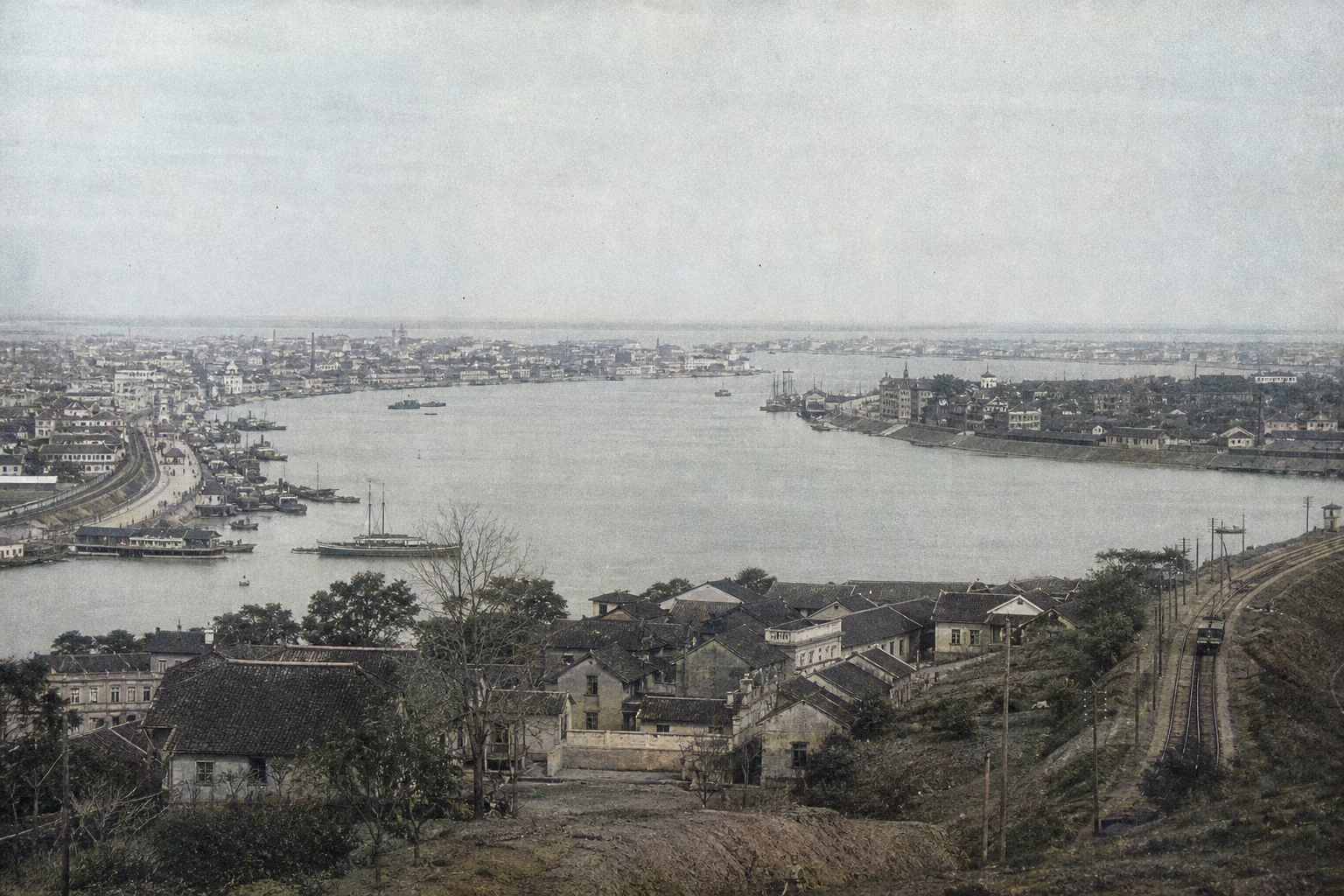
(For the larger situation in 1938 - Japanese forces joining north and south after Xuzhou, and the southward shift of international aid routes to China - see *Fourteen-Year War of Resistance · War Overview*; here only Wuhan is treated.)
This city: Wuchang, Hankou, and Hanyang stood across the rivers from one another, and the Pinghan and Yuehan railways connected here (across the river) - the actual capital at the time: after Nanjing fell, the central organs of party, government, and army, inland-moving factories, newspapers, and schools were all crowded here. "Defend Greater Wuhan" was literal.
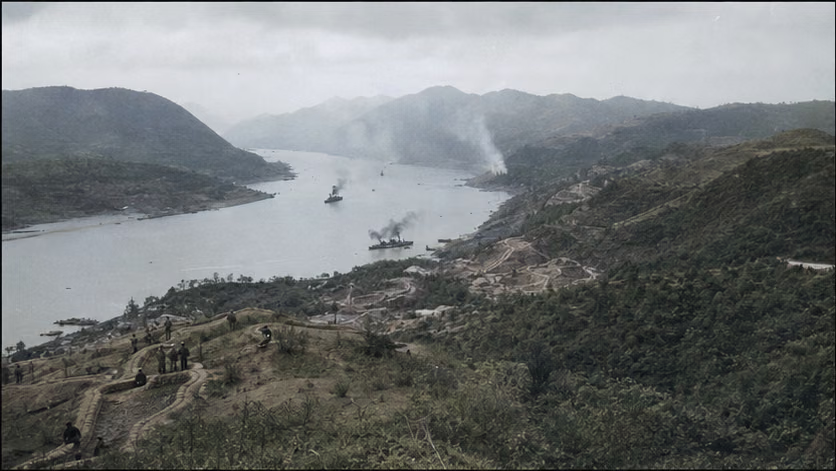
This terrain: defending Wuhan did not mean defending inside the city. The eastern gate was on the river: the two fortress levels of Madang and Tianjiazhen locked the Yangtze; the northern screen was the Dabie Mountains; the south was the mountain country of northern Jiangxi and southern Hubei. The campaign was actually fought on the outer perimeter one or two hundred kilometers from Wuhan, and the three towns themselves never became the main battlefield.
Why It Was Fought
The yellow water from Huayuankou rewrote the Japanese advance map (see *Battle of Lanfeng and the Huayuankou Breach (1938) ※*). Before the breach, the direct road to attack Wuhan was to take Zhengzhou in the west and then descend along the Pinghan Railway; after June 9, eastern Henan became a flooded zone, and that road was sealed by the Yellow River water. Japanese forces turned the main axis southward: upstream along the Yangtze, attacking Wuhan from both banks. The shape of the campaign was fixed by this flood - not across the plain, but along the river.
Wuhan at this moment was China's actual capital. After Nanjing fell, the central organs of party, government, and army, inland-moving factories, newspapers, and schools were all crowded into the three towns of Wuchang, Hankou, and Hanyang; the Pinghan and Yuehan railways met here across the river. For Tokyo, this was the last great objective for "ending the war": take Wuhan, destroy the wartime center, and the Chinese government should submit - in the arithmetic of "quick battle, quick decision," this was supposed to be the final battle.
The Chinese policy this time was set in the opposite direction. The lesson of Nanjing was only half a year away: defend the capital to the point of the city's fall, and what followed was massacre (see *Defense of Nanjing*). Wuhan would not be defended that way - not to hold Wuhan until the last soldier, but to wear the enemy down in layers on the perimeter, "defending Wuhan without fighting at Wuhan." The Fifth War Area held the northern foothills of the Dabie Mountains, and the Ninth War Area lined the southern bank of the Yangtze. In sequence, 110 divisions and nearly one million men (statistical bases vary by account) were placed on the outer perimeter one or two hundred kilometers from the three towns: the two fortress levels of Madang and Tianjiazhen locked the river, the Dabie Mountains blocked the north, and the northern Jiangxi mountains cupped the south. The aim was not never to lose the city; it was to make Japanese forces pay in full for every step forward, to stretch the timetable of "quick decision" by another notch. Meanwhile, the city itself was moving: the inland-bound factories, agencies, and schools continued upstream toward Chongqing.
Japanese forces advanced upstream with about 9 divisions and 250,000 to 300,000 men (statistical bases vary by account) under the Central China Expeditionary Army, with naval guns and aviation suppressing the whole course of the advance. But this line of advance itself charged a toll: supply depended entirely on one river, malaria and cholera spread through the mountains south of the Yangtze, and the farther west the troops went, the fewer they became. In late June, Madang Fortress, the first gate of the Yangtze, fell within several days, and the campaign opened from there. For the next four and a half months, the fighting was on the river and in the mountains, one or two hundred kilometers from Wuhan - the three towns themselves never became the battlefield.
Course of the Engagement
| Stage | Time | Key Points |
|---|---|---|
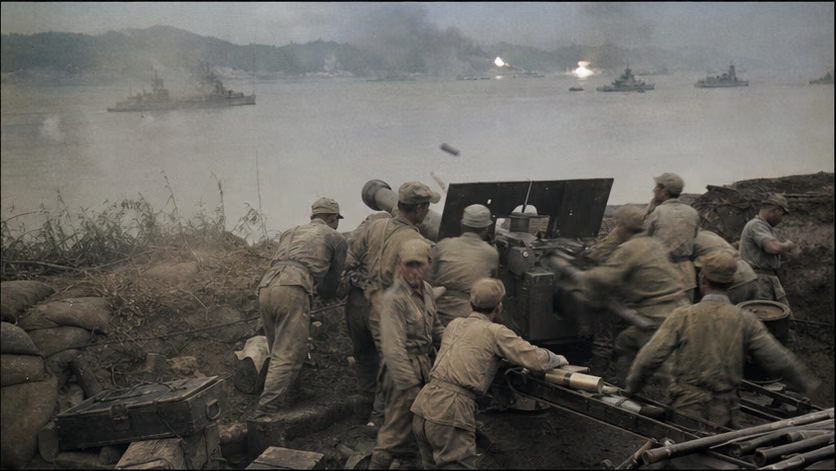
| Madang falls | Late June | Madang Fortress, the first gate of the Yangtze, fell within several days - the case involving the defensive deployment and fortress commander Xue Weiying's "delay of military opportunity and execution under military law" (charge and process unverified, cross-reference with the Lanfeng case); the gates of Hukou and Jiujiang lay open |
| Jiujiang falls | Late July | Jiujiang fell, Japanese forces established a bridgehead south of the river, and forces split to advance west along Ruichang and De'an |
| South-bank struggle | August–October | Northern Jiangxi mountains: Xue Yue's First Army Group and the Japanese Eleventh Army repeatedly ground each other down around De'an; **the greater part of the 106th Division was encircled and destroyed at Wanjialing (late September–10.10, separate article *Battle of Wanjialing (1938)*)** - the brightest battle of the whole campaign |
| North-bank fortress battle | September | The attack and defense of Tianjiazhen Fortress (mid- to late September) - the last lock on the Yangtze, recognized in both Chinese and Japanese war histories as the heaviest fortress battle of the Battle of Wuhan (specific sequence unverified); the fortress fell, and river defense was lost in full |
| Foothills of the Dabie Mountains | September–October | After Guangji and Tianjiazhen on the northern line, Japanese forces attacked toward Xinyang through the Dabie Mountains direction (October, sequence unverified), outflanking Wuhan from the north |
| Guangzhou falls | 10.21 | Japanese forces also used the 21st Army to land at Daya Bay and took Guangzhou in ten days - Wuhan and Guangzhou fell in the same month, the Yuehan line was cut, and coastal external routes were now all sealed; half of the strategic meaning of defending Wuhan was hollowed out, and the resolve to withdraw accelerated from there (causal weight unverified) |
| Wuhan abandoned | 10.25–27 | The Chinese side actively withdrew from the three towns, with no street fighting and no destruction of the city - Japanese forces received an intact empty city (contrast with Nanjing; see "Aftermath") |
Casualties and Losses
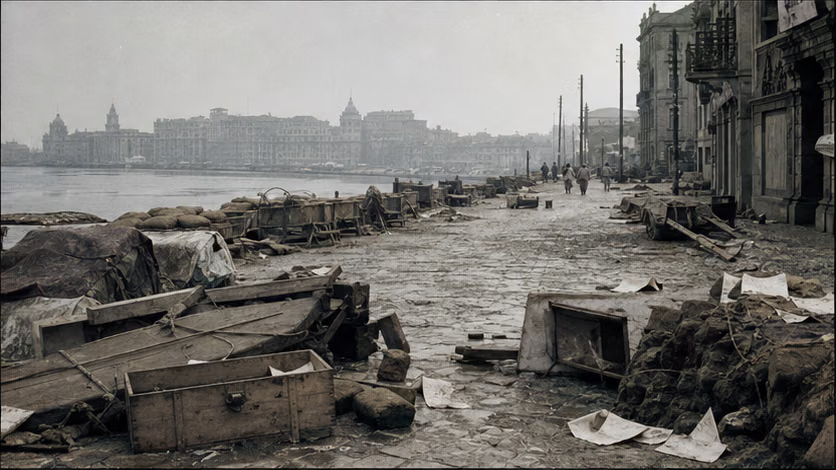
- Chinese side: about 400,000 casualties (this figure is widely circulated; statistical boundary - whether it includes all peripheral fighting and the sick - unverified).
- Japanese side: more than 35,000 (Japanese battle-report basis) to about 100,000 (Chinese and later scholarship basis) - the two sets are recorded side by side, and neither is selected over the other; the difference lies mainly in whether the sick are counted: malaria and cholera spread in the mountains south of the Yangtze, and Japanese non-combat attrition was extremely heavy (Japanese war histories themselves record disease losses, details unrecorded).
- ※ Civilians: air raids (the cases of the bombing of Wuhan, details unrecorded) and refugee flows in the war zone along the river; unlike Nanjing, the abandonment of the three towns did not turn into a massacre - see the final section for this point.
Aftermath
- The threshold of the stalemate phase: the Japanese occupied zone was pushed to its limit here - hundreds of kilometers of front, guerrilla zones everywhere behind the lines, and the troops scattered like pepper. "Quick battle, quick decision" was bankrupt in full, and the Japanese side turned to "using Chinese to control Chinese" (fostering the Wang Jingwei puppet regime, established in 1940) and long-term attrition - the war changed form (see *Fourteen-Year War of Resistance · War Overview*).
- The Chinese central organs moved west to Chongqing, with the southwest as the rear area for protracted resistance - after the Yuehan line was cut, the only foreign-aid routes left were the Yunnan-Vietnam and Yunnan-Burma lines (see *Yunnan–Burma Theater (1942–45)*).
- Wuhan and Nanjing in contrast: Nanjing was defended to the city's fall, and when the city fell, massacre followed; Wuhan was released after enough fighting had been done, and the city was handed over intact - the difference between the two abandonments is the whole meaning of the policy "defending Wuhan without fighting at Wuhan."
- Wuhan's air battles and the mass mobilization of the era of *March of the Volunteers* reached their height here: the donation campaign to defend Greater Wuhan, the propaganda war of the Political Department's Third Department (Guo Moruo) - "those with money give money, those with strength give strength" changed from a slogan into lines in the streets (data unverified).
Accounts of Those Present
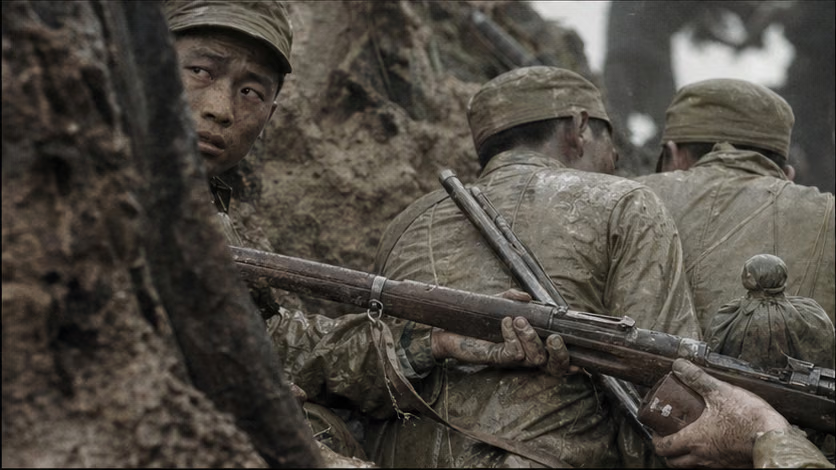
- The donation campaign: in July 1938, during Wuhan Donation Week, citizens, rickshaw pullers, and beggars put money into donation stands, and more than one million was collected in several days (statistical bases vary by account) - a city's self-mobilization three months before its fall.
- The songs of the Third Department: Guo Moruo headed the Political Department's Third Department and organized anti-enemy drama troupes and singing teams; the songs of the era of *March of the Volunteers* and *Yellow River Cantata* filled the streets of the three towns (specific repertoire and activity sequence unverified).
- The commander at Madang: the fortress fell within several days, and commander Xue Weiying was shot under military law (cause of case and procedure unverified) - standing before and after the Long Muhan case at Lanfeng, the military-law year of 1938.
- Japanese forces amid disease: Japanese war histories record malaria and cholera spreading among the units operating south of the Yangtze, with some regiments having more sick than battle casualties (details unrecorded) - not everything that stopped them outside Wuhan's gate was the Chinese army.
- The last people to withdraw: the defending troops and civilians withdrew in order, "the people left and the city remained" - in contrast with the rout at Nanjing one year earlier (see *Defense of Nanjing*).
The Ground
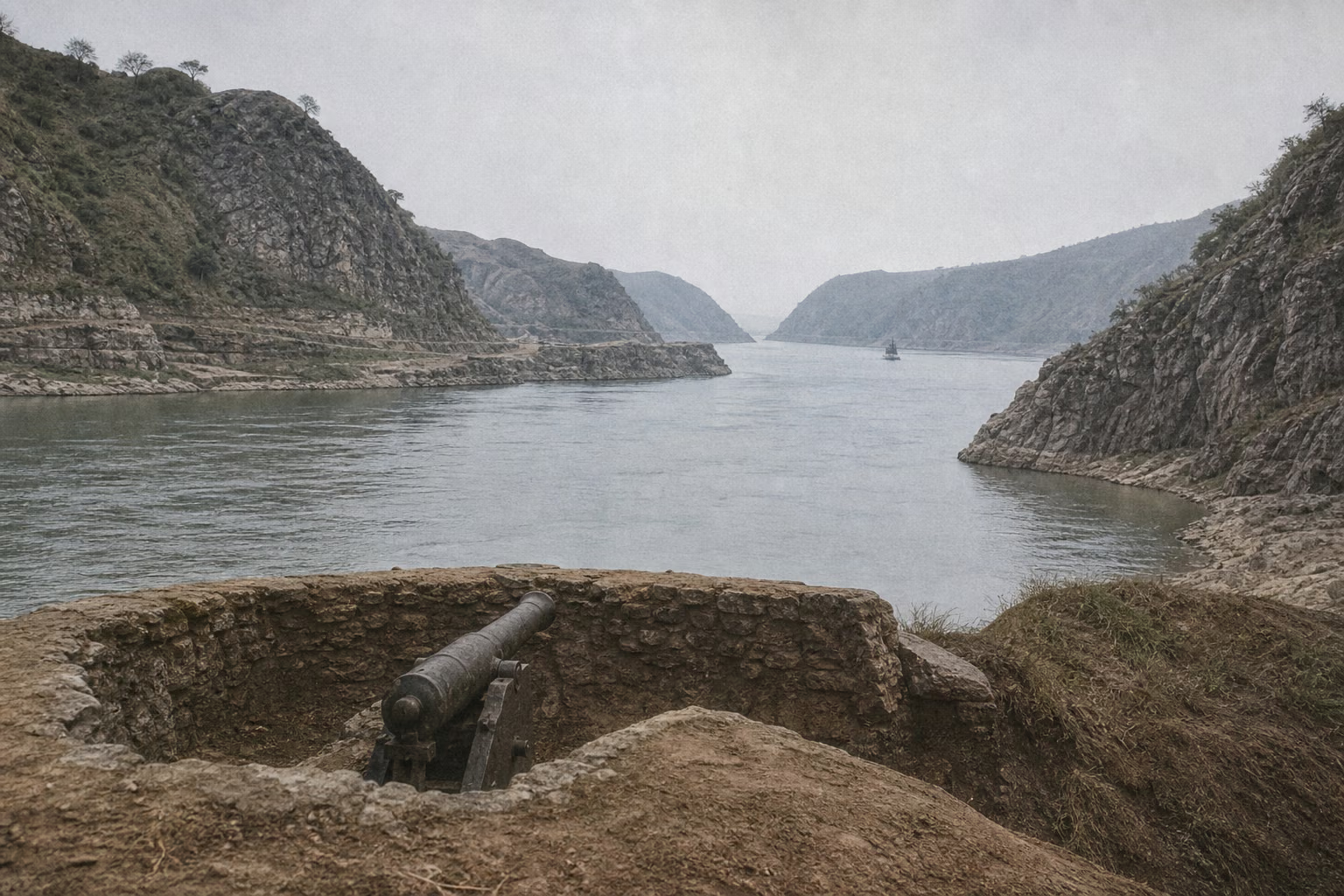
- Two levels of locks on the river: Madang-Tianjiazhen - fortress space where the river narrowed and mountain bluffs pressed in from both banks, the axis of naval guns firing against shore guns.
- Northern Jiangxi mountains: the ridge-and-road network around De'an - the encirclement space of the separate Wanjialing article was here.
- Foothills of the Dabie Mountains: the hilly corridor of attack and defense on the northern line.
- Three towns across the rivers: one city divided into three pieces, with two rivers meeting - the spatial ending of "abandoned without destruction."
How Each Side Records It
- Chinese side: regarded as a turning point of "defeat yet victory" - the city was lost, but "quick decision" died; the narrative center is the accomplishment of attritional warfare and the victory at Wanjialing.
- Japanese side: official war histories acknowledge the Wuhan campaign as the largest use of forces since the start of the war, and acknowledge the severity of casualties and disease losses; the anxiety that "the war situation remained undecided" after the occupation of Wuhan appears in internal documents (details unrecorded).
- Western observers in China at the time: wrote the abandonment of Wuhan as an example of "China had not lost" (specific reports unverified).
Disputes and Sensitivities
- The two bases for casualty figures differ by a factor of three, and between them lies the definitional dispute over "whether the sick count as campaign losses" - both accounts are recorded side by side, with different boundaries.
- Responsibility for the fall of Madang: defensive readiness, river-defense deployment, and the Xue Weiying case - the accounts are recorded side by side and remain unverified.
- The causal weight between the fall of Guangzhou and the Wuhan withdrawal: whether "once Guangzhou fell, Wuhan could not be held" or whether it was the logical close of an established attritional policy - both accounts are recorded side by side.
- The characterization of "the arrival of the stalemate phase" is itself broadly consistent in Chinese and Japanese war-history narratives; the divergence lies in causation: the achievement of the Chinese attritional strategy, or the limits of the Japanese force structure - recorded side by side.
Contents
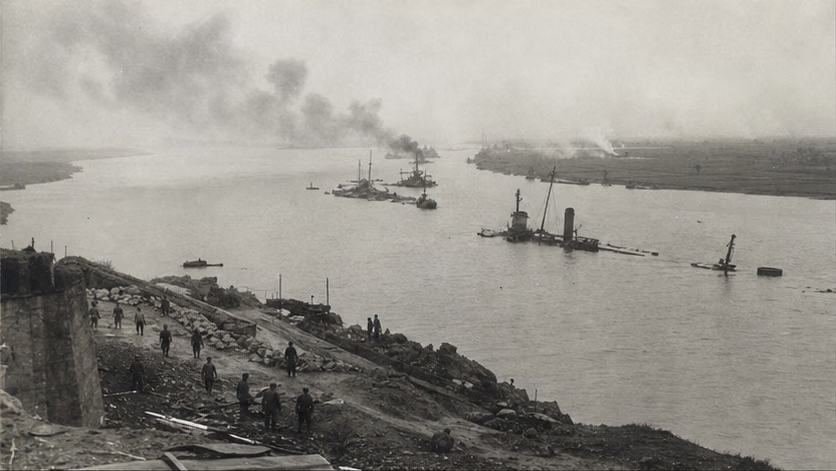
The attack and defense of Tianjiazhen Fortress has not yet become a separate article. The Wuhan air battles have not yet become a separate article, or may be folded into *Air War and the Navy*.
Sources and Open Questions
Sources: the Wuhan chapter of *Operational Record of the Frontal Battlefield in China's War of Resistance Against Japan*; the relevant volumes of *Senshi Sosho* by the War History Office of Japan's Defense Agency; war-history materials edited by Guo Rugui and Huang Yuzhang; newspapers of the time (*Xinhua Daily*, the Wuhan edition of *Ta Kung Pao*); materials on the Third Department and the donation campaign (to be collected).
Open questions: the different bases for both sides' strength figures (the statistical boundaries of 110 divisions / 9 divisions); the statistical boundaries of the two casualty figures and the basis for counting the sick; the full course of the fall of Madang and the Xue Weiying case; the sequence of the attack and defense of Tianjiazhen; the date of Xinyang's fall; literature on the causal chain between the fall of Guangzhou and the Wuhan withdrawal; figures for the donation campaign; the activity sequence of the Third Department; details of Japanese disease attrition.
All images on this site are AI-generated depictions. They are not historical photographs, not primary sources, and do not depict any real individual.