Engagement Archive · Battle of Longling
The longest battle of the western Yunnan counteroffensive -- five months, three entries and three withdrawals. Longling was the crossroads between Songshan and Tengchong; Japanese reinforcements came up wave after wave from Mangshi, while the Expeditionary Force entered the city again and again only to be pushed out again. Only after Songshan was opened and Tengchong fell did Longling finally change hands. The campaign's outcome was ultimately decided by two other mountains.
Engagement Data
| Item | Content |
|---|---|
| Part of | Fourteen-Year War of Resistance · Yunnan–Burma Theater (for the overall picture, see *Yunnan–Burma Theater · Overview*) |
| Time | 1944.6.5 – 11.11 (three attacks, five months of seesaw fighting) |
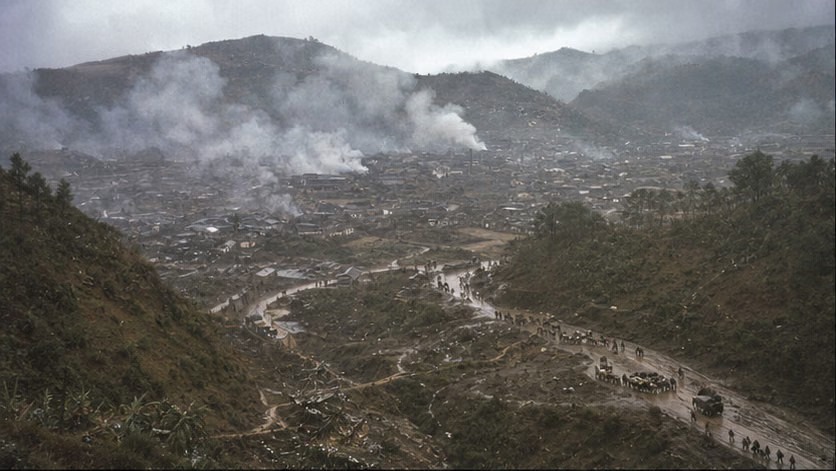
| Location | Longling, Yunnan (the hub of the Songshan–Mangshi section of the Yunnan-Burma Road), and the outer line around Zhen'anjie and Huangcaoba |
| Attacking side | Eleventh Group Army of the Western Yunnan Expeditionary Force (Song Xilian, later Huang Jie), including the 71st Corps, Second Corps, Sixth Corps, and others, totaling more than one hundred thousand in successive phases (figures vary by statistical basis) |
| Defending side | Main force of the Japanese 56th Division, with reinforcements including the Second Division, totaling more than twenty thousand in successive phases (figures vary by statistical basis) |
| Result | Longling city was taken on 11.3 (figures vary by statistical basis; 11.3–11.11 clearing remains unverified); the middle section of the Yunnan-Burma Road was opened, and Japanese forces withdrew to Mangshi |
Belligerents
| Item | Expeditionary Force | Japanese Forces |
|---|---|---|
| Strength | More than one hundred thousand in cumulative total, but the force here repeatedly felt thin after separate attacks on Songshan and Tengchong | Garrison plus two waves of relief forces ("Dan" operation counterattack -- Japanese operation name unverified) |
| Situation | The central hub of a three-line advance -- hard to hold here before the two wings were settled | Interior-line maneuver: used Mangshi as rear support and reinforced step by step |
| Weather | Rainy season throughout: supply lines turned to mud, airdrops were limited | Suffered the same |
Terrain and Conditions
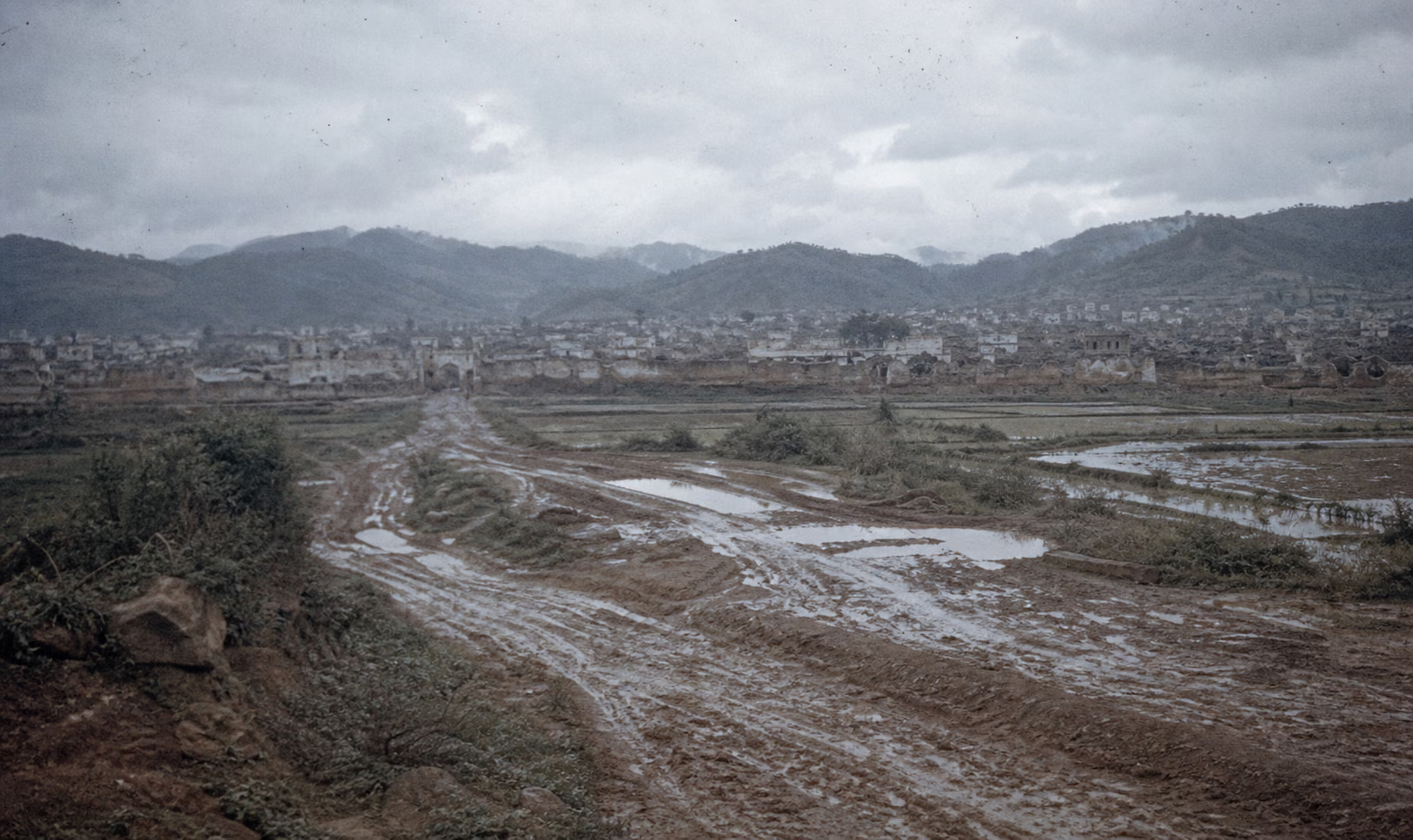
Longling city sat astride the Yunnan-Burma Road between Songshan and Mangshi, ringed by surrounding heights (Laodongpo, Wenbipo, and others). In western Yunnan's rainy season, roads became rivers and works became ponds -- half of the five-month battle was fought against rain. Civilian life on the battlefield: evidence of Japanese rule and "comfort stations" during the two years of Longling's occupation (the former Dongjiagou comfort station site survives today -- another site in western Yunnan ※, unverified).
Why It Was Fought
On the second day after Songshan opened, another force on the southern wing had already crossed that mountain and driven straight toward Longling deeper along the road. After the Eleventh Group Army crossed the river, it split into two routes: one route besieged Songshan, while the main force rushed forward through the gap -- while the main force of the 56th Division was pinned at both Tengchong and Songshan, Longling's city defenses were briefly thin. That window would not stay open long.
Longling was worth seizing. The city sat on the Yunnan-Burma Road between Songshan and Mangshi, the crossroads between Songshan and Tengchong, surrounded by heights. Without taking Longling, even if Songshan and Tengchong were gained, the road would still be broken in the middle -- three lines joined here, making it the connector of the entire western Yunnan counteroffensive. For Japanese forces, it was equally vital: Longling was the forward support of the Mangshi defensive line. Lose it, and the interior line of Japanese forces in western Yunnan would be cut through the waist. Both sides understood the weight of the place.
The two sides of the calculation fixed the later shape of the battle from the opening. The Expeditionary Force sought speed: enter the city first, then wait for the two wings to free themselves and come in support. Yet after splitting forces toward Songshan and Tengchong, the route committed to Longling was in fact thin (the command review of the withdrawal after the first attack, and the debate between intelligence misjudgment and dispersion of strength, remain unverified). Japanese forces sought relief: using Mangshi as rear support and interior-line maneuver, they could push up reinforcements wave after wave. One side seized a window; the other fought with depth. Western Yunnan's rainy season was already overhead -- for the next five months, the roads here would spend half their time under water.
Behind the search for speed lay another deadline from above. Western Yunnan and northern Burma were parts of the same board; across the Nu River, the Chinese Army in India was driving east, and Chongqing repeatedly tightened the counteroffensive deadline for the Expeditionary Force (the back-and-forth cables on the deadline remain unverified). The Eleventh Group Army's plan was to leave one force to besiege Songshan and use the main force to take Longling directly. When this decision was made, the estimate of Japanese strength inside the city was too low (the intelligence statistical basis remains unverified); once the two wings became deadlocked, this route became the lone stake. After the withdrawal from the first attack, group-army headquarters once reported to Chongqing that Longling had been taken, then soon corrected the report (the process remains unverified) -- the expectation of quick victory and the pressure of false reporting themselves show how hurriedly this decision was made.
The material boundary was equally hard for both sides. On the Expeditionary Force side: with the road still blocked, supply across the whole line depended on human backs, pack animals, and airdrops from the Nu River crossings. In the rainy season, airdrops often missed, and shells had to be saved for the general assault (details of ammunition supply remain unverified). On the Japanese side: the 56th Division was cut into several places -- Songshan, Tengchong, Longling, and Mangshi -- unable to respond to one another, and reinforcements had to cross the Gaoligong Mountains on foot. It was only that Mangshi's rear was closer to Longling than the Nu River crossings were to the Expeditionary Force. Another method on the table -- first concentrate to remove Songshan, then turn to Longling -- is not seen in surviving records as a formal proposal (unverified); in fact, that was how the battle was later finished.
On June 5, the Expeditionary Force's advance elements reached the outskirts of Longling city, and the first attack began.
Course of the Engagement
| Phase | Time | Key Points |
|---|---|---|
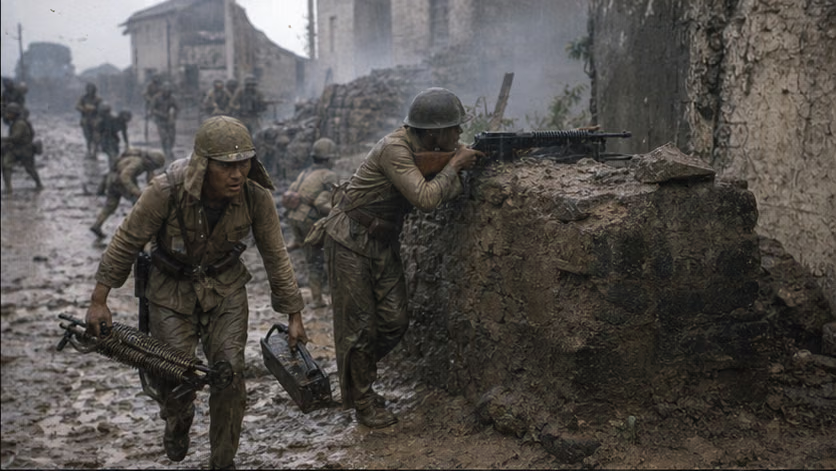
| First attack on Longling | 6.5–16 | Rushing through the gap, the force once entered the urban area; Japanese forces counterattacked with reinforcements from Mangshi, while the Expeditionary Force's strength was pulled apart by Songshan and Tengchong and it was forced to withdraw -- first entry, first exit |
| Stalemate and attrition | June–September | Seesaw fighting on outer heights (the battles around Zhen'anjie and Huangcaoba remain unverified); rainy-season supply crisis (front-line food shortage records remain unverified); the Japanese "Dan" operation counterattack once pressed close (the Longling crisis in early September remains unverified) |
| Songshan-Tengchong effect | 9.7 / 9.14 | The two places were settled one after the other, and troops and artillery were redirected to Longling -- the balance tilted from outside inward |
| Third attack and capture of the city | 10.29–11.3 | General assault: several corps attacked in concert; Longling city was taken on 11.3, and the pursuit continued toward Mangshi (Mangshi taken on 11.20, concluded in the overview) |
Casualties and Losses
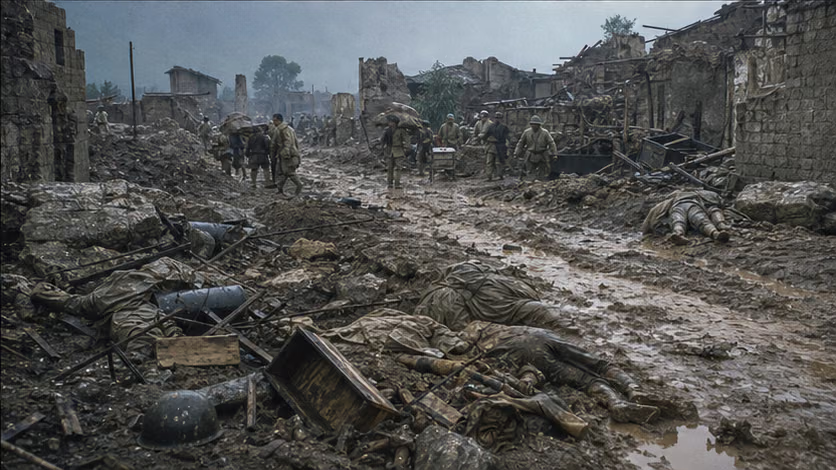
- Expeditionary Force: nearly thirty thousand casualties (common statistical bases vary by account) -- the heaviest casualties of the three great battles in western Yunnan (because the battle lasted the longest).
- Japanese forces: more than ten thousand casualties (figures vary by statistical basis); the 56th Division had by this point lost campaign capability.
- ※ Civilians and city: Longling's city walls and urban area were left broken; civilian deaths during the two-year occupation and five-month battle, along with casualties among those supporting the front (local statistical bases vary by account); comfort-station evidence ※.
Aftermath
- The western Yunnan section of the Yunnan-Burma Road was fully opened, and the countdown to the junction at Mong Yu (1945.1.27) began -- the three great battles closed here (see overview).
- The 56th Division -- the same division defending Songshan, Tengchong, and Longling -- was consumed as an organized formation in western Yunnan: a division's two-year strangulation of a theater ended in total defeat.
- The western Yunnan counteroffensive's account of more than sixty thousand casualties in exchange for one road (listed in the overview) was settled at Longling.
Accounts of Those Present
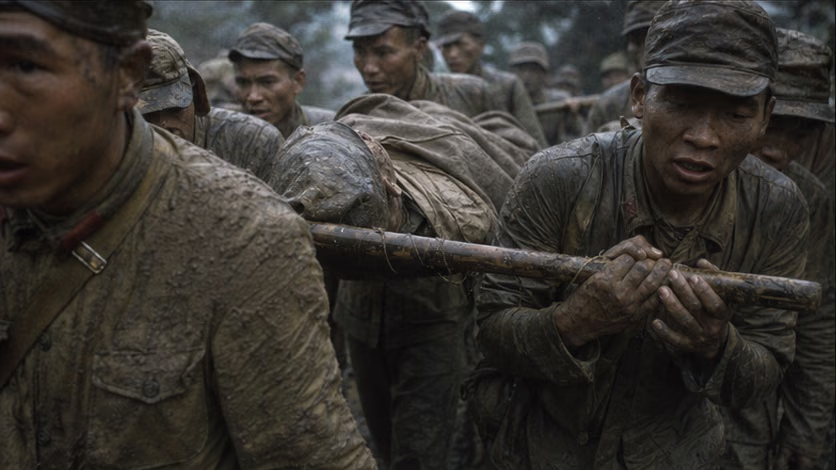
- The city entered and left three times: soldiers entered the same street for the third time (memoir materials by those present; source level unverified) -- the psychological abrasion of "repeated capture" is a state unique to a long seesaw battle.
- The wounded in the rain: stretcher teams along the rainy-season evacuation line -- mud up to the knees, stretchers relayed by civilian laborers (oral materials from laborers; source level unverified). The battle with the heaviest casualties was also the battle with the hardest evacuation.
- The handover from Song Xilian to Huang Jie: the commander was changed mid-battle (September; the reason and process remain unverified) -- a five-month battle passed through two commanders, itself a footnote to its difficulty.
The Ground
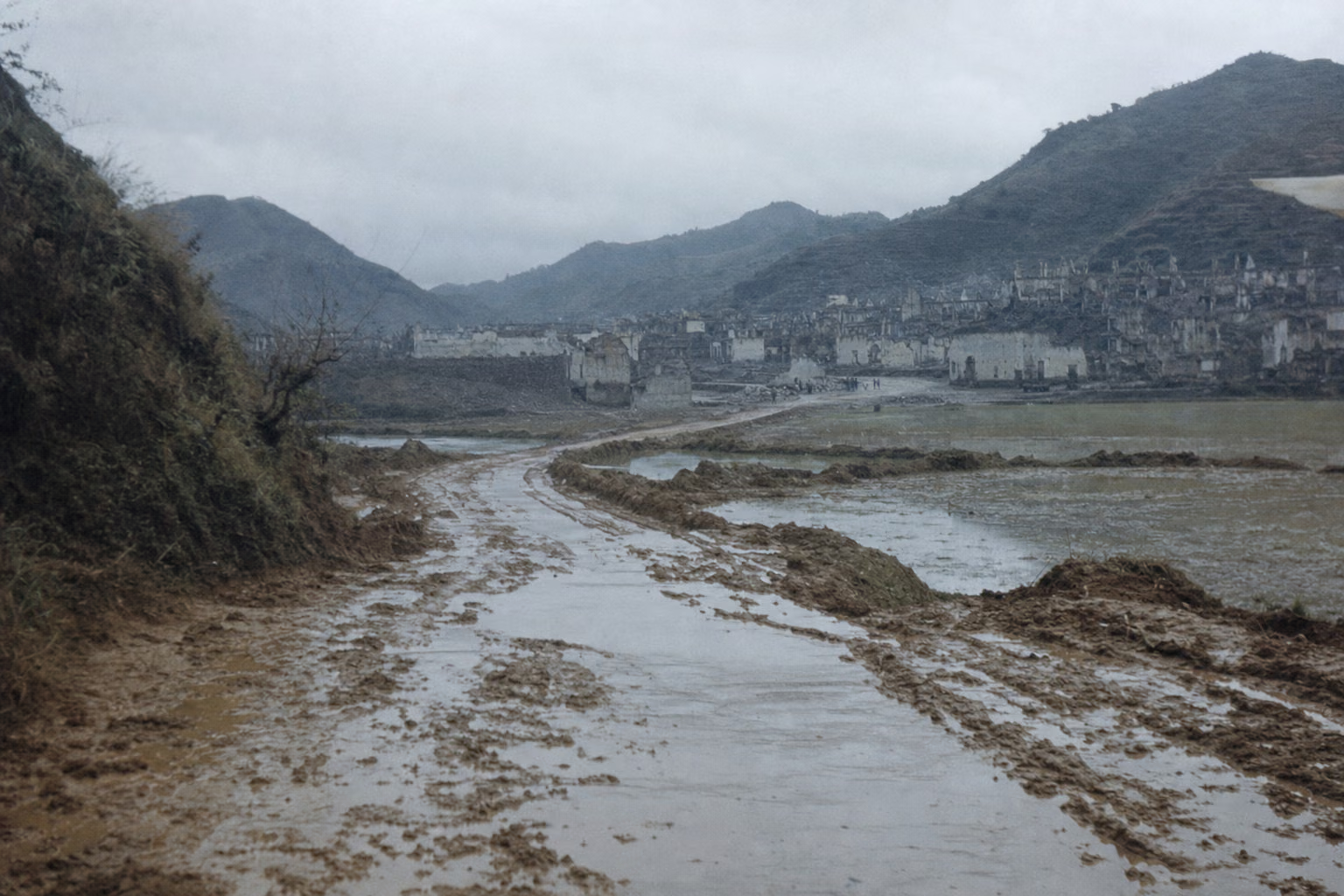
- A city of crossroads: the struggle for a road junction -- the spatial prototype of the "hub" as an operational objective (structurally comparable with Hengyang).
- Heights around the city: the cycle of taking and losing Laodongpo and other heights -- the offensive-defensive grammar of "city below mountain."
- Rainy-season variable: a dynamic battlefield in which road passability changed with the weather -- another sample of supply as the core mechanism (in comparison with northern Burma).
- Linkage among three battles: the theater-level board of Songshan–Tengchong–Longling -- the structure of a "systems battle" in which one battle's outcome was decided elsewhere.
How Each Side Records It
- Chinese side: the least-known of the three great battles (no drama of "annihilation," no symbolism of "first recovery" -- the hardest battle is remembered the least, an asymmetry here); the Longling War of Resistance memorial site and the Dongjiagou site are points of local memory.
- Japanese side: the history of the "Dan" operation and the destruction of the 56th Division (the relevant volumes of its war history remain unverified).
Disputes and Sensitivities
- Command responsibility for the withdrawal after the first attack (the debate between intelligence misjudgment and dispersion of strength remains unverified); the process of the command change.
- Casualty statistical bases; comfort-station evidence.
Sources and Open Questions
Sources: *History of the War of Resistance in Western Yunnan*; memoir materials by Song Xilian; the section on the "Dan" operation in the Japanese *Army Operations on the Burma Front*; Longling local gazetteers and archives on the Dongjiagou site.
Open questions: detailed chronology of the three attacks; casualties on both sides; scale of the Dan operation; reason for the command change; statistical basis for the date of the city's capture; comfort-station case; the back-and-forth cables on the western Yunnan counteroffensive deadline; the intelligence statistical basis for Japanese strength at Longling before the first attack; the process by which the city was reported taken and then the report corrected; details of ammunition supply and airdrops during the siege; whether the proposal to "first concentrate to remove Songshan, then turn to Longling" was formally raised.
All images on this site are AI-generated depictions. They are not historical photographs, not primary sources, and do not depict any real individual.