Engagement Archive · Battle of Western Hunan (Xuefeng Mountains)
In the spring and summer of 1945, the Japanese forces' last large-scale offensive drove toward Zhijiang airfield; in the Xuefeng Mountains, Chinese forces held them point by point, encircled them, and drove them back -- the frontal battlefield's last major campaign closed in complete victory.
Engagement Data
| Item | Content |
|---|---|
| Time | 1945.4.9 – 6.7, about two months |
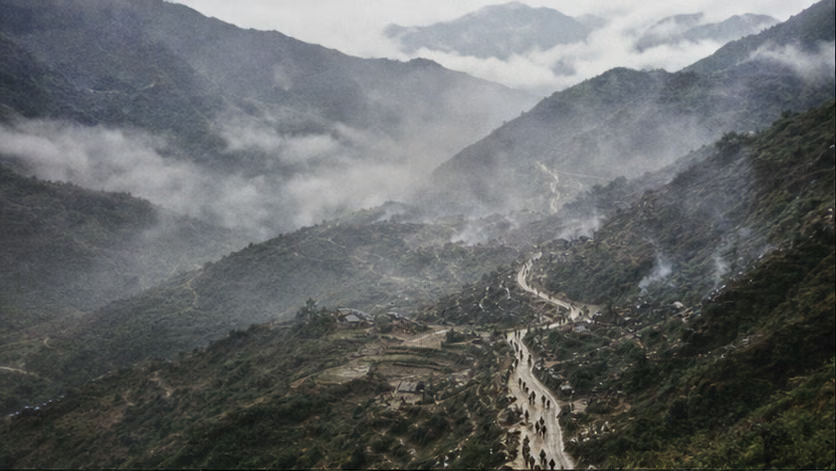
| Location | The Xuefeng mountain region of western Hunan (between Shaoyang and Zhijiang, along the line of Longtan, Wugang, Dongkou, Jiangkou, and Shanmen) |
| Part of | Fourteen-Year War of Resistance · the last major campaign on the frontal battlefield |
| Chinese side | Fourth Front Army (commander-in-chief Wang Yaowu), including the 73rd Army, the 74th Army, and the 100th Army, among others; New Sixth Army (Liao Yaoxiang) was airlifted from Burma to Zhijiang as the general reserve |
| Japanese side | 20th Army (commanding officer Ichiro Banzai), including elements of the 116th, Forty-Seventh, Sixty-Fourth, and Sixty-Eighth Divisions and independent brigades (exact order of battle unverified) |
| Result | The Japanese offensive stalled at the passes of the Xuefeng Mountains; the Chinese side encircled and counterattacked, and around 6.7 the front line returned to its pre-battle position; the Japanese objective of taking Zhijiang airfield failed |
Belligerents
| Item | Chinese Side | Japanese Side |
|---|---|---|
| Strength | More than about 200,000 (including the airlifted New Sixth Army reinforcements) | About 80,000 |
| Firepower | Most participating main forces were U.S.-equipped or partly U.S.-equipped units; for the first time on the frontal battlefield, artillery and automatic weapons created a local advantage over Japanese forces (calibers vary by account) | Regular divisional equipment; heavy weapons and ammunition were both inferior to the Chinese side's |
| Air | Chinese and American air forces, based at Zhijiang airfield, held air superiority throughout, supporting combat and bombing supply lines | Air strength was nearly exhausted, with basically no air support |
| Supply | Rear areas were close, and air transport reached Zhijiang directly | Advanced west from Shaoyang; mountain supply lines were long and interdicted from the air |
The comparison in this battle had reversed: eight years earlier at Shanghai, Chinese forces had used flesh and blood to hold against firepower; this time, firepower, air superiority, and troop strength were all on the Chinese side.
Terrain and Conditions
(For the larger situation in 1945 -- Japan's defeat already decided, and the aftermath of Operation Ichi-Go on the Chinese battlefield -- see *Fourteen-Year War of Resistance · War Overview*. Here, only western Hunan is covered.)
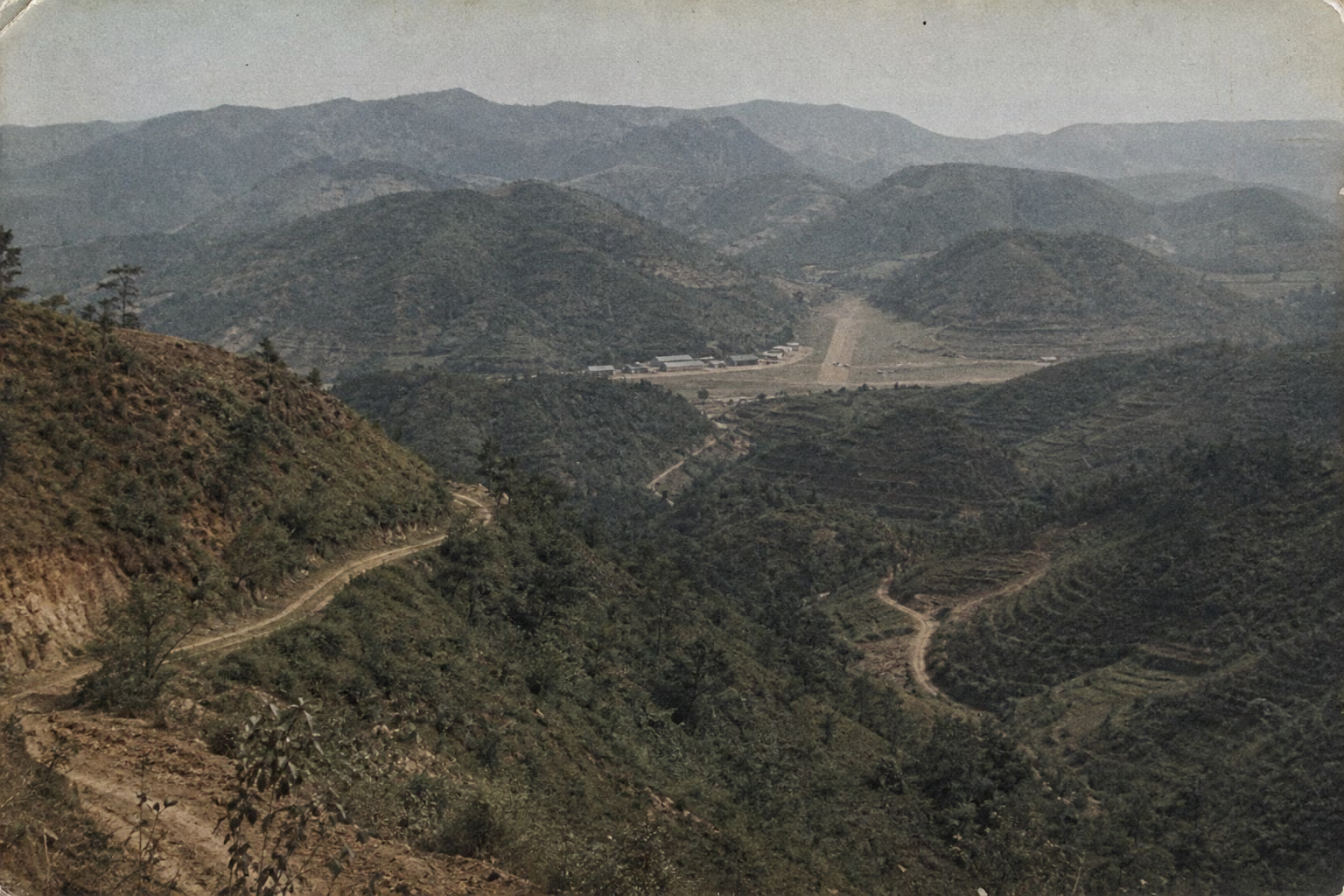
Zhijiang airfield: an air base at a vital point on the Hunan-Guizhou highway. Chinese and American air forces struck from here against Japanese transportation lines in central and southern China, making it a thorn in the Japanese side. In 1944, Operation Ichi-Go had removed the airfield cluster along the Hunan-Guangxi line, and Zhijiang became the last major airfield east of the rear area (this account remains unverified).
Xuefeng Mountains: the natural barrier of western Hunan, extending north and south. Only a few passes led toward Zhijiang -- Longtan, Dongkou, Jiangkou, Wugang, and other points -- and the defenders held ground where, as the saying goes, "one man guards the pass."
Local society: western Hunan had a fierce local culture and many local armed groups (beneath the old name "western Hunan bandits" were in fact local self-defense forces, many of which joined the fighting and helped defend in wartime -- details unrecorded); civilians broke roads, transported grain, and guided troops, giving the war zone a high degree of social cooperation.
Why It Was Fought
The Battle of Guilin–Liuzhou ended at Dushan: on December 2, 1944, the Japanese vanguard burned Dushan and then withdrew, and the offensive's high-water mark was also the point at which its force was spent. Operation Ichi-Go was by then effectively finished. The continental line of communication had been opened in name, but this railway, bought with more than 500,000 troops, could not run: the sea routes had already been strangled by U.S. submarines, and the railway was being broken section by section under pressure from Chinese and American air forces. Many of the aircraft bombing that line took off from an airfield in western Hunan.
Zhijiang stood at a vital point on the Hunan-Guizhou highway. After Operation Ichi-Go removed the airfield cluster along the Hunan-Guangxi line, it became the last major airfield east of the rear area (this account remains unverified). Chinese and American air forces used it as a base to strike transportation lines in central and southern China -- on Japanese maps, this was the last nail that had to be pulled out. In spring 1945, with no room left to retreat in the Pacific and the home islands being bombed every day, Japan's response on the Chinese mainland was still to launch another offensive: Ichiro Banzai, commanding officer of the 20th Army, led about 80,000 men westward, with a concrete objective -- knock out Zhijiang airfield, remove the aerial threat, and at the same time try to inflict a heavy blow on the main Chinese forces in western Hunan, recovering the morale that had declined steadily after Operation Ichi-Go. Yasuji Okamura himself had reservations about whether this "limited-objective offensive" was worthwhile (this account remains unverified); the offensive was launched anyway. It was the last large-scale Japanese offensive in China. When it was launched, defeat had already been decided.
To attack again after defeat was already decided was not without calculation. The 20th Army's 80,000 men were already the largest mobile force the China Expeditionary Army could squeeze out in central China. It could not count on air power; fuel and ammunition were enough only for one limited offensive; and the supply line hung on a single road west of Shaoyang. The wager was speed -- seize the moment after the opponent's recent defeat, before the line had stabilized, and bite off the airfield in one mouthful. What the calculation missed was not the terrain, but the fact that the opponent's material base had already changed.
And the material base on the other side had indeed changed. Wang Yaowu, commander-in-chief of the Fourth Front Army, held more than 200,000 men; most of the main forces were U.S.-equipped or partly U.S.-equipped units, and for the first time on the frontal battlefield they formed a local firepower advantage over Japanese forces (calibers vary by account). The Chinese and American air forces at Zhijiang held air superiority. Another general reserve was on the road: the New Sixth Army of the Chinese Army in India, airlifted as a complete formation from Burma to Zhijiang. The Chinese calculation followed the shape of the ground: the Xuefeng Mountains lay between Shaoyang and Zhijiang, and the roads toward the airfield narrowed into the passes at Longtan, Dongkou, Jiangkou, Wugang, and a few other points. First use the mountains to split apart and hold the 80,000 men, then encircle them. Eight years earlier at Shanghai, Chinese forces had used flesh and blood to hold against firepower; this time, firepower, air superiority, and troop strength were all on the Chinese side.
The Chinese side had anticipated this offensive: the Japanese concentration toward Shaoyang had long since been detected, and He Yingqin coordinated western Hunan's defenses, determined to use the passes to break the opponent apart and hold him, then encircle with fresh forces (process by which the deployment formed unverified). In surviving Chinese-side records, no disagreement is seen over whether this battle should be fought in western Hunan -- firepower, air superiority, terrain, and troop strength were for the first time all in their own hands.
On April 9, the 20th Army advanced from Shaoyang toward the Xuefeng Mountains by separate routes.
Course of the Engagement
| Phase | Time | Key Points |
|---|---|---|
| Japanese advance west | From 4.9 | The 20th Army advanced from Shaoyang toward the Xuefeng Mountains by separate routes, making relatively rapid early progress |
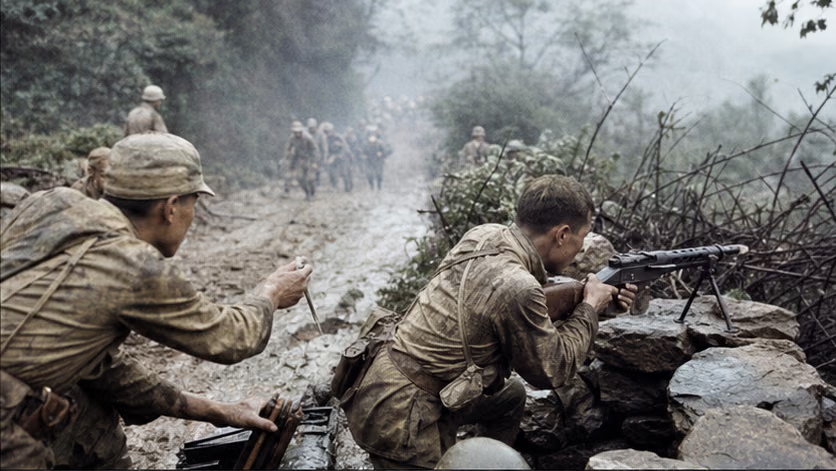
| Held point by point | Mid-April – early May | The Chinese side used the Xuefeng Mountain passes for successive resistance: the Wugang defenders (a battalion-level formation, unit number unverified) held the city and withstood repeated attacks by several times their number; the battles at Longtansi, Dongkou, Jiangkou, Shanmen, and other points opened one after another; Chinese and American air forces bombed Japanese supply lines and assembly areas throughout |
| Encirclement and counterattack | Early–late May | After Wang Yaowu identified the direction of the Japanese main attack, he committed fresh forces including the New Sixth Army to the counterattack; elements of the Japanese 116th Division and others were compressed into mountain passes, supply was cut off, and withdrawal became breakout (details at each point unrecorded) |
| Front line restored | Late May – 6.7 | Japanese units withdrew to their starting positions near Shaoyang, and around 6.7 the front line returned to its pre-battle position |
The New Sixth Army was the first U.S.-equipped force of the Chinese Army in India to be airlifted into the domestic frontal battlefield -- brought back as a complete formation from the Burma front. That line deserves a separate note in military history.
Casualties and Losses
- Japanese side: Chinese battle reports claimed more than 26,000 Japanese killed and wounded; the Japanese statistical basis is significantly lower (specific figures unrecorded, listed side by side pending verification).
- Chinese side: about more than 20,000 casualties (figures vary by statistical basis).
- Whichever set of figures is used: the Japanese offensive was crushed, many participating divisions were badly mauled, and afterward Japanese forces in China no longer had the ability to launch an offensive.
Aftermath
- From this point, the frontal battlefield entered a state of stalemate and watchful waiting; Chinese forces began planning surrender-reception and counteroffensive deployments. Two months later, Japan surrendered.
- On 1945.8.21, Takeo Imai, deputy chief of staff of the Japanese China Expeditionary Army, flew to Zhijiang to negotiate surrender -- the negotiation site was chosen beside the airfield defended by this campaign. The war ended beside the airfield it had failed to knock out.
- Zhijiang later built a surrender memorial arch, one of the surviving domestic landmarks commemorating victory in the War of Resistance.
Accounts of Those Present
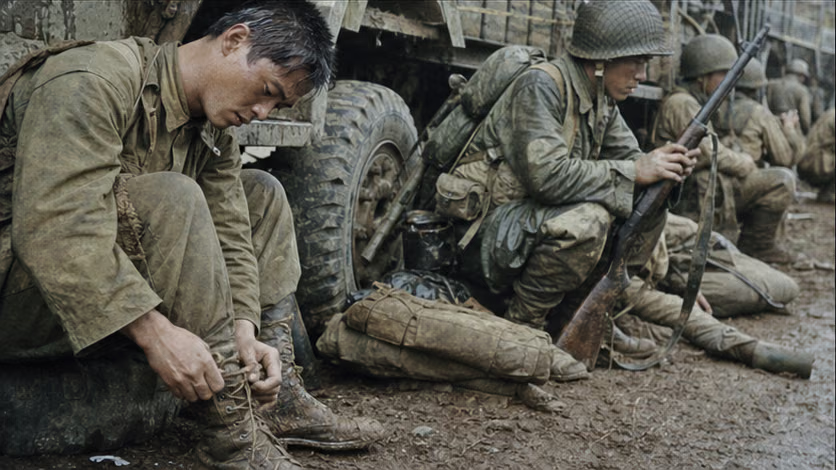
- Defense of Wugang: the defenders held against a larger force; fighting seesawed inside and outside the city walls for many days, and Japanese forces never broke the city (defending unit number and number of days of city defense unverified) -- one county seat held off a division-level offensive.
- Airlifted reinforcements: the New Sixth Army flew directly from Burma to Zhijiang on U.S. transport aircraft, and soldiers went to the front line as soon as they got off the planes -- the other end of the "Hump route" carrying men was this campaign (for the Hump, see *Air War and the Navy*).
- Longtansi: elements of the 74th Army fought repeatedly over the mountain pass, while local civilians braved shellfire to deliver food and guide troops (details unverified).
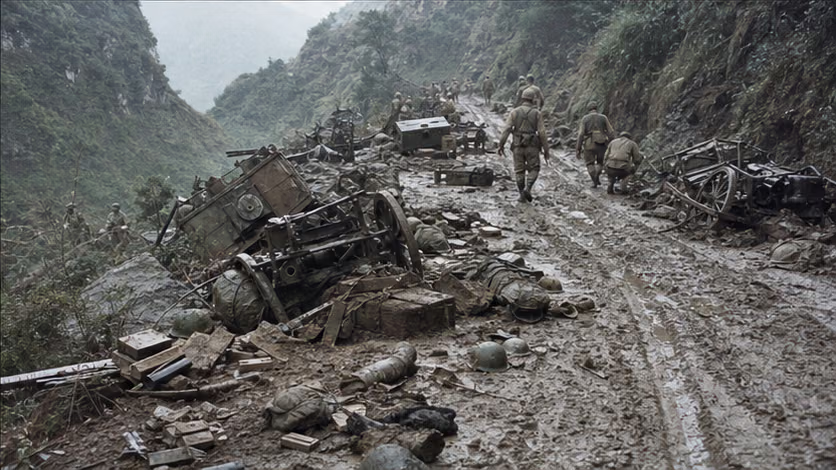
- Japanese forces in rout: after encircled Japanese forces ran out of grain, they foraged in the mountains, and when breaking out they abandoned heavy equipment -- the army that had chased Chinese forces at Shanghai eight years earlier now walked the road of rout in reverse through the gullies of the Xuefeng Mountains (Japanese memoir materials pending verification).
The Ground
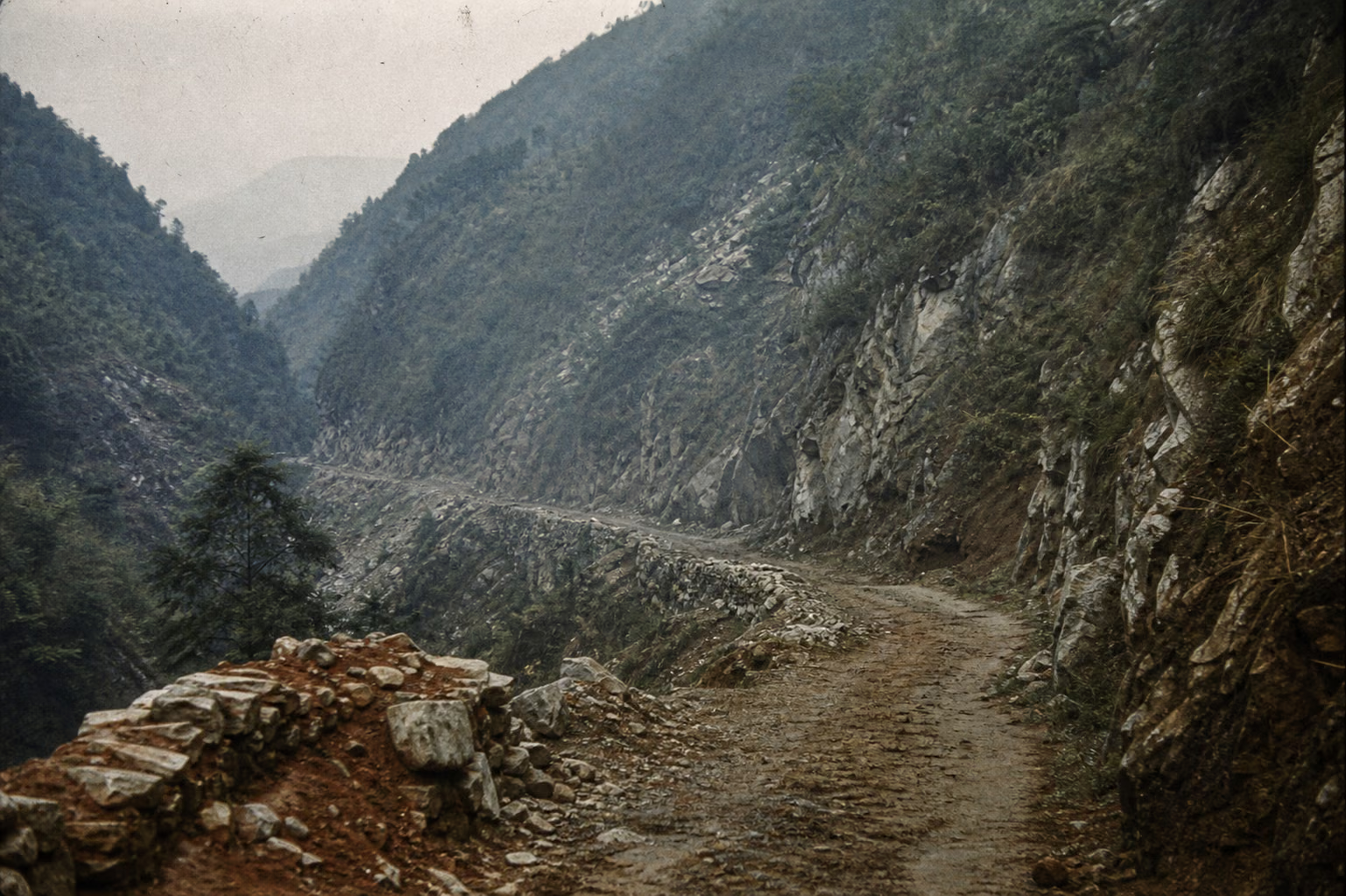
- The main range of the Xuefeng Mountains lay across the space between Shaoyang and Zhijiang, around one thousand meters above sea level; the routes to Zhijiang narrowed into several passes: Longtan, Dongkou, Jiangkou, Shanmen -- each pass was an independent grinding point.
- Wugang city: an old county seat with intact walls, a sample of point defense.
- Zhijiang airfield: the value anchor of the entire front line -- hold it, and air superiority remained; lose it, and everything fought in front of it was for nothing.
- Mountains + air superiority: the defenders were on the mountains, while the attackers were pressed by aircraft in the valleys -- the spatial grammar of verticality and asymmetry had turned to the Chinese side.
How Each Side Records It
- Chinese side: called it the "Great Victory in Western Hunan" and the "Great Victory at Xuefeng Mountain," and wrote it into history as the closing work of the frontal battlefield; Wang Yaowu and the 74th Army reached the peak of their prestige in this battle.
- Japanese side: war-history narratives are relatively muted, usually recording it as the "Zhijiang Operation" and acknowledging that the objective was not achieved (specific wording in Japanese war histories unverified).
- Long obscured: because the battle occurred on the eve of victory, it was overshadowed by the subsequent surrender reception and civil war, and public awareness remained far below its historical position; Chinese publications have become more numerous in recent years (source for the phrase "forgotten campaign" unverified).
Disputes and Sensitivities
- The two sets of casualty figures for Japanese forces differ widely.
- The characterization of "complete victory" is broadly sustained in scholarship (objective not achieved, front line restored), but detailed narratives of fighting at individual points in Chinese battle reports often contain exaggeration; verifying results point by point is work for later.
- The campaign's mutual appropriation with the argument that "the Nationalist Army's main forces preserved strength for the civil war" is a sensitive point in the contemporary public sphere.
Sources and Open Questions
Known main sources:
- Memoirs related to Wang Yaowu and battle reports of the Fourth Front Army (specific titles to be checked)
- Relevant volumes of the Japanese Defense Agency War History Office's *Senshi Sosho* (Japanese official history)
- Archives on the Battle of Western Hunan at the Second Historical Archives of China (Nanjing)
Open questions: complete order of battle of the Japanese participating forces; Wugang defending unit number and number of days of city defense; chronology and details of the battles at Longtan, Dongkou, Jiangkou, and Shanmen; specific Japanese-side figures for Japanese casualties; Chinese casualty basis; source for Yasuji Okamura's attitude toward the Zhijiang operation; specific materials on the participation of "western Hunan bandits"; source for the phrase "forgotten campaign."
All images on this site are AI-generated depictions. They are not historical photographs, not primary sources, and do not depict any real individual.