Engagement Archive · Battles of Xinkou and Niangzi Pass (1937)
For more than twenty days at Xinkou, 80,000 defenders held the Itagaki Division on the front and did not yield a step -- the hardest positional battle fought by Chinese forces on the North China front; once Niangzi Pass on the eastern line fell, even the best defense at Xinkou had to withdraw -- "Xinkou was not defeated; the defeat came at Niangzi Pass": the front held, the flank collapsed, and Taiyuan's fate was not decided before the Xinkou line.
Engagement Data
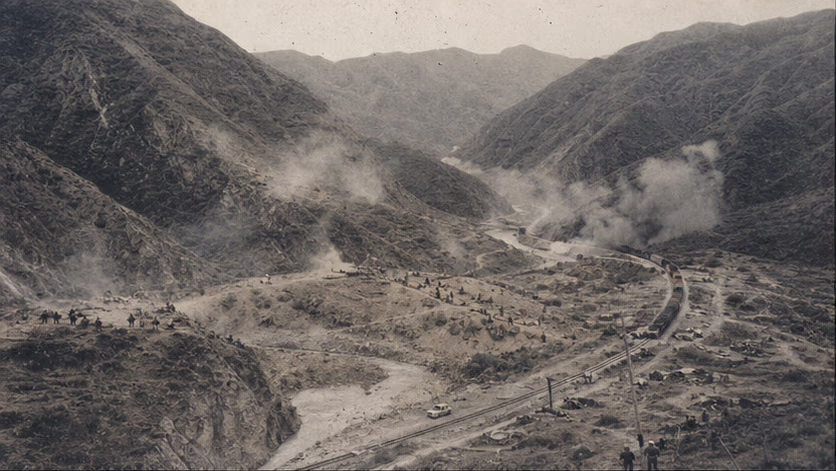
| Item | Content |
|---|---|
| Time | Xinkou: 1937.10.13 – 11.2 (a stalemate of more than twenty days); Niangzi Pass: 10.12 – 10.26, fell; 11.9, Taiyuan fell |
| Location | Xinkou: the pass north of Taiyuan between the Yunzhong River and Hutuo River, with the main position along the Nanhuaihua–Hill 204 line; Niangzi Pass: the Jiuguan–Niangzi Pass line on the old Zhengding–Taiyuan Railway at the Shanxi–Hebei boundary |
| Belongs to | Fourteen-Year War of Resistance · Battle of Taiyuan (see Battle of Taiyuan · Overview) |
| Chinese side | Xinkou: forward commander-in-chief Wei Lihuang; Central Army 14th Group Army (including Hao Mengling's Ninth Army), Jin-Sui Army, Sichuan Army, and Shaanxi Army, about 80,000 men; Niangzi Pass: under the control of Huang Shaohong, deputy commander-in-chief of the Second War Area (defending order of battle unverified) |
| Japanese side | Xinkou: Fifth Division (Itagaki Seishiro) plus part of the Chahar Expeditionary Force, about 50,000 men (figures vary by account); Niangzi Pass: 20th Division (Kawagishi Bunzaburo) and others |
| Result | Japanese forces never broke the Xinkou front; Niangzi Pass fell on 10.26, Xinkou's flank and rear lay open, and the whole line withdrew on 11.2; Taiyuan fell on 11.9 |
Belligerents
| Item | Chinese side | Japanese side |
|---|---|---|
| Strength | About 80,000 on the Xinkou front, with mixed designations and multiple systems (Central Army, Jin-Sui Army, Sichuan Army, Shaanxi Army); forces on the Niangzi Pass axis were thin | About 50,000 at Xinkou; 20th Division and others on the Niangzi Pass axis |
| Firepower | Central Army and Jin-Sui Army artillery was still serviceable, while Shanxi-made ammunition was gradually exhausted | Divisional artillery, tanks, and air units; after Yangmingbao airfield was raided on 10.19, air support sharply decreased (see Battlefields Behind Enemy Lines · Overview) |
| Air control | Essentially none | Present, but checked in late October |
| Terrain | Xinkou had mountains on both sides enclosing a river valley, favoring defense; Niangzi Pass controlled the corridor of the Zhengding–Taiyuan Railway, also favoring defense but short of troops | At Xinkou, only frontal assault was available; at Niangzi Pass, frontal assault and envelopment were used together |
Terrain and Conditions
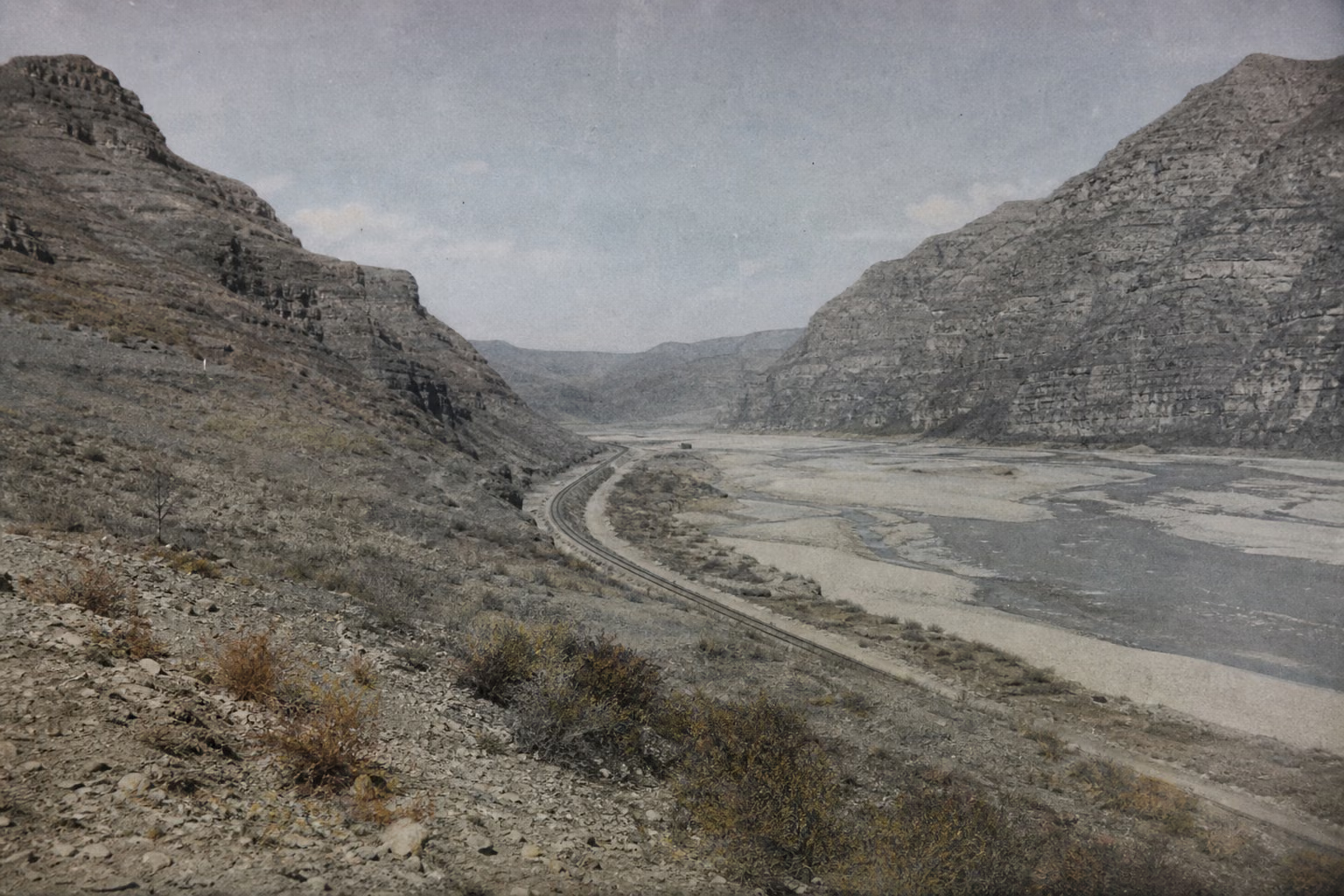
Xinkou: the last threshold north of Taiyuan -- a span of more than ten li between the Yunzhong River and Hutuo River, where mountains on both sides locked the Tongpu Railway into the valley. Niangzi Pass: a strong pass on the Zhengding–Taiyuan Railway in the Taihang Mountains, the throat between Shanxi and Hebei. China in October 1937: Shanghai was still fighting, most of North China had already been lost, and the Battle of Taiyuan was North China's last major battle -- to hold Shanxi was to hold North China's dignity; and that dignity depended on two lines holding at once. For the larger situation, see Fourteen-Year War of Resistance · War Overview.
Why It Was Fought
The ambush at Qiaogou burned a portion of the Itagaki Division's baggage train, but it could not stop the advance. By the end of September, the Inner Great Wall defense line had still been broken, and the Second War Area as a whole retreated toward the last threshold north of Taiyuan -- Xinkou. The pass between the Yunzhong River and Hutuo River was only more than ten li wide; mountains on both sides locked the Tongpu Railway into the valley, and beyond this point Taiyuan had no defensible barrier left. Yan Xishan pushed forward everything in his hands that could still fight: Wei Lihuang led the Central Army 14th Group Army north to serve as forward commander-in-chief, while the Jin-Sui Army, Sichuan Army, and Shaanxi Army deployed alongside it, about 80,000 men in all, to fight a positional battle north of Taiyuan; the Eighth Route Army divisions dispersed behind enemy lines to cut Japanese supply lines at their own discretion (Pingxingguan, Yanmen Pass, Yangmingbao; cross-reference the overview and Battlefields Behind Enemy Lines · Overview).
The Japanese forces' method was a two-pronged pincer. The Fifth Division advanced south from Guoxian and Yuanping to take the Xinkou front directly; the 20th Division moved west along the Zhengding–Taiyuan Railway and knocked at Niangzi Pass, the throat between Shanxi and Hebei -- the two routes were to join at Taiyuan. The premise of the pincer was a rapid decision: Itagaki's force had pushed smoothly through northern Shanxi and did not regard this pass as a wall that could hold it back -- Japanese campaign accounts later contain scattered remarks such as "the stubbornness of the Chinese army exceeded expectations" (source unverified). But the Chinese deployment contained a soft point: the main force was concentrated on the northern line, while the eastern line at Niangzi Pass, a chain of passes favorable to defense, had forces too thin to make "favorable to defense" real. Whether the judgment to weight the north and slight the east belonged to Yan Xishan, and whether the high command had drawn troops away for Shanghai, are competing accounts left to the disputes section -- at this moment Shanghai was at its fiercest, and two battlefields were both reaching out for troops. That was the hardest reality of autumn 1937.
Only a few documentary strokes can be traced for where the resolve behind this deployment was fixed: in September, Zhou Enlai went north to Taiyuan and conferred with Yan Xishan on operational coordination, including the direction in which the Eighth Route Army would be used (agenda and resolution text unverified); the transfer of Wei Lihuang's 14th Group Army from Hebei into Shanxi, and the assignment of Huang Shaohong to take special responsibility for the Zhengding–Taiyuan Railway axis, were movements explicitly ordered by the high command (order date unverified). Behind these decisions, one piece of intelligence was missing in common: since the collapses along the Pingsui and Pinghan lines, Chinese judgments about the next Japanese main attack had swung between the Taiyuan front and the Zhengding–Taiyuan Railway flank (judgment process unverified); Japanese forces likewise had no firm measure of the pass's strength -- in Itagaki's reports from the advance, not one had said that it could hold.
The material accounting was colder still. With northern Yanbei already lost, railway carrying capacity in northern Shanxi was halved; Central Army reinforcements coming from a thousand li away had to move along the Zhengding–Taiyuan and Tongpu railways, with grain and ammunition in train. Shanxi-made ammunition decreased with every round fired, and the Taiyuan Arsenal was already on the Japanese target list (factory relocation sequence unverified). The Japanese boundary was equally clear: the Fifth Division stood isolated in the mountains of northern Shanxi, while the 20th Division's westward advance was constrained by the tunnels and bridges of the Zhengding–Taiyuan Railway -- the handles of the two pincers were not very solid. Japan was betting that the Chinese side would fail to hold first. Whether anyone raised a formal objection at the time to the thinness of the eastern line is not seen in the records now available (no record of objection seen) -- the hole at Niangzi Pass would become a hole in the whole situation only after the fighting began.
In early October, the Jin-Sui Army brigade under Jiang Yuzhen held Yuanping for about ten days and was nearly wiped out, buying time for the Xinkou deployment; on 10.12, fighting opened along the Zhengding–Taiyuan Railway axis; on 13, the main force of the Fifth Division stormed Nanhuaihua -- the two pincers closed at the same time. One struck the hard wall at Xinkou. The other was reaching toward Niangzi Pass, where there were few troops to hold it.
Course of the Engagement
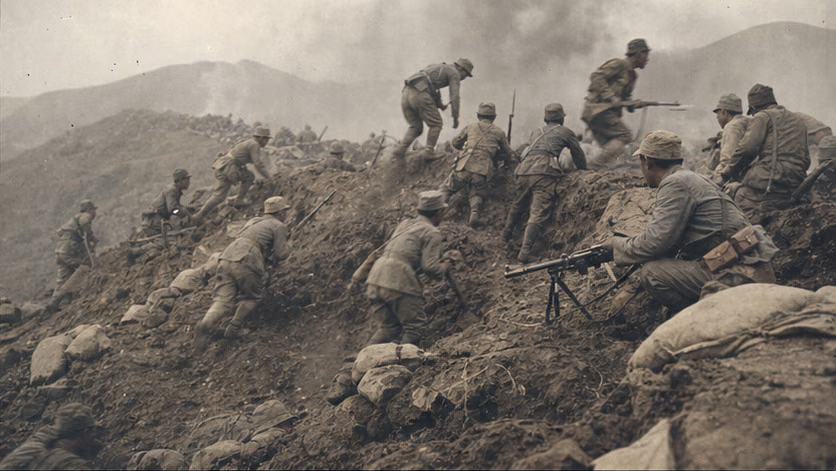
| Phase | Time | Main points |
|---|---|---|
| Yuanping outpost | 10.1–10.11 | The Jin-Sui Army 196th Brigade (brigade commander Jiang Yuzhen) held Yuanping for about ten days; the brigade was nearly wiped out and Jiang Yuzhen died for the country -- this bought time for the Xinkou deployment (details unverified) |
| Battle begins at Xinkou | 10.13 | The main force of the Japanese Fifth Division stormed the Nanhuaihua line; the defenders were deployed in depth, and the battle opened with artillery fire |
| See-saw at Nanhuaihua | 10.13–end of the month | Nanhuaihua–Hill 204 changed hands more than ten times, lost by day and retaken by night -- called a "meat grinder," where lives were traded hill by hill |
| Three generals killed on the same day | Morning of 10.16 | Hao Mengling, commander of the Ninth Army; Liu Jiaqi, commander of the 54th Division; and Zheng Tingzhen, commander of the Fifth Independent Brigade, were all killed on the same day in the Nanhuaihua counterattack -- Hao Mengling was the first army commander to die for the country in the War of Resistance |
| Behind-the-lines coordination | 10.18–19 | The Yanmen Pass ambush and the night raid on Yangmingbao airfield (damaging more than twenty Japanese aircraft) -- Japanese aircraft over Xinkou suddenly decreased, and the pressure on the front eased sharply (see Battlefields Behind Enemy Lines · Overview) |
| Niangzi Pass in danger | 10.12–26 | The 20th Division attacked along the Zhengding–Taiyuan Railway; forces on the Jiuguan–Niangzi Pass line were thin, and reinforcements were committed piecemeal and defeated piecemeal (order of battle unverified); the Eighth Route Army 129th Division attacked the enemy flank and rear (Changshengkou, Qigencun, and others; cross-reference Battlefields Behind Enemy Lines · Overview) but could not reverse the frontal situation |
| Niangzi Pass falls | 10.26 | Niangzi Pass was lost, and Japanese forces drove straight along the Zhengding–Taiyuan Railway toward Shouyang and Yuci -- Xinkou's flank and rear lay open |
| Whole line withdraws | 11.2 | Xinkou's defenders were ordered to withdraw south; more than twenty days of hard resistance were thus rendered void |
| Taiyuan | 11.6–11.9 | Fu Zuoyi's 35th Army defended Taiyuan alone for several days, broke out on the night of 11.8, and the city fell on 11.9 (details unverified) |
Casualties and Losses
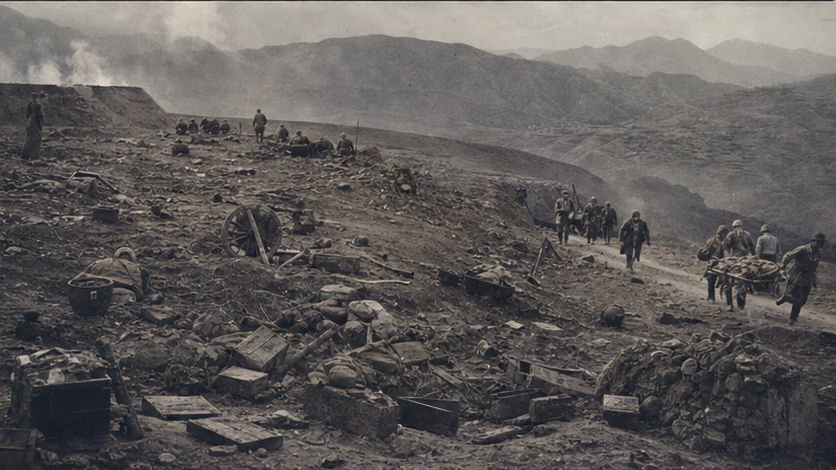
- Xinkou: Chinese casualties numbered in the tens of thousands (figures vary by account); Japanese casualties were about 20,000 (Chinese battle-report basis; Japanese records unverified, with both accounts retained).
- Hao Mengling, Liu Jiaqi, and Zheng Tingzhen, three generals, died for the country on the same day; Jiang Yuzhen's brigade was nearly wiped out at Yuanping.
- Niangzi Pass axis: defender casualties and order of battle are both unverified.
- ※ Civilians along the line: towns and villages in Guoxian, Yuanping, Xinkou, and along the Zhengding–Taiyuan Railway suffered from the fighting and retaliatory killings by Japanese forces (individual cases unverified).
Aftermath
- "Xinkou was not defeated; the defeat came at Niangzi Pass" -- the common assessment: the frontal positional battle held against elite Japanese forces, while the cause of defeat lay on the eastern flank; the battle's structure was one in which the front held and the flank collapsed.
- Taiyuan fell on 11.9, and the era of regular set-piece battles in North China ended in Shanxi; the Eighth Route Army remained in Shanxi to open base areas (see "Aftermath" in the overview) -- Xinkou's blood did not buy Taiyuan, but it bought time: the battlefield behind enemy lines in North China gained its footing during these more than twenty days.
- Hao Mengling was honored with a state funeral rite, public memorials were held by all circles in Wuhan, and the KMT and CPC mourned together (details unverified) -- one of the landmark events in the United Front narrative.
- Wei Lihuang thereafter gradually drew closer to the CPC side (visited Yan'an in 1938; level unverified) -- a line planted at Xinkou.
Accounts of Those Present
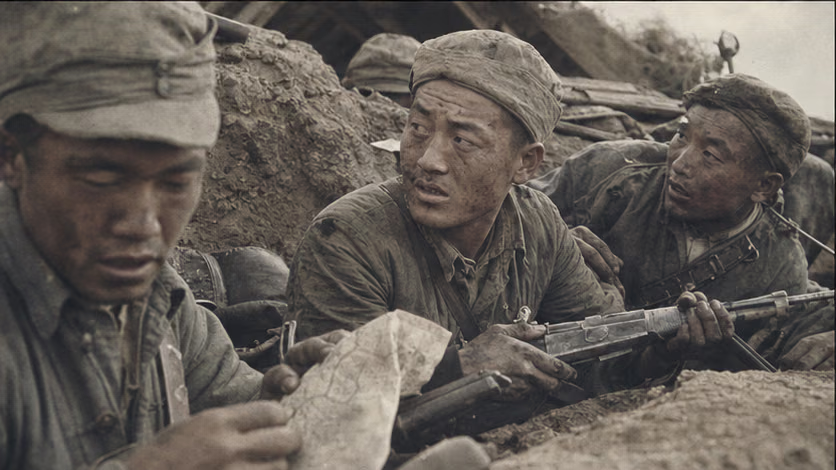
- Hao Mengling's two files: in 1931, he had taken part in the Third Counter-"Encirclement" Campaign against the Central Soviet Area, fighting the Red Army -- six years later he died for the country on the anti-Japanese battlefield, becoming the first army commander to die for the country in the War of Resistance; one person, two files, one arc of light. His final letters to his family circulated before his death (meaning "repay the country with death"; original text unverified).
- Hill 204: a numbered hill that changed hands more than ten times -- "those who went up were a battalion; those who came down were a platoon" (memoir layer, source unverified); the literal meaning of the name "meat grinder."
- Three generals on the same day: Hao Mengling, Liu Jiaqi, and Zheng Tingzhen were all killed on the morning of 10.16 on the Nanhuaihua counterattack line -- army, division, and brigade commanders were used up in one morning, and the chain of command was patched together temporarily by deputies and staff officers.
- Wei Lihuang at the front: the forward commander-in-chief was stationed at Xinkou to supervise the fighting and kept contact with the Eighth Route Army side (the level of Zhou Enlai's participation in operational meetings unverified).
- What that night at Yangmingbao meant for Xinkou: once the airfield was blown up, Japanese aircraft over the heads of the Xinkou defenders suddenly decreased -- front-line soldiers may not have known who had blown it up; they only knew that at daybreak the enemy aircraft did not come.
- Fu Zuoyi's isolated city: before defending Taiyuan, Fu Zuoyi had already expressed a resolve to die if necessary (memoir layer, source unverified); several days of city defense and the breakout on the night of 11.8 -- the aspiration to "fight in the field from the city" and the details of the hurried breakout remain unverified.
The Ground
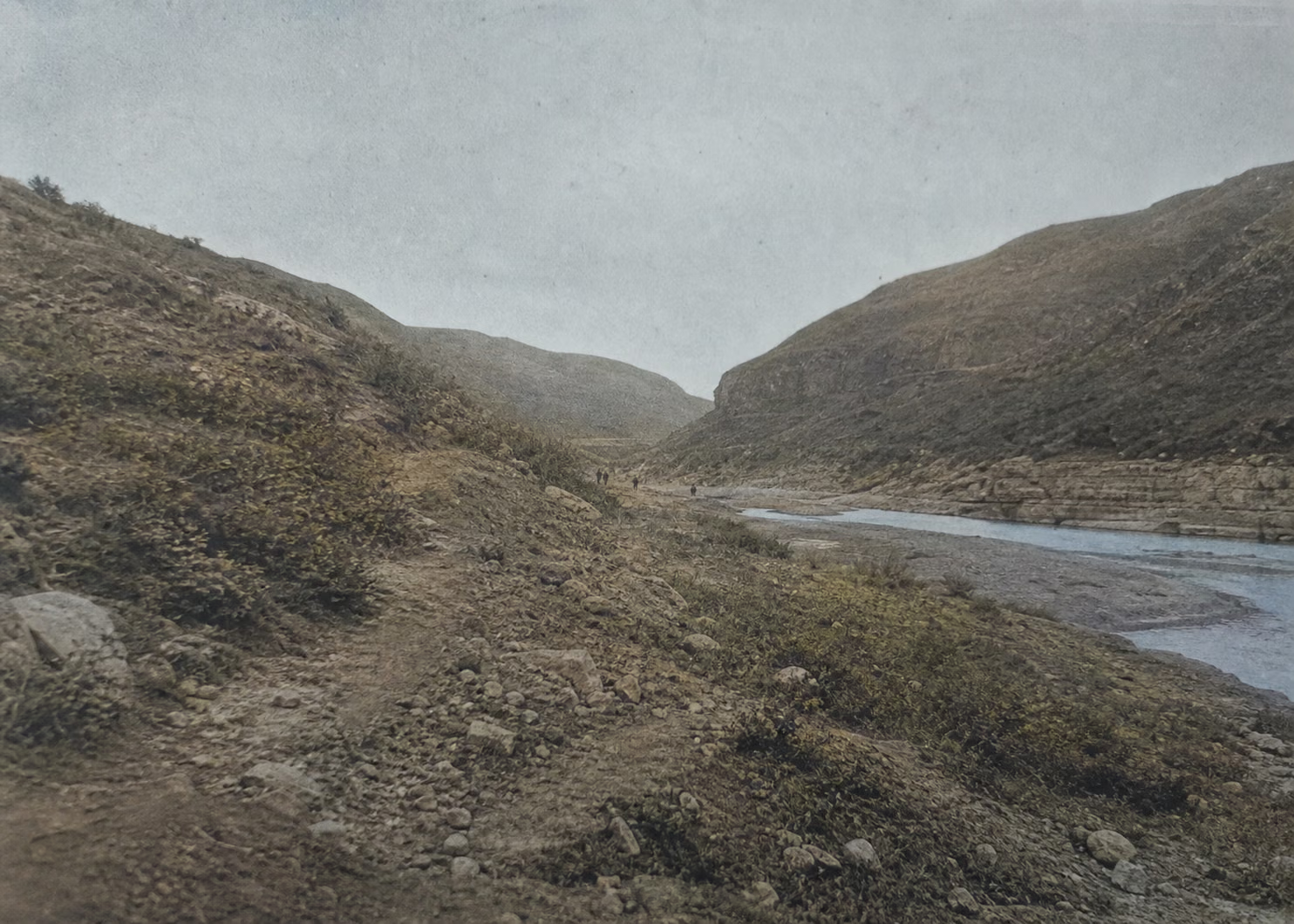
- Xinkou: a pass of more than ten li between the Yunzhong River and Hutuo River, with mountains on both sides locking the river valley -- a rare North China front where "nothing but a head-on collision" was possible, and Japanese mechanized advantages were discounted among the mountains.
- Nanhuaihua–Hill 204: a slaughterhouse core of a dozen or more square kilometers, where hills differing in elevation by only a few dozen meters repeatedly changed hands.
- Niangzi Pass: the Zhengding–Taiyuan Railway corridor in the Taihang Mountains, with a string of passes from Jiuguan to Niangzi Pass -- favorable to defense, but "favorable to defense" had to be paid for with troops, and the eastern line was precisely where there were none.
- The spatial interlock of the two battlefields: the Xinkou front pinned the main Japanese force, while the Eighth Route Army cut the Yanmen Pass road and Yangmingbao airfield behind Japanese lines (see overview) -- two sets of methods on one map.
- Taiyuan: an isolated city at the end of the Fen River valley after three sides had been lost -- from the start, defending the city was a rearguard action and a symbol.
How Each Side Records It
- Chinese side (KMT): Xinkou is recorded as the most stubborn engagement on the North China frontal battlefield, and Hao Mengling's death for the country as the high point of a narrative of national integrity; responsibility for the "defeat at Niangzi Pass" points toward eastern-line command and troop allocation (the level of responsibility among Yan Xishan, Huang Shaohong, and the high command remains unverified).
- Chinese side (CPC): the Xinkou front and operations behind enemy lines are recorded together -- a "coordination sample" of the front holding to the death while the rear cut off support; KMT generals such as Hao Mengling are included in the martyr narrative.
- Japanese side: war histories acknowledge Xinkou as a rare hard stand since the war began, with the Fifth Division blocked for more than half a month; evaluations such as "the stubbornness of the Chinese army exceeded expectations" appear scattered in campaign accounts (source unverified).
Disputes and Sensitivities
- Responsibility for the fall of Niangzi Pass: whose judgment produced the thin eastern line -- Yan Xishan's weighting of the north and slighting of the east? The high command drawing troops away to aid Shanghai? Huang Shaohong's faulty command? -- competing accounts remain side by side, and the level remains unverified; this question directly determines the explanatory frame for "why Xinkou's victory was rendered void."
- Casualty figures: Chinese casualties at Xinkou are given in several accounts as tens of thousands; the gap between Japanese casualties of 20,000 (Chinese battle reports) and Japanese records is retained side by side and still awaits verification.
- Assessment of Fu Zuoyi's defense of Taiyuan: several days of isolated-city defense -- was it a "loyal and brave rearguard," or "holding what was known to be indefensible and merely adding casualties"? -- both readings are placed together, and the details remain unverified.
- Hao Mengling's final letter and related memoirs circulate in multiple versions; the original source still needs to be checked.
Sources and Open Questions
Known main sources:
- *Zhongguo Kangri Zhanzheng Zhengmian Zhanchang Zuozhan Ji*, chapter on the Battle of Taiyuan
- Taiwan edition of *Kangri Zhanshi*, relevant volumes (volume titles unverified)
- Japanese Defense Agency War History Office, *Army Operations in the China Incident*, vol. 1 (Japanese official history)
- Biographies and memoirs relating to Hao Mengling, Wei Lihuang, and Fu Zuoyi (editions unverified)
Open questions (unverified items): the various figures for strength and casualties on both sides at Xinkou; the defending order of battle and day-by-day course of the fall on the Niangzi Pass axis; details from the battlefield where the three generals died for the country; the actual course of the Yuanping blocking action; records of Zhou Enlai's participation in Xinkou operational meetings; Fu Zuoyi's orders for defending Taiyuan, the breakout process, and the competing assessments; archival bases for the competing accounts of responsibility for the eastern line's fall; individual cases of civilian suffering along the line; agenda and resolution text from the Taiyuan conference between Zhou Enlai and Yan Xishan; dates of the transfer orders for Wei Lihuang and Huang Shaohong; materials on Chinese judgments of the direction of the next Japanese main attack; the relocation sequence of the Taiyuan Arsenal; records of any formal objection during the formation of the Xinkou deployment to the thinness of the eastern line.
All images on this site are AI-generated depictions. They are not historical photographs, not primary sources, and do not depict any real individual.