Engagement Archive · Air War and the Navy (1937–45, combined account)
The Chinese navy began its war of resistance by sinking more than forty of its own vessels; the Chinese air force carried eight years of lost air superiority on the lives of a generation of pilots. This article records what happened in the sky and on the river: the curve by which air superiority was lost in full and then taken back, and the Chinese, Soviet, and American pilots who died for that curve.
Engagement Data
| Item | Details |
|---|---|
| Time | 1937.8 – 1945, the eight years of full-scale war running through the Fourteen-Year War of Resistance |
| Space | The Jiangyin section of the Yangtze River; the airspace over Shanghai, Wuhan, Chongqing, and other cities; the Burma–Yunnan "Hump" route |
| Belongs to | Fourteen-Year War of Resistance · Air War and Navy combined account |
| Chinese side | Chinese navy (First and Second Fleets); Chinese air force; Chinese-American Composite Wing, etc. |
| Allied side | Soviet Volunteer Group (1937–41); American Volunteer Group (AVG, "Flying Tigers," 1941.12–42.7) and the later Fourteenth Air Force |
| Japanese side | Imperial Japanese Navy Air Service and Imperial Japanese Army Air Service |
Belligerents
| Item | Chinese side | Japanese side |
|---|---|---|
| Navy | About sixty thousand tons of warships at the start of the war, mostly obsolete small vessels | The world's third-largest navy, complete with aircraft carriers and battleships; the two were not on the same scale |
| Air force (1937) | About three hundred combat aircraft, dependent on foreign purchases; every loss was one aircraft fewer | Several thousand army and navy aircraft, with domestic production providing continual replacement |
| Air force (after 1942) | U.S.-supplied P-40s, P-51s, and other aircraft entered via the Hump; the equipment gap gradually narrowed | Late in the war, elite units were transferred to the Pacific, and Japanese aviation strength in China was depleted |
Terrain and Conditions
(For the larger setting, see "Fourteen-Year War of Resistance · War Overview." Here only two background facts directly relevant to this article are recorded: first, China was an agrarian country, and the entire material base of its navy and air force had been accumulated over years through foreign purchases, so losses could not be replaced domestically; second, the possession of air superiority directly determined the shape of the ground battlefield. In 1937–41, Chinese cities and armies had no cover under Japanese aircraft; after 1942 the situation gradually turned, and by the Battle of Western Hunan in 1945 the Chinese side held air superiority throughout.)
Why It Was Fought
On the day gunfire began in Zhabei during the Battle of Shanghai, the war was no longer being fought only on the ground. Shanghai was a city that had grown out of the sea. Japanese reinforcements, supplies, and naval gunfire all came from river and sea; the Yangtze was a road that warships could travel, and upstream along that road Nanjing and Wuhan both lay within the Japanese navy's reach. The ground battle was a killing struggle in the urban districts, but the real gateways were on the water and in the sky.
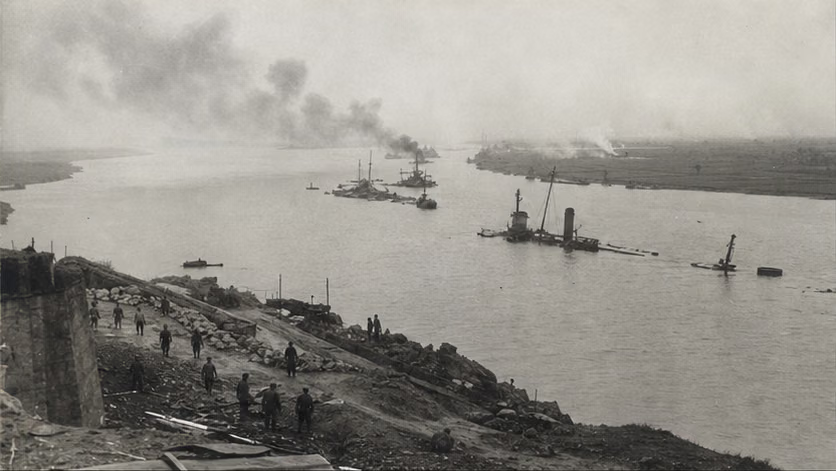
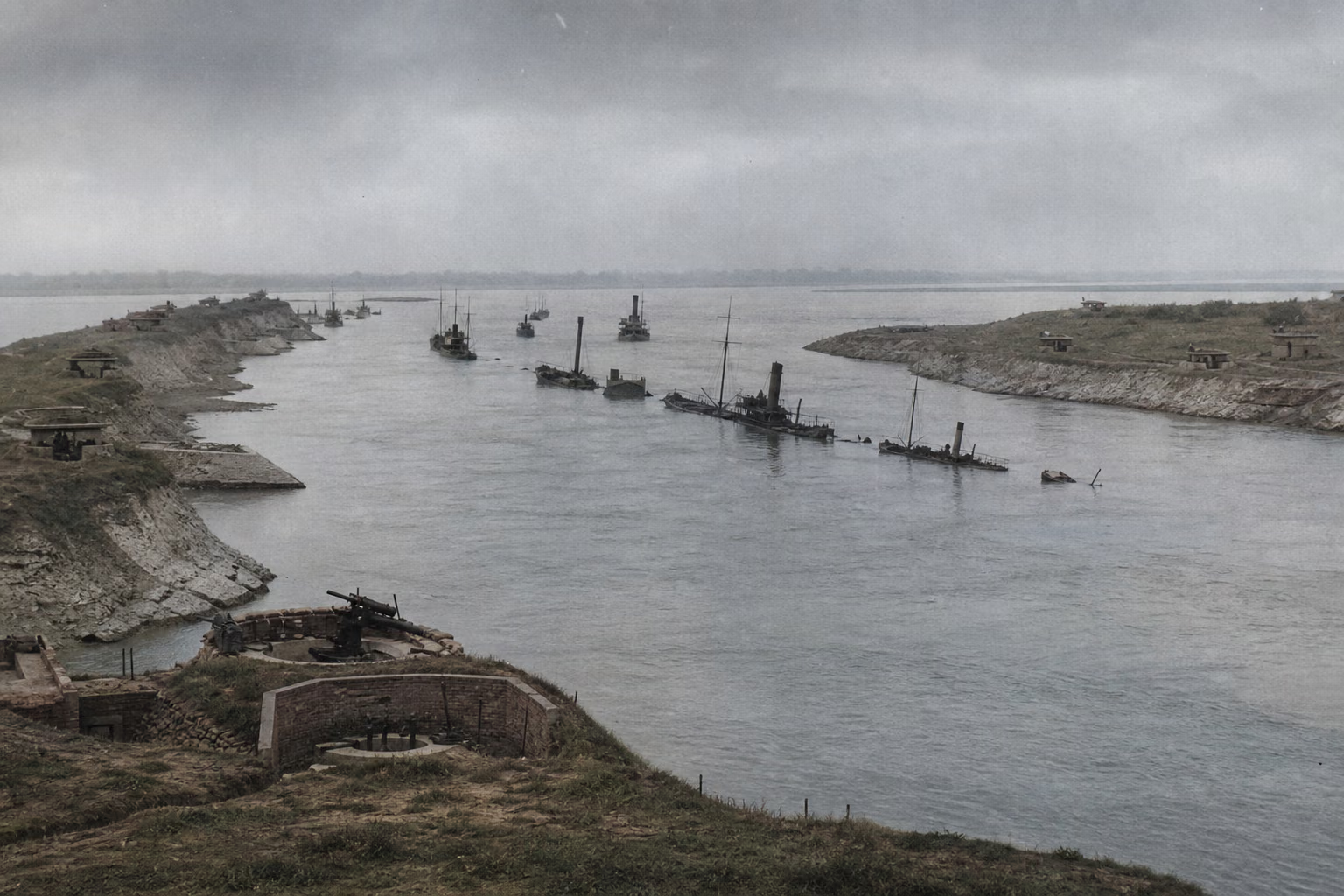
The Chinese navy's entire material base amounted to about sixty thousand tons, mostly obsolete small vessels; opposite it stood the world's third-largest navy. A fleet action at sea would have meant destruction in a single stroke. The navy therefore narrowed its task to one thing: delaying the Japanese route up the Yangtze toward Nanjing and Wuhan. Only one method remained: sinking itself into the river. Beginning on August 12, warships and requisitioned merchant vessels were scuttled in succession in the Jiangyin waterway (starting dates vary by account). At this point the Yangtze narrows abruptly, making it a place where ships could block the channel. The plan had originally included a first half: sealing the river in advance, trapping the Japanese warships in the middle and upper Yangtze, and destroying them in one sweep. But Japanese ships and expatriates escaped downstream before the closure (rumors of a leak circulated; verification pending), and the door was left open, leaving only the channel blockade. The decision to close the river was made at a highest-level military conference at the beginning of the war (the conference name and date vary by account). In the later investigation of Huang Jun, confidential secretary of the Executive Yuan, for collaboration with Japan, the leak of the river-closure plan was listed among his offenses (the case and execution process require verification). Whether there were objections inside the navy to the scuttling, such as proposals to preserve the ships by withdrawing upstream or going out to sea, does not appear in surviving records (no record of dissent found).
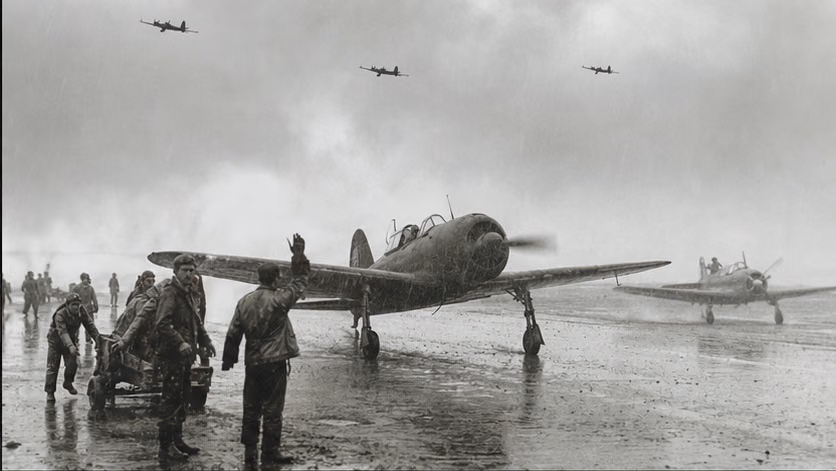
The air force ledger was equally lopsided: about three hundred combat aircraft, all dependent on foreign purchases, and every loss was one aircraft fewer; across from them were several thousand army and navy aircraft, with domestic production providing continual replacement. The Japanese calculation was to seize air superiority at the outset. Air units would fly across the sea from bases in Taiwan and Kyushu straight at the airfields of Hangzhou and Nanjing, destroying the Chinese air force on the ground; the Japanese called this "transoceanic bombing." The Chinese calculation was to strike the warships in the Huangpu River, hold the airspace over Nanjing, Shanghai, and Hangzhou, and keep a piece of sky over the Battle of Shanghai. Material reality set limits on both calculations. The three hundred aircraft were the whole result of several years of accumulated foreign exchange; fuel, ammunition, and spare parts all depended on imports. Pilots came out of the Jianqiao Air Academy; one class took several years, and when one pilot was killed, a replacement required several more years. The elite force could only be wagered in the first few months of the war. Japan's wager was on a quick decision, but transoceanic bombing meant long range and limited bomb loads. On August 14, the Chinese air force struck Japanese ships in the Huangpu River. On the same day, the Fourth Group transferred from Henan to Jianqiao in Hangzhou through rain, landed and immediately took off, intercepting incoming Japanese aircraft. The first battle was a victory (for the figures, see the table below). The Japanese had not expected this purchased air force to bite. Over the following year, from Shanghai and Nanjing to the skies over Wuhan, China's first generation of pilots traded their lives for time. There was only one path by which replacement could arrive: on August 21, the Sino-Soviet Non-Aggression Pact was signed, and Soviet aircraft and volunteer airmen began coming to China by the end of the year. For the next four years, China's sky was sustained by this northern supply line.
Every line that follows in this article, the sunken ships and shore batteries at Jiangyin, Chinese and Soviet pilots fighting side by side over Wuhan, Chinese and American crews flying over the Himalayas after the Burma Road was cut in 1942, and the Hump route that kept the Chinese theater's material lifeline alive by air transport, was forced into being by the same fact: the disparity in strength was enormous, but the war still had to be fought.
Course of the Engagement
| Thread | Time | Main points |
|---|---|---|
| Jiangyin scuttling | 1937.8 | The navy scuttled its own vessels and requisitioned merchant ships, more than forty in total, in the Jiangyin waterway to block the channel (ship counts vary by account). The Jiangyin naval and air battle followed; Japanese aircraft bombed continuously, and the navy's main combat vessels were largely destroyed by autumn 1937 |
| August 14 Air Battle | 1937.8.14 | The Fourth Group (group commander Gao Zhihang) transferred from Henan to Jianqiao in Hangzhou through rain, intercepted incoming Japanese aircraft that same day, and shot down Japanese aircraft ("6:0" is the figure in Chinese combat reports; this figure is empirically disputed). The Chinese air force won its first battle, and after 8.14 the date was designated "Air Force Day" |
| Wuhan air battles | 1938 | Three major air battles took place on 2.18, 4.29, and 5.31, with Chinese and Soviet pilots fighting side by side. In the battle of 4.29, pilot Chen Huaimin, after his aircraft was damaged, rammed a Japanese aircraft and died with it (details unrecorded) |
| Soviet Volunteer Group | 1937–41 | More than two thousand personnel came to China to fight, including pilots and ground crew (figure disputed), and more than two hundred died in China. Bomber group commander Grigory Kulishenko was killed in action in 1939; his grave is in Wanzhou, Chongqing |
| Flying Tigers and the Fourteenth Air Force | 1941.12–42.7 (AVG), then to 1945 | The American Volunteer Group commanded by Claire Lee Chennault fought in the China-Burma theater. Its record must be distinguished by counting method: the AVG claimed about three hundred Japanese aircraft shot down, while empirical studies generally put the figure at a little over one hundred; the gap between claim and evidence is recorded together (level marked). In 1942.7 it was incorporated into the U.S. military sequence, and its successor was the Fourteenth Air Force |
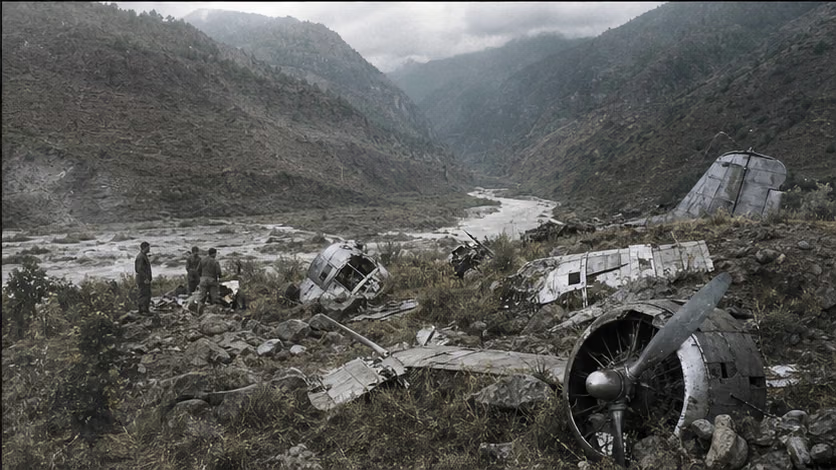
| Hump route | 1942–45 | After the Burma Road was cut, American aircraft flew from Assam in India across the eastern Himalayas to Yunnan. Over three years they carried about 65–80 ten-thousand tons, or 650,000–800,000 tons (figures vary by accounting method); more than five hundred aircraft crashed, and more than one thousand crew members died (figures vary by accounting method). The valleys were scattered with aluminum fragments from crashed aircraft, and were called "Aluminum Valley" |
Casualties and Losses
- Navy: the main combat vessels were nearly all lost within 1937; afterward the navy continued operations on the Yangtze through guerrilla methods such as mines and shore batteries.
- Early Chinese air force pilots: Gao Zhihang (killed at Zhoujiakou in 1937.11), Liu Cuigang, Yue Yiqin, Chen Huaimin, and other first-generation aces died one after another. The average survival time of China's first generation of fighter pilots was measured in months (this saying is widely circulated; its counting method and source require verification).
- Soviet Volunteer Group: more than two hundred died (figure disputed).
- U.S. side: more than one thousand crew members died on the Hump route (figure disputed); combat losses of the AVG and the Fourteenth Air Force are counted separately.
- Japanese side: systematic figures for the attrition of Japanese aviation strength in China (figure disputed).
Aftermath
- The curve of air superiority completed a full turn: fully lost in 1937, endured with difficulty in 1938–41, gradually recovered after 1942 with U.S. aid and the Hump, and taken back by Chinese and American air forces in 1944–45. The all-weather air superiority of the Battle of Western Hunan was the end point of this curve (see "Battle of Western Hunan").
- The navy began with self-scuttling and persisted to victory through mine units; postwar reconstruction began almost from zero.
- The memory of 8.14 Air Force Day continued on both sides of the Taiwan Strait (each side's wording requires verification); the memory of the Flying Tigers has been repeatedly invoked in contemporary China-U.S. relations.
Accounts of Those Present
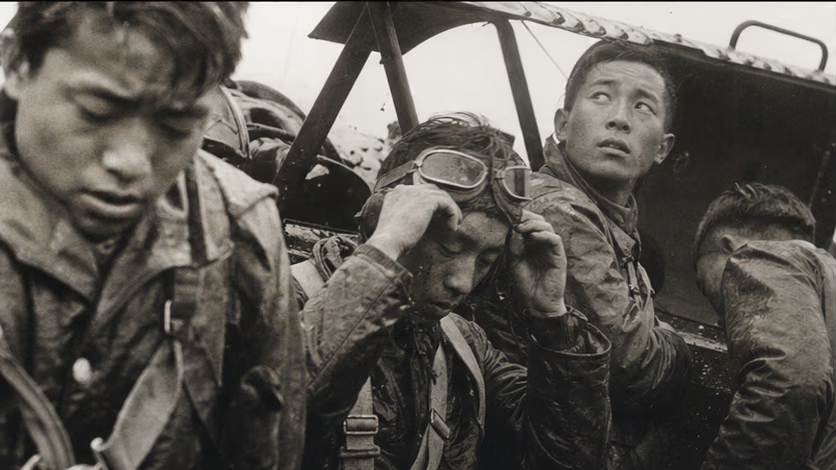
- Self-scuttling: naval officers and sailors personally blew up and scuttled their own warships. The navy entered the war by destroying itself. After the sunken ships sealed the river, sailors went ashore to fight as guerrillas and defend gun batteries. The ships were gone; the men were still fighting.
- Gao Zhihang: on August 14 he led his unit through rain to meet the battle, and his aircraft was out of fuel when it landed (details unrecorded). Three months later, Japanese aircraft raided Zhoujiakou airfield; he was killed by bombing as he was taking off to meet the enemy, at the age of thirty.
- Chen Huaimin: in the 4.29 Wuhan air battle, after his aircraft was hit and caught fire, he did not bail out, but rammed the enemy aircraft. His younger sister Chen Nan later wrote an open letter to the wife of Takahashi Kenichi, the Japanese pilot killed in action: one account, between two families and two countries (the original letter survives; wording requires verification).
- Kulishenko: a Soviet bomber group commander, he crash-landed in the Yangtze after his aircraft was damaged in 1939, exhausted his strength, and drowned. The people of Wanzhou guarded his grave for many years (details unrecorded).
- "Aluminum Valley": Hump pilots navigated by the reflected light from aluminum fragments of earlier wrecks along the valleys. The air route was marked out by crashes.
- Average survival measured in months: young men graduating from the Jianqiao Air Academy were killed in batches at the age of twenty-one or twenty-two; in graduation photographs, one group after another was crossed out. The line has circulated to this day. The precise figure remains to be verified, but the intensity was real.
The Ground
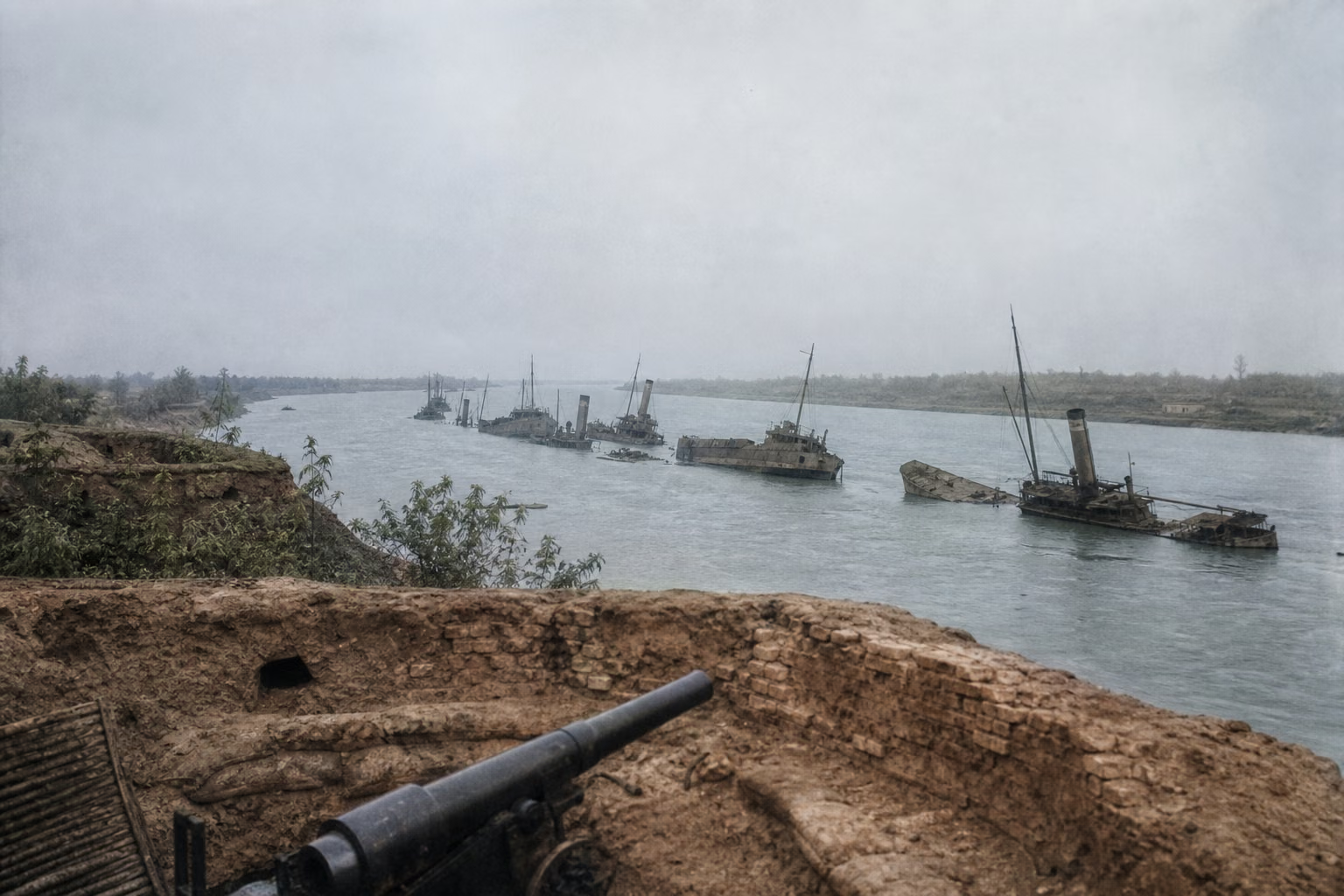
- Jiangyin: the point where the Yangtze narrows abruptly, with a sunken-ship blockade line and batteries on both banks, forming a "waterway gate" defensive space.
- Jianqiao: runway, rain clouds, and fuel for transfer flights: the resource constraints within air warfare.
- The sky over Wuhan: high-altitude dogfights above urban landmarks, with a million people on the ground watching with upturned faces; air battle as a "public event" in space.
- The Hump: seven-thousand-meter ridges in the eastern Himalayas, icing, turbulence, and no alternate landing fields; the route itself was the enemy.
- The bank of the Yangtze at Wanzhou: the grave of a foreign pilot, a point of spatial memory.
How Each Side Records It
- Chinese side: August 14 stands at the center of air-force founding memory; the Flying Tigers have long been a positive symbol in Chinese-language narratives.
- Japanese side: Japanese accounts of August 14 differ sharply from the figures in Chinese combat reports (the number of losses acknowledged by Japan is figure disputed); Japanese military histories did not rate the early combat capability of the Chinese air force as low (wording to be checked).
- Soviet side: the Soviet Volunteer Group remained secret for a long time and was gradually made public only around the dissolution of the Soviet Union.
- U.S. side: the AVG's record has been reduced year by year by later military historians. The gap between claimed victories and empirically established victories is an open topic in Western scholarship. This does not diminish the assessment of the sacrifices on the Hump: those were deaths on a transport line, with no victories to dispute.
Disputes and Sensitivities
- Counting victories: the August 14 "6:0" and the AVG's "three hundred aircraft" are both combat-report claims, and both differ from empirical research. In this article, levels are marked throughout: claim and evidence are placed side by side, without arbitrarily choosing one.
- Nature of the Flying Tigers: the volunteer group's well-paid, mercenary coloration coexists with the narrative of "international righteous men"; the two sides remember it in different keys.
- Late public disclosure of the Soviet Volunteer Group: the warmth and coldness of Sino-Soviet relations determined how this memory appeared and disappeared over several decades.
- The use of contemporary diplomatic symbols involving the Flying Tigers and Kulishenko is sensitive.
Sources and Open Questions
Known main sources:
- Japanese Defense Agency War History Office, Senshi Sosho volumes related to air operations in China (Japanese official history)
- Claire Lee Chennault, Way of a Fighter, memoir
- Chinese: various studies and memoirs on the history of the Chinese air force and navy (specific bibliography to be checked and supplemented)
Open questions: the specific number and list of ships scuttled at Jiangyin, by counting method; the empirically established number of aircraft shot down on August 14; details of Gao Zhihang's death; details of Chen Huaimin's ramming and the original text of Chen Nan's open letter; figures for the number and deaths of the Soviet Volunteer Group; details of Kulishenko's story; the specific research sources for the AVG's claimed and empirically established shootdown counts; the various accounting methods for Hump tonnage, crash numbers, and crew deaths; the source and statistical basis for "the first generation of pilots survived on average only by the month"; figures for the attrition of Japanese aviation strength in China.
All images on this site are AI-generated depictions. They are not historical photographs, not primary sources, and do not depict any real individual.