Engagement Archive · Chahar Resistance (1933)
In the summer of 1933, Feng Yuxiang, Ji Hongchang, and Fang Zhenwu raised an allied army at Zhangjiakou and recovered Duolun - the first recovery of lost territory by Chinese troops since the Mukden Incident; afterward, this army was deprived of pay, pressured, and dissolved by its own government.
Engagement Data
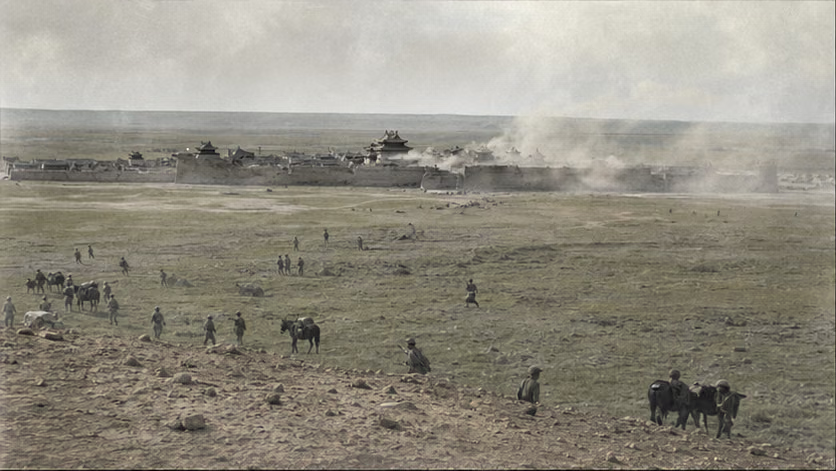
| Item | Content |
|---|---|
| Time | 1933.5.26 - August (remnant units fought on alone until October) |
| Place | Zhangjiakou in Chahar Province and eastern Chahar (Kangbao, Baochang, Guyuan, Duolun) |
| Part of | Fourteen-Year War of Resistance · Local Resistance Phase (for the larger situation, see *Fourteen-Year War of Resistance: War Overview*) |
| Initiating side | Chahar People's Anti-Japanese Allied Army: commander-in-chief Feng Yuxiang, forward commander-in-chief Fang Zhenwu, forward general commander Ji Hongchang; Communists participated (Xuan Xiafu, Xu Quanzhong, and others - list of names unverified) |
| Opposing sides | Japanese-puppet forces: part of the Kwantung Army and puppet troops held eastern Chahar; Nanjing government forces: He Yingqin assembled heavy forces to pressure the Allied Army |
| Result | Kangbao, Baochang, and Guyuan were successively recovered; Duolun was taken on 7.12; on 8.5 Feng Yuxiang left office, and the Allied Army was dissolved; the remnant units were defeated in October |
Belligerents
This engagement had a three-sided structure: the Allied Army first fought Japanese-puppet forces, and Nanjing government forces later pressured the Allied Army. The sides are listed separately.
| Side | Strength | Equipment and Condition |
|---|---|---|
| Chahar People's Anti-Japanese Allied Army | Claimed to number 100,000, with an actual strength of several tens of thousands (figure disputed) | Assembled from remnants of the old Northwestern Army, volunteer forces, and local militias; short of firearms and without a stable source of pay |
| Japanese-puppet forces (eastern Chahar) | Several thousand to more than ten thousand, including puppet troops (figure disputed) | Duolun had fortifications, with Japanese advisers and fire support |
| Nanjing pressure forces | More than ten divisions and more than 100,000 men were assembled in succession (figure disputed) | Central Army units and forces under Pang Bingxun and others, fully equipped, using a blockade of pay and transport as well |
Terrain and Conditions
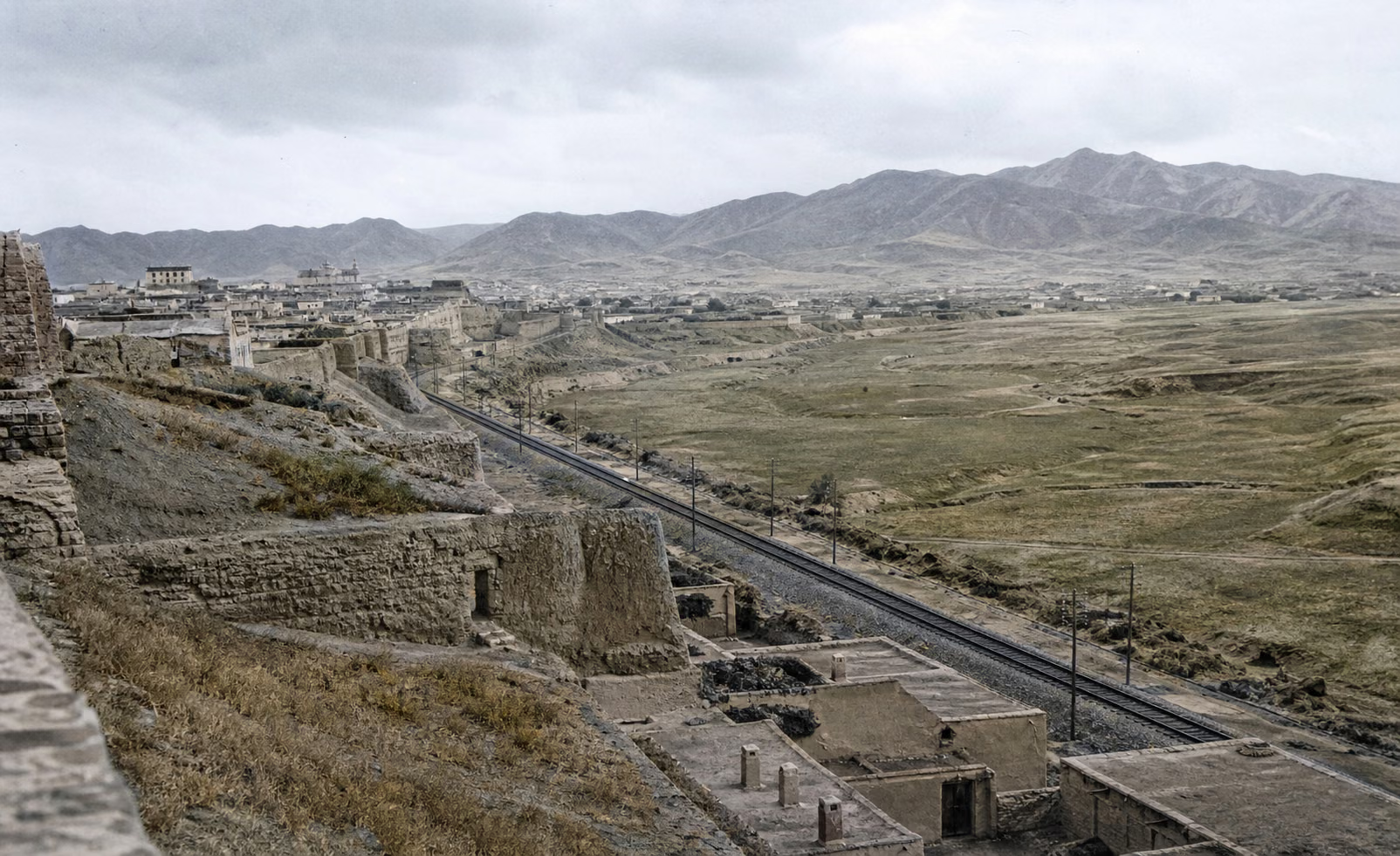
(For the larger situation in 1933 - the recent loss of Rehe and the Tanggu Truce - see *Fourteen-Year War of Resistance: War Overview* and *Defense of the Great Wall (1933)*. This entry covers only Chahar.)
Chahar: the front line was a vacuum. After the Tanggu Truce, eastern Hebei was demilitarized, and Chahar became the front line facing Japan. Provincial chairman Song Zheyuan's troops were still fighting along the Great Wall line, leaving the Chahar rear empty. Feng Yuxiang, having fallen from power, was then living at Zhangjiakou; Fang Zhenwu, an old subordinate, led his troops on foot from Shanxi to join him. Japanese-puppet forces had already occupied Duolun and other counties in eastern Chahar. Duolun was the key town of eastern Chahar and the gateway to the steppe.
Why It Was Fought
The blood shed at the Great Wall passes was exchanged for the negotiating table at Tanggu: the Great Wall line became a de facto ceasefire line, eastern Hebei was about to be demilitarized, and North China's gateway had been opened on paper. The Tanggu Truce was signed on 1933.5.31; five days earlier, on 5.26, Zhangjiakou issued a public telegram to the whole country - the Chahar People's Anti-Japanese Allied Army had been founded, with Feng Yuxiang as commander-in-chief. On one side, the government was drawing a ceasefire line in an agreement; on the other, civilians and out-of-power old soldiers raised their own banner against the enemy. The two acts were completed in the same week. The contrast needs no commentary.
The banner was raised at Zhangjiakou for a reason. Once eastern Hebei was disarmed, Chahar stood at the front line against Japan; provincial chairman Song Zheyuan's troops were still on the Great Wall line, and the Chahar rear was empty. Japanese-puppet forces had already occupied Duolun and other counties in eastern Chahar - Duolun was the key town of eastern Chahar and the gateway to the steppe; if pressure continued southwest, Zhangjiakou would be next. And Zhangjiakou was Feng Yuxiang's old ground: after his defeat in the Central Plains War, he had left office and lived there in retirement; Fang Zhenwu led old troops on foot from Shanxi to join him, while remnants of volunteer forces and local militias gathered one after another. Enemy situation, terrain, and personal networks all converged in this mountain city controlling the Pingsui Railway. Before the banner was raised, Feng Yuxiang had spent months preparing at Zhangjiakou: contacting old subordinates, and dealing with the CPC's northern organization and anti-Chiang forces (level of consultation and list of names unverified). Capital, too, was being gathered - Chahar Province could not raise pay, Feng Yuxiang used his private savings, and Ji Hongchang sold family property to buy weapons (details unverified).
Three account books lay on the same table. The Allied Army's account: Japanese-puppet forces occupied the counties of eastern Chahar, and these were its operational targets; recovering lost territory was both resistance against Japan and the only capital on which this improvised army - remnants of the old Northwestern Army, volunteer forces, and local militias, claimed at 100,000 but actually several tens of thousands - could stand. Even in his public telegram leaving office, Feng Yuxiang was still telling his subordinates that resistance against Japan was no crime (original wording source unverified). He believed that recovering lost territory could at least buy tolerance. Nanjing's account was the exact opposite: "internal pacification before external resistance," and tens of thousands outside the system were more conspicuous than the Japanese-puppet forces in eastern Chahar. The public reasons for pressure were "unauthorized movement" and "undermining unity"; another line was written in the files - suspicion of "Communization," and Communists did indeed hold posts in the army. Nanjing's resolve landed in concrete measures: He Yingqin, acting chairman of the Beiping Military Commission, first negotiated incorporation; when talks failed, he transferred Pang Bingxun's and other units forward, cut the Pingsui Railway, and cut off food and pay (orders for the pressure deployment unverified). Chiang and Wang sent several telegrams urging Feng to cancel the Allied Army's name (correspondence telegrams unverified). The pressure used exactly the two things the Allied Army lacked most: grain and routes. The Japanese-puppet side's account was to hold eastern Chahar and watch how Nanjing dealt with this army that would not obey orders.
It was not that no one raised objections: after the pressure order was issued, people from many circles sent public telegrams asking that the army be turned outward against Japan instead (details unverified), but they did not shake Nanjing's calculation. Nor was the Allied Army internally solid as iron: army commander Deng Wen was assassinated in Zhangjiakou, and widely circulated accounts pointed the assassin's background toward Nanjing's secret-service system (widely circulated, confirmation unverified). After Feng Yuxiang left office, an incorporation plan came to the table. Fang Zhenwu and Ji Hongchang refused to accept it - dissent remained to the end, and the price was isolation.
In late June, Ji Hongchang led the Northern Route Army in an oath-taking ceremony and moved out into eastern Chahar. The position of this army had in fact been written on the day its founding was announced: not resisting Japan was a problem; resisting Japan outside the system was also a problem. In front were Japanese forces, behind were Central Army forces - on the map, those two directions were its whole condition.
Course of the Engagement
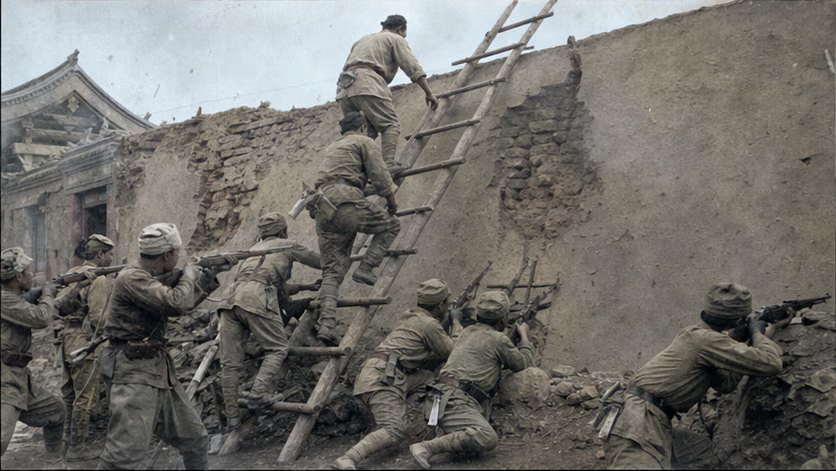
| Phase | Time | Key Points |
|---|---|---|
| Army founded | 5.26 | Zhangjiakou issued a public telegram announcing the founding of the Chahar People's Anti-Japanese Allied Army, with Feng Yuxiang as commander-in-chief; Communists held posts in the army and participated (rank level unverified) |
| Three counties recovered in succession | Late June-early July | Ji Hongchang led the Northern Route Army in recovering Kangbao, Baochang, and Guyuan in succession, and puppet troops collapsed or surrendered |
| Assault on Duolun | 7.7-7.12 | After five days and nights of hard fighting, Ji Hongchang's troops recovered Duolun on 7.12 - the first recovery of lost territory by Chinese troops since the Mukden Incident |
| Pressure | Late July-early August | He Yingqin moved more than 100,000 troops toward Zhangjiakou, cut the Pingsui Railway, and cut off food and pay; Japanese forces simultaneously applied pressure in eastern Chahar - squeezed from both sides |
| Departure from office and dissolution | 8.5-mid-August | Feng Yuxiang issued a public telegram on 8.5 and left office, then left Zhangjiakou for Mount Tai; Song Zheyuan returned to Chahar to govern, and most of the Allied Army was incorporated or dispersed |
| Remnants fight alone | August-October | Fang Zhenwu and Ji Hongchang refused to accept reorganization, changed their banner to the "Army to Resist Japan and Punish Traitors," and fought north of Beiping; in mid-October they were defeated around Shunyi under attacks from both Japan and Chiang's side (details of the defeat unrecorded) |
Casualties and Losses
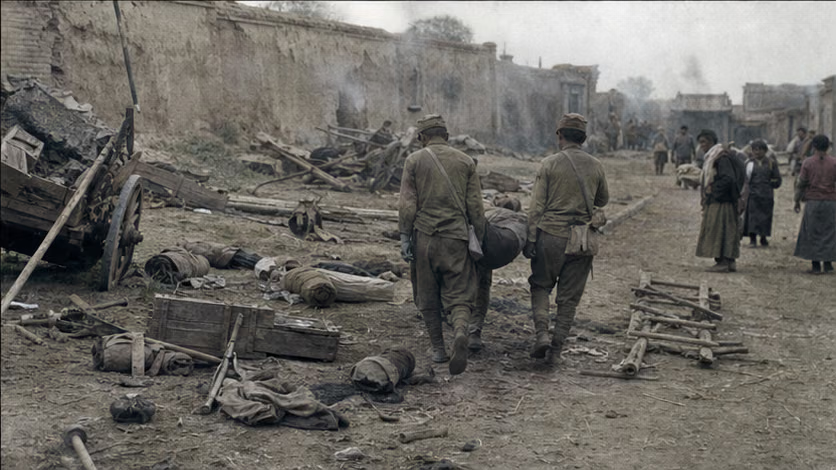
- Allied Army: casualties in the assault on Duolun were about 1,600 (statistical bases vary by account); there are no reliable statistics for casualties during the remnant units' isolated fighting (figure disputed).
- Japanese-puppet forces: no consistent statistical basis exists for loss figures in the fighting across eastern Chahar (statistical bases vary by account).
- ※ Civilians: records of requisitioning and the effects of war on civilians in the eastern Chahar war zone and during the pressure campaign are scattered (record unverified).
Aftermath
- Chahar returned to direct Nanjing control; after the Allied Army was dissolved, Duolun and the other recovered counties were again occupied by Japanese-puppet forces (timing and course unverified).
- Ji Hongchang went underground and continued anti-Chiang resistance against Japan. On 1934.11.9 he was wounded in an assassination attempt in Tianjin, arrested, extradited to Beiping, and executed on 11.24, at the age of thirty-nine.
- Fang Zhenwu lived in long exile and was assassinated during the War of Resistance in 1941 in Hong Kong (one account says Guangdong - this account unverified).
- Those who recovered lost territory were dissolved by their own government. The first recovery of lost territory since the Mukden Incident brought not reinforcement but pressure - "external resistance" and "internal pacification" collided head-on here, and what they shattered was the Allied Army.
Accounts of Those Present
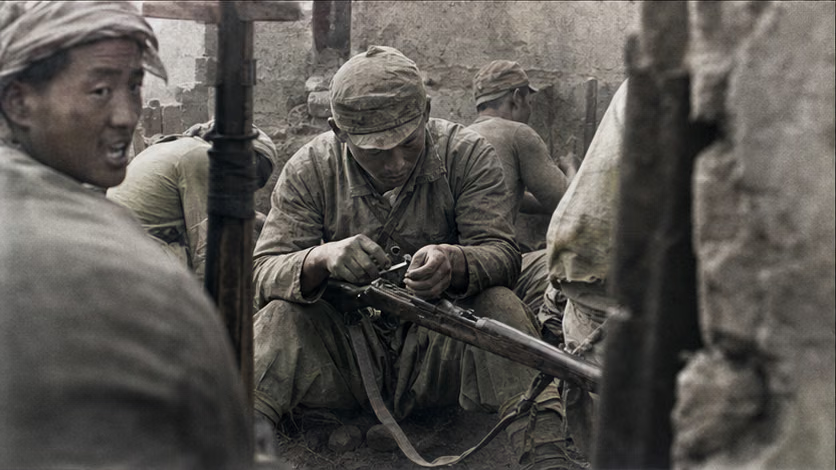
- "I regret not dying in resistance against Japan": before his execution, Ji Hongchang wrote a poem on the ground with a tree branch (common account): "I regret not dying in resistance against Japan, and live to bear today's shame. With the nation broken even so, why should I spare this head?" Before the shooting, he ordered a chair brought over and sat facing the muzzles (details vary by version, unverified).
- Selling family property: accounts that Ji Hongchang sold family property to buy weapons and relieve the crisis are common (details unrecorded).
- Five days and nights at Duolun: the assaulting troops had no heavy artillery, relying on scaling ladders and close combat to fight street by street; on the day the city was taken, merchants and residents inside the city came out to welcome them (details unrecorded).
- Feng Yuxiang leaves Zhangjiakou: when he issued his public telegram leaving office, he told his subordinates in substance that resistance against Japan was no crime (original wording source unverified), then went to Mount Tai to study - an old soldier who could fight was pressed back into the study by the system.
- Fang and Ji as an isolated army: more than twenty thousand men (figure disputed) carried the banner of the "Army to Resist Japan and Punish Traitors" around to the northern outskirts of Beiping. In front were Japanese forces, behind were Central Army forces - on the map, those two directions were their whole condition.
The Ground
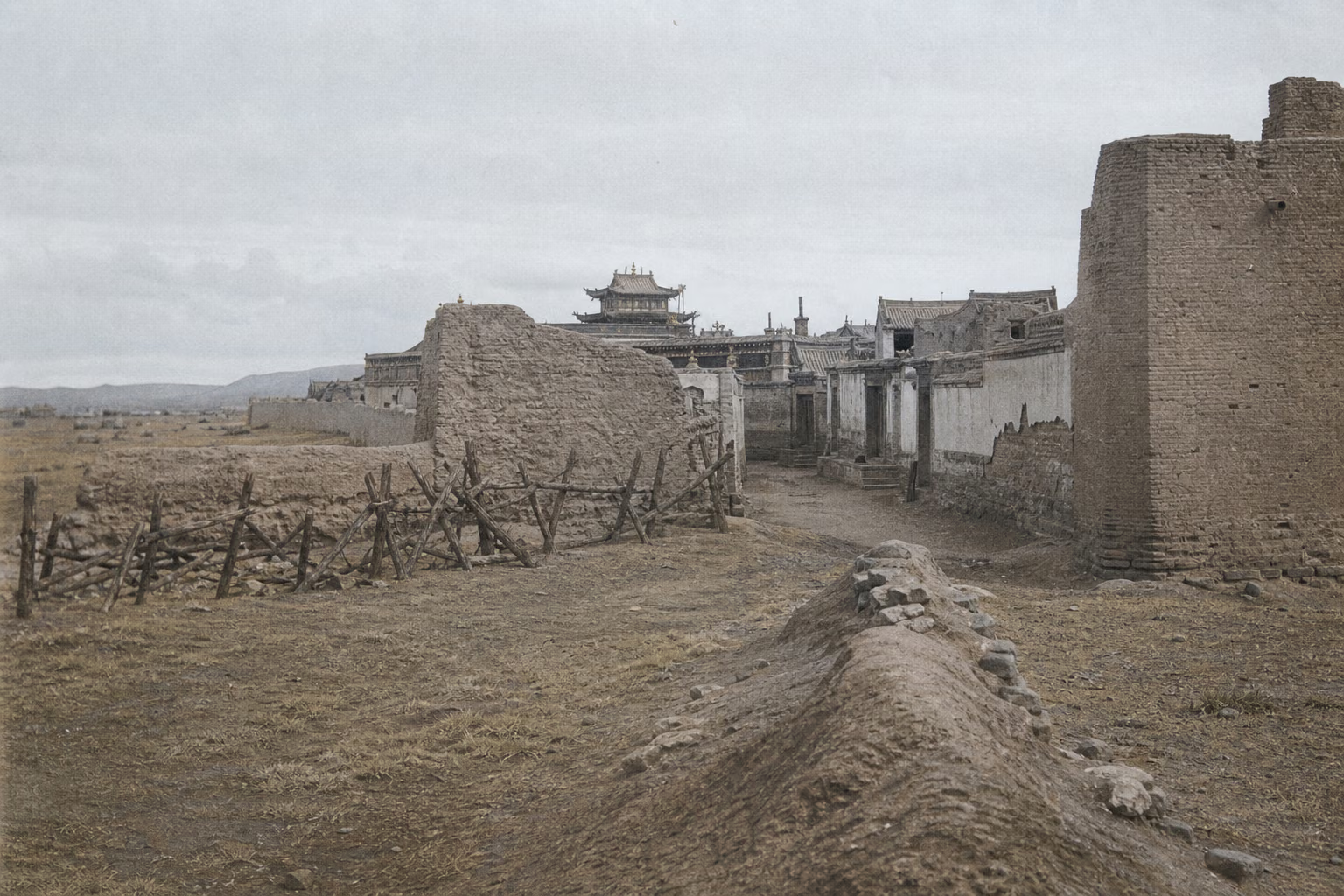
- Bashang Plateau and the eastern Chahar steppe: open, without cover; towns were fortresses.
- Duolun: a religious and trading center on the steppe (a city of lama temples), a fortified assault target.
- Zhangjiakou: a mountain city controlling the Pingsui Railway; once the railway was cut, the whole army lost its grain supply - the transport line was the lifeline.
How Each Side Records It
- Chinese side (Nanjing at the time): characterized it as "unauthorized movement" and "undermining unity," making pressure seem justified; this wording was seldom mentioned later.
- Chinese side (later): mainland histories set the tone as a righteous act of resistance against Japan, and Ji Hongchang is listed among famous anti-Japanese martyrs; Taiwan-side histories long avoided the subject or treated it briefly (record unverified).
- Japanese side: war histories and diplomatic archives treated the Allied Army as an "anti-Manchukuo, anti-Japanese" armed force, and were especially alert to its relationship with the CPC (archival details unrecorded).
Disputes and Sensitivities
- The relationship between the Allied Army and the CPC: at the time, Nanjing used "Communization" as one of the reasons for applying pressure; records differ on the actual rank level and role of Communists inside the army.
- How to characterize "pressure": Nanjing-side files and Allied Army-side recollections give completely opposite accounts of the cutting of pay and the forward movement of troops. The divergence itself is recorded as well.
- Details of Ji Hongchang's execution (the poem before execution, sitting to receive the shots) circulated in many versions and require checking against original sources.
Sources and Open Questions
Known principal sources:
- *Historical Materials on the Chahar People's Anti-Japanese Allied Army* (Chinese source-material collection - title unverified)
- Ji Hongchang biographies and chronologies (editions unverified)
- Relevant archives of the Japanese Ministry of Foreign Affairs and the Kwantung Army (Japanese side - file numbers unverified)
Open questions: the actual strength of the Allied Army; the list of Communists who joined the army and their rank levels; the statistical basis for casualties in the assault on Duolun; the timing and course by which Duolun and the other counties fell again; the time, place, and details of the remnant units' defeat; the original sources for Ji Hongchang's execution poem and execution-ground details; the time and place of Fang Zhenwu's assassination; the level of consultation and list of names for Feng Yuxiang's contacts with the CPC's northern organization and other parties; He Yingqin's orders for the pressure deployment; correspondence telegrams from Chiang and Wang urging Feng to cancel the Allied Army's name; details of public telegrams from various circles supporting the Allied Army and opposing the pressure campaign; the perpetrator and background in Deng Wen's assassination; details of Feng Yuxiang's private funding and Ji Hongchang's weapon purchases.
All images on this site are AI-generated depictions. They are not historical photographs, not primary sources, and do not depict any real individual.