Engagement Archive · Battle of Huangtuling
A mortar shell landed in an isolated courtyard in a Taihang Mountain gully and killed Lieutenant General Abe Norihide, the Japanese forces' "flower of famous generals" -- the highest-ranking Japanese commander killed by the Eighth Route Army; Tokyo radio mourned him, and only later did the squad leader firing the gun in the Taihang Mountains learn whom he had hit.
Engagement Data
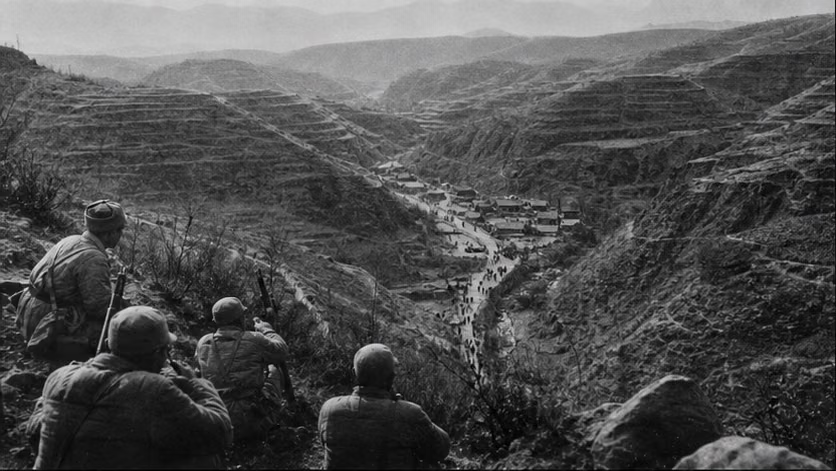
| Item | Content |
|---|---|
| Part of | Fourteen-Year War of Resistance · Battlefields Behind Enemy Lines (for the overall picture, see *Battlefields Behind Enemy Lines · Overview*) |
| Time | 1939.11.3 (Yansuxiya)–11.7 (Huangtuling), Laiyuan-Yixian mountain area |
| Belligerents | First Military Subdistrict of the Jinchaji Military Region (Yang Chengwu) and the Special Service Regiment of the 120th Division, among others / Independent Mixed Second Brigade of the Japanese forces (brigade commander Lieutenant General Abe Norihide) |
| Result | At Yansuxiya, more than 500 Japanese troops of the Tsujimura Battalion were annihilated; at Huangtuling, more than 900 were annihilated again, and Abe Norihide was killed by mortar fire (results vary by statistical basis) |
Belligerents
| Item | Eighth Route Army | Japanese forces |
|---|---|---|
| Strength | Several regiments deployed in separate ambush positions | Brigade punitive column of more than 1,500 men |
| Key weapons | One 82-mm mortar in the subdistrict artillery company (ammunition counted shell by shell and in extremely short supply) | Mountain artillery and air support (restricted by mountain terrain) |
Terrain and Conditions
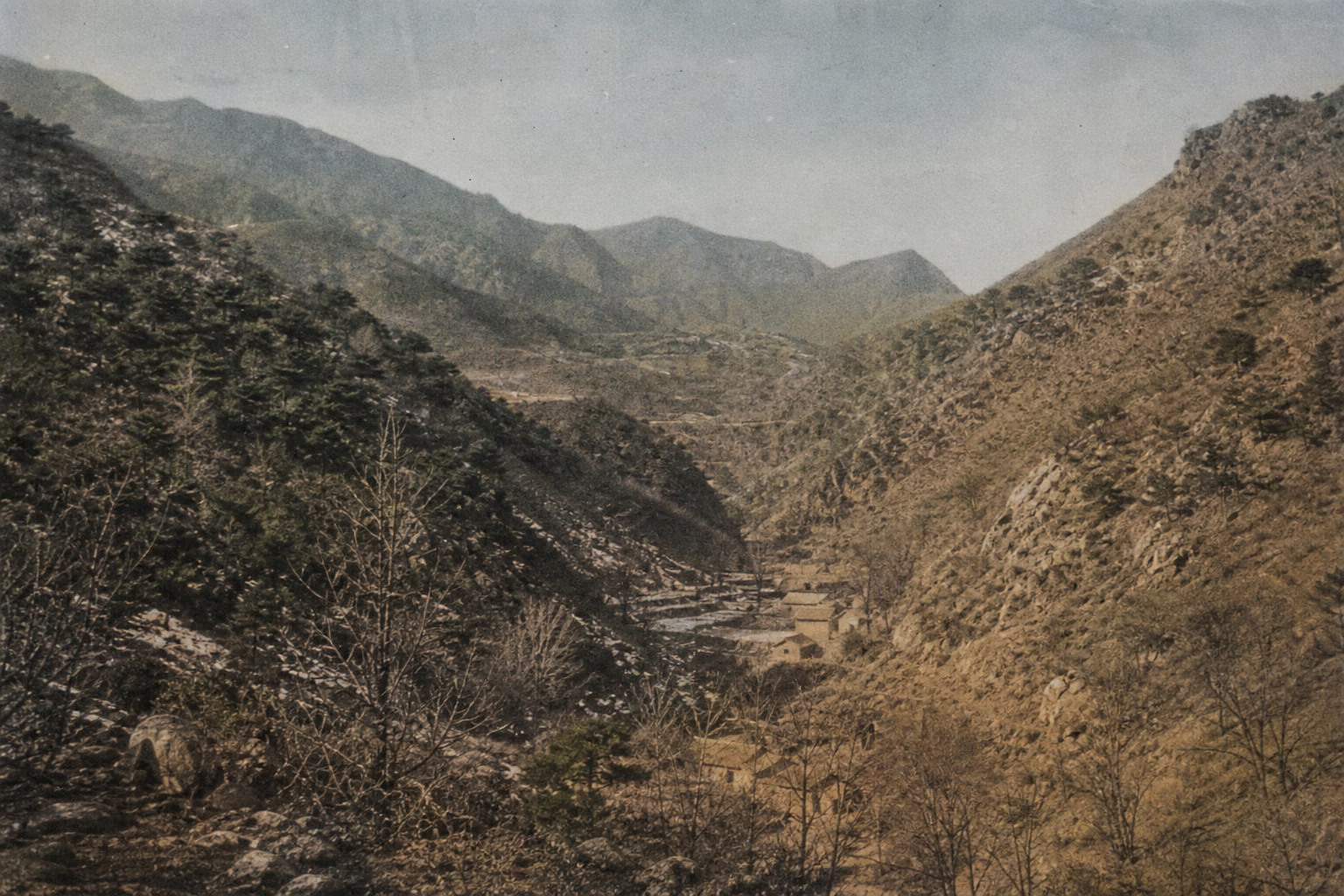
The Laiyuan mountains were the gateway to the Beiyue area of Jinchaji, and the winter 1939 "mopping-up" campaign was opening there; at Yansuxiya, one part of the force had first been annihilated, and Abe personally led the main force in to seek annihilation and revenge -- the commander entered the mountains with anger, and this was exploited by his opponent.
Why It Was Fought
The campaign in northern Hunan ended in mid-October, and the Japanese forces withdrew to the north bank of the Xinqiang River; on the front-line battlefield, that autumn ended with congratulatory telegrams. In the same autumn and winter, North China was a different kind of war: no front line, no large campaign, and Japanese "mopping-up" operations against base areas behind enemy lines once each year, with the onset of winter as their usual season (for the annual rhythm, see also *Counter-"Mopping-Up" Operations*). In the winter of 1939, Jinchaji bore the first impact, and the Laiyuan-Yixian mountain area was the gateway to the Beiyue area -- if the "mopping-up" operation was to enter the mountains, this was the necessary mouth.
Both sides had scripts ready to hand. The Independent Mixed Second Brigade of the Japanese forces entered the mountains along several routes, intending to seek out and annihilate the main force of Yang Chengwu's First Military Subdistrict; the Eighth Route Army's response was the old method of war behind enemy lines -- lure the enemy deep into the mountains, cut off the return route, and pick one isolated route to eat up inside a gorge. Which side could follow its own script depended on what mistake the opponent made first.
On November 3, the Tsujimura punitive column reached the Yansuxiya gorge, entered an ambush, and more than 500 men were annihilated in the gorge. This should have been the warning that made the "mopping-up" operation stop; instead, it became the fuse for the next battle: brigade commander Lieutenant General Abe Norihide personally led more than 1,500 men into the mountains for revenge -- the commander entered the mountains with anger, and this was exploited by his opponent.
The real decision had to be made in the days after Yansuxiya. By the normal practice of warfare behind enemy lines, annihilating a battalion was already a rare victory; what should follow was dispersal, transfer, concealment, and rest until this round of "mopping-up" had passed. Staying in place to fight a second battle meant continuing to leave the just-exposed position before the enemy's eyes. Yang Chengwu chose to stay and fight (the timing of the decision and the exchanged telegrams with the military region remain unverified). The judgment supporting that choice was very concrete: the force coming in was an army of revenge, so its route of advance could be predicted, and mountain gorges were the only real capital in the Eighth Route Army's hands.
What he lacked was more numerous than what he had. The subdistrict artillery company had only one 82-mm mortar, with shells counted one by one (the number of shells on hand varies by account); infantry ammunition had to be locally procured from the base area, which could not afford several continuous days of consumption; there were no heavy weapons, assault against fortified positions was impossible, and the only thing that could be done was to lead the opponent into terrain from which he could not get himself out, then end the fight in the shortest possible time. For precisely this reason, from the beginning this battle was designed not to "rout" the enemy, but to eat him up in one mountain gully.
One still more important thing was missing: they did not know whom they were fighting. Inside this column entering the mountains was a lieutenant-general brigade commander, but when the battle opened this was not known to the opponent -- when the shell fell into the isolated courtyard, the men firing the gun only knew that the place looked like a command post (when the Eighth Route Army confirmed that Abe Norihide was in the formation varies by record, unverified). The weight of the result came back several days later from Japanese broadcasts. The legendary quality with which later generations repeatedly told this battle rests precisely on the ignorance of those involved at the time.
No trace of dissent was left on the surface (no record of dissent has been seen; whether there was debate inside the subdistrict over whether to fight again remains unverified).
Fighting while withdrawing, the Eighth Route Army drew this column of revenge deeper toward the gorge between Huangtuling and Zhaitou.
Course of the Engagement
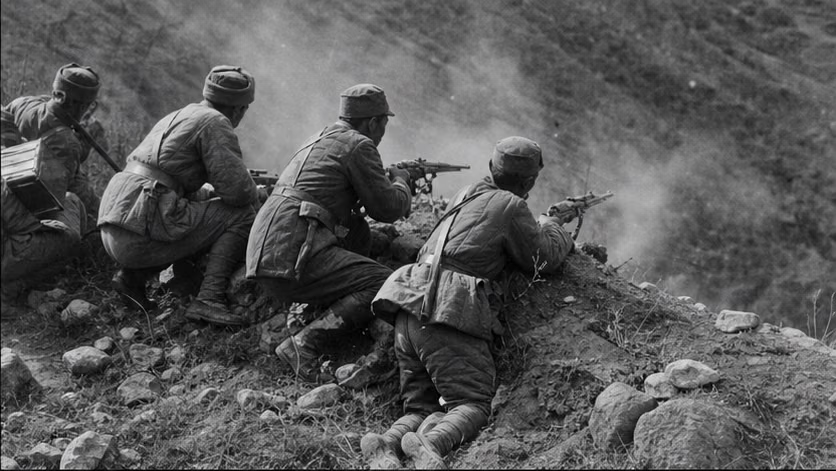
| Phase | Key points |
|---|---|
| Yansuxiya 11.3 | The Tsujimura punitive column entered an ambush, and more than 500 were annihilated in the gorge |
| Luring the enemy 11.4–6 | Abe led 1,500 men deep in pursuit of revenge, while the Eighth Route Army fought while withdrawing and drew them toward the Huangtuling-Zhaitou gorge |
| Encirclement 11.7 | The hills on all four sides struck together, trapping the Japanese forces in the villages at the bottom of the gully |
| One shell, dusk 11.7 | Observation found a group of officers gathered in an isolated courtyard; several mortar rounds from the subdistrict artillery company (company commander Yang Jiuping? details of Chen Zhengxiang's command line remain unverified) hit the target, and Abe Norihide was gravely wounded and died (aged 53, a lieutenant general -- one of the highest-ranking Japanese commanders killed in the war of invasion of China) |
| Breakout | Japanese relief troops and aircraft arrived, and the Eighth Route Army withdrew; the surviving enemy retreated |
Casualties and Losses
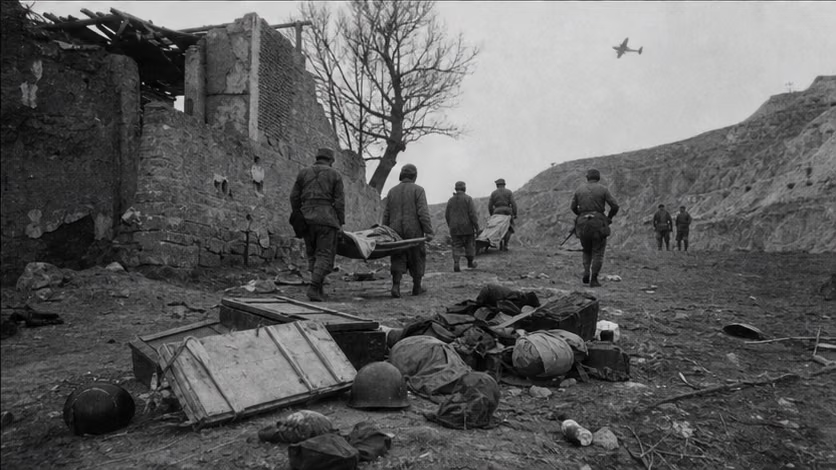
- Japanese forces: approximately 1,400-plus in the two engagements combined (figures vary by statistical basis); Abe Norihide killed -- the *Tokyo Asahi Shimbun* line, "the flower of famous generals withered on the Taihang Mountains" (translation of the headline unverified).
- Eighth Route Army: several hundred casualties (figures vary by statistical basis).
Aftermath
- Japanese forces retaliated with larger winter "mopping-up" operations (see *Counter-"Mopping-Up" Operations*) -- the recurring cost pattern after the killing of a general officer appeared again.
- The mortar that killed Abe is now preserved in the Military Museum (artifact provenance unverified); the battle of the "flower of famous generals" became an origin point in the artillery narrative of warfare behind enemy lines.
Accounts of Those Present
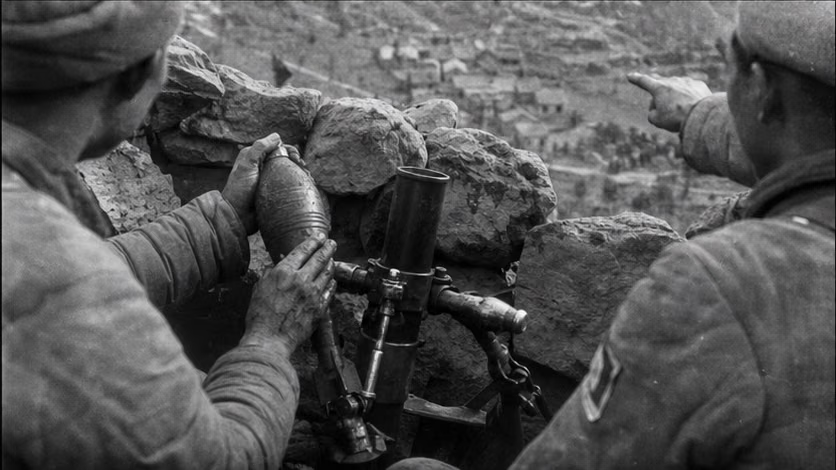
- The men firing the gun: the mortar squad fired 4 rounds by coordinates -- at the time, they only knew they were "hitting a cluster of officers," and several days later they learned from enemy radio broadcasts whom they had hit (participant recollection materials; evidentiary level unverified). The greatest results in war are often achieved anonymously.
- Abe's gloves: Japanese accounts record that after being hit he was still dictating a final telegram (the details of his final moments come from Japanese reporting; evidentiary level unverified).
The Ground
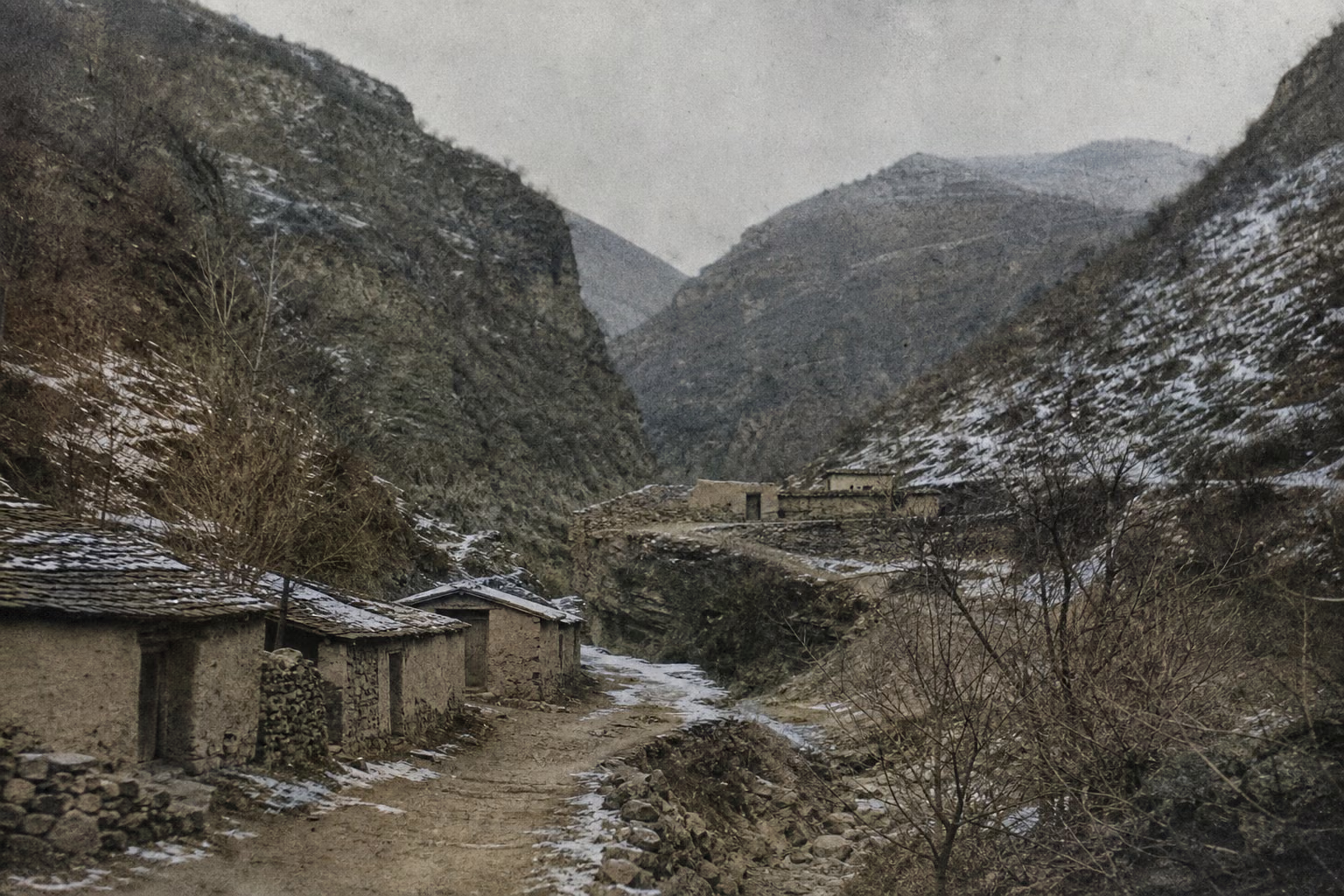
- A three-level focus of gorge-village-isolated courtyard: from the encirclement ring to one small courtyard, the space contracted and ended in the perspective of one gun position.
- "The battlefield of one gun": artillery behind enemy lines, with ammunition counted shell by shell -- every shell was an engagement asset.
How Each Side Records It
- Chinese side: entered the canon (the quotation "the flower of famous generals withered" has been passed down); one of Yang Chengwu's battles of fame.
- Japanese side: the *Asahi* and other papers carried large contemporary mourning reports (original copies can be checked in JACAR / newspaper archives) -- the opponent's obituary is first-hand proof of the result.
Disputes and Sensitivities
- Competing accounts of the mortar crew's affiliation and command details (accounts naming Chen Zhengxiang, Li Erxi, and others) remain unverified; figures for enemy losses in the two engagements vary by statistical basis.
Sources and Open Questions
Sources: *War History of the Eighth Route Army*; Yang Chengwu's memoirs; contemporary Japanese reporting (original copies of the *Asahi Shimbun*, *Mainichi Shimbun*, and others to be checked); Military Museum artifact files.
Open questions: the timing of the decision to fight again after Yansuxiya and the exchanged telegrams with the military region; the number of shells held by the subdistrict artillery company; the time and channel by which the Eighth Route Army confirmed that Abe Norihide was in the formation; whether there was debate inside the subdistrict over whether to fight again; enemy casualty figures; competing accounts of mortar-crew personnel; accounts of Abe's final moments; the original headline text of "flower of famous generals"; provenance of the mortar artifact.
All images on this site are AI-generated depictions. They are not historical photographs, not primary sources, and do not depict any real individual.