Engagement Archive · Defense of Sihang Warehouse
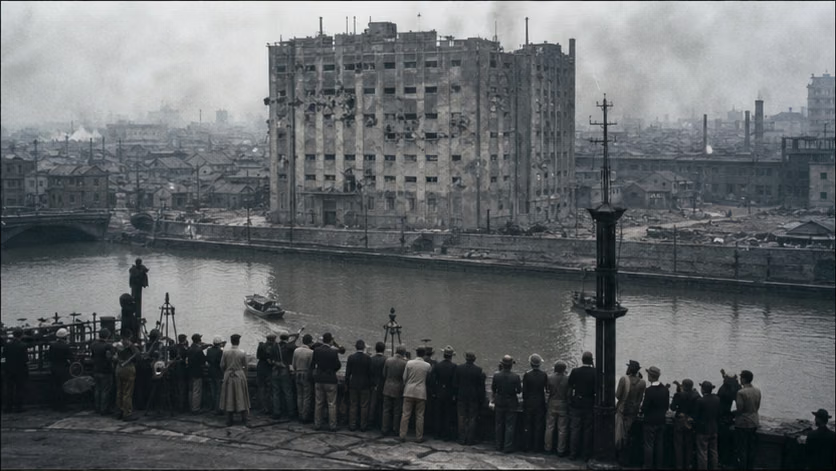
Four hundred and eleven men held one warehouse for six days, while announcing eight hundred to the outside world -- across the Suzhou Creek, a million citizens in the concessions and reporters from around the world watched from the opposite bank. This was a battle consciously fought for the world to see; the soldiers on the stage, however, were truly dying. After the play ended, they were imprisoned for four years, and their regimental commander died under the knives of his own men.
Engagement Data
| Item | Content |
|---|---|
| Time | 1937.10.26 – 11.1 (six days of fighting); detention in the Isolated Battalion Camp, 1937.11 – 1941.12; end line extending to 1946 |
| Place | Sihang Warehouse on the north bank of Suzhou Creek in Zhabei, Shanghai (the joint warehouse of the four banks: Jincheng, Zhongnan, Dalu, and Yanye) -- directly across the creek stood the International Settlement |
| Belongs to | Fourteen-Year War of Resistance · Battle of Shanghai (1937) (for the campaign as a whole, see *Battle of Shanghai (1937) · Campaign Overview*) |
| Defending side | First Battalion, 524th Regiment, Eighty-Eighth (88th) Division (led by regimental executive officer Xie Jinyuan; 411 men, called "Eight Hundred" to the outside world) |
| Attacking side | Part of the Japanese Shanghai Expeditionary Army (troop figures vary by account) -- because it pressed directly against the concessions, heavy artillery and aerial bombs could not be used freely |
| Result | After six days of fighting, the unit was ordered to withdraw into the concessions; it was immediately disarmed by the Shanghai Municipal Council and detained in the "Isolated Battalion Camp" for four years |
Belligerents
| Item | Isolated Battalion | Japanese Forces |
|---|---|---|
| Strength | 411 men (textual check of figures: 410/420 and other accounts are listed side by side; figure disputed) | Several hundred to more than a thousand troops in the immediate attacking force (figure disputed) |
| Fortifications | Reinforced-concrete warehouse, thick walls, and ample ammunition (former site of the Eighty-Eighth (88th) Division headquarters, with its stores still there) | Firepower constrained: the concessions were very near, and gas tanks stood beside them -- heavy weapons had to be used with caution |
| Special Factor | Backed by the "world's grandstand" -- the opposite bank could not be shelled, becoming both the isolated unit's shield and its stage | Subject to the same spatial constraint |
Terrain and Conditions
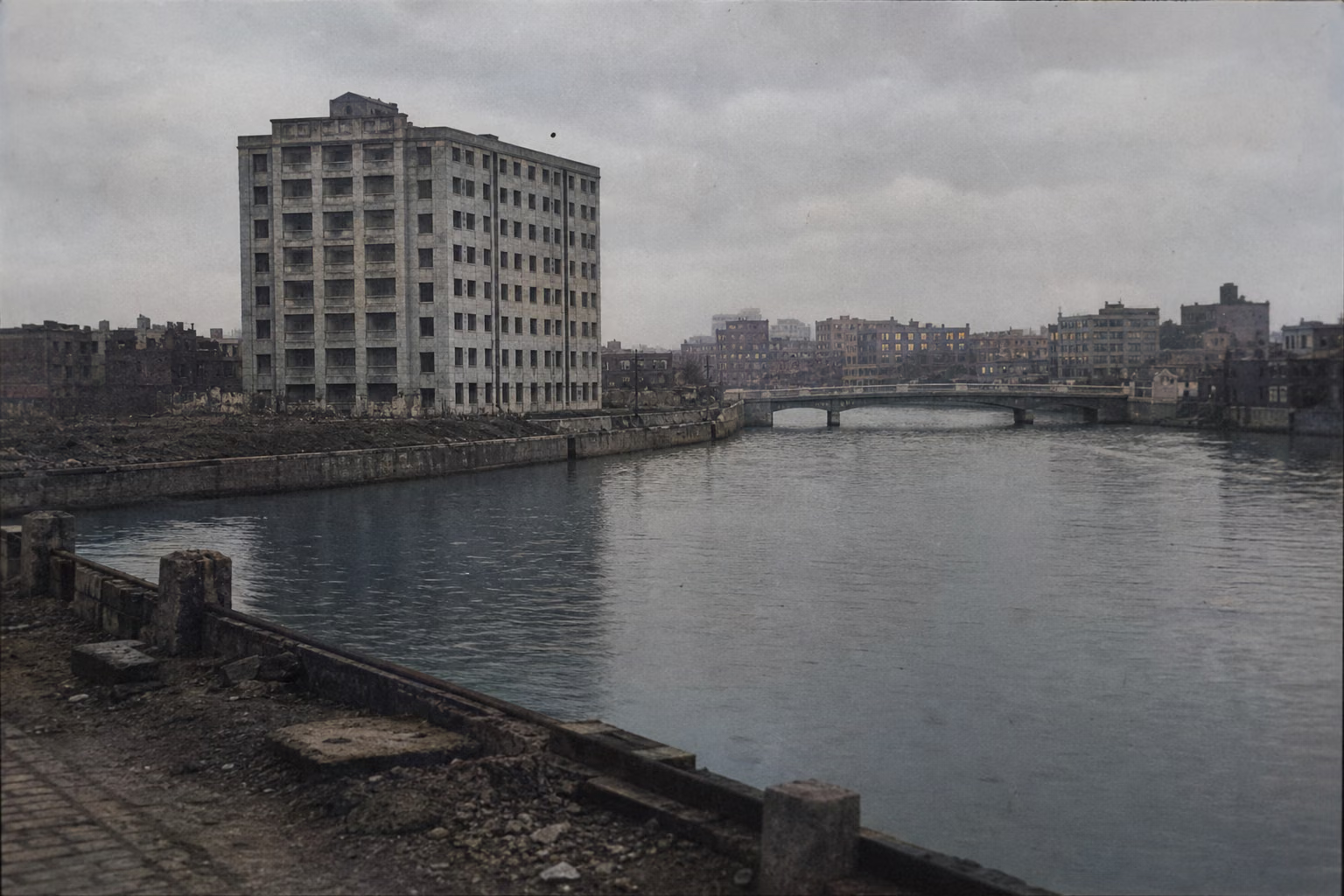
After Dachang fell, the Chinese side withdrew along the whole line south across Suzhou Creek. Sihang Warehouse was the last foothold in Zhabei: the north, west, and east had already fallen, while to the south, across one river, lay the International Settlement just as the neon lights were coming on -- war and peace were set side by side, separated by a single river, a theater-like space rare in the history of war. The motive for leaving a unit here was conscious: the Nine-Power Treaty Conference was about to open, and troops were left to hold to the death "for the sake of international perception" (decision telegrams and command levels remain to be verified) -- the "performative" character was built into this battle from the factory floor and is not evaded here; bullets and death were real, and the two things coexisted without canceling each other out.
Why It Was Fought
The flames at Yangmingbao belonged to the northern line. In the same late October, the Shanghai front collapsed: from the mill of Baoshan and Luodian to Yunzaobang and then Dachang, the Chinese side had filled the line for two months; on October 26, when Dachang fell, the whole line broke, and the army withdrew south across Suzhou Creek. A retreat needed someone to cover the rear. Covering the rear was only the opening; the decision was made one level higher. The determination to hold Zhabei came from the highest level of the supreme command and was passed down layer by layer through the Third War Area (the back-and-forth telegrams and chronology remain to be verified); what was visible when the order was given was the narrow window of the Brussels conference, and what was not visible was how the concession authorities would ultimately treat the isolated unit once it withdrew inside -- the answer would only be revealed on the day they entered.
The 88th Division was ordered to leave one part behind to cover the army's river crossing. How much to leave had been bargained over: the original plan was to leave the whole division to hold Zhabei; division commander Sun Yuanliang argued forcefully that his troops had suffered too heavily, and the commitment was reduced layer by layer until finally one battalion was used for the task (the originally planned formation and the process of reduction appear only in the memoir layer, unverified) -- regimental executive officer Xie Jinyuan and battalion commander Yang Ruifu led the First Battalion, 524th Regiment into the warehouse: four hundred and eleven men, called eight hundred to the outside world, an inflated number both to strengthen morale and to mislead the enemy.
The site had been chosen with great precision. Sihang Warehouse was the last foothold in Zhabei, the former site of the Eighty-Eighth (88th) Division headquarters: reinforced concrete, thick walls, and ample ammunition. More important, directly south across one river lay the International Settlement -- with gas tanks beside it, Japanese heavy artillery and aerial bombs had to be used with caution, and the isolated unit in effect had its back against a wall the opponent dared not shoot through. That wall was also a grandstand: across the creek stood a million citizens and reporters from many countries. The isolated unit had another asset: the warehouse held ammunition, food, and water left by divisional headquarters, enough for four hundred men to hold out for several days without difficulty (records of the quantity of stores remain to be verified). What truly set the limit for the defense was not warehouse capacity but the opposite bank -- the contest between the concession authorities' tolerance and Japanese pressure.
The motive for leaving troops here was conscious. Militarily, the task of covering the main force across the creek was completed within several hours; the next five days of defense were fought for morale and international attention. The Nine-Power Treaty Conference was scheduled to open in Brussels on November 3 (the conference date is an accepted historical fact); "for the sake of international perception," the supreme command wanted the world to see that Shanghai was still resisting (decision telegrams and command levels remain to be verified). The balance between rear-guard duty and display is discussed in the disputes section; both things stand at once: this battle was consciously fought for the world to see, and the deaths on the stage were also real. No record of dissent over the order to "leave troops to hold to the death" has been found on the surface (no dissenting record found); dissent appeared at the end: when the withdrawal order arrived, Xie Jinyuan's own wish was to live or die with the warehouse, but he obeyed the order and acted (his diary remains to be verified). The withdrawal was ordered because international perception had been judged sufficient and because there was fear the fighting would spread into the concessions; as for whether the command anticipated that the concessions would disarm the isolated unit, the records are unclear (unverified).
On the night of October 26, the men of the battalion entered the warehouse in the dark and sealed the windows with sandbags. After daybreak, people began gathering on the opposite bank.
Course of the Engagement
| Stage | Time | Key Points |
|---|---|---|
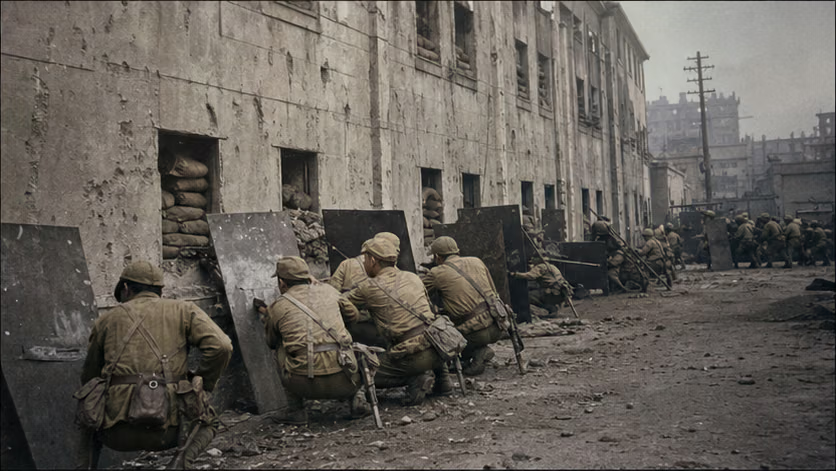
| Entry | Night of 10.26 to morning of 10.27 | The battalion entered the warehouse, built firing ports, and sealed windows with sandbags; stragglers were taken in, and the count came to 411 men |
| First day's fighting | 10.27 | A probing Japanese attack was beaten back; citizens on the opposite bank began gathering to watch |
| Chen Shusheng | 10.28 | Japanese forces used steel plates to cover demolition work at the base of the wall; soldier Chen Shusheng bound grenades to his body and leapt from a window to die together with the enemy (his final words, "To sacrifice one's life for righteousness is what your son wishes," were written on an undershirt; level unverified) |
| Delivering the flag | 10.28–29 | Girl Scout Yang Huimin delivered the national flag into the warehouse, and it was raised on the roof in the morning -- cheers rolled across the opposite bank; (the popular account of swimming across Suzhou Creek and the textual check that she "moved secretly by bridge" are listed side by side, with level marked); headlines appeared in newspapers of many countries |
| Continued fighting | 10.29–31 | Several Japanese attacks were all repulsed; the isolated unit killed from several dozen to two hundred enemy troops (two sets of figures listed side by side; figure disputed); citizens across the creek reported enemy movements on blackboards and threw supplies across (details unrecorded) |
| Ordered withdrawal | Night of 10.31 to 11.1 | The supreme command judged that international perception had become sufficient and feared danger to the concessions, so it ordered withdrawal; the isolated unit crossed the bridge under fire into the concessions -- Xie Jinyuan's own wish had been to hold to the death, but he obeyed the order and acted (his diary remains to be verified) |
Aftermath
- Four years in the Isolated Battalion Camp (1937.11–1941.12): under Japanese pressure, the Shanghai Municipal Council disarmed the isolated unit and detained it on open ground on Jiaozhou Road -- called a guest force in name, prisoners in fact. During those four years the isolated unit continued drilling, flag-raising (the casualties and course of the 1938.8 flag-raising clash remain to be verified), and self-support through production -- six days of fighting, four years in prison; that proportion is the true structure of this article.
- The death of Xie Jinyuan (1941.4.24): four mutinous soldiers bought off by the Wang Jingwei puppet regime assassinated him on the drill ground, age thirty-seven -- he had held off Japanese attacks, but did not evade the knives of his own men. More than two hundred thousand people in Shanghai attended his funeral (figures vary by account).
- Scattered but not extinguished (1941.12–1945): after Pearl Harbor, Japanese forces occupied the concessions; the isolated unit was captured and sent to forced labor in different places -- Laohuqiao in Nanjing, Hangzhou, and Papua New Guinea in the South Seas (thirty-six men were sent to New Guinea; the number of survivors is disputed). Some who escaped returned to their units and fought again; others made their way home. In 1946, more than a hundred survivors returned to Shanghai (figures vary by account).
Casualties and Losses
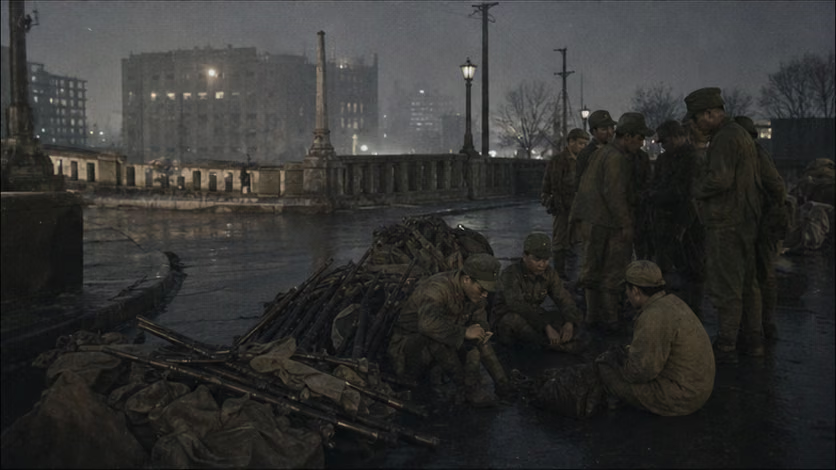
- Isolated Battalion: in the six days of fighting, nine were killed and more than twenty wounded (figures vary by account) -- the contrast between light casualties and enormous influence is recorded together; in the subsequent four years of detention and prisoner-of-war life, more men died than in the fighting (number disputed).
- Japanese forces: several dozen to two hundred killed or wounded (two sets of figures).
- During the fighting, stray rounds in the concessions killed and wounded civilians (record unverified)※.
Aftermath
- The "Eight Hundred Heroes" immediately became a symbol of national mobilization: the song *Song of the Eight Hundred Heroes* ("China will not perish") spread widely; international reporting fixed the final scene of Shanghai as resistance rather than rout -- the chaos of the great retreat was hidden by the light of a single warehouse, the relation between propaganda effect and the full historical picture.
- After his death, Xie Jinyuan was enshrined; Shanghai has Jinyuan Road and Jinyuan High School. In 2015, Sihang Warehouse was opened as a memorial hall, with the bullet-scarred wall preserved.
- The films *Eight Hundred Heroes* (1938, 1975) and *The Eight Hundred* (2020) -- each age filmed its own "Eight Hundred"; this is a brief entry in the screen history of contemporary memory.
Accounts of Those Present
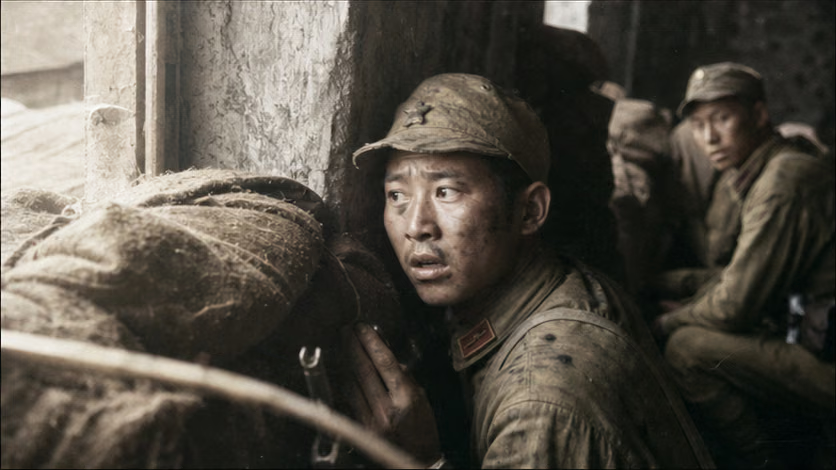
- 411 and 800: the inflated troop figure was part of psychological warfare -- two versions of one number, living separately in military history and commemorative history.
- Chen Shusheng's undershirt: his last words were written on clothing next to the body -- he knew there would be no remains, so the words had to remain on himself.
- The spectators across the creek: citizens used blackboards to report Japanese movements and threw bread and cigarettes across the creek -- the audience for the first time became participants in the battle; "a death struggle under watch" is this article's distinctive narrative mechanism.
- Yang Huimin's flag: the meaning of delivering the flag lay in the morning when it was raised -- textual verification (how it was brought in) and meaning (why ten thousand people wept) belong to two separate layers, and both are needed.
- Xie Jinyuan's drill ground: during the four years of detention, the unit drilled and raised the flag every day -- turning a prison ground into a barracks was the extra period of the six-day battle; the man who assassinated him was a subordinate who lived with him day and night. No comment is added to this matter.
The Ground
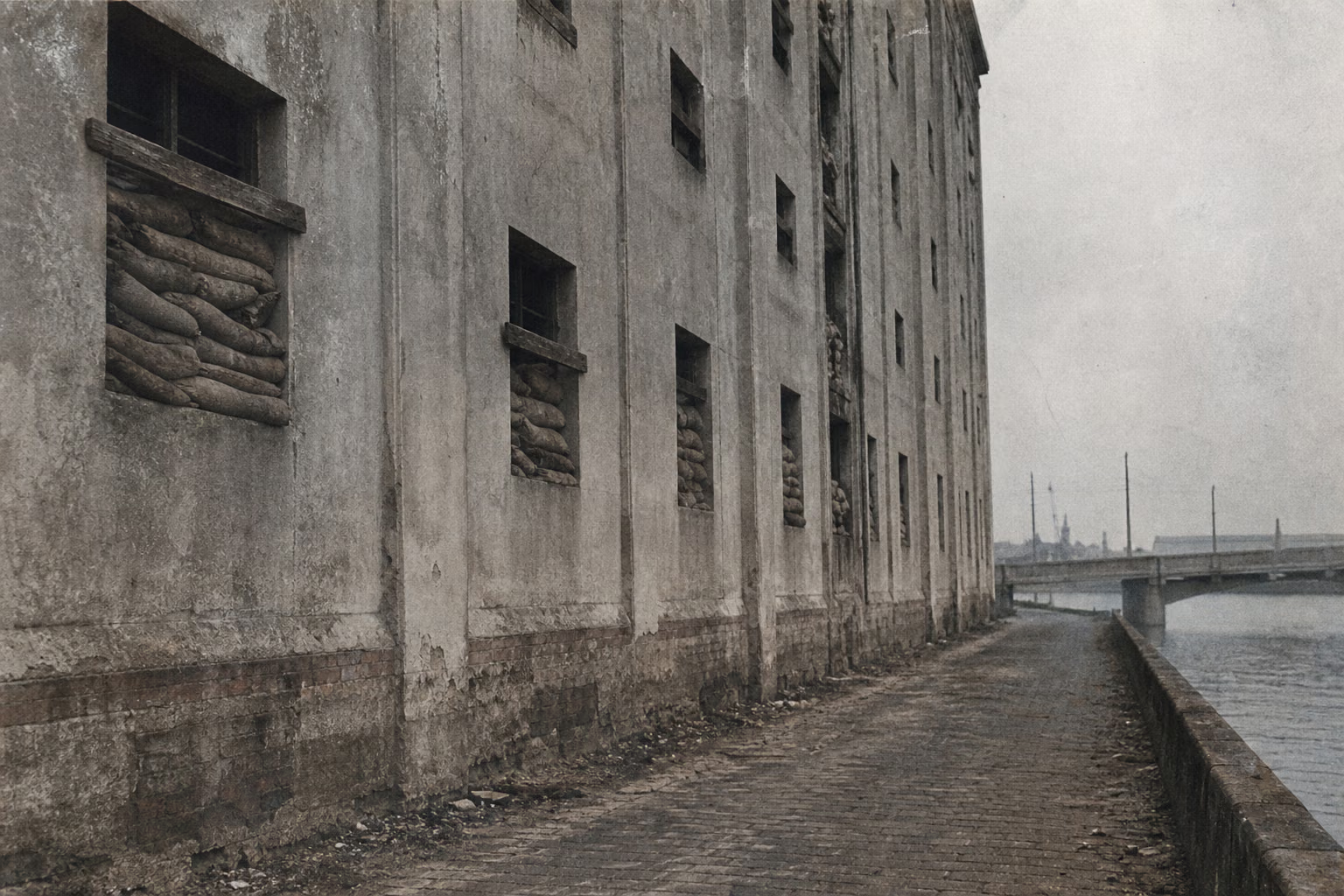
- A war in one building: a six-story warehouse, thick walls, small windows, streets on four sides and the creek on one -- a micro-spatial lesson in vertical defense, field-of-fire management, and sealing demolition points.
- Suzhou Creek: one river separating two jurisdictions -- firepower exclusion zone, audience seating, and route of withdrawal in one; the spatial tension of "being able to see safety but unable to return to it."
- Garbage Bridge (Tibet Road Bridge): the fire-swept route of withdrawal on the night of 11.1 -- a bridge of only several dozen meters, walked from battlefield into cage.
- The rooftop flagpole: the focus of all Shanghai's gaze -- one spatial point gathered the whole symbol.
How Each Side Records It
- Chinese side: one of the highest symbols in War of Resistance commemoration. Narrative change: the Isolated Battalion Camp and Xie Jinyuan's death long receded from view and have been filled in again in recent years; the dispute over historical fact and adaptation triggered by *The Eight Hundred* is the latest round of public discussion.
- Japanese side: its war histories give it very little ink -- a battle globally famous for the other side and almost unremembered by itself (a memory asymmetry structurally similar to Sanyuanli, appearing again after a hundred years).
- International: Western press archives from the time are abundant (*The North-China Daily News*, *The New York Times*, etc., to be compiled) -- "resistance livestreamed to the whole world" is its place in world history.
Disputes and Sensitivities
- Decision motive (the balance between military rear-guard action and international display) -- conscious staginess and soldiers' real deaths coexist.
- Numbers (411/420/800), enemy losses inflicted, the method of delivering the flag, and casualties in the flag-raising clash -- statistical basis and level are marked item by item.
- Presentation of the four years in the Isolated Battalion Camp and the end line: the tragedy is not blamed on one side alone (the concessions, the Japanese side, the Wang Jingwei puppet regime, and the supreme command each bear responsibility), and the account is kept layer by layer.
- The adaptation dispute over *The Eight Hundred* is noted briefly, not treated as a film review.
Sources and Open Questions
Sources: *Collected Historical Materials on the Eight Hundred Heroes* (bibliographic details unverified); Xie Jinyuan's diary and family letters; Yang Ruifu's *Four-Day Record of the Isolated Battalion's Struggle*; Shanghai Sihang Warehouse Battle Memorial; collected reports from Chinese and foreign newspapers of the time.
Open questions: the various figures for troop strength; the level of Chen Shusheng's last words; textual verification of the flag delivery; enemy losses inflicted; the flag-raising clash; funeral attendance; the New Guinea prisoner-of-war line; the number of survivors who returned to Shanghai.
All images on this site are AI-generated depictions. They are not historical photographs, not primary sources, and do not depict any real individual.