Engagement Archive · First Battle of Changsha (1939)
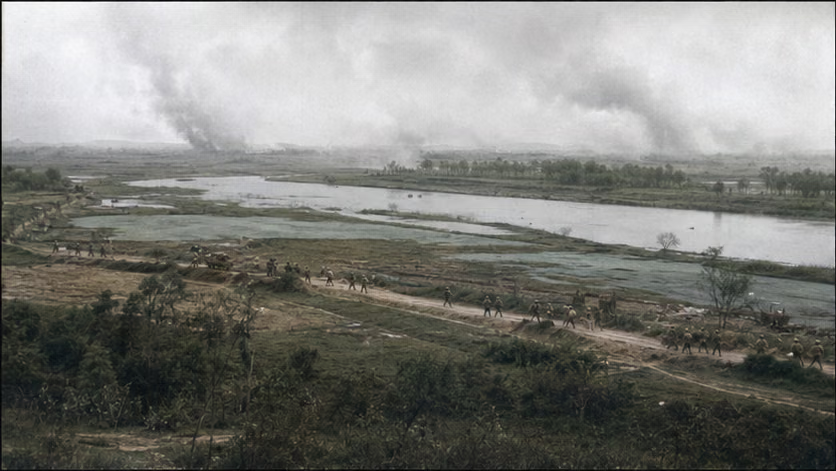
Roughly 100,000 Japanese troops drove on Changsha along three routes; Xue Yue used the Xinqiang River-Miluo River-Laodao River water lines for successive resistance, destroyed roads, and stripped the countryside of usable supplies. Japanese forces reached Changsha's outskirts but could neither take the city nor hold their position, and withdrew on their own: the Chinese side proclaimed the "Great Victory of Northern Hunan," the Japanese side called it "completion of the objective," and another campaign was won by both sides. This was the beginning of Changsha's three defenses.
Engagement Data
| Item | Content |
|---|---|
| Time | 1939.9.14 - mid-October (dates vary by account) |
| Location | Northern Hunan: Xinqiang River-Miluo River-Laodao River-Changsha outskirts; with additional diversionary battlefields in northern Jiangxi and southern Hubei |
| Part of | Fourteen-Year War of Resistance · stalemate-phase campaign (the first of Changsha's three defenses) |
| Chinese side | Ninth War Area (commander-in-chief Chen Cheng; acting commander-in-chief Xue Yue; details of the command relationship unrecorded), with Guan Linzheng's 15th Army Group and other units as the main force on the northern Hunan front |
| Japanese side | Eleventh Army (commander Okamura Yasuji), roughly 100,000 men, including the Sixth, Thirty-Third, 101st, and 106th Divisions and other units (order of battle unverified) |
| Result | Japanese forces halted their offensive in late September and withdrew in early October, restoring the original situation; the Chinese side announced the "Great Victory of Northern Hunan" |
Belligerents
| Item | Chinese Side | Japanese Side |
|---|---|---|
| Strength | The Ninth War Area had roughly several hundred thousand men across Hunan, Hubei, and Jiangxi (basis varies by account), deployed by successive lines and in depth | Roughly 100,000 men, divided into three routes (northern Jiangxi, southern Hubei, northern Hunan), with northern Hunan as the main attack |
| Firepower | Artillery was weak, but terrain and water lines were used to delay layer by layer | Divisional artillery + aviation + naval landing forces in cooperation (on the Xiang River) |
| Use of terrain | Successive resistance along water lines + thorough road destruction + scorched-earth denial | Mechanized units were constrained by destroyed roads and river networks |
| Supply | Fighting on interior lines, relying on the rear | Supply lines lengthened with the advance and were repeatedly cut by Chinese flank attacks |
Terrain and Conditions
(For the larger situation in 1939 -- the outbreak of the European war in September, and Japan's adjustment of China policy after its setback at Nomonhan -- see *Fourteen-Year War of Resistance · War Overview*; here only northern Hunan and Changsha are treated.)
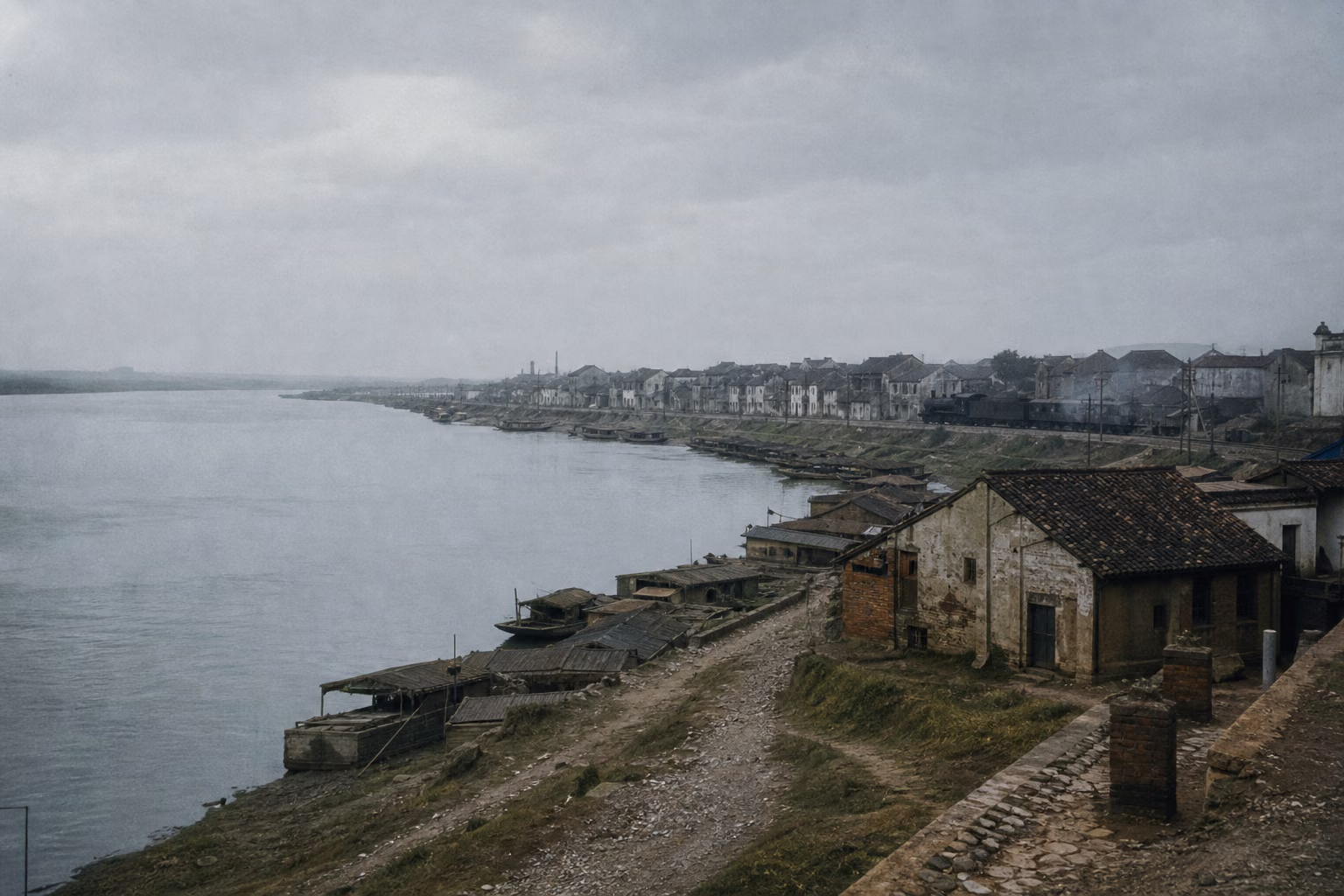
Northern Hunan situation: After the Battle of Wuhan (1938), the Ninth War Area held Hunan and Jiangxi and had faced the Japanese Eleventh Army for nearly a year. Changsha was the capital of Hunan Province, crossed lengthwise by the Yuehan Railway, and the gate through which Japanese forces had to pass if they moved south. From north to south across northern Hunan lay three water lines, the Xinqiang River, the Miluo River, and the Laodao River, a natural ladder for resistance in succession.
The city: Before the war, Changsha was a major city and rice-market port in south-central China. After this battle it faced Japanese forces twice more (the Second Battle of Changsha in 1941, and the Third Battle of Changsha in 1941-42), until it fell in 1944 amid the collapse in the Battle of Henan-Hunan-Guangxi. The "three defenses of Changsha" began here.
Why It Was Fought
After the pincer offensive at Suizhou-Zaoyang came up empty before the mountains, Okamura Yasuji's Eleventh Army returned to its original defenses. In half a year, this army had fought two battles around Wuhan: at Nanchang it had pulled out a thorn; at Suizhou-Zaoyang it had struck empty air. But the largest opponent directly south of Wuhan had not moved: several hundred thousand men of the Ninth War Area held Hunan and Jiangxi, facing it across the Xinqiang River for nearly a year.
By September 1939, the reasons to move had converged. On 1 September, war broke out in Europe, and the attention of Britain and France drew back to their own territory; the international intervention on which Chongqing most relied suddenly seemed farther away. In the same month, the guns at Nomonhan fell silent. Japanese forces, having lost to the Soviet Army in the north, needed even more to regain weight on the China battlefield. What Okamura wanted was not a city, but the main force of the Ninth War Area: roughly 100,000 men divided into three routes, with northern Jiangxi and southern Hubei as diversions and northern Hunan as the main attack, to destroy the Chinese army opposite in northern Hunan and shake Chongqing's will to resist. As soon as the Nomonhan ceasefire was signed, the Eleventh Army drafted a northern Hunan operational plan (plan text and date unverified). Okamura's confidence rested on his assessment of the Ninth War Area's fighting capacity, accumulated over a year of attacking Nanchang and fighting Suizhou-Zaoyang; the intelligence he lacked lay beneath the road surface -- how badly the roads of northern Hunan would be dug up, and what could still be requisitioned locally after scorched-earth denial, would only be known once the battle began. Changsha was a necessary target in this calculation: the capital of Hunan Province, with the Yuehan Railway running through it. Take it, and the Hunan-Jiangxi corridor would lie open.
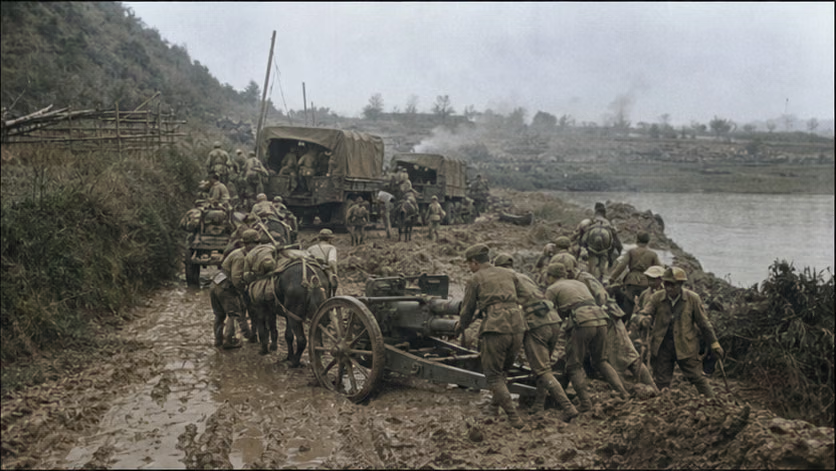
The calculation of Xue Yue, acting commander-in-chief of the Ninth War Area, ran in the opposite direction. From north to south across northern Hunan lay three water lines, the Xinqiang River, the Miluo River, and the Laodao River, a natural ladder for resistance in succession. He would not hold the Xinqiang River to the death, but instead wear the enemy down along each water line: roads would be dug up completely, grain hidden away, and people evacuated, so that Japanese trucks and heavy guns had to crawl over roadbeds turned into ridges between fields, while the opponent would be allowed to reach the space between the Laodao River and Changsha before being struck. The method later named the "Heavenly Furnace tactics" took embryonic form in this battle; the formal shaping of its name and system would have to wait until the Third Battle of Changsha. The material boundary on the Chinese side was just as hard: pay and ammunition for several hundred thousand men were not ample, and once road destruction began, even their own heavy equipment had to be carried back by human labor. To hide all grain and strip the countryside was to burn away a layer of the war area's own requisition base before fighting the battle (supply details for both sides unverified).
Each side had miscalculations. Okamura did not expect road destruction and scorched-earth denial to bind mechanized forces to this degree: the farther the supply lines stretched, the more often they were hit from the flank, and by the time the spearhead saw the outskirts of Changsha, food and ammunition were already insufficient. Japanese military history left technical records of this lesson (original text unverified). Inside the Chinese side, meanwhile, Changsha itself was not a settled question. Chongqing at one point considered abandoning Changsha. Those who advocated withdrawal wanted to preserve the capital assets of the army: after the Battle of Wuhan (1938), every war area was refitting, and to stake the Ninth War Area's main force around Changsha on a decisive battle meant that if the gamble was lost, all of Hunan and Jiangxi would be lost. Xue Yue insisted on fighting. After several rounds of telegrams back and forth, Chongqing yielded (wording of the telegrams unverified). On the Japanese side, there are accounts of dispute within the Eleventh Army over whether to continue the attack after the spearhead reached the Laodao River (records unverified). In the end, the arithmetic of supply overrode the spirit for assaulting the city.
On 14 September, Japanese forces on each route began moving in succession. The diversionary battles in northern Jiangxi and southern Hubei opened, and the main attacking corps in northern Hunan pressed toward the Xinqiang River.
Course of the Engagement
| Stage | Time | Key Points |
|---|---|---|
| Three-route advance | From 9.14 | Japanese forces used the northern Jiangxi and southern Hubei routes as diversions, with northern Hunan as the main direction of attack (route designations unverified) |
| Xinqiang River | Mid-to-late September | Guan Linzheng's 15th Army Group and other units resisted along the river, then withdrew according to the prearranged plan |
| Miluo River | Late September | Resistance on the second water line; the Chinese side destroyed roads thoroughly, making movement difficult for Japanese mechanized columns |
| Laodao River-Changsha outskirts | Late September | Japanese spearheads reached the Laodao River and the outskirts of Changsha, but their supply lines were repeatedly hit from the flank and cut, leaving food and ammunition insufficient |
| Withdrawal | Late September-early October | Japanese forces ordered the offensive halted and withdrew to their original line (the order date varies by account); the Chinese side followed up, restoring the original situation |
Casualties and Losses
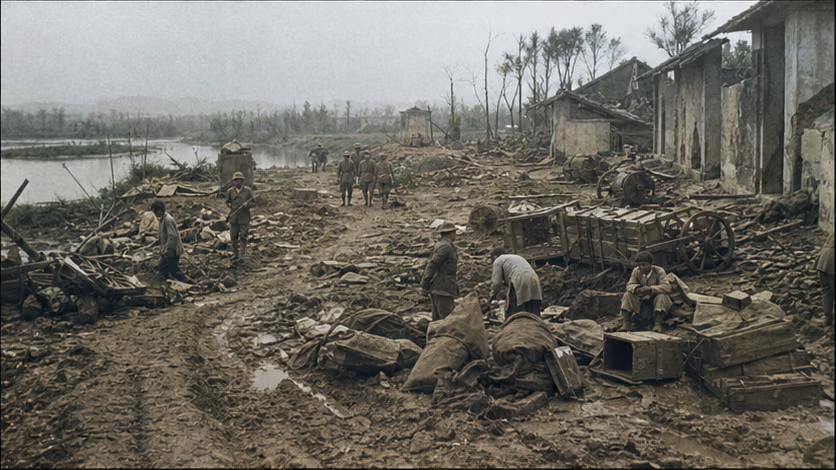
- Japanese side: Chinese battle reports claimed thirty to forty thousand Japanese killed and wounded; the Japanese side self-reported several thousand casualties (the two figures are listed side by side, with each side's statistical boundary unverified).
- Chinese side: casualties were likewise on the order of several tens of thousands (self-reported basis varies by account), higher than the Japanese self-reported figure. Successive resistance traded space for attrition, and the attrition consumed the defender as well.
- Civilians: Road destruction and scorched-earth denial were themselves a deprivation imposed on the people of northern Hunan; records of Japanese burning and killing along the offensive routes are scattered (details unrecorded).
Aftermath
- The Chinese side announced the "Great Victory of Northern Hunan," and congratulations on the victory spread across the country -- exactly the kind of news morale needed most in the stalemate phase. The Japanese side stated that its operational objective had been achieved and that it had shifted by initiative. Another campaign won by both sides, of the same type as the Battle of Suizhou-Zaoyang.
- "Changsha held" became from this point a spiritual symbol of the frontal battlefield, and two more battles followed in 1941 and 1941-42 (see *Second Battle of Changsha (1941)* and *Third Battle of Changsha (1941-42)*).
- The method of "withdrawing for a decisive battle," successive resistance along water lines + road destruction and scorched-earth denial, first took embryonic form in this battle; the formal shaping of the name and system of the "Heavenly Furnace tactics" occurred in the Third Battle of Changsha (time when the name appeared unverified).
- In this battle, the Japanese Eleventh Army realized that without confidence in annihilating the Chinese main force, a deep thrust into northern Hunan meant trapping itself in a supply dead end. This lesson directly influenced later designs for attacks on Changsha.
Accounts of Those Present
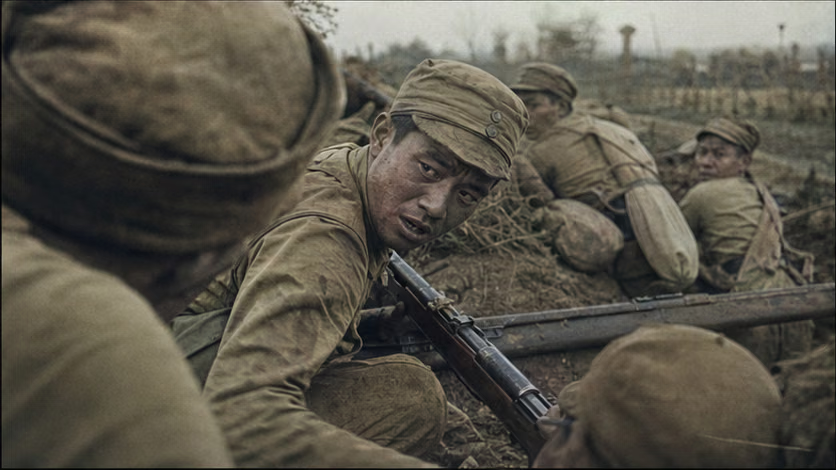
- Xue Yue's resolve: Chongqing at one point considered abandoning Changsha, but Xue Yue insisted on fighting (wording of the telegrams unverified). Whether or not to defend Changsha was itself one of the most important decisions in this battle.
- Road destruction: The roads of northern Hunan were dug up completely, their surfaces turned into ridges between fields. Japanese trucks and heavy guns could not crawl into Changsha. The method was crude, but it worked.
- Scorched-earth denial: The common people hid all grain and left the villages empty, so Japanese "local requisition" came up empty. The four characters for scorched-earth denial, written in military history, are tactics; written in a village, they mean the breaking of food supply.
- The halt by the Laodao River: The Japanese spearhead had already seen Changsha, but behind it the supply lines were being hit everywhere, and food and ammunition at the front were nearly exhausted. It could not advance, so it had to retreat.
The Ground
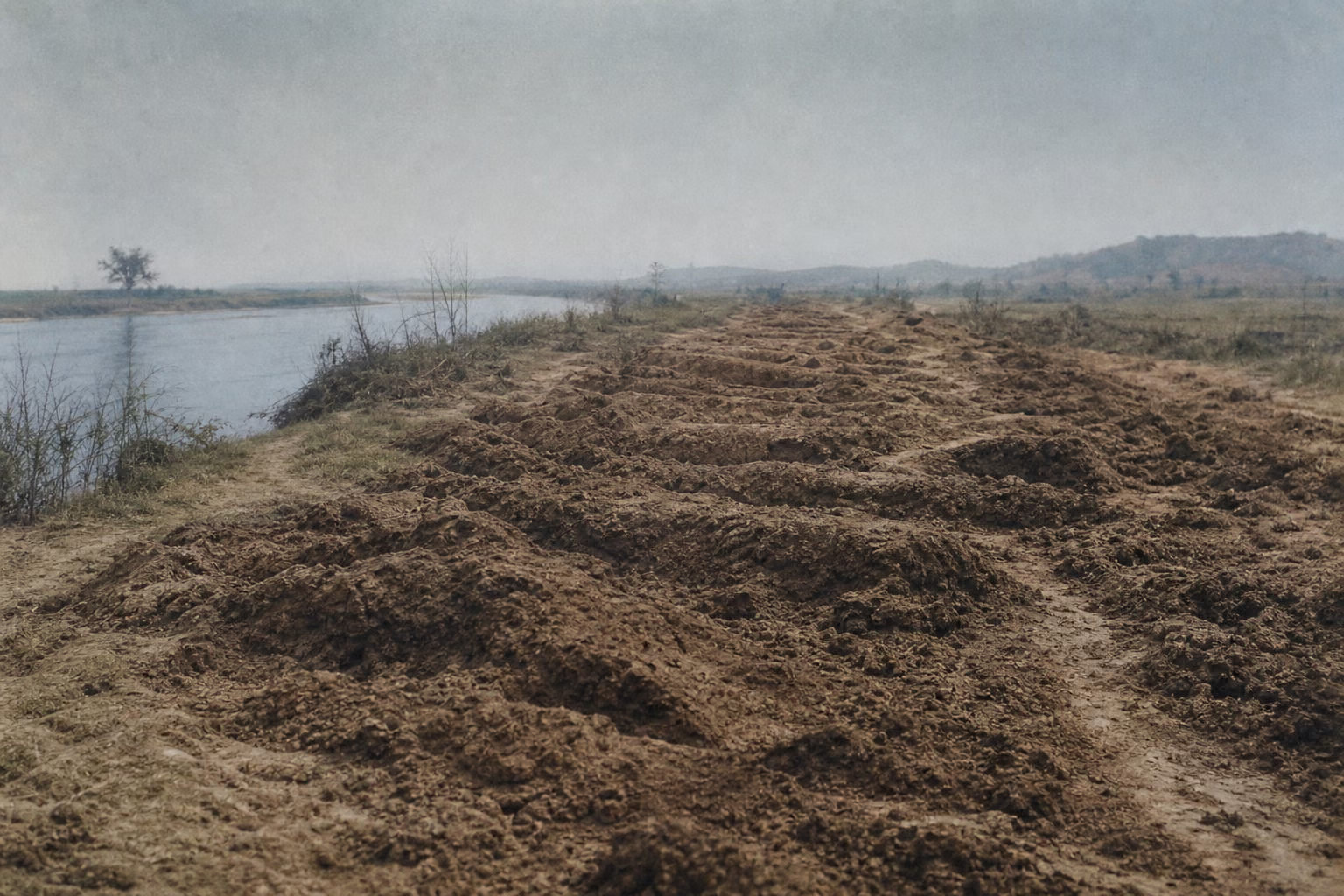
- Three water lines ran from north to south: the Xinqiang River, the Miluo River, and the Laodao River. Every river crossed lengthened the Japanese supply line by another section and shortened the Chinese depth by another section.
- Changsha was the endpoint but not the meat grinder: in this battle the city walls were not breached, and the struggle took place entirely along the outer water lines and roads.
- The destroyed road network was itself "terrain": an asymmetrical space made by human labor.
- Japanese forces had boat support on the Xiang River, while the Chinese side had flank-attack positions in the hills on the east bank. The land and water axes ran in parallel.
How Each Side Records It
- Chinese side: records it as the "Great Victory of Northern Hunan" or the "First Great Victory of Changsha"; congratulatory telegrams and propaganda were overwhelming (specific proclamations unverified). Xue Yue's reputation rose from this point.
- Japanese side: military history records the objective as striking the Ninth War Area, followed by a shift after "completion of the objective"; it also contains technical records of supply failure and harassment by flank attacks (original text unverified).
- Two victories side by side: the Chinese side won because "Japanese forces failed to take Changsha"; the Japanese side won because "we had not intended to hold it for long, and withdrew when we chose." This article still lists the two accounts side by side, as a dual victory narrative of the same type as the Battle of Suizhou-Zaoyang.
Disputes and Sensitivities
- "Driven back" or "shifted by initiative": Chinese and Japanese narratives are fundamentally opposed on how to characterize the Japanese withdrawal. Japanese records of the supply predicament are the key to interpretation, pending document-by-document checking.
- The attribution and timing of the "Heavenly Furnace tactics": the tactical embryo was present in this battle, while the name and systematic expression are more often said to belong to the Third Battle of Changsha. Xue Yue's own place in the two narratives has long been disputed.
- The gap between Chinese battle-report figures for Japanese killed and wounded and Japanese self-reported figures reaches several-fold to tenfold.
- The distance between victory propaganda and the actual battle situation was a point of discussion both at the time and later.
Sources and Open Questions
Known main sources:
- Detailed battle reports of the Ninth War Area and congratulatory telegrams (file numbers unverified)
- Relevant volumes of *Senshi Sosho* by the War History Office of Japan's Defense Agency (Japanese official history, volume titles unverified)
- Memoir materials by Xue Yue and related generals (specific titles unverified)
Open questions: the complete order of battle and strength basis of the Japanese participating divisions; the Chinese defensive order of battle; the start and end dates of the three-route offensive; the exact date and wording of the Japanese order to withdraw; the original sources and statistical boundaries for both sides' casualty figures; telegrams between Chongqing and the front concerning the proposal to "abandon Changsha"; the earliest date when the name "Heavenly Furnace tactics" appeared; records of the specific scope of road destruction and scorched-earth denial; text and drafting date of the Eleventh Army's northern Hunan operational plan; Okamura Yasuji's assessment materials on the fighting capacity of the Ninth War Area; supply details for both sides; records of internal dispute over whether Japanese forces should continue the attack after reaching the Laodao River.
All images on this site are AI-generated depictions. They are not historical photographs, not primary sources, and do not depict any real individual.