War Overview · Sino-Soviet Border Conflict (1969)
"Comrades plus brothers" split to the end into live fire between two nuclear powers along a border of more than seven thousand kilometers: Zhenbao Island in March, Tielieketi in August, then rumors of nuclear strikes and a nationwide call to dig deep shelters; this conflict, which never became a full war, pinned more than a million Soviet troops to China's northern frontier for nearly twenty years, and also pushed China toward the door that led to a handshake with the United States.
Engagement Data
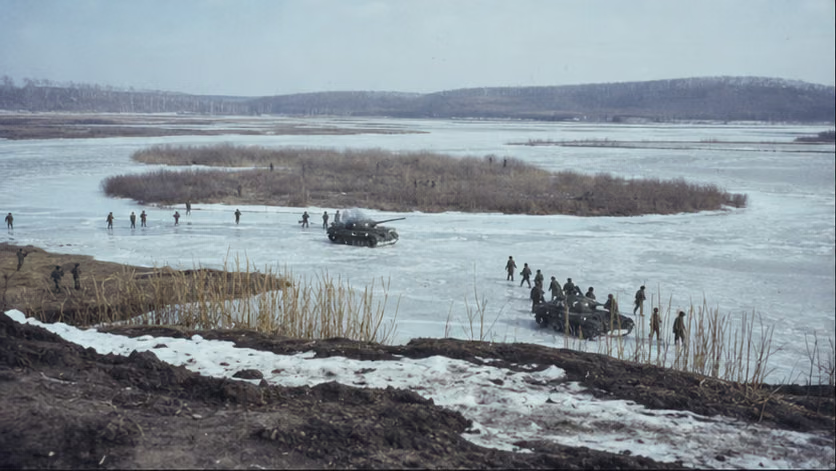
| Item | Content |
|---|---|
| Time | 1969.3.2 first clash at Zhenbao Island – 1969.10.20 resumption of border talks in Beijing (the military standoff continued into the 1980s) |
| Place | Eastern sector: Zhenbao Island on the Ussuri River (Hulin, Heilongjiang); western sector: Tielieketi, Yumin County, Xinjiang; multiple points of friction along the whole line |
| Belligerents | People's Liberation Army border-defense units and reinforced detachments / Soviet Border Troops (under the KGB) and attached regular forces |
| Result | After the fighting at Zhenbao Island, the Chinese side held the island; at Tielieketi, the Chinese patrol detachment was wiped out; the 9.11 Kosygin-Zhou Enlai airport meeting lowered the temperature, and talks resumed on 10.20; the fighting stopped at the level of a border conflict and did not escalate into war |
Belligerents (War Level)
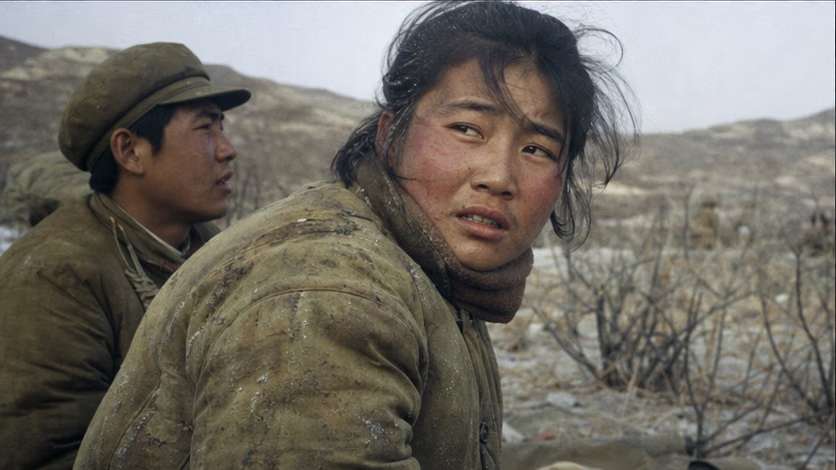
| Item | China | Soviet Union |
|---|---|---|
| Border posture | Border-defense station system plus field armies in depth, with the "three norths" as the main focus of defense | From 1965, continued reinforcement in the Far East: forces on the Sino-Soviet and Sino-Mongolian borders rose gradually from a little over ten divisions to several dozen divisions (figures vary by phase and statistical basis), including Soviet troops stationed in Mongolia |
| Technical gap | Mainly infantry small arms and towed artillery, with weak anti-tank means; Zhenbao Island exposed that Type 40 rocket launchers could not penetrate the frontal armor of the T-62, directly spurring the development of a new generation of anti-tank equipment (lineage unverified) | Armored formations, "Grad" rocket artillery, operational aviation, mechanized border defense |
| Nuclear | First atomic test in 1964, hydrogen bomb in 1967, with delivery means initially in place | Mature nuclear arsenal, the hidden card behind rumors of "surgical strikes" |
Current Situation
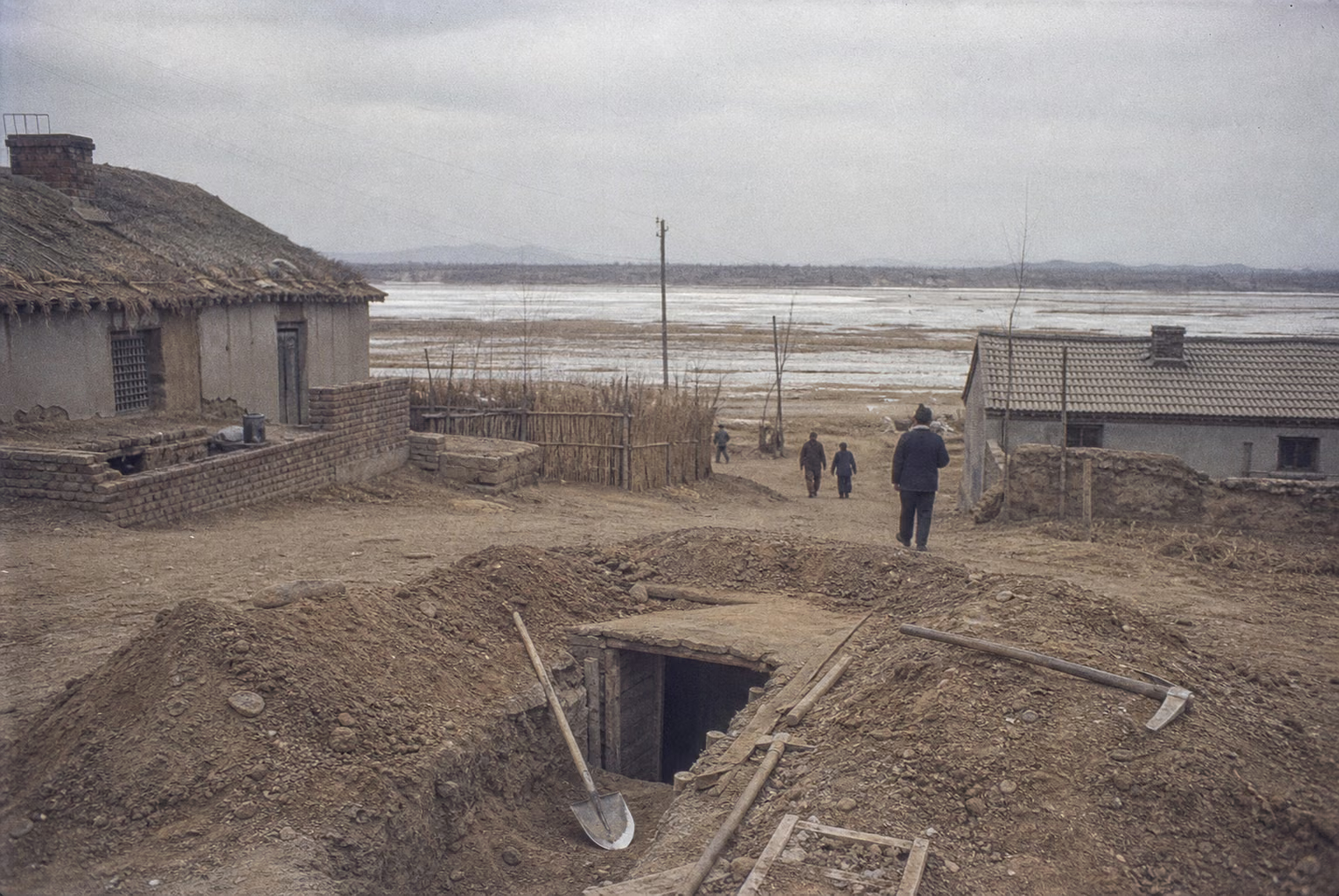
World: In August 1968, Soviet tanks entered Prague, and the "limited sovereignty" doctrine (Brezhnev Doctrine) appeared: the sovereignty of socialist states could be corrected by the "big family." Beijing heard this sentence as a warning addressed to itself. The United States was mired in Vietnam; Nixon took office in January 1969 and was looking for ways to extricate the United States and counterbalance its rivals.
China: At the height of the Cultural Revolution, on the eve of the Ninth National Congress (1969.4); "anti-revisionism" was the highest political vocabulary, and mobilization for war preparedness ran through the year, but the rules of engagement on the front-line border remained very tight for a long time (border-defense discipline such as not firing first; text unverified).
Soviet Union: Brezhnev was in power, and the characterization of China slid from "dogmatism" toward the direction of principal danger; Soviet military strength in the Far East continued to increase, and border defense shifted from a posture of guard duty to offensive expulsion (for the escalation chain, see causes of the conflict).
Why It Was Fought
By the fourth year of the effort to aid Vietnam and resist America, China's anti-aircraft guns were still facing American aircraft at bridgeheads in Vietnam, while the former patron to the north had already become something else. At the other end of "comrades plus brothers," these 10 years were a downward road: the Twentieth Congress of the CPSU in 1956 planted the split; in 1960.7 the Soviet Union withdrew all experts from China and tore up hundreds of contracts (number unknown); polemics moved from intra-party documents onto newspaper front pages, and the Nine Commentaries on the Open Letter of the Central Committee of the CPSU kept denouncing Moscow until 1964. In February of that year, the two countries discussed the border in Beijing: China wanted the Soviet side first to acknowledge that the Tsarist treaties were unequal treaties, and then adjust the boundary on the basis of the treaty line; the Soviet side rejected that premise. After half a year of talks, they parted without result (details unverified). The treaty line had not been agreed, the ownership of river islands remained suspended, and from then on patrols from the two sides confronted each other on the same stretches of bank and shoal.
The friction grew harder year by year. From 1966 to 1968, expulsions along the eastern-sector boundary rivers rose from shouting and clubs to armored-vehicle collisions (the Chinese side had a statistical basis for the number of incidents, unverified); in 1968.1, on Qiliqin Island, Soviet armored vehicles rammed and crushed Chinese fishermen on the ice, killing several people (number unknown). No shots were fired, but people died. In 1968.8, Soviet troops entered Czechoslovakia: a brother country, and they still went in. From this, Beijing defined the Soviet Union as "social-imperialist," and turned "Soviet revisionists have designs on destroying us" from a propaganda phrase into an operational assumption.
Moscow wanted to press China back into the order of the "big family"; Beijing wanted to prove that it could not be pressed back. Neither side wanted a major war, and both were betting that the other side would stop first (decision-making documents on both sides are thin, unverified). The frozen river surface in the eastern sector was the easiest place for trouble: armored vehicles could move on the ice, patrol lines overlapped every day, and the treaty line and the centerline of the main channel each had its own logic. On 1969.3.2, at Zhenbao Island, a clash between patrols turned into a firefight for the first time; on 3.15, it became an attack and defense involving tanks and rocket artillery. Five months later, on 8.13, in the western sector at Tielieketi, Soviet forces answered with a prearranged ambush (accounts vary on whether it was western-sector retaliation).
Beyond the gunfire lay the larger cards. Between summer and autumn, the Soviet side let rumors of a "surgical nuclear strike" spread through several channels: Viktor Louis's article, and diplomats' probes to the American side (declassified documents unverified); the American side indicated that it did not support an attack on China (documents on the Nixon administration's position unverified). China shifted into war preparedness: urban evacuations and nationwide shelter digging. Ho Chi Minh died on 9.2. On 9.11, Kosygin, returning from the condolences, detoured through Beijing and spoke with Zhou Enlai at the airport for more than three hours; on 10.20, border talks resumed in Beijing. The fighting stopped at the level of a border conflict.
Could it have been avoided? In the 1964 round of talks, working-level officials were once close to a plan that would settle ownership of the river islands according to the centerline of the main channel; Zhenbao Island would have belonged to China under that plan. The plan was not signed (source hierarchy unverified). Twenty-two years later, when the two sides sat back down at the table, the eastern-sector agreement signed in 1991 used broadly the same line.
Course of the Engagement
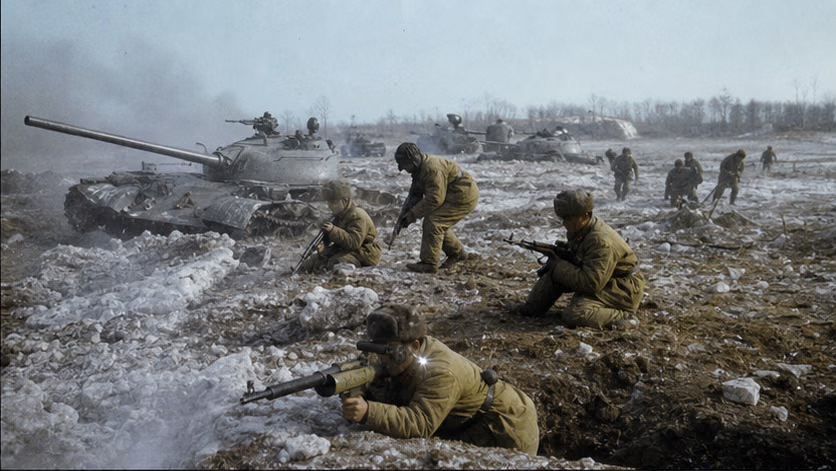
| Segment | Time | Key Points | Separate Article |
|---|---|---|---|
| Friction escalates | 1966–1969.2 | Boundary-river expulsions rose from bare hands and clubs to armored-vehicle collisions; the 1968.1 Qiliqin Island crushing incident; the decision chain by which the Chinese side approved a counterstrike plan (unverified) | - |
| Zhenbao Island | 1969.3.2–3.17 | Three main battles: the 3.2 patrol firefight, the 3.15 main battle (armored formations and "Grad" rocket artillery), and the struggle over the T-62 around 3.17; artillery standoff continued to the end of the month | Battle of Zhenbao Island |
| Tension along the whole line | 1969.4–8 | Multiple border frictions; the 6.10 Tasti Incident in the Tacheng direction of Xinjiang, in which female militia member Sun Longzhen was shot and killed (details unverified); Soviet exercises and reinforcements in the Far East | - |
| Tielieketi | 1969.8.13 | Prearranged ambush in the western sector: a Chinese patrol detachment was surrounded on an unnamed height, with 28 killed (accounts vary), and 3 captured and later returned | Tielieketi Incident |
| Nuclear shadow and cooling | 1969.8–10 | Soviet nuclear-strike rumors and the American statement of opposition (declassified documents unverified); Chinese deep-shelter digging and preparedness evacuations; on 10.18, "Vice Chairman Lin's Directive No. 1" placed the whole army on emergency war readiness (for the question of characterization, see Sensitivities); the 9.11 airport meeting, and the 10.20 resumption of talks | - |
Casualties and Losses
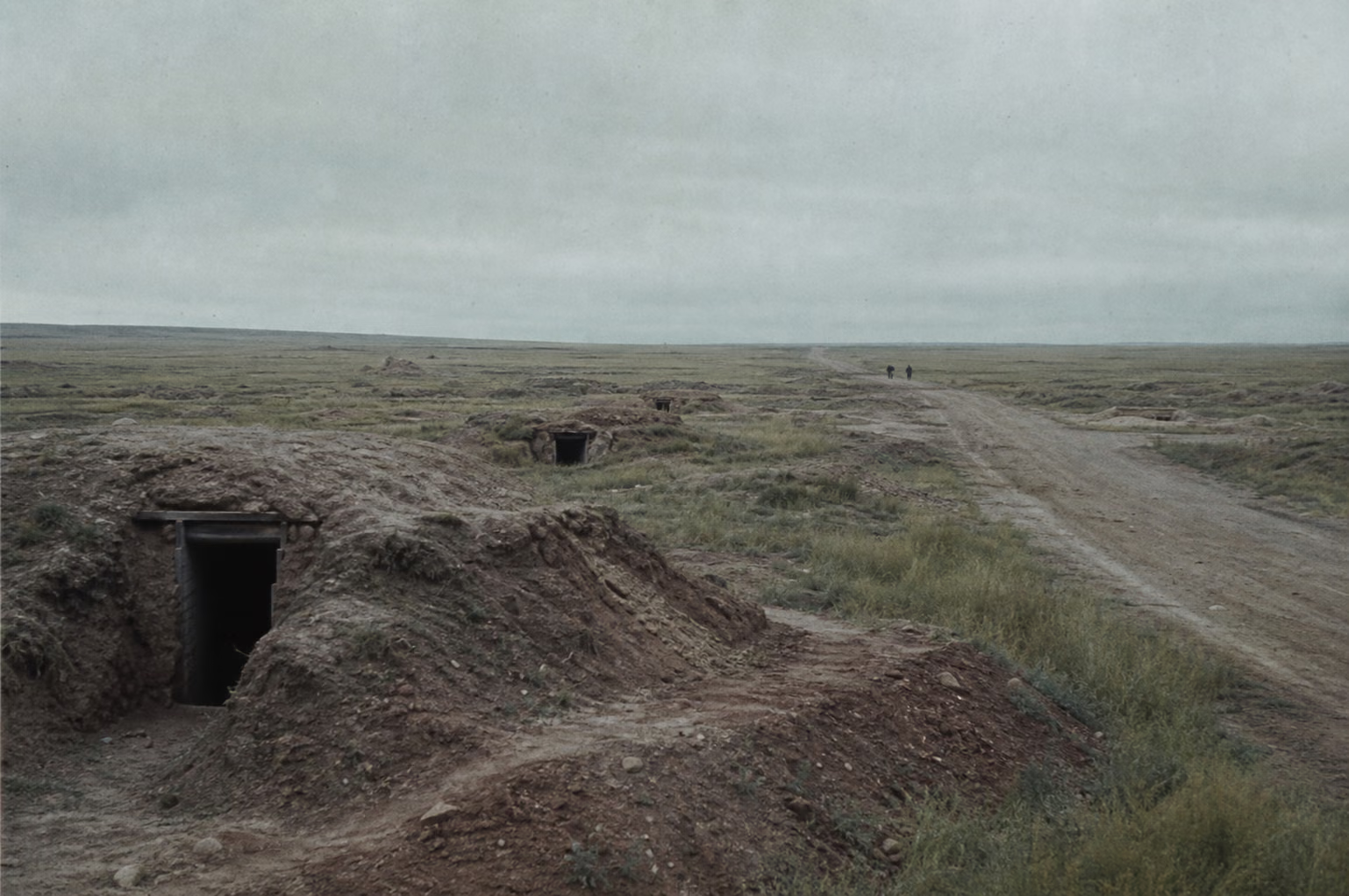
- Zhenbao Island: the Chinese side announced 71 killed (whether this includes the later artillery phase, statistical boundary unverified); the Soviet side announced 58 killed and 94 wounded (Soviet figures). The two sets of figures are placed side by side, with different boundaries (see the separate article).
- Tielieketi: 28 Chinese killed (accounts vary), 3 captured and later returned; the Soviet side self-reported casualties from single digits to more than ten people (accounts vary).
- The bill for war preparedness: nationwide evacuation, civil-defense works, increased investment in the Third Front; the non-combat costs were much greater than the fighting itself (the economic and social costs of the deep-shelter mobilization vary by research basis); in October 1969, the central leadership evacuated from Beijing for war preparedness.
- ※ Civilians and militia: the fishermen crushed on Qiliqin Island, and Sun Longzhen at Tasti. The casualties of border residents and militia were scattered through the full course of the conflict, with no combined statistical basis (unverified).
Aftermath
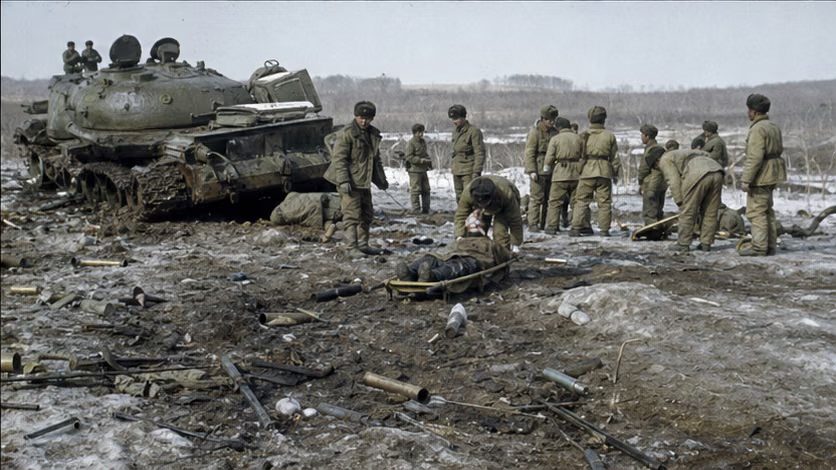
- Catalyst for Sino-American rapprochement: After Zhenbao Island, Washington reassessed the triangle. From 1969, secret channels to China opened; in 1971.7 Kissinger made a secret visit to Beijing, and in 1972.2 Nixon visited China. The "Soviet threat" became the shared language that thawed a twenty-year deadlock between China and the United States (scholars debate the causal weight).
- Standoff of million-man armies: Soviet forces in the Far East and Mongolia thereafter remained at several dozen divisions for more than 10 years ("million" is the conventional general label; figures vary by account), while China fortified the "three norths" and dug deep shelters while storing grain. Both countries carried nearly twenty years of military expenditure. Relations began to loosen in 1982, and Gorbachev's 1989 visit to China achieved normalization.
- The final settlement of the border: The talks resumed in 1969.10 became a marathon without result. The true settlement came at the end of the Cold War: the 1991.5 Sino-Soviet Agreement on the Eastern Section of the Boundary confirmed that Zhenbao Island belonged to China; the western sector and remaining segments were then delimited successively through later Sino-Russian, Sino-Kazakh, and other treaties (the 2004 supplementary agreement closed the eastern-sector settlement).
- Military-industrial aftereffects: the anti-tank shortcomings exposed at Zhenbao Island spurred the development of new rocket launchers and anti-tank weapons (model lineage unverified); the captured T-62 entered the collection of the Military Museum in Beijing.
- Domestic political aftereffects: "Directive No. 1" and the war-preparedness evacuations were folded into later narratives of the Lin Biao incident (for changes in characterization, see Sensitivities).
How Each Side Records It
- Chinese side: Zhenbao Island was a nationwide heroic symbol of the "anti-revisionist" era (combat heroes, commemorative medals, propaganda posters); after the Sino-Soviet thaw, it became low-key, and textbooks passed over it in a few words. Tielieketi remained almost silent for a long time; around 2008, cemetery repairs, public commemorations, and reporting gradually increased (for the thread, see the separate article). The official characterization is "self-defense counterattack."
- Soviet/Russian side: The Damansky (the Russian name for Zhenbao Island) narrative centers on the heroism of the border troops: Strelnikov and Leonov were posthumously awarded Hero of the Soviet Union, and Babansky remained a lifelong commemorative symbol. The 1991 confirmation of ownership has occasionally met objections inside Russia (at the media level, unverified); Russian historiography in recent years has tended toward more varied formulations (unverified).
- Kazakhstan: Tielieketi's opposite side is now the China-Kazakhstan border, and this battle has almost no place in Kazakh public memory (unverified). The country that carried out the ambush no longer exists, and that memory lost its owner with it.
- Scholarship: Two main lines are archival research in Cold War international history (the Chinese prearranged-plan thesis, the Soviet decision chain) and research on the nuclear crisis (the reality or unreality of the 1969 nuclear rumors): Yang Kuisong, Shen Zhihua, American think-tank studies, and others (bibliography unverified).
Disputes and Sensitivities
- Who fired first on 3.2 / whether there was an ambush: The two sides' accounts are entirely opposed; after the Cold War, some Chinese research put forward the formulation of a "prepared self-defense counterattack" (Yang Kuisong and others).
- The reality of the nuclear-strike rumors: Whether the Soviet side at the time was probing, blackmailing, or had genuinely discussed such action, the declassified materials still cannot be fully pieced together; the documents on the American position still await item-by-item verification.
- Characterization of "Directive No. 1": Was it a war-preparedness measure or a political action? After the September 13 incident, it became a settled controversy, and official and scholarly descriptions have changed over time. Layer the issue; do not take sides.
- The organized destruction of the Tielieketi unit and the reasons for its long obscurity (involving review of the patrol plan and propaganda choices) will be developed in the separate article.
- Present-day borders: The current China-Russia and China-Kazakhstan borders have already been delimited by treaty. This section concerns the disputes of that year, and does not project present-day vocabulary backward.
- Casualty figures are always placed side by side by the accounts of the two sides, with statistical boundaries noted item by item.
Contents
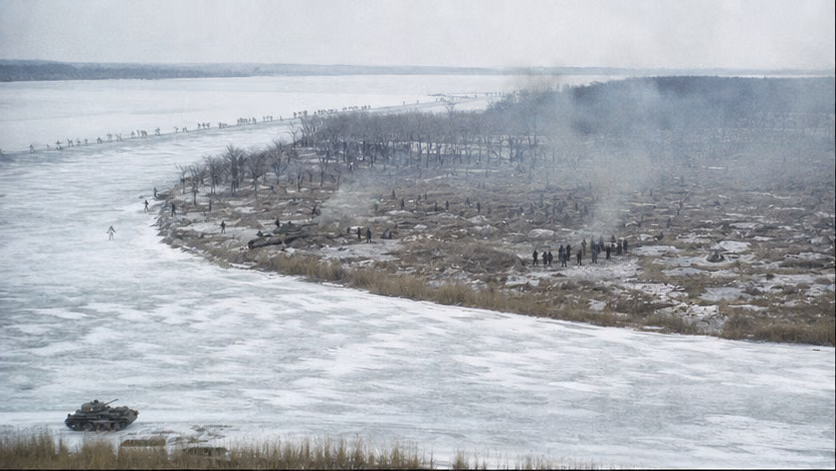 Battle of Zhenbao Island1969.03On the frozen Ussuri River, a clash between patrols grew within half a month into an attack and defense involving tanks, armored vehicles, and rocket artillery; on a river island of 0.74 square kilometers, the armies of two nuclear powers exchanged fire in formed units for the first time, and the aftershock far exceeded the island's size.
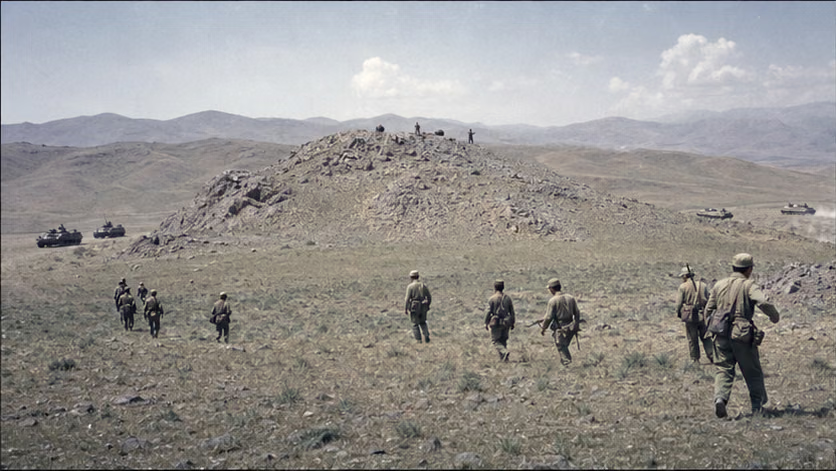 Tielieketi Incident1969.08Five months after the Battle of Zhenbao Island, on the western border, a Chinese patrol detachment walked into a Soviet prearranged ambush. Its covering group fought to destruction on an unnamed height: 28 killed (accounts vary), 3 captured. For nearly forty years, the Chinese side kept almost silent about this battle.
Sources and Open Questions
Sources: relevant chapters of *An Outline History of Sino-Soviet Relations* (edited by Shen Zhihua); Yang Kuisong's research on the 1969 Sino-Soviet border conflict; Xinhua and *People's Daily* announcements from the time, read alongside Soviet TASS and *Pravda* texts; Russian border-troop histories and Damansky commemorative materials (unverified); declassified American research on the 1969 crisis (think-tank reports, titles unverified); Military Museum display of the T-62.
Open questions: number of experts withdrawn and contracts canceled; details of the 1964 negotiation plan; statistical basis for the 1966–68 frictions; number of dead on Qiliqin Island; each side's casualty figures and statistical boundaries for the two battles; declassified documents on nuclear rumors and the American response; the text of "Directive No. 1" and literature on its characterization; figures for Soviet forces in the Far East at each phase; details of the Tasti Incident; the text of the 1991 agreement and later treaties; lineage of anti-tank equipment development; text of border-defense engagement discipline.
All images on this site are AI-generated depictions. They are not historical photographs, not primary sources, and do not depict any real individual.