War Overview · Northern Expedition (1926–1928)
A revolutionary army of fewer than 200,000 men fought its way out from Guangdong and, in two and a half years, broke or absorbed the three great northern warlord groupings, nominally unifying China beneath a single flag -- while the revolutionary camp itself tore apart midway, making the endpoint of this war also the starting point of the KMT–CPC Civil War.
Engagement Data
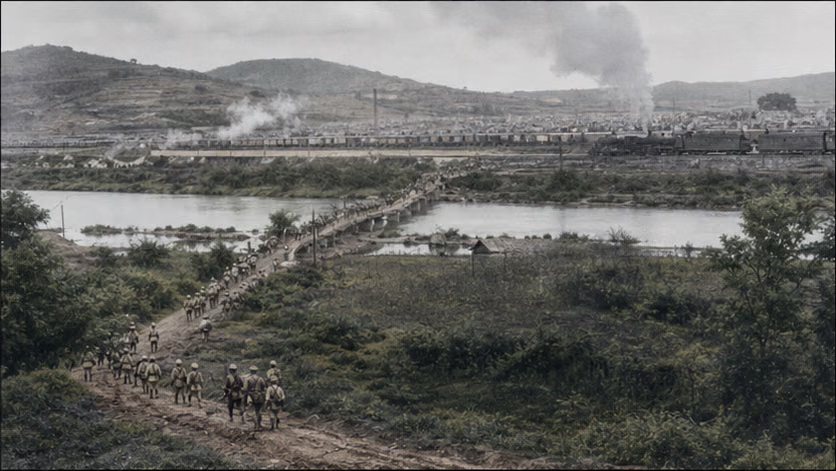
| Item | Content |
|---|---|
| Time | 1926.7.9 oath-taking in Guangzhou – 1928.12.29 Northeast changes flags |
| Place | Guangdong -> Hunan-Hubei -> Jiangxi -> Fujian-Zhejiang -> Shanghai-Nanjing -> North China and Beijing-Tianjin -> Northeast |
| Belligerents | National Revolutionary Army (Northern Expeditionary Army) / Beiyang forces (Wu Peifu's forces, Sun Chuanfang's forces, Zhang Zuolin's Fengtian clique; in the later stage Fengtian Zhang forces were integrated as the "Anguojun") |
| Result | The three great warlord groupings either collapsed or surrendered; on 1928.12.29 the Northeast changed flags, and the National Government completed nominal unification |
Belligerents (War Level)
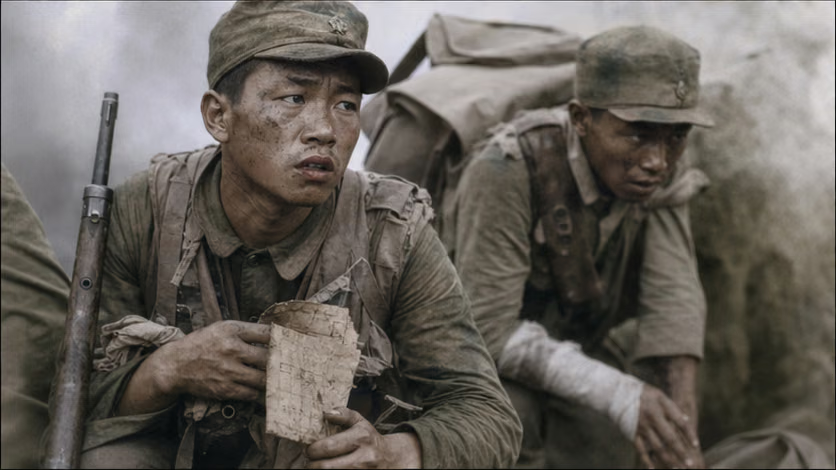
| Item | National Revolutionary Army | Beiyang Forces |
|---|---|---|
| Total strength | About 100,000 at the start, organized as eight armies (Chiang Kai-shek as commander-in-chief); after absorption and expansion, numbers grew continuously, reaching several hundred thousand by 1927 (statistical basis varies by account) | Wu Peifu about 200,000, Sun Chuanfang about 200,000, Zhang Zuolin's Fengtian clique about 350,000 (figures vary widely by basis); in total several times the size of the Northern Expeditionary Army |
| Firepower | Soviet-supplied firearms and Training Regiment-style organization rooted in the Whampoa Military Academy; artillery was scarce | Equipment varied sharply by faction; the Fengtian Army had its own arsenals, heavy artillery, and armored trains, and held the advantage in nominal firepower |
| Organization and morale | Party-representative system, political work alongside the army, a new army held together by "principle" | Old mercenary armies; when pay stopped, troops mutinied, and when defeated, they changed flags or defected |
| External aid | Soviet advisers (political: Borodin; military: Galen, i.e. Blyukher) and munitions | Japanese protection of and intervention on behalf of Fengtian Zhang (later direct troop deployment; see the Jinan Massacre) |
The troop figures on both sides are unreliable: the Beiyang forces were large on paper but had limited combat-capable troops, while after rolling absorption the Northern Expeditionary Army's statistical basis became confused.
Situation
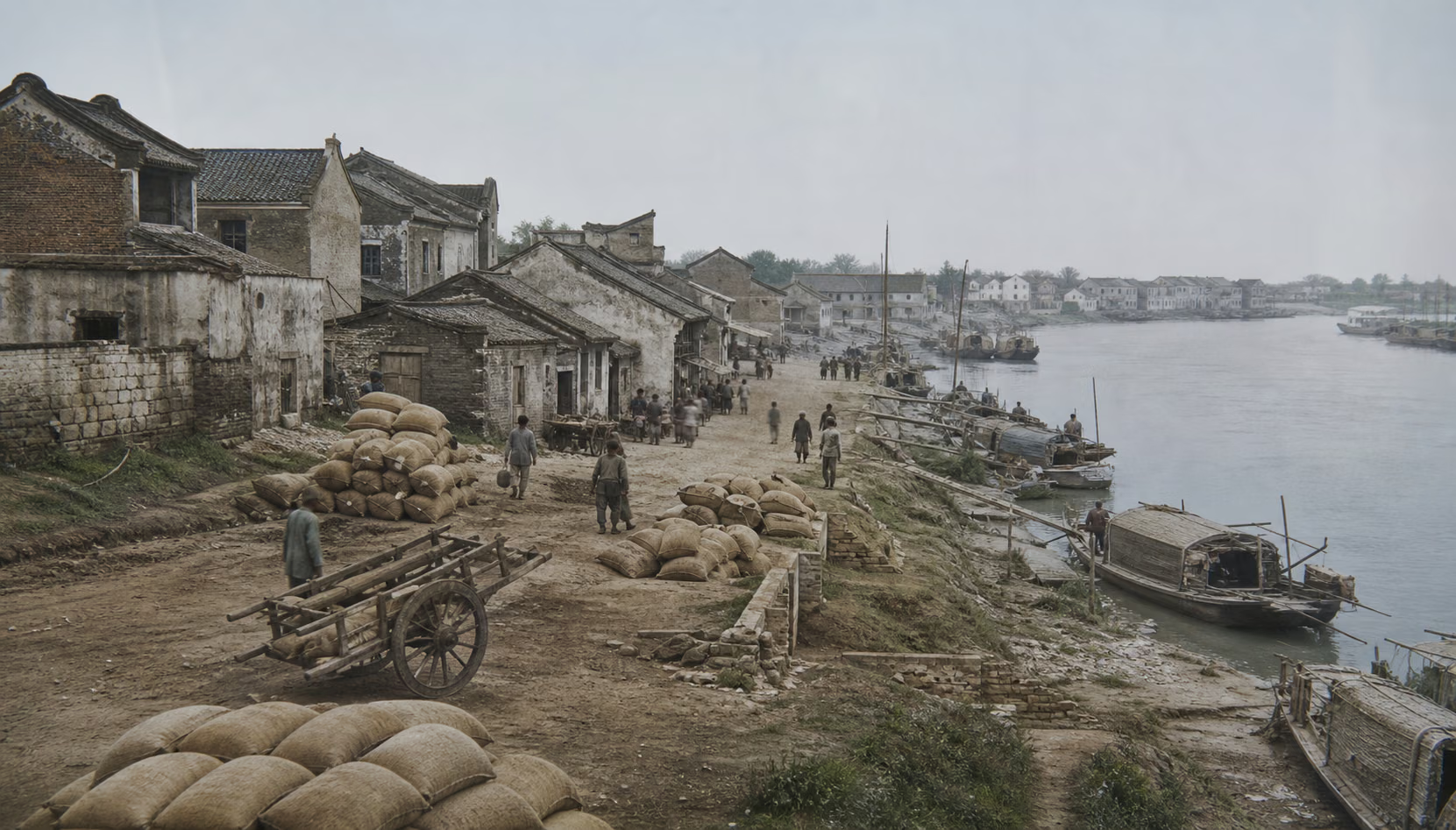
World: under the post-First World War Versailles-Washington system, the powers' pattern of interests in China was being reorganized; the Soviet Union treated revolution in the East as an outward direction and intervened deeply in Chinese politics through the Communist International; Japan swung between Shidehara diplomacy and Tanaka hardline policy, while interests in Manchuria and Mongolia were treated as a lifeline.
China: the tenth year of warlord conflict. After Yuan Shikai's death, Beiyang broke into the Zhili, Anhui, Fengtian, and other factions; the Beijing government changed cabinets more than ten times in ten years (specific number unverified), while military disaster, extortionate levies, forced labor, and grain requisitions spread across the North and the Yangtze valley. In 1925, the May Thirtieth Movement and the Canton-Hong Kong Strike turned "down with the imperialist powers, eliminate the warlords" from a slogan into a street movement, and the *National Revolution Song* was sung across the country to an older melody (one account traces the tune to a French children's song; unverified) -- this was the social soundtrack when the Northern Expedition set out.
Guangdong base area: in 1924, the First National Congress of the KMT reorganized the party, allied with Russia, and admitted Communists, who joined the KMT in an individual capacity; Whampoa built the army, two Eastern Expeditions defeated Chen Jiongming, Yunnan and Guangxi troops were pacified, and Guangdong was unified. By 1926, this was the only base area in all China with a doctrine, an army, and tax revenue -- the entire capital of the Northern Expedition lay here.
Three opponents: Wu Peifu held Hunan-Hubei and Henan; the old aura of the "Jade Marshal" remained, but years of defeats had already damaged his vitality. Sun Chuanfang held the five southeastern provinces of Jiangsu, Zhejiang, Anhui, Jiangxi, and Fujian, styling himself commander-in-chief of the five provinces. Zhang Zuolin held the Northeast and Beijing-Tianjin, the last and largest block. The Northern Expedition's strategy was defeat in detail: first Wu, then Sun, finally Zhang.
Why It Was Fought
The Constitutional Protection War had become a stalemate. By 1926, the only force still able to move was the Guangdong base area -- its origins have already been laid out above; here the question is only how it became an army marching north.
In the first half of 1926, two events cleared the threshold for sending troops: after the March Zhongshan Warship Incident and the May Party Affairs Reorganization Case, military authority was concentrated in Chiang Kai-shek's hands; Soviet arms reached Guangdong by sea, advisers had entered the game, and fiscal reorganization had produced revenue. In June, a KMT Central Committee meeting passed the resolution to launch the Northern Expedition and appointed Chiang Kai-shek commander-in-chief (meeting session and resolution date unverified); on July 9, Guangzhou held the oath-taking ceremony.
Why now? The opening was given by the opponents. The three great northern warlords were biting one another: Wu Peifu's core main force was pinned on the Nankou line fighting Feng Yuxiang's Guominjun, with Wu supervising operations at Changxindian and unable to look south; Sun Chuanfang sat watching from his five southeastern provinces, calculating that once the southern army and Wu's army had both suffered, he would come down and clean up the Yangtze; Zhang Zuolin was farthest away, watching the fire from across the river. Guangzhou saw this clearly, so the strategy before troops were even sent was defeat in detail: stabilize Sun Chuanfang and strike Wu Peifu first (original planning documents and meeting records unverified). The later course of the war largely followed this script not because the script was brilliant, but because the three opponents made three separate calculations, and none was willing to send troops first for another man's sake.
Nor was there no dissent. Within the CPC, Chen Duxiu at this time held reservations about the Northern Expedition; in July he published articles discussing it, was accused of taking a passive attitude and of being wary of military centralization, and received criticism from within the party and from the Communist International (the articles' intent and the degree of criticism are interpreted differently by different scholars; source unverified) -- this was the only formed dissent left on paper before troops were sent. It was not adopted: a single corner of Guangdong could not support a standing army, and if it waited, both finances and morale would be trapped to death in the Pearl River Delta (this judgment is inferred from the base area's fiscal structure, with no direct record; unverified). The dissent remained on paper; the army crossed the provincial border.
The material boundary was drawn just as clearly. The entire store of assets consisted of one province's tax revenue, Soviet firearms shipped in by sea, and cadres trained at Whampoa, enough to form eight armies; the opponents were three families of old armies totaling several hundred thousand men. Every round of ammunition fired was one less, and replenishment could only come by feeding war with war -- with every city taken, funds were raised locally, units absorbed, and public bonds issued; the army was like a snowball, and also like a household living on debt (detailed military revenue and expenditure for each stage unverified). Artillery was the short plank from beginning to end, and that boundary appeared all along the road: fight mobile warfare if mobile warfare was possible, avoid assaults on fortified positions if they could be avoided, absorb where absorption was possible, and when a fortified city had to be taken, fill the gap with human lives.
On the Beiyang side there was no center -- the other half of why the Northern Expedition could succeed. Wu Peifu underestimated the southern army, thinking his Hunan-Hubei forces were enough to handle it while his core forces stayed in the North and did not return. Sun Chuanfang's "neutrality" was a carefully calculated misjudgment: what he wanted was not peace but profit from the struggle; by the time he understood, Wu's army had already collapsed beyond recovery. Each man's judgment, taken alone, was not stupid. The trouble was that three pieces of clarity added together arranged the order of battle exactly for the Northern Expeditionary Army.
The entry point fell in Hunan. In the spring of 1926, Tang Shengzhi drove out Zhao Hengti and set himself up independently; Wu Peifu supported Ye Kaixin in attacking Tang. Tang retreated to Hengyang and asked Guangzhou for aid -- aiding Tang was the Northern Expedition: in May, Ye Ting's Independent Regiment and other advance units entered Hunan; in July, the main army followed. A long-planned war of unification opened as a relief operation.
Course of the Engagement (Stage Table)
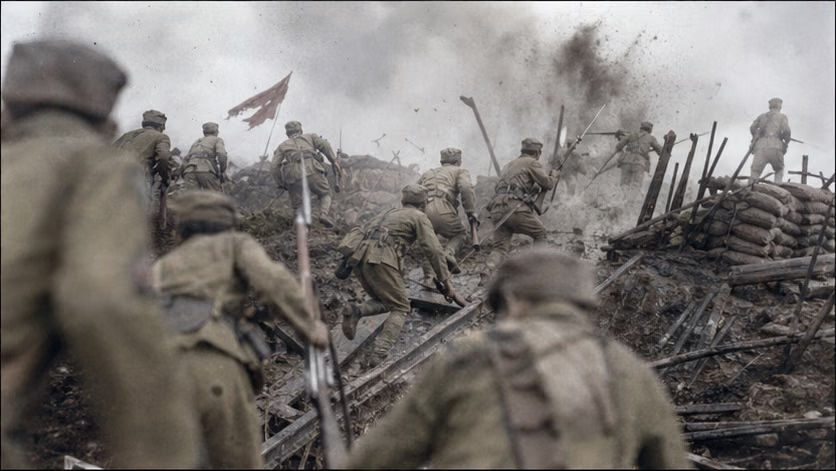
| Stage | Time | Key Points | Separate Articles |
|---|---|---|---|
| Setting out and entering Hunan | 1926.5–8 | Ye Ting's Independent Regiment and other advance units entered Hunan to aid Tang Shengzhi (after Tang's forces submitted, they were organized as the Eighth Army); 7.9 Guangzhou oath-taking; Changsha and Pingjiang fell in succession, and the Battle of the Miluo River routed the main Wu forces in Hunan (chronological details of each engagement unrecorded) | (Entry into Hunan included in this article) |
| Decision in Hunan-Hubei | 1926.8–10 | 8.26–27 Tingsi Bridge, 8.30 Hesheng Bridge; Wu Peifu's main force collapsed at the gates of Wuhan; from September, Wuchang was besieged for forty days, and on 10.10 the city fell, breaking Wu's power in Hunan-Hubei | Battles of Tingsi Bridge and Hesheng Bridge; Siege of Wuchang |
| Jiangxi campaign | 1926.9–11 | Forces turned into Jiangxi against Sun Chuanfang's main force; Nanchang changed hands in a three-takings-and-three-losses seesaw (wording unverified); on 11.8 Nanchang was taken, and Sun's main force in Jiangxi was destroyed | Battle of Nanchang (1926) |
| Advance into Fujian and Zhejiang | 1926.12–1927.3 | The Eastern Route Army entered Fujian; Zhou Yinren's forces collapsed, and many Fujian defenders changed flags; in 1927.2 Hangzhou was taken, and in March the army reached the outskirts of Shanghai and Nanjing -- the Southeast was largely taken by defection and political collapse rather than hard fighting (details unrecorded) | (Fujian-Zhejiang included in this article); Shanghai-Nanjing has a separate article to be written |
| The camp tears apart | 1927.4–8 | The April 12 Shanghai party purge; the July 15 Wuhan split with the Communists; the Ninghan Split and reunion; the First United Front breaks down | See next section; separate article to be written |
| Second Northern Expedition | 1928.1–6 | After Ninghan reunification, the Chiang, Feng, Yan, and Guangxi groupings advanced north; 5.3 Jinan Massacre; in June Fengtian forces withdrew from Beijing-Tianjin, and Beijing was renamed Beiping | Jinan Massacre and others have separate articles to be written |
| Closing | 1928.6–12 | 6.4 Huanggutun: Zhang Zuolin was killed by a bomb planted by the Kwantung Army; 12.29 Zhang Xueliang changed the Northeast's flag | Huanggutun has a separate article to be written |
The Revolutionary Camp Tears Itself Apart
When the Northern Expedition reached the Yangtze valley, the internal fissure inside the revolutionary camp burst open publicly -- this was the greatest turning point of the whole war, more decisive for China's direction than any single battle.
- The fissure had long existed: alliance with Russia and admission of Communists was an alliance of expediency. In the 1926 Zhongshan Warship Incident (3.20) and the Party Affairs Reorganization Case, Chiang Kai-shek had already begun restricting Communist activity inside the KMT; during the Northern Expedition, worker and peasant movements spread like wildfire in Hunan-Hubei and Jiangxi, land and labor-capital conflicts intensified, and fear deepened on the KMT right.
- 1927.4.12 April 12: Chiang Kai-shek purged the party in Shanghai; Green Gang armed men attacked workers' pickets, and Communists and worker-movement cadres were then arrested and killed, with the dead numbering from several thousand to over ten thousand depending on the basis used (unverified; two accounts coexist)※. The Nanjing National Government was established immediately afterward.
- Ninghan Split and reunion: the Wuhan National Government for a time opposed Chiang by launching an eastern expedition against him; Feng Yuxiang mediated, and with economic blockade in the Wuhan jurisdiction and an internal rightward turn, Wang Jingwei "split with the Communists" on 1927.7.15 -- after July 15, Ninghan gradually moved toward reunion (September special committee; details unrecorded).
- Consequence: the First United Front broke down completely. The Communists went underground and moved toward armed uprisings (Nanchang Uprising, 1927.8.1), and the KMT–CPC Civil War began from here -- this article closes at this point and connects onward to the Agrarian Revolutionary War articles.
- The Soviet role turned at the same time: Borodin, Galen (Blyukher), and other advisers left China after the split with the Communists; Stalin blamed the failure on CPC "right deviation," and Chen Duxiu fell from power within the CPC -- KMT-CPC relations and internal struggles in the Soviet Communist Party were entangled together, and causal narratives here diverge greatly among scholars, so this enters the "Disputes" section.
Two Insertions by External Powers
- Nanjing Incident (1927.3.24): when Northern Expeditionary troops entered Nanjing, looting of foreign consulates and foreign casualties occurred; British and American naval guns shelled Nanjing, causing Chinese military and civilian casualties (the two sides give separate casualty bases; unverified) -- a direct appearance of the powers' gunboat policy within the Northern Expedition; details cross-reference the later separate article.
- Jinan Massacre (1928.5.3–): as the Second Northern Expedition reached Jinan, Japanese forces sent troops into Shandong and clashed with the Northern Expeditionary Army, massacring several thousand Chinese soldiers and civilians and torturing to death diplomatic personnel including Cai Gongshi (figures vary by basis)※. The Northern Expeditionary Army detoured north. This was a rehearsal for full-scale Sino-Japanese war ten years later; details cross-reference the later separate article.
Second Northern Expedition and Nominal Unification (1928)
In early 1928, Chiang Kai-shek returned to office, and the four groupings of Chiang, Feng Yuxiang, Yan Xishan, and Li Zongren jointly launched the Second Northern Expedition. Fengtian forces abandoned Beijing-Tianjin; in June, Yan Xishan's forces entered Beijing, which was renamed Beiping. On 6.4, Zhang Zuolin's special train was destroyed at Huanggutun by explosives pre-planted by the Kwantung Army, and he died of his wounds -- young Japanese officers had directly killed the puppet their own government intended to protect. On 12.29, Zhang Xueliang telegraphed the Northeast's change of flag, and nominal national unification was achieved.
The weight of nominal unification needs to be written realistically: the four groupings absorbed old units and each held territory; the Demobilization and Reorganization Conference (1929) broke down over army reduction, and the Chiang-Gui, Chiang-Feng, and 1930 Central Plains War soon followed -- unification existed on paper, and division continued in another form. This leads into the articles on the warlord wars.
Casualties and Losses
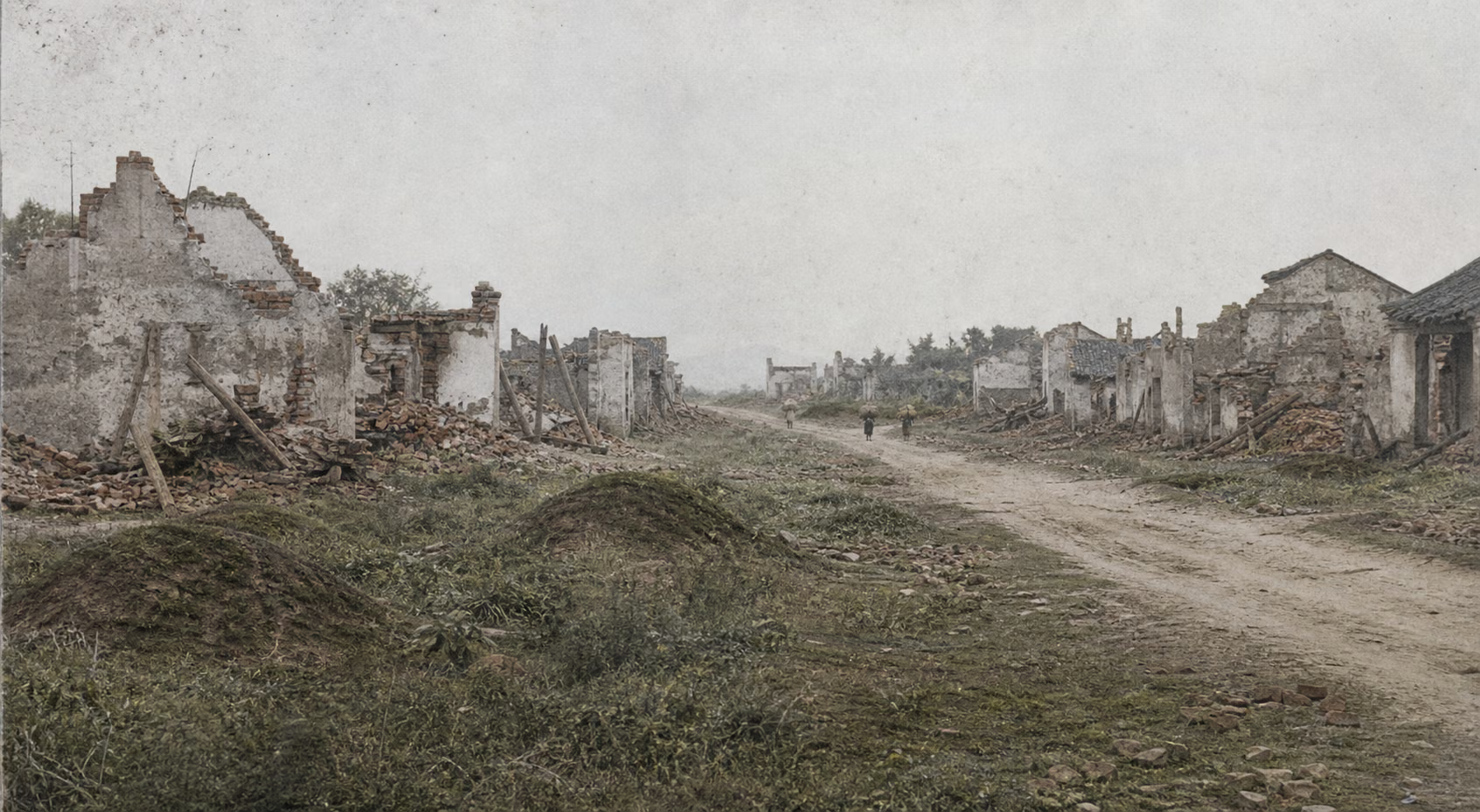
- Northern Expeditionary Army: the total casualty basis for the whole war is confused; in the Jiangxi campaign alone (1926.9–11), losses reached several tens of thousands, the heaviest since the war began (army archives and later military histories differ widely; several accounts coexist).
- Beiyang forces: the combined losses of the factions were far greater than those of the Northern Expeditionary Army, but most disappeared through rout, absorption, and change of flag, making "casualties" and "disintegration" difficult to separate statistically.
- ※ Civilians: forced labor, grain requisition, and local fund-raising were common in the war zones; during the forty-day Siege of Wuchang, food in the city ran out and many civilians starved to death (see separate article); plunder and disturbance by routed troops and during absorption are scattered through local gazetteers and newspapers, with no total account. As usual, the main cost of war fell on heads without unit designations.
Aftermath
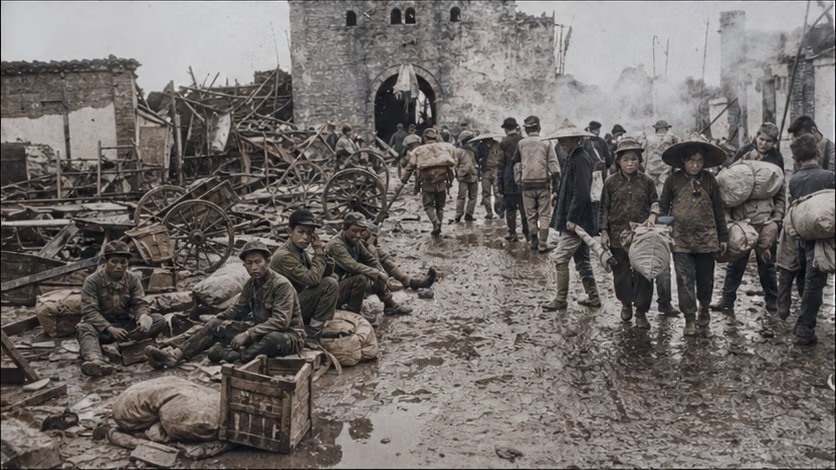
- The National Government fixed its capital at Nanjing and entered the period of "political tutelage"; the military-political legacy of the Northern Expedition -- party leadership over government, and military control over the party -- became the skeleton of China's political order for the next twenty years.
- The Communists changed from allies inside the system into wanted rebels, and the Agrarian Revolutionary War began -- one of the Northern Expedition's earliest organizers was no longer on the list of its victors.
- Japan's designs on the Northeast accelerated instead because of Zhang Zuolin's death and Zhang Xueliang's change of flag; three years later came September 18.
- The Beiyang warlords as a whole exited history, but warlord politics did not -- only the list changed into new uniforms.
How Each Side Records It
- National Revolutionary narrative (the Northern Expeditionary Army's own): a National Revolution to "down with the imperialist powers, eliminate the warlords," a righteous army unifying China; Whampoa spirit, the legend of the Iron Army, and people bringing food and drink to welcome the troops formed a golden chapter in official KMT historiography.
- Beiyang side and local memory: in old-style memory, Wu Peifu in his later years did not go abroad and did not serve puppet regimes, so the "defeated general" retained a personal integrity; Sun Chuanfang was assassinated in 1935 by Shi Jianqiao in revenge, adding a folk-story color to the Beiyang ending. Local memories in the war zones are more often of military disaster: forced labor, grain requisitions, routed troops passing through; every army forced laborers, and whoever won demanded grain.
- Two later KMT and CPC narratives, side by side: the Communist narrative stresses that worker and peasant movements were the foundation of the Northern Expedition's victory, that Communists (including Ye Ting's Independent Regiment) fought in the vanguard and sacrificed most heavily, and that the KMT right betrayed the revolution midway; the KMT narrative stresses military unification and the realization of Sun Yat-sen's teachings, frames the party purge as "protecting the party and saving the nation," and calls the worker and peasant movements "excessive." Both narratives hold part of the historical facts.
Disputes and Sensitivities
- Number of April 12 dead: figures from several thousand to several tens of thousands coexist by different bases; the characterization of the "party purge" (protecting the party vs. betrayal) remains a dividing line between historical views across the Taiwan Strait.
- Merits and faults of Soviet intervention: Soviet aid and advisers were one of the conditions for the Northern Expedition's military victory, and at the same time a structural cause of the KMT-CPC rupture; whether Stalin's China directives were right or wrong touches the respective narratives of Soviet Communist Party history and CPC history.
- Evaluation of worker and peasant movements: the contest between characterizing them as "transgression" or as "revolution" is directly tied to the legitimacy of both parties.
- Northern Expedition and "unification": the tension between nominal unification and substantive division is the pivot judgment linking this article to the warlord-war articles and the Central Plains War article.
- The Northern Expeditionary Army itself was not without blemish: disciplinary problems brought by absorbing old warlord units, and disturbances caused by assault troops and routed soldiers, are recorded in the separate articles.
Contents
The Battles of Shanghai and Nanjing, the Nanjing Incident, April 12, the Jinan Massacre, the Huanggutun Incident, and others have separate articles to be written. Entry into Hunan and the Fujian-Zhejiang advance are included in this article and do not become separate articles.
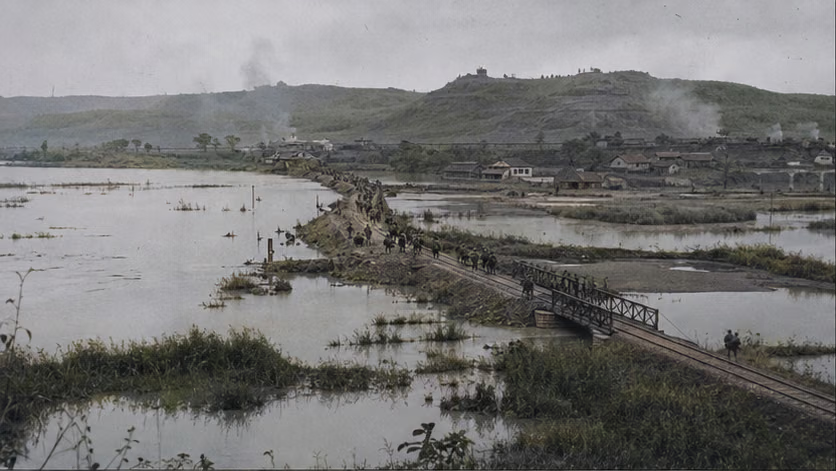 Battles of Tingsi Bridge and Hesheng Bridge1926.08Wu Peifu set two hard lines at Wuhan's southern gate, and the National Revolutionary Army's Fourth Army smashed through both in four days -- the Hunan-Hubei battlefield was settled from that point, and the Fourth Army was thereafter called the "Iron Army."
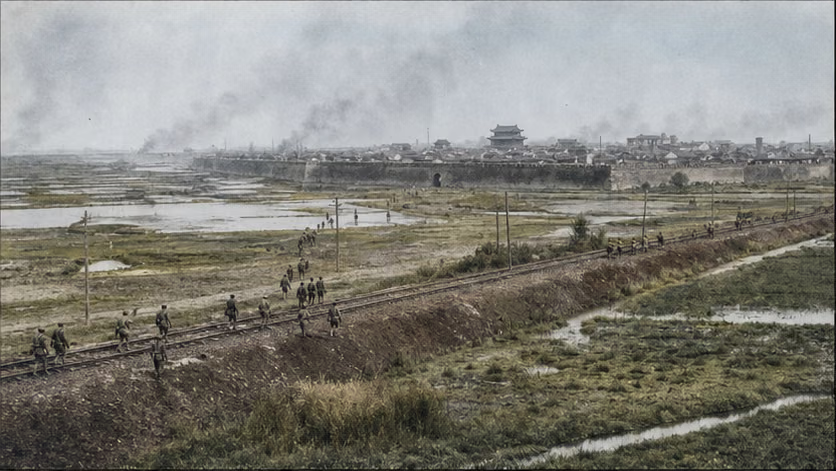 Battle of Nanchang (1926)1926.09The Northern Expeditionary Army entered Nanchang twice and was twice broken there; only on the third attempt, with an encircling general assault, did it take the city -- Sun Chuanfang's main force as commander-in-chief of the five southeastern provinces was destroyed in Jiangxi, while the Northern Expeditionary Army paid its heaviest casualties since the war began.
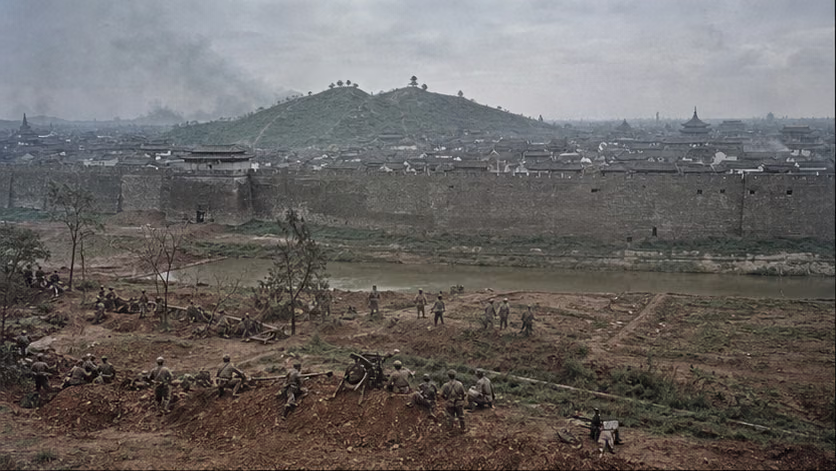 Siege of Wuchang1926.09Wu Peifu's last main force withdrew into the fortified city of Wuchang and held it for 40 days; two ladder assaults piled bodies below the walls, and in the end the city was starved out, while the hunger of those 40 days fell chiefly on the hundreds of thousands of civilians trapped inside.
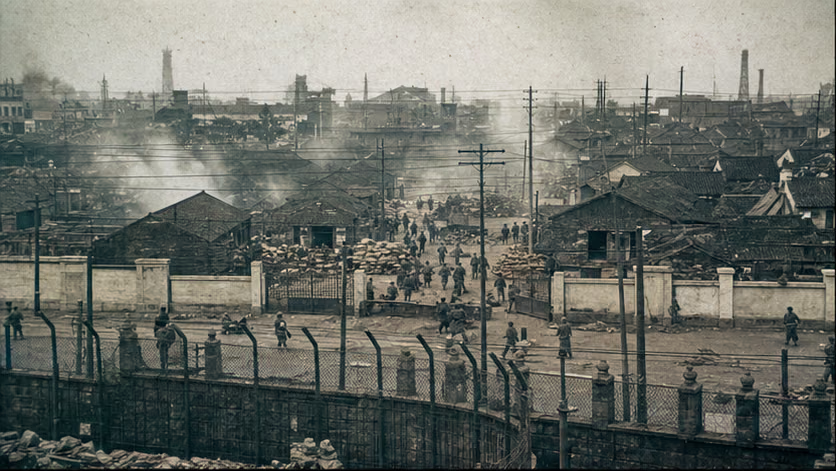 Battles of Shanghai and Nanjing (1927, incl. the Nanjing Incident)1927.02Shanghai was taken by a workers' uprising that opened the way for the main army without bloodshed; Nanjing was taken by assault -- the next day, after the city fell, British and American warships shelled Xiaguan, leaving civilians dead and wounded in heaps; half a month later, in Shanghai, the revolutionary camp raised its guns against its own people.
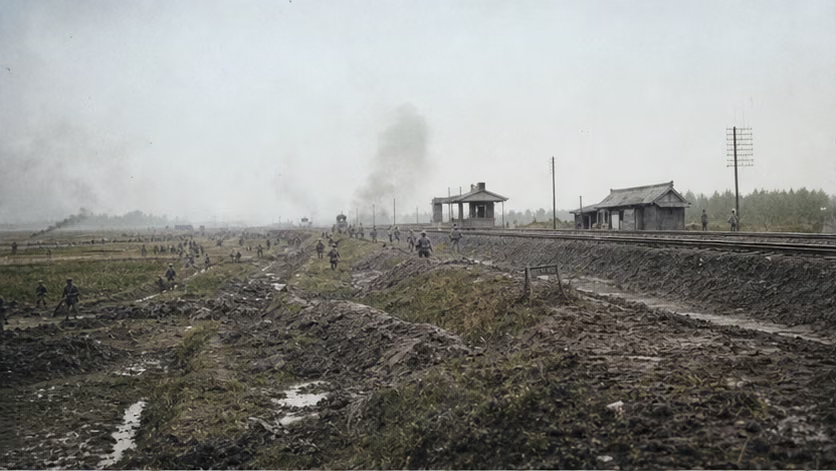 Battle of Henan (1927)1927.04Amid the Ning-Han split, the Wuhan side carried the Northern Expedition into Henan on its own, fought the southward-moving Fengtian Army head-on for a month, and joined forces at Zhengzhou -- the battle was won, but Wuhan's military capital was thinned out, and the fruits of the junction fell into Feng Yuxiang's pocket.
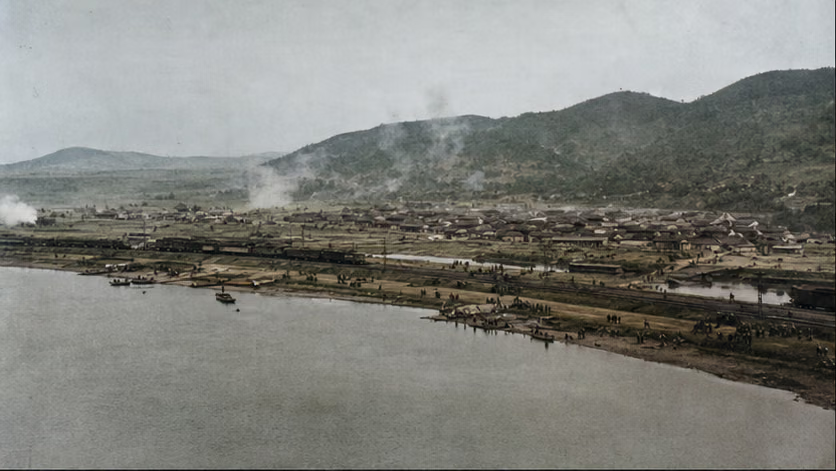 Battle of Longtan1927.08Chiang Kai-shek had only just stepped down, Nanjing and Wuhan were still locked in confrontation, and Sun Chuanfang's 60,000 troops crossed the Yangtze by night into the opening, driving straight to Longtan under Nanjing's eyes: after 7 days of bloody fighting, the enemy force that had crossed the river was almost entirely destroyed; it was the closest the Nanjing regime ever came to collapse, and Sun Chuanfang's final all-in wager.
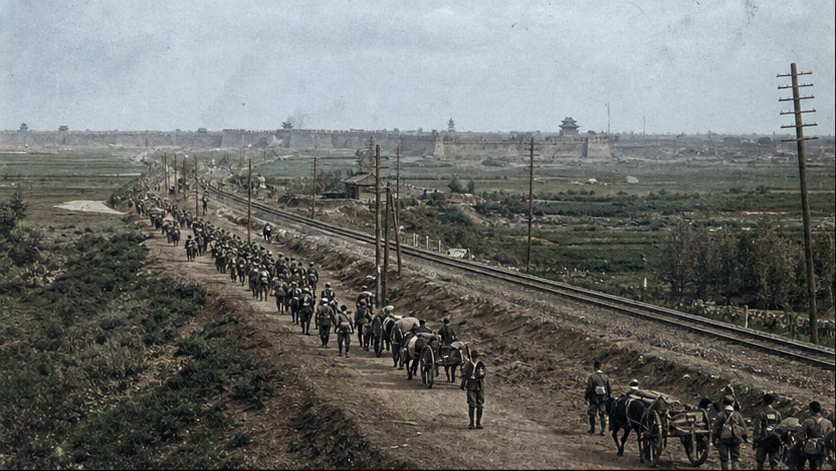 Second Northern Expedition (incl. the Jinan Massacre)1928.04Four group armies converged on Beijing and Tianjin, and in military terms the outcome was scarcely in doubt--what was actually remembered were two things that happened along the road: Japanese forces slaughtered soldiers and civilians in Jinan, forcing the Northern Expeditionary Army to detour, and the Kwantung Army blew Zhang Zuolin, train and all, into the air at Huanggutun. A Chinese war of unification was rewritten twice by Japanese intervention.
Sources and Open Questions
Main sources (proposed verification paths):
- Northern Expedition archives held by the KMT Party History Commission; *Military History of the Northern Expedition* (Taiwan official edition)
- Volumes on the Great Revolution period from the CCP History Publishing House; military-history materials related to Ye Ting's Independent Regiment
- Soviet side: Cherepanov, *The Northern Expedition of the Chinese National Revolutionary Army*; selected Communist International archives
- Contemporary newspapers: *Shen Bao* and *Ta Kung Pao* war-zone reporting, 1926–28
Open questions: the different bases for both sides' troop strengths; chronological details of the engagements entering Hunan; the concrete process of the Fujian-Zhejiang change-of-flag advance; the various bases for the number of April 12 dead; casualties on both sides in the Nanjing Incident; number of dead in the Jinan Massacre; casualties in the Jiangxi campaign; concrete procedures of Ninghan reunification; tune lineage of the *National Revolution Song*; number of Beijing government cabinet changes; meeting session and resolution date for the resolution to launch the Northern Expedition; original planning documents for the first-Wu-then-Sun strategy; the text of Chen Duxiu's Northern Expedition articles and the process of criticism against them; the relationship between Guangdong's fiscal structure and the decision to send troops; routes and quantities of Soviet munitions; detailed military revenue and expenditure for each stage.
All images on this site are AI-generated depictions. They are not historical photographs, not primary sources, and do not depict any real individual.