Engagement Archive · Battle of Longtan
Chiang Kai-shek had only just stepped down, Nanjing and Wuhan were still locked in confrontation, and Sun Chuanfang's 60,000 troops crossed the Yangtze by night into the opening, driving straight to Longtan under Nanjing's eyes: after 7 days of bloody fighting, the enemy force that had crossed the river was almost entirely destroyed; it was the closest the Nanjing regime ever came to collapse, and Sun Chuanfang's final all-in wager.
Engagement Data
| Item | Details |
|---|---|
| Time | 1927.8.25 – 8.31, 7 days |
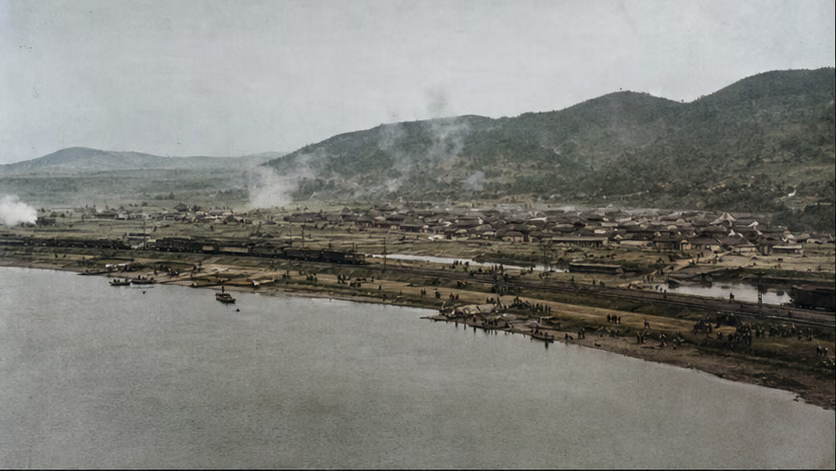
| Place | South bank of the Yangtze east of Nanjing: the Longtan–Qixia Mountain–Wulong Mountain line (middle section of the Shanghai–Nanjing Railway) |
| Part of | Northern Expedition (for the larger situation, see *Northern Expedition · Overview*) |
| Belligerents | National Revolutionary Army (He Yingqin's First Route, Li Zongren's Seventh Army, with Bai Chongxi returning from Shanghai to reinforce and strike from the flank; naval fleet support) / the roughly 60,000-strong river-crossing corps of the remnants of Sun Chuanfang's Five-Province Allied Army |
| Result | Sun's river-crossing force was encircled and destroyed; more than 30,000 were captured (figures vary by account); Sun Chuanfang's power collapsed from this point on |
Belligerents
| Item | National Revolutionary Army | Sun's River-Crossing Corps |
|---|---|---|
| Strength | At first, only part of the First Route faced the attack and fought in haste; by the time of the encirclement, the three converging forces totaled around 100,000 (figures vary by account) | About 60,000, crossing the river with nearly all available forces |
| Key factor | The navy (Chen Shaokuan's vessels and others) controlled the river and cut the crossing points: Sun's troops who had crossed became an isolated force with the river at their backs | A crossing with no road home: too few boats and the river sealed off; victory meant taking Nanjing, defeat meant no retreat |
| Command | After Chiang stepped down, the Nanjing side had no clear head; He, Bai, and Li coordinated on the battlefield on their own, and the Guangxi Clique's prestige rose sharply from this point | Sun Chuanfang personally supervised the crossing from the north bank |
Terrain and Conditions
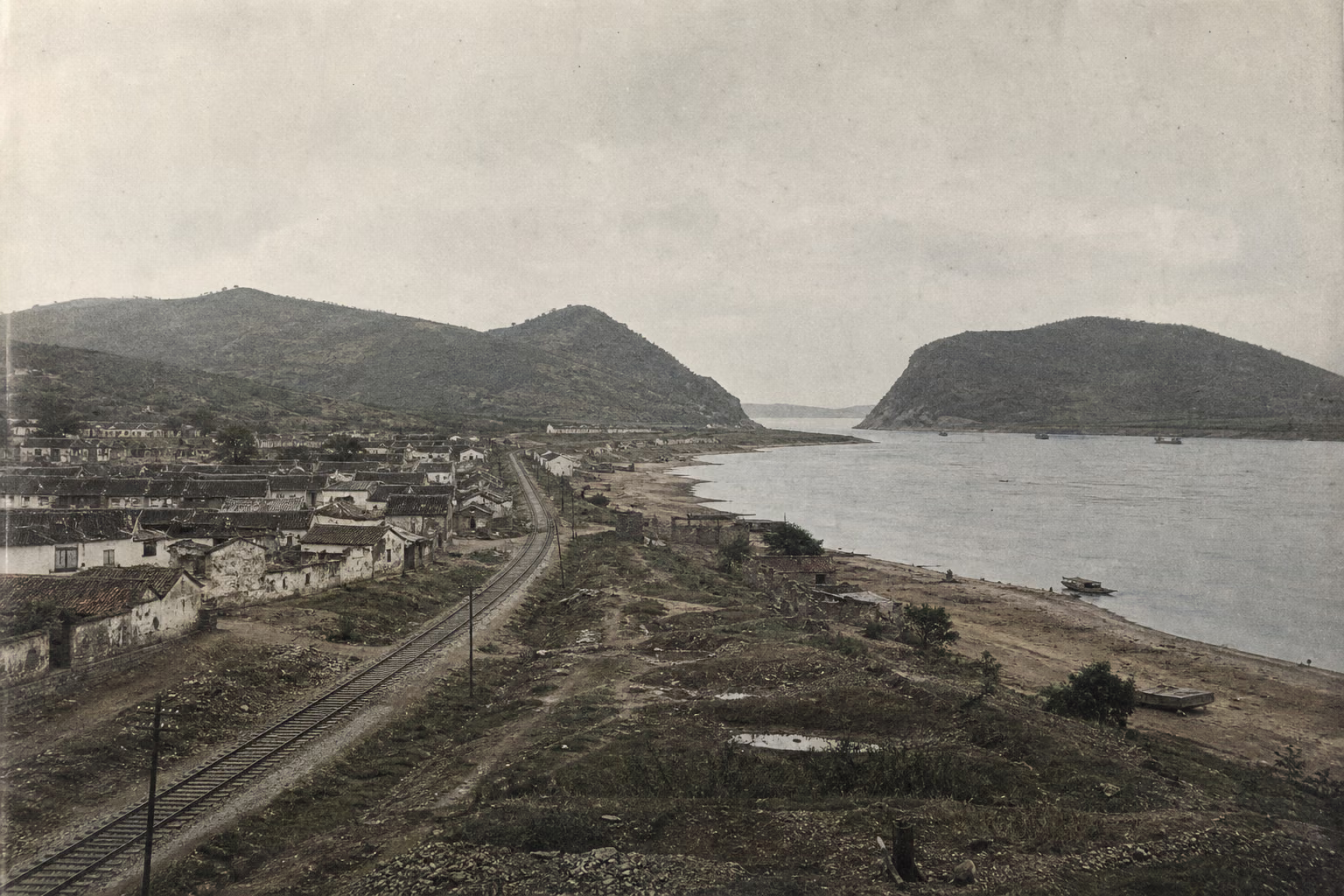
In August 1927, the Nanjing regime was beset from within and without: Chiang Kai-shek stepped down on 8.13, the Nanjing-Wuhan confrontation remained unresolved, and Xuzhou had just been lost. Sun Chuanfang gathered his remnants north of the Yangtze and saw the opening clearly. Longtan lay between Nanjing and Zhenjiang; the Shanghai–Nanjing Railway passed through it, while Qixia Mountain and Qinglong Mountain pinched the river into a defile. If the crossing succeeded, Sun could sever the Shanghai–Nanjing line from east and west and press directly toward Nanjing.
Why It Was Fought
The Zhengzhou convergence had not stitched the revolutionary camp back together (see *Battle of Henan (1927)*). After the April 12 Shanghai purge and the formation of rival Nanjing and Wuhan central governments, Wuhan also reached the point of "separating from the Communists" on July 15. The greatest political difference between Nanjing and Wuhan thus disappeared, but the confrontation remained. August made Nanjing's troubles worse: Xuzhou had just been lost; on August 13, Chiang Kai-shek publicly announced that he was stepping down; the Nanjing side had no clear head; and its main forces had been shifted west to face Wuhan. The lower Yangtze, won over the course of a year of the Northern Expedition, was now at its thinnest point of defense.
Someone north of the river saw all of this. Since losing Shanghai and Nanjing, Sun Chuanfang had gathered his remnants north of the Yangtze: Jiangxi had buried his main force (see *Battle of Nanchang (1926)*), Fujian, Zhejiang, and Jiangsu had fallen one after another, and only the designation of a five-province allied commander remained. All year, he had been waiting for a chance to return south of the Yangtze. The opening in August was that window, and it was plainly not going to open a second time: once Nanjing and Wuhan compromised, the southern armies would have their hands free, and the northern-bank remnants would have no stake left to wager. If not now, when? Everything he could see was printed in the newspapers: defeat at Xuzhou, Chiang's resignation, the westward transfer of the main force. What he could not see was which side the naval fleet stood on. The outcome of this gamble had already been fixed before he made his move; he simply did not know it. The meeting and date at which he resolved to cross by night with all available forces are not recorded (unverified).
The chosen point of attack was precise. Longtan lay between Nanjing and Zhenjiang; the Shanghai–Nanjing Railway ran through the town, while Qixia Mountain and Qinglong Mountain narrowed the river into a defile. If the crossing succeeded here, Sun could cut the Shanghai–Nanjing line from east and west and press directly toward Nanjing. About 60,000 Sun troops moved out with nearly all available forces, and the nature of the stake was written into the opening move: there were too few boats, the river could be sealed at any time, victory meant recovering Jiangnan, and defeat meant no road home.
The misjudgments on both sides revealed themselves in the same week. Nanjing had not calculated that Sun Chuanfang would dare cross by night with all available forces. After the main force had been shifted west, only part of the First Route faced him, and it fought in haste. Sun Chuanfang wagered that the Nanjing side had no head, no reinforcements, and no time; each of those three was only half true. He Yingqin, Li Zongren, and Bai Chongxi indeed had no single commander over them, but they coordinated on the battlefield on their own. The heaviest item he miscalculated was the navy: by this point the fleet had turned toward the Nanjing side (course unverified), and once the river was sealed, the 60,000 who had crossed became an isolated force with the river at their backs.
The material base of each side was written just as clearly. Sun's vulnerable point was boats: 60,000 men and one river, with requisitioned civilian craft sufficient only for crossings in batches by night; little heavy equipment crossed, and ammunition and grain all depended on the crossing line. That line was in the navy's hands, not his. Nanjing's material base was the railway: its immediate strength was thin, and its capital for turning the situation lay on the Shanghai–Nanjing line. Bai Chongxi led troops from Shanghai, gathering men as he went and returning westward by train, while He Yingqin and Li Zongren drew in their two routes; in 7 days, they assembled a three-sided encirclement. Whether anyone inside Sun Chuanfang's camp objected to committing all available forces to the river crossing does not appear in surviving records (unverified). On the Nanjing side, with no clear head, there was not even a court-level struggle to speak of; coordination grew out of the battlefield, not out of decisions made in Nanjing.
On the night of August 25, Sun's troops embarked at multiple points, including Wangjiangting, and crossed the river under cover of darkness. In fact, Sun Chuanfang had one road that did not cross the Yangtze: defecting north to Zhang Zuolin's Fengtian side and living under another's roof. He later took that road, but only after Longtan, and after 60,000 men had been destroyed. For Nanjing, the loss of Longtan meant the capital could not be held and the gains of the Northern Expedition would be lost in a day. For Sun Chuanfang, after this night there would be no five provinces left. Both sides staked everything on an encounter with no road of retreat.
Course of the Engagement
| Phase | Time | Key points |
|---|---|---|
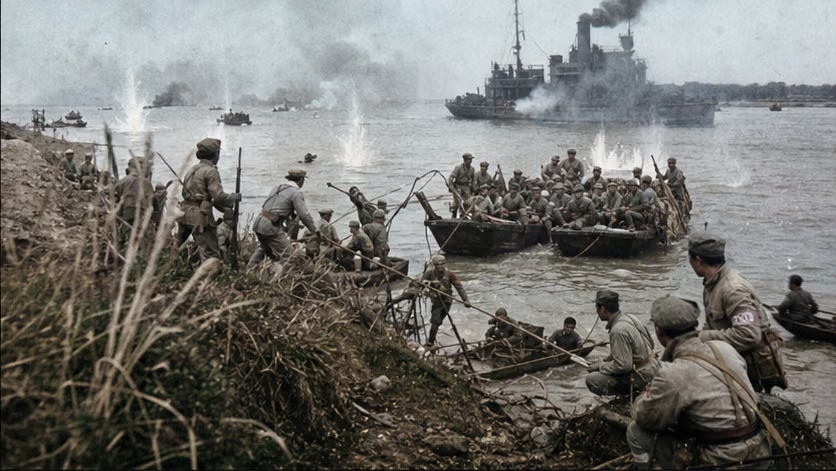
| Night crossing | Night of 8.25–morning of 8.26 | Sun's troops crossed by night from multiple points, including Wangjiangting, launched a surprise attack, occupied Longtan station and the town area, and cut the Shanghai–Nanjing Railway |
| See-saw fighting | 8.26–8.28 | Longtan town and Qixia Mountain changed hands repeatedly (the station changed hands several times; details unrecorded); the First Route Army fought while concentrating its forces, and Bai Chongxi, after hearing the news in Shanghai, led troops westward along the railway to strike from the flank |
| Navy seals the river | From 8.26 | Naval guns bombarded the crossing points and intercepted ferry boats: Sun's reinforcements and retreat route were cut at the same time (the navy's turn toward the Nanjing side remains unverified) |
| General assault and encirclement | 8.29–31 | He Yingqin, Li Zongren, and Bai Chongxi attacked from three sides; on 8.30, the general assault took Longtan, and on 8.31 the remaining enemy was cleared out; Sun's river-crossing force was destroyed |
Casualties and Losses
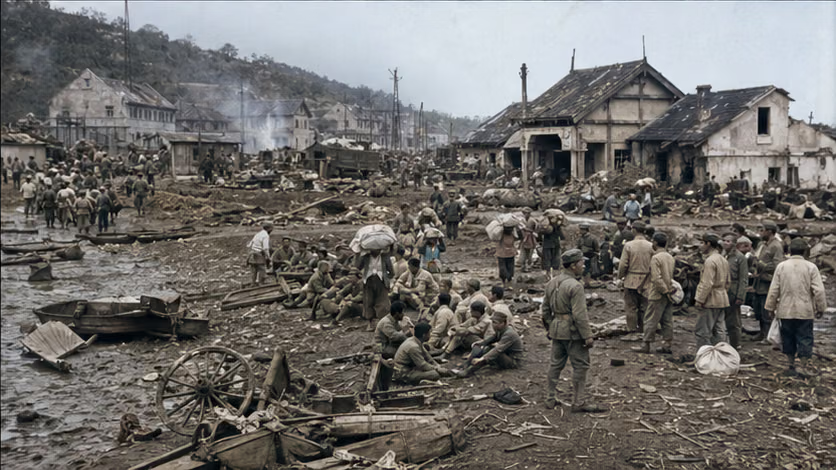
- Sun's forces: tens of thousands killed in action or drowned, and more than 30,000 captured (figures vary by account) - the Five-Province Allied Army lost its last capital in a single battle.
- National Revolutionary Army: nearly 10,000 casualties (figures vary by account), with heavy losses in both the First Route Army and the Seventh Army.
- ※ Civilians: 7 days of fighting in Longtan town, townspeople displaced, and corpses floating on the river for ten days and more (local records unverified).
Aftermath
- The Nanjing regime passed its line of survival. A contemporary comment of the sort Tan Yankai wrote in his congratulatory couplet to He Yingqin, "command composed, safety and danger hung on one battle" (couplet text unverified), captured the weight of the engagement.
- The Guangxi Clique (Li and Bai) grew powerful on the strength of its battlefield achievement: the internal power structure of the Nanjing side was reordered, and after Chiang returned to power in 1928, his grievances with the Guangxi Clique deepened from this point (leading into the Chiang–Gui War).
- Sun Chuanfang went north to the Fengtian Clique and lived as a dependent; in 1935, he was assassinated in Tianjin by Shi Jianqiao (a revenge case for her father that caused a public sensation, noted here in passing).
- The Nanjing-Wuhan confrontation changed pressure under the fact that "the Nanjing side had won a major victory"; in September, Nanjing and Wuhan merged.
Accounts of Those Present
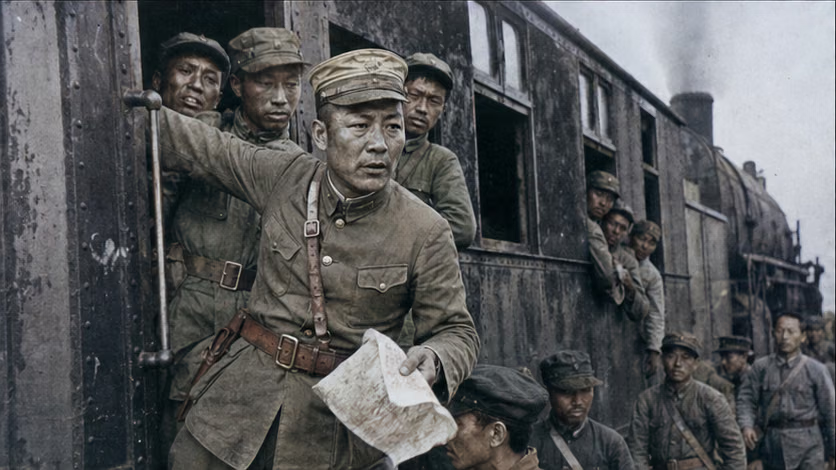
- Bai Chongxi's train: hearing the alarm in Shanghai, he requisitioned locomotives and moved along the Shanghai–Nanjing line, gathering troops as he went and driving all the way back to the battlefield; in this one battle, the name "Little Zhuge" proved its substance.
- The boats on the river: crossing the Yangtze was easy; returning across it was hard. Once the navy changed sides, the only retreat left to 60,000 men was to swim. The ratio between corpses floating on the river and those taken prisoner wrote out the four characters "fighting with one's back to the river."
- Sun Chuanfang's telescope: supervising the battle from the north bank, watching the river-crossing corps be destroyed with no boats to send in support; the final scene of the five-province allied commander was to look on from across the river.
The Ground
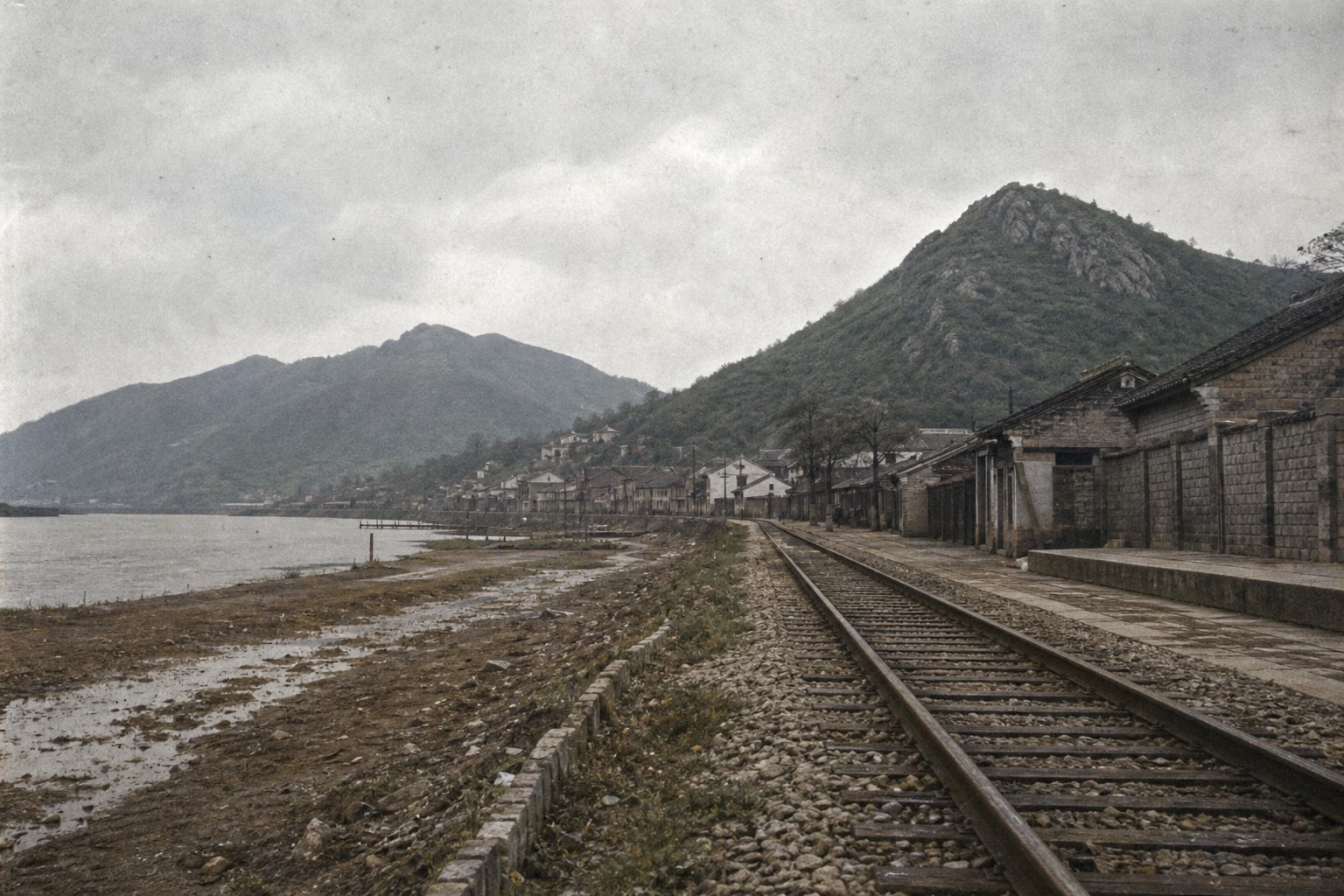
- Three layers of space: riverbank, railway, and mountain defile. The crossing beachheads, Longtan station, and the heights of Qixia Mountain made each other's gain and loss consequential.
- The "third-party firepower" of naval guns: the line of fire on the river cut north from south, making it the spatial switch of the engagement.
- Night crossing and morning attack: the opening of this engagement is a classic case of multipoint penetration behind the enemy line.
How Each Side Records It
- National Revolutionary narrative: a battle for the survival of the Northern Expedition and a classic victory of the few over the many. In the separate memoirs of He, Bai, and Li, the main figure differs each time: one victorious battle, three claims to first credit, a living specimen of factional writing.
- Sun's side and later Beiyang commentary: recorded as a last throw after "the mandate had run out"; in his later years, Sun Chuanfang practiced Buddhism and did not speak of military affairs.
- Later generations: extremely highly regarded in military history but little known to the wider public, a purely military decisive battle caught between the political narratives of April 12 and the Nanjing-Wuhan split.
Disputes and Sensitivities
- The dispute over first credit (the claim that He Yingqin held the line, the claim that Bai Chongxi struck from the flank, and the claim that Li Zongren directed the battle): read the three sets of memoirs against one another and set them side by side without adjudicating.
- The handling and later destination of the more than 30,000 prisoners (incorporation and demobilization, unverified).
- The inside story and price of the navy's turn (figure disputed).
Sources and Open Questions
Sources: Li Zongren's memoirs, Bai Chongxi interview records, the prequel sections of He Yingqin's *Eight Years of Resistance and Tai'erzhuang* (bibliography unverified); *Historical Materials on the Northern Expedition*; Nanjing local gazetteers.
Open questions: the meeting and date of Sun Chuanfang's decision to cross the Yangtze; whether there were objections inside Sun's army to committing all available forces to the crossing; the accounting bases for both sides' troop strengths, casualties, and prisoners; how many times the station changed hands; the course of naval participation; the text of Tan Yankai's congratulatory couplet; the handling of prisoners; the accurate phrasing of the brief note on the Shi Jianqiao case.
All images on this site are AI-generated depictions. They are not historical photographs, not primary sources, and do not depict any real individual.