Engagement Archive · Battle of Nanchang (1926)
The Northern Expeditionary Army entered Nanchang twice and was twice broken there; only on the third attempt, with an encircling general assault, did it take the city -- Sun Chuanfang's main force as commander-in-chief of the five southeastern provinces was destroyed in Jiangxi, while the Northern Expeditionary Army paid its heaviest casualties since the war began.
Engagement Data
| Item | Content |
|---|---|
| Time | 1926.9 early entry into Jiangxi – 11.8 Nanchang taken |
| Place | Jiangxi: Nanchang and the line of the Nanxun Railway (Jiujiang--Nanchang), the Gan River and Xiu River basins |
| Belongs to | Northern Expedition · War against Sun Chuanfang's five southeastern provinces (for the higher-level overview, see *Northern Expedition · Overview*) |
| Attacker | National Revolutionary Army: Sixth Army (Cheng Qian), Third Army (Zhu Peide), Second Army, Seventh Army (Li Zongren), part of the First Army (Chiang Kai-shek supervising in person), etc. |
| Defender | Sun Chuanfang's Beiyang forces: main Jiangxi-facing force of the Five-Province Allied Army (units under Deng Ruzhuo, Zheng Junyan, and others; order-of-battle details unrecorded) |
| Result | 11.8 Nanchang taken; Sun Chuanfang's main Jiangxi force was destroyed, and Sun himself fled east by boat; the southeastern situation was settled |
Belligerents
| Item | Attacker | Defender |
|---|---|---|
| Strength | Several tens of thousands in the armies entering Jiangxi together (bases vary by account), the largest force the Northern Expeditionary Army committed in a single direction | Several tens of thousands in Sun Chuanfang's Five-Province Allied Army main force inside Jiangxi, deployed in depth along the Nanxun line and at Nanchang (bases vary by account) |
| Firepower | Mainly infantry, with limited artillery; equipment varied by army, while the First Army's direct-line units were relatively well organized | Sun's forces were relatively well equipped, held the railway, and could maneuver by rivers and lakes; naval vessels assisted the defense (details of that assistance unrecorded) |
| Posture | Fresh from victory in Hunan-Hubei, but split between two fronts (Wuchang had not yet fallen), with long supply lines | Fighting on home ground, rested and waiting, able to counterattack through gaps between the Northern Expeditionary armies |
| Command | The armies were factionally mixed (Hunan, Yunnan, Guangxi, Guangdong, and Chiang's direct-line units), and coordination repeatedly failed | Sun Chuanfang personally came to Jiujiang to supervise the fighting and could command one side with authority |
Terrain and Conditions
(For the wider situation in 1926, see *Northern Expedition · Overview*; this section concerns Jiangxi only.)
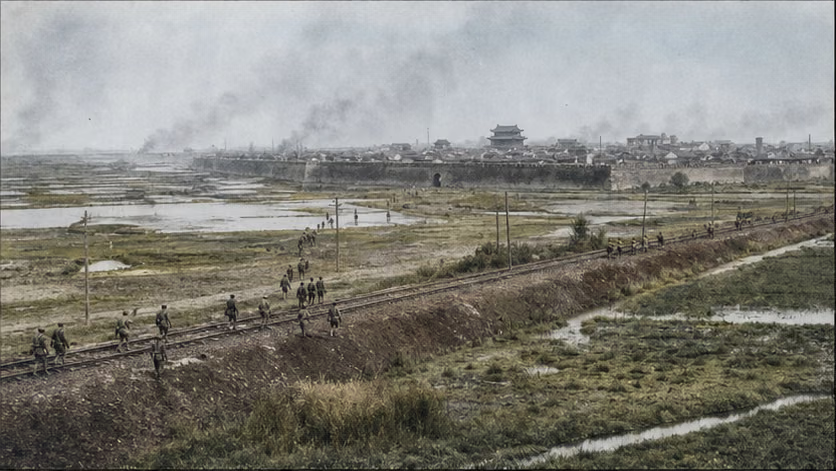
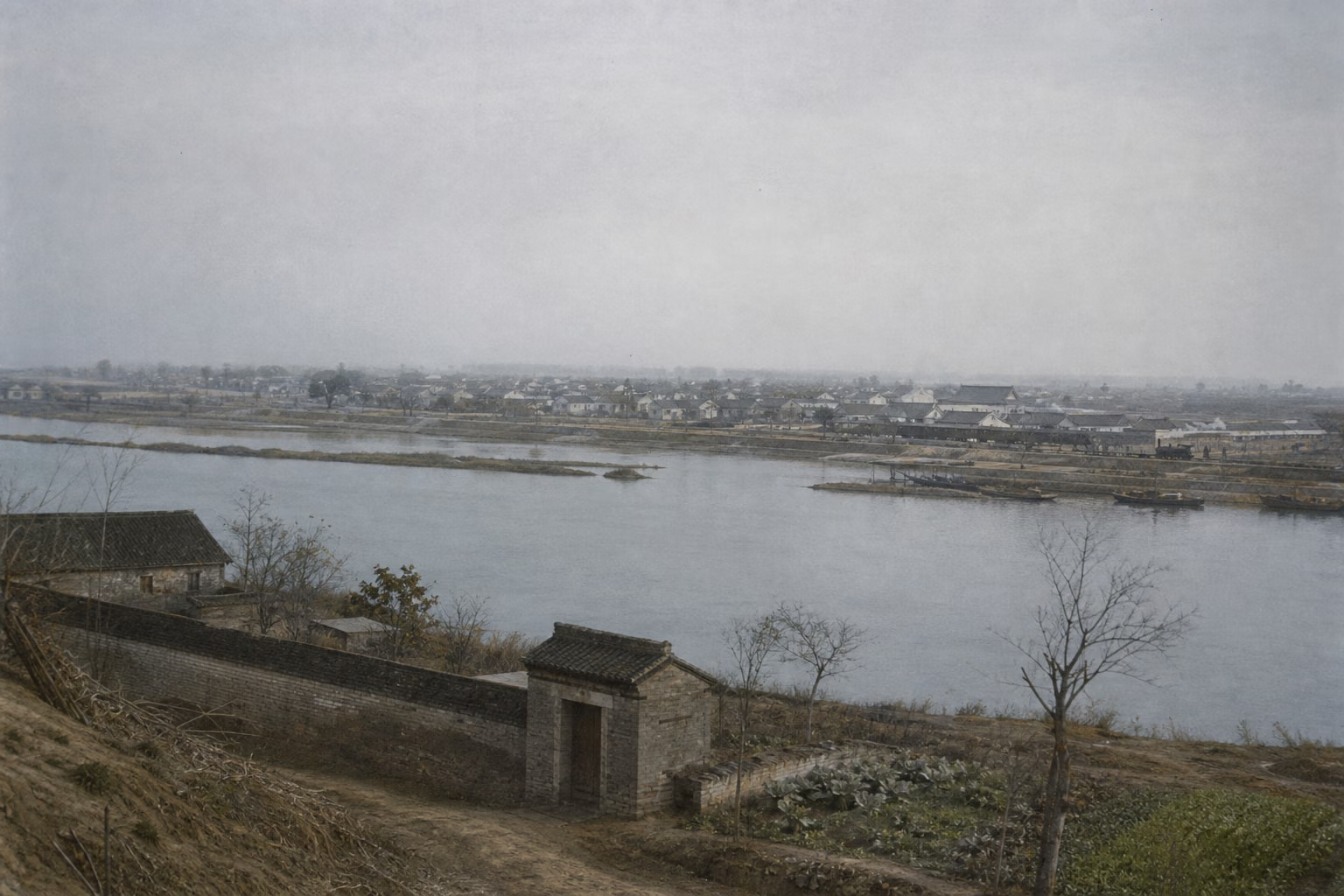
Jiangxi was the gateway to Sun Chuanfang's five southeastern provinces. The province is mountainous; the Gan River runs through it from south to north, Jiujiang sits on the Yangtze, and Nanchang stands on the lower Gan River at the terminus of the Nanxun Railway -- whoever controlled the Nanxun line controlled Jiangxi's main artery. Sun's main force deployed along the railway, while the Northern Expeditionary Army, on entering Jiangxi, had to cross mountains and leave behind its supply base in Hunan-Hubei. Sun Chuanfang had watched the Northern Expeditionary Army and Wu Peifu fight to exhaustion in Hunan-Hubei, intending to move only after the Northern Expeditionary Army was worn down; when he acted, he chose precisely the opening created by the Northern Expeditionary Army being split between two lines, with the Siege of Wuchang still unresolved. Within the war zone, armies in transit conscripted labor and requisitioned grain, and defeated and routed soldiers scattered as a scourge. Local records often note the severity of Jiangxi's military disasters that year (details unrecorded).
Why It Was Fought
On the Hunan-Hubei front at the end of August, the outcome was no longer in doubt: Tingsi Bridge and Hesheng Bridge had both been broken in four days (see *Battles of Tingsi Bridge and Hesheng Bridge*), Wu Peifu's gateway to Wuhan lay open, and Wuchang was besieged in early September. Under Guangzhou's strategy of defeating the opponents one by one -- first Wu, then Sun, then Zhang -- the next opponent was Sun Chuanfang, commander-in-chief of the five southeastern provinces.
Sun Chuanfang had been watching for these two months. Holding Jiangsu, Zhejiang, Anhui, Jiangxi, and Fujian, he watched the Northern Expeditionary Army and Wu Peifu fight to the finish in Hunan-Hubei, waiting until the Northern Expeditionary Army was worn down before acting. But Wu collapsed too quickly: the two bridges were lost in four days, and if Sun waited any longer, what arrived would not be profit from another man's struggle, but the Northern Expeditionary Army with its hands free. Before moving, he first sent a circular telegram demanding that the Northern Expeditionary Army withdraw (the claim that its wording was "hard-line and tantamount to an ultimatum" is widely circulated; the original text and date of the telegram are unverified), then immediately shifted troops westward, adopting the posture of aiding Wu and attacking Hunan as the Five-Province Allied Army assembled toward Jiangxi. The point he chose for action was indeed shrewd: the Siege of Wuchang was still unresolved, the Northern Expeditionary Army was split between two lines, and the armies entering Jiangxi were a mixture of Hunan, Yunnan, Guangxi, Guangdong, and Chiang's direct-line units, with repeated coordination problems. That judgment itself was not wrong; the later two failed attacks on Nanchang proved it. What he had not counted was that watching from the side also incurred a debt: Wu Peifu had already collapsed, and Sun now had to receive the Northern Expeditionary Army's full blow alone. The fighting in Jiangxi became a separate decisive battle for the Five-Province Allied Army's main force.
Jiangxi was the indispensable square on this board. It was the western gate of Sun Chuanfang's five provinces and also pressed against the flank and rear of Hunan-Hubei: if Sun's army attacked Hunan through Jiangxi, the Northern Expeditionary Army's main force below Wuchang would be caught from front and rear. The province's main artery was the Nanxun Railway. Jiujiang connected to the Yangtze; Nanchang lay on the lower Gan River at the railway terminus, both provincial capital and Sun's main headquarters inside Jiangxi. Neither side could go around the city.
The Northern Expeditionary Army's calculation was to preempt: before Sun's army completed its concentration, it would enter Jiangxi first and seize the initiative in shifting from "fighting Wu" to "fighting Sun." The date and telegram in which that order to move first was issued are unrecorded (unverified). In early 9, the armies crossed the Hunan-Jiangxi border, and Chiang Kai-shek went personally to the front as commander-in-chief to supervise operations. Whether to take Nanchang first or first cut the Nanxun Railway had already produced different views inside the army; Li Zongren's memoir records that he himself advocated cutting the Nanxun line first, but that proposal was not adopted at the time (attested only in Li Zongren's account; unverified). In practice, the army first contested the city: Cheng Qian's Sixth Army entered an empty Nanchang -- whether under orders or in a rash move for credit, the books shift blame among themselves (see the final section) -- and several days later was driven out by Sun's counterattacks from north and south, suffering very heavy losses. In 10, Chiang personally supervised another attack, which was also checked. Only after two setbacks did the army switch to the policy of cutting the Nanxun line: cut the road first, then take the city. That change of route was bought with the casualties of two rounds.
The material limits behind the decision were just as clear. Entering Jiangxi meant crossing mountains and leaving the Guangdong-Hunan supply base; grain and ammunition all had to be relayed from the rear. There was no heavy artillery for siege warfare, so infantry had to be fed into the walls. The Siege of Wuchang still held down the main force, and the troops available for Jiangxi were not abundant to begin with. Military funds came from Guangdong finance and levies in occupied areas, while the paper currency carried with the army had limited credit in the war zone (unverified). This expeditionary supply line could not sustain a prolonged war. On Sun Chuanfang's side, he fought on home ground, could maneuver by rail, had naval vessels assisting the defense, and drew on the richer revenues of the five provinces. Yet the territory of all five provinces had to be defended at the same time, and the force he could concentrate in Jiangxi also had an upper limit (unverified). The cards in his hand were more orderly than those of the Northern Expeditionary Army, but he had to lay them across five tables.
At this moment, no more than ten days had passed since the collapse at Hesheng Bridge -- the war Sun Chuanfang had watched for two months had finally become his own to fight.
Course of the Engagement
| Stage | Time | Key Points |
|---|---|---|
| First entry into Nanchang | 9 mid-month | Cheng Qian's Sixth Army took advantage of Sun's main force being on the Nanxun line and Nanchang being empty, and around 9.19 entered Nanchang for a time (date details unrecorded); the First Division of the First Army (Wang Bailing) collapsed near Nanchang |
| Counterattack and expulsion | 9 late-month | Sun's army counterattacked from both north and south and formed an encirclement; the force inside the city stood isolated and broke out after street fighting, suffering severe losses; part of Cheng Qian's force was encircled and destroyed (accounts differ on how Cheng Qian himself escaped; unverified) |
| Seesaw and failed renewed attack | 10 | Fighting in Jiangxi repeatedly seesawed; Chiang Kai-shek personally supervised another attack on Nanchang, but the mid-10 assault was checked, with very heavy casualties (details of the setback and casualty figures unverified), and the army lifted the siege and turned to attack the Nanxun line |
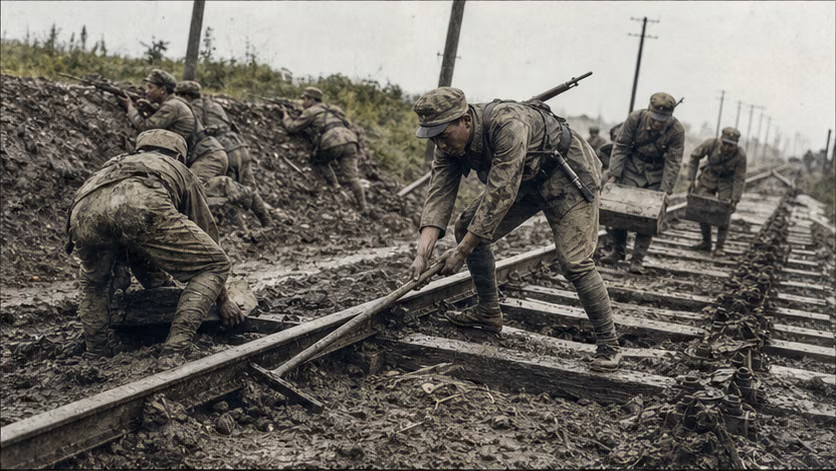
| Cutting the Nanxun line | early 11 | The policy shifted to cutting the railway first and taking Nanchang afterward: the Seventh Army and other units fought hard along the De'an, Mahuiling, and Tujiabu line, cut the Nanxun Railway, and destroyed Sun's main force in northern Jiangxi in detail (chronology of the individual actions unverified) |
| Taking Nanchang | 11.8 | In the encircling general assault, the defenders collapsed and Nanchang was retaken; Sun Chuanfang's main force was destroyed in Jiangxi, and Sun himself fled east by warship |
Casualties and Losses
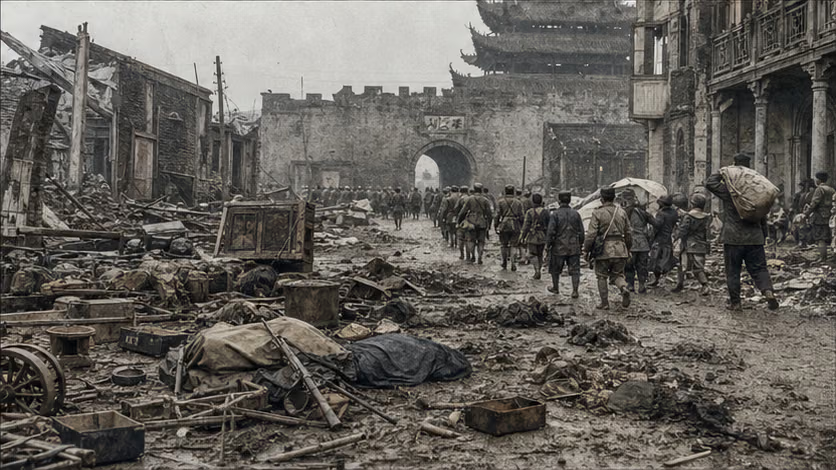
- Attacker: the Northern Expeditionary Army's casualties in this engagement were the heaviest since the war began, with figures ranging from more than ten thousand to several tens of thousands by different bases (unverified; two accounts coexist); Cheng Qian's Sixth Army, Wang Bailing's First Division, and other units suffered especially sharp losses.
- Defender: Sun Chuanfang's main Jiangxi force was destroyed, with more than ten thousand captured (figures vary by account); from this point the Five-Province Allied Army of the Southeast lost the strategic initiative.
- ※ Civilians and prisoners of war: Sun's army dealt harshly with Northern Expeditionary officers and men captured after entering the city, and with civilians suspected of "collaboration"; executions and torture appear in Northern Expeditionary accounts (specific circumstances and head-count bases vary by account). Forced labor, grain requisition, and harassment by routed troops spread across the Jiangxi war zone; as usual, both must be recorded.
Aftermath
- Once Sun Chuanfang's main Jiangxi force was lost, Fujian and Zhejiang immediately began to waver: from 12, Fujian commanders changed flags one after another, and the Eastern Route Army took Fuzhou and entered Zhejiang without bloodshed (the Fujian-Zhejiang advance is included in *Northern Expedition · Overview*); in the spring of 1927, the fighting reached Shanghai and Nanjing (see *Battles of Shanghai and Nanjing*).
- After Jiangxi was secured, the Northern Expeditionary Army headquarters moved to Nanchang -- and Nanchang soon became the stage for internal power struggle within the KMT. The capital-relocation dispute of early 1927 (Wuhan vs. Nanchang) began from here (process unverified).
- Chiang Kai-shek's command in this engagement suffered setbacks, damaging his personal military prestige -- this evaluation belongs to the layer of later interpretation and should be marked as such; but it is also a fact that Sun's main force was ultimately destroyed by Chiang's army.
Accounts of Those Present
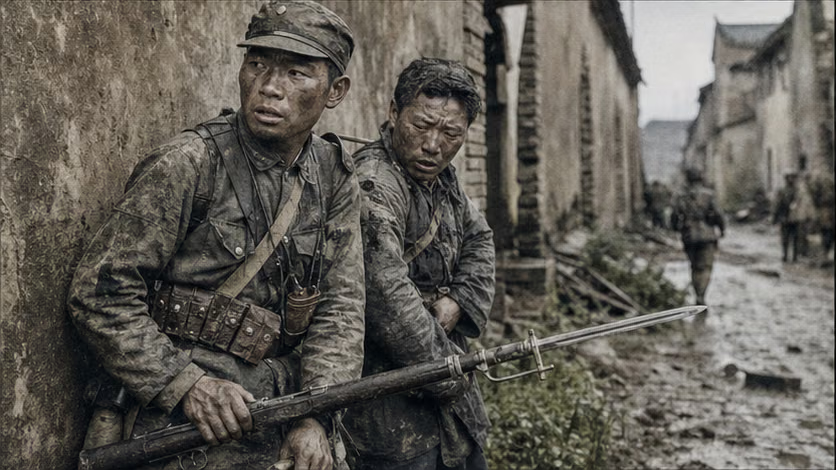
- The price of going in and coming out once: the swift success when the Sixth Army entered an empty city and the breakout when the counterattack arrived were separated by only a few days; among the officers and men of the units encircled and destroyed, most did not make it out of Nanchang (the circumstances of escape and destruction are unverified).
- The direct-line rout: Wang Bailing's First Division -- a Whampoa direct-line unit and one of Chiang Kai-shek's original units -- collapsed without fighting near Nanchang, enraging Chiang (disciplinary details unrecorded). The direct line was not an iron plate either; this is a point often overlooked in this engagement.
- Sun's army's reprisals: after the counterattack retook the city, Sun's army dealt harshly with prisoners and suspected civilians (※; see the Casualties and Losses section) -- Beiyang military discipline left an evil name in Jiangxi.
- Victory by changing roads: after two failed attacks on the city, the army turned against the Nanxun line -- first cutting off its legs, then taking its heart. Nanchang in the end was taken by encirclement, not by storm.
The Ground
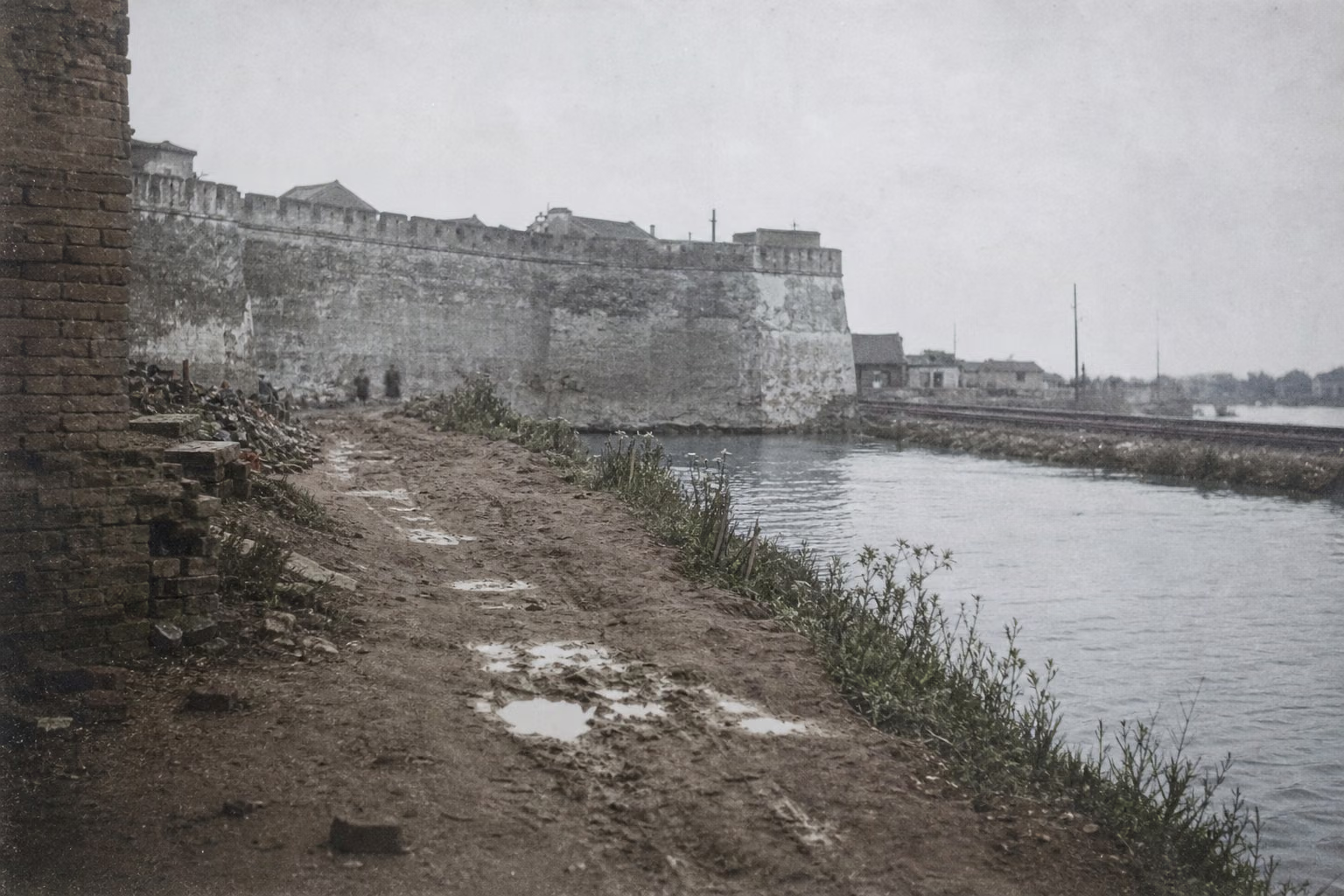
- Gan River + Poyang Lake water network + Nanxun Railway: Jiangxi's axes of attack and defense all lay on water and rails. Units away from the railway lost mobility; units holding the railway held the tempo.
- Nanchang city: a fortified plain city on the east bank of the Gan River (details of the city defenses unrecorded), where a frontal assault faced the double obstacle of walls and rivers and lakes.
- De'an--Mahuiling--Tujiabu: a chain of nodes on the Nanxun line. With each node cut, Nanchang became that much more isolated -- a sample of "railway-node warfare."
How Each Side Records It
- National Revolutionary narrative (the Northern Expeditionary Army's own): the hardest engagement of the Northern Expedition, a final victory won through endurance after two setbacks; Chiang Kai-shek's personal supervision at the front is one of the main lines of the official narrative.
- Beiyang side and local memory: Sun Chuanfang's military career turned here from rise to decline; Jiangxi local memory centers on military disaster -- months of seesaw fighting, forced labor, grain requisition, routed soldiers, and city walls changing flags, with local damage far deeper than in Hunan-Hubei.
- Two later narratives, side by side: the Communist narrative highlights the Sixth Army's (Cheng Qian's unit, where Communist political work was relatively strong) merit in entering first and the misery of its encirclement, as well as worker and peasant support for the Northern Expeditionary Army; the KMT narrative records the combined effort of the armies and Chiang's command, and tends to understate the defeat in the first entry into Nanchang. The assessment that "Chiang's personal military prestige was damaged" belongs to the layer of later interpretation.
Disputes and Sensitivities
- Responsibility for the two setbacks: whether Cheng Qian advanced rashly or coordination failed, and where responsibility lay for the rout of Wang Bailing's division, are matters on which the memoirs shift blame among themselves and require source-by-source checking.
- Casualty bases: accounts differ sharply on Northern Expeditionary Army casualties in this engagement.
- ※ Records of Sun's army's treatment of prisoners and civilians come mainly from Northern Expeditionary sources; parts resting on a single witness should be marked as attested in one source only.
- The connection between the capital-relocation dispute (Wuhan vs. Nanchang) and this engagement touches the characterization of the KMT internal struggle in 1927; narrative levels must be kept distinct.
Sources and Open Questions
Main sources (proposed verification paths):
- *Military History of the Northern Expedition* (Taiwan official edition), Jiangxi operations volume
- Memoirs of Cheng Qian, Li Zongren, Bai Chongxi, and others; Sixth Army military-history materials
- *Shen Bao* and *Ta Kung Pao* war reports from Jiangxi, 1926, 9–11
- Jiangxi local gazetteer records of military disaster
Open questions: the different bases for both sides' troop strengths; the original text and date of Sun Chuanfang's circular telegram demanding that the Northern Expeditionary Army withdraw, and the chronology of his westward troop movement; the date and dispatch text of the Northern Expeditionary Army's order to enter Jiangxi first; other records of the debate inside the army over attacking Nanchang first or cutting the Nanxun line first (beyond Li Zongren's memoir), and why Li's proposal was not adopted at the time; the exact date of the first entry into Nanchang; the circumstances of Cheng Qian's escape and of the units encircled and destroyed; details of the rout and discipline of Wang Bailing's division; the specific course and casualties of the failed renewed attack in 10; the chronology of the actions along the Nanxun line; the order-of-battle disposition of Sun's army defending Nanchang; original records of Sun's army's treatment of prisoners and civilians; the different bases for the Northern Expeditionary Army's total casualties in this engagement; the Northern Expeditionary Army's military fund-raising and the credit of the army's paper currency inside Jiangxi; the evidentiary basis for estimating the upper limit of Sun Chuanfang's forces that could be concentrated in Jiangxi; details of naval assistance in the defense; the course of the capital-relocation dispute.
All images on this site are AI-generated depictions. They are not historical photographs, not primary sources, and do not depict any real individual.