Engagement Archive · Battles of Tingsi Bridge and Hesheng Bridge
Wu Peifu set two hard lines at Wuhan's southern gate, and the National Revolutionary Army's Fourth Army smashed through both in four days -- the Hunan-Hubei battlefield was settled from that point, and the Fourth Army was thereafter called the "Iron Army."
Engagement Data
| Item | Content |
|---|---|
| Time | Tingsi Bridge 1926.8.26–27; Hesheng Bridge 1926.8.30 |
| Place | Within Xianning, Hubei: Tingsi Bridge (along the Canton-Hankow Railway), Hesheng Bridge (roughly a dozen-plus kilometers north of Tingsi Bridge) |
| Affiliation | Northern Expedition · Hunan-Hubei decisive battles (for the higher-level overview, see Northern Expedition · Overview) |
| Attacking side | National Revolutionary Army Fourth Army (army commander Chen Keyu, deputy army commander Zhang Fakui at the front), comprising the Tenth Division, Twelfth Division, and Ye Ting's Independent Regiment (vanguard) |
| Defending side | Wu Peifu's Beiyang forces: Tingsi Bridge defenders (commanded by Song Dapei and others; unit designations in detail unrecorded); at Hesheng Bridge, Wu Peifu personally led reinforcements in setting the defense |
| Result | The two bridges were taken in succession, the main Wu forces routed, and Wu retreated to defend Wuhan; the Northern Expeditionary Army reached the walls of Wuchang |
Belligerents
| Item | Attacking Side | Defending Side |
|---|---|---|
| Strength | The Fourth Army committed roughly around 20,000 men in the front line (overall engagement commitment varies by statistical basis) | About 20,000 defenders at Tingsi Bridge, and also several tens of thousands deployed at Hesheng Bridge (figures differ widely by basis) |
| Firepower | Mainly infantry small arms, with limited artillery; assaults on fortified positions depended mostly on infantry | Relied on prepared positions, with dense machine-gun fire points; toward Hesheng Bridge, Wu Peifu brought in guards and an armored train for support (details of the armored train's participation unrecorded) |
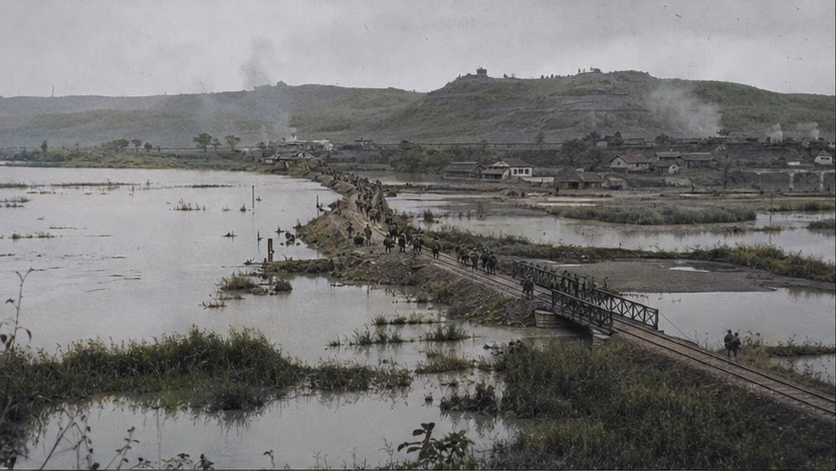
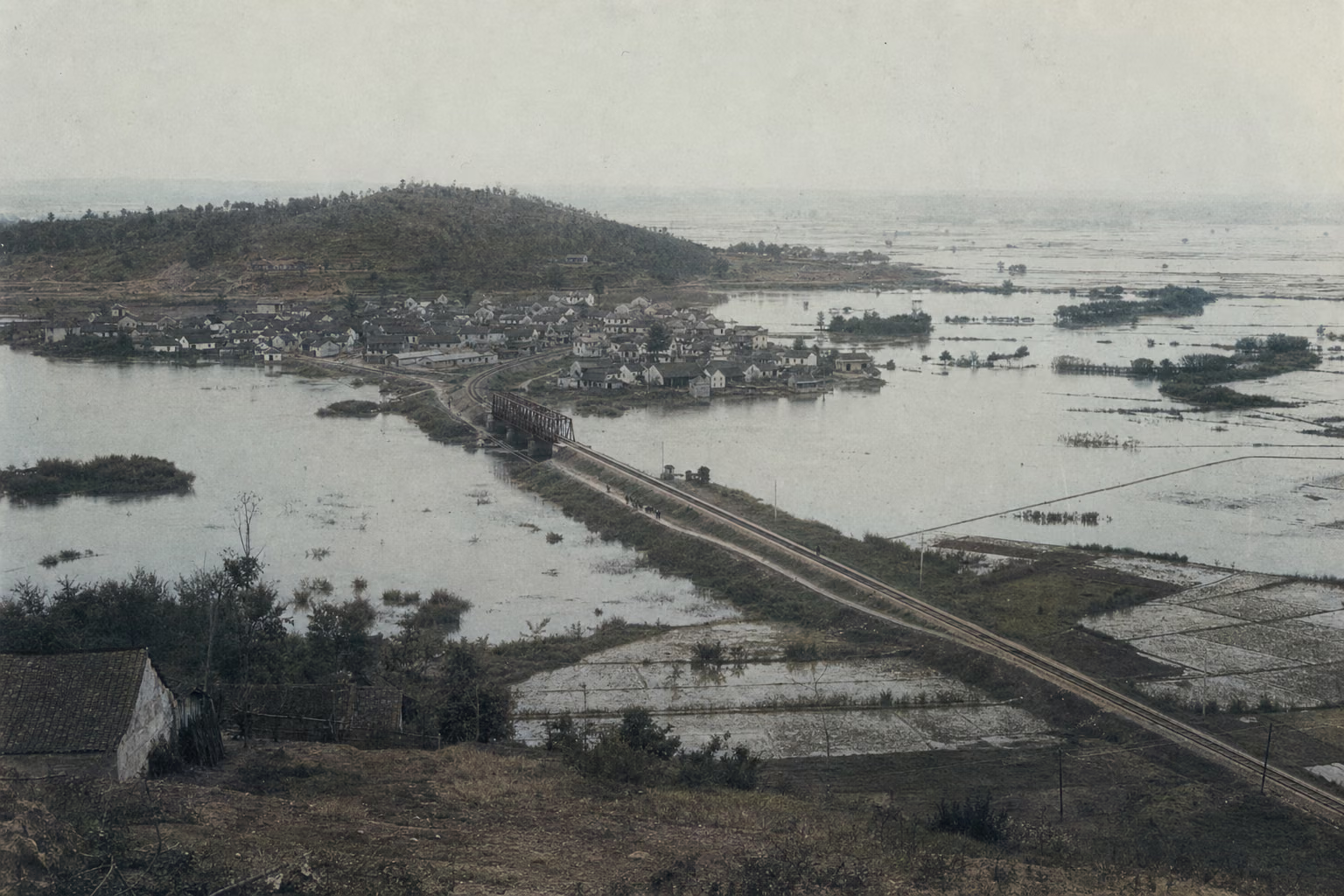
| Positions | Mobile warfare and direct assault | Tingsi Bridge was surrounded by water on three sides and backed by high ground, with only the railway-bridge line passable -- a textbook case of ground easy to defend and hard to attack |
| Morale | A force coming off earlier victories; the vanguard regiment had Communists as its backbone, and attacks depended on leaders going first | After repeated defeats and withdrawals, the defenders held difficult ground to the end, with Wu Peifu personally supervising the battle |
Terrain and Conditions
(For the larger situation in 1926 -- KMT-CPC cooperation, the Guangdong expedition northward, and the three great warlords -- see Northern Expedition · Overview; here the focus is only the Xianning line.)
Xianning lies more than a hundred li south of Wuchang, with the Canton-Hankow Railway running north-south through it. Rivers, lakes, and marshes crowd this area, and water levels were high at the turn from summer to autumn. Tingsi Bridge town was surrounded by water on three sides, with high ground screening it to the southwest, and by land there was almost only the single passage of the railway bridge -- this was the terrain Wu Peifu had chosen to block the Northern Expeditionary Army. People along the line farmed for a living; warlord troops had already passed through, conscripting labor and requisitioning grain, and with a major battle approaching, many young and able-bodied people took shelter elsewhere (details of local livelihood unrecorded).
Why It Was Fought
When the Northern Expeditionary Army held its oath-taking ceremony in Guangzhou on July 9, Wu Peifu was not in Hunan-Hubei -- he was at Nankou a thousand li away, personally supervising Zhili troops in assaulting the Guominjun's valley positions (see Battle of Nankou). The best-fighting Beiyang units were pinned along the Great Wall line for an entire summer, leaving the Hunan-Hubei rear empty. Guangzhou's strategy was defeat in detail -- first Wu, then Sun, finally Zhang (see Northern Expedition · Overview) -- and it seized precisely this opening: Ye Ting's Independent Regiment and other units advanced first into Hunan to support Tang Shengzhi, the main army then followed, and Changsha fell in succession; in mid-to-late August Pingjiang and Tongcheng also fell, the Miluo River line was broken, and Wu's main force in Hunan had already collapsed. By the time the Guominjun at Nankou withdrew westward in mid-August and Wu Peifu freed himself to return south, Hunan was no longer his.
He had to find a line south of Wuhan that could hold. The Canton-Hankow Railway was the Northern Expeditionary Army's main axis of attack, and before entering Wuchang it had to pass through Xianning; rivers, lakes, and marshes crowded this area, water levels were high at the turn from summer to autumn, Tingsi Bridge town was surrounded by water on three sides and backed by high ground, and by land almost only one railway bridge remained. Wu Peifu set the first line here and the second a dozen-plus kilometers north at Hesheng Bridge -- letting the terrain make up the manpower deficit. If these two lines could not be held, Wuchang would be an isolated city.
Neither side's calculation was complicated. Wu Peifu wagered on terrain, and also on the blade: he personally supervised the battle, placed enforcement troops behind the line, and had those who retreated beheaded -- an old-style army kept its front together with human heads. The Northern Expeditionary Army wagered on speed: while Sun Chuanfang still held his troops back and Wu's routed soldiers had not yet been gathered into formation again, it would smash open this last reserve in one stroke. The miscalculations later became clear. At Tingsi Bridge, the frontal uphill assault was checked on the first day and casualties mounted; natural strength really was natural strength. Behind the Hesheng Bridge line, however, the enforcement troops beheaded retreating officers and displayed their heads, yet still could not stop the whole line from routing -- a blade could not hold soldiers who no longer wanted to fight, and this was what Wu Peifu had not calculated.
The Northern Expeditionary Army made its decision on the road of pursuit: with Pingjiang already taken, the front line did not wait for the rear units to assemble but drove straight toward Xianning (the formation of this decision varies in detail across books and remains unverified); the Soviet senior military adviser Galen, who accompanied the army, had taken part in planning the Northern Expedition strategy, while his concrete degree of participation in the Hunan-Hubei battle remains unverified. The intelligence they held was that Wu's army in Hunan had collapsed and Wuhan was empty; what they lacked was the river-and-marsh line immediately in front of them -- the details of the defenders' deployment at Tingsi Bridge. They only felt out that gap after the first day's uphill assault failed, and in the end the people who filled it were not scouts, but local farmers who showed the way. Wu Peifu's decision was made on the road south: enforcement troops, guards, armored train -- everything that could be staked was staked on the two bridges. He calculated that after successive battles the other side would have to stop to reorganize and resupply, giving him time to gather routed troops. The other side did not stop.
Material boundaries hemmed both sides in tightly. Wu Peifu's last card lay behind him: the Hanyang Arsenal was the largest source of arms in the middle Yangtze. If Xianning was lost and Wuhan then lost, the arms source would be cut off -- the two bridges defended not only terrain, but the arsenal's moat. Yet the troops he brought back from Nankou had been spent through an entire summer, routed soldiers could not be gathered, and ammunition could not keep up. The Northern Expeditionary Army had limited artillery and depended entirely on infantry for assaults on fortified positions; grain and ammunition had to be carried north for a thousand li from Guangdong and Hunan, and each faster step lengthened the supply line by another segment -- speed was their only surplus. No clear record has been found of whether anyone among Wu's staff argued for abandoning Xianning and defending Wuhan directly, or whether anyone in the Northern Expeditionary Army argued for delaying the attack (unverified).
On August 26, the Fourth Army reached Tingsi Bridge and met the enemy that day. Wu Peifu had no second plan in hand: if Hunan-Hubei was lost, only Henan remained for him to retreat to, and his best-fighting troops had just been consumed for a whole summer in the valleys of Nankou. These two bridges were the last-stand formation itself.
Course of the Engagement
| Stage | Time | Key Points |
|---|---|---|
| Contact at Tingsi Bridge | 8.26 | The Fourth Army reached Tingsi Bridge, where the defenders used the water network and high ground to seal the railway bridge; the frontal uphill assault was checked, and casualties gradually mounted |
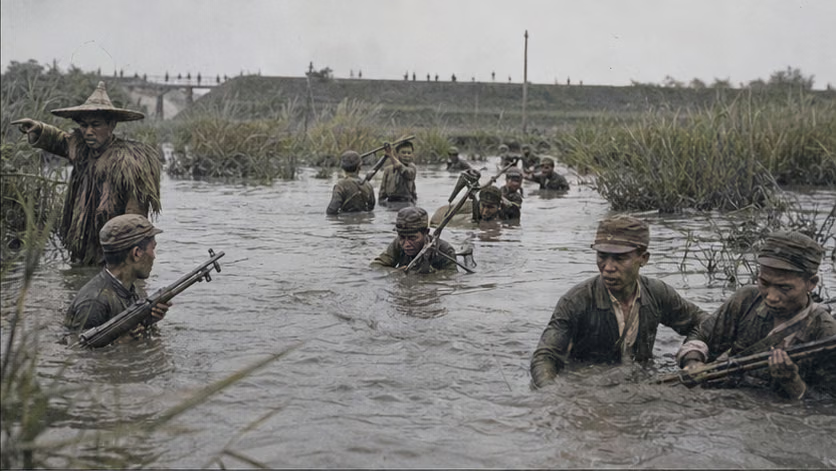
| Outflanking break-in | Night of 8.26–8.27 | Troops waded through water to outflank the side and rear (the episode of local farmers guiding them around to a point behind the defenders' line is widely circulated, but original records remain unverified); around the morning of 8.27, front-and-rear attacks broke the position, and the defenders abandoned the bridge and fled north |
| Deployment at Hesheng Bridge | 8.27–29 | Wu Peifu personally reached Hesheng Bridge to supervise the battle, gathered routed troops and brought in reinforcements, constructed a defense in depth along the hills, and placed enforcement troops behind the line |
| Decisive battle at Hesheng Bridge | 8.30 | Ye Ting's Independent Regiment, the Tenth Division, and the Twelfth Division attacked in repeated turns and broke through point by point; Wu's rear line wavered, and although enforcement troops beheaded retreating officers and displayed the heads, they still could not stop the whole line from routing, which collapsed in a single day |
Casualties and Losses
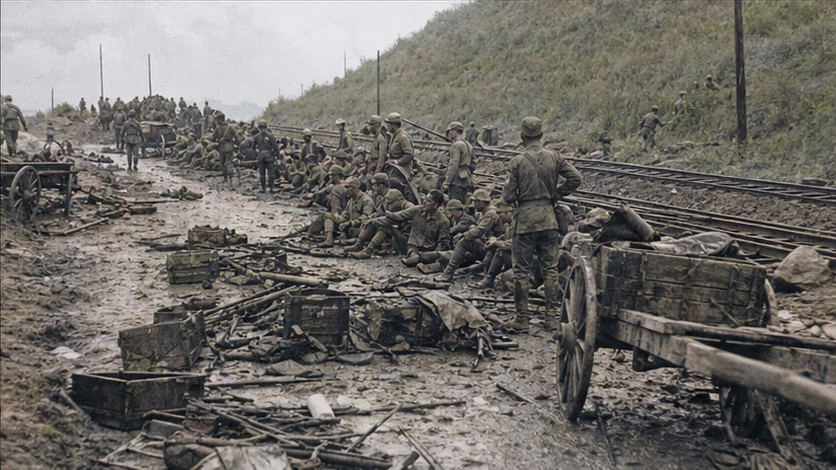
- Attacking side: records differ on Fourth Army casualties in the two engagements, with the combined total in the several thousands (figure disputed); as the vanguard, Ye Ting's Independent Regiment suffered the heaviest losses, especially among battalion and company cadres (specific figures unrecorded).
- Defending side: those destroyed, captured, and scattered in the rout together exceeded ten thousand (bases vary by account); multiple sources agree that enforcement troops killed retreating officers on their own side, though the number is unrecorded.
- ※ War-zone civilians: large armies moved back and forth, and forced labor, grain requisition, and plunder by routed soldiers arrived together (local records are scattered; unverified) -- as usual, part of the bill for a victory was charged to ordinary people.
Aftermath
- Wu Peifu's gates to Wuhan were thrown open, and he retreated to defend Wuchang, Hankou, and Hanyang; in early September the Northern Expeditionary Army reached the walls of Wuchang and shifted into siege warfare (see Siege of Wuchang).
- The Fourth Army received the name "Iron Army." The best-known story is the people of Wuhan presenting an "Iron Army" shield; the timing was after Wuhan was taken (the specific time and form remain unverified).
- Ye Ting's Independent Regiment made its name in this battle, and the seeds of its later expansion were planted here -- this force with Communists as its backbone was one of the origins of the 24th Division, the main force in the later Nanchang Uprising.
Accounts of Those Present
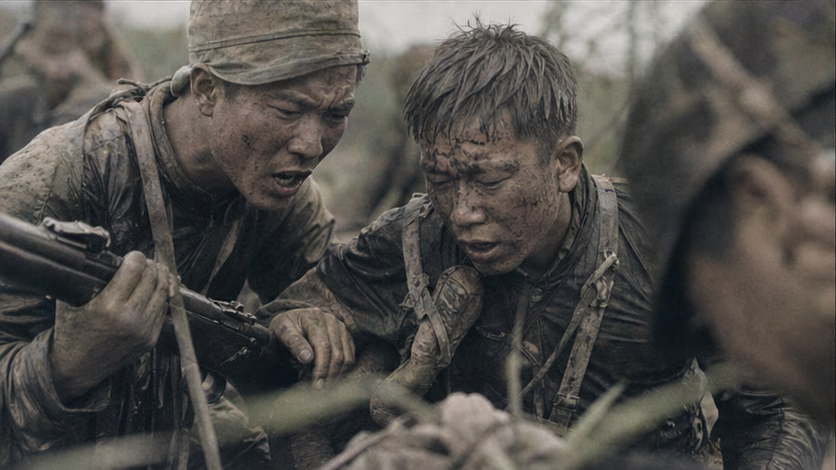
- The blade of the enforcement troops: behind the Hesheng Bridge line, Wu Peifu ordered enforcement troops to behead officers who retreated and hang their heads in front of the line for public display -- an old-style army keeping its front together with human heads stood in contrast to the army opposite, which kept its front together by leaders charging first.
- Farmers showing the way: the frontal attack at Tingsi Bridge could not move the position, and local farmers led troops around through the water network to the side and rear -- this detail appears in both sets of textbook narratives, but which battle report or memoir first recorded it remains unverified.
- Losses of the Independent Regiment: the vanguard regiment attacked the hardest points, with cadres leading from the front and suffering the heaviest casualties; the formation built around Communists was badly depleted after the two-bridge battles, and later memoirs repeatedly mention replenishment and rebuilding (details unrecorded).
The Ground
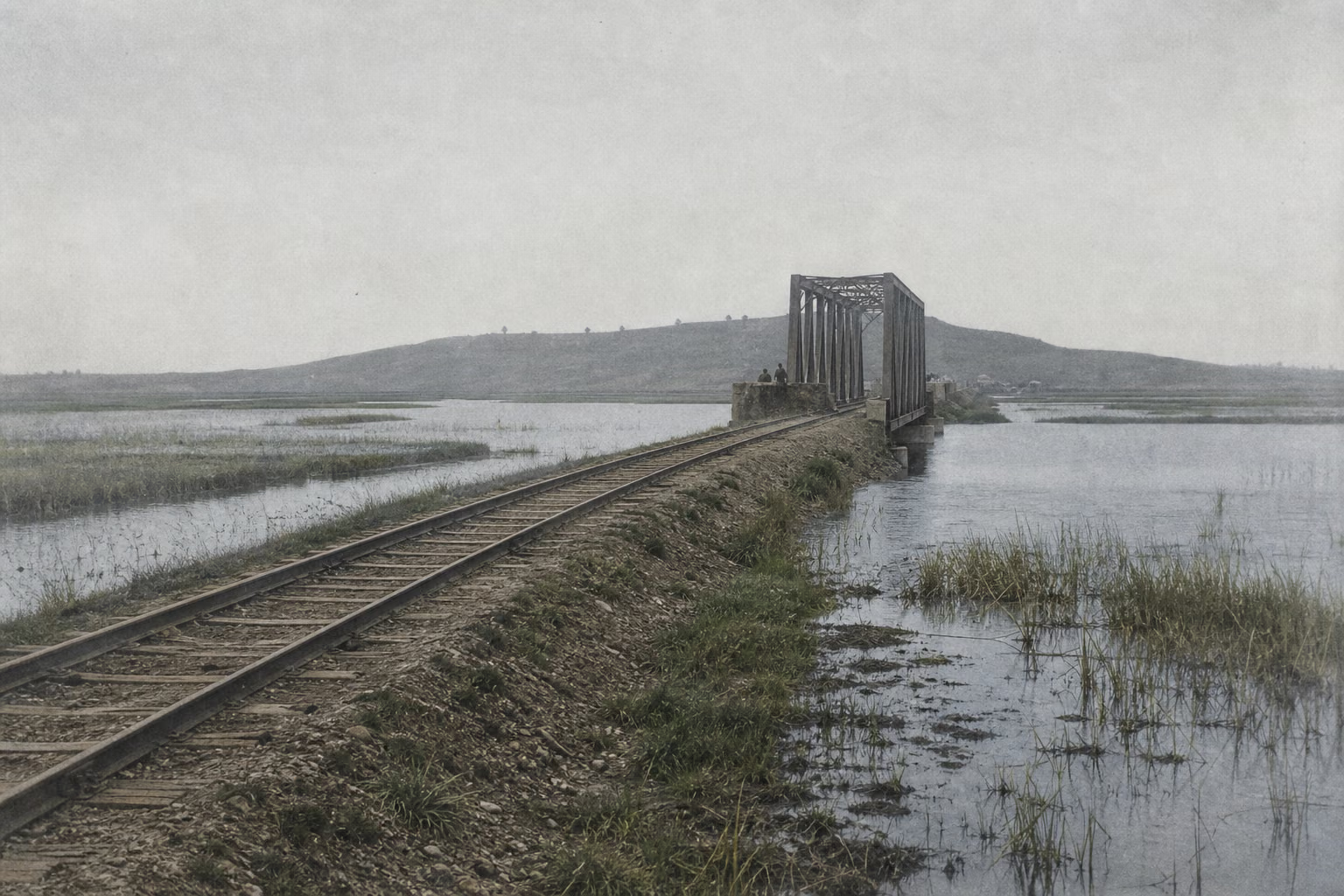
- Tingsi Bridge: water on three sides + one railway bridge + high ground behind it, with an attack frontage so narrow that troops could only be committed in sequence -- a natural bottleneck.
- The water network was the terrain: summer-autumn floodwater seemed to block movement, but could in fact be waded through -- the outflanking route was hidden in the paddy fields, and local knowledge broke the terrain's deadlock.
- Hesheng Bridge: hilly depth + railway line, making the defense belt-shaped; enforcement troops stood behind the line, so death lay in both directions, front and rear -- the rout first broke from the rear.
- Armored train: a mobile heavy-firepower platform along the Canton-Hankow line (participation details unrecorded).
How Each Side Records It
- National Revolutionary narrative (the Northern Expeditionary Army's own): the Northern Expedition's first great head-on hard-fought victory, the starting point of the "Iron Army" legend, and proof of political work and the spirit of the new army.
- Beiyang side and local memory: the final battle of Wu Peifu's lifetime of achievement; in old-style memory, Wu was the "Jade Marshal" who would not borrow foreign loans and in his later years refused to serve Japan -- "defeated without losing integrity." Xianning's local memory also carries the side of military disaster as large armies passed through.
- Two later narratives, side by side: the Communist narrative emphasizes Ye Ting's Independent Regiment -- a force with Communists as its backbone -- as the vanguard that suffered the heaviest casualties, and treats the political ground color of the "Iron Army" honor as party leadership and sacrifice; the KMT narrative emphasizes the Fourth Army as a whole and the command of Whampoa-system officers, with the Independent Regiment only one regiment among them. Each narrative holds part of the historical facts, and the dispute over the name "Iron Army" originates here.
Disputes and Sensitivities
- The ownership of the "Iron Army" honor: a point of divergence between the two party narratives, with both accounts coexisting.
- The episode of farmers showing the way: widely circulated but weak in original sourcing, it belongs to the gray zone between transmission and historical fact; the source remains unverified.
- Casualty figures differ widely by basis.
- The detail of enforcement troops beheading men and displaying the heads comes from multiple accounts, but the number has no firm basis; this article records the event while preserving doubt about the number.
Sources and Open Questions
Main sources (proposed verification paths):
- *Military History of the Northern Expedition* (Taiwan official edition), Hunan-Hubei operations volume
- Historical materials on Ye Ting's Independent Regiment, and memoirs by Zhou Shidi and other participants
- Biographies of Wu Peifu and Beiyang-side records
- *Shen Bao* and *Ta Kung Pao* war-zone reporting, 1926.8-9
Open questions: the different bases for troop strengths on both sides at the two bridges; unit designations of the Tingsi Bridge defenders; earliest record of farmers showing the way; details of the armored train's participation; number beheaded by the enforcement troops; time and form of the "Iron Army" shield presentation; specific casualty figures for the Fourth Army and the Independent Regiment; records on civilian life in the Xianning war zone; decision process for driving straight toward Xianning after the Battle of Pingjiang; degree of Soviet military adviser Galen's participation in the Hunan-Hubei operations; timing of Wu Peifu's return south and his enforcement deployment; the Hanyang Arsenal's role as an arms source in the Wuhan campaign; whether either side discussed abandoning the defense or delaying the attack.
All images on this site are AI-generated depictions. They are not historical photographs, not primary sources, and do not depict any real individual.