War Overview · Warlord Era Conflicts (1916–30)
Once Yuan Shikai died, the Beiyang machine split into several great pieces and fought for fourteen years over the largest prize, the "center": from battles decided in five days to campaigns of a million men, until in the end two loose ends led onward, one to the Mukden Incident and one to Marco Polo Bridge.
Engagement Data
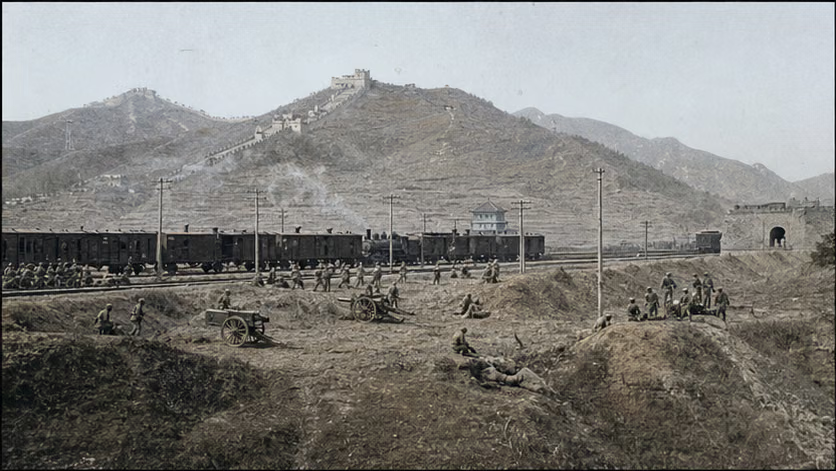
| Item | Content |
|---|---|
| Time | 1916.6 (Yuan Shikai dies) – 1930.11 (Central Plains War ends); overlaps and cross-references the two article groups on the Constitutional Protection War and the Northern Expedition |
| Place | The capital region, Zhili, the Northeast, Jiangsu–Zhejiang, the Central Plains -- almost every railway line |
| Belligerents | Beiyang and local factions: Anhui, Zhili, Fengtian, Shanxi, Guominjun, the old and New Guangxi cliques, Yunnan, Sichuan, and other armies; from 1929 onward, the internal war of the KMT's new warlords |
| Result | No one truly unified China; one year after nominal unification in 1928, major war resumed; after the Central Plains War in 1930, Chiang's central government established surface authority |
Faction Genealogy (Quick Reference)
| Faction | Core figures | Territory | External-Backer Leaning |
|---|---|---|---|
| Anhui clique | Duan Qirui, Xu Shuzheng | Capital region, Anhui-Zhejiang-Fujian | Japan (Nishihara Loans) |
| Zhili clique | Feng Guozhang -> Cao Kun, Wu Peifu | Zhili, Hunan-Hubei, Jiangsu | Britain and the United States |
| Fengtian clique | Zhang Zuolin, Zhang Xueliang | Three Eastern Provinces | Japan |
| Shanxi clique | Yan Xishan | Shanxi | Watchful fence-sitting |
| Guominjun | Feng Yuxiang | Northwest | For a time aligned with the Soviet Union |
| New Guangxi clique | Li Zongren, Bai Chongxi | Guangxi | — |
| Yunnan and Sichuan factions | Tang Jiyao and the Sichuan warlords | Southwest | — |
Situation
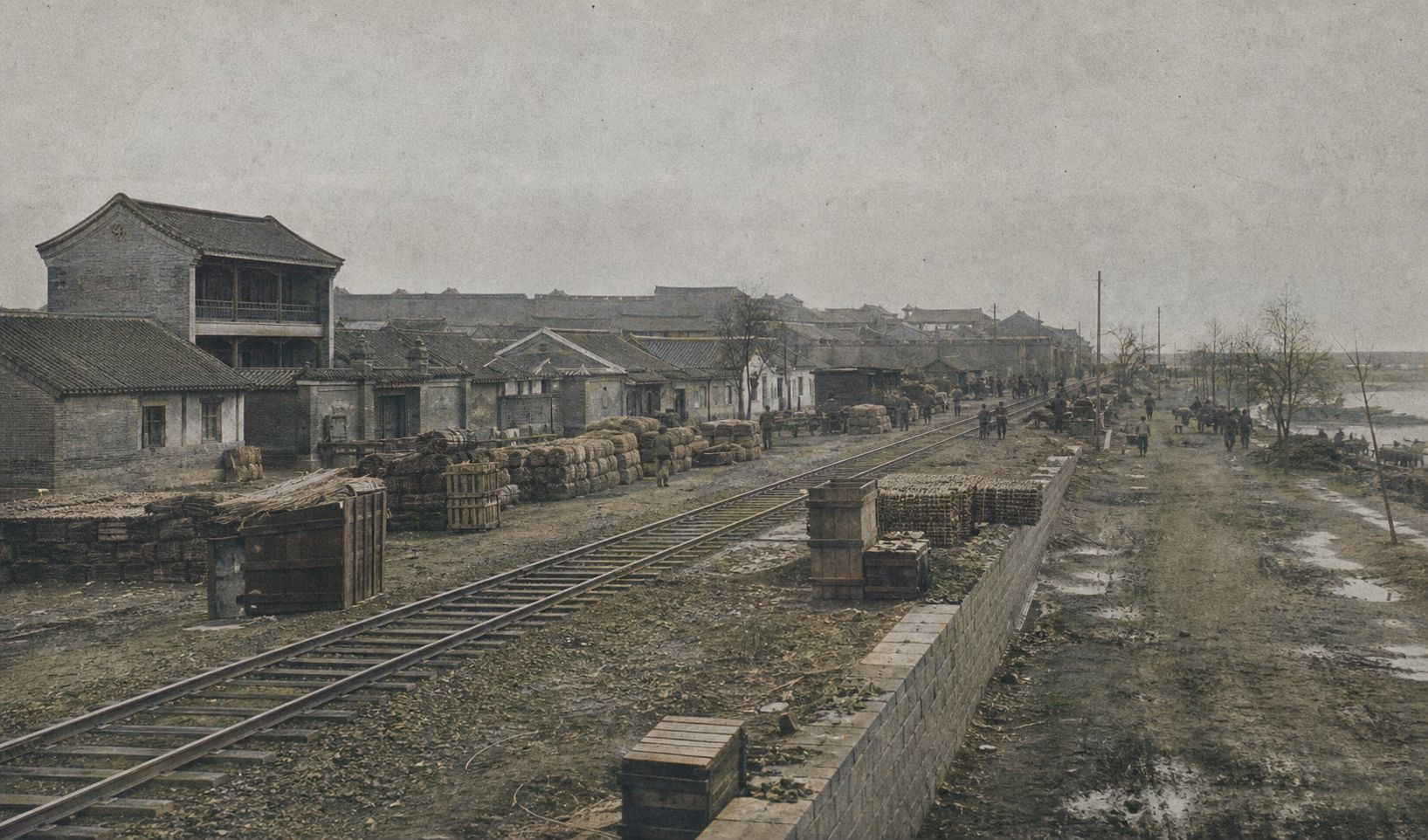
World: the First World War and the postwar order -- Japan used the powers' eastward distraction during the European war to become dominant in China (the Twenty-One Demands, Nishihara Loans), and after the Washington system (1922) the powers re-coordinated among themselves; from 1919 onward, an arms embargo on China existed in name, while each faction had its own channels for weapons (details unrecorded).
China: the Republic had a constitution in name but no constitutional government in substance. "Legitimacy" (the president and Parliament) became both the banner for war and the prize of war; the remaining customs and salt-tax revenue, railway lines, and opium and gambling tax sources were the hard benefits. At the social level, troop numbers expanded from about 500,000 in 1916 to about 2,200,000 in 1928 (figures vary by account), and soldiering became a livelihood for disaster-year refugees -- there was no answer to "for whom do they fight"; soldiers fought for pay.
Ideas and the South: after May Fourth (1919), "down with the warlords" became a phrase of social consensus. The southern National Revolution drew legitimacy from this: the Warlord Era Conflicts themselves gave the forces that would end them their reason to exist (see the Northern Expedition articles).
Why It Was Fought
Once Yuan Shikai died, the problem was not who would succeed him, but that there was no method of "succession" jointly recognized by all sides. The presidency, Parliament, and cabinet could all be disputed; the only judge that worked was troops. Beijing therefore became the greatest prize of all: whoever held Beijing had the nominal authority to appoint military governors and provincial governors, the status to handle remaining customs and salt-tax revenues, and the eligibility to borrow foreign loans in the central government's name. In every decision for war across those fourteen years, the surface cause was to punish this man or campaign against that one; in the final calculation, all of it was aimed at that city.
There were two ways to lay down a decision, inside and outside of each other. One was unification by force: Duan Qirui first borrowed from Japan in the name of joining the European war and trained the War Participation Army; after the war ended, it was renamed the Frontier Defense Army, while the blade in practice pointed at the Constitutional Protection forces in the Southwest. In the Zhili–Anhui War, the Anhui clique collapsed in five days; Wu Peifu took up the relay, trained troops at Luoyang, and still fought under the banner of unification by force. The other was defection: defection and bribery often decided the outcome before positions did, and almost every major war was ignited by the unsettled accounts of the previous one -- after the Zhili–Anhui War in 1920, Zhili and Fengtian jointly controlled affairs, only to fall out two years later; Cao Kun's bribery in the presidential election (1923) spent the Zhili clique's last moral capital, and the anti-Zhili contacts among Fengtian, Zhejiang, and Guangdong then took shape (the formation process of the triangular alliance remains unverified), lighting the great reversal of 1924. Telegrams were the prose form of all this: wars began by telegram, defections declared themselves by telegram, and resignations from office had their telegrams as well. Here, resolve was often just a matter of several official messages passing back and forth (treated in detail elsewhere; not expanded here).
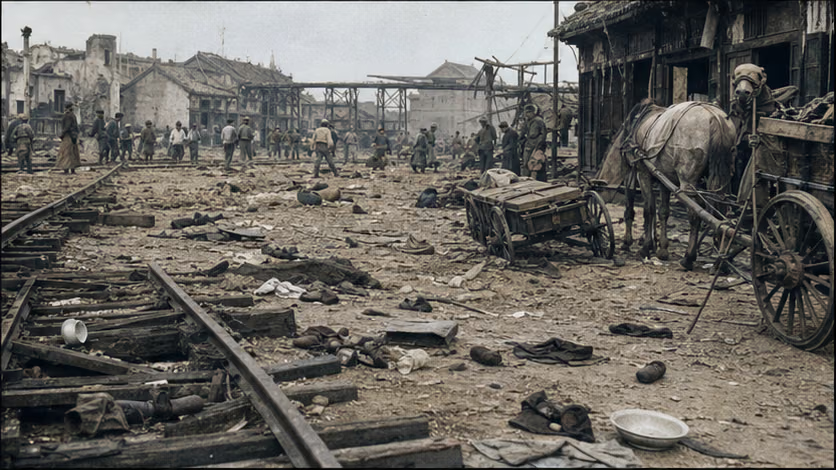
The material boundaries were harder than resolve. Military funds meant loans and intercepted tax sources; the larger the war, the heavier the debt, and after one battle ended, the first thing to find was the next lender willing to provide money. Soldiers were supplied by refugees in disaster years, and the ever-growing ranks of troops were themselves the stored stock for another war. Railways were the skeleton of mobility and fund-raising, so major wars were fought along railways. Ammunition depended on imports and a few domestic arsenals: whoever had the stronger replenishment line had the firmer resolve.
Another road was always visible on the table: calls to abolish military governorships and reduce armies, the movement for provincial federation, merchants' market strikes and refusal to supply army pay, and literati peace efforts (specific examples and dates unverified). Before every major war someone raised them, and every time the road failed to open. The reason it failed was half private calculation and half structure: unilateral troop reduction was equivalent to handing one's territory to those who did not reduce theirs (unverified) -- whoever put down the gun first exited first. All sides could do that calculation, so each troop-reduction conference tightened war preparations instead.
In 1928, Zhang Xueliang changed the Northeast's flag, and China was nominally unified, but this calculation was not abolished. In 1929, the Demobilization and Reorganization Conference divided the spoils unevenly, directly bringing on the Chiang–Gui and Chiang–Feng campaigns; in 1930 the Central Plains War saw a million men face off, and the outcome was finally settled when Zhang Xueliang telegraphed on September 18 in support of Chiang and the Northeastern Army entered the pass. Resolve had been laid down for fourteen years; by the end, the hand that decided victory and defeat had moved back from Luoyang and Baoding to beyond the pass -- exactly the doorway to the next war.
Course of the Engagement (Stage Table)
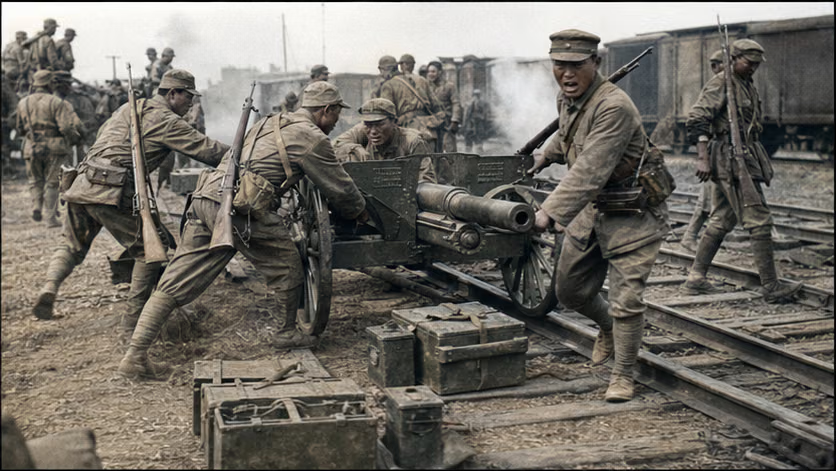
| Stage | Time | Key Points | Separate Articles |
|---|---|---|---|
| Anhui clique in power and the Zhili–Anhui War | 1916–1920.7 | Duan Qirui's policy of unification by force failed internally; Zhili and Fengtian joined hands and toppled Anhui in five days | Zhili–Anhui War |
| Zhili–Fengtian joint control to rupture | 1920–1922.5 | First Zhili–Fengtian War; Fengtian forces were defeated, withdrew beyond the pass, and closed themselves off to reorganize | First Zhili–Fengtian War |
| Zhili dominance | 1922–1924 | Cao Kun bribed his way into the presidency (1923, under the name "piglet parliamentarians"); Wu Peifu's "unification by force" rose again | — |
| Jiangsu–Zhejiang hostilities and the second Zhili–Fengtian war | 1924.9–11 | The Jiangsu–Zhejiang War served as the fuse; the bloody fighting at Shanhaiguan remained undecided, while the Beijing Coup settled the outcome | Jiangsu–Zhejiang War, Second Zhili–Fengtian War |
| Fengtian reaches Shanghai and anti-Fengtian revolt | 1925 | Fengtian power reached as far as Shanghai; Guo Songling revolted against Fengtian and was defeated and killed under Japanese intervention | Guo Songling's Revolt Against the Fengtian Clique |
| Northern war and the Northern Expedition | 1926 | Zhili, Fengtian, and Shanxi forces besieged the Guominjun at Nankou; in the same period, the National Revolutionary Army set out on the Northern Expedition | Battle of Nankou (Northern Expedition covered separately) |
| New-warlord civil wars | 1929–1930 | The division of spoils in demobilization and reorganization was uneven; the Chiang–Gui and Chiang–Feng campaigns were both decided by defection and bribery; the Central Plains War was a million-man showdown | Chiang–Gui and Chiang–Feng Wars, Central Plains War |
Defection: The Keyword of Warlord War
The decisive move in Beiyang wars often lay not in positions but where human loyalties turned away: Feng Yuxiang's Beijing Coup against Zhili (1924), Guo Songling's revolt against Fengtian (1925), Han Fuju and Shi Yousan turning against Feng (1929), and Zhang Xueliang's entry through the pass to settle the Central Plains War (1930) -- almost every major war was closed by a defection or a change of flag. The telegram was its prose form: declarations of war had the "Yang telegram" and "Jia telegram" denouncing one another, defections had telegrams that explained themselves, and resignations from office had farewell telegrams. The Warlord Era Conflicts were also a protracted "war of telegrams," and this discursive history is itself important historical material.
Casualties and Losses
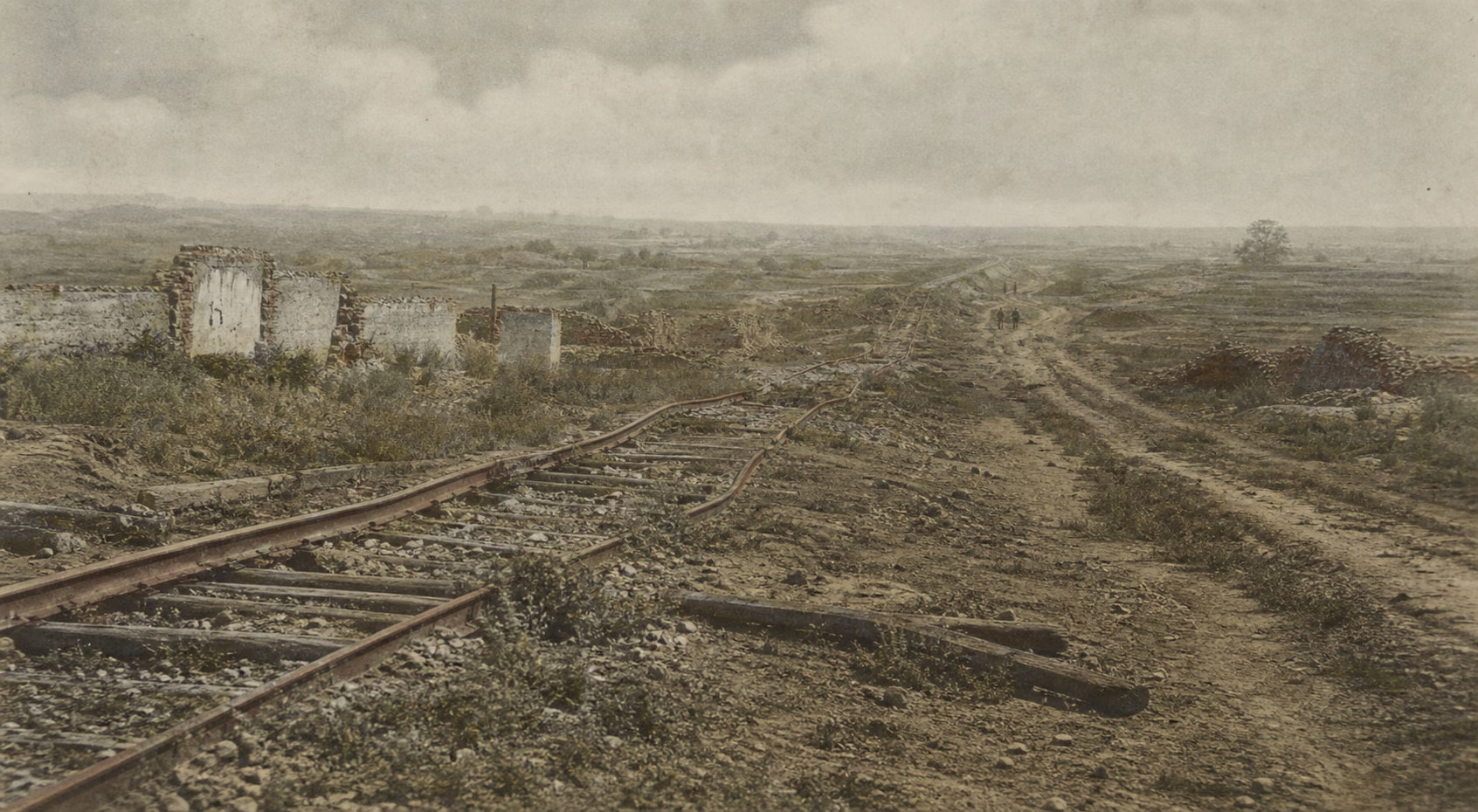
- Armies: there is no authoritative overall account of military casualties across the successive wars (each engagement is treated in its separate article); the heaviest casualties came on the Shanhaiguan front in the Second Zhili–Fengtian War and in the Central Plains War (combined total about 300,000; figures vary by account).
- Civilians ※: military depredation, forced labor, local fund-raising for army pay, advance collection of money and grain taxes (Sichuan has an extreme record of "advance collection reaching several decades after the Republic," unverified), forced cultivation under opium taxes (opium replanting to support armies), and plunder by soldiers and bandits as one body -- scattered, year after year, and uncounted, this was the largest account of those fourteen years.
- State: railways were damaged, finances mortgaged, and foreign debts piled up; after central authority fell to zero, the powers each sought agents of their own.
Aftermath
- Nominal unification (the Northeast changing flags in 1928) and substantive division coexisted; after 1930, aftershocks such as the Liangguang Incident and the Fujian Incident still followed (see later articles).
- Two loose ends: ① the Central Plains War drew the main force of the Northeastern Army through the pass -> the Northeast was left hollow -> one year later came the Mukden Incident (1931); ② remnants of the Northwestern Army were reduced and reorganized into Song Zheyuan's 29th Army -> seven years later, Marco Polo Bridge fired the first shot of full-scale War of Resistance. The endpoint of the Warlord Era Conflicts was followed immediately by the starting point of national war.
- The structure of military intervention in politics did not disappear; it only changed names -- later political history still sat in the same pot.
How Each Side Records It
- Contemporary telegram language: every side called itself "defending the constitution," "saving the nation," or "pacifying disorder," and accused the other side of "bringing ruin to the country" and "bringing disaster to the people" -- the inflation of nominal claims is itself historical material.
- People and newspapers: folk songs and local gazetteer records of "qiu-ba" soldiers, military disaster, and forced labor; in civilian memory there were no factions, only troops passing through.
- Later generations: textbooks long summed it up in one stroke as "warlord conflicts and the people living in misery." In recent decades, renewed research into Beiyang history -- reassessments of figures, studies of local military-gentry regimes, the concept of the "military-gentry regime," and so on -- has restored these fourteen years from caricature to history. The two layers coexist.
Disputes and Sensitivities
- Historians differ in estimating the weight of the foreign factors behind each clique (Japanese aid to Anhui and Fengtian, British-American favor toward Zhili, Soviet alignment with Feng).
- Reassessments of individual figures (Wu Peifu's late-life conduct, Duan Qirui's "three makings of the republic," Zhang Zuolin in relation to Japan) fluctuate greatly; citations need to mark period and standpoint.
- The word "warlord" itself is a victor's derogatory label; different factions had their own formal designations.
Contents
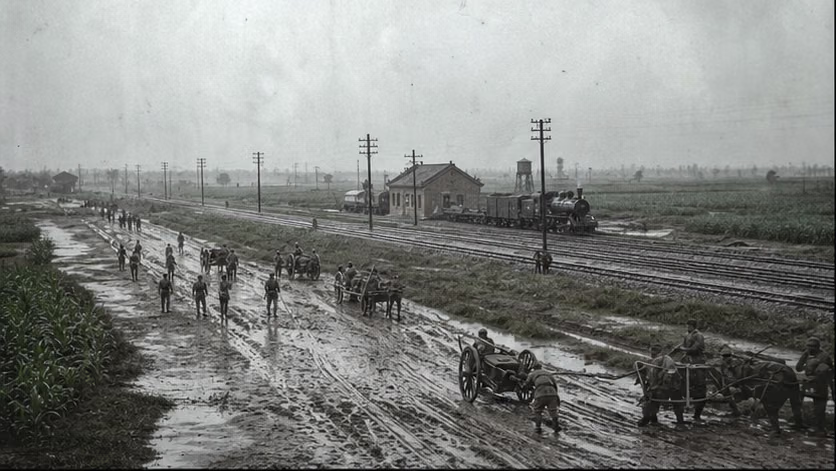 Zhili–Anhui War1920.07The first civil war after the Beiyang house split apart lasted only five days: the Japanese-equipped, Japanese-trained, "most modern" Frontier Defense Army scattered at first contact, proving a rule that would recur throughout the next decade: the deciding factor in Beiyang wars was never weapons, but factional alignment and morale.
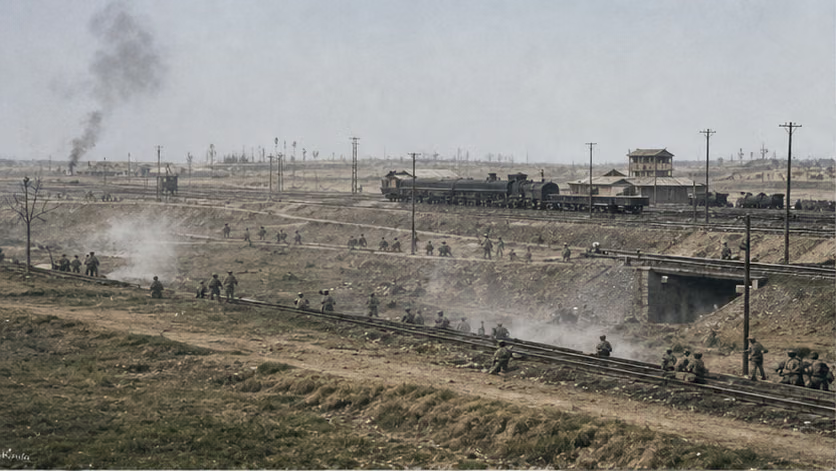 First Zhili–Fengtian War1922.04Two years after Zhili and Fengtian divided the spoils of the Zhili–Anhui War, they turned against each other; Zhang Zuolin entered through the passes for the first time to contend for the realm, only to be driven back out within a week by Wu Peifu -- the most important product of this defeat lay not on the battlefield but after the war: the Fengtian clique shut the passes, spent three years reorganizing its army, and trained the new force that would return two years later.
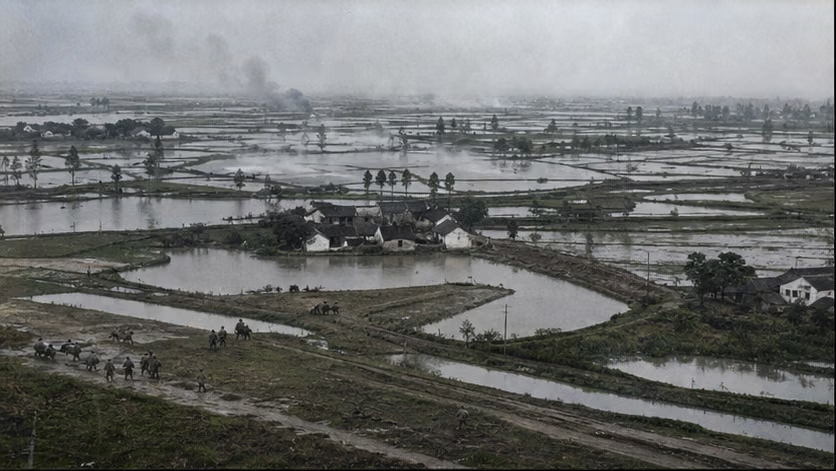 Jiangsu–Zhejiang War1924.09The Zhili-aligned military governor of Jiangsu and the Zhejiang military governor, a remnant of the Anhui clique, fought for more than a month over Shanghai's tax sources and territory -- a local war that nevertheless lit the fuse of the Second Zhili–Fengtian War; for the people of Jiangnan, it was "a war fought over the taxes of one city."
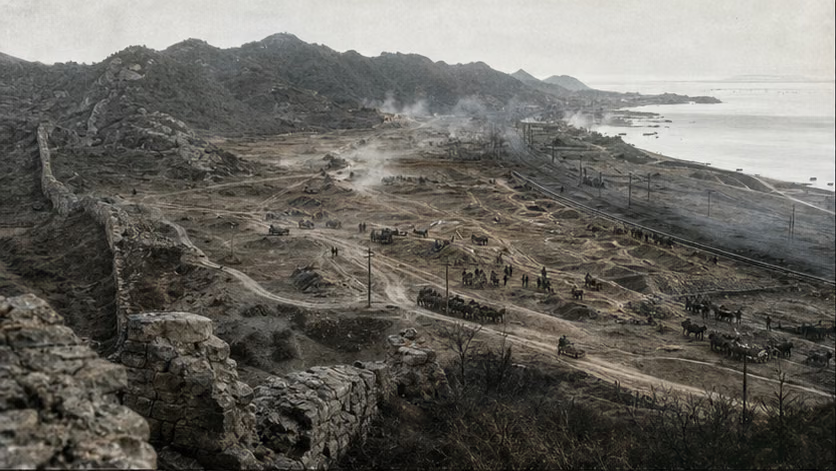 Second Zhili–Fengtian War (1924)1924.09Before Shanhaiguan, two army groups wore each other down with modern firepower for more than a month, yet the outcome was decided by a single public telegram of defection inside Beijing: the Zhili central government collapsed from that point, and the culture of "defection" reached its summit here.
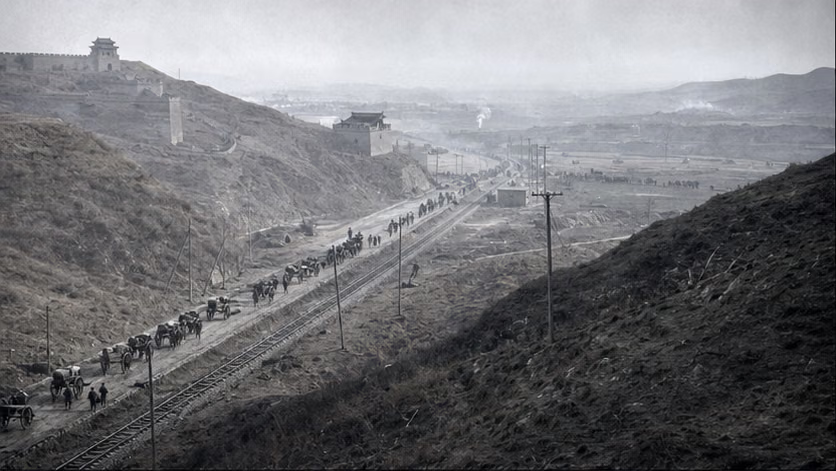 Guo Songling's Revolt Against the Fengtian Clique (1925)1925.11The best-fighting elite formation in the Fengtian Army took the name "Northeast Guominjun" and turned back against its own marshal: within a month it seized Shanhaiguan and Jinzhou and fought to the gates of Shenyang, only to break at the Julu River -- the intervention of Japan's Kwantung Army was the immediate external force that tipped the balance.
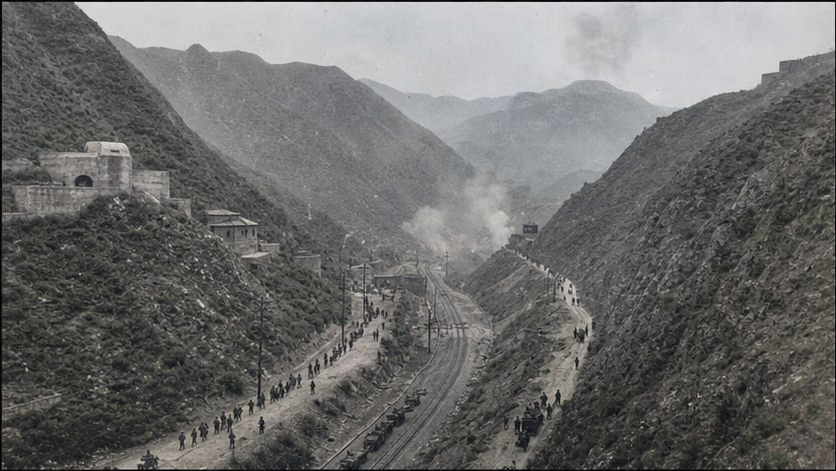 Battle of Nankou (1926)1926.05The Zhili, Fengtian, and Shanxi forces, four to five hundred thousand men among them, besieged the Guominjun for four months and pinned the main Beiyang armies along the Great Wall; in those same months the southern National Revolutionary Army set out on the Northern Expedition, and this vast battle was later almost wholly covered over by the Northern Expedition's own narrative.
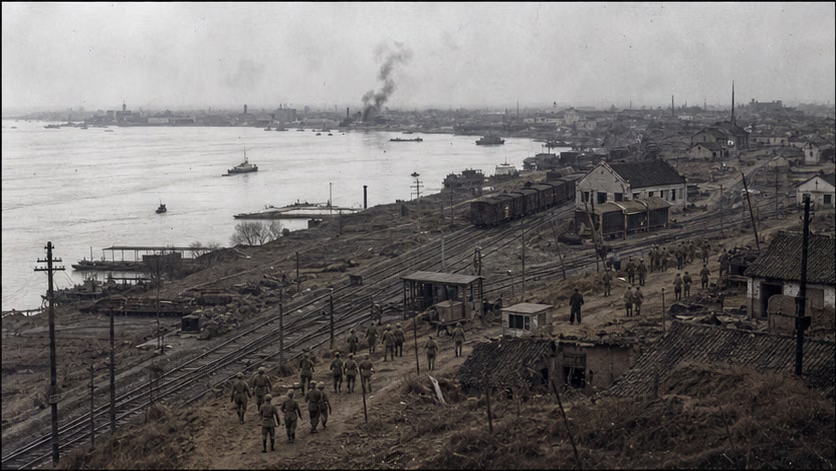 Chiang–Gui and Chiang–Feng Wars (1929)1929.03In the second year after the Northern Expedition's "unification," just after the Demobilization and Reorganization Conference had finished cutting troop numbers, the Nanjing center fought the New Guangxi clique and then the Northwestern Army -- neither war was won by breaking the enemy in battle, but by buying him apart: the decisive move was defection, with guns and artillery only secondary.
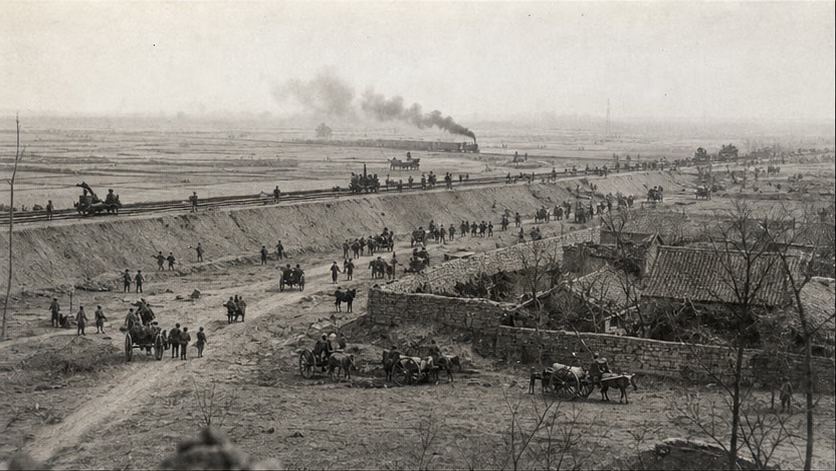 Central Plains War (1930)1930.05For half a year, armies numbering in the millions fought along the Longhai, Tianjin-Pukou, and Pinghan railways; in the end, victory and defeat were decided by a single public telegram from beyond the passes -- the high point of the KMT new-warlord civil wars, with two trailing consequences, one leading to 1931 and the other to 1937.
Sources and Open Questions
Main sources: Lai Xinxia et al., *History of the Beiyang Warlords*; Ding Zhongjiang, *Anecdotal History of the Beiyang Warlords* (narratively detailed, but its textual criticism requires caution); Tao Juyin, *Historical Talks on the Period of Beiyang Warlord Rule*; *Beiyang Warlords* source-material series (edited by Lai Xinxia); chronologies and memoirs of figures from each faction (*Chronology of Wu Peifu*, *Feng Yuxiang's Diary*, and others).
Open questions: the basis for figures on troop expansion; the actual implementation of the arms embargo and each faction's arms channels; records of Sichuan's extreme advance-collection years; representative texts for the "war of telegrams"; the overall casualty basis for the Central Plains War; the formation process and respective motives of the Fengtian-Zhejiang-Guangdong triangular alliance; direct records for the structural judgment that "unilateral troop reduction is equivalent to handing one's territory to those who do not reduce theirs" (the mechanism connecting troop-reduction conferences and cycles of war preparation); the concrete activities and setbacks of abolishing military governorships and reducing armies, and of the provincial-federation movement before successive major wars; representative examples and dates of merchants' market strikes, refusal to supply army pay, and literati peace appeals.
All images on this site are AI-generated depictions. They are not historical photographs, not primary sources, and do not depict any real individual.