Engagement Archive · First Zhili–Fengtian War
Two years after Zhili and Fengtian divided the spoils of the Zhili–Anhui War, they turned against each other; Zhang Zuolin entered through the passes for the first time to contend for the realm, only to be driven back out within a week by Wu Peifu -- the most important product of this defeat lay not on the battlefield but after the war: the Fengtian clique shut the passes, spent three years reorganizing its army, and trained the new force that would return two years later.
Engagement Data
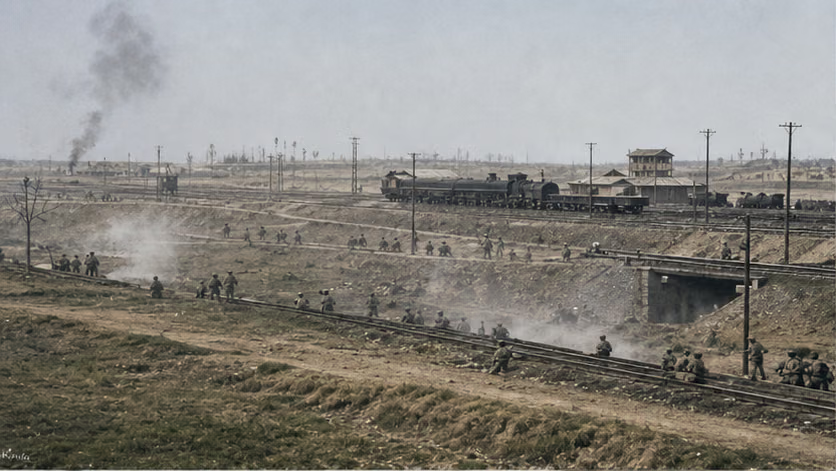
| Item | Details |
|---|---|
| Time | 1922.4.28 – 5.5 |
| Place | The capital region: the Changxindian–Liulihe line (western route) and the Gu'an–Yongqing line (eastern route) |
| Belligerents | Zhili Army (Wu Peifu as front-line commander-in-chief, Cao Kun holding Baoding) / Fengtian Army (Zhang Zuolin entering through the passes as self-appointed commander-in-chief of the Zhenwei Army) |
| Result | The Fengtian Army's western route collapsed, and the entire line withdrew beyond the passes; the Zhili clique gained sole control of the Beijing government |
Belligerents
| Item | Zhili Army | Fengtian Army |
|---|---|---|
| Troop strength | About one hundred thousand (figures vary by basis) | About one hundred twenty thousand entered through the passes (figures vary by basis); those called elite were mostly reorganized from old bandit backgrounds |
| Training | Wu Peifu's Third Division was a veteran elite force of the Beiyang Army | Officers were a mixture of old and new, with many old-style commanders |
| Command | Wu Peifu went personally to the front and maneuvered decisively | Zhang Zuolin sat at Junliangcheng, while the front-line generals would not yield to one another |
Terrain and Conditions
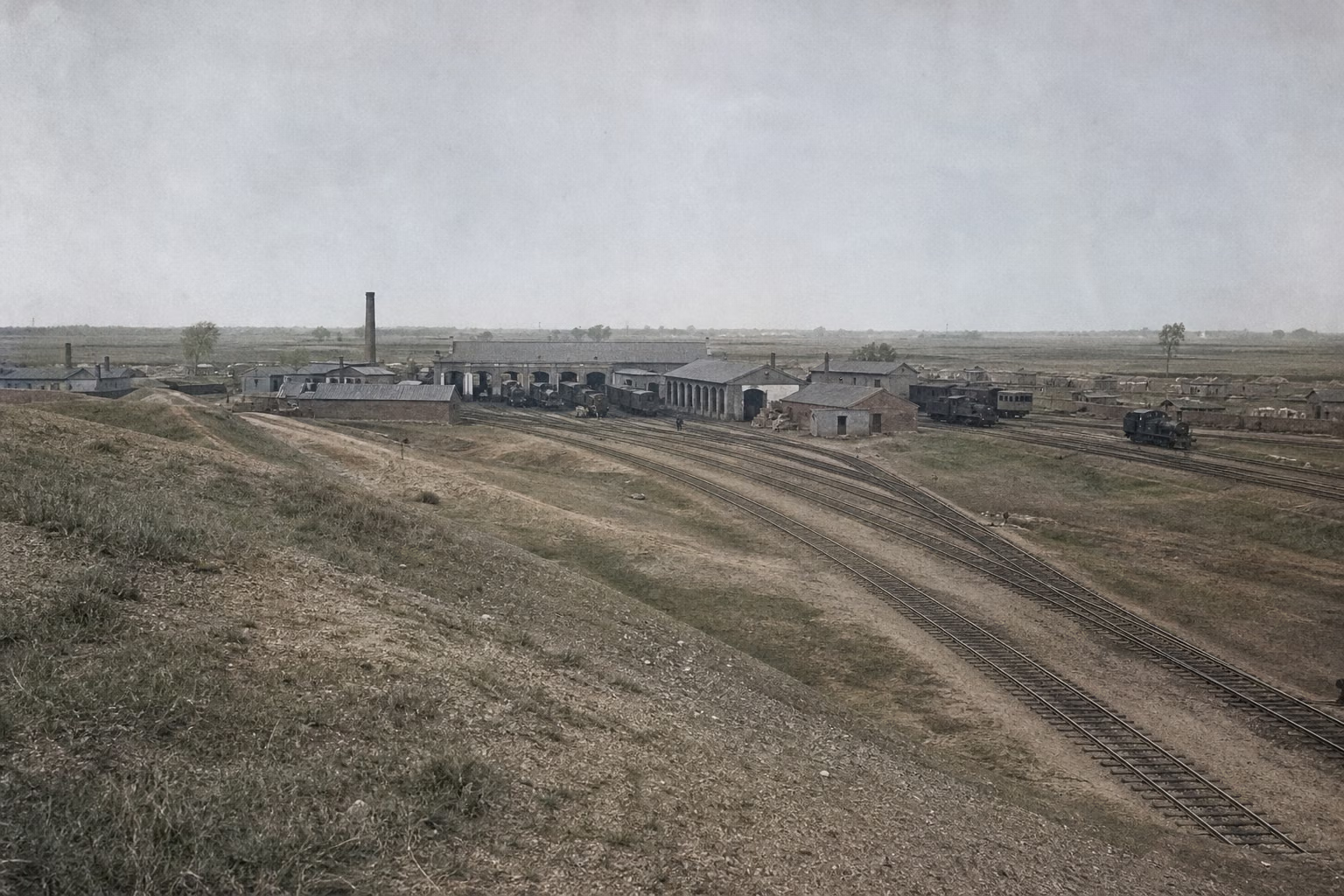
The Beijing–Hankou and Tianjin–Pukou railways again served as the framework of the battlefield; Changxindian was the first hub on the Beijing–Hankou line out of Beijing, and its gain or loss directly affected the gate to the capital. Political climate: Zhili and Fengtian had co-managed Beijing for two years, with cabinet crises continuing without pause (the Liang Shiyi cabinet leaned toward Fengtian, and the Zhili clique brought it down); "expel Fengtian" had gained the upper hand in public opinion inside the passes.
Why It Was Fought
Less than two years after the Zhili–Anhui War, the two winners fell out first. When Zhili and Fengtian had joined hands to topple the Anhui clique in five days, the spoils had not been divided evenly: the Fengtian Army, being first in position, took the larger share of the Anhui clique's frontier-defense army weapons and territory inside the passes; Zhang Zuolin also reached into the cabinet, helping the pro-Fengtian Liang Shiyi form a cabinet in late 1921 -- the Communications Clique's money bag had been connected to Fengtian's rifles. The Zhili clique regarded the capital region as its preserve. Over two years it watched "co-management" turn step by step into "Fengtian management"; cabinet crises came one after another, and accumulated resentment became an account book.
In January 1922, Wu Peifu seized on Liang Shiyi's proposal to borrow Japanese funds to redeem the Jiaoji Railway and attacked him by telegraph as a man "selling out the country" -- the public-opinion tactic used in the Zhili–Anhui War, brought over unchanged against the Fengtian clique. Liang Shiyi was shouted out of office, and the call to "expel Fengtian" gained the upper hand in newspapers inside the passes; Zhang Zuolin lost this cabinet hand, suffering damage to face and material interest alike, and turned to ally with remnants of the Anhui clique and Sun Yat-sen in Guangzhou, echoing north and south to form a triangular anti-Zhili alignment. By this point there was no draw left at the card table.
Once real fighting began, the battlefield still could only be the capital region: the Beijing–Hankou and Tianjin–Pukou railways were the framework; Changxindian controlled the first hub on the Beijing–Hankou line out of Beijing, and whoever held the railway held Beijing. The Fengtian Army had already moved into the passes along the Beijing–Fengtian line, while the Zhili Army's base was at Baoding -- the two armies' stations interlocked with each other, their outposts facing one another, so war required no expedition, only an order.
Zhang Zuolin's calculation was to enter through the passes with the momentum and settle the central government in one stroke: about one hundred twenty thousand Fengtian troops entered through the passes, more than the Zhili Army by a margin (figures vary by basis), and there were also southern forces and Anhui remnants to pin down the Zhili rear. What he had not calculated was that numbers could not make up for quality -- the Fengtian Army's officers were a mixture of old and new, and commanders from old bandit backgrounds could not master a modern battlefield; he accepted this account only after defeat, and the way he accepted it was to shut the passes for three years, discard the old, and train the new. Wu Peifu's calculation was to turn "expel Fengtian" into a second "punitive campaign against rebels": use public opinion to nail the opponent to the side of injustice, then use the old Third Division, seasoned in the Hunan-Hubei wars, to decide the outcome on the railway lines.
Each side put its resolve in a different place. Wu Peifu first made the war a public-opinion "punitive campaign against rebels" before taking action; Zhang Zuolin set his resolve in Shenyang, concurrently appointing himself commander-in-chief of the Zhenwei Army, dispatching forces by separate routes, and not tearing off the mask before entering through the passes (the stated pretext and dates of troop dispatch vary by source, unverified). What he could see was that his troop strength was larger by a margin, and that the Anhui clique and the south had people ready to answer him; what he could not see was the quality of this army that had expanded too quickly -- that account would exist only after the battle.
Each side had narrow places in its money road: the Zhili Army held the Beijing–Hankou and Tianjin–Pukou lines and the capital region's tax sources, yet had owed pay year after year, and Wu Peifu's training at Luoyang was mostly self-financed; the Fengtian side had ample finances and newly purchased weapons and ammunition, but the troops entering through the passes could only be sustained by what they carried and by railway relay, and with every day the battle line lengthened, the risk to supply grew by one more day. There were also people on both sides who wanted to stop it: Cao Kun and Zhang Zuolin were in-laws through their children and did not wish for a rupture, and over the two years Cao mediated several times, only in the end failing to bend Wu Peifu (the depth of the Cao-Wu disagreement varies in detail by source, unverified); among Fengtian veterans, too, some advocated closing the passes and defending themselves (attested only in memoir-type accounts, unverified). Dissent all remained beneath the table.
In April, Zhang Zuolin sent his army into the passes by separate routes under the name of "aiding Guangxi." The Zhili Army moved north from Baoding to meet it. On April 28, the eastern and western routes opened fire at the same time -- the internecine war of the two great victors came less than two years after their joint overthrow of the Anhui clique.
Course of the Engagement
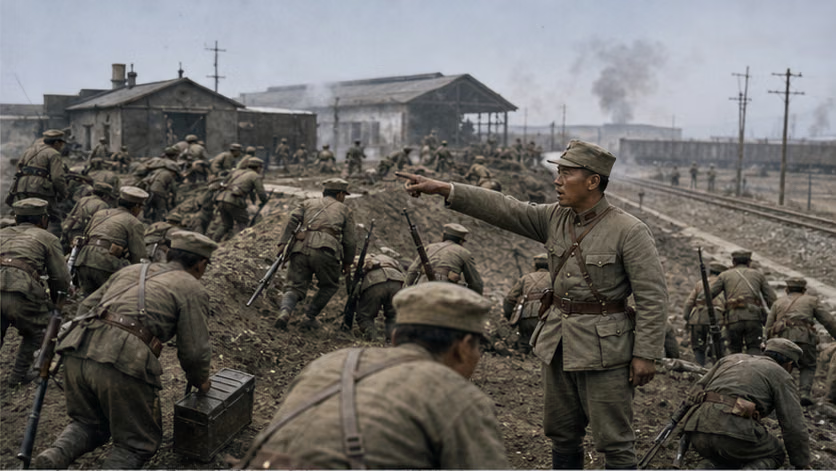
| Stage | Time | Main points |
|---|---|---|
| Whole-line contact | 4.28–29 | The eastern and western routes began fighting at the same time, with attacks and defenses on both sides |
| Changxindian stalemate | 4.29–5.3 | Main battlefield on the western route: the Zhili Army's Third Division and Fengtian elite troops repeatedly fought for the position, with Wu Peifu personally supervising |
| Zhili breaks the western route | 5.4 | Wu Peifu used reserves to make a flanking detour and strike the side; the Fengtian western route collapsed. One account says the Fengtian 16th Division defected in battle to answer the Zhili Army (details of the defection are unrecorded) -- another ending written by defection |
| General Fengtian retreat | From 5.5 | The whole line withdrew beyond the passes; the Zhili Army pursued as far as the Luanzhou line and stopped (pursuit endpoint unverified) |
Casualties and Losses
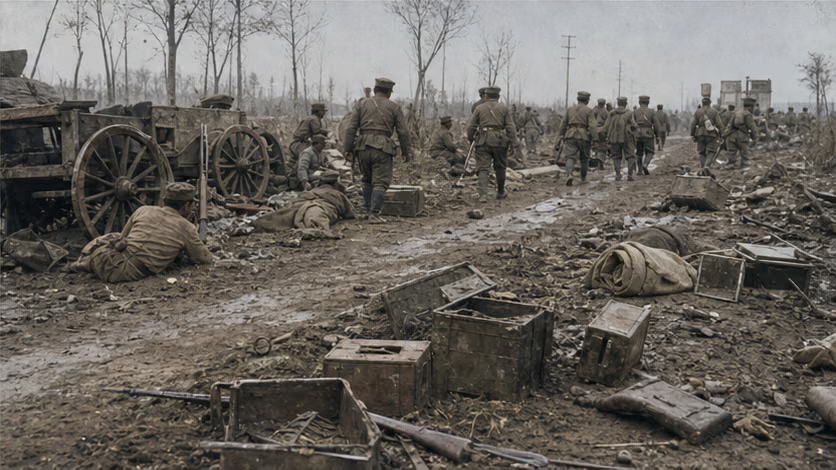
- Combined casualties on both sides numbered in the thousands (each basis unverified); the Fengtian Army lost many rifles, munitions, and baggage.
- Political price: President Xu Shichang was soon forced out by the Zhili clique, and Li Yuanhong returned to office -- the Zhili script of "restoring the legal order" began (a foreshadowing of vote-buying).
Aftermath
- Fengtian army-building after defeat: Zhang Zuolin announced "autonomy for the Three Eastern Provinces" and shut the passes for three years to reorganize the army and prepare for war -- establishing the Three Eastern Provinces Army Reorganization Office, expanding the Shenyang Arsenal, enlarging the Northeast Military Academy, employing Yang Yuting, Guo Songling, and other new-style officers from the Japanese Military Academy and the Army War College, and discarding the old while training the new. The Fengtian Army that entered through the passes again in 1924 was already another army (continued in "Second Zhili–Fengtian War"). Military modernization born from defeat is the true subject of this article.
- The Zhili clique stood alone at the top: restoring the legal order, Cao Kun's vote-buying election (1923.10, said to have been five thousand yuan per vote, figures vary by basis) -- after force, it lost moral standing as well, laying a buried charge for its universal abandonment two years later.
- Guo Songling and other new-style officers rose during the reorganization, also planting a distant cause of the 1925 revolt against Fengtian (see "Guo Songling's Revolt Against the Fengtian Clique").
Accounts of Those Present
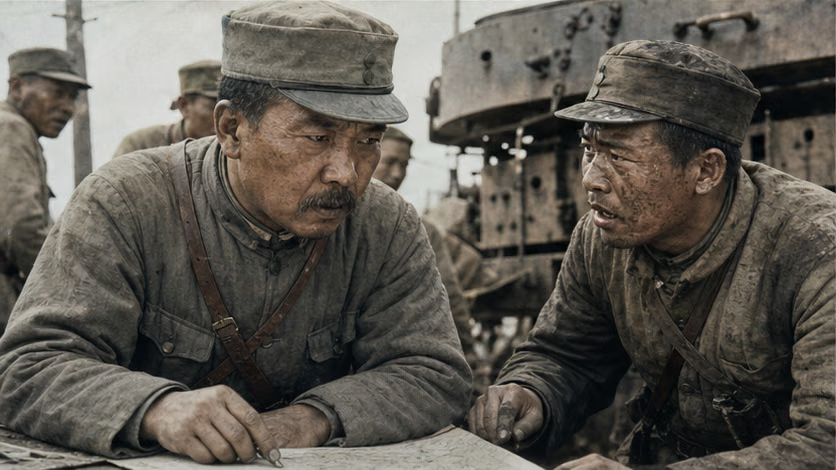
- Wu Peifu's peak: Two victories in two years brought the name "Ever-Victorious General" to its height; Time magazine later made him the first Chinese person to appear on its cover (1924.9, on the eve of the Second Zhili–Fengtian War, unverified) -- only two years lay between peak and collapse.
- Zhang Zuolin's account book: After retreating beyond the passes in defeat, he did not punish the old front-line generals; instead, he turned back and built arsenals and military academies -- a man from a bandit background, after losing the wager, changed the cards first rather than overturning the table.
- The 16th Division's defection (figure disputed): If true, it adds another example to the Beiyang wars' rule that "defection decides victory and defeat."
The Ground
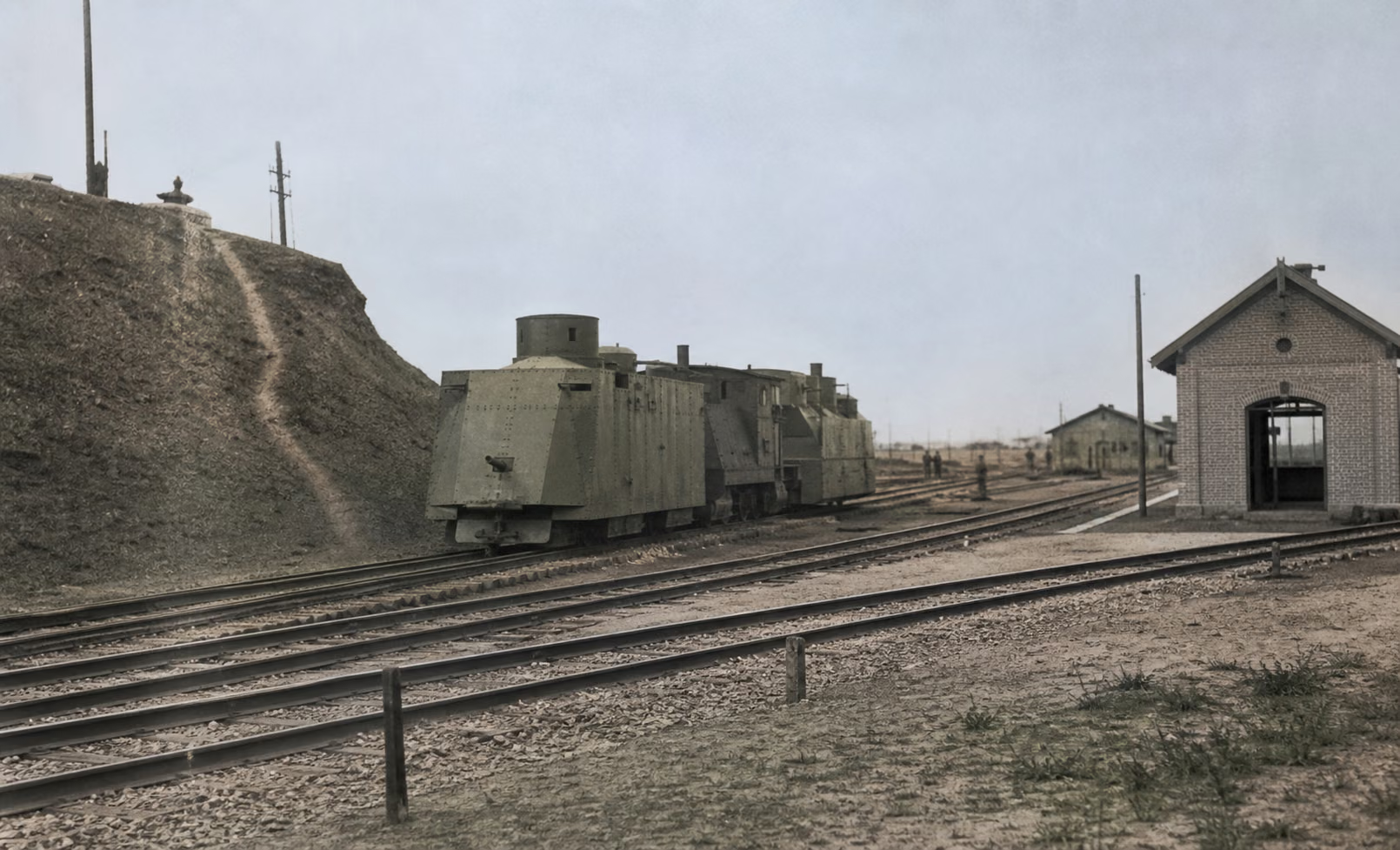
- Changxindian: attack and defense around a railway hub -- station yards, locomotive sheds, and roadbed embankments formed positions; armored trains moved back and forth in support.
- The posture of two routes advancing across the capital-region plain: the two railways each fought their own war, and the route where victory and defeat were decided first determined the whole situation.
- Shanhaiguan: the pass line to which the Fengtian Army retreated; two years later, the same place would be the site of a larger and bloodier battle (see the Second Zhili–Fengtian War).
How Each Side Records It
- Zhili clique: another complete victory in a "punitive campaign against rebels," with circular telegrams and newspapers pushing Wu Peifu onto the altar.
- Fengtian clique: avoided speaking of defeat -- internally calling it "reorganizing the army and preparing for war, to await another effort"; the Northeast reorganization thereby became the starting point of Fengtian narrative.
- Later generations: often pass over it in a single stroke as the prelude to the Second Zhili–Fengtian War; the angle of "defeat forcing army-building" deserves a chapter of its own.
Disputes and Sensitivities
- Whether the account of the Fengtian 16th Division's defection is true, and how much it mattered.
- The troop-strength and casualty figures for the two sides diverge sharply by basis.
- The contradiction between Wu Peifu's image as a "patriotic soldier" and his policy of unification by force -- two readings of the same man.
Sources and Open Questions
Sources: Lai Xinxia et al., History of the Beiyang Warlords; Collected Archival Historical Materials on the Fengtian Warlords (volume details unverified); Tao Juyin, Historical Tales from the Period of Beiyang Warlord Rule; battlefield reports in that year's Shenbao and Eastern Miscellany.
Open questions: the order of battle of both sides; the source for the account of the 16th Division's defection; the endpoint of the pursuit; the basis for the vote-buying price; Time cover date; the organizational details of the Three Eastern Provinces army reorganization; the Zhenwei Army's pretext and dates of troop dispatch; Cao Kun's advocacy of peace and the depth of the Cao-Wu disagreement; the account of Fengtian veteran generals advocating closing the passes and defending themselves; concrete records for the Zhili Army's unpaid wages and Wu Peifu's self-financing of military expenses at Luoyang; how the Fengtian Army's entry through the passes was supplied.
All images on this site are AI-generated depictions. They are not historical photographs, not primary sources, and do not depict any real individual.