Engagement Archive · Jiangsu–Zhejiang War
The Zhili-aligned military governor of Jiangsu and the Zhejiang military governor, a remnant of the Anhui clique, fought for more than a month over Shanghai's tax sources and territory -- a local war that nevertheless lit the fuse of the Second Zhili–Fengtian War; for the people of Jiangnan, it was "a war fought over the taxes of one city."
Engagement Data
| Item | Content |
|---|---|
| Time | 1924.9.3 – mid-10 (Lu Yongxiang steps down and leaves) |
| Place | Jiangsu–Zhejiang border: Huangdu–Liuhe line (the Songhu front), Yixing–Changxing line (west side of Lake Tai) |
| Belligerents | Jiangsu's Qi Xieyuan (Zhili clique, with supporting attacks from Fujian, Jiangxi, and other provinces) / Zhejiang's Lu Yongxiang (Anhui-clique remnant, commanding He Fenglin's Songhu forces) |
| Result | Lu's forces were defeated; Lu Yongxiang and He Fenglin stepped down and went east across the sea; the Zhili clique took Shanghai -- only to lose it again after the overall reversal in the Second Zhili–Fengtian War |
Belligerents
| Item | Jiangsu forces (coalition) | Zhejiang-Shanghai forces |
|---|---|---|
| Strength | Mainly Jiangsu troops, with supporting attacks from Fujian, Jiangxi, and Anhui forces; about 100,000 in all (figures vary by account) | Two Zhejiang divisions plus the Songhu garrison, about 60,000 to 70,000 (figures vary by account), with the Fujian forces of Zang Zhiping and Yang Huazhao also absorbed as guest troops in the "Zhejiang-Shanghai Allied Army" |
| Posture | Multi-pronged encirclement | Interior-line defense, relying on Songhu pay revenue |
| Reinforcement cut off | — | The Anhui clique had already fallen, the Fengtian clique was far beyond the pass, and Zhejiang-Shanghai stood isolated |
Terrain and Conditions
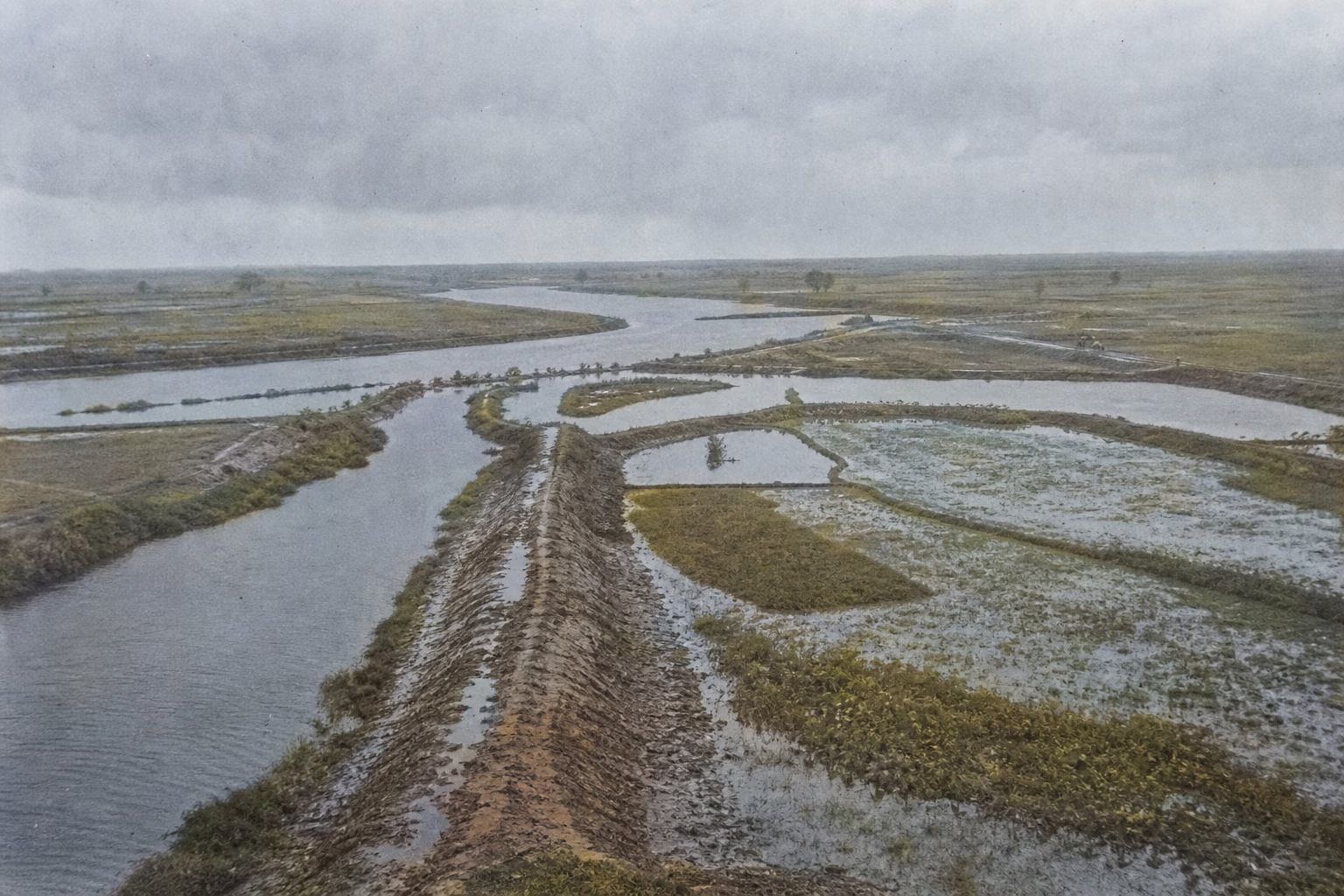
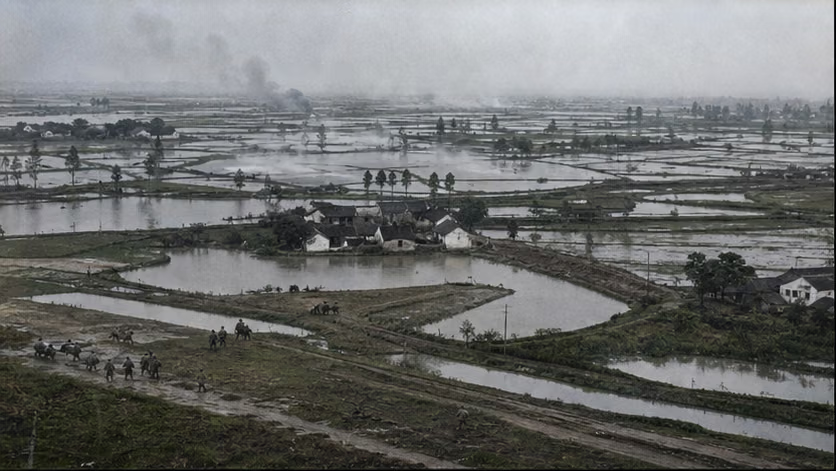
Shanghai was not the battlefield, but it was the reason for the war: customs revenue, lijin transit taxes, opium and gambling tax sources, and arsenals. Whoever held Songhu would be richer than every province. The gentry and merchants of Jiangsu and Zhejiang had long advocated "protecting the territory and keeping the people at peace," and several rounds of Jiangsu-Zhejiang peace agreements had been signed (the 1923 Jiangsu-Zhejiang Peace Agreement; details unverified) -- but agreements could not stop the logic of territory. The battle lines at Huangdu, Liuhe, and Yixing all lay amid water-networks and polders, made muddy by autumn rains.
Why It Was Fought
The First Zhili–Fengtian War had driven Fengtian forces beyond the pass, leaving the Zhili clique in sole control of the Beijing government. For the next two years, the Zhili clique could have whatever it wanted. In October 1923, Cao Kun then put on the president's hat through a bribed election -- beyond the gun barrel, he had spent away moral standing as well. Looking across the area within the pass, only one point of defiance remained: Lu Yongxiang, military governor of Zhejiang, the last organized force left from the Anhui-clique remnants. He commanded He Fenglin's Songhu forces and sent public telegrams refusing to recognize the bribed president. To the Zhili clique, this was the last nail that had to be pulled out.
That nail was driven into the richest ground in the country. By administrative structure, Shanghai belonged to Jiangsu, but military power was held by Zhejiang-aligned forces: customs revenue, lijin transit taxes, opium and gambling tax sources, and arsenals besides. Whoever held Songhu would be richer than every province. Jiangsu military governor Qi Xieyuan sat close at hand and had long wanted to seize Songhu and return it to Jiangsu's administrative structure -- the three accounts of territory, tax sources, and the Zhili-Anhui score were all being settled on the same piece of land.
In 1924, the Zhili clique moved in Fujian. The Anhui-clique units of Zang Zhiping and Yang Huazhao were expelled from Fujian, made their way into Zhejiang, and Lu Yongxiang absorbed these two homeless guest forces into the "Zhejiang-Shanghai Allied Army." He gained tens of thousands of troops, but also handed the other side a pretext for war. After that, the two sides exchanged official messages and public telegrams several times, denouncing one another; Qi Xieyuan accused Lu of "destroying peace," and yesterday's agreement became today's banner for a punitive campaign. Qi dared to act because Beijing stood behind him: Cao Kun and Wu Peifu backed Jiangsu, ordered Lu Yongxiang removed from office, and sent troops to punish him (date and official-document form unverified). Lu dared to fight because his confidence lay to the north -- he had already formed an anti-Zhili triangular alliance with Zhang Zuolin and Sun Yat-sen, wagering that once Jiangsu-Zhejiang moved, the overall Zhili-Fengtian situation would move with it.
Qi Xieyuan's calculation was multi-pronged encirclement and a quick decision: Jiangsu troops as the core, supported by Fujian, Jiangxi, and Anhui forces, about 100,000 in all, against some 60,000 to 70,000 Zhejiang-Shanghai troops (figures vary by account). Zhejiang-Shanghai had no outside help -- the Anhui clique had already fallen, and the Fengtian clique was far beyond the pass. Lu Yongxiang's calculation was to defend on interior lines: rely on Songhu pay revenue to maintain the troops, prolong the war, and wait for the north. The Fengtian clique had closed itself off and reorganized its army for three years, and needed only a pretext to enter the pass; Guangzhou was also glad to see the Southeast pin down the Zhili main force. Each side miscalculated something. Jiangsu forces did not expect the water-networks and polders at Huangdu and Liuhe to turn the offensive into inch-by-inch attrition. What the Zhejiang-Shanghai forces did not expect was the time gap: however quickly the north moved, they first had to hold off the encirclement with 60,000 to 70,000 men by themselves.
Material conditions set boundaries on both calculations. Qi's military pay and equipment came from Jiangsu's provincial finances and pay contributions from other provinces. The Fujian, Jiangxi, and Anhui troops in the multi-pronged supporting attacks each had territorial accounts of their own, and doing the job without exerting real force was the structural weakness of this encirclement (unverified). Of the 100,000 troops, the only ones he could truly count on were Jiangsu's own. Lu's lifeline was the Songhu tax source: beyond customs and lijin, there was also opium tax revenue. But once the fighting began, Shanghai's finance tightened and its markets slumped; tax sources dried up by themselves, and the longer the war dragged on, the harder pay became. Ammunition was the same illness on both sides: Jiangnan had no secure rear arsenal, and replenishment depended on prewar reserves and foreign purchases (details on arms sources unverified). Qi's forces could not afford a prolonged multi-pronged siege; Lu's calculation required delay, but his tax sources could not sustain delay.
It was not that there was no other road on the table. Zhang Jian and other Jiangsu-Zhejiang gentry, along with the Shanghai General Chamber of Commerce, repeatedly shuttled to mediate and sent public telegrams opposing the war; the Jiangsu-Zhejiang Peace Agreement of 1923 was signed along that road. The road did not open. Qi Xieyuan had Beijing's support and regarded Songhu as something he must have; Lu Yongxiang would not hand over Songhu military authority or the guest troops he had absorbed. Before the war began, the room for both parties to take one step back had already been used up. Whether anyone inside the two armies urged against fighting is not found in extant records (unverified).
On September 3, firing began in the Huangdu direction. Twelve days later, Fengtian forces mobilized beyond the pass, and the national chessboard moved in response. The Zhejiang forces on the Songhu front first had to hold by themselves.
Course of the Engagement
| Stage | Time | Key Points |
|---|---|---|
| Opening of the war | 9.3 | Firing began in the Huangdu direction, and the Songhu front became the main battlefield |
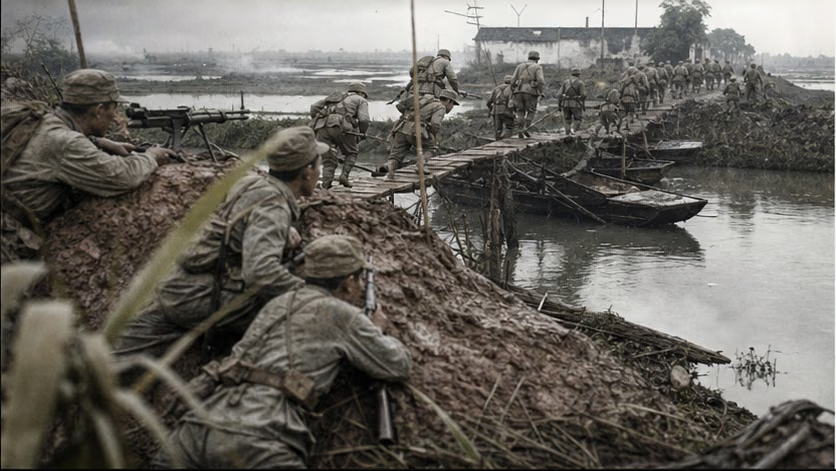
| Liuhe seesaw | Early to mid-9 | Positional fighting in water-network terrain; Jiangsu offensives were repeatedly checked (battle details unclear) -- the hardest-fought section of this war |
| Yixing direction | Mid- to late-9 | Jiangsu forces, joined by Anhui and Jiangxi units, pressed into Zhejiang from the west side of Lake Tai |
| Fujian forces enter Zhejiang and the general collapse | Late-9 – 10 | Sun Chuanfang led Fujian forces north from Fujian into Zhejiang (his rise began through this campaign; details unclear), leaving Zhejiang forces attacked from front and rear; around 10.13, Lu Yongxiang and He Fenglin sent public telegrams stepping down and went east across the sea (dates vary by account) |
Casualties and Losses
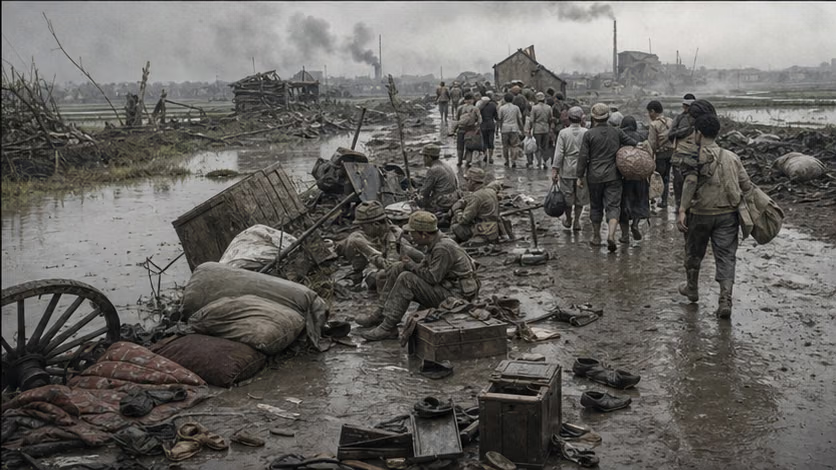
- Total casualties on both sides numbered several thousand (figures vary by account).
- ※ Civilians: in the war zones near Songhu and along Lake Tai, refugees counted in the hundreds of thousands poured into Shanghai's foreign concessions (figures vary by account); Jiangnan gentry and merchants organized Red Cross and refugee relief work, and local gazetteers and newspapers recorded it in considerable detail -- the psychological shock of "a military disaster unseen in Jiangnan for decades" was greater than the casualty figures.
- Shanghai markets: financial turbulence and soaring rice prices (record unverified).
Aftermath
- Fuse effect: Zhang Zuolin entered the pass again in the name of "aiding Lu and campaigning against Zhili" -- the Jiangsu–Zhejiang War directly ignited the Second Zhili–Fengtian War (9.15 Fengtian mobilization; the two wars interlocked in time from end to beginning).
- Sun Chuanfang used this campaign to enter Zhejiang, and within two years grew into the "Commander-in-Chief of the Allied Army of the Five Southeastern Provinces" -- one of the protagonists of the next era (linking onward to the Longtan line in the Northern Expedition articles).
- Lu Yongxiang exited the stage with the remaining Anhui-clique lineage; Qi Xieyuan had barely warmed his seat in Shanghai before the Zhili central structure collapsed.
Accounts of Those Present
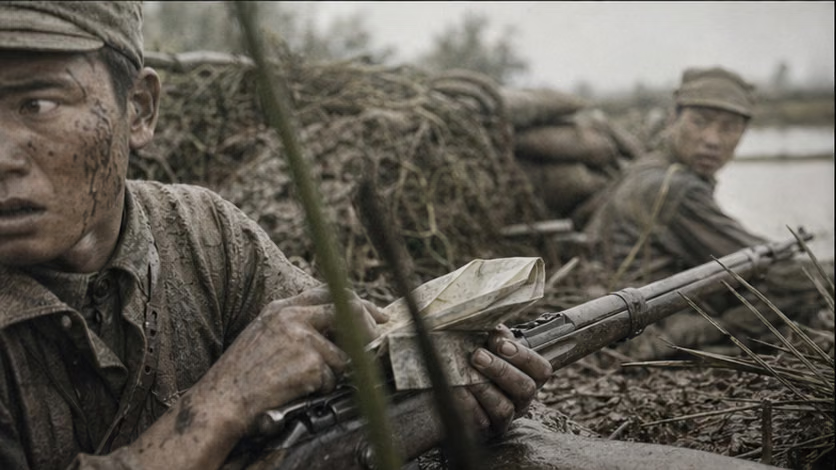
- The gentry-merchant agreements: the gentry and merchants of Jiangsu and Zhejiang twice made agreements to "protect the territory"; once hostilities began, the agreements became paper -- the ceiling of civilian society's ability to restrain warlords was plain to see.
- The Zang and Yang guest troops: the two units expelled from Fujian became the pretext for war and also fought the hardest battles in the Zhejiang army's order of battle (record of performance unverified) -- guest troops had no territory, and could only fight to the death.
- Refugees in the concessions: the war was fought outside the city, while hundreds of thousands crowded into the foreign concessions -- "neutral" foreign concessions became refuges in a Chinese civil war, a structural irony that would recur in the later Battle of Shanghai.
The Ground
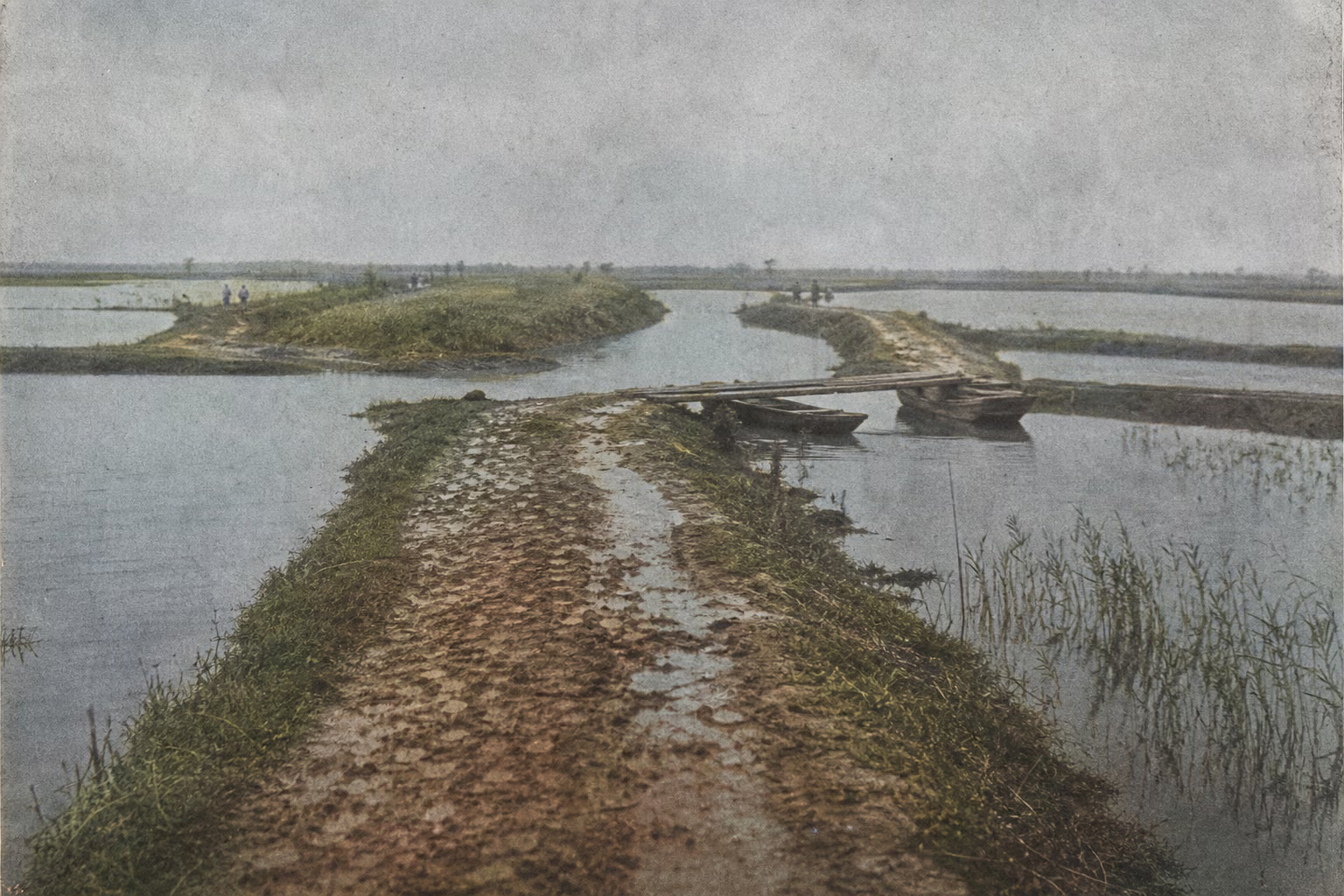
- Positional fighting in water-network polders: river branches served as trenches, polder dikes as ramparts, and movement depended on boats and bridges; autumn rains turned everything into mire -- the spatial grammar of a Jiangnan battlefield was entirely different from railway warfare on the northern plains.
- Huangdu–Liuhe line: a narrow front between the Shanghai-Nanjing Railway and the mouth of the Yangtze; if an attack could not break through, it became a meat grinder.
- Shanghai foreign concessions: an "outside-the-boundary space" beside the battlefield, where refugees, arms, and intelligence converged.
How Each Side Records It
- Both sides used public telegrams to accuse the other of "destroying peace," each holding up the name of the Jiangsu-Zhejiang people.
- Jiangnan civilian memory: in local gazetteers and notes, this was the "Jiazi Military Disaster"; refugees and rice prices were the key nouns (representative literature unverified).
- Later generations: often treated as a footnote to the Second Zhili–Fengtian War; in recent years, research from the perspective of livelihood and local society has gradually increased.
Disputes and Sensitivities
- Responsibility for starting the war: whether absorbing guest troops came first or deliberate provocation came first; the public telegrams of both parties stand side by side.
- The timing and calculation behind Sun Chuanfang's entry into Zhejiang -- the layers of the "fisherman profiting" narrative.
- Wide disparities in casualty and refugee figures.
Sources and Open Questions
Sources: Lai Xinxia et al., *History of the Beiyang Warlords*; *Historical Materials on the Jiangsu–Zhejiang War* (bibliographic details unverified); Shanghai's *Shen Bao* war reports and refugee coverage, 1924.9–10; the military-affairs volumes of Jiangsu and Zhejiang local gazetteers.
Open questions: the orders of battle and casualties of both sides; details of the Liuhe fighting; the date when Lu and He stepped down; the process of Sun Chuanfang's entry into Zhejiang; refugee numbers and concession-relief records; the text of the Jiangsu-Zhejiang Peace Agreement; the date and official-document form of the Beijing government's removal of Lu Yongxiang from office and order for a punitive campaign; original records for the formation and contacts of the anti-Zhili triangular alliance; evidence for the claim that the Fujian, Jiangxi, and Anhui supporting forces "did the job without exerting real force" (a structural inference requiring war reports or the telegrams and correspondence of participants to confirm it); details of both sides' arms sources and prewar reserves; the original texts and back-and-forth process of Zhang Jian and other gentry, together with the Shanghai General Chamber of Commerce, mediating and sending public telegrams; whether records exist of prewar dissent inside the two armies.
All images on this site are AI-generated depictions. They are not historical photographs, not primary sources, and do not depict any real individual.