Engagement Archive · Guo Songling's Revolt Against the Fengtian Clique (1925)
The best-fighting elite formation in the Fengtian Army took the name "Northeast Guominjun" and turned back against its own marshal: within a month it seized Shanhaiguan and Jinzhou and fought to the gates of Shenyang, only to break at the Julu River -- the intervention of Japan's Kwantung Army was the immediate external force that tipped the balance.
Engagement Data
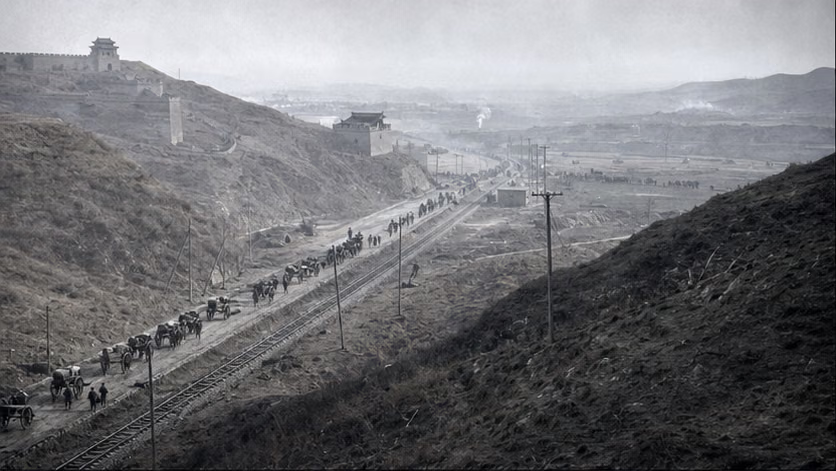
| Item | Content |
|---|---|
| Time | 1925.11.23 (telegram from Luanzhou announcing the uprising) – 12.24 (defeat at the Julu River), 12.25 Guo and his wife were executed |
| Place | Eastern Hebei (uprising at Luanzhou) -> Shanhaiguan -> Suizhong and Jinzhou -> the Julu River line at Xinmin (western outskirts of Shenyang) |
| Affiliation | Warlord Era Conflicts · internal war of the Fengtian clique (the outbreak of internal Fengtian contradictions after the 1924 Second Zhili–Fengtian War) |
| Belligerents | Anti-Fengtian side: Northeast Guominjun (Guo Songling); suppression side: Fengtian Army (Zhang Zuolin, with Zhang Xueliang commanding at the front); external force: Japanese Kwantung Army (intervening on Zhang Zuolin's side) |
| Result | Guo's army was defeated; Guo Songling and his wife Han Shuxiu were captured and executed, and their bodies exposed for three days ※; Zhang Zuolin kept the Northeast, but both the Fengtian clique's strength and its new-officer group were damaged |
Belligerents
| Item | Northeast Guominjun (Guo's army) | Fengtian Army (Zhang Zuolin's side) |
|---|---|---|
| Strength | About 70,000 men, the former main force of the Fengtian Army's Third Front Army and the most elite formation in Fengtian service | Initially short of troops able to fight; urgently transferred forces from Jilin and Heilongjiang (including Wu Junsheng's cavalry) as reinforcements, with the total gradually surpassing Guo's army (figure disputed) |
| Equipment | The finest Fengtian equipment defected with them, with infantry and artillery complete; but after moving away from the Shenyang arsenal, ammunition supply was cut off | The arsenal was in Shenyang, so ammunition did not run out; the Japanese Kwantung Army helped transport troops and weapons (details unrecorded) |
| External aid | Formed a "triangular alliance" with Feng Yuxiang's Guominjun and Li Jinglin, then quickly undercut one another -- Li Jinglin turned against Guo midway and blocked his rear, while Feng's forces took territory for themselves | Japanese Kwantung Army: warned Guo's army not to enter within twenty li of the South Manchuria Railway leased zone, in practice sealing Guo's flank corridor; transported troops, supplied weapons, and provided intelligence for the Fengtian side (intervention details unverified item by item) |
| Command | Guo Songling, leader of the new faction in the Fengtian Army, outstanding in both training troops and fighting, but with a fragile political alliance | Zhang Zuolin oversaw the whole effort; Zhang Xueliang faced his former teacher at the front |
Terrain and Conditions
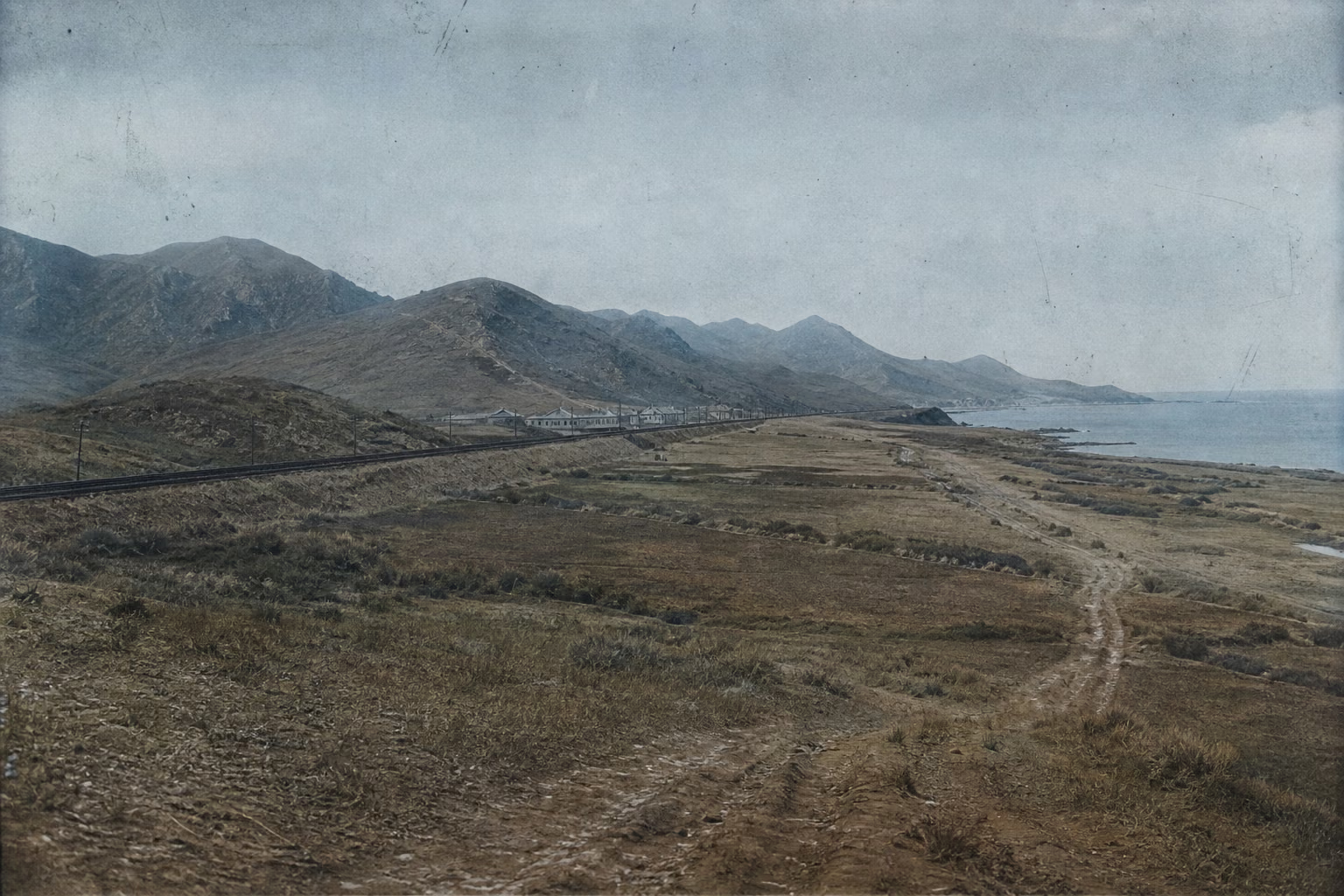
(For the larger situation in 1925 -- Fengtian expansion beyond the pass after the Second Zhili–Fengtian War, the Zhejiang–Fengtian War, the anti-imperialist atmosphere after the May Thirtieth Movement, and Japan-Fengtian relations -- see Warlord Era Conflicts · Overview; here the focus is only the eastern Hebei-western Liaoning line.)
The western Liaoning corridor became a battlefield again: it was the same corridor as in the Zhili–Fengtian War one year earlier, but in the opposite direction -- this time the attacking side moved from west to east, pushing through Shanhaiguan, Suizhong, Jinzhou, and Xinmin toward Shenyang. The corridor's pattern, mountains to the north and sea to the south, had not changed, but the South Manchuria Railway leased zone (the Japanese-occupied area along the South Manchuria Railway) lay across Guo's flank, and a single Kwantung Army "twenty-li prohibition" turned the corridor into a one-sided passage.
Inside the Northeast: the Fengtian arsenal and the Northeast's finances were both in Shenyang. Guo's eastward advance therefore meant leaving his supply base to attack the supply base -- time stood on the defender's side.
Why It Was Fought
After the Second Zhili–Fengtian War was won, the Fengtian clique's reward system went wrong. The bloody fighting on the Shanhaiguan front had been carried by Guo Songling's Third Front Army, yet when rewards were handed out he received no territory -- the promised military governorship of Anhui fell through, while officers from the military-academy faction, including Yang Yuting and Jiang Dengxuan, divided Jiangsu and Anhui among themselves (the sequence remains unverified). The accumulated resentment between the new faction and the old faction now had a grievance that could not be swallowed.
Within a year, the Fengtian Army had expanded on the back of victory all the way to the Yangtze, only to be driven back in autumn 1925 by Sun Chuanfang's Zhejiang–Fengtian War: Jiangsu and Anhui were gained and then lost again, while front-line troops had been fighting beyond the pass year after year, and war-weariness fermented in the barracks. Guo Songling watched the troops he had trained being spent for someone else's territory, and he had long resented Zhang Zuolin's pro-Japanese policy. That autumn he was sent by Fengtian command to Japan to observe maneuvers; in Tokyo he made contact with representatives of Feng Yuxiang's Guominjun (the process of contact remains unverified), and the secret "triangular alliance" against Fengtian took shape from there -- Guo would send troops, Feng would provide support, and Li Jinglin in Zhili would open the way.
In November, Zhang Zuolin deployed for war against the Guominjun and again wanted this most elite force to take the lead (details of the deployment are unrecorded). Guo Songling refused to fight this kind of war again. His 70,000 men were stationed along the eastern Hebei railway line; to turn east was to face Shanhaiguan -- the western Liaoning corridor they had marched through one year earlier, this time in reverse, with Shenyang as the endpoint: the arsenal was there, the Northeast's finances were there, and Zhang Zuolin was there.
The anti-Fengtian side's calculation was speed. The 70,000 men were the point of the Fengtian spear, and many garrison troops along the route were former comrades; Guo gambled that a manifesto would settle the matter, and that once troops reached the city walls the marshal would step down on his own -- so the public telegram did not call for overthrowing the Fengtian clique, but only asked Zhang Zuolin to leave office and supported Zhang Xueliang to take charge of the Northeast. He miscalculated on three counts: the alliance was fragile, and Feng and Li each had territorial designs of their own; supply hung in the air, for the closer he fought toward Shenyang, the farther his ammunition line moved from the arsenal; and then there was Japan -- the South Manchuria Railway leased zone lay across the corridor's flank, and he had counted the Kwantung Army as an outsider. On the suppression side, Zhang Zuolin at first lacked enough troops able to fight and urgently called back forces from Jilin and Heilongjiang. He could count on two things: the Northeast's material base was in the defender's hands, and time stood on the defender's side; and that line along the South Manchuria Railway had been drawn by someone else.
The decision to rise first came down in the barracks at Luanzhou: Guo Songling convened a meeting of his subordinate commanders and announced a change of banner (the time and place of the meeting and each person's stance vary by account and remain unverified). He dared take this step half on confidence in his 70,000 men and half on the alliance fixed during his trip to Tokyo. After the uprising began, the Japanese side sounded him out about terms for cooperation, and he refused (the time, place, and wording appear only in memoir-type records and remain unverified). The intelligence he lacked lay precisely in the other two players' bottom cards: he could see but could not untie Feng's and Li's territorial calculations, and the scale of Kwantung Army intervention would not become clear until the "twenty-li prohibition" blocked his road.
The material account favored the defender from the start. Guo's army was elite, but its supply line ran backward: the closer it fought toward Shenyang, the farther its ammunition was from the arsenal; the rear depended only on the eastern Hebei line, and once Li Jinglin turned against him, that line existed in name only. Zhang Zuolin held the arsenal, the finance office, and the reserve troops of Jilin and Heilongjiang; what he lacked was only time -- and time was exactly on his side. After the uprising, Zhang Xueliang tried several times to persuade Guo to stop fighting (occasions and wording appear only in memoirs and remain unverified); whether anyone inside Guo's army openly opposed the uprising is unclear in existing records (unverified).
On 11.23, the Luanzhou telegram was issued, listing Zhang Zuolin's offenses, asking him to step down, and supporting Zhang Xueliang to take charge of the Northeast. Seventy thousand men turned their guns around -- the manifesto of uprising was at the same time a letter urging an old master to retire.
Course of the Engagement
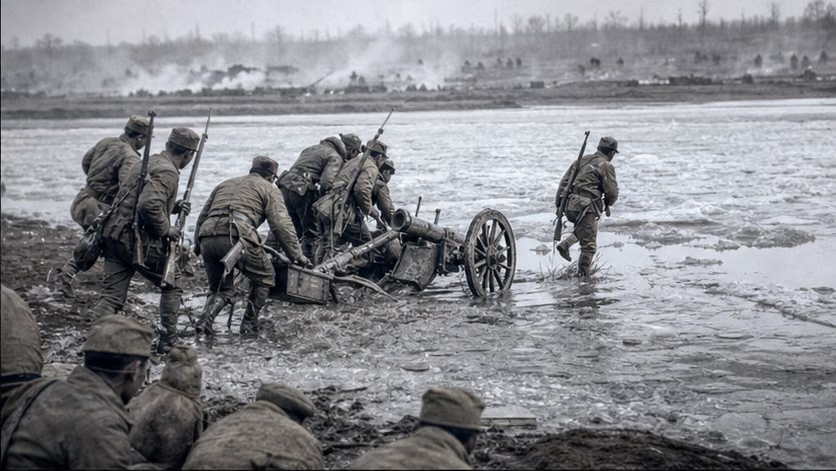
| Stage | Time | Key Points |
|---|---|---|
| Uprising at Luanzhou | 11.23–25 | Issued a telegram against Fengtian and renamed the force "Northeast Guominjun"; detained and killed Jiang Dengxuan as he passed through (details unrecorded) -- the uprising saw blood at once, leaving no way back with the old faction |
| Leaving Shanhaiguan | Late 11 – early 12 | Took Shanhaiguan and Suizhong in succession, while Zhang Zuoxiang's forces and others retreated step by step; Li Jinglin turned against Guo, cut off Guo's rear, and opened fire on the Guominjun -- the triangular alliance collapsed of itself |
| Taking Jinzhou | Early 12 | Occupied Jinzhou around 12.7 (dates vary by account), shaking Shenyang; Zhang Zuolin was at one point ready to step down and pack up valuables (various memoir accounts remain unverified) |
| Kwantung Army intervention | Mid-to-late 12 | The Japanese side announced that Chinese troops were forbidden to enter or fight within twenty li of the South Manchuria Railway leased zone, blocking Guo's detour; the Kwantung Army transported troops and weapons for the Fengtian side, turning the battlefield situation around (details unverified item by item) |
| Decisive battle at the Julu River | 12.23–24 | Guo's army stalled on the west bank of the Julu River and could not break the fortified river line; Wu Junsheng's cavalry raided Baiqibao and burned Guo's ammunition (the burning of ammunition at Baiqibao remains unverified), morale collapsed, and subordinates defected one after another; Guo and his wife abandoned the army and fled |
| Outcome | 12.24–25 | The couple were found in a farmhouse near Laodafang in Liaozhong, and on 12.25 Zhang Zuolin ordered them shot on the spot; their bodies were exposed in Shenyang for three days ※ |
Casualties and Losses
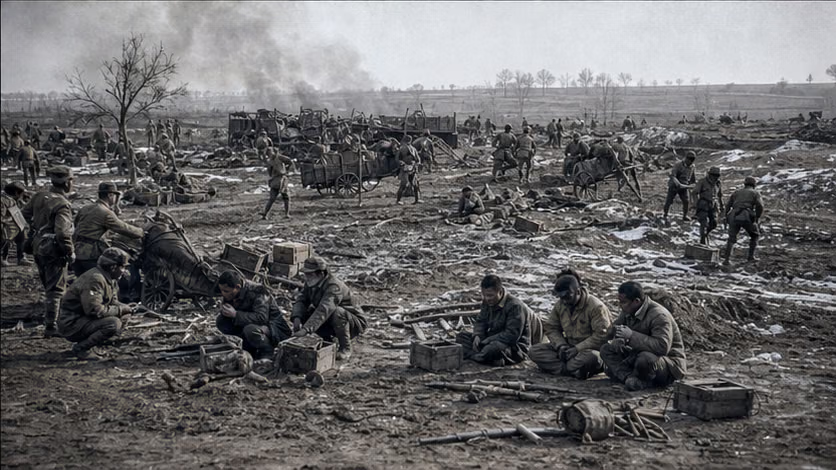
- Military: the organizational structure of the Fengtian Army's elite Third Front Army was destroyed, with combined casualties on both sides in the tens of thousands (methods of counting vary by account); the new-officer group declined from this point onward.
- Political: Zhang Zuolin incurred a debt by borrowing Japanese power -- the Japanese side later repeatedly demanded repayment on the basis of the "secret agreement at the time of the Guo Songling incident" (whether a written secret agreement existed remains an unresolved question and remains unverified), and this debt hung on all the way to Huanggutun in 1928.
- Civilians: the western Liaoning corridor became a battlefield twice within one year, with military disaster, forced labor, and requisitions piled together; there are no local statistics (newspaper and local-gazetteer records remain unverified).
Aftermath
- Zhang Zuolin regained control of the Northeast and purged Guo's party; new-faction commanders were either executed or expelled. Zhang Xueliang lost someone who had been both teacher and friend, and personally experienced the most painful internal split in the Fengtian clique.
- In the name of "maintaining order along the South Manchuria Railway," the Japanese Kwantung Army completed its first practical direct intervention in a Chinese civil war -- a direct example of an external force changing the outcome of a Chinese civil war, a precedent that would be cited repeatedly afterward.
- Feng Yuxiang's Guominjun first lost Li Jinglin and then lost credibility in this alliance, and turned to bear the joint siege by Zhili, Fengtian, and Shanxi forces alone (continued in Battle of Nankou).
- The weight of this battle in Zhang Xueliang's mind has often later been linked to the choice to change the Northeast's flag in 1928 -- that connection belongs to later interpretation, and no conclusion is drawn at the factual level here.
Accounts of Those Present
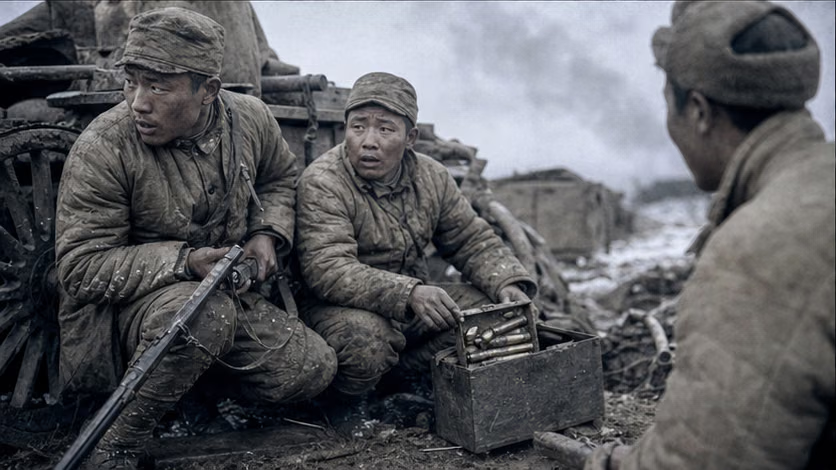
- Calling across the river: at the Julu River standoff, Zhang Xueliang called from the front line toward Guo's positions urging surrender, and also sent a letter or telegram addressing him as "Brother Maochen" (Maochen was Guo Songling's courtesy name) -- teacher and student faced each other across the river, each acting for what he regarded as right (the original text of the telegram is quoted differently in different books and remains unverified).
- Killing Jiang Dengxuan: on the day of the uprising, Jiang Dengxuan was detained and executed while passing through -- from then on there was no room for negotiation between Guo and the old faction (the place and process of the execution vary by account and remain unverified).
- The last night: after the defeat, the couple fled by farm cart and were found hiding in a vegetable cellar; Zhang Zuolin telegraphed an order for execution on the spot, forbidding their transfer to Shenyang -- what he feared was Zhang Xueliang pleading for mercy (the claim that he "feared the young marshal would plead for mercy" appears in many memoirs and remains unverified).
- Bodies exposed for three days ※: the bodies were brought back to Shenyang and exposed for three days, with tens of thousands watching -- an old Beiyang-era punishment of public display, falling on a reformist general and his wife who held the rank of lieutenant general.
- Where the soldiers belonged: Guo's soldiers had originally been Fengtian troops, and they defected and then defected again; when they heard the other side shout "come back and you will not be punished," whole companies laid down their guns -- there was no answer to "for whom do they fight"; see Warlord Era Conflicts · Overview.
The Ground
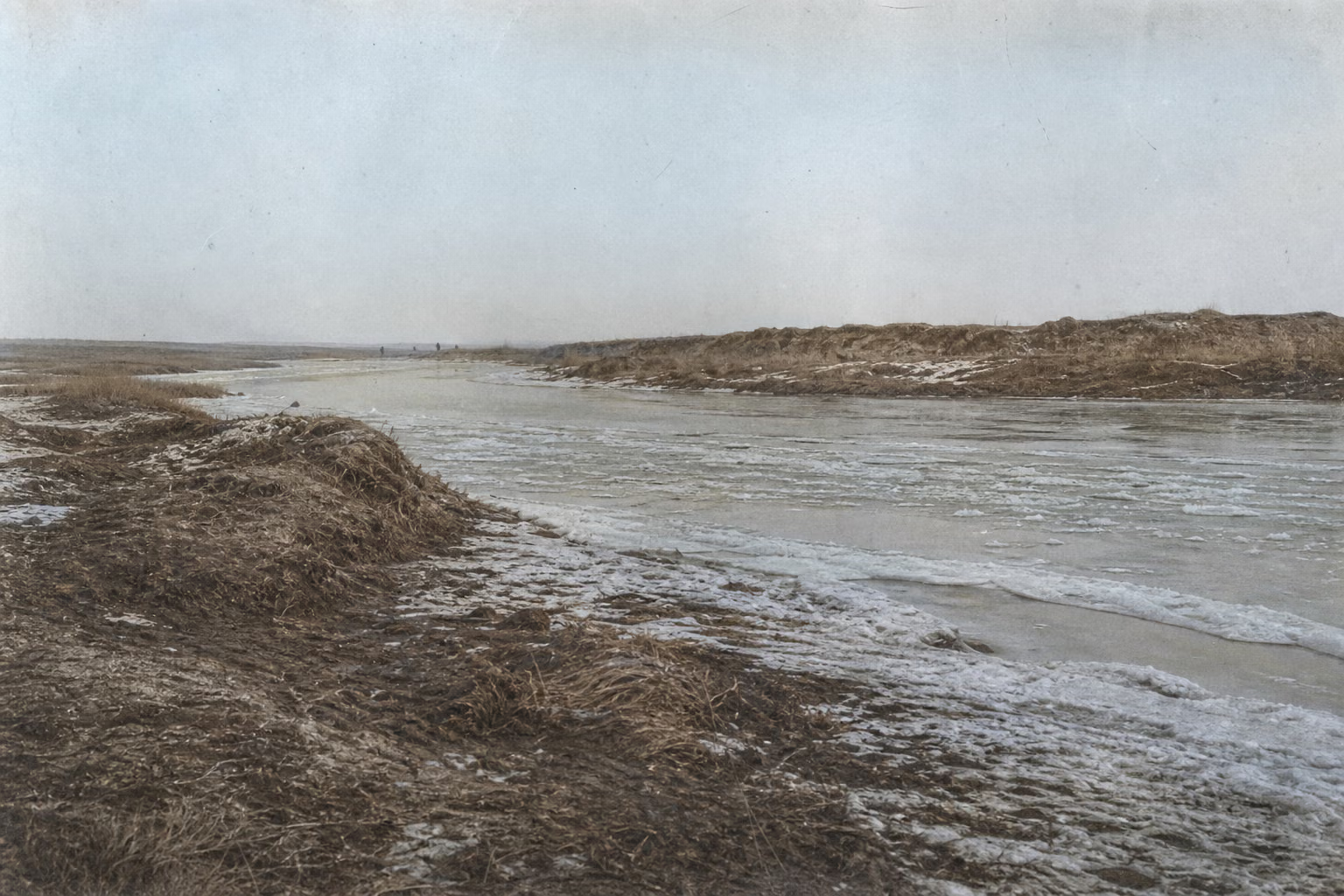
- The same western Liaoning corridor was used for the second time: Shanhaiguan, Suizhong, Jinzhou, Xinmin -- the nodes overlapped completely with the Zhili–Fengtian War, but the direction was reversed. Comparing the two articles shows the rigid constraint geography imposed on war.
- The South Manchuria Railway leased zone was an "invisible wall": the Japanese prohibition marked the twenty li on both sides of the South Manchuria Railway as a no-combat zone, cutting one strip out of Guo's maneuver map out of thin air.
- The Julu River (a tributary of the Liao River, west of Shenyang) was Shenyang's last natural water barrier; the half-frozen winter river surface and the west-bank defensive line formed the decisive battlefield. Baiqibao lay in Guo's rear, and the ammunition stockpile was raided by cavalry -- front and rear collapsed on the same day.
How Each Side Records It
- Telegram layer (the voices of the warring sides themselves): the 11.23 Luanzhou telegram was the major manifesto, listing Zhang Zuolin's offenses, asking him to step down, and supporting Zhang Xueliang; Zhang Zuolin's side sent telegrams campaigning against the "rebel Guo," condemning him for repaying kindness with resentment; the Japanese statement used "protecting South Manchuria Railway interests" as its wording -- the three sides' textual positions were starkly different, and the originals are scattered in contemporary papers such as the Shengjing Times and Ta Kung Pao (the original text of each telegram remains unverified).
- Civilian and newspaper memory: newspapers inside the pass mostly sympathized with Guo Songling and saw him as a reformist within the Fengtian clique; among people in the Northeast, the memory was of the second passage of a large army within one year, with military disaster and forced labor; three days of exposed bodies remained an urban memory that Shenyang residents still mentioned decades later (oral-history and memoir titles remain unverified).
- Later narratives: in the textbook system, this battle is usually attached briefly to the two lines of "warlord conflicts" and "Japanese interference in China's internal affairs"; recent research on Beiyang history and the history of Japanese invasion of China treats it as the first case of Kwantung Army intervention in a Chinese civil war and examines it in detail (representative works remain unverified).
Disputes and Sensitivities
- Characterization: "reformist righteous action" or "warlord infighting" -- both characterizations coexist and each has its own historiographical context; Guo Songling's patriotic motives were tangled together with the expedient method of allying with Feng.
- Unresolved secret-agreement case: whether Zhang Zuolin signed a written secret agreement in exchange for Japanese intervention remains unresolved; the various rights and interests later demanded by the Japanese side after Guo's death, and whether they stood in a causal chain with the 1928 Huanggutun incident, are also supported by materials of different levels.
- Details of Kwantung Army intervention: troop transport, weapons supply, demarcation of the no-combat zone, and intelligence support differ in detail between Japanese archives and Chinese records, and each item remains to be verified.
- Zhang Xueliang's relationship with Guo has repeatedly been dramatized in narratives and films on both sides of the Taiwan Strait, and the source levels of the relevant memoir materials are uneven.
Sources and Open Questions
Known main sources:
- Zhang Xueliang oral history (recorded by Tang Degang), relevant chapters
- Japanese Kwantung Army and Foreign Ministry archives (Japanese-side account of the intervention details)
- Contemporary newspapers: Shengjing Times, Ta Kung Pao, Shen Bao
- Tao Juyin, Anecdotal History of the Beiyang Warlords' Rule (narrative reference; original sources must be checked back)
Open questions: troop-strength figures for Guo's army and the Fengtian Army in each period; full text of the Luanzhou telegram; original text of Zhang Xueliang's "Brother Maochen" letter or telegram; the process of Jiang Dengxuan's execution; exact date of Jinzhou's fall; details of Kwantung Army intervention (prohibition text, troop-transport batches, weapons-supply lists); the process of burning ammunition at Baiqibao; whether a written secret agreement existed; Zhang Zuolin's telegram ordering the execution; the source of the claim that he "feared the young marshal would plead for mercy"; the time and place of the Luanzhou meeting and each person's stance; the claim that Japan sounded out Guo about cooperation terms; the occasions and wording of Zhang Xueliang's attempts to persuade Guo to stop fighting; whether anyone inside Guo's army objected to the uprising; records on ammunition carried and supplied during Guo's eastward advance.
All images on this site are AI-generated depictions. They are not historical photographs, not primary sources, and do not depict any real individual.