Engagement Archive · Second Zhili–Fengtian War (1924)
Before Shanhaiguan, two army groups wore each other down with modern firepower for more than a month, yet the outcome was decided by a single public telegram of defection inside Beijing: the Zhili central government collapsed from that point, and the culture of "defection" reached its summit here.
Engagement Data
| Item | Details |
|---|---|
| Time | 1924.9.15 – early November (Beijing Coup, 10.23; Wu Peifu left Tianjin by sea and headed south on 11.3, dates vary by account) |
| Place | Eastern Hebei: the Shanhaiguan–Jiumenkou–Shimenzhai line was the main battlefield; the Rehe direction was the flank battlefield; Beijing was the site of the coup |
| Belongs to | Warlord Era Conflicts · Zhili–Fengtian rivalry (following the First Zhili–Fengtian War of 1922) |
| Belligerents | Fengtian Army (Zhang Zuolin) / Zhili Army (Wu Peifu's punitive army system); midway through the war, Feng Yuxiang's Third Army of the Zhili Army defected and was also known as the Guominjun |
| Result | The Zhili central government collapsed: Cao Kun was imprisoned, Wu Peifu fled south by sea; Duan Qirui became provisional chief executive; the Fengtian clique and Feng Yuxiang's Guominjun jointly occupied the north |
Belligerents
| Item | Fengtian Army | Zhili Army |
|---|---|---|
| Strength | About 250,000 (self-styled Zhenwei Army, entering the passes in six routes; figures vary by accounting basis), with Zhang Xueliang and Guo Songling's Third Army making the main attack on the Shanhaiguan front | About 200,000 (punitive army in three routes; figures vary by accounting basis), with the First Army along the Shanhaiguan front and the Third Army (Feng Yuxiang) moving out through Rehe |
| Firepower | After two years of military reorganization, its artillery and machine-gun allocation was the strongest the Fengtian Army had ever possessed; its arsenals (the Three Eastern Provinces Arsenal) supplied its own ammunition | Its equipment was not weak, but arrears in pay had dragged on for a long time, and ammunition supply was constrained by the Beijing–Hankou and Tianjin–Pukou lines |
| Air | Several dozen newly purchased aircraft, used for reconnaissance and bombing inside the passes for the first time (sorties and effects unverified) | Also had an air detachment, but deployed on a smaller scale (figure disputed) |
| Command | Zhang Xueliang and Guo Songling formed a front-line pairing, the core of the new army trained after defeat in the First Zhili–Fengtian War | Wu Peifu, as commander-in-chief of the punitive army, went to the front in person, but the armies were a mixed weave of factions and their orders were unevenly obeyed |
Terrain and Conditions
(For the larger situation in 1924--the Jiangsu–Zhejiang War breaking out first, Sun Yat-sen's Guangzhou Northern Expedition answering from afar, and the anti-Zhili triangular alliance--see Warlord Era Conflicts · Overview. This section covers only eastern Hebei and Beijing.)
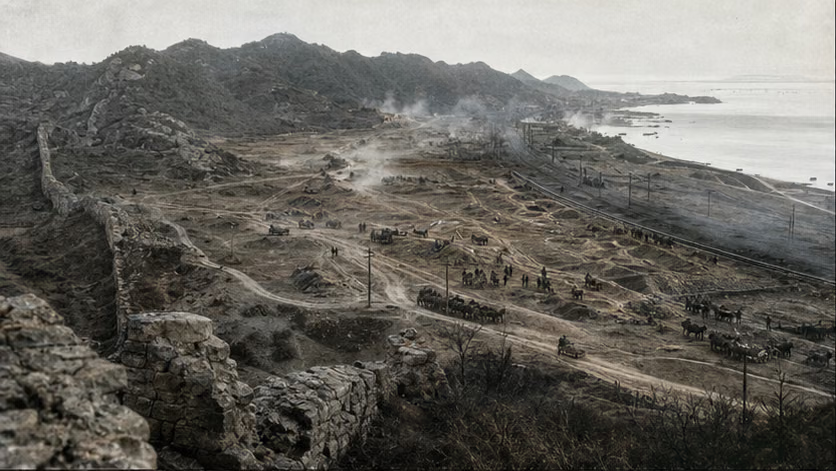
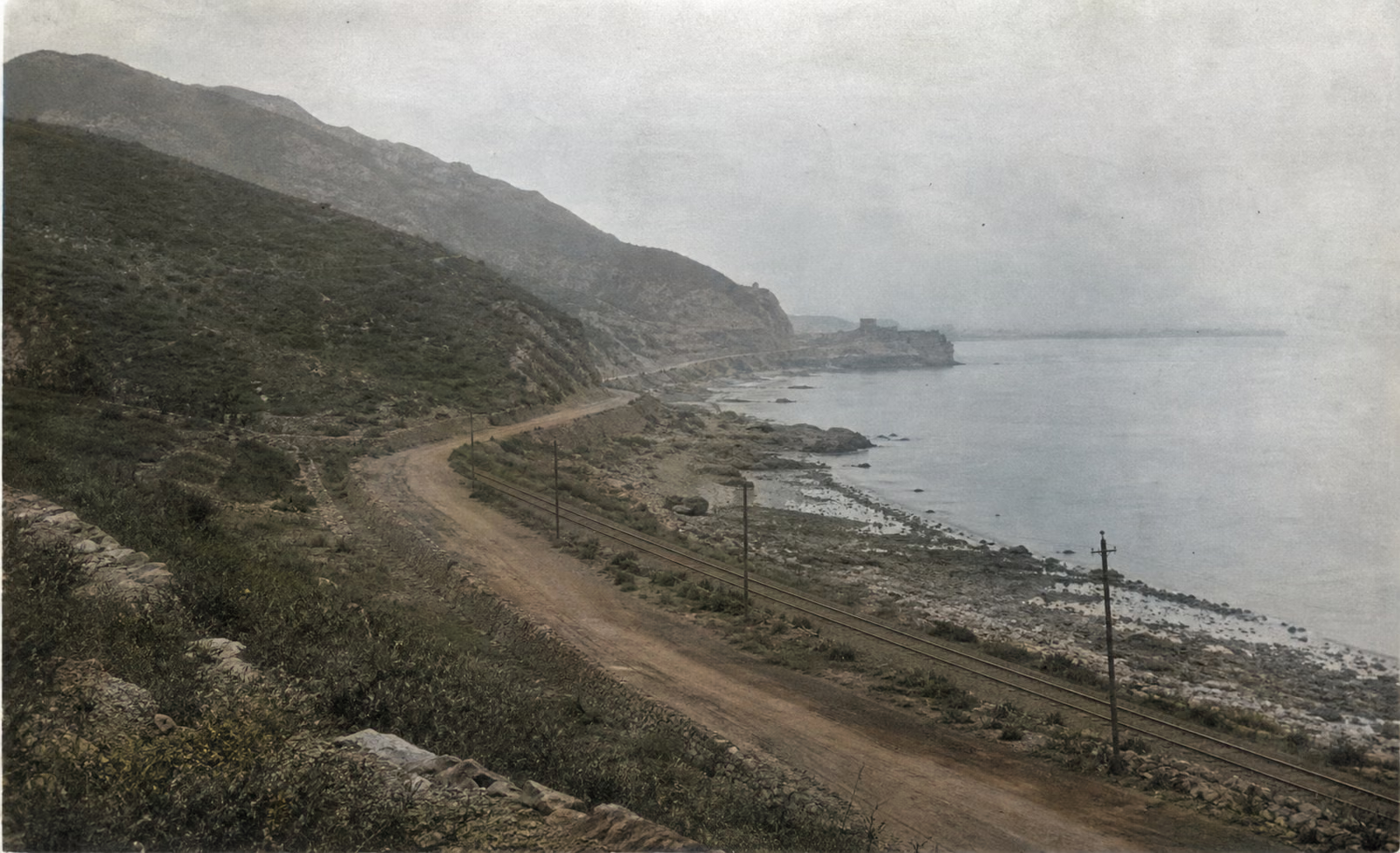
Eastern Hebei corridor: Shanhaiguan controlled the western mouth of the Liaoxi corridor, with the sea to the south and mountains to the north. The railway hugged the coast, so the attacking side could only chew forward head-on through this narrow corridor. Jiumenkou and Shimenzhai were mountain passes on the northern wing: whoever broke out through the mountains could cut behind Shanhaiguan's defenders.
Beijing: Cao Kun had been in office for just one year after his bribed election. The Zhili central government faced an anti-Zhili alliance outside and the long-running discord between Feng Yuxiang's line and Wu Peifu inside; frictions over pay and incorporation had already become public before the war. The city was the capital, and also the Zhili clique's rear hub: the tighter the front became, the less the rear could withstand someone turning against it.
Why It Was Fought
The fighting at Shanhaiguan had its fuse laid two years earlier. In the First Zhili–Fengtian War of 1922, the Fengtian Army collapsed and retreated beyond the passes. Zhang Zuolin did not overturn the table; he turned back to expand arsenals, run military academies, promote a generation of new officers such as Zhang Xueliang and Guo Songling, and discard the old while training the new. Two years later, the Fengtian Army was no longer that old force with outlaw roots: its artillery and machine guns were the strongest it had ever had, its arsenals supplied ammunition, and it had added several dozen aircraft. The military reorganization served one purpose: to enter the passes again.
In the same two years, the Zhili clique laid its own family assets out on the table and squandered them. Cao Kun put on the president's hat through a bribed election, and from then on the central government carried the words "bribed election" on its back. Wu Peifu tried to unify the country by force, sending armies in all directions and making enemies north and south. Sun Yat-sen, Duan Qirui, and Zhang Zuolin formed an anti-Zhili triangular alliance, kept three-way contact, and agreed to send troops. All they lacked was a pretext.
On September 3, 1924, the Jiangsu–Zhejiang War began: the Zhili-aligned Qi Xieyuan attacked the remnant Anhui clique force of Lu Yongxiang from multiple routes; Zhejiang and Shanghai were in danger, and Lu appealed to his allies for help. This was what Zhang Zuolin had been waiting for. Fengtian held successive military and political meetings, settled on raising troops in the name of "aiding Lu and punishing Zhili" (meeting records unverified), and on September 15 issued a public telegram announcing entry through the passes, advancing on six routes. In the telegrams by which each side denounced the other, one side's charge was bribed election and the other side's was ruining the country. Beneath them was the struggle for the central government and for territory; that layer is not to be prettified.
There was no real choice of battlefield. The Liaoxi corridor had the Bohai Sea pressed against its south and mountains leaning on its north, and Shanhaiguan controlled the corridor's western mouth: the Fengtian Army could not enter the passes without going through this gate. Jiumenkou and Shimenzhai on the northern wing were the only variables; whoever broke out from the mountains could cut behind the frontal defenders. Farther out, the Rehe direction could serve as a flanking detour. And behind all of this lay Beijing.
The resolve on both sides rested on money and grain, but the weight was different. The Fengtian Army's two years of reorganization stood on the revenues and arsenals of the Three Eastern Provinces: ammunition supplied at home, aircraft bought abroad, trains carrying materiel forward all the way. Half of Zhang Zuolin's confidence in entering the passes again lay in the accounts office. The Zhili Army's accounts had long been in deficit: several months of unpaid wages were normal, the treasury was already empty, the bribed election had consumed another large sum, and when 200,000 men set out, war expenses had no secure source (war-funding arrangements unverified). There were opposing voices inside the Fengtian clique. Wang Yongjiang, who governed Fengtian, had for years advocated preserving the territory and calming the people, and opposed exhausting the state through militarism; before and after the dispatch of troops he repeatedly remonstrated without being heeded (original text and timing of the remonstrance unverified). The fiscal bureaucrat's ledger could not outweigh the soldiers' need to recover the breath lost two years before.
Zhang Zuolin's calculation was frontal attrition plus a hidden card: Zhang Xueliang and Guo Songling's Third Army would make the main attack on Shanhaiguan, staking the quality of the new army trained over two years. Beneath the table, Feng Yuxiang, whose resentment with Wu Peifu had already run deep, was said before the war to have accepted support from the Fengtian side (amount and evidence unverified). Wu Peifu's calculation was to reproduce 1922: he received orders and selected generals at Sizhaotang in Zhongnanhai (details vary among books), hold the front by relying on strong terrain, wait until the Fengtian Army was worn out far from home, then close the affair by sending a flank out through Rehe to envelop it. For this, he placed Feng Yuxiang, who had long been at odds with him, on the route closest to Beijing and least subject to restraint. It was not that no one in camp warned him that this route could not be entrusted to Feng; the warning was not accepted (seen only in memoir accounts). Each side miscalculated something: Zhang Zuolin did not expect the Shanhaiguan front to grind blood for a month; what Wu Peifu failed to calculate was the rear: the tighter the front became, the less the rear could withstand someone turning against it.
In mid-September, the two armies advanced toward each other. The Zhili Army's Third Army also set out, through Rehe and toward the flank. Leading it was Feng Yuxiang.
Course of the Engagement
| Phase | Time | Key Points |
|---|---|---|
| Outbreak and the Rehe direction | 9.15–late September | The Fengtian Army entered the passes in six routes; Feng Yuxiang's Third Army of the Zhili Army was ordered to move out through Rehe, but marched slowly (later readers often interpret this as deliberate waiting, unverified); the Fengtian Army advanced relatively quickly in the Rehe direction |
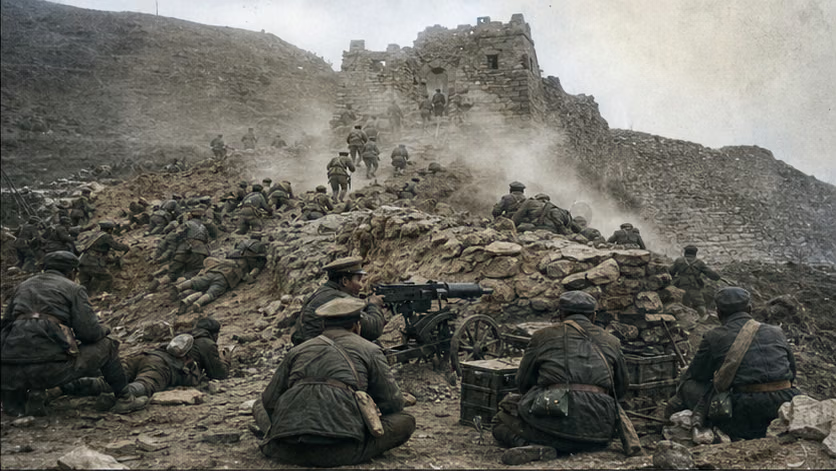
| Bloody fighting on the Shanhaiguan front | Late September–mid-October | Jiumenkou and Shimenzhai changed hands repeatedly, with the Fengtian Third Army making the main attack; the Zhili Army resisted stubbornly from its positions, and casualties on both sides numbered in the tens of thousands, making this one of the fiercest positional battles of the early Republic (casualty figures vary by accounting basis); Wu Peifu went personally to Luanzhou to supervise the fighting |
| Beijing Coup | 10.23 | Feng Yuxiang defected at the front; his troops marched by night back to Beijing, imprisoned Cao Kun, and controlled the whole city; he issued a public telegram advocating peace and renamed his troops the "National Army of the Republic of China"; together with Hu Jingyi and Sun Yue, he organized the First through Third Armies of the Guominjun |
| Collapse of the Zhili Army | 10.24–early November | Wu Peifu faced enemies front and rear, and his attempt to return from the Shanhaiguan front to punish Feng failed (Battle of Yangcun and others, details unrecorded); around 11.3 he boarded a warship at Tanggu, Tianjin, and fled south by sea (date and route details unrecorded); the Zhili troops on the Shanhaiguan front were incorporated or disarmed by the Fengtian Army |
| Subsequent political situation | November | On 11.5 Feng Yuxiang's troops revised the Articles of Favorable Treatment for the Qing Imperial House and expelled Puyi from the Forbidden City: the Jiazi palace coercion ended the "small court" inside the palace (for details, see the entry on the Articles of Favorable Treatment in the Xinhai Revolution pieces); on 11.24 Duan Qirui became provisional chief executive |
Casualties and Losses
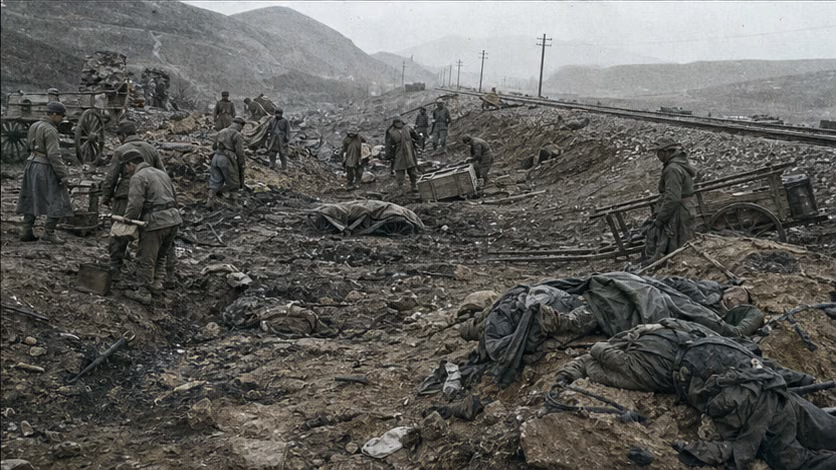
- Along the Shanhaiguan–Shimenzhai line, combined casualties on both sides reached the level of several tens of thousands (the battle reports of different sides used sharply divergent accounting bases, and multiple specific figures coexist). It is often described as the highest-casualty positional battle of the Beiyang era, source unverified.
- Military disaster and forced labor: along the eastern Hebei battlefield, grain, fodder, carts, and drivers were requisitioned locally; defeated troops looted as they passed; civilian losses were not statistically recorded (newspaper accounts are scattered, unverified).
- Political cost: the bribed-election parliament and the Zhili central government perished together; Puyi left the palace, and the Articles of Favorable Treatment for the Qing Imperial House were written off in one stroke (the version signed in the Xinhai year became void at this point--see Warlord Era Conflicts · Overview and the Xinhai Revolution pieces).
Aftermath
- The Fengtian clique and the Guominjun jointly occupied the north and installed Duan Qirui as provisional chief executive. Duan had no troops; the regime was transitional by nature, and the Fengtian-Feng contradiction was planted at once (continued in Guo Songling's Revolt Against the Fengtian Clique and Battle of Nankou).
- Sun Yat-sen was invited north to discuss national affairs and died of illness in Beijing on 1925.3.12. The National Revolution and northern politics converged here, and this stroke carries them forward (see Warlord Era Conflicts · Overview).
- Wu Peifu went by the Yangtze back to the Luoyang–Wuhan line to gather his remnants, and two years later returned to the battlefield as a target of the Northern Expedition.
- The Zhili clique lost the central government but did not perish: Sun Chuanfang held the five southeastern provinces, and the anti-Fengtian war (the 1925 Zhejiang–Fengtian War) soon arose.
Accounts of Those Present
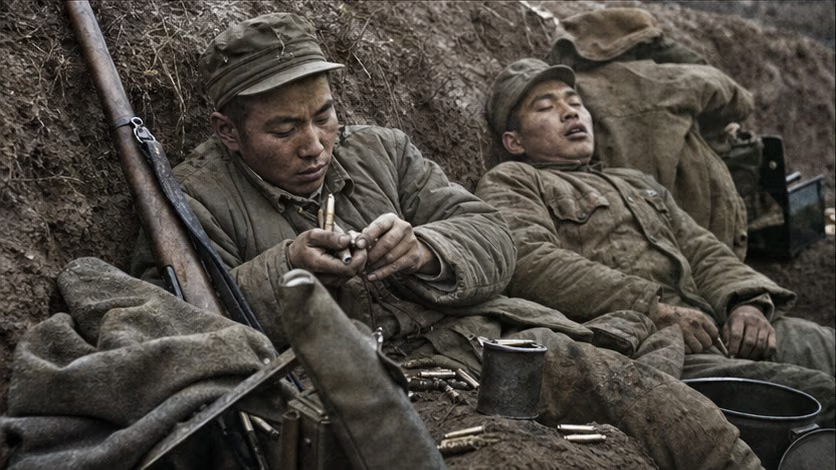
- The operation of defection at the front: Feng's troops turned back from the Rehe front in October, hiding by day and marching by night, blocking news as they returned to Beijing. In a single night on 10.23 they controlled the city gates, railway stations, and telephone bureau, and Cao Kun was surrounded in Zhongnanhai. The coup succeeded through "the marching speed of one's own people" (marching schedules vary among books, unverified).
- Wu Peifu's commander's banner: after hearing of the change at the front, he still raised the banner of "punishing rebels" and turned back to punish Feng; after his defeat he fled south from Tanggu aboard a warship. The end-stage scene of this famous Beiyang general is vividly described in various memoirs, but details differ (figure disputed).
- The day of leaving the palace: on 11.5 Lu Zhonglin led men through the Shenwu Gate and ordered Puyi to move out that same day; Puyi left the palace with his consorts for the Prince Chun Mansion. This was the last day of the identity of "emperor" inside the Forbidden City (memoirs by both Lu Zhonglin and Puyi exist, details unrecorded).
- Soldiers: the rank and file of both the Zhili and Fengtian armies were mostly recruited sons of farming families; unpaid wages were normal, and defeated troops before battle and demobilized men after the war sought survival along the roads. "For whom they fought" has no answer; see Warlord Era Conflicts · Overview.
The Ground
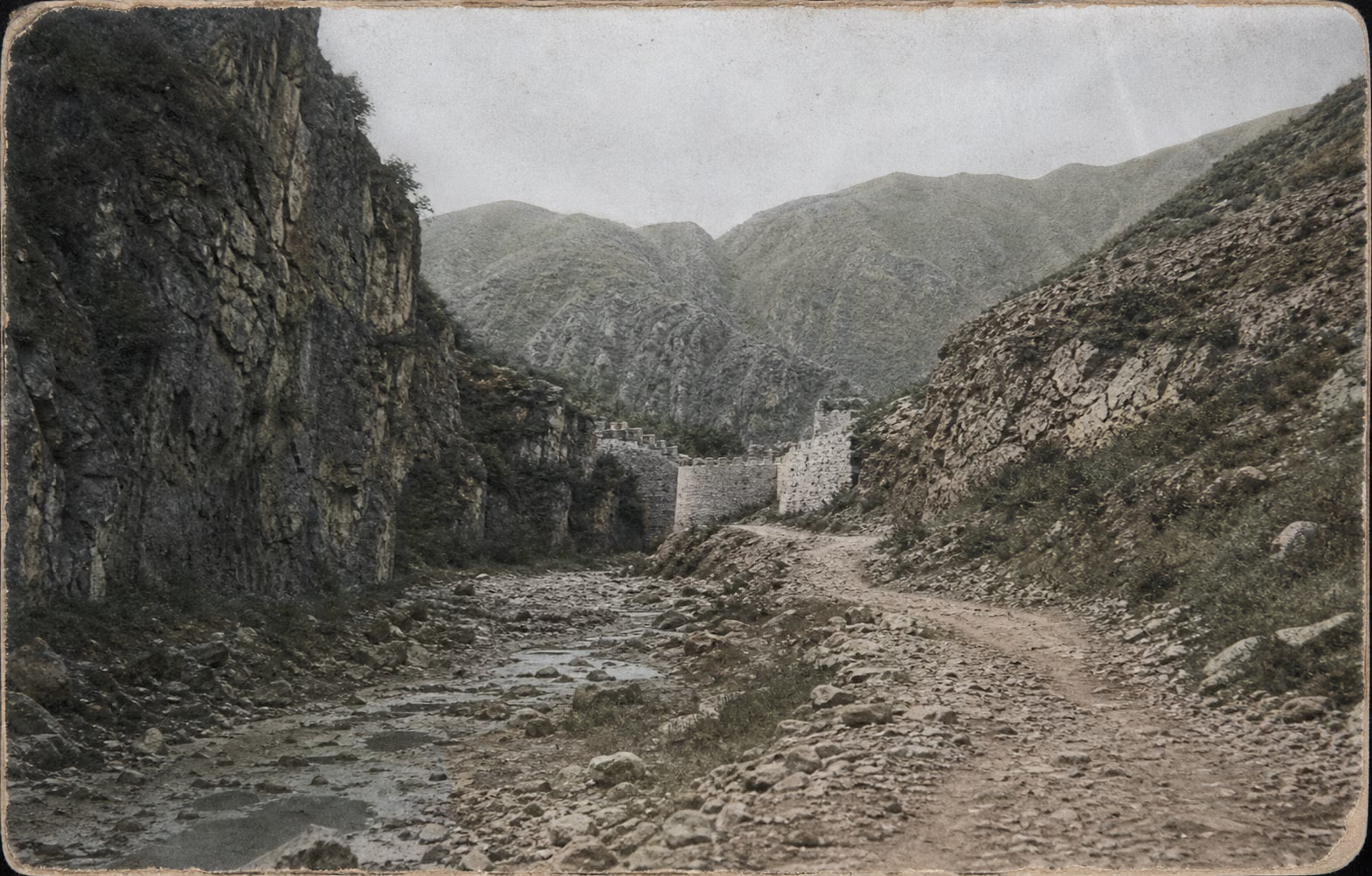
- The Liaoxi corridor was a natural single-axis battlefield: the Bohai Sea lay to the south, mountains to the north, and the railway and road ran in parallel between them. Attack and defense could only unfold within the width of the corridor.
- Jiumenkou (a pass where the Great Wall crosses a river valley) and Shimenzhai (a mountain passage) were the keys to the corridor's northern wing. The mountain heights and pass fighting were the spatial protagonists of this battle.
- The space of the Beijing Coup lay inside the city: city gates, telephone bureau, railway stations, the presidential residence. The list of control points for taking a city in one night, together with the flesh-and-blood mill dozens of kilometers away at the front, formed two spatial layers of the same war.
How Each Side Records It
- The public-telegram layer (the voices of the fighting sides themselves): before the war, Zhang Zuolin issued a public telegram denouncing Cao Kun's bribed election, while the Zhili clique issued one denouncing the Fengtian side for "raising troops and offending rightful order"; during the war, on 10.23 Feng Yuxiang led the "public telegram advocating peace," bitterly describing the sufferings of civil war and announcing his return march, a classic text of self-defense by a defector; Wu Peifu replied by telegram, denouncing Feng's defection and betrayal and upholding Cao while punishing Feng; after the war, the factions again exchanged public telegrams before and after Duan Qirui entered Beijing. From the opening of war to its close, every step was accompanied by another round of public telegrams. The original texts are scattered in newspapers of the time (texts and dates of individual telegrams vary by account).
- Popular and newspaper memory: along the Beijing–Tianjin–Hebei line, what was remembered was military disaster, forced labor, requisitioned carts, and requisitioned grain; Shanghai and Tianjin newspapers continuously reported the intensity of the fighting at Shanhaiguan, and "Jiumenkou" and "Shimenzhai" briefly became familiar place-names in the press (specific newspaper items unverified).
- Later narratives: textbooks subsume this battle under the two strokes of "Warlord Era Conflicts" and "collapse of Beiyang warlord rule"; in the past twenty years, renewed research on Beiyang history has treated the Beijing Coup separately and in detail, and older names such as "Capital Revolution" and "Jiazi Coup" have been reexamined (representative works unverified).
Disputes and Sensitivities
- How to characterize the Beijing Coup: at the time there were already two readings: "revolution" (expelling a bribed-election president and inviting Sun Yat-sen north) and "defection" (selling out one's master before the front and accepting Fengtian support behind his back). The claim that Feng Yuxiang received a huge sum from the Fengtian Army circulated very widely, but amounts and evidence differ from book to book (figure disputed). Both readings coexist.
- Expelling Puyi from the palace: at the time there were two arguments, "eliminating the remnants of imperial rule" and "breaking an agreement and bullying an orphan"; Qing loyalist elders and the Republican government each held to their own account. This section should be read together with the Articles of Favorable Treatment for the Qing Imperial House in the Xinhai Revolution pieces.
- Casualty figures: casualty figures for the Shanhaiguan front range from several tens of thousands to the level of 100,000, with multiple claims coexisting.
Sources and Open Questions
Known main sources:
- Lai Xinxia et al., *History of the Beiyang Warlords* (war framework)
- Newspapers of the time: *Shen Bao*, *Ta Kung Pao*, and *Chen Bao* war reports and full texts of public telegrams
- Feng Yuxiang, *My Life*, and memoirs by Lu Zhonglin and other participants in the coup
- Puyi, *From Emperor to Citizen* (the section on leaving the palace)
Open questions: the strength accounting bases and order of battle of both sides; the sources for the various casualty figures on the Shanhaiguan front; the marching schedule of Feng Yuxiang's troops returning toward Beijing; the amount and evidence for Feng's receipt of Fengtian support; the exact date and sea route of Wu Peifu's departure south from Tianjin; the detailed sequence of the fighting for Jiumenkou and Shimenzhai; a list of defections and collapses among units other than the Zhili Third Army; the original texts and dates of each round of public telegrams in 1924; the date and minutes of the Fengtian decision-making meeting on sending troops; the original text and timing of Wang Yongjiang's remonstrance against sending troops; the source for the camp warning to Wu Peifu about carefully using Feng Yuxiang's route; the details of Wu Peifu selecting generals at Sizhaotang; the actual figures for Zhili war-funding arrangements and arrears in pay.
All images on this site are AI-generated depictions. They are not historical photographs, not primary sources, and do not depict any real individual.