Engagement Archive · Central Plains War (1930)
For half a year, armies numbering in the millions fought along the Longhai, Tianjin-Pukou, and Pinghan railways; in the end, victory and defeat were decided by a single public telegram from beyond the passes -- the high point of the KMT new-warlord civil wars, with two trailing consequences, one leading to 1931 and the other to 1937.
Engagement Data
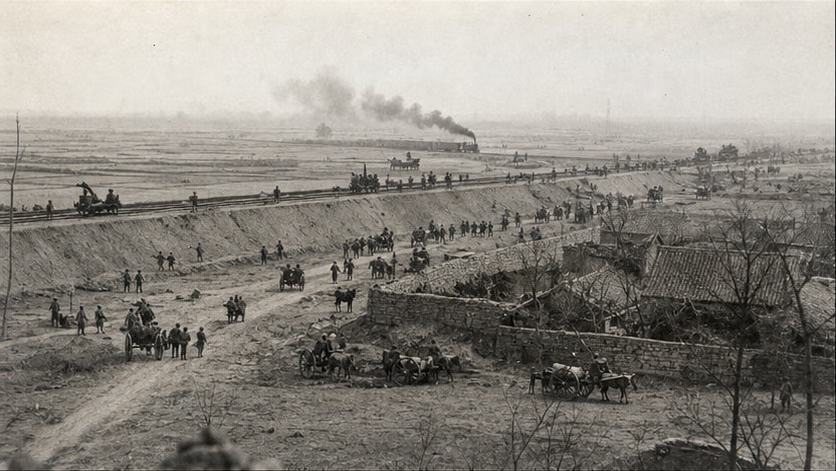
| Item | Details |
|---|---|
| Time | 1930.5-11 (May-November 1930; fighting began in May; on 9.18 Zhang Xueliang issued a public telegram supporting Chiang; in October-November the allied forces collapsed overall) |
| Place | Three Central Plains lines: the Longhai line (Guide-Minquan-Qixian, the main battlefield), the Tianjin-Pukou line (the gain and loss of Jinan), and the Pinghan line (toward Xuchang); also the Hubei-Hunan theater, where the Guangxi Army moved north into Hunan |
| Belongs to | Warlord Era Conflicts · KMT new-warlord civil wars (the enlargement and overall outbreak of the Chiang–Gui and Chiang–Feng Wars (1929)) |
| Belligerents | Chiang's forces (Nanjing Central Army) / anti-Chiang allied forces: Shanxi Army (Yan Xishan), Northwest Army (Feng Yuxiang), Guangxi Army (Li Zongren), together with Wang Jingwei's Reorganization Group and others; in August they convened an "Enlarged Conference" in Beiping and set up a separate National Government |
| Result | After the Northeastern Army entered the passes on 9.18, the allied forces collapsed overall; Yan Xishan and Feng Yuxiang stepped down, and the Northwest Army disintegrated and was absorbed; Chiang's central authority was established |
Belligerents
| Item | Chiang's forces (Central) | Anti-Chiang allied forces |
|---|---|---|
| Strength | About six to seven hundred thousand (figures differ sharply by counting basis) | About seven to eight hundred thousand in total (figures differ sharply by counting basis): chiefly the Shanxi Army and Northwest Army, with the Guangxi Army moving north from Guangdong and Guangxi into Hunan |
| Equipment | Chiang's core units had the advantage in German equipment, artillery, and air power; supply was convenient along the Tianjin-Pukou and Longhai routes | The Northwest Army was hardy but poorly equipped and short of ammunition; the Shanxi Army had the Taiyuan Arsenal but poor artillery mobility; the Guangxi Army had limited manpower |
| External support and leverage | Central finances, bonds, and "silver bullets" for inducing defections; Zhang Xueliang's Northeastern Army was the card held to the end | The legal-political card of the Beiping Enlarged Conference setting up a separate center; the party-affairs banner of Wang Jingwei's Reorganization Group |
| Weaknesses | Forces were divided across three lines, and several crises occurred from May to August | The allied forces each kept their own calculations: Yan Xishan was skilled at calculation and unwilling to fight to the death, Feng and Yan distrusted each other, and command had no unified center |
Terrain and Conditions
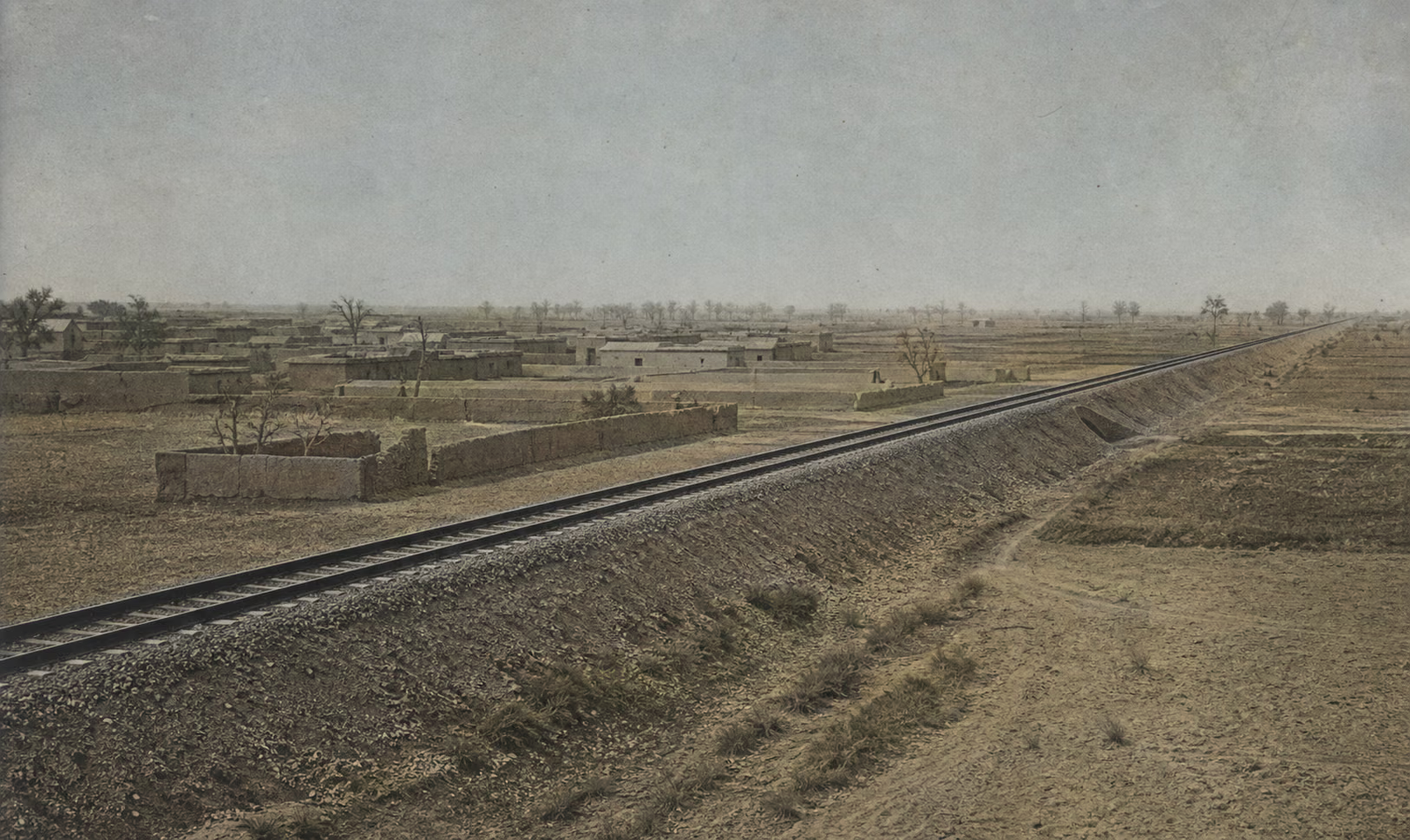
(For the larger situation in 1930 -- the spread of the world economic crisis, the configuration inside and outside the passes after the Northeast changed allegiance, and the party-affairs struggle between the Reorganization Group and the Western Hills Conference Group -- see Warlord Era Conflicts · Overview. This entry records only the war zone.)
The Central Plains: the cross-shaped zone formed by the Longhai, Tianjin-Pukou, and Pinghan railways was the spatial framework of the entire war. Guide (Shangqiu), Minquan, and Qixian lay on the Longhai line; Jinan lay on the Tianjin-Pukou line; Xuchang lay on the Pinghan line. Large armies assembled, were supplied, advanced, and retreated along the railways; mobile operations away from the rail lines were rare.
The ground tone of disaster: around 1930, northern China suffered repeated years of severe drought, and the war zone met it directly -- military calamity and drought compounded each other, leaving broad stretches along the Longhai line barren ※ (records on the drought's range and severity unverified). Soldiers fought on famine land; civilians fled famine across land at war.
Why It Was Fought
After the Chiang–Gui and Chiang–Feng Wars (1929) were over, everyone opposed to Chiang had learned the same lesson: going it alone meant certain defeat. The Guangxi Army retreated in defeat to Guangxi, and the Northwest Army lost the elite forces under Han and Shi. When the accounts from 1929 were added up, among the four group armies only Yan Xishan's had not yet been cut down. The man in Taiyuan waiting for a price also understood what he was waiting for: the price would not come. The old accounts of demobilization had not been settled, and he would be next. In early 1930, Yan and Feng converged and issued public telegrams against Chiang; the Guangxi clique, back in Guangxi, responded under the name of the "Army to Protect the Party and Save the Nation," and Wang Jingwei's Reorganization Group moved north to join them. For the first time, the armed and party-political wings of the opposition formed a single apparatus.
The nominal cause was properly framed: "protect the party and save the nation; oppose dictatorship." The legality of Nanjing's Third National Congress had already been contested, and the Reorganization Group brought the struggle over party authority and constitutional legitimacy onto the stage, giving anti-Chiang politics a party-affairs argument to work with. On the surface were party and legitimacy; beneath them remained territory and military power. Both layers have to be recorded.
The first blows were telegrams. In February, Yan Xishan initiated an exchange around "yielding office for the nation," asking Chiang Kai-shek to step down and go abroad together with him; Nanjing's replies grew harder letter by letter. The last non-fighting option still on the table -- a joint retirement from office -- had been raised by both sides, and neither side meant it: stepping down was a posture, not a way out. In March, generals from the former Second, Third, and Fourth Group Armies jointly issued a telegram supporting Yan. On April 1, Yan Xishan took office in Taiyuan as "Commander-in-Chief of the Republic of China's Army, Navy, and Air Force," with Feng Yuxiang and Li Zongren as his deputies. A second system of military orders had been set up, and Nanjing immediately issued a public telegram to "suppress the rebels." Throughout this period, envoys and money from both sides were running to Shenyang: the Northeastern Army, staying beyond the passes, was the largest unplayed card, and everyone wanted it in hand.
The war could only be fought in the Central Plains. The Longhai, Tianjin-Pukou, and Pinghan railways wove a cross between Henan and Shandong: the Northwest Army came out through Tongguan and attacked east along the Longhai line; the Shanxi Army came down the Tianjin-Pukou line to take Shandong; the Guangxi Army moved north from Guangdong and Guangxi into Hunan to tie down Chiang's forces; and Chiang's forces answered on three lines from south to north. Troop strengths at the million level could be deployed only on this railway cross. Large armies assembled and were supplied along the railways; station names became battlefield names.
The allied forces calculated on using larger numbers and attacking from three sides: about seven to eight hundred thousand against six to seven hundred thousand (figures differ sharply by counting basis), plus the political offensive of setting up a separate legitimacy, would wear down Nanjing across multiple lines. Chiang's calculation was to hold on interior lines and win with the later move: Jiangsu-Zhejiang finance and bonds supplied the blood, "silver bullets" continued to buy men in the old 1929 manner, and he held his card while waiting for a change. The weaknesses on both sides were also written in the accounts: the allied forces each kept their own calculations, Yan Xishan was skilled at calculation and unwilling to fight to the death, Feng and Yan distrusted each other, and command had no unified center; Chiang's forces were divided across three lines and had to defend everywhere.
Neither side formed its resolve all at once. After several exchanges of documents and telegrams, Nanjing issued an explicit order for punitive action (date and document number unverified). Chiang Kai-shek's hidden card was not troop strength but finance and induced defection -- in the war of 1929, money had done the fighting in place of guns. What he lacked was steadiness at the front: the Longhai line was repeatedly in crisis, and his railway carriage nearly fell into enemy hands. Yan and Feng were the opposite: many troops, short pay. The Northwest Army had the worst supply, and records of military food becoming unsustainable appear repeatedly (details unverified); the Shanxi Army had the Taiyuan Arsenal, but its heavy weapons could not move; local fund-raising fell on the people of Henan and Shandong after repeated drought years, and the more was extracted, the less stable the position became. Shenyang's decision was made latest of all: prices from both sides were raised at Zhang Xueliang's door for several months; he named his price, watched, and put pen to paper only when the balance became visible (details of the bargaining and each side's offers unverified).
There were not no brakes on the surface. When the military situation was at its tightest, there were proposals for compromise inside Nanjing (this claim unverified). On the Tianjin-Pukou line, after Fu Zuoyi took Jinan, he argued for pressing straight south with the momentum; Yan Xishan suspected him of becoming too powerful and divided his command, and the Shanxi Army's offensive then faltered (course of events unverified). In Shenyang, the elder statesman Zhang Zuoxiang opposed entering the passes and being drawn in (seen only in memoir-type records, unverified). None of the three brakes held.
In May, the three lines successively came into contact. The Central Plains into which a million men moved was precisely the Central Plains of repeated years of drought.
Course of the Engagement
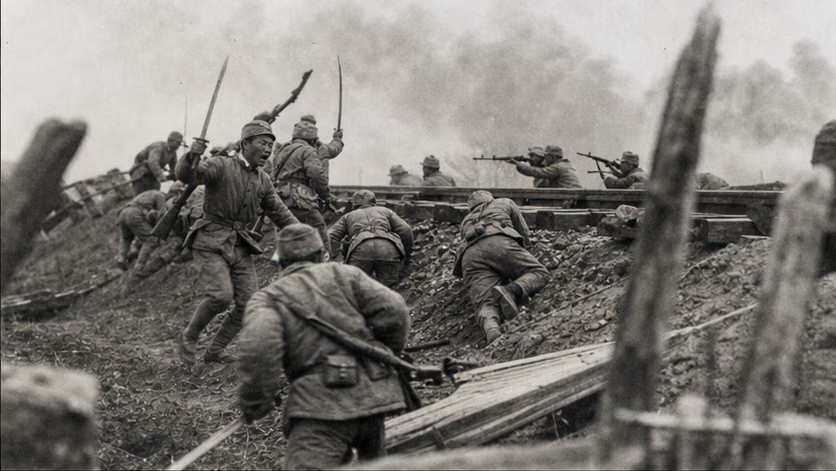
| Phase | Time | Main points |
|---|---|---|
| Outbreak | May | The allied forces moved south and east in three routes: the Northwest Army attacked east along the Longhai line, the Shanxi Army advanced along the Tianjin-Pukou line to take Shandong, and the Guangxi Army moved north into Hunan; Chiang's forces answered on three lines |
| Longhai seesaw | May-August | The Guide-Minquan-Qixian line became the main battlefield and changed hands repeatedly; Chiang's forces were several times in crisis: the Guide airfield was attacked, and Chiang Kai-shek's railway carriage was nearly captured (details unrecorded); the Chiang-side general Fan Zhongxiu was killed in action (figure disputed) |
| Tianjin-Pukou line and Jinan | June-August | The Shanxi Army occupied Jinan in June; Chiang's forces counterattacked and retook Jinan in mid-August (the timing of Jinan's changes of hands unverified) -- from this point the Shanxi Army fell back on the defensive, and the allied eastern line collapsed |
| Pinghan line and the two Hu provinces | June-September | The Northwest Army and Chiang's forces were deadlocked toward Xuchang; the Guangxi Army, moving north into Hunan, was intercepted by the Guangdong Army and retreated in defeat to Guangxi (details unrecorded) |
| Zhang Xueliang enters the passes | 9.18 | Zhang Xueliang issued a public telegram supporting Chiang, and more than one hundred thousand Northeastern Army troops entered the passes and occupied Beiping and Tianjin -- the balance tilted immediately. The date is the same day as the Mukden Incident one year later; this was pure coincidence |
| Overall collapse | October-November | The Yan-Feng allied forces collapsed across the line: the Shanxi Army withdrew to Shanxi, the Northwest Army broke apart, and its generals accepted absorption one after another; on 11.4 Yan and Feng issued public telegrams stepping down (dates vary by account); the Beiping Enlarged Conference scattered |
Casualties and Losses
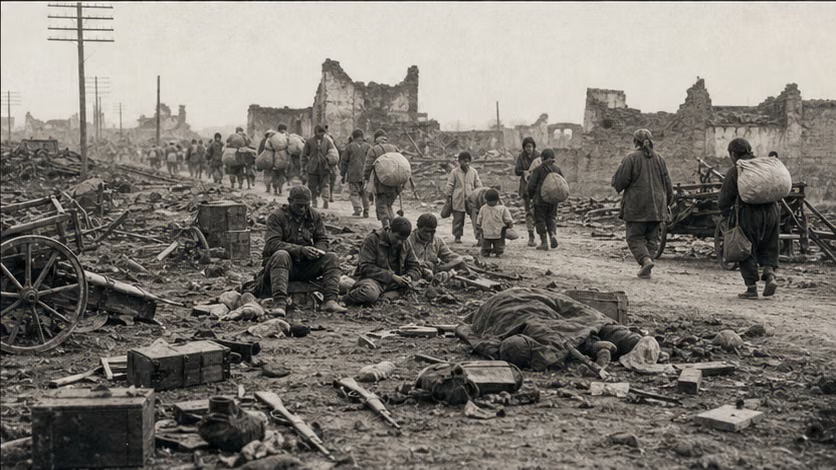
- Total casualties on both sides were about three hundred thousand (figures differ sharply by counting basis, and multiple versions coexist across sources) -- the largest civil war since the beginning of the Republic.
- Civilian life ※: the war zone crossed Henan, Shandong, Anhui, and Jiangsu provinces, and several million civilians suffered military calamity. Beyond forced labor, fund-raising, commandeered carts, and requisitioned grain, there was also severe drought. Military calamity and drought compounded one another, and records of starvation deaths and famine flight along the Longhai line are scattered in contemporary newspapers and relief reports (records of civilian life along the Longhai line unverified).
- Finance: Nanjing's war costs were sustained by bonds and Jiangsu-Zhejiang tax sources; the anti-Chiang side raised funds locally, and there are no statistics for the burden on civilians in the war zone.
- The military account: the Northwest Army -- the large force that had come out of the Beijing coup of 1924 -- now disintegrated as a whole, and its remnants went their separate ways.
Aftermath
- Chiang's central authority was established, and no faction inside the KMT could again contend for national power by force. Thereafter, anti-Chiang activity shifted into political and peripheral-war modes.
- Tail one, leading to 1931: more than one hundred thousand main-force troops of the Northeastern Army entered the passes to aid Chiang and remained long in Beiping and Tianjin, leaving northeastern defenses hollow. One year later, at the Mukden Incident, the Kwantung Army faced exactly this empty frame (specific list of troop movements unverified).
- Tail two, leading to 1937: the remnants of the Northwest Army were reduced and reorganized as the 29th Army (Song Zheyuan's command) and stationed in Beiping and Tianjin. Seven years later, at Marco Polo Bridge, the first shot of full-scale War of Resistance was fired by the successor to this remnant army.
- Zhang Xueliang, for his service in supporting Chiang, was promoted to deputy commander of the army, navy, and air force and took charge in Beiping -- the peak of his personal prestige, one year before the order not to resist.
Accounts of Those Present
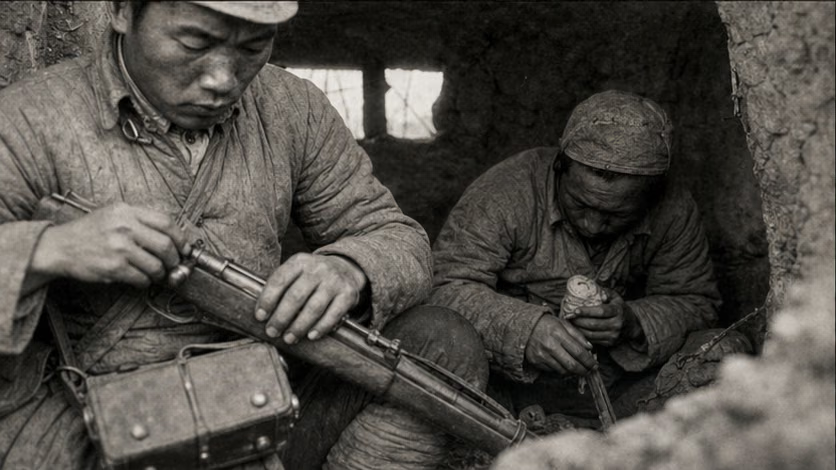
- The danger on the Longhai line: the night the Guide airfield was attacked, and Chiang Kai-shek's special train nearly seized by cavalry -- Chiang's own later recollections and records from other sides do not fully agree (details unrecorded), but both sides' war reports acknowledged that Chiang's forces were several times in danger from May to August.
- "Silver bullets" and "human bullets" used together: Chiang's side put explicit prices on inducing Northwest Army generals to defect, and after the war those who accepted absorption each received establishments and sources of pay (defection-payment amounts vary by account). The Northwest Army, meanwhile, was famous for night raids by broadsword units and bitter defense -- an account written in flesh and blood under equipment disadvantage.
- The Beiping Enlarged Conference: while bodies piled up at the front, anti-Chiang factions met at Zhongnanhai in Beiping and set up a separate National Government. The "war on the battlefield" and the "war in the conference hall" took place in the same summer.
- The viewpoint of famine flight ※: farmers in drought areas fled famine and then met soldiers, or met soldiers and then fled famine. The Central Plains in newspaper relief reporting forms another parallel narrative of this million-man war (articles unverified).
- Soldiers: soldiers on both sides were mostly sons of farming families who enlisted in famine years; joining the army to eat grain was literal. "For whom did they fight" has no answer; see Warlord Era Conflicts · Overview.
The Ground
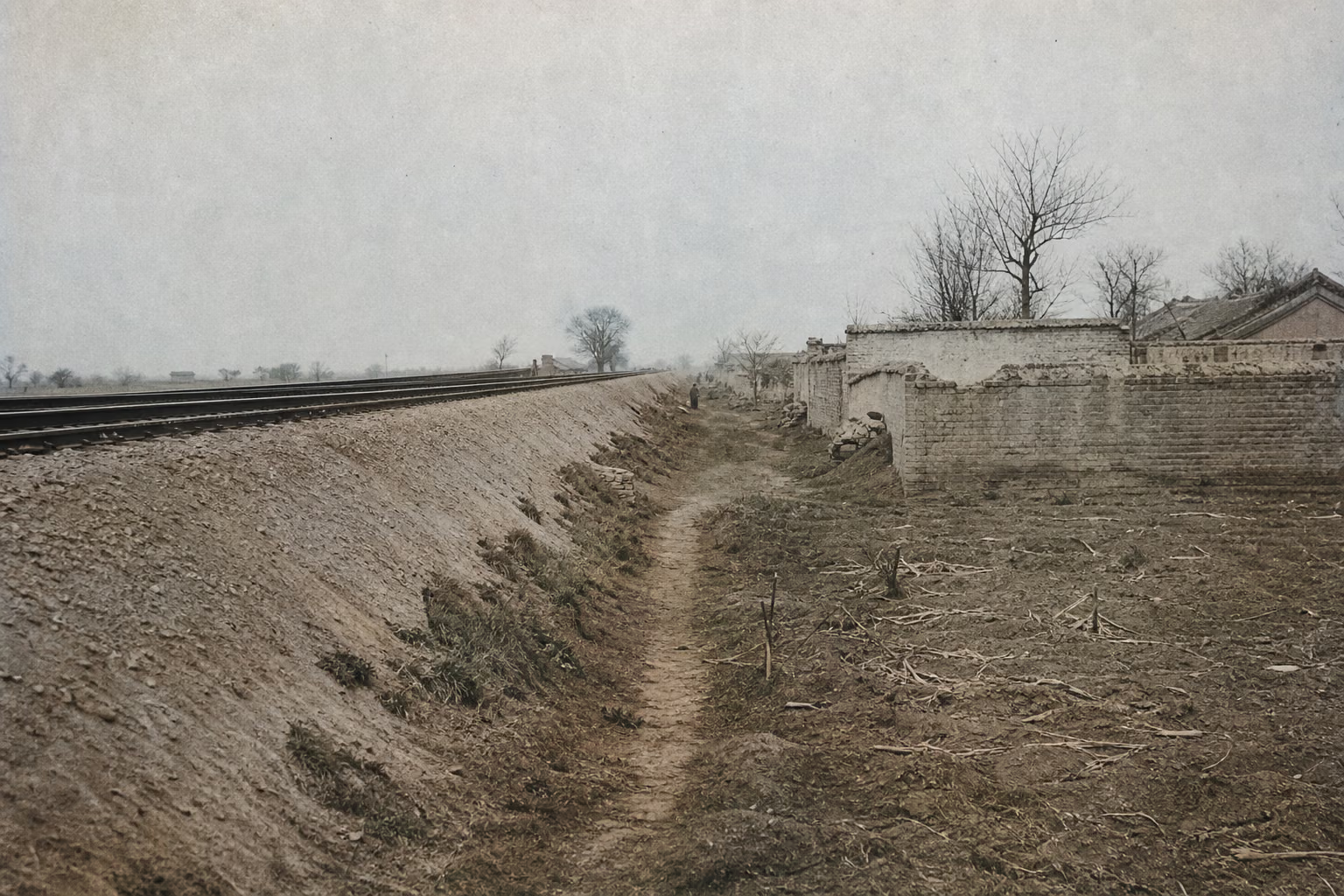
- The three railways were the three maps: the Longhai line was an east-west mill of flesh and blood, the Tianjin-Pukou line was the gain and loss of Jinan, and the Pinghan line was the deadlock at Xuchang. Railway station names were battlefield names.
- Guide-Minquan-Qixian: the eastern Henan plain had no defensible terrain, and positions depended on villages, walled strongholds, and railway embankments; attack and defense repeatedly changed hands within a depth of several dozen kilometers.
- Jinan: the Tianjin-Pukou and Jiaoji railways met there, and its gain or loss directly changed the configuration of the eastern line.
- Inside and outside the passes: the Northeastern Army entered the passes along the Beining line (the Beijing-Fengtian Railway) -- the same route by which the Fengtian Army had entered the passes in 1924 and 1925, and the third time it decided the military situation inside the passes.
How Each Side Records It
- The telegram layer (the combatants' own voices): before the war, Yan, Feng, Li, and others jointly issued public telegrams condemning Chiang for "bringing disaster to the country through dictatorship," while Chiang's side issued public telegrams to "suppress rebellion and pacify disorder." During the war, the Beiping Enlarged Conference issued a party-affairs manifesto and set up a separate legitimacy. On 9.18, Zhang Xueliang's "Qiao telegram" supported Chiang and called for peace -- this sheet of paper was itself a military action that changed the war situation (original texts and dates of the telegrams vary by account). In November, the war ended with Yan and Feng's public telegrams stepping down. Throughout, "telegrams fought the war"; public telegrams and war reports were two faces of the same process.
- Civilian and newspaper memory: what the Henan-Shandong line remembered was military calamity, forced labor, severe drought, and famine flight. Newspapers in Shanghai and Tianjin already had a layer of commentary that mixed numbness and criticism toward civil war at the million-man scale; "the largest civil war since the beginning of the Republic" was a phrase from newspapers of the time (articles unverified).
- Later narratives: textbooks call it the "Central Plains War" and place it in the section on "KMT new-warlord conflicts," usually leaving only two lines for time and result. Recent research has reassessed its weight: the largest civil war in modern China, the foundation stone of Chiang's central authority, and the two tails leading to 1931 and 1937 (representative studies unverified).
Disputes and Sensitivities
- Counting bases for troop strength and casualties: figures for the forces committed by both sides range from "over one million in total" to higher numbers, while three hundred thousand casualties is the common figure.
- Characterization: "the last battle of the war of unification" and "the high point of the new-warlord civil wars" coexist as two characterizations, each connected to a different political narrative.
- Evaluation of Zhang Xueliang's entry through the passes: the readings "promoted unification and ended civil war" and "hollowed out the Northeast and lost it by inaction" have long collided.
- The compounding of drought and military calamity: disaster history and war history each record one half; only reading them together reveals the whole. Specific disaster figures remain disputed.
Sources and Open Questions
Known main sources:
- Li Zongren's memoirs; Feng Yuxiang-related diaries and memoirs; recollections by Shanxi Army generals
- Zhang Xueliang's oral history (sections on the decision to enter the passes)
- Contemporary newspapers: Ta Kung Pao, Shen Bao, Central Daily News, and relief reports
- Relevant military histories of the Republic and studies of new-warlord conflicts (framework and secondary references; primary sources must be checked back against them)
Open questions: sources for the various troop-strength counting bases on both sides; the source for the figure of three hundred thousand casualties; details of the attack on the Guide airfield and the danger to Chiang's railway carriage; the time and place of Fan Zhongxiu's death in action; the precise timing of Jinan's changes of hands; operational nodes in the Guangxi Army's entry into Hunan and retreat in defeat; the original text of the 9.18 Qiao telegram; the original text of the 11.4 public telegrams stepping down; the list of Northeastern Army troops that entered the passes; newspaper and relief records on the compounding of drought and military calamity along the Longhai line; the schedule and documents of the Beiping Enlarged Conference; the date and document number of Nanjing's explicit order for punitive action; records of Northwest Army supply and local fund-raising; the source for proposals of compromise inside Nanjing; the course of Fu Zuoyi being deprived of part of his command after taking Jinan; the claim that Zhang Zuoxiang opposed entry through the passes; records of each side's offers during Zhang Xueliang's period of waiting and watching.
All images on this site are AI-generated depictions. They are not historical photographs, not primary sources, and do not depict any real individual.