Engagement Archive · Battle of Henan (1927)
Amid the Ning-Han split, the Wuhan side carried the Northern Expedition into Henan on its own, fought the southward-moving Fengtian Army head-on for a month, and joined forces at Zhengzhou -- the battle was won, but Wuhan's military capital was thinned out, and the fruits of the junction fell into Feng Yuxiang's pocket.
Engagement Data
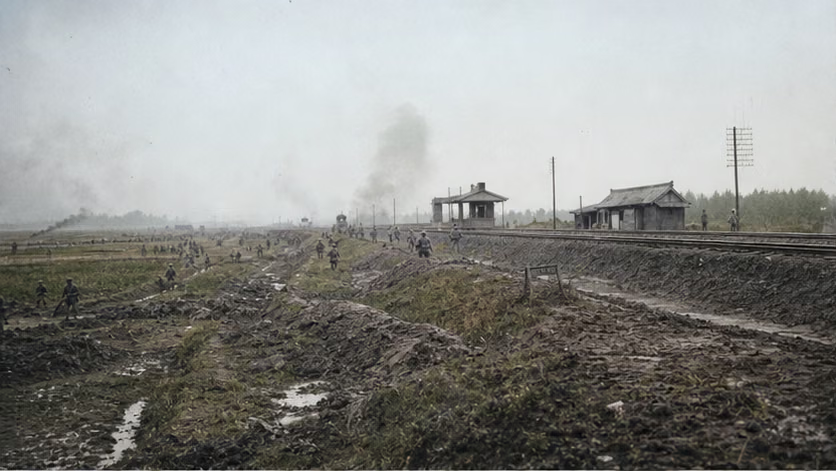
| Item | Content |
|---|---|
| Time | late 1927.4 – 6.1 (junction at Zhengzhou) |
| Place | Henan: the line from Zhumadian through Xiping, Shangcai, Linying, and Xuchang to Zhengzhou (the Beijing-Hankou Railway axis) |
| Affiliation | Northern Expedition (for the larger situation, see *Northern Expedition · Overview*) |
| Belligerents | The Wuhan National Government's Northern Expeditionary Army (Tang Shengzhi as commander-in-chief, Zhang Fakui's Fourth Army, etc.) and the allied Guominjun under Feng Yuxiang (moving east from Shaanxi through Tongguan) / Fengtian Army (southward-moving corps under Zhang Xueliang, Han Linchun, and others) |
| Result | The Fengtian Army retreated north of the Yellow River; on 6.1, the Wuhan army and Feng's forces joined at Zhengzhou; after the Zhengzhou Conference, Henan territory went to Feng |
Belligerents
| Item | Wuhan Northern Expeditionary Army | Fengtian Army |
|---|---|---|
| Strength | About 100,000 (bases vary by account) | The southward-moving corps numbered a little over 100,000 (bases vary by account), with superior equipment (artillery and armored cars) |
| Situation | The Ning-Han confrontation lay behind it, while worker-peasant movements and officer alienation coexisted within | Recently defeated while tied down on the Jin-Sui front (figure disputed), fighting away from home ground |
Terrain and Conditions
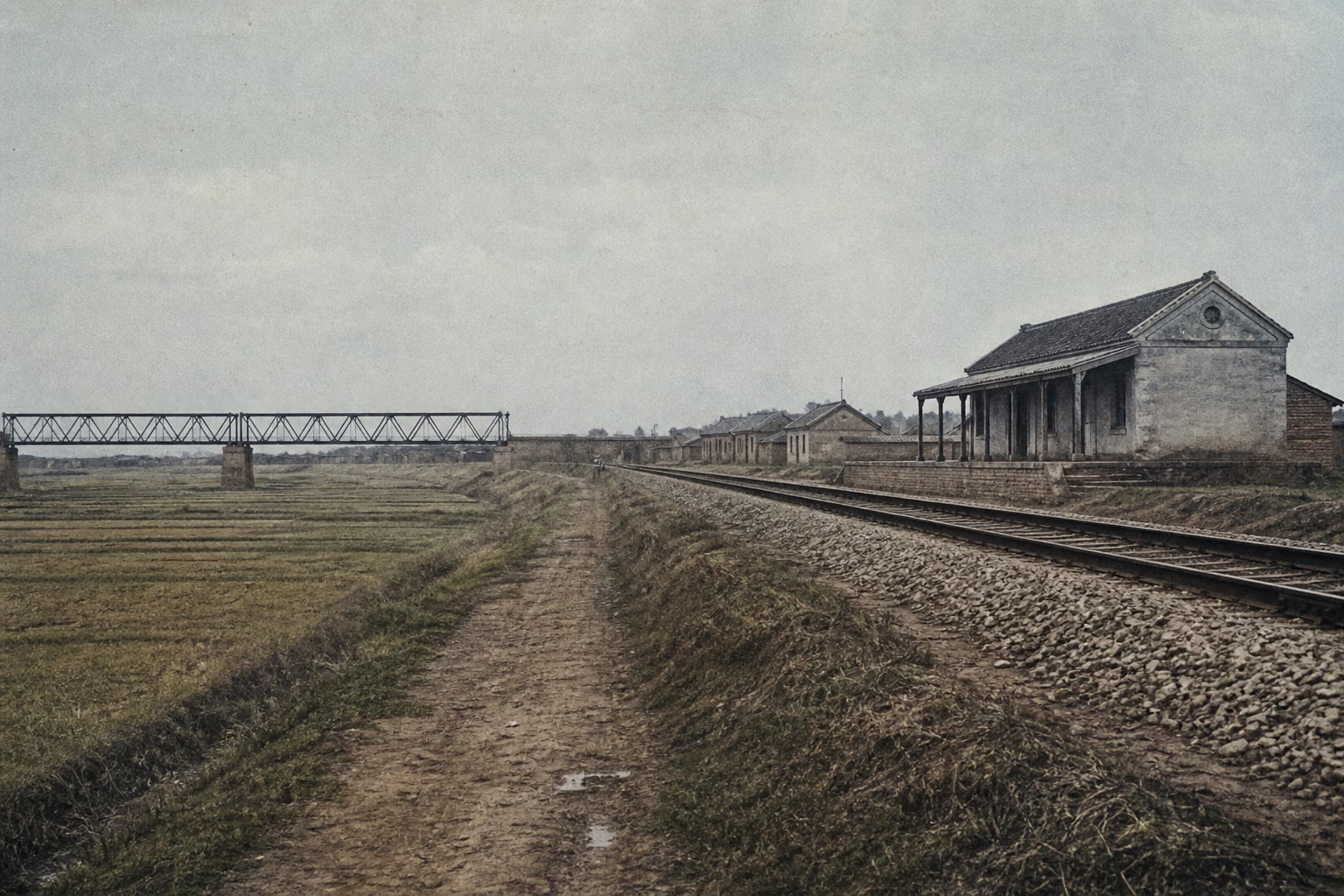
Henan in the spring of 1927: militia forces such as the Red Spear Society were everywhere, and troops, bandits, and famine disasters overlapped; the Beijing-Hankou Railway was the battle's only axis. Wuhan at this moment faced enemies in front and rear -- Nanjing to the east had already set up a separate central government, and the Northern Expedition became a political choice to "prove itself through war."
Why It Was Fought
Only half a month after Shanghai and Nanjing had been taken, the revolutionary camp split in two (see *Battles of Shanghai and Nanjing*). On April 12, Chiang Kai-shek carried out his purge in Shanghai and then set up a separate National Government in Nanjing; overnight, Wuhan faced enemies in front and rear -- to the east stood Nanjing, newly self-established, while to the north the Fengtian Army, taking advantage of the southern split, had moved south and already reached the Central Plains, and within Wuhan's own jurisdiction worker-peasant movements and officer alienation coexisted. In this situation, Wuhan needed a battle to prove that the revolution had not stopped in its hands.
Two directions had lain on Wuhan's table: an eastern expedition against Chiang, or a Northern Expedition into Henan. An eastern expedition meant immediate armed conflict within the revolutionary camp; the Northern Expedition still flew a shared banner, and there was support to the north -- the Guominjun force that had withdrawn west from Nankou (see *Battle of Nankou*) had sworn in at Wuyuan to join the national revolution, and at this moment was being led by Feng Yuxiang eastward from Shaanxi through Tongguan. The proposal for an eastern expedition was set aside, and Wuhan resolved to move north, aiming to open contact with Feng Yuxiang and gain outside support. Two railways marked the junction point with absolute clarity: the Wuhan army would go north along the Beijing-Hankou line, Feng's forces would move east along the Longhai line, and where the two lines met was Zhengzhou.
The proposal for an eastern expedition was not absent. After Nanjing set itself up separately, Wuhan debated its direction internally for quite some time: attack Chiang first, or link up with Feng first. Advisers and the two parties went back and forth several times, and in the end the Northern Expedition line prevailed (the positions of the different sides vary by account and remain to be verified). The fact that this choice could be made did not mean it was made at leisure -- that spring Wuhan was already under economic blockade; in April it ordered the concentration of cash (details of the regulations remain to be verified), paper currency depreciated by the day, troops were owed pay, and the food and ammunition for a 100,000-man expedition all pressed down on Hunan and Hubei. Outside the two Hu provinces, Wuhan did not have one inch of secure ground for raising military funds. To fight was to fight while short of money; not to fight was, politically, to sit and wait to be eaten away. When this decision was made, what Wuhan could see was that the Fengtian Army was isolated and fighting away from home, and that Feng Yuxiang could be expected to come east; what it could not see was the price list in Feng's mind, already quoted by both Nanjing and Wuhan.
The Fengtian Army's move south was a different calculation. Since the south had split, Zhang Zuolin meant to take the Central Plains amid the disorder -- Henan, Wu Peifu's last remaining territory after his defeat, had by this point been taken over by the southward-moving Fengtian Army (Wu's remnants were either incorporated or scattered; details remain unclear). Zhang Xueliang and Han Linchun's southward-moving corps, numbering a little over 100,000 men (bases vary by account), had artillery and armored cars, and deployed along the Beijing-Hankou line. As the Fengtian Zhang side saw it, a south too busy with its own divisions could not block this road.
The miscalculations later came due on both sides. The Fengtian Zhang side had not expected that a government with its backyard on fire could still fight such a battle -- in front of the Linying positions, the Wuhan army made repeated bayonet assaults and forced out a frontal victory over the Fengtian Army's main force, a rare thing in the history of the Northern Expedition. Wuhan, for its part, won the battlefield and lost the board: it had not calculated that the Central Plains opened with the Fourth Army's blood would become Feng Yuxiang's bargaining chip with both sides -- after the Zhengzhou Conference, Henan territory went to Feng, Feng soon went to Xuzhou to meet Chiang, and Wuhan's position became still more isolated. This political account did not appear on any operations map when the war began.
In late April, the Wuhan army, about 100,000 strong (bases vary by account), advanced north along the Beijing-Hankou line. The two armies moved toward each other and collided on the Linying-Xuchang line -- this time, the force opposite them was no longer routed remnants of the old Beiyang armies, but the Fengtian Army's main force.
Course of the Engagement
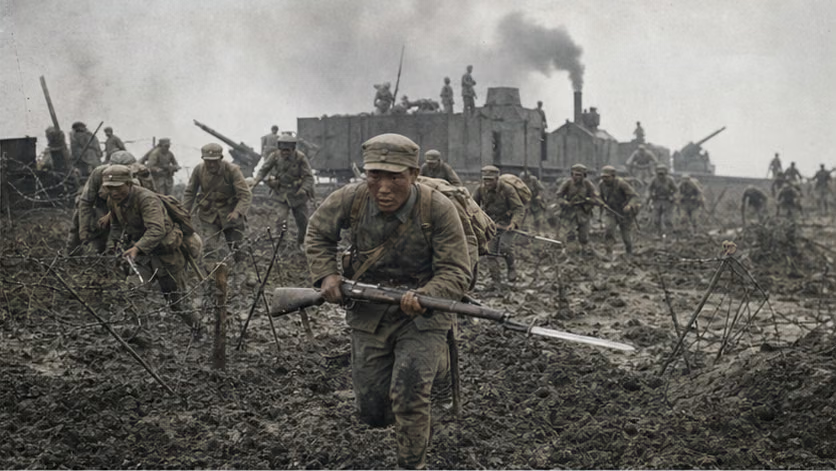
| Stage | Time | Key Points |
|---|---|---|
| North along the Beijing-Hankou line | late April–mid-May | Zhumadian, Xiping, and Shangcai were engaged in succession; the Fengtian Army fought while withdrawing to prepared positions at Yancheng-Linying |
| Decisive battle at Linying | 5.27–28 | The fiercest fighting of the engagement: Zhang Fakui's troops stormed the Fengtian positions, with repeated bayonet fighting (the Fourth Army and Eleventh Army suffered especially heavy casualties; figure disputed); the Fengtian Army retreated north of Xuchang |
| Junction at Zhengzhou | 5.30–6.1 | Feng Yuxiang's forces came out through Tongguan, took Luoyang, and pushed east; the Fengtian Army retreated across the Yellow River along the whole line; on 6.1, the forces joined at Zhengzhou |
| Zhengzhou Conference | 6.10–12 | Wang Jingwei and others met Feng Yuxiang -- Feng then went to Xuzhou to meet Chiang (6.20 Xuzhou Conference), and in the end issued a circular telegram urging Nanjing and Wuhan to "cooperate in purging the Communists" -- Henan, which Wuhan had fought down, became Feng's bargaining chip with both sides (conference details remain unclear) |
Casualties and Losses
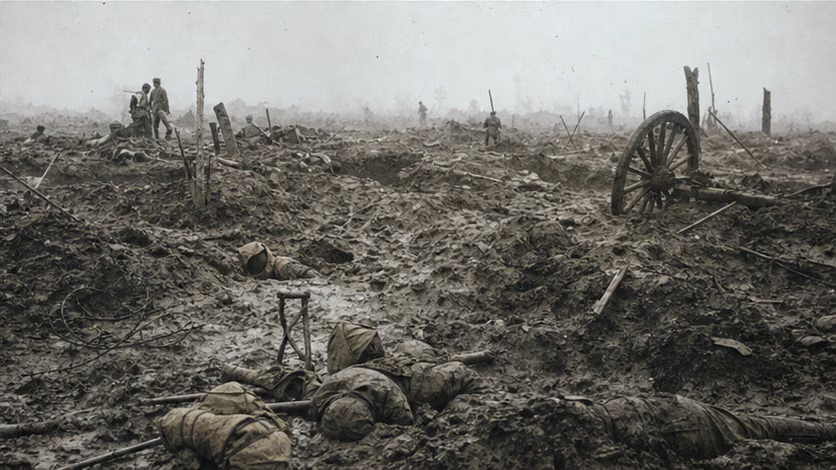
- Wuhan Northern Expeditionary Army: over ten thousand casualties (bases vary by account), with the Fourth Army system's elite units especially badly worn down -- the troop base of the Nanchang Uprising two months later was directly connected to this attrition (see the articles on the Agrarian Revolutionary War).
- Fengtian Army: casualties and prisoners numbered in the tens of thousands (bases vary by account), and the army retreated to the north bank of the Yellow River.
- ※ Civilians: along the Beijing-Hankou line, forced labor, grain requisition, and mutual killing among Red Spear Society members and routed soldiers all occurred, and local gazetteers contain many records of military disaster (details unrecorded).
Aftermath
- Military victory, political bleeding: Henan territory went to Feng Yuxiang; Feng then chose sides between Nanjing and Wuhan, leaving the Wuhan government still more isolated.
- The depletion of Wuhan's military strength laid the ground for the chain that followed after July 15: the failed "eastern expedition against Chiang" and the troops' move south, the prelude to the Nanchang Uprising.
- The Fengtian Army withdrew to hold Hebei; after this, Zhang Zuolin formed the Anguojun government (1927.6), the final central form of Beiyang appeared.
Accounts of Those Present
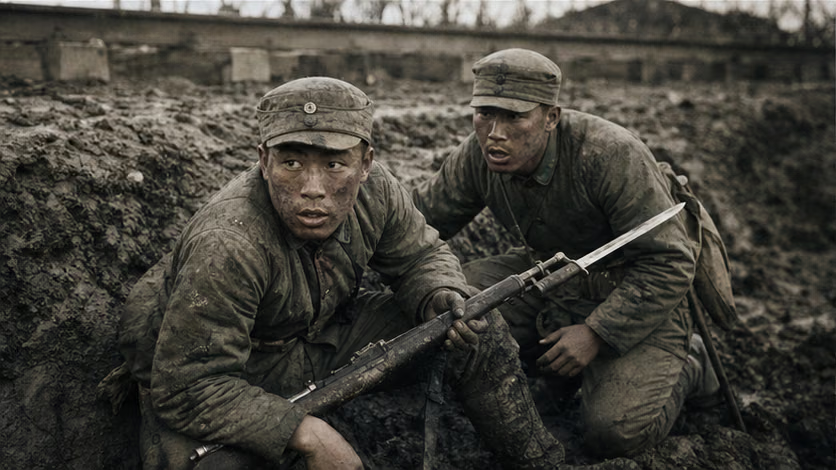
- The bayonets at Linying: a rare head-on hard fight with the Fengtian Army's main force in the history of the Northern Expedition -- the "Iron Army" name was here given another layer of blood (the list of officers killed in action remains to be verified).
- Two conference halls: the Zhengzhou Conference and the Xuzhou Conference -- the junction that front-line soldiers bought with their lives was converted by politicians, each in a conference hall, into bargaining chips.
- The Red Spear Society: local armed groups that attacked the Fengtian Army and also harassed the Northern Expeditionary Army -- in the gaps of regular-army battle history, they were the Central Plains countryside's instinct for self-protection.
The Ground
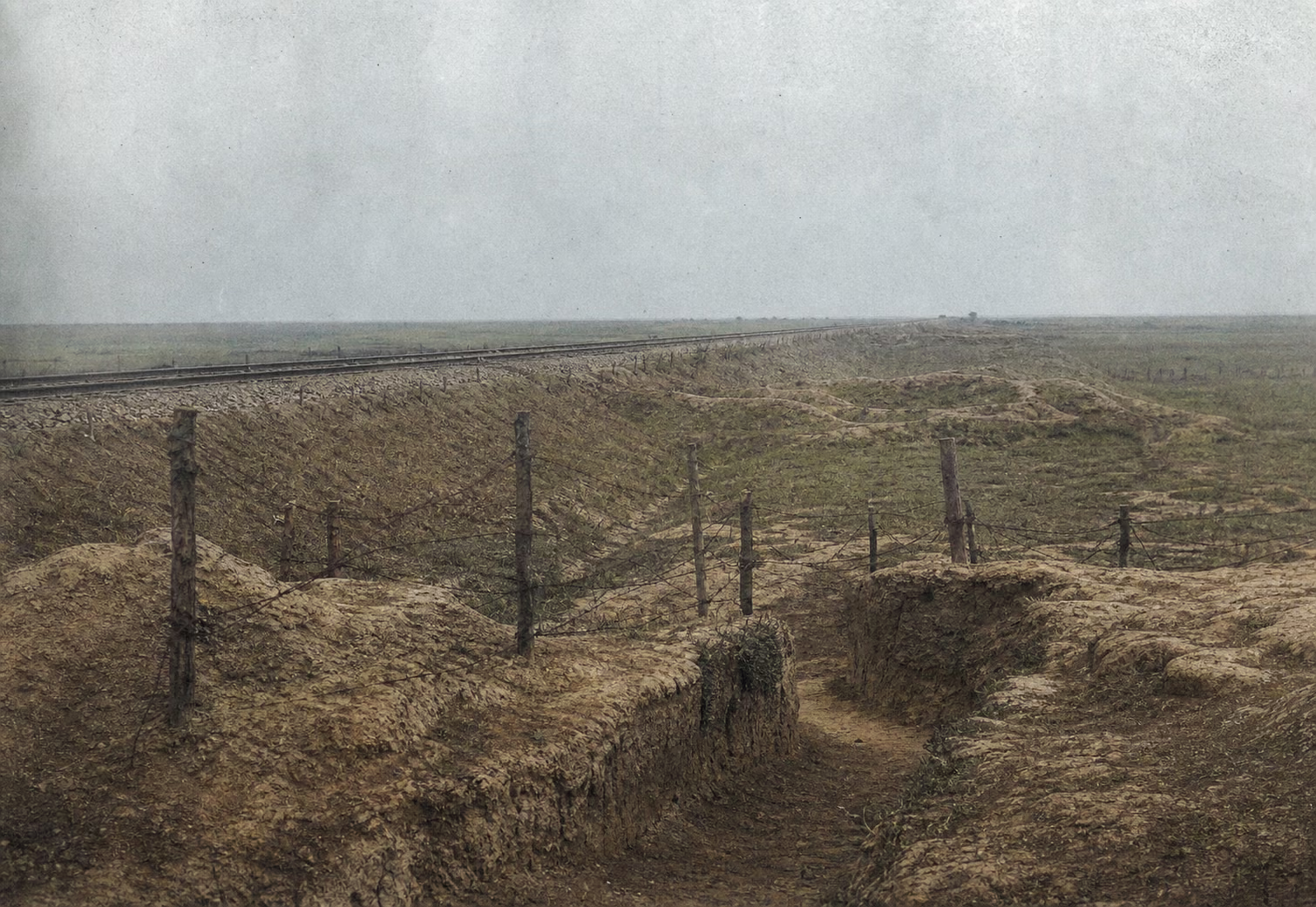
- The Beijing-Hankou Railway ran like a single thread: stations, railway bridges, and roadbeds formed the chain of battle nodes, and armored trains were the Fengtian Army's mobile fortresses.
- Prepared positions at Linying: trenches and works, barbed wire, and artillery set to the rear formed defensive depth; this was the first time the Northern Expeditionary Army had to bite into hard fortifications of this kind.
- Yellow River: the Fengtian Army's defensive line and psychological line in retreat -- to cross the river was to abandon the Central Plains.
How Each Side Records It
- Wuhan side: it was loudly publicized as proof of "continuing the revolution"; soon, as the political situation overturned, this victory was played down in the official histories of both parties -- a battle won yet one neither side wanted to say much about is itself a specimen of narrative.
- Fengtian side: recorded as a strategic contraction; Zhang Xueliang's weariness of civil war after this engagement (the layer of his own recollection, unverified) is often cited as a psychological foreshadowing of the Northeast Flag Replacement a year later.
- Local memory: Henan folk memory records military disaster -- armies passing through, forced labor, and the Red Spear Society; the victories and defeats of official history had nothing to do with them.
Disputes and Sensitivities
- Historians differ on the motives of Tang Shengzhi, Zhang Fakui, and the Wuhan government (self-proof, survival, a genuine Northern Expedition).
- Casualty bases diverge sharply; the formulation that "the Fourth Army fought away its entire base" needs to be checked against order-of-battle data.
- The assessment of Feng Yuxiang bargaining with both sides -- "opportunism" and "judgment of the times" stand as two parallel readings.
Sources and Open Questions
Sources: collected volumes of *Historical Materials on the Northern Expedition*; relevant chapters of Feng Yuxiang's *My Life*; Fengtian-side materials in *History of the Northeastern Army* (bibliography to be verified); military-affairs volumes of Henan local gazetteers.
Open questions: troop strengths and casualty bases on both sides; the course of the Linying fighting and the list of those killed in action; records of the Zhengzhou and Xuzhou conferences; records of Fengtian Army armored-car use; records of clashes between the Red Spear Society and the two armies; records of the different positions in Wuhan's internal debate over an eastern expedition versus the Northern Expedition; records of Wuhan's cash-concentration regulations and the raising of Northern Expedition military funds; materials on Wuhan's estimates of Feng Yuxiang's attitude.
All images on this site are AI-generated depictions. They are not historical photographs, not primary sources, and do not depict any real individual.