Engagement Archive · Siege of Wuchang
Wu Peifu's last main force withdrew into the fortified city of Wuchang and held it for 40 days; two ladder assaults piled bodies below the walls, and in the end the city was starved out, while the hunger of those 40 days fell chiefly on the hundreds of thousands of civilians trapped inside.
Engagement Data
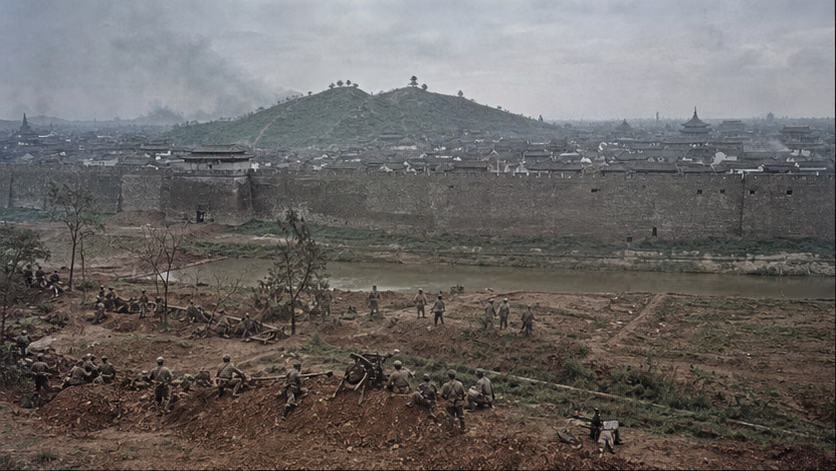
| Item | Details |
|---|---|
| Time | 1926.9.1 – 10.10, about 40 days |
| Place | Wuchang city, Hubei (Wuchang of the Three Towns of Wuhan, facing Hankou and Hanyang across the river) |
| Belongs to | Northern Expedition · conclusion of the Two Lakes decision campaign (for the higher-level overview, see Northern Expedition · Overview) |
| Defender | Beiyang forces under Wu Peifu: the Wuchang garrison (Liu Yuchun and Hubei military governor Chen Jiamo directed the defense), about more than 10,000 men (figures vary by account) |
| Attacker | National Revolutionary Army Fourth Army, part of the First Army, Eighth Army, and others (Li Zongren commanded the assault; the rotation in which each army was committed remains unverified) |
| Result | On 10.10, part of the garrison acted as an inside party and opened a gate; the city fell. Liu Yuchun was captured, and Wu Peifu's power in the Two Lakes came to an end |
Belligerents
| Item | Defender | Attacker |
|---|---|---|
| Strength | About more than 10,000 men held an isolated city (including rallied routed troops; figures vary by account) | Several tens of thousands in the besieging armies, rotated in sequence (figure disputed) |
| Firepower | Artillery and machine guns on the walls, relying on the fortified city; food and ammunition dwindled as the siege continued | Limited artillery; no heavy guns or proper scaling equipment; assaults depended on ladders and mass climbing |
| External support | Wu Peifu was in Hankou, but no reinforcements arrived; Sun Chuanfang watched and did not move | Fresh from the victories at the two bridges, with civilian support and easier intelligence work |
| Situation | A fortified city with deep moats; grain was stored but limited | The four surrounding districts' supplies were cut off, making a long siege possible |
Terrain and Conditions
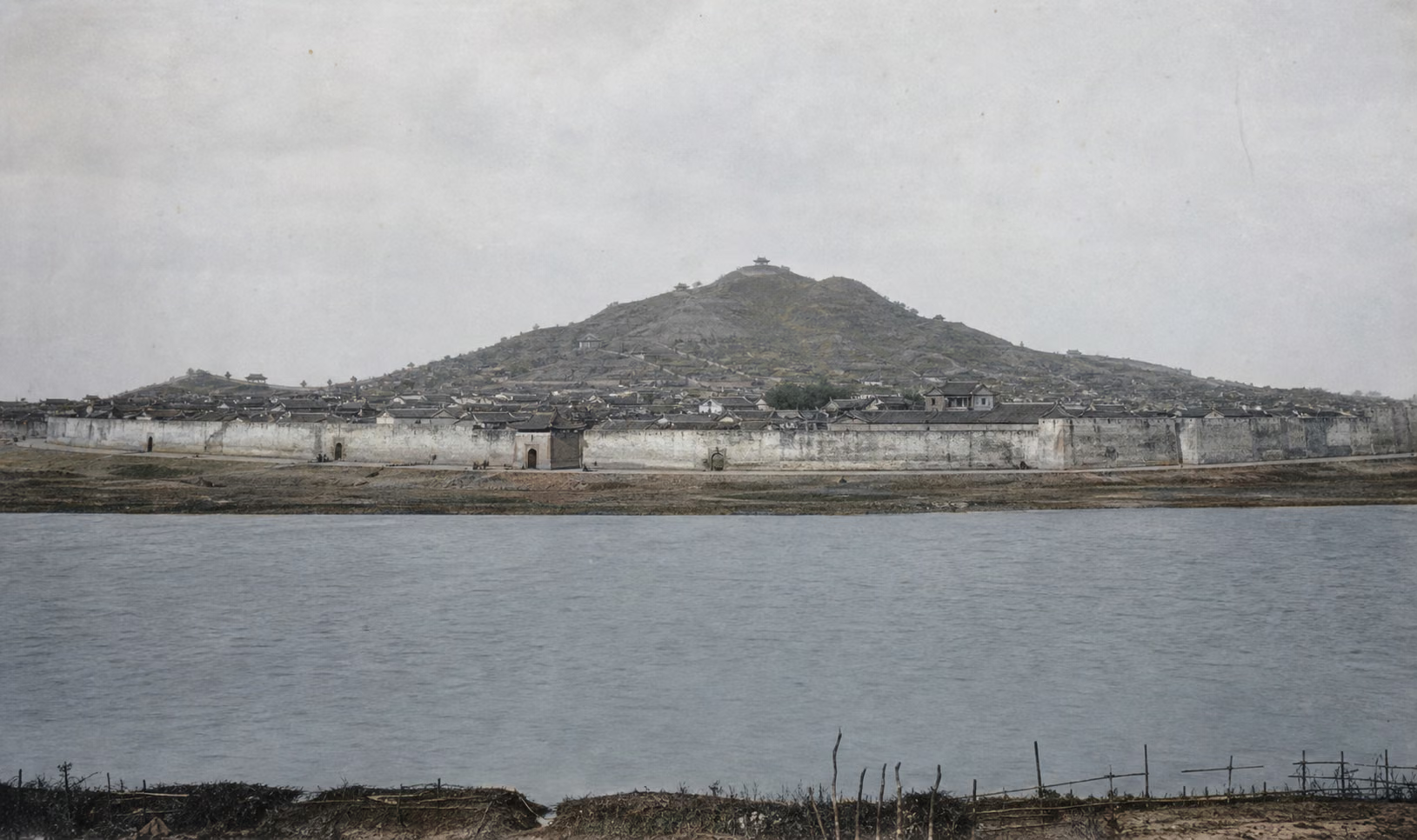
(For the wider situation in 1926, see Northern Expedition · Overview; this section concerns only the city of Wuchang.)
Wuchang was the seat of the Huguang governor-general's yamen. Its walls were high and thick, and Snake Hill ran through the city as a natural commanding height. The first rising of the Xinhai Revolution had begun in this city; 15 years later, another siege that would help determine China's direction fell within the same ring of walls. Outside the city, the Northern Expeditionary Army controlled the surrounding districts. Inside, the garrison and stranded residents numbered several hundred thousand people (population figures vary by account). Once the grain route was severed, the city changed from a fortress into a cauldron of thin gruel. After Hankou and Hanyang were taken one after the other by the Northern Expeditionary Army in early September, Wuchang became a wholly isolated city.
Why It Was Fought
When the Northern Expeditionary Army entered Jiangxi and opened the war against Sun Chuanfang (see Battle of Nanchang (1926)), the Two Lakes behind it had not yet been closed off. The "division of forces on two fronts" that constrained operations across the Jiangxi theater had its other front pressed beneath the walls of Wuchang. The city had been under siege several days before the Jiangxi fighting began.
After the defeats at Tingsi Bridge and Hesheng Bridge, Wu Peifu was left with only the Three Towns of Wuhan (see Battles of Tingsi Bridge and Hesheng Bridge). Soon the three towns were reduced to one: in the first two days of September, the troops in Hankou and Hanyang had no will to fight, and commanders such as Liu Zuolong went over to the other side (details unrecorded). The two towns changed hands, and Wuchang, across the river, became an isolated city. This city alone did not surrender. Liu Yuchun and Hubei military governor Chen Jiamo shut the gates and resolved to hold to the death with more than 10,000 men (figures vary by account). The order to defend had come from Wu Peifu, with a promise that reinforcements would certainly arrive (the original wording of the telegram remains unverified). Their visible capital was clear: high, thick walls; Snake Hill running through the city as a commanding height; grain stored inside the walls. The reserve on which Wu Peifu pinned his hopes lay outside the city: Sun Chuanfang might send troops, or northern reinforcements might march south. So long as the city held, the Two Lakes campaign was not settled.
The Northern Expeditionary Army could not afford to wait. Wuchang was the seat of the Huguang governor-general's yamen; without taking the city, no complete success in the Two Lakes could be claimed. More urgent still was the east: Sun Chuanfang had already issued circular telegrams mobilizing troops, and the Five-Province Allied Army was assembling toward Jiangxi. The main force pinned below Wuchang had to be freed and redirected as soon as possible. Taking Wuchang quickly became the most urgent matter after the two bridge battles. In early September, Chiang Kai-shek personally came outside the city to supervise the fighting, and the assault conference set a deadline for taking it (accounts differ on the conference site and the deadline imposed, unverified).
Each side therefore wagered on time. The defenders wagered on "delay": fortified walls and stored grain, long enough for Sun Chuanfang or northern troops to arrive. That wager later failed cleanly. Sun Chuanfang kept watching and did not move, and not one of Wu Peifu's reinforcements arrived. The attackers wagered on "speed": carrying the edge of their new victories at the two bridges, and seeing Hankou and Hanyang fall without battle, they thought Wuchang too would collapse. What they could not see was the quality of the garrison on the walls. Without heavy artillery or proper scaling equipment, an assault could only rely on ladders and mass climbing; this was not a tactical preference but a constraint imposed by what they had. The first attack before dawn on September 3 was driven back by fire from the walls. A second attack by a suicide squad on September 5 nearly destroyed the First Battalion of Ye Ting's Independent Regiment (specific figures unrecorded). With the assault route blocked, the attackers shifted to a long siege and the cutting of grain.
It was not that no one at the front argued for encirclement and waiting for change; orders with deadlines overrode everything (the persons and occasions of those objections remain unverified). On the defenders' side, whether there were proposals to negotiate surrender during the siege appears only in scattered records (unverified). On the day the city fell, the gate was opened by the garrison's own men; the divisions inside the city were finally not settled by speech. What had been imagined as a quick decision became a 40-day war of attrition. Once the gates were shut, those enclosed in the confrontation were not only more than 10,000 defenders, but also several hundred thousand stranded civilians (population figures vary by account). The defenders waited for reinforcements; the attackers waited for grain inside the city to run out. And grain was eaten by soldiers and civilians alike. The besieging troops could not sustain the siege easily either: several tens of thousands of soldiers and their animals had to be supplied, supplies had to pass over the newly opened northern section of the Yuehan Railway, and Jiangxi pressed daily for troops to be withdrawn (details of the besiegers' supply line remain unverified). A long siege was a clenched-teeth compromise, not an unhurried choice.
Course of the Engagement
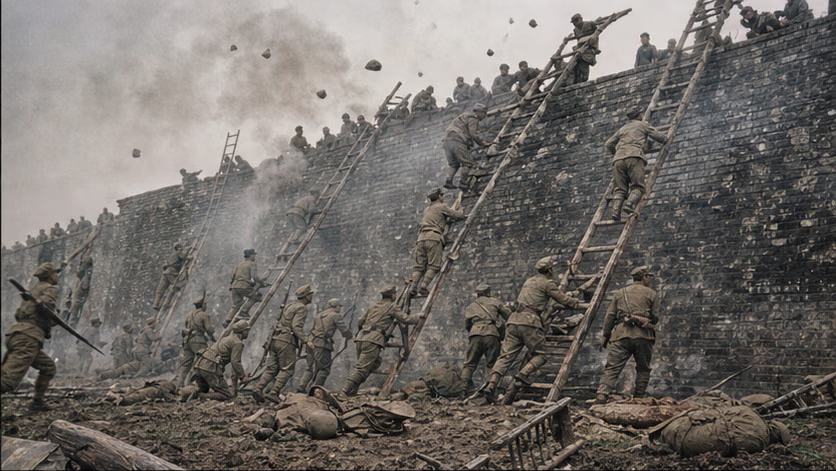
| Phase | Time | Main points |
|---|---|---|
| Troops at the walls | 9.1–2 | The Northern Expeditionary Army took Hanyang and Hankou, completing the encirclement of Wuchang |
| First assault | 9.3 | Before dawn, troops climbed toward the walls on ladders; attacking upward, they were suppressed by fire from the walls and withdrew with heavy casualties |
| Second assault | 9.5 | A suicide squad made another night attack; the First Battalion of Ye Ting's Independent Regiment was almost wiped out ("almost wiped out" appears in many memoirs; specific figures unrecorded). The assault route was proved unworkable |
| From assault to long siege | Mid-September–early October | The siege cut off grain, interspersed with shelling and tunnel work (the question of tunnel blasting remains unverified); grain inside the city ran out, and the number of the starved dead gradually grew |
| Inside party opens the gate | 10.10 | Part of the garrison arranged surrender with the Northern Expeditionary Army as an inside party and opened a city gate (the unit designation of the gate-opening force and the gate name remain unverified). The main army poured in; Liu Yuchun was captured, and Chen Jiamo was taken (Chen's later fate remains unverified) |
Casualties and Losses
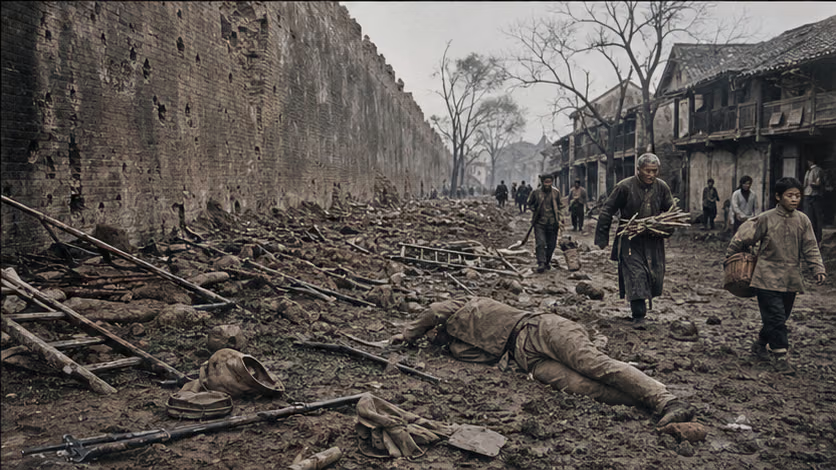
- Attacker: the two assaults caused severe casualties, with especially heavy losses in the First Battalion of the Independent Regiment. Those killed in the assault suicide squad were buried together at Hongshan; the grave of the martyrs of the Independent Regiment survives today (the burial history and headcount vary by account).
- Defender: after the city fell, most were captured; there is no reliable count of battle wounds, disease deaths, or deaths during the siege.
- ※ Civilians: during the 40-day siege, grain was cut off inside the city, rice prices soared beyond what ordinary households could bear, and many civilians died of hunger. Records of civilian life during the siege are scattered in contemporary newspapers and local sources; specific figures have no firm basis (figure disputed). Beyond the military account of the siege, this was a debt first entered against the common people.
Aftermath
- Wu Peifu's power withdrew from the Two Lakes; from then on he had only a corner of Henan left, and never recovered.
- The Three Towns of Wuhan all passed into the hands of the Northern Expeditionary Army, the Two Lakes were settled, and the main theater shifted east to Jiangxi (see Battle of Nanchang (1926)).
- The National Government soon deliberated moving the capital to Wuhan (advance personnel reached Hankou in December; the relocation process remains unverified). The fall of Wuchang on the same day as the Xinhai "Double Ten" layered the symbolism of revolutionary commemoration.
- Liu Yuchun's fate after capture (disposition, release, year of death) remains unverified.
Accounts of Those Present
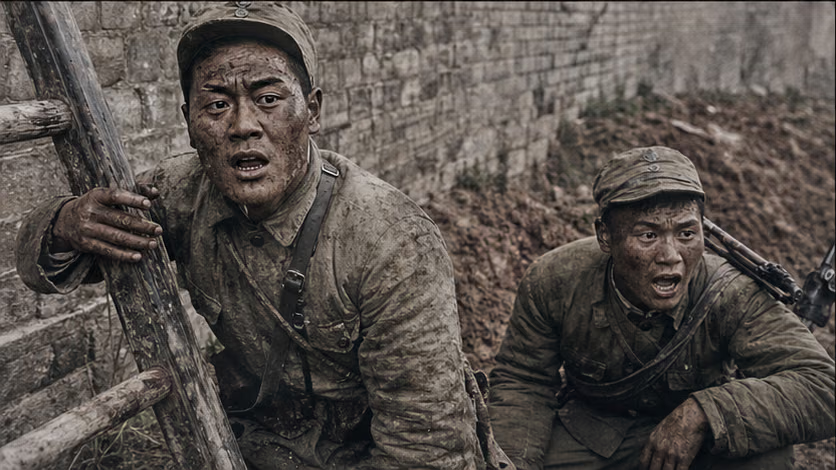
- Below the ladders: in the two assaults of 9.3 and 9.5, soldiers carried ladders and climbed the walls; from above came rolling logs, stones, and machine guns. The bodies of the dead piled at the foot of the wall, and those who came after climbed over them (as described in memoir literature; details unrecorded).
- The mass burial at Hongshan: the suicide-squad dead were collected and buried at Hongshan in Wuchang. The grave of the officers and soldiers of the National Revolutionary Army Fourth Army Independent Regiment who died in the Northern Expedition assault on the city survives today. The dead of one engagement gathered into a single mound.
- The pots inside the city: after the grain ran out, bark and bean cakes were both eaten inside the city (reported at the time; details unrecorded). Conflicts between soldiers and civilians over grain appear repeatedly in records from the late siege.
- The people who opened the gate: at the very end, the gate was opened by the garrison's own men. After 40 days of siege, what collapsed was the human will inside the city, not the wall.
The Ground
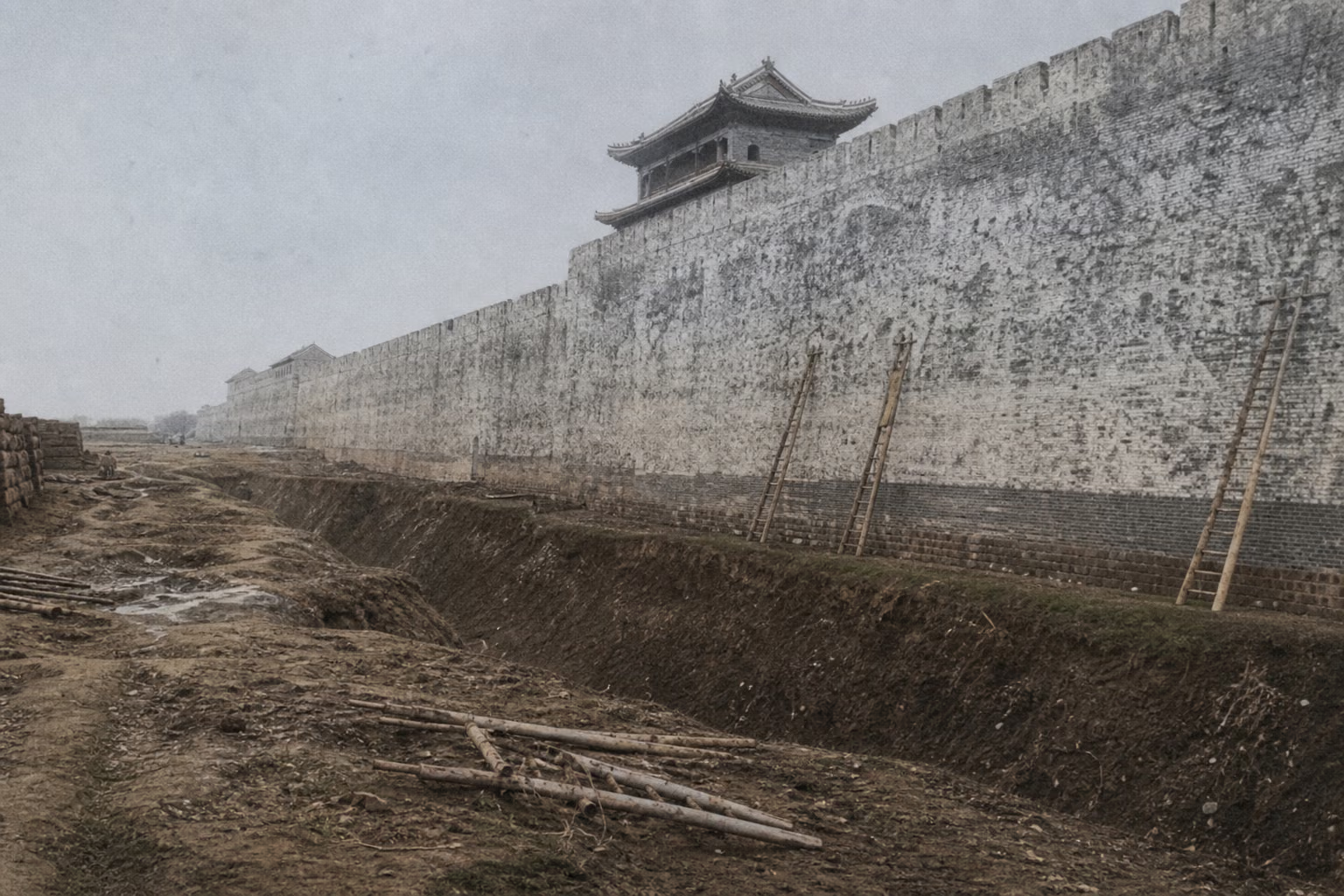
- Fortified city + Snake Hill commanding height + the locked keys of the four gates: a defensive system from the age of cold weapons faced an infantry army in 1926 that still lacked heavy artillery. The attackers' technical gap determined that the engagement took the form of a siege, not a bombardment.
- Encirclement ring: the geography of the three towns. The Yangtze and Han rivers pressed on either side, Wuchang hung alone on the south bank, and once Hankou and Hanyang were lost it became a dead ground.
- Time as weapon: in the long-siege phase, the battlefield moved from the city wall to the rice market; grain prices and public morale were the invisible front line.
How Each Side Records It
- National Revolutionary narrative (the Northern Expeditionary Army's own): another monument to the Iron Army spirit; the suicide squad and the mass burial at Hongshan became fixed entries in Kuomintang military history and textbooks.
- Beiyang-side and local memory: in old-style accounts, Liu Yuchun's 40-day defense is the fulfillment of duty by someone "serving his own master." Wu Peifu's abandonment of the city and departure (retreating to Henan), set against the fate of the defending commander, was often discussed by later generations. In Wuhan local memory, the hunger of the siege was an old story told across three generations.
- Two later versions, side by side: the Communist narrative emphasizes the sacrifice of the First Battalion of Ye Ting's Independent Regiment and the Communist Party suicide squad; the Kuomintang narrative records the overall achievement of the Fourth Army and the other assaulting forces. On the characterization of Liu Yuchun's "stubborn resistance," the two narratives reach similar conclusions in different wording.
Disputes and Sensitivities
- Responsibility for the siege: whether responsibility for the hunger deaths inside the city lay with the defenders' refusal to surrender or with the attackers' siege remains disputed both in the law of war and in historical evaluation. Each side has its own logic.
- The unit designation of the inside party that opened the gate, and the name of the gate, differ across books.
- There is no statistical count of civilian deaths; the sources for specific figures remain unverified.
- The evaluation of Liu Yuchun (dutiful service vs. prolonging civilian disaster) touches the broader evaluative framework for Beiyang military men.
Sources and Open Questions
Main sources (planned verification paths):
- Northern Expedition War History (Taiwan official edition), Wuhan operations section
- Historical materials on the Independent Regiment and memoirs by Zhou Shidi and others; Li Zongren's memoirs
- Shenbao and Ta Kung Pao reports on the siege from September–October 1926 (the main sources for records of civilian life inside the city)
- Wuhan local gazetteers; inscription on the Hongshan Independent Regiment martyrs' grave
Open questions: the various figures for defender and attacker strength; specific casualties in the two assaults; the loss count of the First Battalion of the Independent Regiment; the question of tunnel blasting; the unit designation of the gate-opening force and the gate name; records and figures for starvation deaths inside the city; Liu Yuchun's fate after capture; Chen Jiamo's fate; details of the handover of Hanyang and Hankou; the process of moving the capital to Wuhan; the burial history and headcount at Hongshan; the original text of Wu Peifu's order to defend the city; the site and deadline of the Wuchang assault conference; details of the front-line objections that advocated encirclement; scattered records of surrender discussions on the defenders' side; details of the besiegers' supply line during the siege.
All images on this site are AI-generated depictions. They are not historical photographs, not primary sources, and do not depict any real individual.