Engagement Archive · Battles of Shanghai and Nanjing (1927, incl. the Nanjing Incident)
Shanghai was taken by a workers' uprising that opened the way for the main army without bloodshed; Nanjing was taken by assault -- the next day, after the city fell, British and American warships shelled Xiaguan, leaving civilians dead and wounded in heaps; half a month later, in Shanghai, the revolutionary camp raised its guns against its own people.
Engagement Data
| Item | Content |
|---|---|
| Time | 1927.2–3 (Third Armed Uprising of Shanghai Workers, 3.21–22; recovery of Nanjing, 3.23–24; Nanjing Incident, 3.24) |
| Place | Shanghai (mainly Zhabei and Nanshi); Nanjing city and the river surface off Xiaguan |
| Belligerents | National Revolutionary Army Eastern Route Army (He Yingqin, Bai Chongxi) and the Shanghai Workers' Pickets / Beiyang forces (remnants of Sun Chuanfang's forces and Zhang Zongchang's Zhili–Shandong Allied Army) |
| Result | Both Shanghai and Nanjing fell, and the lower Yangtze was secured; the Nanjing Incident brought shelling by the powers and diplomatic negotiations; the April 12 Incident followed almost immediately (see the overview) |
Belligerents
| Item | Northern Expeditionary Army and uprising workers | Beiyang defenders |
|---|---|---|
| Strength | Several tens of thousands in the Eastern Route Army; about 2,700 armed men in the Shanghai Workers' Pickets (bases vary by account) | Several thousand under Bi Shucheng of the Zhili–Shandong Allied Army in Shanghai; several tens of thousands under Sun Chuanfang and Zhang Zongchang in Nanjing (bases vary by account) |
| Situation | Military pressure from outside coordinated with uprising inside the city | Morale already broken, fighting while falling back |
Terrain and Conditions
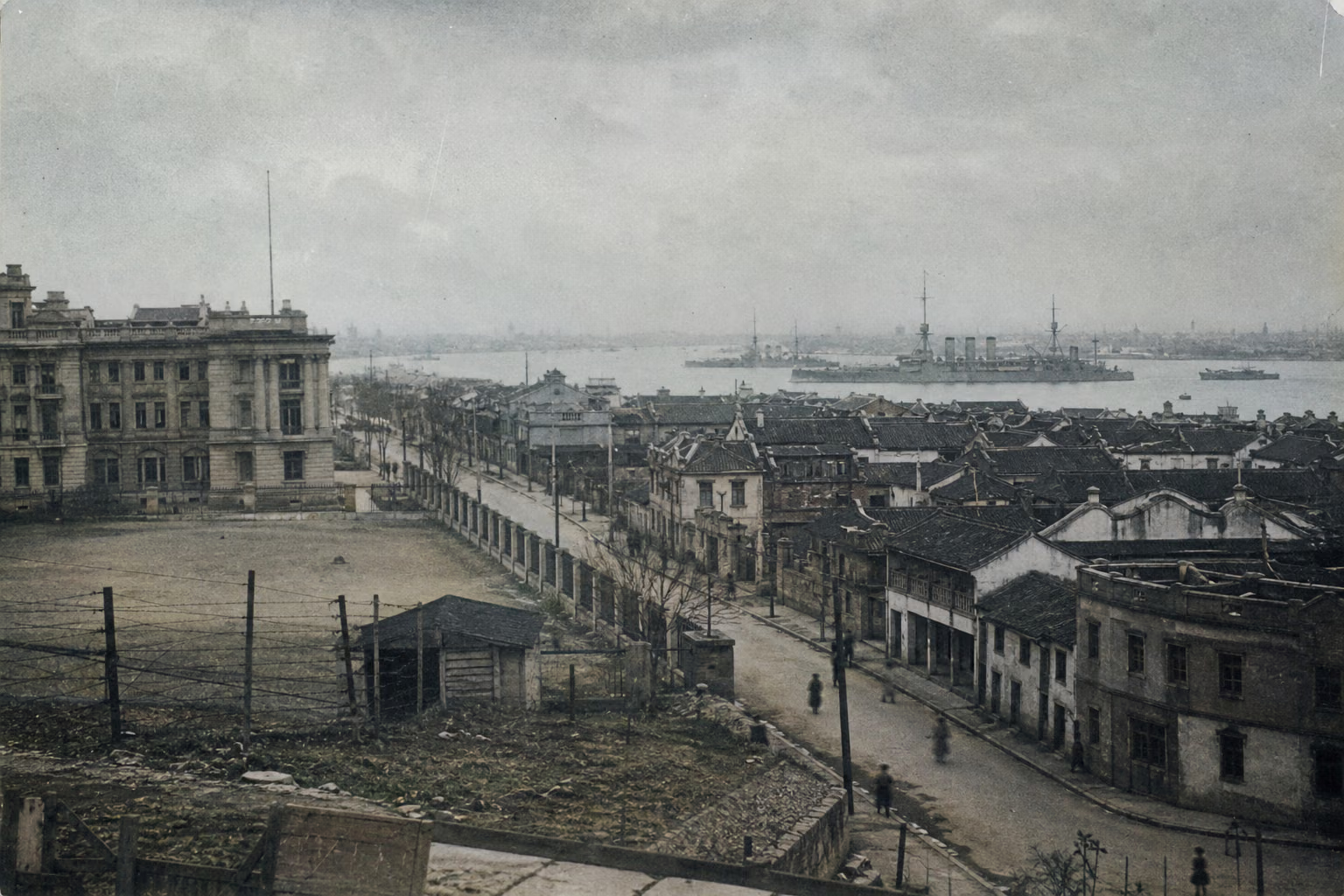
Shanghai: the Chinese-administered districts and the foreign concessions interlocked like teeth, and after the May Thirtieth Movement the labor movement had unprecedented organizational strength; the first two armed uprisings (1926.10, 1927.2) had both failed, and ※ many insurgents were arrested and killed (records of public beheadings remain unverified). Nanjing: Sun Chuanfang's old nest had already emptied out, and guest troops of the Zhili–Shandong army held the city with broken discipline. Foreign warships gathered at Xiaguan and on the Huangpu River -- China's civil war was always conducted under the gaze of foreign gun muzzles.
Why It Was Fought
Wuchang fell on October 10 (see *Siege of Wuchang*), and Wu Peifu's power in the Two Lakes ended there. The Northern Expeditionary Army no longer had a two-front anxiety. A month later Nanchang was recovered, and Sun Chuanfang's main force in Jiangxi was destroyed; afterward, the southeast almost collapsed by itself -- from December, Fujian commanders changed flags one after another, the Eastern Route Army took Fuzhou without bloodshed, and in February 1927 it took Hangzhou, relying mostly on defections and political disintegration, with few hard battles (see *Northern Expedition · Overview*). Of Sun Chuanfang's five provinces, three were gone. Only Jiangsu and Anhui remained, and the facade of Jiangsu and Anhui was Shanghai and Nanjing.
These two cities, however, carried the heaviest weight. Shanghai was the country's financial source, the central hub of customs revenue, finance, and shipping, and also the place watched by the foreign powers, with warships of several countries anchored in the Huangpu River. Nanjing was a political symbol. For this revolution that had come out of Guangzhou, only by taking Shanghai and Nanjing could the words "National Government" be placed on the country's table. Within the revolutionary camp, the dispute over moving the capital had already opened (Wuhan vs. Nanchang, see *Battle of Nanchang (1926)*) -- Shanghai's tax source and finance were high-value stakes no matter whose hands they fell into.
The defenders opposite them were no longer Sun Chuanfang's old troops. After the collapse in Jiangxi, his old base was empty, and the Zhili–Shandong Allied Army from the Fengtian-aligned camp came south to take over the defense -- Zhang Zongchang's guest troops held Nanjing, with military discipline in decay; Bi Shucheng's Zhili–Shandong troops were stationed inside Shanghai. Outside the city stood Shanghai's workers, whose organizational strength had been unprecedented since the May Thirtieth Movement: the first two armed uprisings (1926.10, 1927.2) had both failed, and many insurgents had been arrested and killed ※ (records of public beheadings remain unverified). What the third uprising was waiting for was the moment when the main army came to the city walls.
Each side's calculation was clear to itself. The Northern Expeditionary Army wanted to use the wave of defections to take the lower Yangtze in one stroke; the Eastern Route Army advanced north from Hangzhou, while the Jiangyou Army pointed toward Nanjing. The CPC-led Shanghai General Labor Union decided to launch the Third Armed Uprising, turning a general strike into armed seizure of the city and coordinating with the main army from inside and outside -- urban uprising coordinated with regular forces was a new sample of the National Revolution's military model, and the workers were to open their own city for themselves. The defenders' calculation was simplest and most hollow: guest troops would hold the river; if they could not hold it, they would cross the river and withdraw north -- morale was already broken, and they fought while falling back. Only one thing lay outside every calculation: the workers who rose in uprising could not imagine that the army they welcomed into the city would disarm them half a month later (April 12; cross-reference *Northern Expedition · Overview*).
The resolve of the uprising side had been calibrated by two failures. Both previous attempts had failed over timing: when they were launched, the main army had not yet arrived, and the isolated force was exposed to suppression. The second failure was especially bitter -- the Eastern Route Army had reached the outskirts of Shanghai but halted and did not advance; the uprising hung alone and failed (the reason for the halt remains disputed and unverified). This time, the Shanghai General Labor Union waited until the Eastern Route Army was at Longhua before ordering the general strike to turn into an uprising (the specific decision-making process remains unverified). Even within the party, there was not no dispute over whether to rise again at this time and place (details of the disagreements remain unverified). What they could see was the wavering of the Zhili–Shandong army -- the rumors that defending commander Bi Shucheng was in secret contact with the Northern Expeditionary Army. What they could not see was what would happen half a month later.
The boundary drawn by money was especially hard in this engagement. By the time the Northern Expeditionary Army reached the Yangtze, financing a Northern Expedition on the strength of Guangdong Province alone had already emptied the treasury. Shanghai's customs revenue, salt surplus, and banks were the next lifeline money for this revolution -- the city had to remain whole and could not be smashed. At the same time, the gun muzzles of foreign warships on the river meant that no side could touch a single strand of the concessions' barbed wire. The defending side was a guest army, long unpaid, waiting neither for Zhang Zongchang's relief nor for any reason to keep holding out. Bi Shucheng made contact about changing sides, hesitated, and achieved nothing; before the city had fallen, the commanding general left first (the course of those contacts remains unverified).
On March 21, the Shanghai general strike turned into armed uprising. On March 23, Cheng Qian's Jiangyou Army attacked Nanjing. The fighting in the Shanghai and Nanjing engagements themselves was not heavy -- the truly heavy things lay before and after them.
Course of the Engagement
| Stage | Time | Key Points |
|---|---|---|
| Third Armed Uprising of Shanghai Workers | 3.21–22 | The general strike turned into armed uprising; Zhou Enlai and others directed it; the pickets attacked police stations and arsenals, and after about 30 hours of fierce fighting took Zhabei; Bi Shucheng's troops collapsed and withdrew; the Eastern Route Army vanguard entered Shanghai -- the city was first taken by the workers |
| Assault on Nanjing | 3.23–24 | Cheng Qian's Jiangyou Army and other forces attacked Nanjing; the Zhili–Shandong army broke and crossed the river in flight; the city was taken on the morning of 3.24 |
| ※ Nanjing Incident | 3.24 | Inside the city, looting and attacks against foreign residents and consulates occurred (whether the perpetrators were routed troops, undisciplined soldiers, or organized action remains disputed among all sides and unverified); British and American warships shelled the Xiaguan area in the name of "protecting foreign nationals," causing civilian casualties (Chinese records report more than 2,000 dead and wounded? The figures differ sharply by basis) -- the powers' gun muzzles and the disorder inside the city appeared in the same frame |
| Situation turns abruptly | Late March–April (3 to 4) | The powers issued joint protests and deployed forces as pressure; Shanghai financial capital and the concession authorities leaned toward "order"; the April 12 (4.12) purge began (covered in the overview and the articles on the Agrarian Revolutionary War; cross-reference here) |
Casualties and Losses
- Military casualties: battle casualties in the Shanghai and Nanjing engagements were both not heavy (figures vary by account) -- the real blood came before and after: the dead from the two failed uprisings ※, civilian casualties in the Nanjing Incident ※, and the arrests and killings of April 12 ※.
- Diplomacy: the five-power ultimatum and compensation negotiations after the Nanjing Incident dragged on for years (the result of the negotiations remains unverified).
Aftermath
- The lower Yangtze passed entirely into Northern Expeditionary Army hands; Shanghai's customs revenue and financial resources became the capital on which the Nanjing regime stood.
- The Nanjing Incident became evidence for the powers' fear of "Bolshevization," and also became a catalyst for the tacit understanding among Chiang's side, the powers, and Jiangsu-Zhejiang capital -- half a month later, on April 12, the Shanghai Workers' Pickets were disarmed, and the dead were counted in the thousands ※ (figures vary by account; see the overview and the articles on the Agrarian Revolutionary War for cross-reference).
- "A city taken by workers, and half a month later it was the workers' turn to bleed" -- a structural judgment sentence shared by this article and the overview.
Accounts of Those Present
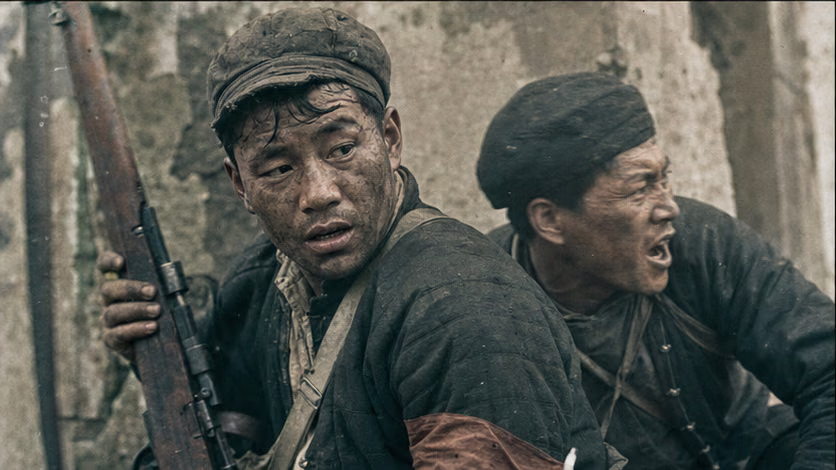
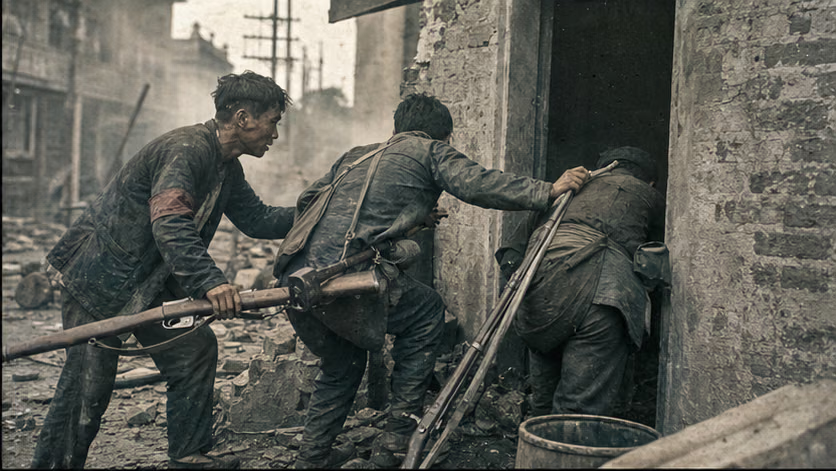
- The pickets' 30 hours: more than 2,000 assorted rifles against regular troops, street fighting in Zhabei for a day and a half -- the space and cost of urban uprising entered different chapters of different countries' textbooks two years later.
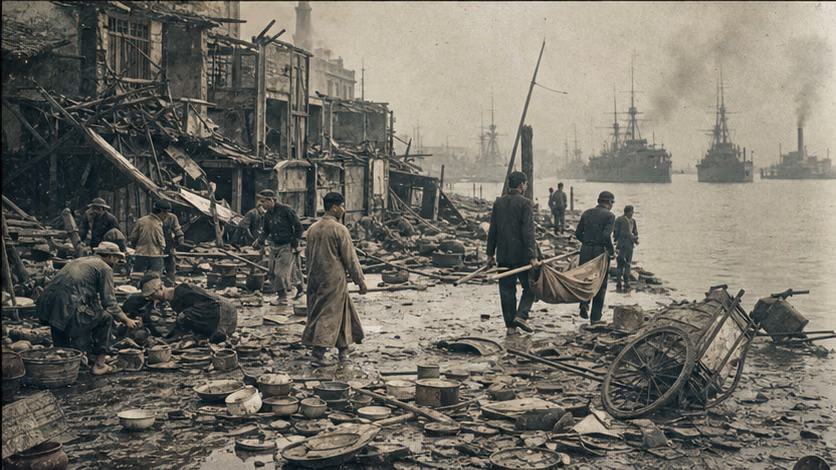
- The guns at Xiaguan: on the afternoon of 3.24, British and American naval shells fell on the Xiaguan streets -- the "day of victory" in the Northern Expedition narrative was, in Xiaguan residents' memory, the day of shelling. One day, two memories.
- Bi Shucheng: the Zhili–Shandong general who left without fighting was soon executed by Zhang Zongchang (details unclear) -- a sample of the fate of a defeated commander inside the warlord system.
The Ground
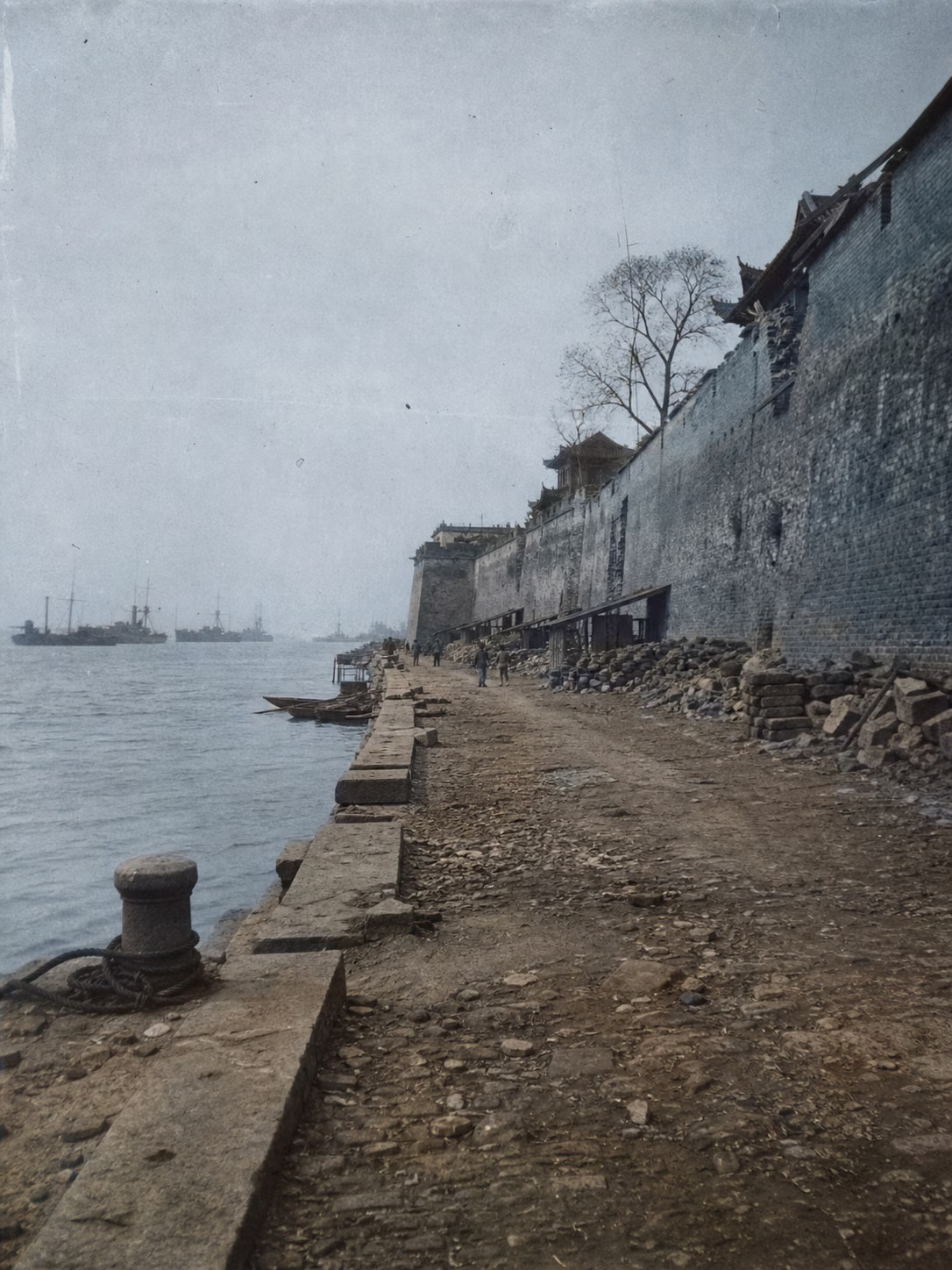
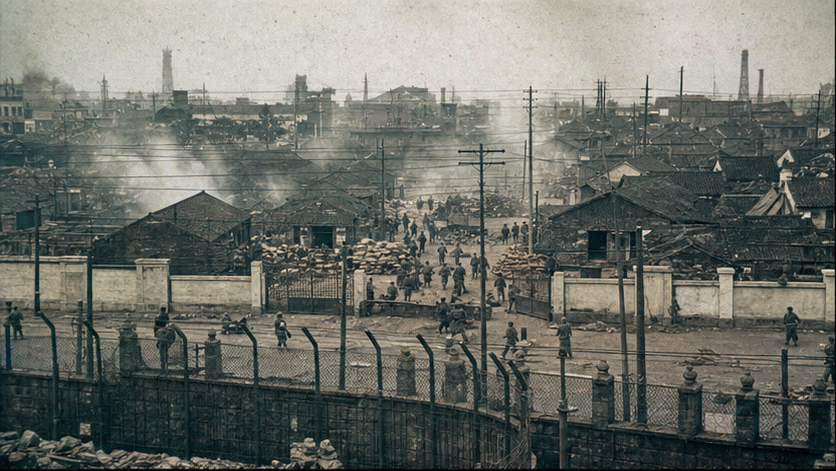
- Shanghai: the boundary between Chinese-administered districts and foreign concessions was the limiting line of the front -- uprising and suppression both took place outside the concessions' barbed wire. The "boundary" was the spatial grammar of every fight in this city.
- Zhabei: police stations, railway stations, and arsenals formed the node network of the urban uprising.
- Nanjing Xiaguan: the vertical section from gun muzzles on the river to wharves to city wall was the spatial prototype of the shelling incident.
How Each Side Records It
- National Revolutionary narrative: a triumphal chapter of recovering Shanghai and Nanjing and establishing the capital at Nanjing; the Nanjing Incident is recorded as "disorderly soldiers breaking discipline, and the powers seizing on a pretext."
- Communist narrative: the three armed uprisings of Shanghai workers are the high point of the urban labor movement, and April 12 is "betrayal" -- the two parties' ways of recording the same March split completely in April.
- The powers and the concessions: the Nanjing Incident was amplified by English-language newspapers as "atrocities," becoming fuel for public opinion in favor of armed intervention; the shelling of Xiaguan, in that narrative, was "protection of foreign nationals" -- civilian deaths and injuries had no place in that account.
Disputes and Sensitivities
- The mystery of the perpetrators in the Nanjing Incident: the routed-troops theory, undisciplined-soldiers theory, and organized-action theory each have their sources and positions, and a century has not settled the matter.
- The casualty figures from the shelling differ sharply (the Chinese figure of more than 2,000 versus foreign figures at the level of dozens).
- The death toll and characterization of April 12 belong to the core sensitivities of the overview and the articles on the Agrarian Revolutionary War; here they are only cross-referenced.
Sources and Open Questions
Sources: *Materials on the Three Armed Uprisings of Shanghai Workers* (the edited volume remains unverified); Chinese and foreign diplomatic files on the Nanjing Incident (relevant items in *Collection of Old Chinese and Foreign Treaties* remain unverified); paired reading of reports in that year's *Shen Bao* and *North-China Daily News*.
Open questions: the number of armed pickets; Bi Shucheng's end; the various theories about the perpetrators of the Nanjing Incident and the casualty bases on each side; the five-power ultimatum and the result of the compensation negotiations; records of the dead in the first two uprisings; the reason the Eastern Route Army halted during the second uprising; the decision-making process for the third uprising; the party debate over the timing of the uprising; the course of Bi Shucheng's contacts about changing sides; records on the relationship between Northern Expeditionary Army finance and Shanghai customs revenue and salt surplus.
All images on this site are AI-generated depictions. They are not historical photographs, not primary sources, and do not depict any real individual.