Engagement Archive · Tielieketi Incident
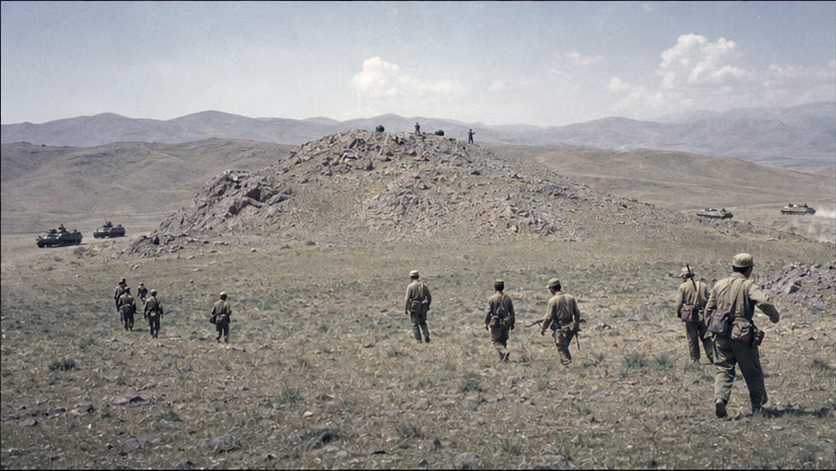
Five months after the Battle of Zhenbao Island, on the western border, a Chinese patrol detachment walked into a Soviet prearranged ambush. Its covering group fought to destruction on an unnamed height: 28 killed (accounts vary), 3 captured. For nearly forty years, the Chinese side kept almost silent about this battle.
Engagement Data
| Item | Content |
|---|---|
| Time | Morning to afternoon of 1969.8.13 (lasting several hours; time span unverified) |
| Place | Tielieketi area, Yumin County, Xinjiang; an unnamed height in the disputed area west of the Barluk Mountains (after the battle, the Chinese side named it "Zhongyong Mountain"; naming process unverified) |
| Belongs to | Sino-Soviet Border Conflict (1969), western sector |
| Ambushing side | Soviet border-defense detachment and attached forces: infantry, more than ten armored vehicles, 2 helicopters (order of battle and details unrecorded) |
| Ambushed side | Chinese border-defense patrol detachment (under the Tacheng Military Subdistrict, with military-region news personnel accompanying the detachment; several dozen personnel in all, organization unrecorded) |
| Result | The unnamed height held by the covering group was lost, and all personnel in the group were killed; the Chinese side lost 28 killed (accounts vary), and 3 were captured (later returned after negotiations; dates vary by account); Soviet forces withdrew after clearing the battlefield |
Belligerents
| Item | Ambushed side (Chinese patrol detachment) | Ambushing side (Soviet forces) |
|---|---|---|
| Strength | Several dozen personnel in the patrol group and covering group combined (grouping unverified) | About 300 personnel (accounts vary) |
| Equipment | Infantry small arms and a small number of rocket launchers (unverified) | More than 10 armored vehicles, artillery and mortars, helicopter observation and fire correction (details unrecorded) |
| Situation | Daylight patrol on foot, with no artillery support in depth (support disposition became a focus of postwar review; details unverified) | Prepositioned positions, armored encirclement, firepower suppression from above |
Terrain and Conditions
(For the larger all-line tension in 1969, see *Sino-Soviet Border Conflict: Overview*; this article writes only this mountain area.)
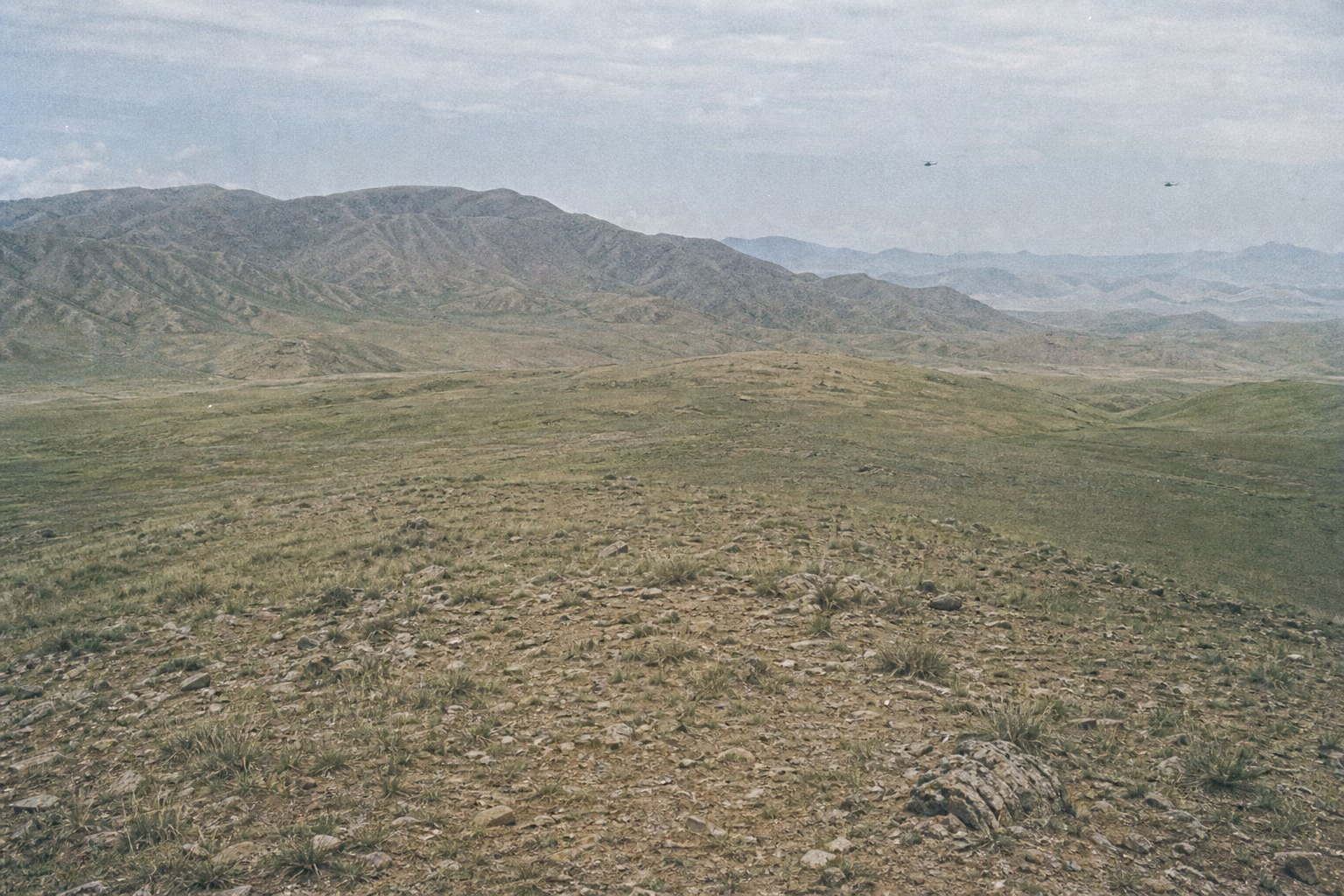
The Barluk Mountains run across Yumin County's western border. The area west of the mountains was a Sino-Soviet disputed area, and the Soviet line of actual control extended inside the Chinese claim line (extent unverified). This was grazing country, pasture used by Kazakh herders in seasonal movement, where border defense maintained presence through patrol lines. By the summer of 1969, blood had already been shed on this stretch: on 6.10 at Tasti, the female militia member Sun Longzhen was shot and killed by Soviet forces in a border clash (details unverified). In early August, Soviet activity opposite Tielieketi was frequent, with helicopters conducting reconnaissance for days in succession (these pre-battle signs were repeatedly reviewed after the battle, unverified). Gobi hills, thin grass, bare stone, and long daylight sightlines: terrain with nowhere to hide.
Why It Was Fought
The Battle of Zhenbao Island stopped at the end of March, but the account had not been settled. The side that had lost face in the eastern sector sought to make it up along the whole line. In the spring and summer of 1969, Soviet activity in the western border sector suddenly intensified: troops moved opposite Central Asia, and helicopters reconnoitered along the line. Soviet participants and later studies often state directly that Tielieketi was retaliation for the Battle of Zhenbao Island (the retaliation thesis belongs to Soviet accounts and research formulations, not a conclusion in Chinese archives; unverified). The western sector differed from the eastern sector: there was no centerline of a main channel to cite. Between the Soviet line of actual control and the Chinese claim line lay broad pastures, and every line a patrol walked was inside the other side's binoculars.
In June, people died at Tasti. In early August, the movements opposite Tielieketi grew denser day by day: helicopters flew close along the ridgeline, and armored vehicles gathered behind the line of actual control (details of these signs unrecorded). Chinese patrols did not stop. Under the border-defense principle of the time, the patrol line was the claim line; not walking it meant yielding it. The patrol on 8.13 was a routine arrangement, reported to and approved by higher authority, with military-region news personnel assigned to accompany it for reporting (this detail later became one focus of review: whether the plan and route had already been known to the other side remains unverified).
The calculations on the two sides were asymmetrical. The Soviet side wanted an annihilation battle it could count on: prearranged positions, armored encirclement, helicopter fire correction, meant for Beijing to see and for the whole line to see. On the Chinese side, from the detachment up to higher command, the day was still estimated according to the old script of "friction - standoff - expulsion," and the Soviet side's determination to open fire was underestimated (as seen in postwar review formulations, unverified). The unnamed height occupied by the covering group had no fieldworks to rely on, and there was no artillery group in depth.
In the morning, the patrol detachment advanced into the planned area, and Soviet forces opened fire from three sides to encircle it. Once the gunfire began at Tielieketi, it was no longer a meeting engagement.
Course of the Engagement
| Phase | Time (unverified) | Key points |
|---|---|---|
| Entry | Morning | The patrol group moved forward along the planned line, while the covering group occupied the unnamed height and other key points; Soviet armored vehicles moved out from the flanks |
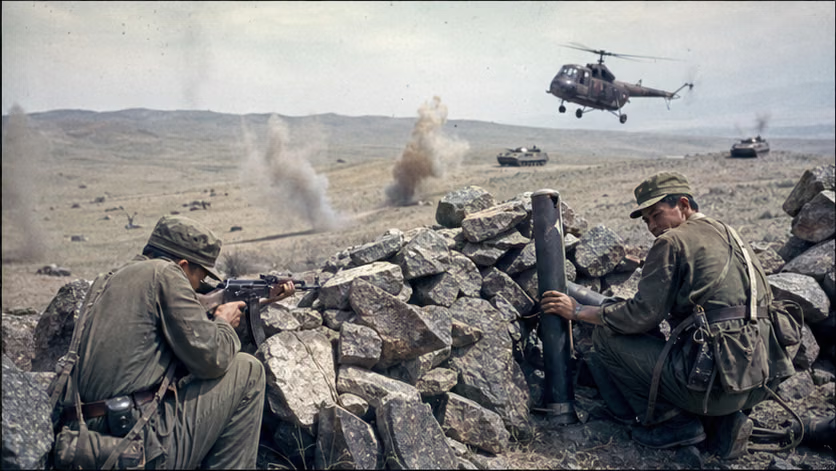
| Encirclement | Morning | Soviet forces opened fire from three sides, and armored vehicles cut off the height from the rear; helicopters circled overhead for fire correction; the height had no fieldworks, with stone piles used as cover |
| Holding and destruction | Morning-afternoon | The covering group on the unnamed height resisted for several hours under artillery fire and armored attack, exhausted its ammunition, and was killed to the last man; the remaining troops and reinforcements were cut off by firepower and could not approach (reinforcement process unverified) |
| Closure | Afternoon | Soviet forces cleared the battlefield, took away captured personnel and some bodies and equipment (body handover situation unverified), and then withdrew; the fighting ended that day |
Casualties and Losses
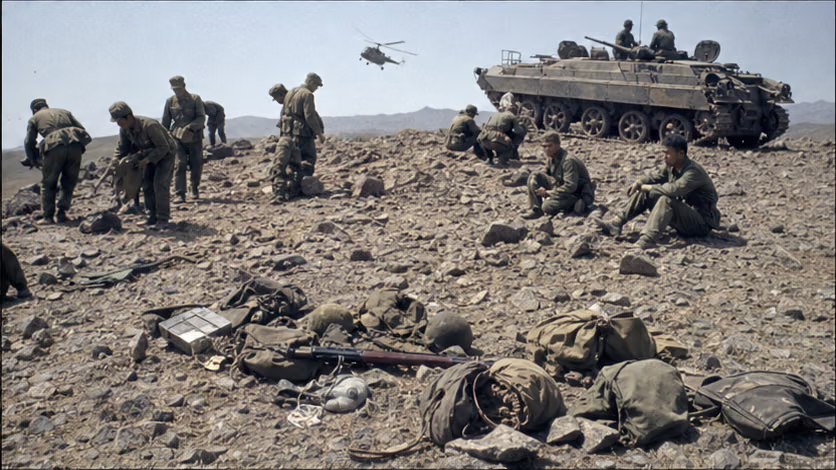
- Chinese side: 28 killed (conventional figure; the name list remains to be checked person by person; accompanying news personnel were also in the formation, but their number and names are unrecorded); 3 captured, returned after negotiations once the situation eased in September (date and process unverified).
- Soviet side: self-reported 2 killed and more than ten wounded (Soviet figures, unverified).
- The account beyond the figures: this was the only battle in the 1969 border conflict in which a Chinese organized unit was wiped out: a defeat.
Aftermath
- Within one month, the larger situation turned: the 9.11 airport meeting, the 10.20 resumption of talks (see the overview). Tielieketi was the last major live-fire confrontation along the whole line (definition unverified).
- Chinese military review began immediately: the patrol plan, covering disposition, support in depth, and reading of pre-battle signs were reviewed item by item (review texts not public; items unverified); border defense in the western sector was later redeployed (details unverified).
- The three captured personnel underwent review after returning to China (details of their situation unverified): an institutional background structurally parallel to the review of returned captives from the War to Resist U.S. Aggression and Aid Korea.
- This battle long remained outside public propaganda, for the dual reasons of defeat and the later Sino-Soviet thaw (causal analysis belongs to the interpretive layer). Around 2008, reports began to mention repairs to the Yumin County Martyrs' Cemetery, the "Zhongyong Mountain" commemorative facilities, and public memorial ceremonies, and public accounts by veterans and families of the fallen gradually increased (timeline unverified).
- The battlefield area was later delimited by the China-Kazakhstan boundary treaty, with the commemorative facilities on the Chinese side (treaty and delimitation details unverified).
Accounts of Those Present
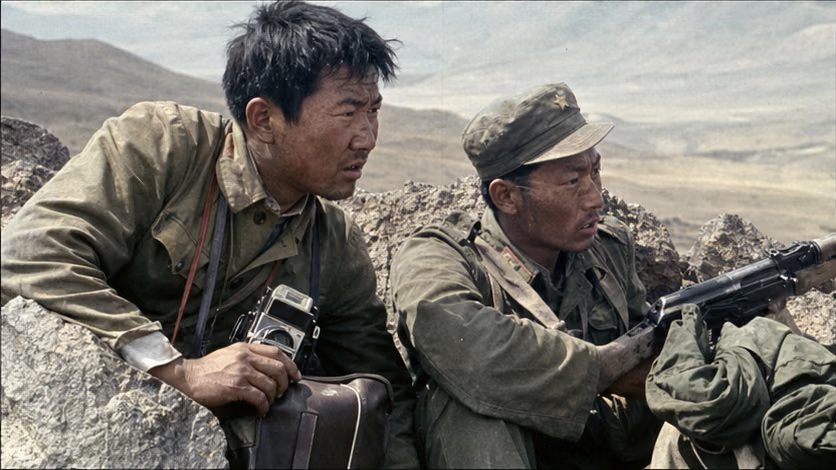
- The accompanying reporters: in the detachment that day were military-region news and photography personnel ordered to come for coverage (number and names unrecorded). Their cameras stayed on the height with them: one embedded assignment for propaganda became the sharpest detail of the battle.
- The captured men's later lives: one of the three captured personnel, Yuan Guoxiao (name unverified), gave interviews many years later, recounting capture, interrogation, and return. The review he underwent after returning to China made him speak little of this battle for decades afterward (oral-history text unverified).
- The name of the unnamed height: the fallen officers and men were long buried in Yumin County, and the height later received the name "Zhongyong Mountain": one battle that never entered textbooks survived in record through a retrospectively granted place name (naming process unverified).
- Accounts from the opposite side: later recollections by Soviet participants described the battle as a well-prepared operation (Russian-language materials unverified). The ambushing side's frankness is the most direct circumstantial evidence for the claim that it was "prearranged."
The Ground
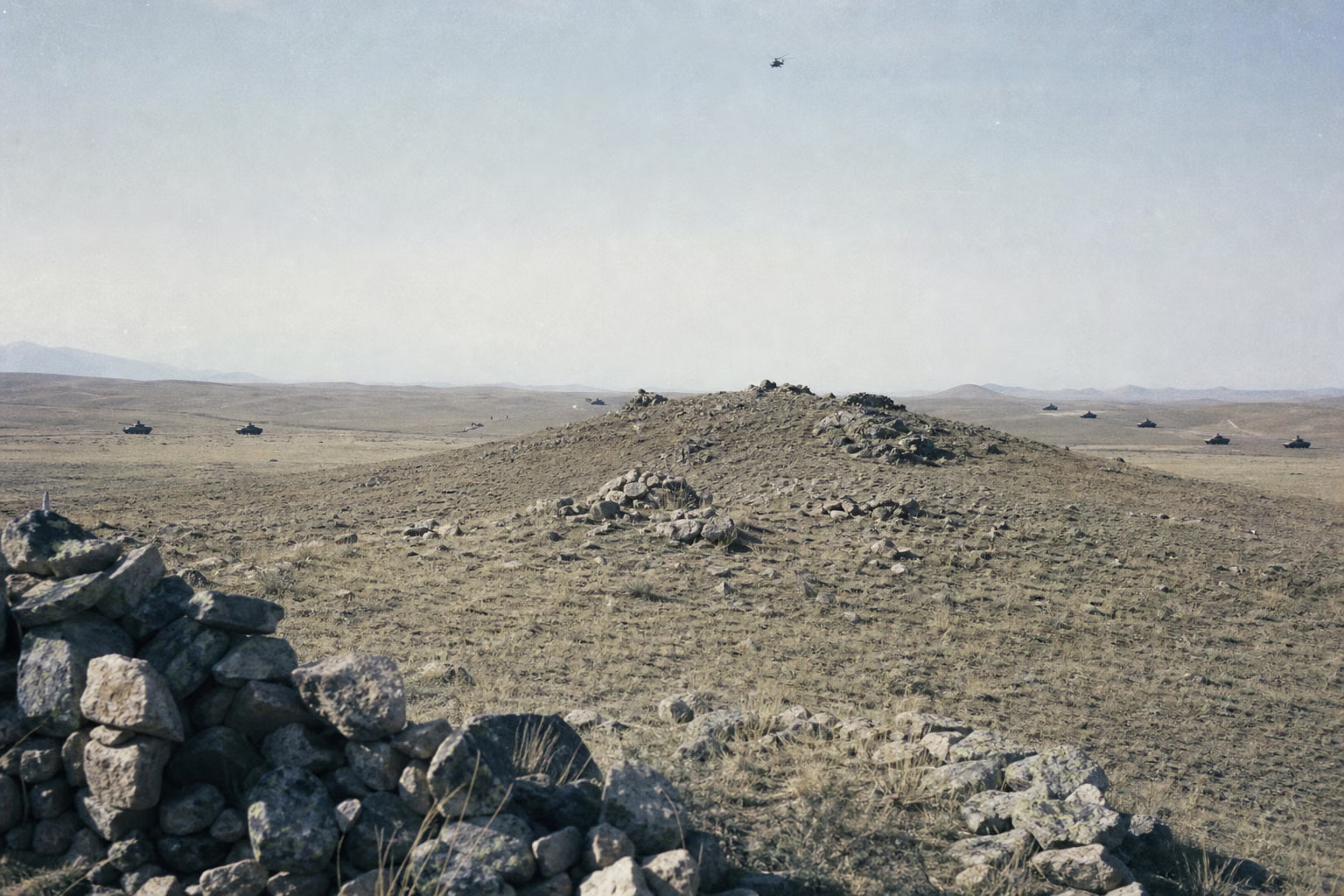
- Bare terrain: Gobi hills, without woods or ravines, in daylight, with open sightlines and nowhere to hide. It was structurally like the ice surface at Zhenbao Island, but more extreme: open ground inside a ring of encirclement.
- A stony knoll: the unnamed height rose by several dozen meters (elevation unverified), with stone piles as cover, armored vehicles firing around it, and helicopters pressing overhead: the geometry of desperation from the defenders' point of view, later also folded into a "weaker side in extremity" narrative.
- Sound layer: the circle formed by armored-vehicle engines, rotor blades overhead, rifle single shots against autocannon. The asymmetry of firepower density itself became spatial narrative.
How Each Side Records It
- Chinese side: nearly forty years of near silence: no textbooks, little public military history. Around 2008 came a turn, with cemetery repairs, public memorial ceremonies, media revisits, and veterans' oral accounts appearing successively (timeline unverified). The narrative settled into "guarding the country and defending the frontier; defeated, yet still fierce." It formed a direct contrast with the high profile of the Battle of Zhenbao Island: victories entered propaganda, defeats entered silence.
- Soviet/Russian side: at the time, propaganda described it as a successful defense that repelled Chinese provocation; in later Russian materials, some accounts state directly that it was a "prepared operation" (literature unverified). After the dissolution of the Soviet Union, this battle also moved toward the margins of Russian public memory.
- Kazakhstan: the ground opposite the battlefield is now the China-Kazakhstan border, and Kazakh public narratives have almost no place for this battle (unverified). The state that carried out the ambush no longer exists, and the memory lost its owner with it.
Disputes and Sensitivities
- Organized destruction and long nondisclosure: organized destruction, capture, and long nondisclosure. Analysis of "why the silence" is marked as interpretive layer, not as an official conclusion.
- Review and accountability: whether the patrol plan was rash, the accompanying reporters and secrecy, the absence of covering and support: these involve responsibility at the command levels of the time. The materials are not public; this article lists the questions and does not name a verdict (unverified).
- The thesis of retaliation for the Battle of Zhenbao Island: Soviet accounts and research formulations; there is no corresponding conclusion in Chinese archives.
- Casualty and capture figures have many unverified points. The principle in thinly sourced places is honesty: better to leave something unverified than to pretend certainty.
- Review of captured personnel after return: discipline for returned captives belongs to the institutional background; individual circumstances remain unverified, structurally like the discipline for returned captives from the War to Resist U.S. Aggression and Aid Korea.
- Present-day boundary: the China-Kazakhstan border has already been delimited by treaty; do not project present-day vocabulary backward.
Sources and Open Questions
Sources: military and local media revisit reports after 2008 (titles unverified); relevant passages in Yang Kuisong and others' research on the Sino-Soviet border conflict; recollections by Soviet participants and border-troop histories (Russian-language literature unverified); displays at the Yumin County Martyrs' Cemetery and commemorative facilities (unverified).
Open questions: the statistical basis for the 28 killed and the name list; the number and names of accompanying news personnel; the names of the 3 captured personnel and the date and process of their return; Soviet order of battle, strength, and self-reported casualties; battle time span and reinforcement process; the naming of "Zhongyong Mountain" and the history of the cemetery; military review texts; the original text of the Soviet-side formulation "prepared in advance"; relevant clauses in the China-Kazakhstan boundary delimitation; the Tasti Incident and its connection to this battle; details of pre-battle signs.
All images on this site are AI-generated depictions. They are not historical photographs, not primary sources, and do not depict any real individual.