Engagement Archive · Battle of Zhenbao Island
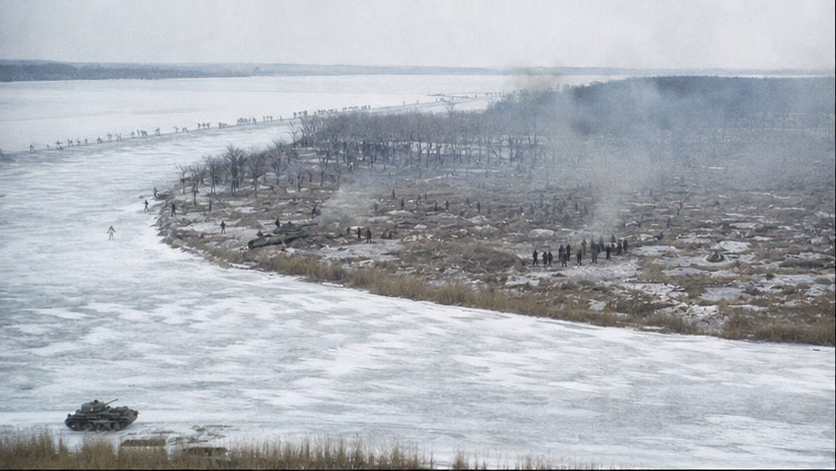
On the frozen Ussuri River, a clash between patrols grew within half a month into an attack and defense involving tanks, armored vehicles, and rocket artillery; on a river island of 0.74 square kilometers, the armies of two nuclear powers exchanged fire in formed units for the first time, and the aftershock far exceeded the island's size.
Engagement Data
| Item | Details |
|---|---|
| Time | 1969.3.2 first engagement; 3.15 main engagement; around 3.17 contest over a tank; artillery standoff continued to the end of March (end-stage boundary unverified) |
| Location | Zhenbao Island (called Damansky Island in Russian), in Hulin County, Heilongjiang, on the Chinese side of the centerline of the main channel of the Ussuri River; area about 0.74 square kilometers |
| Part of | Eastern sector of the Sino-Soviet Border Conflict (1969) |
| Belligerents | Chinese border-defense troops: detachments from Gongsi and Raohe border-defense stations, with reinforced infantry and artillery detachments (order of battle details unrecorded; field commanders included Sun Yuguo and Leng Pengfei) / Soviet Border Troops: Iman Border Detachment (Strelnikov, Leonov) and reinforcing motor-rifle, tank, and artillery units |
| Result | The Chinese side held de facto control of the island after the fighting; the 1991.5 Agreement on the Eastern Section of the Sino-Soviet Boundary legally confirmed its attribution to China |
Belligerents
| Item | Chinese side | Soviet side |
|---|---|---|
| Strength | 3.2: two patrol groups of several dozen men plus forward detachments on the island (deployment details differ between the two sides' accounts, unverified); 3.15: infantry at roughly battalion scale plus artillery groups in depth (calibers vary by account) | 3.2: about 70 men dispatched from two border-defense stations (unverified); 3.15: border-defense mobile group plus motor-rifle and tank detachments, more than 20 armored vehicles (unverified) |
| Equipment | Infantry small arms, 75 recoilless guns, 40 rocket launchers; artillery groups in depth including 85 guns and 120 mortars (details unrecorded) -- the fact that the 40 rocket launcher could not penetrate the T-62 frontally became a major postwar issue | BTR-60 armored personnel carriers, T-62 tanks, "Grad" BM-21 rocket artillery (salvoes against the Chinese depth on 3.15; the claim that this was its first combat use is unverified) |
| Situation | Infantry attack and defense on the island under covering fire from the depth on the bank | Armored maneuver and long-range fire coverage |
Terrain and Conditions
(For the broader situation in 1969 -- the split, the post-Prague characterization, and friction along the entire line -- see the Sino-Soviet Border Conflict Overview; this entry treats only this stretch of river.)
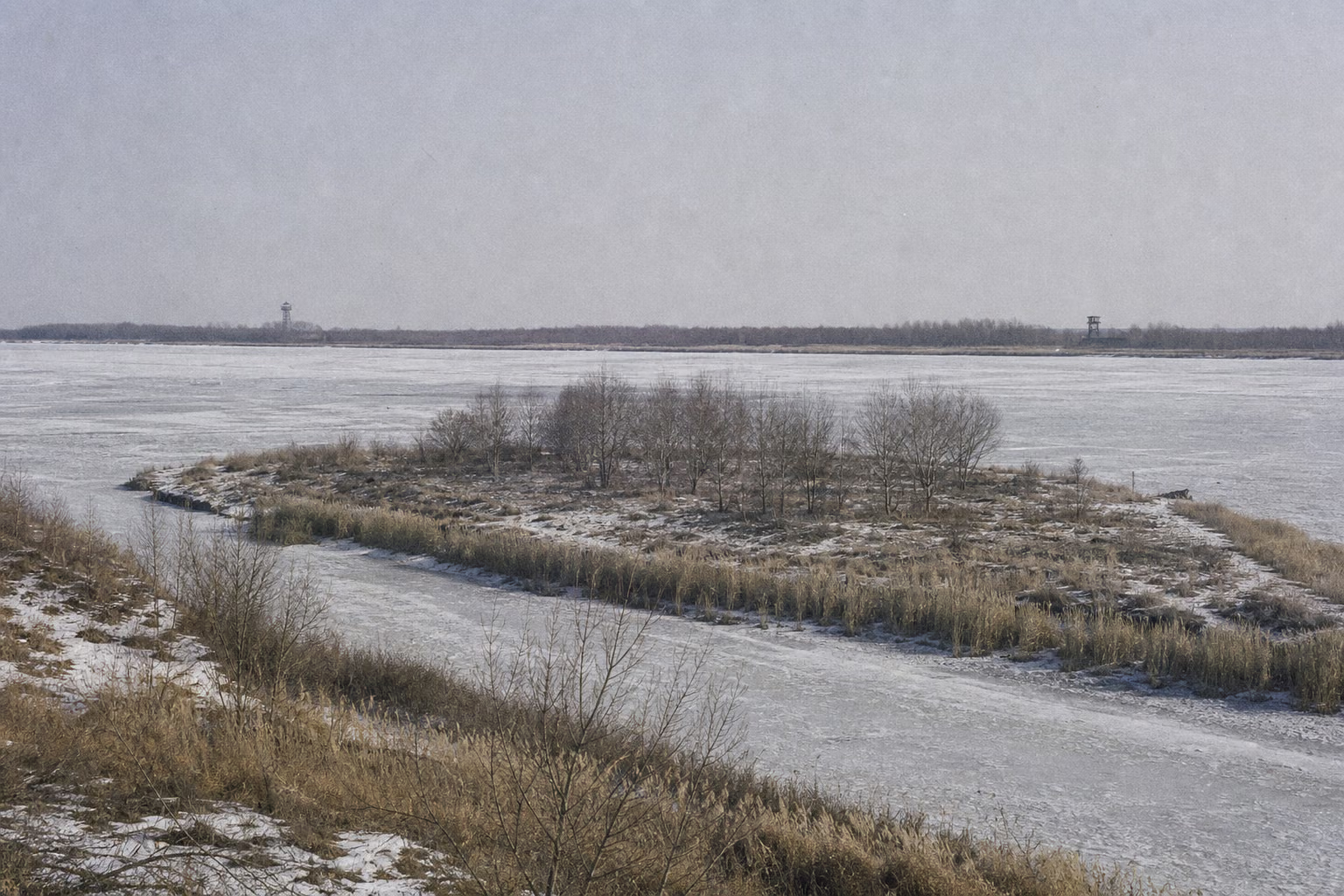
The Ussuri River forms a boundary river along the Hulin and Raohe line. In winter it freezes for several months, and the ice can bear armored vehicles. Zhenbao Island lies close to the Chinese bank, separated from the bank by a narrow channel; in the low-water season it is almost connected to it. On the opposite bank, the Soviet side had set up two border-defense stations at Mikhailovka and Kulebyakiny (transliteration of station names unverified), with watchtowers covering the whole island. Both banks in this sector were sparsely inhabited woodland and reed flats; the nearest Chinese settlements lay along the Raohe and Gongsi line. In the winters of 1967–68, expulsions and brawls on this stretch of river had already become routine. Every patrol onto the island was a contact that might turn into an incident.
Why It Was Fought
By the winter of 1969, the rules on the Ussuri River had already existed in name only. Under the 1860 Treaty of Peking, this river was a boundary river: the Soviet side held to the red line drawn near the Chinese bank on the treaty's attached map and argued that all the islands belonged to the Soviet side; the Chinese side invoked the prevailing rules for international rivers and argued that the boundary should follow the centerline of the main channel. Zhenbao Island lay on the Chinese side of that centerline, a few steps from the Chinese bank in the low-water season. During the 1964 Beijing negotiations, working-level talks had once come close to a plan for settling island attribution by the main-channel principle, under which Zhenbao Island would have belonged to China; the plan was not signed (level of source material unverified). With the matter suspended on paper, each side could only patrol according to its own reasoning on the river.
The freeze-up season was when trouble came. Once the ice froze solid, armored vehicles could drive onto it, and the two sides' patrol lines overlapped on the island every day. From 1967 to 1968, expulsions escalated from verbal abuse to clubs, then to armored-vehicle ramming. After Chinese fishermen were run over and killed at Qiliqin Island in January 1968 (see the Overview), the Chinese border-defense policy of restraint had in effect reached its end. In early 1969, the military region and headquarters approved a self-defense counterattack plan: if Soviet troops again used force to expel Chinese personnel, the Chinese side would counterattack in a prepared manner in the Zhenbao Island direction (level of approval and wording remain not fully public in Chinese archives, unverified). The Soviet term "ambush" and the Chinese term "counterattack after restraint became impossible" refer to the same preparation.
The Soviet side was likewise raising the stakes: the scale and equipment of expulsion operations increased month by month, and border-defense troops were authorized to use armored vehicles at close range (evolution of Soviet rules of engagement unverified). Each side believed the other would back down. The Soviet side thought that, as in the previous two years, after ramming and beating, the Chinese would carry away their wounded and leave; the Chinese side judged that the Soviet side would not use war-level means over an uninhabited small island (postwar narratives on both sides accused the other of deliberate intent; critique texts unverified). Both judgments failed together on March 2.
That morning, two Chinese patrol groups went onto the island; another concealed detachment had entered during the previous night (deployment details are opposed in the two sides' accounts, unverified). Strelnikov led Soviet troops from the two border-defense stations to intercept them and moved into a close standoff. Shots rang out; to this day the two sides give opposite accounts of who fired first. Within minutes, what had been more than a decade of pushing and shoving on this stretch of river became a battle.
Course of the Engagement
| Phase | Time | Key points |
|---|---|---|
| 3.2 first engagement | Morning of 3.2 | Soviet troops intercepted the Chinese patrol groups from two directions and opened fire in a close-range standoff (each side gives a different sequence); the Chinese patrol groups and concealed detachment returned fire; part of the Soviet force, including Strelnikov, was killed (the Soviet figure for deaths that day was 31); the fight lasted about half an hour, and both sides withdrew |
| Standoff and reinforcements | 3.3–3.14 | Both sides reinforced the facing sector with troops and firepower; Soviet armored patrols onto the island became routine, and Chinese artillery groups deployed in depth (deployment details unrecorded) |
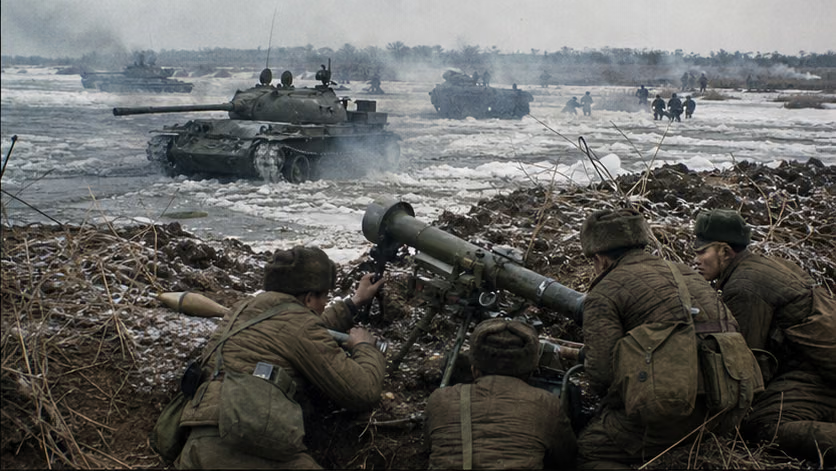
| 3.15 main engagement | Morning to dusk, 3.15 | Soviet troops used armored vehicles and tanks to cover multiple infantry waves against the island, and "Grad" rocket artillery covered both the island and the Chinese depth; Chinese infantry repeatedly resisted from works on the island, with artillery fire from the depth blocking the attacks; after the final Soviet attack failed, the Soviet force withdrew. Colonel Leonov, commander of the Iman Border Detachment, was killed during a tank flanking movement (details unverified) |
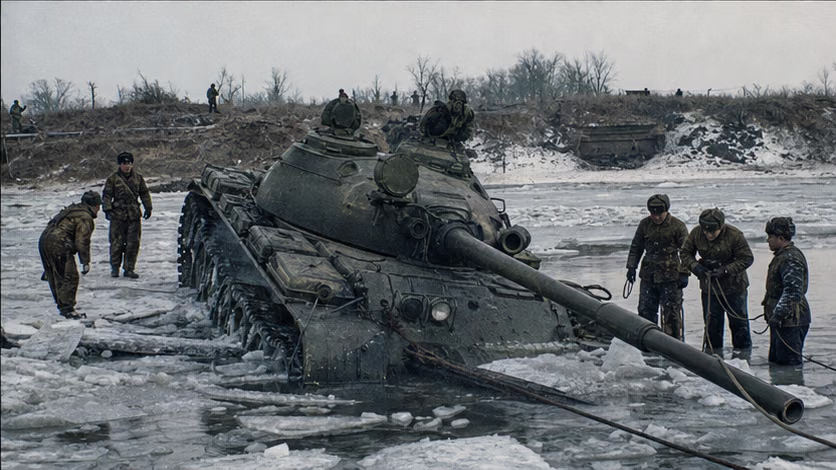
| 3.17 and after | 3.17–3 (to the end of March, month 3) | The two sides repeatedly contested the T-62 disabled in the river channel (the vehicle of Leonov's crew; the account that it was immobilized by a mine is unverified); the Soviet side used artillery fire to break the ice in an attempt to destroy the vehicle, and the tank sank into the river; the artillery standoff continued to the end of the month |
| Salvage | Late 4 (April)–early 5 (May) (unverified) | The Chinese side recovered the T-62 through diving and towing operations -- the most dangerous work after the fighting had ended (participating units unrecorded) |
Casualties and Losses
- Chinese side: 71 killed over the whole course (prevailing figure; statistical boundary unverified; Baoqing County's Zhenbao Island Martyrs' Cemetery buries 68 people, and the relationship between the two figures is unverified), 88 wounded (figures vary by account).
- Soviet side: officially announced 58 killed and 94 wounded (including 31 killed on 3.2) -- the Soviet figure; later Russian literature includes revisions (unverified).
- Chinese battle reports also gave figures of several hundred Soviet troops killed and wounded (unverified); Soviet estimates of Chinese casualties were likewise far higher than 71. Both sides inflated the other's numbers, and the original statistical boundaries have not been made public.
- Equipment: the Soviet army lost one T-62 (captured) and multiple armored vehicles (number unrecorded); Chinese works on the island and positions in depth were damaged under "Grad" coverage (details unrecorded).
Aftermath
- The entire border entered a state near war: nuclear signaling, "dig deep tunnels," airport talks, the resumption of negotiations -- the larger line is in the Overview and is not repeated here.
- That T-62 became both a trophy and a teaching aid: equipment departments dissected and studied its 115 mm smoothbore gun and stabilized fire-control system (project details unverified), and the complete vehicle entered the collection of the Military Museum in Beijing, where it remains on display. Chinese visitors have looked at it through a display case for more than half a century.
- After the fighting, the Chinese side kept a permanent defensive presence on the island, strengthening the works year by year; the 1991.5 Agreement on the Eastern Section of the Sino-Soviet Boundary confirmed Zhenbao Island's attribution to China.
- The fates of participants diverged: Sun Yuguo and others received the title "Combat Hero" (list unverified); Sun Yuguo appeared at the Ninth Party Congress, was rapidly promoted over the following years, and was then demoted and transferred to civilian work in the late 1970s (career curve and political background unverified). For the binding of heroic narrative to the political era, see Sensitivities.
- Catching up after the anti-tank shortfall: the battlefield conclusion that the 40 rocket launcher and the 75 recoilless gun were ineffective against the front of the T-62 directly drove the development of new rocket launchers and anti-tank weapons (model lineage unverified).
Accounts of Those Present
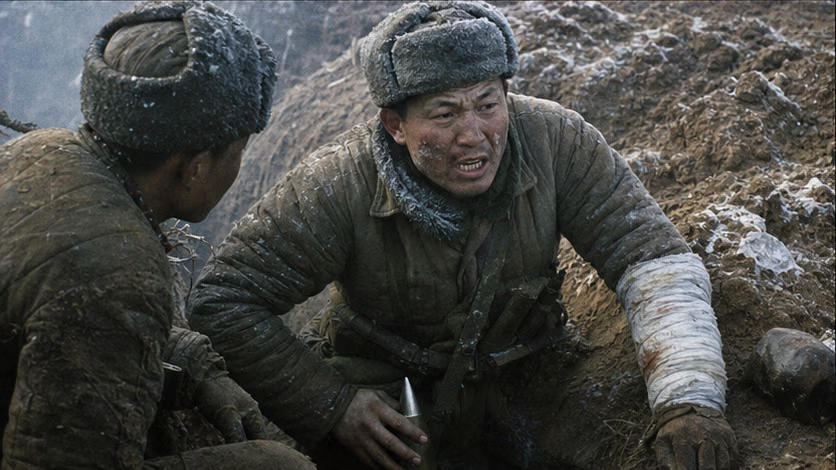
- Sun Yuguo: head of the Gongsi border-defense station. On 3.2 he led a team on the island and was one of the field commanders after the shooting began; a month later he stood on the rostrum of the Ninth Party Congress (source materials on the reporting scene unverified). The arc from a river channel to the Great Hall of the People is itself a note on that era.
- Leng Pengfei: commander on the island on 3.15. Wounded in the arm (exact location unverified), he bandaged the wound and continued fighting, and was awarded the title Combat Hero; in 2017 he received one of the first August 1 Medals -- two eras awarding medals to the same person.
- Yu Qingyang: a squad leader who, during the fighting on 3.2, was hit in the head yet still rushed forward; he was killed. The propaganda phrase "as long as life continues, the charge does not stop" came from him (the core episode of the deed contains a layer of contemporary propaganda processing, unverified); a squad leader in his early twenties (age unverified) died on the ice.
- Sun Zhengmin: an engineer officer who was killed by a mine while clearing mines on the island after the fighting (dates vary by account). The mine he was clearing may have been laid by his own side or by the other side; mines under the ice are the hidden layer of this river's history.
- Names on the other side: Strelnikov, head of the Nizhne-Mikhailovka station, was killed on 3.2 when he went forward to intercept (the Soviet side said to negotiate), and was posthumously awarded Hero of the Soviet Union; Babansky, a corporal who survived on 3.2, gathered the remnants and continued fighting, later became a Hero of the Soviet Union, and attended Damansky commemorations throughout his life; Leonov, commander of the Iman detachment, died beside a tank on 3.15. There are names on the monuments of the other side as well; this entry records them alongside the rest.
- The salvage workers: in the river channel during the thaw, divers worked underwater to attach hooks under threat of Soviet fire (details and unit unverified). After the guns had stopped, the most dangerous work was only beginning.
The Ground
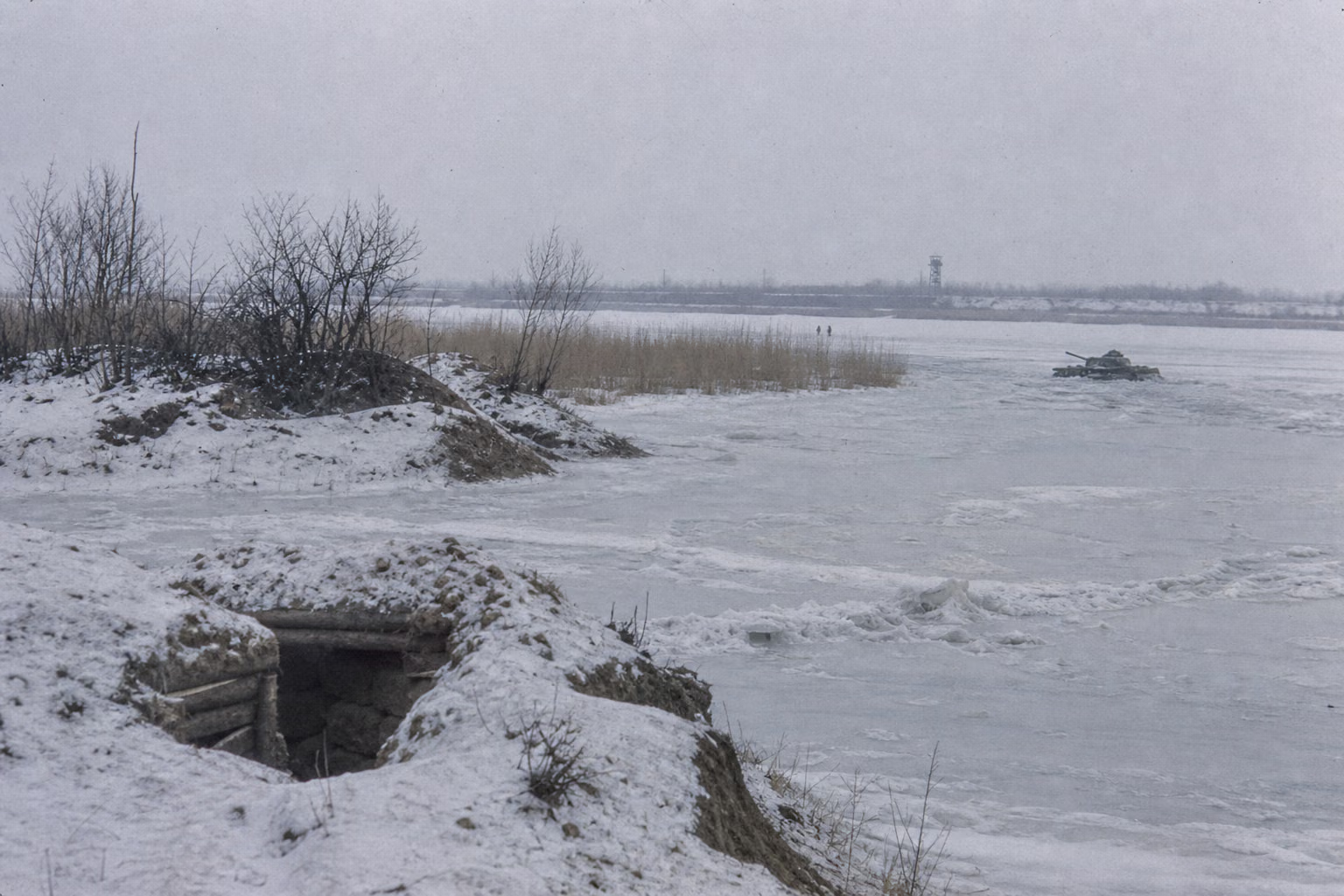
- Extremely small in scale: a river island about two kilometers long and several hundred meters wide, with oak scrub and reed flats, everything frozen hard in winter. The entire depth of the infantry fight could be crossed on foot in a little more than ten minutes.
- The ice surface was the battlefield: armored vehicles and tanks maneuvered on the ice of the river channel, with running water below. Artillery breaking the ice and a tank sinking into the river were spatial events unique to this battle; during the thaw, the entire battlefield would disappear once.
- Three layers of fire geometry: infantry works on the island (trenches, shelters); watchtowers and direct-fire weapons at the border-defense stations on both banks; artillery groups in depth and "Grad" salvoes. The small island was the intersection of three layers of fire.
- Field of vision and temperature: twenty to thirty degrees below zero, snow squalls, short days and long nights; the concealed detachment lay in the snow for an entire night (details of the night concealment on 3.1 unverified). Cold was a third party beyond friend and enemy.
- A T-62 stalled on the ice: in the latter half of the fighting, the contest centered on an "object" rather than a piece of ground. Seizing an object rather than taking ground was the special objective of this battle's second half.
How Each Side Records It
- Chinese side: at the time it was a nationally mobilized heroic narrative -- Combat Heroes, commemorative medals, propaganda posters; "Zhenbao Island" entered the naming habits of a generation. After the Sino-Soviet thaw it became low-key, with textbooks passing over it in a line; the Hulin Zhenbao Island Memorial Hall and Baoqing Martyrs' Cemetery are the main memorial sites, and since the 2000s it has been retold under the theme of "defending the country and guarding the frontier."
- Soviet/Russian side: the Damansky narrative centers on the sacrifice of the Border Troops. Graves and monuments to Strelnikov and Leonov stand in several places in the Far East; after attribution was confirmed in 1991, occasional complaints of "cession" appeared inside Russia (at the media level, unverified). In recent years, Russian military-history accounts have become more varied, with some voices acknowledging improper escalation in the Soviet handling (specific literature unverified).
- Shared point: each writes the other side as the deliberate initiator, and each centers commemoration on the sacrifice of its own border-defense personnel. The two narratives have not joined together after more than fifty years; this entry records them side by side.
Disputes and Sensitivities
- Who fired first / whether there was an ambush: the Soviet side said the Chinese side had pre-positioned troops on 3.2 and opened fire at close range; the Chinese side said Soviet troops used force to intercept and fired first, and that the Chinese counterattack came only after restraint became impossible. After the Cold War, Chinese scholars (Yang Kuisong and others), using archives and participant materials, have argued that the Chinese side carried out a "prepared self-defense counterattack" (the plan existed; the sequence of the first shot still has two accounts). Three layers of account coexist: Chinese official, Soviet/Russian official, and academic.
- Numbers: the two sides' casualty figures are listed side by side; single-side victory figures (several hundred killed and wounded, etc.) come from differing sources.
- Heroic narrative and the political era: Zhenbao Island propaganda was bound to the mobilization around the Ninth Party Congress, and the subsequent rise and fall of Sun Yuguo and others involved both the factual layer and the layer of personal evaluation.
- Level of disclosure for the plan: "prepared counterattack" can now be cited in open Chinese research, but the official formulation has not changed.
- Present boundary: the island's attribution was resolved by the 1991 agreement; present-day terminology should not be projected back onto the time of the fighting.
Sources and Open Questions
Sources: relevant chapters of An Outline History of Sino-Soviet Relations; Yang Kuisong's papers on the 1969 Sino-Soviet border conflict; contemporary Xinhua News Agency and People's Daily communiques and Soviet statements (read against one another); Russian Border Troops histories and Damansky commemorative literature (unverified); the Military Museum's T-62 exhibition; the Hulin Zhenbao Island Memorial Hall display (unverified).
Open questions: the concealed deployment on the night of 3.1 and the approval chain for the plan; detailed strengths committed by both sides on 3.2 and 3.15; original materials from both sides on who fired first; the cause of the T-62's immobilization and the salvage timeline; the statistical boundaries for casualties on both sides (the 71/68 relationship and revised Soviet figures); the details of Leonov's death; materials on Sun Yuguo's career; separating the propaganda layer from the deeds of Yu Qingyang and Sun Zhengmin; details of destruction caused by "Grad" salvoes; the evolution of Soviet rules of engagement; transliteration of border-defense station names; the list of Combat Heroes.
All images on this site are AI-generated depictions. They are not historical photographs, not primary sources, and do not depict any real individual.