Engagement Archive · Battle of Guilin–Liuzhou
The final leg of Operation Ichi-Go: Guilin and Liuzhou fell on the same day, Japanese forces once drove as far as Dushan in Guizhou, only a few hundred kilometers from Chongqing; the transport corridor had been "opened," but the war was already nearly lost.
Engagement Data
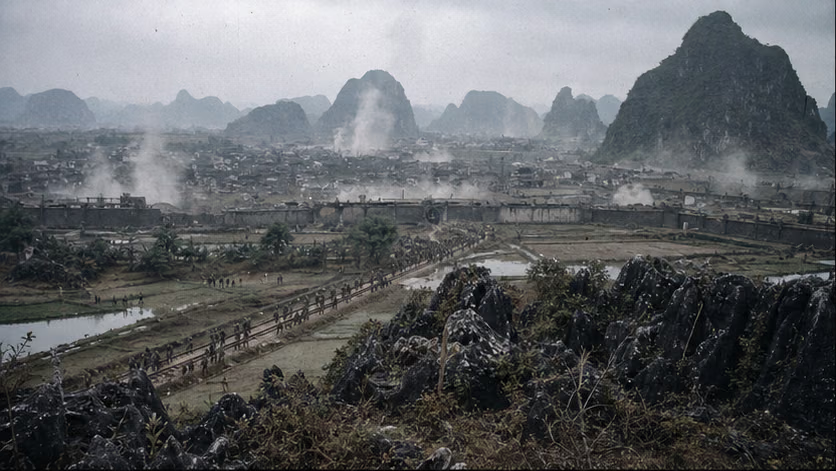
| Item | Details |
|---|---|
| Time | Late 1944.8 – 12 (Defense of Guilin 10.28 – 11.10; Dushan 12.2) |
| Place | Guilin and Liuzhou, Guangxi, and the Guizhou–Guangxi route, reaching as far as Dushan, Guizhou |
| Belongs to | Fourteen-Year War of Resistance · final phase of the Battle of Henan–Hunan–Guangxi (the Hunan–Guangxi phase of Japanese "Operation Ichi-Go") |
| Defender | Fourth War Area (commander-in-chief Zhang Fakui); Guilin city defense (city defense commander Wei Yunsong) |
| Attacker | Japanese Sixth Area Army (commander Okamura Yasuji, newly established in 8): the Eleventh Army pressed in from southern Hunan, while the 23rd Army advanced north from Guangdong |
| Result | On 11.10, Guilin and Liuzhou fell on the same day; on 12.2, Japanese forces occupied Dushan, Guizhou, then pulled back; the mainland transport corridor was nominally opened |
Belligerents
| Item | Defender | Attacker |
|---|---|---|
| Strength | The Fourth War Area had more than 100,000 on paper; after repeated reductions, Guilin's garrison numbered about 20,000 (counting basis varies by account) | Main force of the Eleventh Army + part of the 23rd Army, more than 100,000 in total (counting basis varies by account) |
| Firepower | Limited artillery, holding out from fortifications in limestone hills and caves | Artillery + aviation; poison gas and fire attacks were used in assault operations ※ |
| Situation | Many elite units were in Yunnan–Burma or on mobile outer-line missions, leaving Guangxi thinly held | After Hengyang, the Japanese forces advanced south on the momentum of victory, while their supply lines grew longer and longer |
Terrain and Conditions
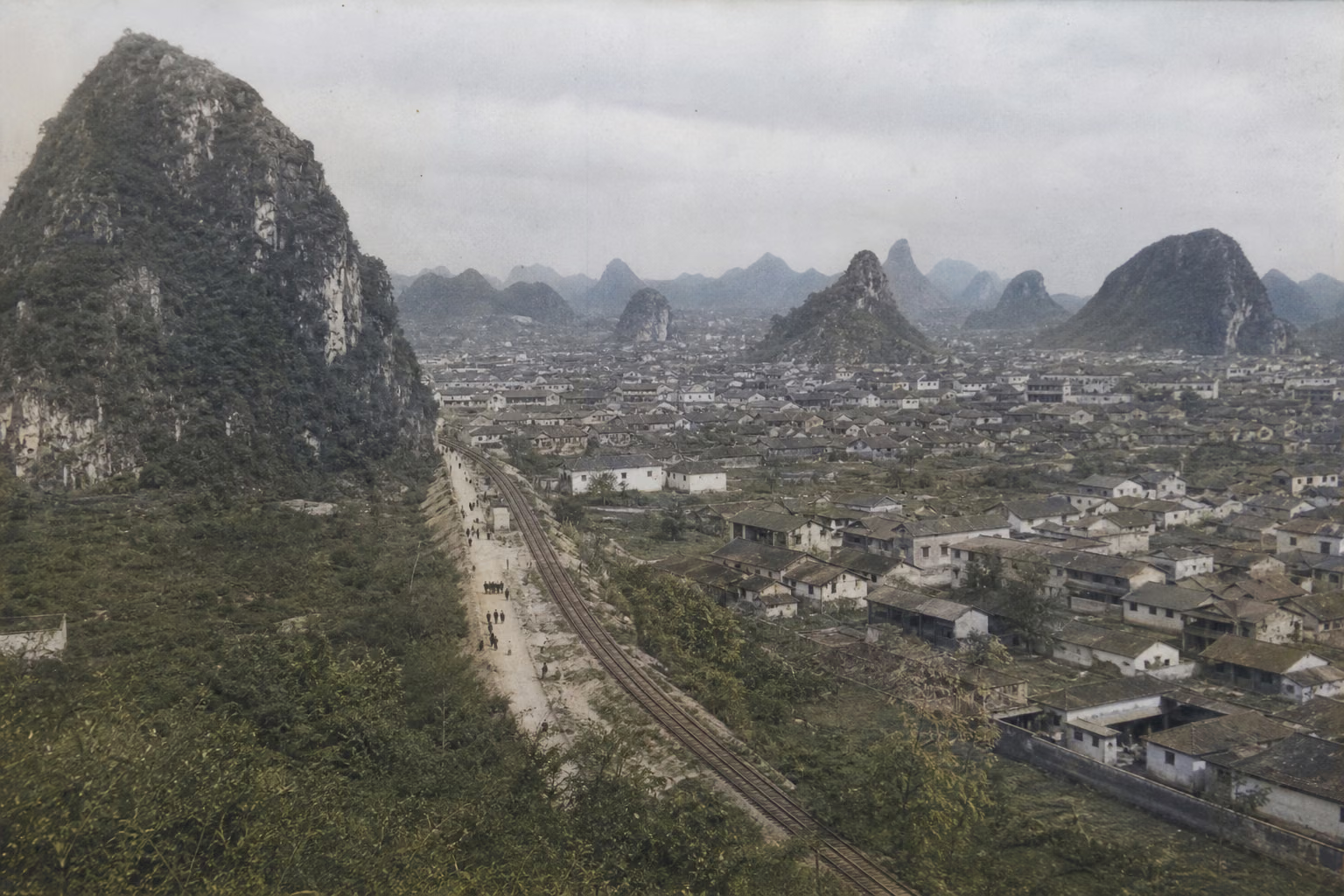
(For the wider situation in 1944 -- worldwide counteroffensives, Chinese collapse, and Japan's last throw -- see Battle of Henan–Hunan–Guangxi: Campaign Overview. This entry concerns only Guangxi.)
Guangxi: a province known for fighting, with an empty reserve at home. Since the beginning of the War of Resistance, Guangxi troops had been known for their ability to fight, but by this point many of Guangxi's elite forces were deployed on outer lines, and the troops left inside the province were thin. Guilin was a major rear-area city in the southwest, crowded with government offices, schools, and refugees; once the evacuation order came down, the whole city fell into disorder. The Hunan–Guangxi railway was the only route of withdrawal for hundreds of thousands of refugees -- troops retreating south and refugees fleeing west were packed onto the same line.
Why It Was Fought
Hengyang had held for 47 days, and the city fell on August 8. Those 47 days exhausted both sides: the defending Tenth Army was fought out, and the attacking forces also suffered heavy casualties below the cliffs. A point that "Operation Ichi-Go" had expected to take in a few days delayed the timetable by more than a month. But the gate to the Hunan–Guangxi line had opened after all: the railway ran southwest, and the next section was Guangxi.
For the Japanese side, this was the final piece of the "opening." In August, Tokyo newly established the Sixth Area Army, with Okamura Yasuji in command: the Eleventh Army pressed in from southern Hunan, while the 23rd Army advanced north from Guangdong. The two routes were to converge, open the Hunan–Guangxi line, connect with the Guangxi–Vietnam corridor, and link the transport line running through the mainland to Indochina. More urgent still were the airfield groups at Guilin and Liuzhou: forward bases of the Chinese and American air forces, and the nails that Operation Ichi-Go had sought to pull out from the start. This was also the section where the supply line was stretched longest: after Hengyang, the Japanese forces advanced south on the momentum of victory, and the line of depots lengthened step by step, thinning the farther it reached into Guangxi.
For the Chinese side, Guangxi was the gateway to the great rear area. This was a province known for fighting, and the reputation of the Guangxi troops was real; but by then the reserve at home was empty. Many elite units were in Yunnan–Burma or moving on outer lines, and the forces left inside the province were weak. Guilin was a major city in the southwest; government offices, schools, and refugees crowded together, and once the evacuation order was issued the whole city fell into disorder. The Hunan–Guangxi railway became the only route by which hundreds of thousands of refugees could flee west -- troops retreating south and refugees fleeing west were jammed onto the same line.
The Chinese plan for defending the city was incomplete from the beginning. Guilin's city defense was nominally to fight a battle to the end, yet the garrison was repeatedly drawn down, until only about 20,000 men remained (the troop strength and the course of the reductions remain unverified). Who ordered those transfers, and whether responsibility lay with the War Area or the high command, remains disputed among historians. The resentment left behind later condensed into one sentence: using 20,000 men to defend a city that was bound to fall. What the defenders could rely on was something particular to this city: karst limestone hills and caves, where the hill itself was a fort and the cave itself a trench.
In late August, Japanese forward elements moved south from Hengyang along the Hunan–Guangxi line. On the same railway, at one end were the troops pressing in; at the other were the people trying to flee.
Course of the Engagement
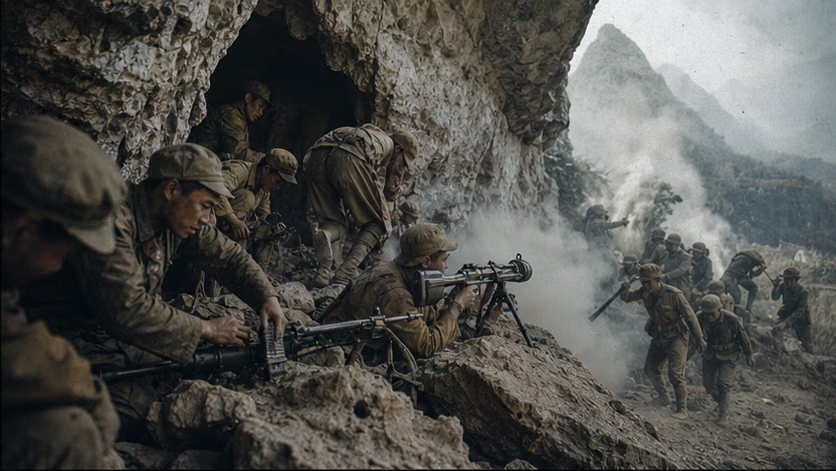
| Phase | Time | Key points |
|---|---|---|
| Southward deployment | Late 8 – 10 | Japanese forces moved south from Hengyang and north from Guangdong, converging from two directions; Chinese forces defending Guilin were repeatedly drawn down (course and responsibility unverified) |
| Defense of Guilin | 10.28 – 11.10 | Outer positions fell one after another; the defenders fought to the end from limestone hills and caves; on 11.9, Kan Weiyong, commander of the 131st Division, killed himself rather than abandon the city, while Chen Jihuan, chief of staff of the city defense headquarters, and Lu Zhanmeng, chief of staff of the 31st Army, were killed in action; on 11.10, the city fell |
| Qixingyan ※ | Early 11 | Defenders inside Qixingyan cave, including wounded soldiers, were subjected to poison gas and fire attacks; more than 800 died in the cave -- an atrocity node in the Guilin battle (the accounting of remains and the evidentiary level of the historical materials remain unverified) |
| Guilin and Liuzhou fall together | 11.10 | Guilin and Liuzhou were lost on the same day; Japanese forces continued forward, and Nanning fell in late 11 (dates vary by account) |
| Thrust into southern Guizhou | Late 11 – 12.2 | Part of the Japanese force pushed north along the Guizhou–Guangxi road and occupied Dushan on 12.2 (the "Southern Guizhou Incident"); the great rear area was shaken, and Chongqing is said to have discussed moving the capital again (this account remains unverified) |
| Pullback | First half of 12 | Japanese forces had reached the high-water mark of the offensive and exhausted their grain and ammunition; they pulled back from Dushan into Guangxi, while Chinese forces followed and recovered territory (sequence unverified) |
Casualties and Losses
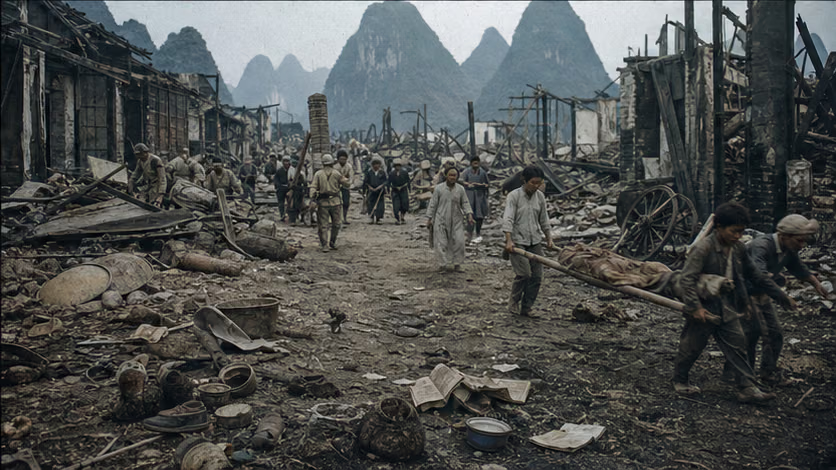
- Defender: most of the Guilin garrison were killed, wounded, or captured (figure disputed); losses across the War Area front line (counting basis varies by account).
- Attacker: several thousand casualties (Japanese figures vary by account); the force that drove deep toward Dushan exhausted its grain and ammunition and retreated in disarray.
- Civilians ※: the refugee tide of the great Hunan–Guangxi retreat -- clinging to trains, overturns, cold and hunger, disease along the railway, with many dead (numbers and systematic records unverified); refugees suffered again in the Southern Guizhou Incident (record unverified).
Aftermath
- Guilin was reduced almost to ruins -- two explanations for responsibility for the burning stand side by side: Chinese scorched-earth withdrawal and Japanese arson (still unverified; no settled judgment found).
- Operation Ichi-Go's "opening" was completed: the Pinghan, Yuehan, and Hunan–Guangxi lines were nominally joined into one line. But the sea routes had already been strangled by U.S. submarines, and the airfield threat was relieved as the Chinese and American air forces shifted east and B-29s began flying from the Marianas -- the Japanese predicament of "winning the operation and losing the war": the largest mobilization in the history of the Japanese Army was wagered in exchange for a railway it could not use (Japanese internal assessments remain unverified).
- In the same year, Chinese forces were counterattacking on the Yunnan–Burma route: the structural coexistence of a great collapse and a great counteroffensive -- see Battle of Henan–Hunan–Guangxi: Campaign Overview.
- The danger at Dushan became a collective memory of "the most dangerous moment for the great rear area."
Accounts of Those Present
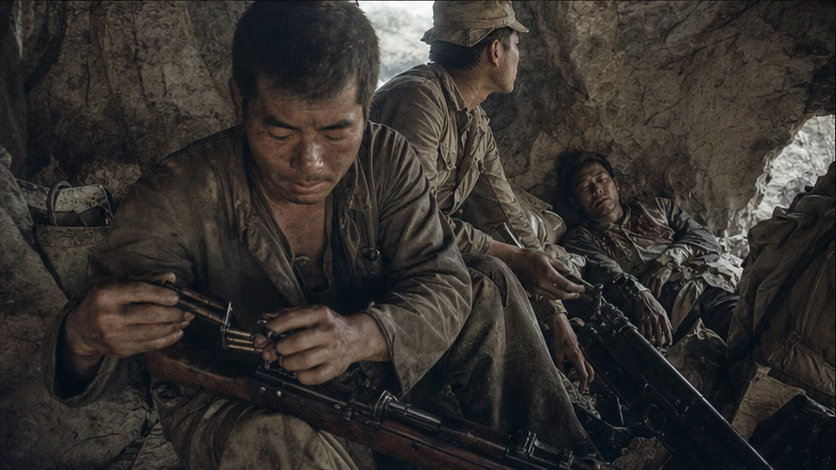
- Kan Weiyong: on the eve of the city's fall, he killed himself rather than abandon the city; his last words expressed the resolve to live and die with the city (original text unverified). Chen Jihuan and Lu Zhanmeng were killed in action the same day -- the number of Chinese commanders and officers who died with the city in the Guilin battle was unusual in the War of Resistance.
- Qixingyan ※: more than 800 defenders and wounded soldiers were inside the cave. After repeated Japanese assaults failed, poison gas and fire attacks were used, and almost no one inside survived; after the war, the cave was opened and the remains were counted (figures and the history of commemoration remain unverified).
- Refugee railway: the waves of flight along the Hunan–Guangxi and Guizhou–Guangxi lines -- accounts of people riding on train roofs, suffocation in bridges and tunnels, overturns, and falls into rivers (cases unverified).
- Dushan: the Japanese vanguard burned Dushan and looked north -- only a few hundred kilometers from Chongqing, but already at the end of its strength; a few days later, it withdrew on its own.
The Ground
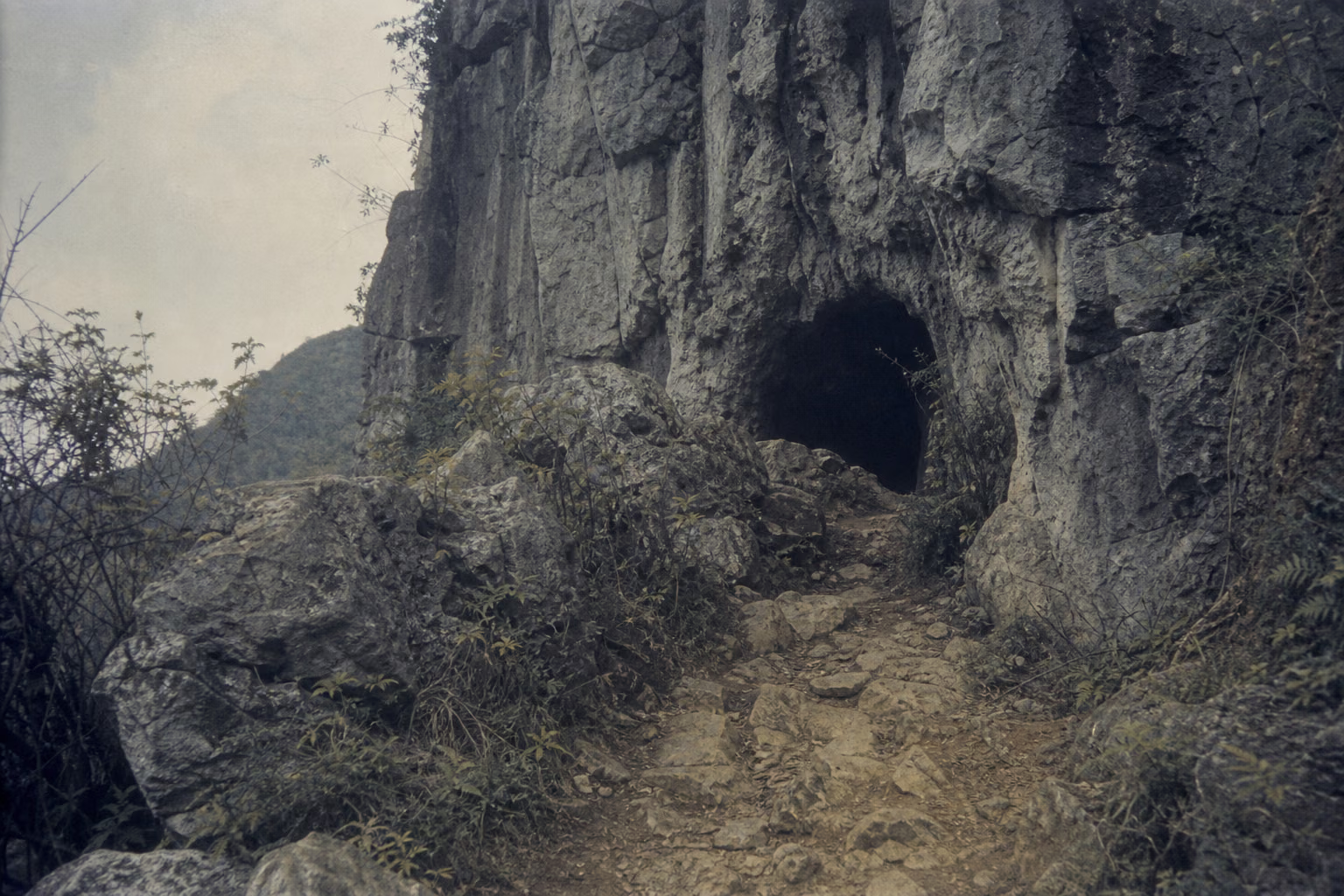
- Guilin is a city of karst limestone hills: isolated peaks and caves formed natural bunker systems, with Qixingyan, Yueya Mountain, and Pingfeng Mountain each becoming an independent strongpoint. Its defensive spatial grammar differed from Hengyang's cliffs: here, "the hill itself was a fort, and the cave itself a trench."
- The Hunan–Guangxi railway ran through the theater: it was both the axis of the Japanese attack and the axis of the refugees' flight -- one line, two human tides.
- After the Guizhou–Guangxi road entered Guizhou, it entered mountain country. Dushan was the geographic high-water mark of the Japanese offensive, and also the limit of its logistics.
How Each Side Records It
- Chinese side: records remember the three Guilin commanders who died with the city and the deaths at Qixingyan; they also remember the resentment over the garrison's strength being emptied out -- "using 20,000 men to defend a city that was bound to fall" (assignment of responsibility, including the course of disciplinary action against Wei Yunsong and others, remains unverified).
- Japanese side: war histories record the bitter cave fighting during the assault on Guilin; regarding the overall gains from Operation Ichi-Go, many postwar Japanese historians have taken a negative view (specific assessments unverified).
- Guangxi Clique narrative: long-term local commemoration in Guangxi of the Defense of Guilin (the tombs of the Qixingyan victims and the history of memorial facilities remain unverified).
Disputes and Sensitivities
- Responsibility for the burning of Guilin: the two explanations, scorched earth and arson, stand side by side, with no settled judgment found.
- The number of Qixingyan victims (more than 800) and the evidentiary level for the use of poison gas (postwar counting reports unverified).
- Who ordered the "repeated reductions" of the garrison: whether responsibility lay with Zhang Fakui, Wei Yunsong, or the high command remains disputed among historians.
- Refugee deaths lack systematic statistics.
Sources and Open Questions
Known main sources:
- The Japanese Defense Agency War History Office, Senshi Sosho volumes related to the Guangxi campaign (official Japanese history; volume titles unverified)
- Survivor memoirs from the Defense of Guilin and reports on the counting of remains at Qixingyan (to be checked)
- Zhang Fakui's memoirs (Fourth War Area perspective)
Open questions: Guilin garrison strength and the course of its reductions; the original text of Kan Weiyong's last words; the positions and details of the deaths in service of Chen Jihuan and Lu Zhanmeng; the number of Qixingyan victims, evidence for poison gas, and history of commemoration; historical materials for the two explanations of Guilin's burning; the date of Nanning's fall; the unit numbers of Japanese forces at Dushan and the sequence of their advance and withdrawal; records of refugee deaths; disciplinary action against Wei Yunsong and others.
All images on this site are AI-generated depictions. They are not historical photographs, not primary sources, and do not depict any real individual.