Engagement Archive · [Foreign war on Chinese soil] Siege of Tsingtao (1914)
Three months after the First World War broke out, Japanese and British forces attacked the German leased territory of Tsingtao in Shandong, China: Europe's war opened an Asian front on Chinese soil. China declared neutrality and marked out a war zone, then watched Japanese forces move beyond it and occupy the entire Jiaozhou-Jinan Railway: one leaseholder was driven out, and a larger one arrived.
Engagement Data
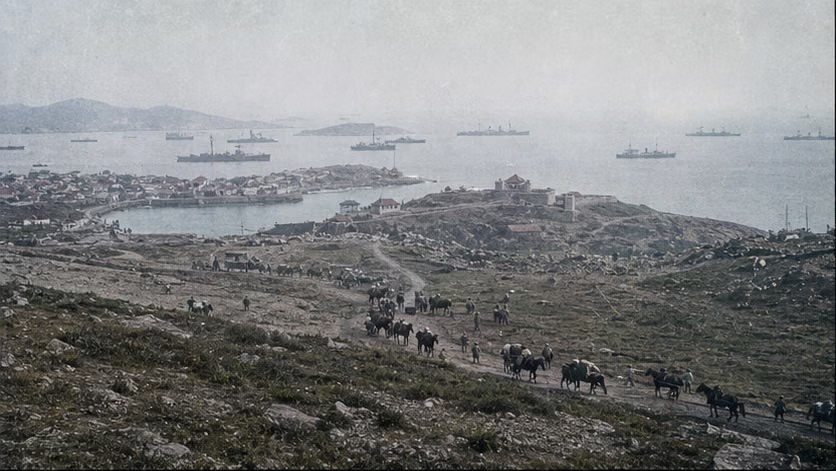
| Item | Details |
|---|---|
| Time | 1914.8.27 blockade – 11.7 surrender of Tsingtao Fortress (land fighting counted from the 9.2 landing at Longkou) |
| Place | Shandong, China: the German leased territory of Tsingtao (Jiaozhou Bay) and the Longkou-Weixian-Jiaozhou-Jinan Railway corridor |
| Attacking side | Japanese forces, mainly the 18th Division, about 50,000 (Kamio Mitsuomi); British Xiemensi Detachment, about 1,500 men (symbolic participation; figures vary by account) |
| Defending side | German and Austro-Hungarian defenders, about 4,500 (Governor Meyer-Waldeck), fortress artillery and a small number of vessels |
| Result | 11.7 German forces surrendered; Japan held Tsingtao and the whole Jiaozhou-Jinan Railway line: the Shandong Question began here |
Belligerents
| Item | Japanese-British forces | German forces |
|---|---|---|
| Strength | More than 50,000 against 4,500: ten to one | Isolated in the Far East, with no relief to await |
| Firepower | Heavy artillery groups (including siege howitzers) + naval blockade + seaplane reconnaissance and bombing (one of Asia's earliest air operations; the Japanese seaplane carrier "Wakamiya" -- one stroke in aviation history) | Fortress groups including the Bismarck Hill batteries |
| Situation | Siege warfare; time favored the attackers | Hold the fortress and wait for a turn in the European war -- a turn that would never come |
Terrain and Conditions
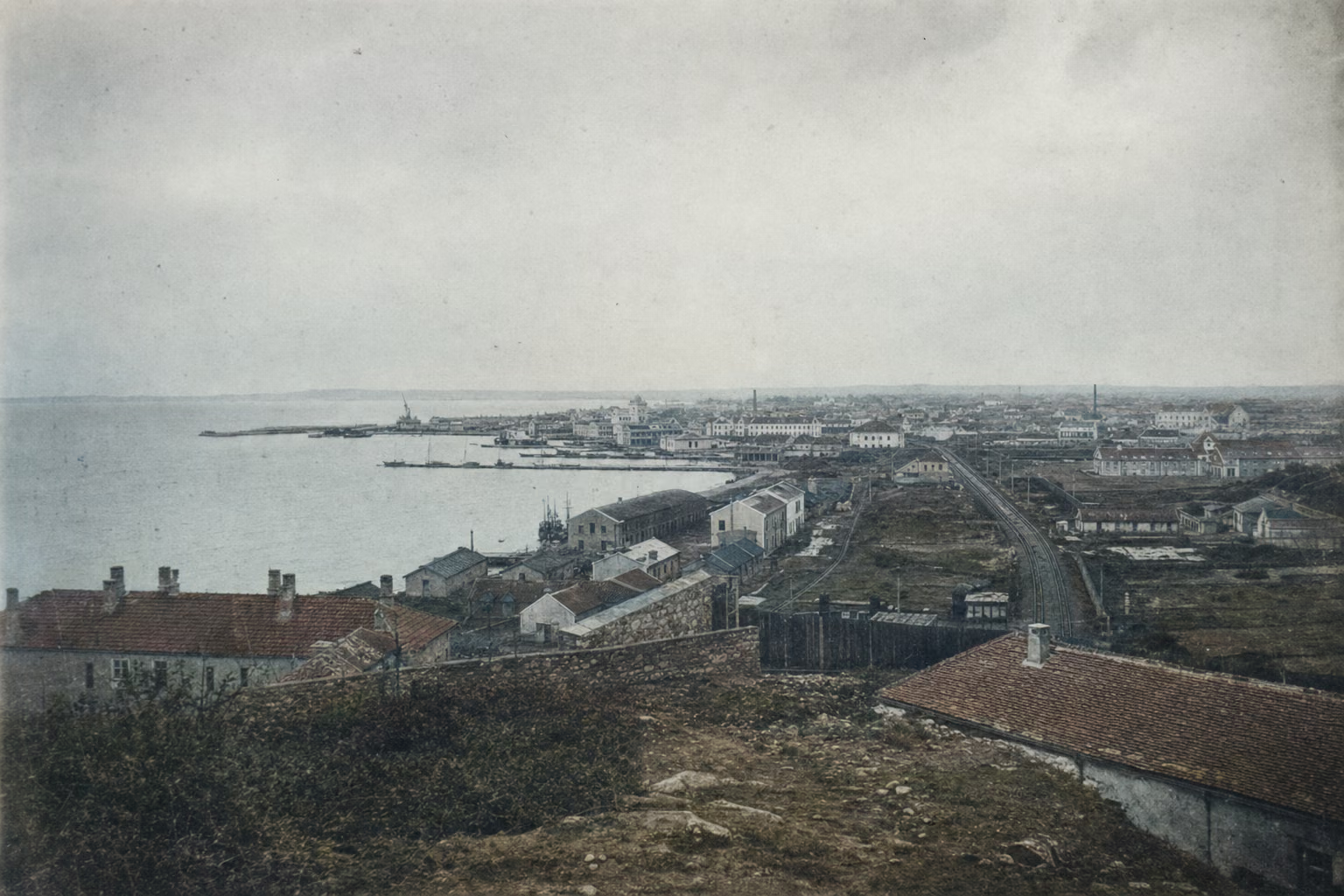
Tsingtao: after Germany took it on a forced lease in 1898, it had spent sixteen years building a "model colony" (urban construction, brewery, Jiaozhou-Jinan Railway). When the First World War broke out, the main force of the German East Asia Squadron had already left port (Count Spee's squadron sailed toward the Pacific; its destruction at the Falklands is a note for another story). China's position: Yuan Shikai's government declared neutrality on 8.6; Japan, invoking the Anglo-Japanese Alliance, issued an ultimatum to Germany (8.15) and declared war on Germany on 8.23 -- in name fulfilling the alliance, in fact taking Shandong. China was forced to mark the area east of Weixian as a "marching zone" (once again setting aside ground on its own soil for belligerents -- a replay of the 1904 Russo-Japanese story; see also the Russo-Japanese War articles). Japanese forces nevertheless landed at Longkou (outside the marked zone), occupied Weixian station along the way, and controlled the whole Jiaozhou-Jinan line. The neutral zone became a fiction, and China's protests had no effect (diplomatic papers unverified).
Why It Was Fought
Europe's war began that summer: the shots at Sarajevo on June 28, Austria-Hungary's declaration of war on Serbia on July 28, and within a week Germany, Russia, France, and Britain were drawn in one after another. The fighting should have been an entire continent away, but Germany had a piece of ground on China's coast: Jiaozhou Bay, leased by force in 1898; Tsingtao, built up over sixteen years; and a Jiaozhou-Jinan Railway running from the port into the Shandong interior, all the way to Jinan. The Beijing government of the third year of the Republic knew it had no power to intervene in the war among the powers. On August 6 it declared neutrality, hoping Europe's fire would not spread onto Chinese soil.
The fire came from Tokyo. Elder statesman Inoue Kaoru called this European war a "heaven-sent opportunity for the new Taisho era": the armies and navies of the European states were pinned down in Europe; the main force of the German East Asia Squadron had already left port; only 4,500 defenders remained in Tsingtao, isolated and without aid. Japan's calculation was very clear: take over Germany's rights and interests in China and the Pacific -- Tsingtao, together with the South Sea Islands -- at the lowest cost, and use the moment when the powers had no attention to spare for the East to establish predominance in China. The "Twenty-One Demands" of January the next year were the price list issued with already-occupied Shandong as the bargaining chip: the Siege of Tsingtao was the military prelude to the Twenty-One Demands. The nominal basis was ready-made too: the Anglo-Japanese Alliance. Britain's calculation was more twisted: it wanted Japan to escort Asian sea lanes, yet feared that this would let Japan grow too strong, and in the end sent a small force to be "present." Germany had only one calculation: hold the fortress and wait for the European war to be decided. Berlin and Tsingtao both believed the war in Europe would be over within months. That judgment was wrong; the wager was a dead position from the start. Tokyo put the calculation onto paper: the Okuma cabinet deliberated for days, with Foreign Minister Kato Takaaki the strongest driving force (details of cabinet proceedings unverified). The scale of the expedition was measured against the treasury: the national debt from the Russo-Japanese War had not yet been paid off, so on land Japan used only one division as the main force, and at sea it used the existing fleet for blockade, fighting a war designed to cost as little as possible. The elder statesmen's voices followed: taking Tsingtao was acceptable, but China should not be excessively injured by it (words attributed to Inoue Kaoru and others; original wording and occasion unverified).
On August 15, Japan issued an ultimatum to Germany: the Jiaozhou Bay leased territory was to be handed over unconditionally by a set deadline, "with a view to its eventual restoration to China." Germany did not reply. On August 23 Japan declared war on Germany; on the 27th the fleet blockaded Jiaozhou Bay.
There had been another path on the table: Germany had probed the possibility of returning Jiaozhou Bay directly to China, so that it would not fall into Japanese hands; Beijing, fearing Japanese pressure, did not dare accept it (details of the negotiations unverified). Another path had been cut off even earlier: Beijing had explored the possibility that China might send troops itself to join an attack on Tsingtao, and Tokyo rejected it outright -- Japan's war was not to be fought by Chinese (details of this negotiation unverified). China therefore issued rules for neutral status, marked out a marching zone, and stood on its own soil watching two foreign countries go to war. Before the zone was marked, Britain had asked Japan not to act beyond the environs of the leased territory; after the landing at Longkou, London protested again (British protest documents unverified). The alliance's accounts were not fully accepted even by the ally.
Course of the Engagement
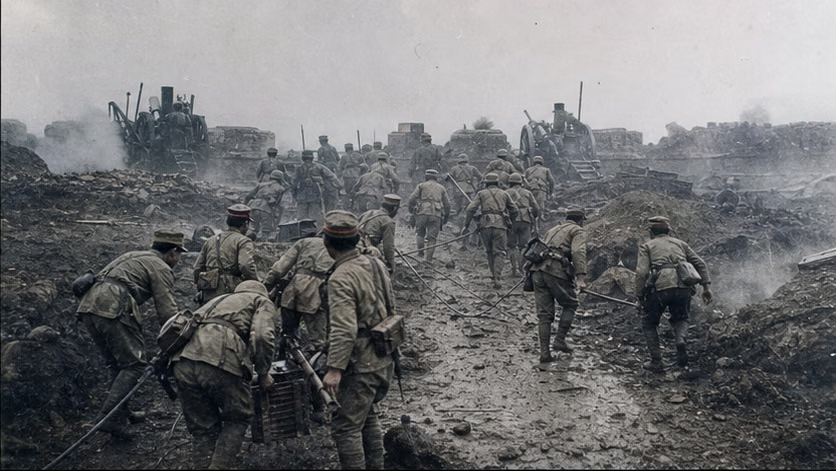
| Phase | Time | Key points |
|---|---|---|
| Blockade and landings | 8.27-9.18 | Naval blockade of Jiaozhou Bay; 9.2 Japanese landing at Longkou (outside the neutral zone -- the landing site itself was a diplomatic incident), then a southward advance through rain; 9.18 another landing at Laoshan Bay |
| Railway occupation | 9-10 month | Japanese forces advanced west along the Jiaozhou-Jinan line and occupied Weixian and Jinan stations (10.6 -- far outside the war zone, an expansion under the name of "protecting the railway") |
| Siege | late 9-10 month | Clearing the perimeter (fighting at Fushan, Gushan, and elsewhere unverified); heavy artillery positions deployed; seaplane reconnaissance and bombing, and the German aircraft "Taube" answering alone against Japanese aircraft (details of the aerial encounter unverified -- the evidentiary level of the claim that this was the Far East's first air combat remains to be distinguished) |
| Final assault | 10.31-11.7 | After seven days and nights of bombardment, infantry made a night assault on the central forts (breached on the night of 11.6); on the morning of 11.7 the fortress raised the white flag; before that, German forces burned and scuttled their vessels (sequence of scuttling in the harbor unverified) |
Casualties and Losses
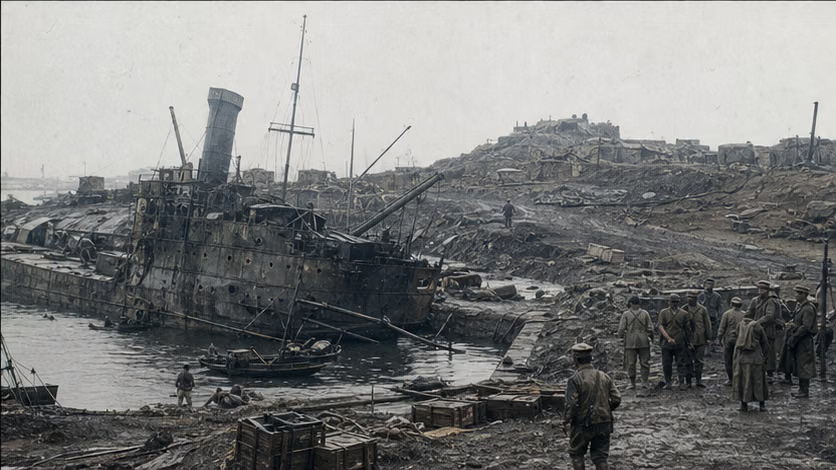
- Japanese forces: about 400 killed and more than 1,500 wounded (figures vary by account); British casualties numbered in the dozens.
- German forces: about 200 killed and about 4,700 captured (sent to prisoner-of-war camps in Japan -- the Bando POW camp and the famous note of the Japanese premiere of the Ninth Symphony; evidentiary level unverified).
- China ※: conscripted laborers on neutral soil, occupied villages and towns, and the calamity of troops along the Longkou-Jinan corridor (losses on the Chinese side were counted by no one -- "no statistics" appears again); after the war Japan held Tsingtao for eight years (until its return after the 1922 Washington Conference -- the price of the return and the details of "redeeming the railway" remain unverified).
Aftermath
- The Shandong Question: Japan inherited and expanded Germany's rights and interests -> 1915 "Twenty-One Demands" -> 1919 Paris Peace Conference Shandong clauses -> May Fourth Movement. The city of Tsingtao ignited one of the most important intellectual movements in modern Chinese history: a battle between foreign countries ultimately lit China's awakening. This causal chain is this article's place on Whence We Came, and it must be written in full.
- In 1922 China recovered Tsingtao (redeeming the Jiaozhou-Jinan Railway for payment -- "redeeming one's own road").
- For the world: Japan entered the ranks of the victors of the First World War at low cost and gained the Pacific mandated territories -- a geographical prefiguration of the Pacific War twenty years later.
Accounts of Those Present
- The document marking the zone: the Chinese Ministry of Foreign Affairs note defining the "marching zone" -- the second time within ten years (1904, 1914) that China set aside ground on its own territory for other countries' wars. Read the two documents together, and they are the whole content of the four words "weak-state neutrality."
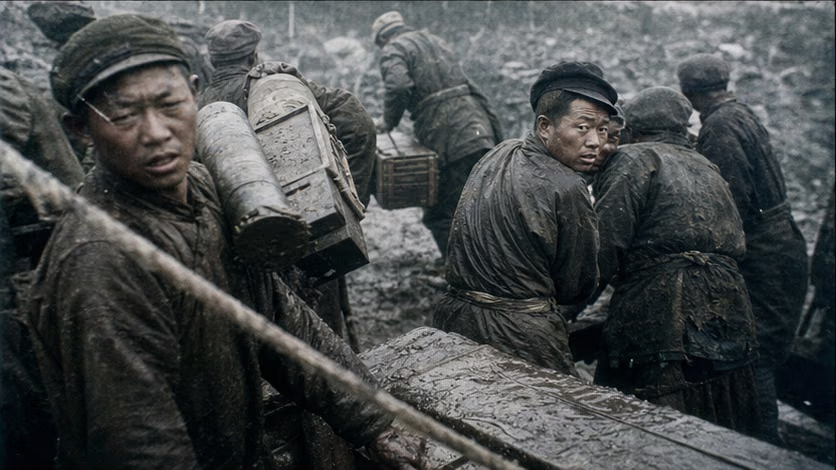
- The laborers of Longkou: after landing, Japanese forces forcibly requisitioned several thousand laborers for transport (figures vary by account) -- citizens of a neutral state carrying ammunition for a belligerent.
- The pilot of the "Taube": the single German aircraft alone against Japanese aircraft, fighting until the last day and then burning the plane (the legendary line of the pilot Plüschow's escape back to Germany is a note, unverified) -- a solitary flight inside a siege.
- Beethoven at Bando: German prisoners of war gave the Japanese premiere of the Ninth Symphony in a Japanese POW camp (1918, evidentiary level unverified) -- a famous footnote to the absurdity of war.
The Ground
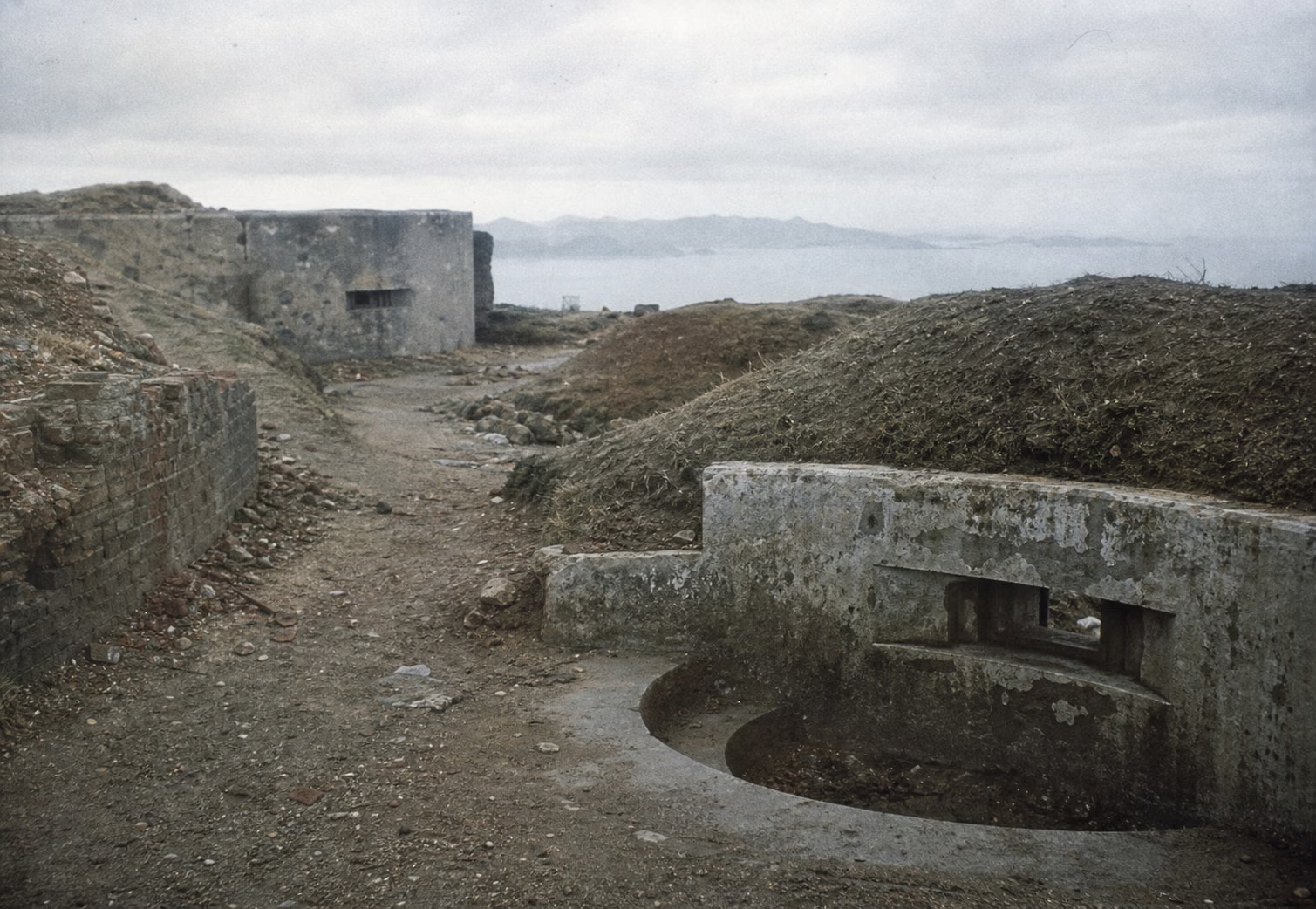
- The standard cross-section of a fortress siege: blockade-landing-perimeter-bombardment-night assault and breach (structurally like Port Arthur in 1904, though vastly different in intensity -- a "small Port Arthur" style of attack and defense).
- The Jiaozhou-Jinan Railway: an axis of occupation outside the war zone. The mismatch between the "battle map" and the "actual occupation map" is itself the narrative mechanism.
- Aviation's first cry: seaplane carrier and single-aircraft air combat. In the skies of 1914, a new page in military history turned on China's coast.
How Each Side Records It
- Japanese side: the "glorious entrance" into the First World War and the era of Tsingtao Shrine (before 1922); postwar narratives softened the substance of expansion.
- German side: the final chapter of a colonial dream in the Far East; the Bando POW camp narrative became a "friendly tale" between Germany and Japan -- the foundation of that tale was Chinese soil, and this is the displacement.
- British side: barely remembered (symbolic participation).
- Chinese side: unable to speak in that year, China answered with May Fourth five years later. China's way of remembering arrived late but sounded the loudest; that time lag is the structure of this article.
Disputes and Sensitivities
- Diplomatic archives on Japanese forces' occupation beyond the marked zone and China's protests (source unverified); figures for laborer requisition.
- The Bando "friendly tale" does not negate individual acts of humanity, but neither can it obscure the nature of occupation.
Sources and Open Questions
Sources: relevant studies on Tsingtao in the First World War (bibliography unverified); the Japanese *Taisho Sannen Nichidoku Senshi*; German defender records; Chinese diplomatic archives (neutrality notes and protest documents); the Tsingtao mountain battery sites (surviving exhibition halls today).
Open questions: the figures for the two sides' strength and casualties; documents on negotiations over actions beyond the marked zone; requisition of laborers; the Plüschow line; verification of the Bando premiere; the details of the 1922 return and railway redemption; the Okuma cabinet's deliberation records and military expenditure details regarding entry into the war; the original wording and occasion of Inoue Kaoru's "heaven-sent opportunity" phrase and the elder statesmen's reminders regarding China; the details of Beijing's probe about sending its own troops to join the attack on Tsingtao; British notes protesting Japanese actions beyond the marked zone.
All images on this site are AI-generated depictions. They are not historical photographs, not primary sources, and do not depict any real individual.