Engagement Archive · Battle of Yenangyaung
One regiment of Chinese soldiers brought more than seven thousand British troops, with their vehicles, out of encirclement in the Burmese oilfields -- the first successful rescue of Allied forces by Chinese troops beyond China's borders. Among the British who were saved, some remembered it for the rest of their lives; in the official histories, the scale of this battle has been argued over on both sides for decades.
Engagement Data
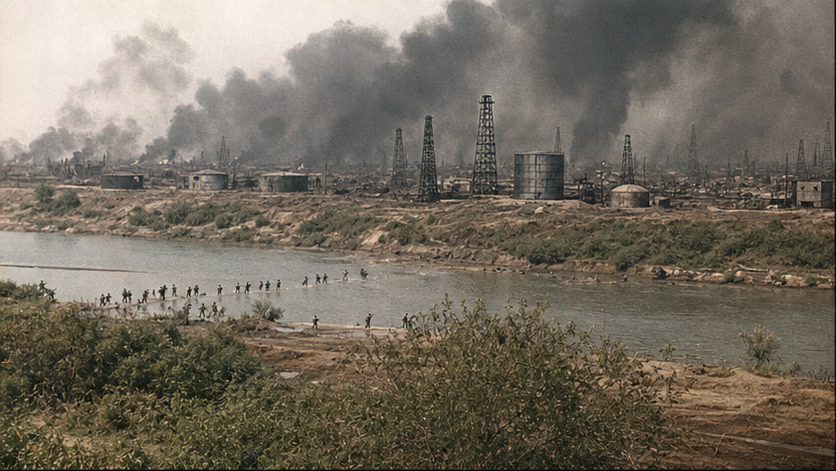
| Item | Content |
|---|---|
| Part of | Fourteen-Year War of Resistance · Yunnan–Burma Theater (for the overall picture, see *Yunnan–Burma Theater · Overview*) |
| Time | 1942.4.17 - 19 |
| Location | Both banks of the Pin River in Yenangyaung, Burma (oilfield area on the east bank of the Irrawaddy River) |
| Relieving force | 113th Regiment, New 38th Division (regimental commander Liu Fangwu), more than one thousand men; division commander Sun Liren personally came forward to command (for the dispute over command attribution, see the disputes section) |
| Encircled force | British Burma Army First Division and part of an armored brigade, more than seven thousand men (including several hundred civilians such as missionaries and journalists; figures vary by account) |
| Encircling force | Mainly two battalions of the Japanese 33rd Division (for the dispute over strength figures, see the disputes section) |
| Result | Key points on the south bank of the Pin River were taken on 4.19; all British forces broke out and withdrew east |
Belligerents
| Item | 113th Regiment | Japanese forces |
|---|---|---|
| Strength | More than one thousand men, supported by several divisional mountain guns | Encircling strength around two battalions (the real force ratio behind "rescuing many with few" is the core problem of this battle's source criticism; see the disputes section) |
| Posture | Active on the outer line, night-march surprise attack | Holding the inner encirclement, while also guarding against a British breakout |
Terrain and Conditions
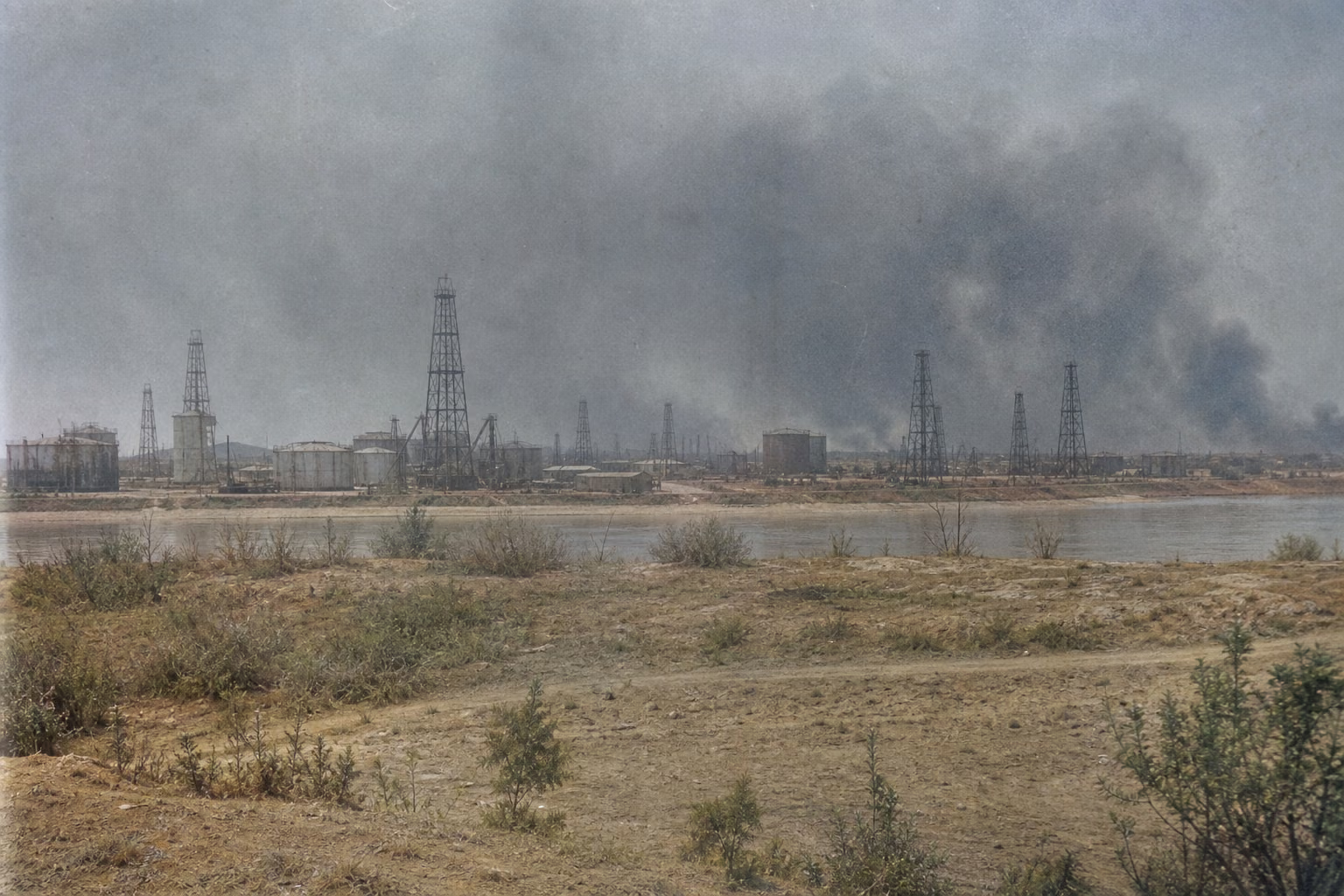
Oilfield district: an industrial landscape of derricks, oil tanks, and refineries; as the British withdrew, they set fire to the oil -- a battlefield under smoke that darkened the sky (all present-day recollections note this scene). The Burmese front had already collapsed: British forces were withdrawing westward all along the line, and Yenangyaung was the portion of that rout in which Japanese forces cut in and trapped them. Burma in April was fiercely hot, and the encircled British had been without water for two days -- thirst was the first weapon of the encirclement.
Why It Was Fought
The twelve days at Toungoo had not produced the expected set-piece campaign. After the 200th Division broke out and withdrew north, the planned decisive battle at Pyinmana miscarried -- British forces had no intention of continuing to hold, and withdrew west along the Irrawaddy River line on their own. By mid-April, the Burma campaign was no longer a question of "where to fight the decisive battle," but of where each front could manage to withdraw.
Yenangyaung, on the east bank of the Irrawaddy River, was Burma's largest oilfield area. For the British Burma Army First Division withdrawing west, it was ground that had to be passed on the line of retreat; for the pursuing Japanese 33rd Division, seizing this point could swallow the exhausted division whole. In mid-April, Japanese forces used light troops to cut in and first severed the road north of Yenangyaung -- more than seven thousand British troops, together with armored vehicles and accompanying missionaries and journalists (personnel composition unrecorded), were trapped in the oilfields they had just set on fire and destroyed. Derrick fires blackened the sky, Burma in April was fiercely hot, and the encircled men had been without water for two days -- thirst was the first weapon of the encirclement.
The Japanese forces holding the encirclement in fact had only about two battalions. That such a force dared to trap seven thousand men was itself a judgment on British morale -- and for the encircled, the judgment was accurate: without water for two days, the British forces failed to break out on their own. What it had not allowed for was the fresh force newly arriving from the north. Slim, commander of the British Burma Army, requested aid from the Chinese side, and the Expeditionary Force assigned the task to the New 38th Division -- the Allies' "fire brigade." For Sun Liren, this unit, reorganized from the Tax Police General Regiment, had still never proved itself on an international stage; for the alliance, this was an inverted moment: the British army that for a month had been "covered" in retreat now had to be saved by Chinese troops.
On April 17, Liu Fangwu's 113th Regiment, more than one thousand men, force-marched light and reached the north bank of the Pin River. Across the river, the oilfield was still burning, and seven thousand men were waiting -- what could be sent was only this one regiment.
Course of the Engagement
| Phase | Main points |
|---|---|
| Relief march, 4.17 | The 113th Regiment force-marched light to the north bank of the Pin River |
| North-bank clearing, 4.18 | Dawn attack; Japanese forces on the north bank were cleared, and the regiment advanced to the river line |
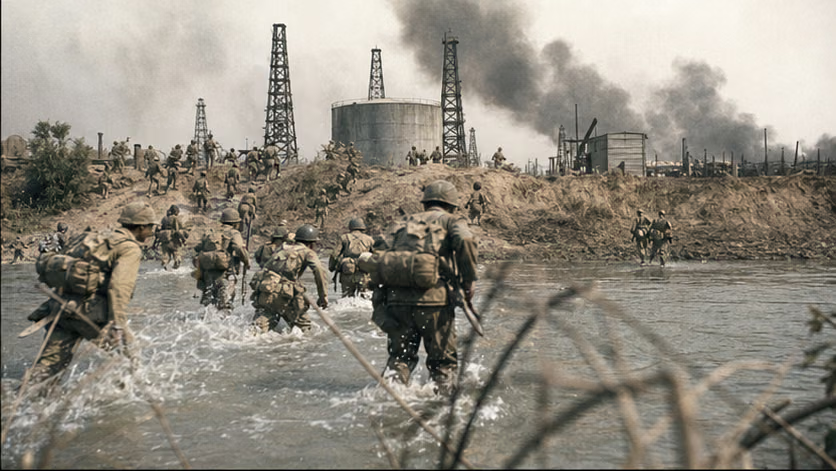
| South-bank assault, 4.19 | Crossed the river at dawn and attacked the high points of the south-bank oilfield area, including Hill 501, fighting repeatedly for the ground (combat details unrecorded); by afternoon the positions were taken and the encirclement was opened |
| Breakout, 4.19–20 | More than seven thousand British troops, over one hundred vehicles, released prisoners, and civilians withdrew east through the opened passage (personnel composition unrecorded) |
Casualties and Losses
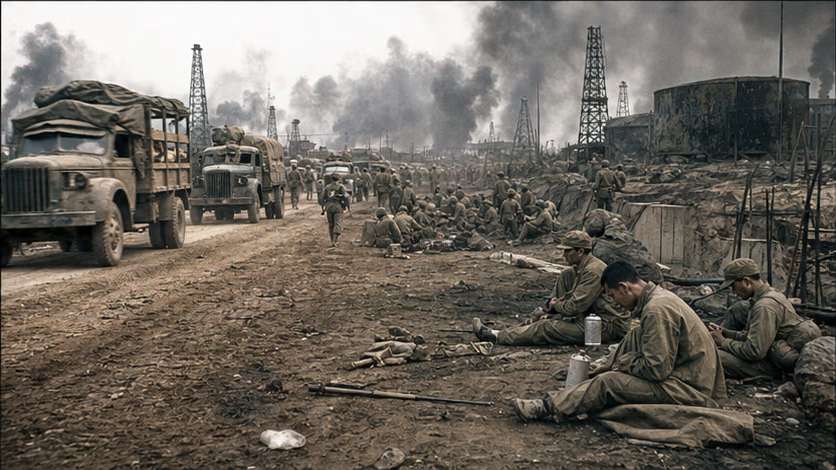
- 113th Regiment: about five hundred casualties (more than two hundred killed; figures vary by account) -- one regiment exchanged half its strength in casualties for seven thousand people.
- Japanese forces: several hundred to more than one thousand killed and wounded (Chinese and Japanese figures differ sharply -- Japanese war histories record this battle only briefly and deny being "defeated"; the two sides are listed side by side).
- British side: casualties during the encirclement and the number of released prisoners of war (this claim remains unverified).
Aftermath
- British and American newspapers carried extensive reports of "Chinese troops saving British troops" (period reporting remains to be collected); Sun Liren received the Commander of the Order of the British Empire (CBE), and Liu Fangwu received the First Class Army, Navy, and Air Force Medal (for decoration details and the dispute over delayed recognition, see below).
- At the campaign level, it did not change the larger situation: within days, the collapse of the whole line began (see *Retreat Through the Savage Mountains*) -- seven thousand people were saved; the campaign could not be saved.
- Long tail: when Margaret Thatcher visited the United States in 1992, she made a special visit to Liu Fangwu to thank him (the man and the episode became widely known only in his later years -- the "forgotten regimental commander" narrative); the Yenangyaung memorial was erected locally in 2013 (history unverified).
Accounts of Those Present
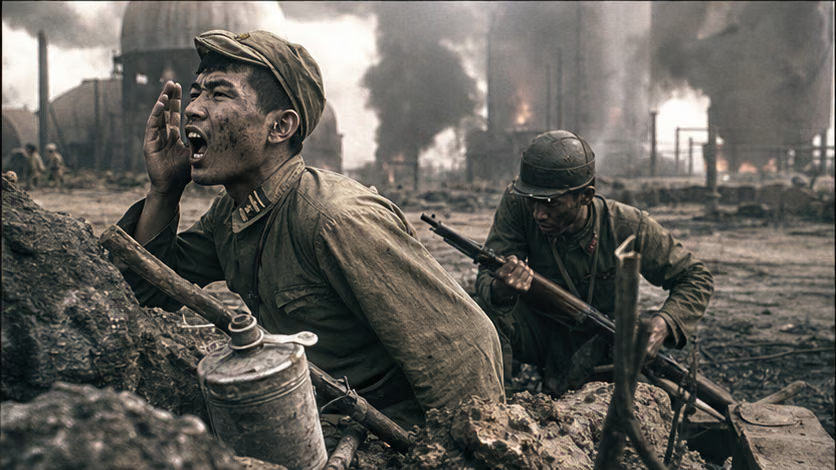
- Liu Fangwu's fifty years: the regimental commander who had fought a famous battle lived in obscurity after the war, running a coal-ball shop in Taiwan (biographical line unverified); when Thatcher shook his hand and thanked him in 1992, he was already ninety-three -- the time lag of credit is this article's most human layer.
- "The Chinese have come": the cheers of the encircled British when they saw the 113th Regiment (British recollections from those present remain to be collected) -- an imperial army was saved by the "lesser ally" as seen from a colonial order, a momentary inversion of that order on the battlefield.
- The black smoke from the burning oil: assaulting under the oilfield fire -- soldiers could not distinguish friend from enemy in the oil smoke (recollection material; evidence level unverified).
The Ground
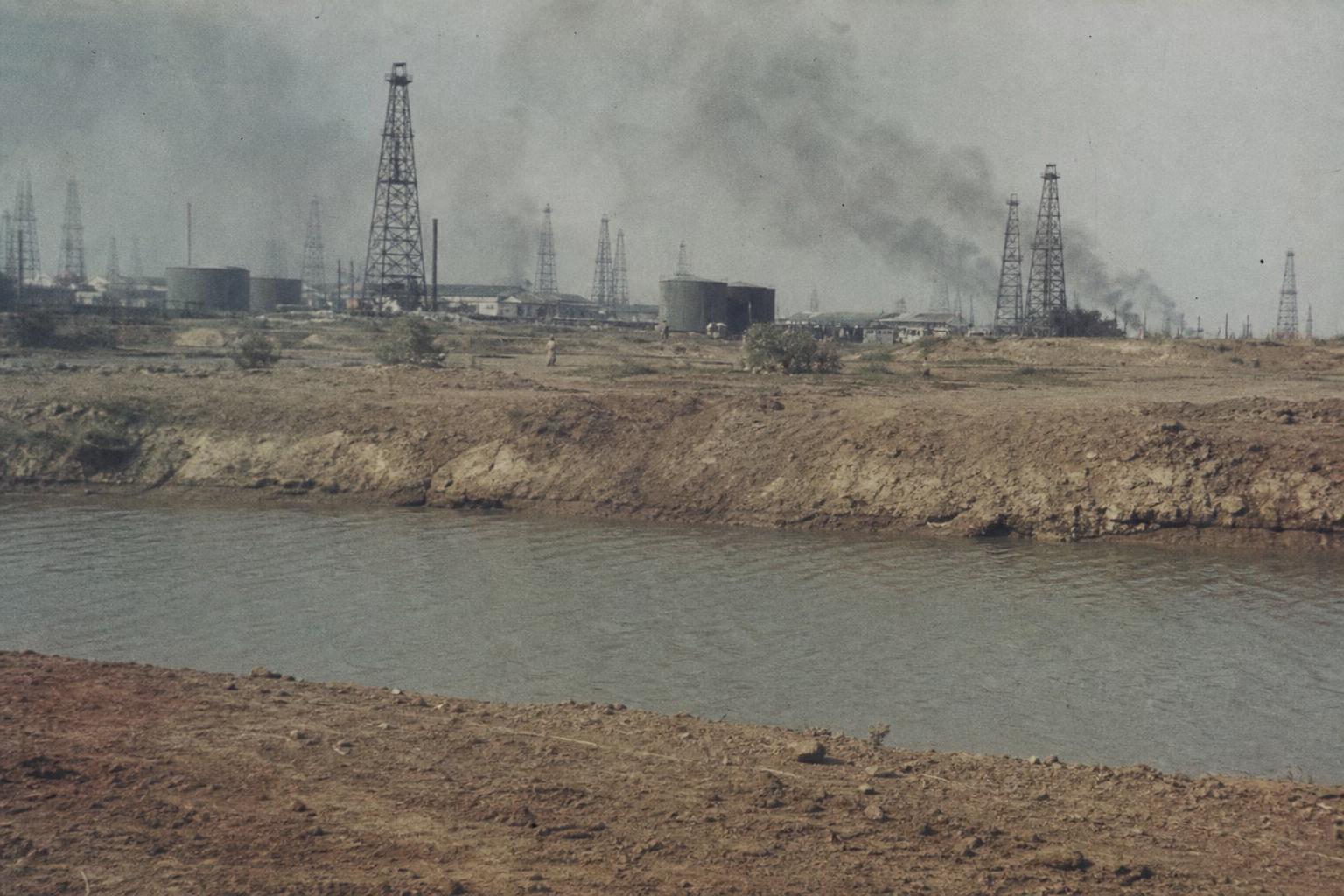
- The attack-and-defense axis on both banks of the Pin River: crossing the river - high ground - oilfield area, a three-part advance.
- Oilfield industrial landscape: a forest of derricks and burning oil tanks -- a rare example of an industrial-facility battlefield (the burning environment as a spatial variable).
- The mission structure of "opening a breach and escorting passage": the spatial prototype of a rescue battle (forming a positive-negative contrast with Hengyang's failed outer relief).
How Each Side Records It
- Chinese side: the Expeditionary Force's only complete victory card in its first expedition, with "Battle of Yenangyaung" entering the canon; an important part of the Sun Liren narrative.
- British side: Slim's memoir records this battle (his account combines reservation and gratitude; original text unverified); activities by descendants of those rescued continue to the present (contemporary segment unverified).
- Japanese side: war histories downplay it (claims of voluntary redeployment and the like, unverified) -- the gap among the three sides' accounts is itself this battle's largest historiographical site.
Disputes and Sensitivities
- Strength and battle-results dispute: in the traditional narrative that "one thousand men broke more than ten thousand Japanese troops and rescued seven thousand British troops," the "more than ten thousand Japanese troops" is an overestimate (the Japanese force was in fact about two battalions) -- source criticism; the reduced factual version is still a fine battle, and this archive uses real figures rather than myth.
- Command attribution: the division of work between Sun Liren's personal presence and Liu Fangwu's regimental action -- a memory history in which the two men's narratives rise and fall against each other, listed side by side as they stand.
- The Japanese "not defeated" account -- the two claims are listed side by side; neither is adopted exclusively.
Sources and Open Questions
Sources: *History of the Chinese Expeditionary Force*; biographies and interviews related to Sun Liren and Liu Fangwu; Slim, *Defeat into Victory*; Japanese *Operations to Capture Burma*.
Open questions: Japanese strength and casualty figures by account; casualties of the 113th Regiment; composition of the rescued British forces; decoration details; original text of Slim's account; history of the memorial.
All images on this site are AI-generated depictions. They are not historical photographs, not primary sources, and do not depict any real individual.