Engagement Archive · Ambushes at Shentouling and Xiangtangpu (1938)
Two textbook ambushes in a single month: at Shentouling, troops spent the night tucked against the road on a bare ridge deemed "unsuitable for ambush"; at Xiangtangpu, 180 Japanese motor vehicles were burned in half a day. Liu Bocheng's method of "drawing out enemy relief forces and striking them" became, from then on, a standard grammar of warfare behind enemy lines.
Engagement Data
| Item | Content |
|---|---|
| Time | Shentouling 1938.3.16; Xiangtangpu 1938.3.31 |
| Place | Southeastern Shanxi: on the ridge at Shentou Village, Lucheng (Handan-Changzhi Road); the Xiangtangpu section between Licheng and Shexian (Handan-Changzhi Road) |
| Belongs to | Fourteen-Year War of Resistance · Battlefields Behind Enemy Lines (for the whole picture, see *Battlefields Behind Enemy Lines · Overview*) |
| Ambushing side | Mainly the 386th Brigade (Chen Geng), Eighth Route Army 129th Division (division commander Liu Bocheng, deputy division commander Xu Xiangqian) |
| Ambushed side | Baggage and reinforcement units of the Japanese 16th and 108th Divisions |
| Result | At Shentouling, more than a thousand were destroyed (figures vary by account); at Xiangtangpu, more than 400 were destroyed and more than 180 motor vehicles burned (figures vary by account) |
Belligerents
| Item | Ambushing Side | Ambushed Side |
|---|---|---|
| Strength | Each engagement used a brigade-scale ambush | March columns and baggage units |
| Method | "Attack what the enemy must rescue": first strike a strongpoint (Licheng) to draw reinforcements -> ambush the relief column | Reinforced along the road, in an elongated marching formation |
Terrain and Conditions
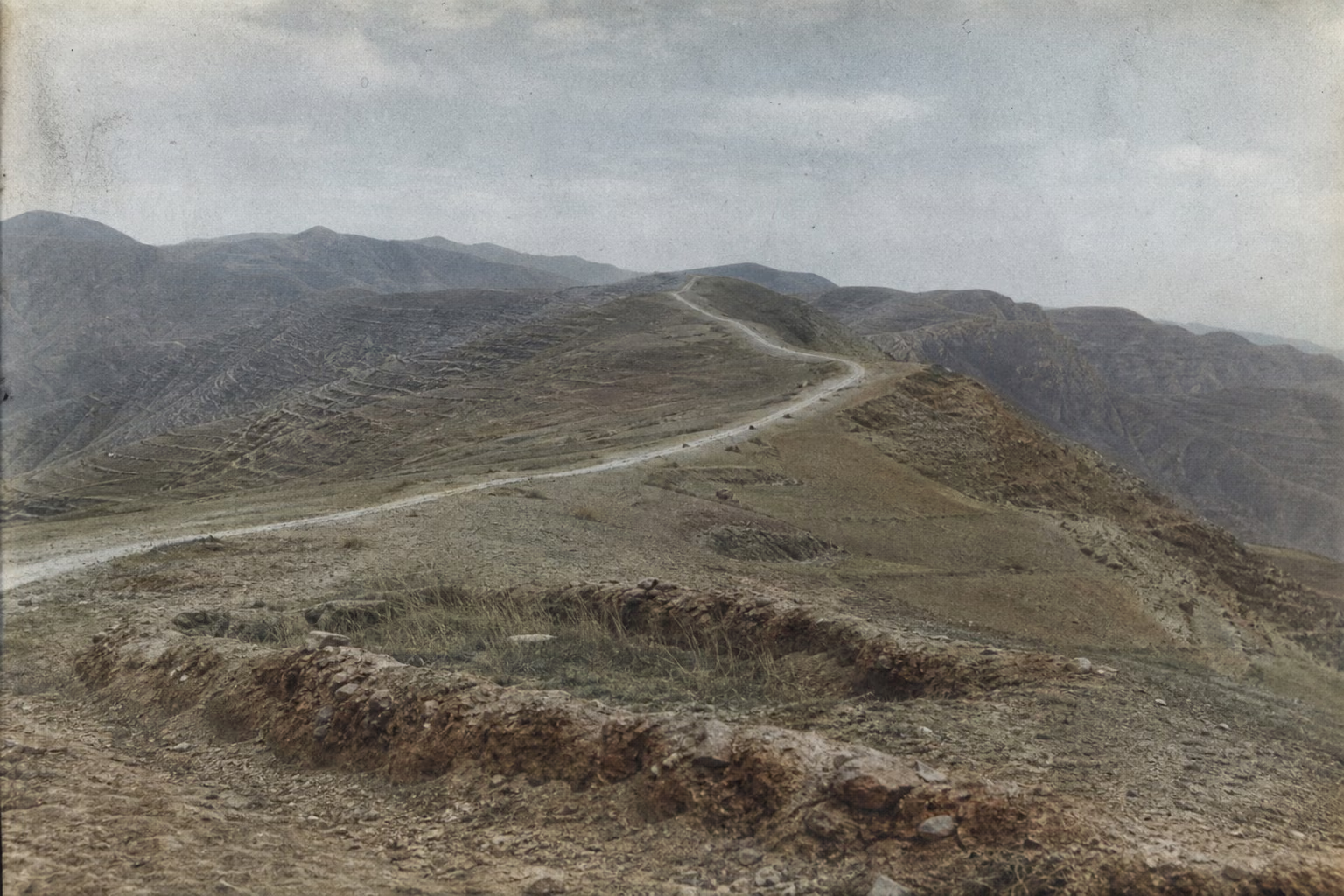
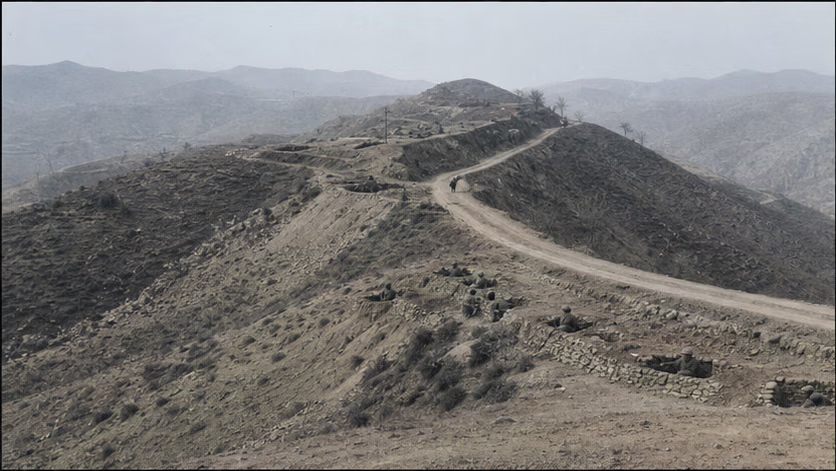
The Handan-Changzhi Road in southeastern Shanxi was the supply artery for Japanese forces attacking toward Linfen; the 129th Division struck this line from the flank along the foot of the Taihang Mountains. Shentouling's terrain ran against convention: the ridge was bare, and the road lay along the crest. Staff officers chose the point on the map, but after Liu Bocheng inspected it on the ground, he turned its "unsuitability for ambush" back against the enemy: the troops lay hidden for a night in old works pressed close to the road, so close that "the enemy could smell the cooking" (memoir layer).
Why It Was Fought
During the days when Tengxian was under siege, another kind of battle was taking shape in the Taihang Mountains. Eyes at the front were fixed on the Tianjin-Pukou Railway; in this part of North China, Japanese forces were driving south toward Xuzhou on one line and attacking toward Linfen in Shanxi on another. The occupied zone spread wider and wider, while their troop strength was stretched thinner and thinner: the troops were in front, the grain and ammunition were on the road.
The Handan-Changzhi Road in southeastern Shanxi was the supply artery for the Japanese Linfen offensive. The Eighth Route Army 129th Division, which had remained behind enemy lines after the fall of Taiyuan, was using the foothills of the Taihang Mountains to strike this line from the flank. For division commander Liu Bocheng, March 1938 was the moment to act: the more urgent the frontal offensive became, the busier this artery would be, and the more certain it was that convoys and relief columns would come. The least costly way to slow the Japanese forces at the front was not to stand under the walls of Linfen, but to pinch the road behind them. Shentouling and Xiangtangpu, two battles in half a month, both struck this same road. They were fought within the framework of supporting the frontal battlefield: in February, Japanese forces attacked Linfen, and Eighth Route Army Headquarters and the Second War Area ordered the 129th Division to strike the Handan-Changzhi line from the flank, with several exchanges of telegrams (dates and wording unverified); the Xiangtangpu engagement was commanded by deputy division commander Xu Xiangqian. What division headquarters had in hand was the pattern of convoys reported by people along the line and by scouts (composition of the intelligence network behind enemy lines unverified). What it did not have was the exact hour when Japanese reinforcements and aircraft would arrive; the time window could only be cut according to the worst estimate.
These two battles had another purpose: to train a method. "Drawing out enemy relief forces and striking them" meant first attacking a strongpoint as bait, drawing out the relief column, and then setting an ambush on the road it had to take in order to concentrate and destroy it: the attack on the point was bait; striking the reinforcements was the substance. The terrain added another reversal. Shentouling was bare and without cover, and the road ran along the ridge; the 129th Division's own staff, reading the map, judged that an ambush could not be set there, but after Liu Bocheng inspected it on the ground, he chose it precisely for that reason. The enemy also read maps; a place where the map showed no room for an ambush was also a place the enemy would not guard. Close-in ambush carried another calculation: once the distance closed to bayonets and hand grenades, Japanese artillery and aircraft were both made useless. The standard formula for annihilation battles behind enemy lines took shape in these two engagements. The division's resources drew the boundary just as clearly: when the 129th Division was reorganized and crossed eastward, it had more than 13,000 men (basis unverified), incomplete rifles, extremely limited cartridges per man (basis unverified), no heavy weapons, and winter clothing and food supplied through the Taihang mountain region. With such capital it could afford only one kind of battle: mountain ambush and close combat with popular support, quick attack and quick withdrawal, breaking contact before enemy reinforcements and aircraft arrived. Shentouling took two hours; Xiangtangpu took half a day. The time budget was set by the ammunition supply. Baggage trains and motor vehicles were chosen as targets also because the vehicles carried guns, ammunition, and rations.
The visible objection came over the choice of site: staff officers judged from the map that Shentouling could not hold an ambush, and that opinion did not survive the test of ground reconnaissance. As for whether the two battles should be fought, or how large they should be, no record of dissent has been found (no dissenting record found).
At dawn on March 16, the 386th Brigade first attacked Licheng. This was the bait. When more than 1,500 men of the Japanese forces from Lucheng moved out along the Handan-Changzhi Road to relieve it, the ambushers had already spent a full night hidden in the old works close to the road on Shentouling.
Course of the Engagement
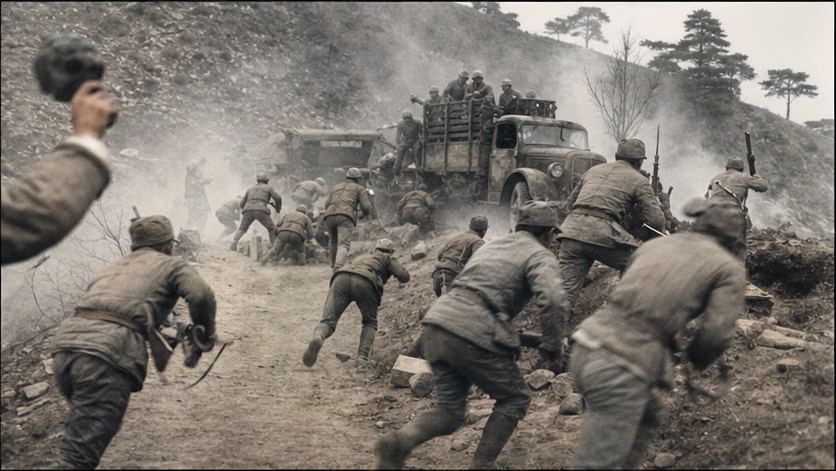
Shentouling (3.16): at dawn, the attack on Licheng served as bait; more than 1,500 men of the Japanese forces from Lucheng moved out to relieve it and entered the Shentouling ambush zone; in two hours of close combat, most were concentrated and destroyed (mainly with bayonets and hand grenades -- the close-in ambush prevented them from exploiting their artillery and air advantages). Xiangtangpu (3.31): an ambush was set against the transport column between Dongyangguan and Shexian: more than 180 motor vehicles entered the ambush zone and were almost entirely burned in half a day, while the escort was destroyed; by the time Japanese reinforcements and aircraft arrived, the troops had already withdrawn.
Casualties and Losses
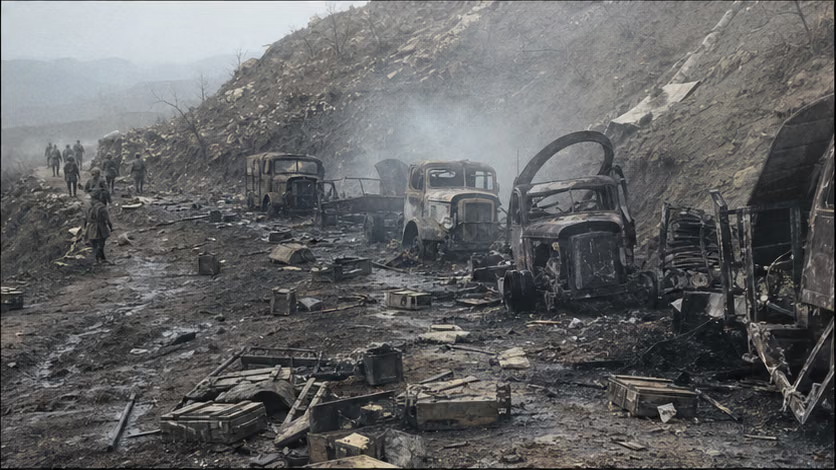
- Japanese forces: in the two engagements combined, casualties were around 1,500 (figures vary by account), and the loss of motor vehicles was the largest single such loss since the invasion of Shanxi began (figures vary by account).
- Eighth Route Army: casualties in each engagement were within the hundreds (figures vary by account).
Aftermath
- Transport on the Handan-Changzhi line was forced to move under heavy escort, and the cost of Japanese mobility rose sharply. The strategic output of the ambush battles was to "make the other side spend more troops on every vehicle."
- "Drawing out enemy relief forces and striking them" entered the Eighth Route Army's tactical canon; the name of the 386th Brigade drew Japanese attention (the saying around the slogan "single out the 386th Brigade" is widely circulated, but the level of its source remains unverified).
Accounts of Those Present
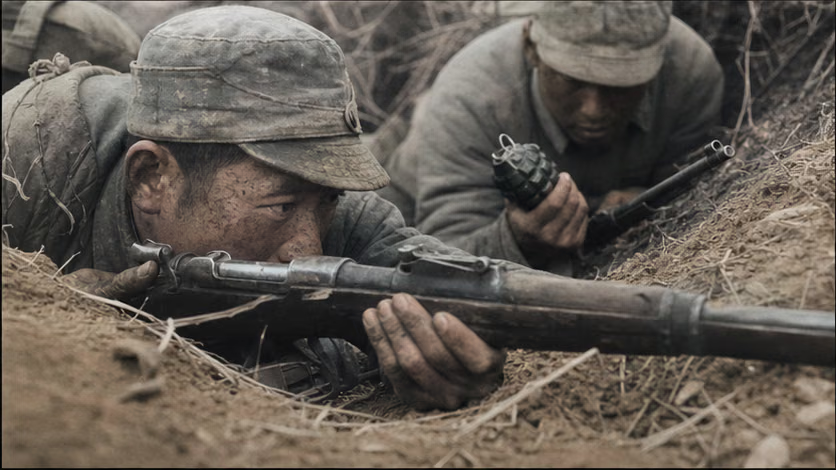
- Map and ground: the staff said the place could not hold an ambush; after seeing it on the ground, Liu Bocheng said that was exactly why it could. This reversal of "the enemy also reads maps" is the sharpest sentence of military thought in this article.
- The discipline of one night: lying hidden until daybreak right against the road, even coughs had to be smothered into the earth (memoir layer, source unverified) -- the main expenditure of an ambush came before fire was opened.
- The fire of the motor vehicles: the hundred-plus vehicles at Xiangtangpu burned for a day. For the first time in the Taihang Mountains, so much steel was burning; villagers along the mountains remembered gathering to watch (oral-history layer, source unverified).
The Ground
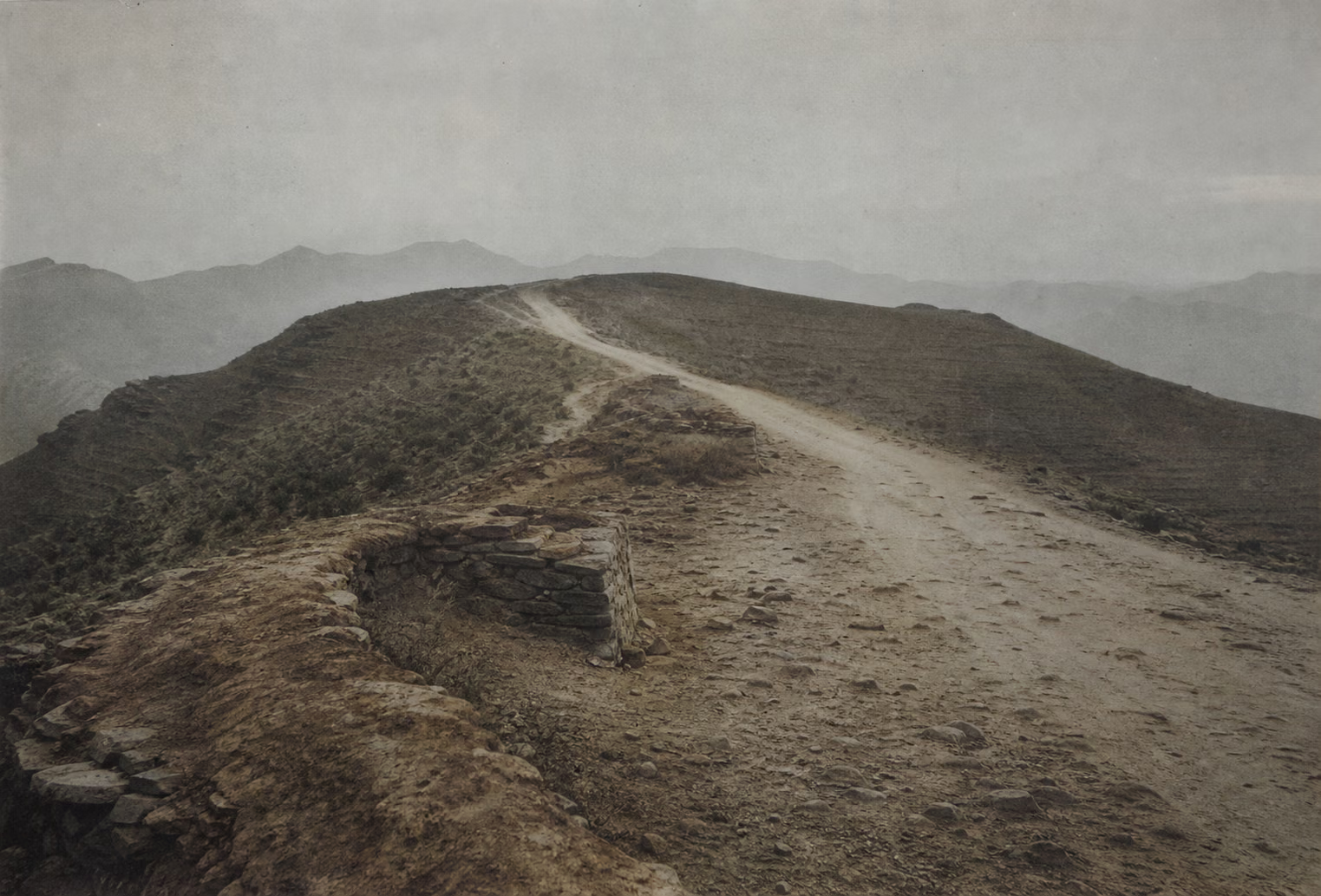
- Shentouling: road on the ridge, no cover on either side -- a spatial lesson in the "counter-intuitive ambush position"; old works served as the ambush body.
- Xiangtangpu: the long single-file line of a convoy on a mountain road -- a classic division by sealing head and tail and burning in segments.
- The operational geometry of three points on one line: "attack point - induced relief column - ambush zone."
How Each Side Records It
- Chinese side: the paired engagements that made the 129th Division's name, entering tactical textbooks.
- Japanese side: losses on the transport line appear in its logistics records (source unverified). Official histories give them little space, while changes to escort regulations speak more loudly; "institutional reaction" is the real accounting method.
Disputes and Sensitivities
- Figures for enemies destroyed and vehicles burned vary by account; the source level of the "single out the 386th Brigade" slogan remains open.
Sources and Open Questions
Sources: *War History of the Eighth Route Army*; Liu Bocheng's selected military writings; Chen Geng's diary; relevant sections of *Public Security Warfare in North China*.
Open questions: enemy losses in the two engagements; number of vehicles burned; Eighth Route Army casualties; source of the slogan; records of changes to Japanese escort regulations.
All images on this site are AI-generated depictions. They are not historical photographs, not primary sources, and do not depict any real individual.