Engagement Archive · Fourth Battle of Changsha (1944)
The same city, the same war-area commander, the same "Heavenly Furnace" - the first three times forged a myth; the fourth burned the city into it.
Engagement Data
| Item | Content |
|---|---|
| Time | 1944.5.27 – 6.18/19 (Changsha fell; the opening phase of the Battle of Changsha-Hengyang, whose full course ran from 5–8) |
| Place | Changsha, Hunan, and Yuelu Mountain |
| Part of | Fourteen-Year War of Resistance · Battle of Henan–Hunan–Guangxi · Battle of Changsha-Hengyang (the Hunan phase of Japanese "Operation Ichi-Go") |
| Defending side | Ninth War Area (commander-in-chief Xue Yue); the city was defended by the Fourth Army (army commander Zhang Deneng) |
| Attacking side | Japanese Eleventh Army (commanding officer Isamu Yokoyama) |
| Result | From 6.16–19, the Yuelu Mountain artillery positions and Changsha city fell in succession; Zhang Deneng was executed by firing squad after the battle; Japanese forces drove south toward Hengyang without pausing |
Belligerents
| Item | Defending side | Attacking side |
|---|---|---|
| Strength | The Ninth War Area had several hundred thousand men on paper, but only the Fourth Army, a little over ten thousand men, defended the city (figures vary by statistical basis) | About 280,000 men, an unprecedented force among the four attacks on Changsha |
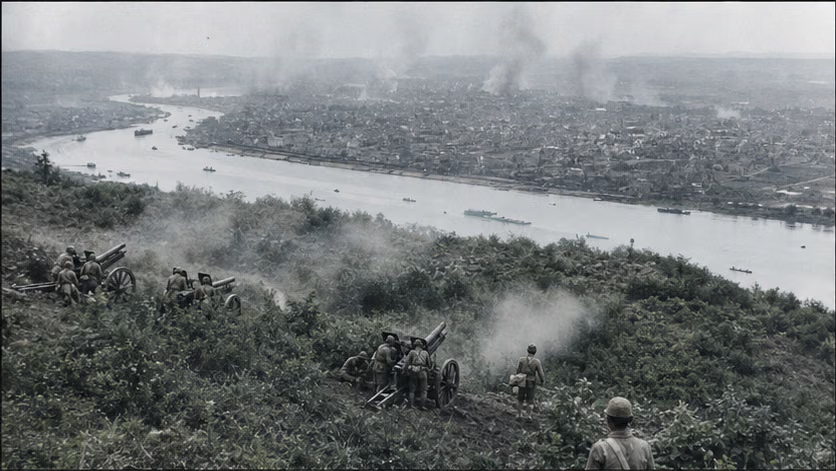
| Firepower | The heavy-artillery positions on Yuelu Mountain were the city's greatest reliance | Divisional artillery + aviation, with a dedicated plan for attacking the Yuelu Mountain artillery positions (this account remains unverified) |
| Method | The fourth use of the "Heavenly Furnace tactics" followed the same prescription: falling back for a decisive battle, then encircling from the flanks | Ignore the outer wings, drive straight in along multiple deep routes, and strike directly at the furnace bottom |
Terrain and Conditions
(For the larger situation of 1944 - world counteroffensive, Chinese retreat, and Japan's all-or-nothing throw - see *Battle of Henan–Hunan–Guangxi · Overview*. Here, only Changsha is covered.)
Changsha: city of three victories. The three Battles of Changsha in 1939, 1941, and 1941–42 were all called great victories. This city was the frontal battlefield's symbol of "holding firm," and "Hunan has not fallen" sustained morale in the rear area. The city burned by the 1938 Wenxi Fire had only just been rebuilt, and now became the front line again. Defenders and civilians alike carried the psychological inertia of "the first three times all held" - but this time the opponent did not intend to fight from the first three scripts.
Why It Was Fought
The counteroffensive in western Yunnan had just climbed onto the Gaoligong Mountains - on the Tengchong route, the 20th Army Group was still attacking passes uphill through hail - when the second phase of Operation Ichi-Go had already linked onto the main Henan-Hunan-Guangxi axis. On May 25, Luoyang fell, closing the Battle of Central Henan (1944); two days later, gunfire opened in northern Hunan. The Japanese timetable had almost no pause: after opening the Pinghan line, the next section was the Yuehan line.
The first objective in the Hunan phase could only be Changsha. It was the facade and hub of the Ninth War Area, and also the hardest signboard on the frontal battlefield: since 1939, three campaigns had been fought and all three had held, and the "city of three victories" sustained morale in the rear area. For Japanese forces, taking Changsha was necessary in order to move south along the Xiang River, open the Yuehan line, and remove the Chinese-American airfields along the Hunan-Guangxi line; for Chongqing, Changsha was the last physical proof of the words "can be held."
Isamu Yokoyama's Eleventh Army assembled about 280,000 men this time, an unprecedented force since the attacks on Changsha began. The setbacks of the first three attempts had been studied systematically by the Japanese side (wording in its war histories unverified), and the method answered them point for point - ignore the outer wings, drive straight in along multiple deep routes, strike directly at the furnace bottom, and draw up a dedicated plan for attacking the Yuelu Mountain artillery positions (this account remains unverified). The objective also changed wording: the first three times were for a "strike," with the army turning back after reaching the Laodao River and Liuyang River line; this time the word was "occupied."
The Ninth War Area's deployment was still the fourth furnace mixed according to the old prescription: falling back for a decisive battle, luring the enemy deep, then encircling from the flanks. Several hundred thousand men on paper were placed along the furnace walls, while only the Fourth Army, a little over ten thousand men, was put inside Changsha city (figures vary by statistical basis). The Heavenly Furnace design had never relied on holding the city; it relied on the opponent walking into the furnace chamber according to the script. Defenders and civilians alike carried the psychological inertia of "the first three times all held"; the postwar reviews put it bluntly: the method had been read through, and the men still underestimated the enemy (review documents unverified).
The two sides made this decision on different grounds. For Japanese forces, this battle was one phase of the overall operation: Operation Ichi-Go, to open the continental line of communication, had been set by Imperial General Headquarters in Tokyo in early 1944; the China Expeditionary Army's commander-in-chief, Hata Shunroku, oversaw the whole, and the Hunan phase was assigned to Yokoyama Isamu's Eleventh Army (the date and document number of the Imperial General Headquarters order remain unverified). When the decision was made, the strongest evidence in Japanese hands was central Henan - in a little over a month they had taken several dozen cities in succession, just verifying for them the quality of the frontal battlefield's large formations; what could not be verified was Changsha's furnace chamber, so they used the thickness of 280,000 men to purchase that verification. Thickness had a price: the mobile forces in China were almost emptied out, and each step the line pushed south stretched the depot line another step; ammunition, grain, and fodder for northern Hunan had to be relayed forward by both water and land routes (details unrecorded). On the Chinese side, the Ninth War Area's several hundred thousand men on paper had to be spread across a broad front from northern Jiangxi to southern Hunan; only a limited number could be gathered around the furnace chamber, and understrength units and interrupted ammunition supply were common illnesses across the Henan-Hunan-Guangxi war areas. As for objections: Japanese war histories do not show records of opposition inside the Eleventh Army to the plan for attacking Changsha; on the Chinese side, before the fourth furnace was mixed according to the old prescription, surviving records show no trace of objections in the exchanged cables between the Military Operations Department and the Ninth War Area over deployment judgments (no record of objections seen; cables unverified).
On May 27, Japanese forces crossed the Xinqiang River on multiple routes. The first three times, they had all once withdrawn back across this river; the fourth time, they did not.
Course of the Engagement
| Phase | Time | Key points |
|---|---|---|
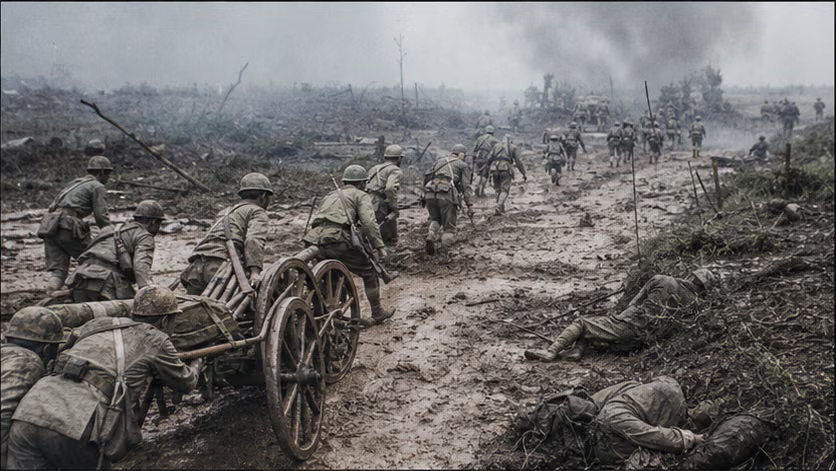
| Breakthrough along the whole line | From 5.27 | Japanese forces advanced on multiple routes, with first-line strength already exceeding that of the previous three attempts; without waiting for the outer-wing "cauldron-bottom" units to deploy their encirclement, the main force drove deep and straight in |
| Outflanking Changsha | Early to mid-6 | The Heavenly Furnace deployment failed: the units assigned to flank attacks were pinned separately by Japanese forces on each route, and Changsha quickly became an isolated city (timelines on each line unverified) |
| Yuelu Mountain lost | Around 6.16 | The Yuelu Mountain artillery positions were lost, and the city defense lost its greatest support (date and course unverified) |
| City falls | 6.18/19 | The Fourth Army retreated in collapse and Changsha fell - only several days passed from the arrival of Japanese forces before the city was lost; the city of three victories collapsed within days |
Casualties and Losses
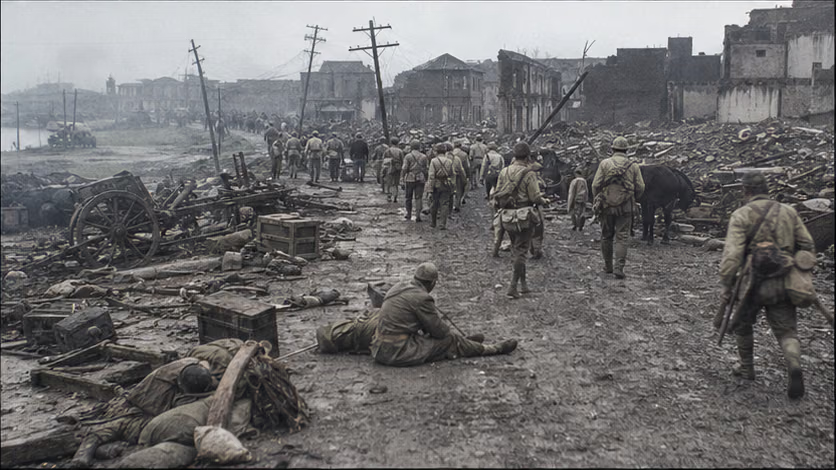
- Defending side: the Fourth Army lost more than half its strength (figure disputed); losses among Ninth War Area units during the collapse and retreat (figures vary by statistical basis).
- Attacking side: several thousand casualties (figures vary by statistical basis).
- Civilians ※: within several years, Changsha passed through war's flames four times after the great fire; civilians fled and died (record unverified).
Aftermath
- Zhang Deneng, commander of the Fourth Army, was executed by firing squad for crimes including improper deployment and abandoning Yuelu Mountain without authorization (the original wording of the charges and the execution date vary by account) - one case in the wartime sequence of "killing generals," set beside Li Fuying (1937 Tianzhen) and Long Muhan (1938 Lanfeng): accountability for defeat first fell on the defeated army's commander.
- Japanese forces drove south without pausing, their spearhead pointed directly at Hengyang - see *Defense of Hengyang*.
- Xue Yue and the Ninth War Area suffered a severe blow to their prestige; the "Heavenly Furnace tactics" left myth thereafter. Historians differ on how to divide Xue Yue's personal responsibility from the high command's responsibility (this account remains unverified).
- Northern Hunan lay open, and the Battle of Changsha-Hengyang entered the Hengyang phase.
Accounts of Those Present
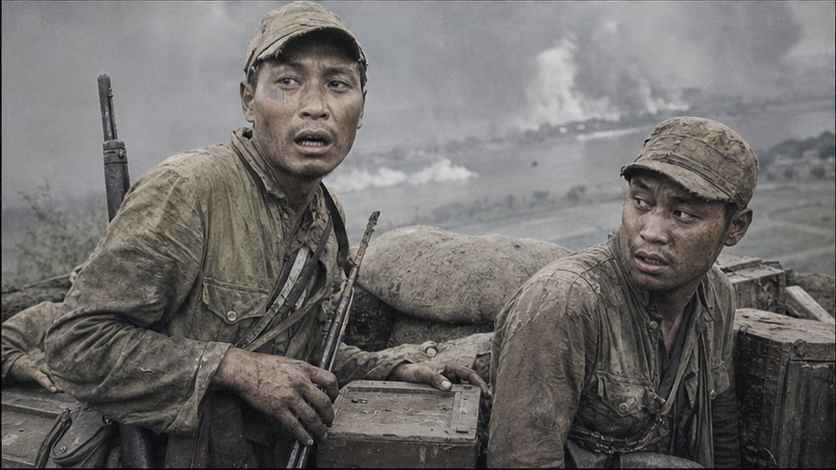
- The end of the myth: the narrative of the first three "Great Victories of Changsha" had sunk deep into public belief, and the fourth battle collapsed in several days - the same city, the same war-area commander, and the opposite result. The defenders' psychological fall was itself part of the historical fact.
- Yuelu Mountain lost first: the mountain's batteries were the lifeline of the city defense; once the mountain was lost, the morale of the defenders in the city collapsed with it (specific course unverified).
- The death of Zhang Deneng: after the execution order was issued, public opinion raised the question of "scapegoating" - the city had been lost by the war area's deployment, but the man killed was the army commander who defended the city (related commentary unverified).
The Ground
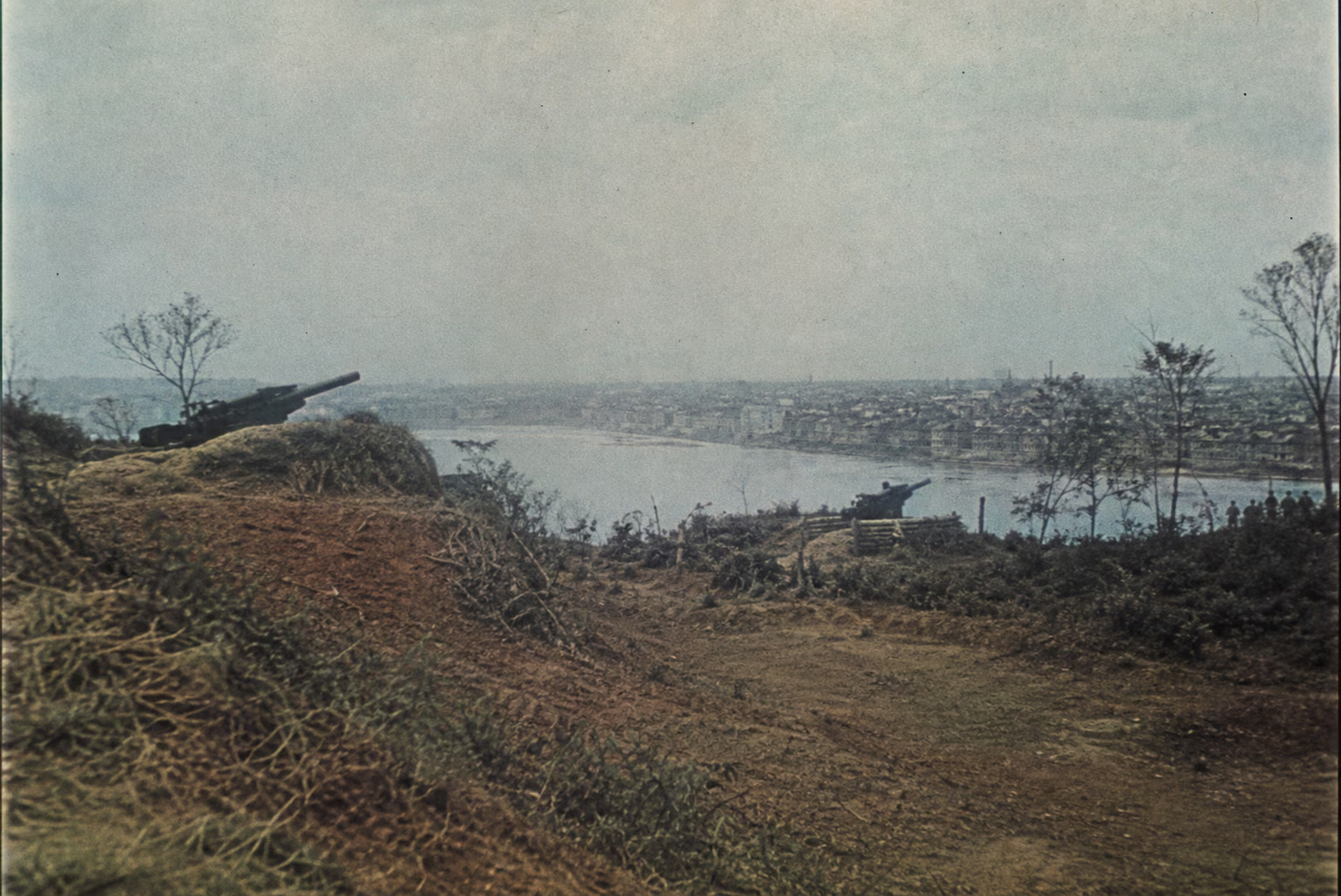
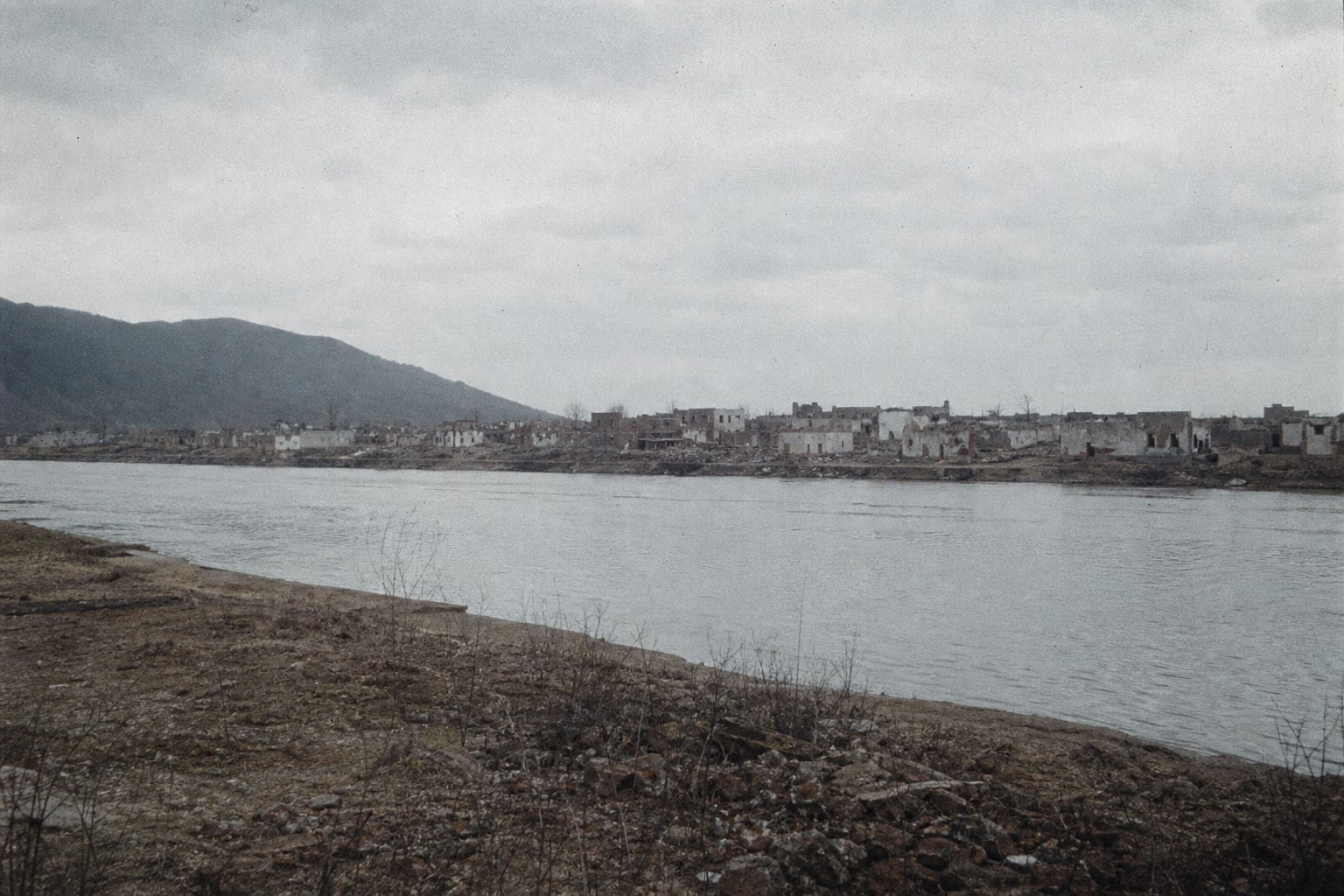
- The Xiang River runs through the space: the city lies east of the river, Yuelu Mountain west of it - mountain and city supported each other as horns, and also burdened each other; once the mountain was lost, the city could not be held.
- In the first three battles, the "furnace chamber" was laid in layered ambushes between the Xinqiang River, Miluo River, Laodao River, and Liuyang River; in the fourth, Japanese forces used superiority in strength to smash directly through the furnace bottom, and the "furnace" ceased to exist.
- From "broad depth for successive resistance" to "an isolated city collapsing in several days," the results of two methods on the same ground make the best specimen for teaching by contrast.
How Each Side Records It
- Chinese side: the narrative fell from "three great victories" into avoidance; reviews concentrated on the "Heavenly Furnace tactics" having been read through, the high command's underestimation of the enemy, and the dispersion of strength (review documents unverified).
- Japanese side: war histories regard the capture of Changsha as the opening battle of the Hunan phase of Operation Ichi-Go, emphasizing the depth of the force and the carefulness of the plan this time - the "lessons" of the first three attempts had been studied systematically (wording unverified).
Disputes and Sensitivities
- Whether Zhang Deneng should have been executed: responsibility for improper deployment coexists with criticism of "killing a general to establish authority"; place him beside Li Fuying and Long Muhan to see the accountability logic of wartime military law.
- The casualty and result figures for the first three "great victories" themselves remain subject to textual disagreement - the premise of the "end of the myth" is that the myth was once taken as true, and this layer must also be written honestly.
- Accounts give both 6.18 and 6.19 for the date when Changsha fell (this account remains unverified).
Sources and Open Questions
Known main sources:
- Japan Defense Agency War History Office, *Senshi Sosho*, volume on the Hunan campaign (Japanese official history)
- Ninth War Area battle reports and Xue Yue-side documents (details unrecorded)
- Military-law files in the Zhang Deneng case (to be checked)
Open questions: exact date when Changsha fell; course and timeline of the loss of Yuelu Mountain; original wording of Zhang Deneng's charges and date of execution; Fourth Army casualty figures; Japanese troop-strength basis (280,000 and other accounts); original Chinese review text on the failure of the "Heavenly Furnace tactics"; textual studies of the casualty and result figures for the first three battles; date and document number of Imperial General Headquarters' order for Japanese "Operation Ichi-Go"; records of Hata Shunroku's command method and location in the Hunan phase; details of the depot line and logistics for the Japanese attack on Changsha; whether records exist of objections inside the Japanese Eleventh Army to the plan for attacking Changsha; exchanged cables between the Military Operations Department and the Ninth War Area over prebattle deployment; records of Ninth War Area unit shortages and ammunition supply.
All images on this site are AI-generated depictions. They are not historical photographs, not primary sources, and do not depict any real individual.