Engagement Archive · Battle of Wanjialing (1938)
A Japanese division drove alone into the mountains of northern Jiangxi, was surrounded on all sides by Xue Yue's more than 100,000 men and fought there for more than ten days; even officers airdropped in to take over command could not break it out -- in the Fourteen-Year War of Resistance, this was the only battle that came close to annihilating an entire Japanese division.
Engagement Data
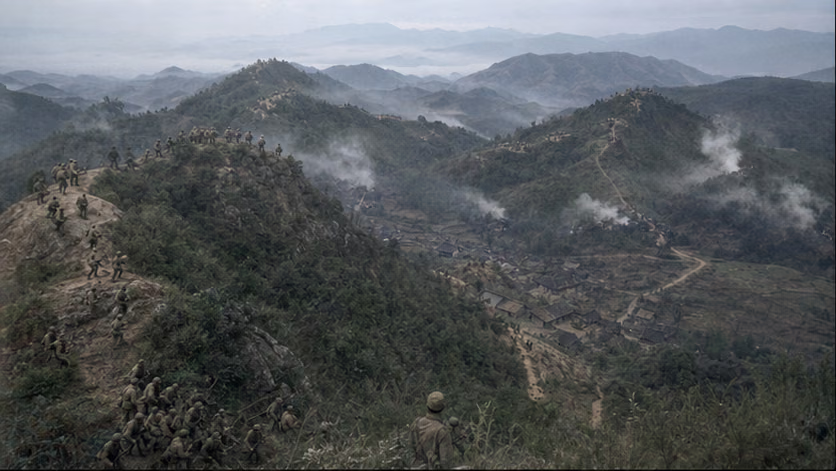
| Item | Content |
|---|---|
| Time | Late 1938.9 – 10.10 (general assault 10.7–10) |
| Location | The Wanjialing mountain area southwest of De'an, Jiangxi (around Zhanggu Mountain, Leimingguliu, and Biandan Mountain) |
| Part of | Fourteen-Year War of Resistance · southern line of the Battle of Wuhan (Ninth War Area; for the whole campaign, see *Battle of Wuhan · Campaign Overview*; for the larger situation, see *Fourteen-Year War of Resistance · War Overview*) |
| Chinese side | Xue Yue's First Army Group, which committed in sequence the Fourth, Sixty-Sixth, and 74th Corps and other units, totaling more than 100,000 men (figures vary by account) |
| Japanese side | Eleventh Army, 106th Division (division commander Matsuura Junrokuro), about 13,000 men (figures vary by account) |
| Result | Most of the 106th Division was destroyed, while the remnants broke out; the Chinese side called it the "Wanjialing Victory" |
Belligerents
| Item | Chinese Side | Japanese Side |
|---|---|---|
| Strength | More than 100,000, enveloping from all sides and attacking in rotation | About 13,000, driven deep alone and surrounded |
| Firepower | Mountain warfare, with artillery mobility restricted | Division artillery intact, with air support and airdropped supplies |
| Terrain | Held favorable mountain ground, using numerical superiority | Trapped in valley bottoms and mountain defiles, with the supply line cut |
| Critical weakness | Mixed unit designations and rotation into battle made sustained pressure difficult | After officer casualties were nearly total, command was maintained by airdropping officers (details of airdropped regimental commanders unverified) -- rare in Japanese military history |
Terrain and Conditions
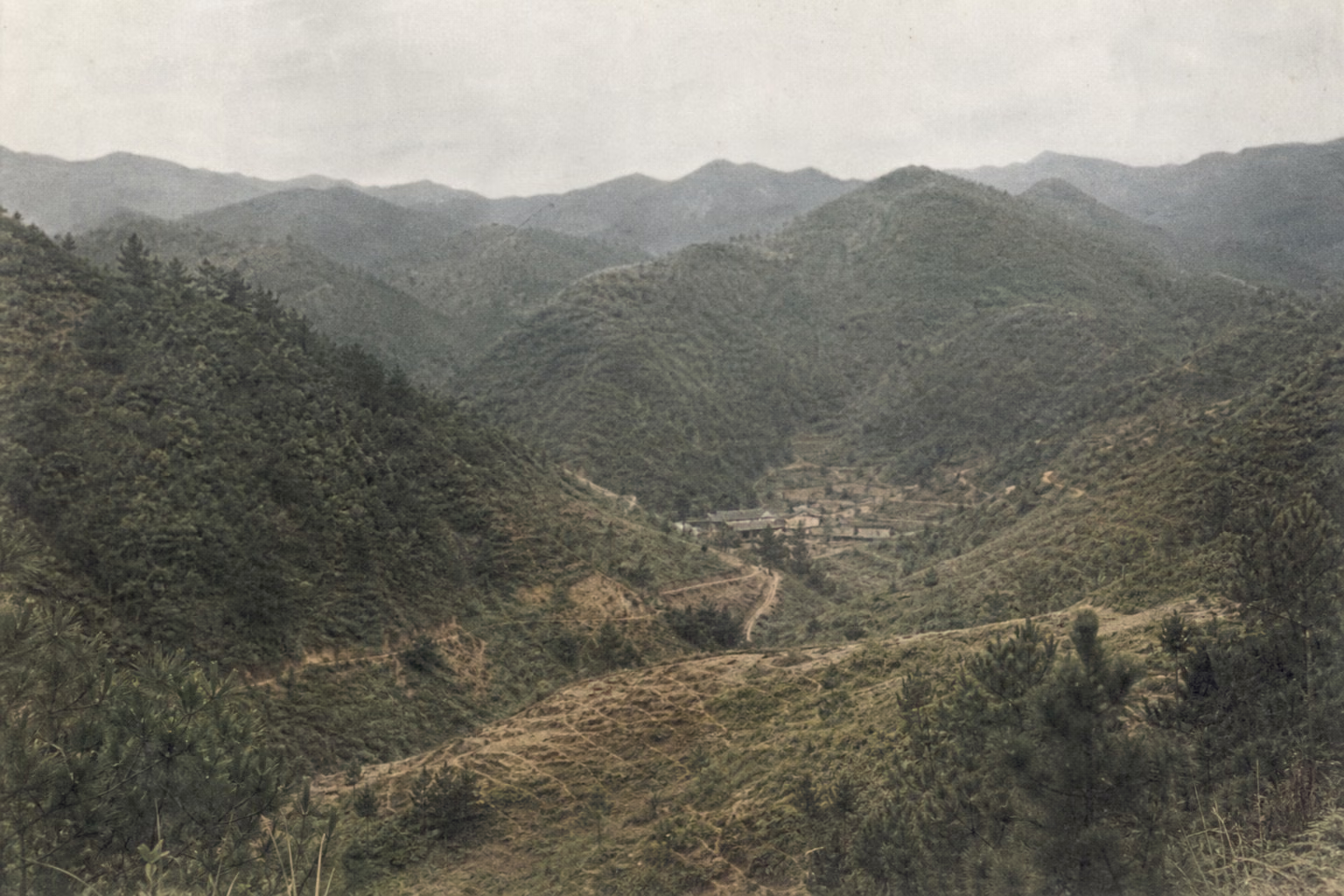
(For the larger situation in autumn 1938 -- the Battle of Wuhan unfolding across the whole line, and the Japanese side seeking a quick decision -- see *Battle of Wuhan · Campaign Overview*; this article covers only northern Jiangxi.)
The mountains of northern Jiangxi: southwest of De'an, in the outlying ranges of the Mufu Mountains, ridge layered on ridge, narrow roads and deep woods -- Japanese heavy equipment could not deploy, and maps did not match the actual terrain (Japanese war histories themselves recorded their map errors, unverified). The 106th Division was ordered to make a penetration from the southern line, intending to move around to the flank and rear of the Chinese positions at De'an -- the penetration became a march into a bag.
Why It Was Fought
More than a month after the Changkufeng ceasefire, the northern border quieted down, and Japan's strength was pressed back in full toward the Yangtze. On the southern line of the Battle of Wuhan, the Japanese Eleventh Army landed at Jiujiang and advanced westward; along the Ruichang-De'an direction, it ground repeatedly against the layered mountain positions of Xue Yue's First Army Group, and for two months could not push open the gate of De'an.
Unable to force the front, the Eleventh Army changed its move: it ordered the 106th Division to leave the main axis and make a southward detour, pass through the mountains of northern Jiangxi, and reach the flank and rear of the Chinese positions at De'an, opening a breach from the side and rear. The route ran through the outlying ranges of the Mufu Mountains: ridge layered on ridge, narrow roads and deep woods, heavy equipment unable to deploy, and the maps in Japanese hands not matching the actual terrain (Japanese war histories themselves recorded their map errors, unverified). In late September, this division of about 13,000 men (figures vary by account) drove into the Wanjialing mountains; only after contact with Chinese troops did it realize that its penetration had become isolation. The 106th Division was a special division formed only that year, with many of its men drawn from reservists (formation details unverified); for such a division to leave the main force and conduct a deep turning movement through roadless mountains, the Eleventh Army's confidence came from two months of observing the Chinese frontal positions at De'an, and from underestimating the Chinese army's mountain mobility (assessment documents unverified) -- the entire premise of this move was that the Chinese troops in the mountains could not move and could not close the ring.
This was exactly what Xue Yue had been waiting for. Once he determined that the 106th Division had driven deep alone, with no support on either flank, he drew the Fourth, Sixty-Sixth, and 74th Corps and other units, more than ten divisions in all, from the surrounding area and closed them in, sealing the mouth on every side -- Wanjialing was not an encounter battle, but a deliberately tightened encirclement and annihilation. Since the war began, attempts to annihilate a Japanese division as an organized formation had failed at Lanfeng, but this time the conditions were in Chinese hands: the mountains tied down the enemy's artillery and wheels, once the supply line was cut the division could only depend on airdrops, and the strength ratio was more than 100,000 against 13,000. The mouth of the bag was closing. The decision to annihilate had to pass through the Wuhan question: Xue Yue and the Military Affairs Commission exchanged telegrams several times, and Supreme Headquarters strictly ordered a time-limited concentration for annihilation, the deadline pointing to October 10 (dates and wording of the exchanged telegrams unverified). What the Chinese side could see clearly was the terrain and the balance of strength; what it could not see clearly was whether the bottom of the bag could be tied tight -- the attacking divisions had fought for days, ammunition depended on civilian porters carrying loads over the mountains, and rotation into battle was not tactical refinement, but because no single route could sustain a continuous strong assault (supply details unverified). On the surrounded side, airdropped food and ammunition could not feed a division, and airdropped officers could restore designations but not unit structure -- both sides' resources were nearly exhausted. No other road was left on the table: whether there was dissent within the Eleventh Army over the turning plan, and whether there was dissent between the war area and the Military Affairs Commission over the decision to annihilate, are both absent from extant records (unverified).
Course of the Engagement
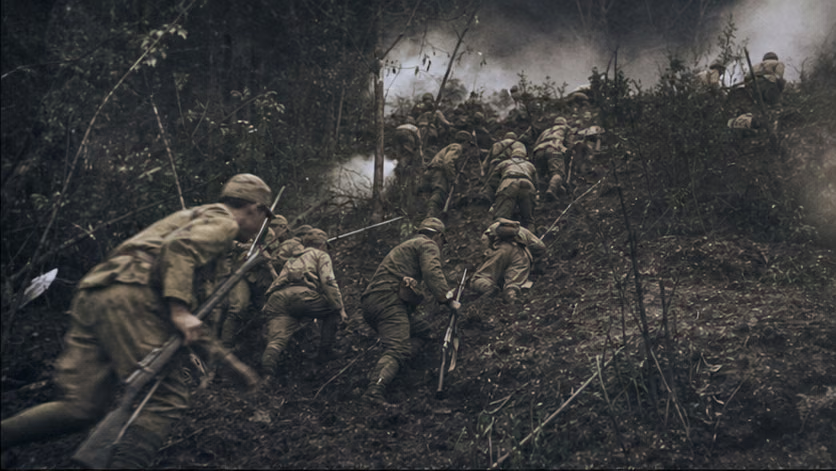
| Stage | Time | Key Points |
|---|---|---|
| Driving deep alone | Late 9 | The 106th Division entered the Wanjialing mountain area on a turning movement; only after contact with Chinese troops did it learn that it had fallen into a heavy encirclement |
| Encirclement tightening | 10.1–6 | Chinese units closed in from all sides, cutting its retreat and supply; Japanese forces stubbornly held commanding points such as Zhanggu Mountain and Leimingguliu; the Japanese side airdropped supplies and airdropped officers to take over command (names of the airdropped regimental commanders unverified) |
| Struggle for Zhanggu Mountain | Early 10 | The commanding point of Zhanggu Mountain changed hands repeatedly -- the account that Zhang Lingfu led a surprise uphill assault and seized the mountain is widely circulated (for level, see the disputes section) |
| General assault | 10.7–10 | The Chinese side launched a general assault across the whole line; 10.10, the "Double Ten," was a political date for presenting a victory -- the offensive was pressed to its tightest point before then; remnants of the 106th Division broke out under cover of night and relief forces (breakout direction and sequence unverified) |
| End | After 10.10 | The battlefield contracted: the Chinese side announced a major victory, while the Japanese side acknowledged that the division had lost more than half its strength and that its combat power had collapsed |
Casualties and Losses
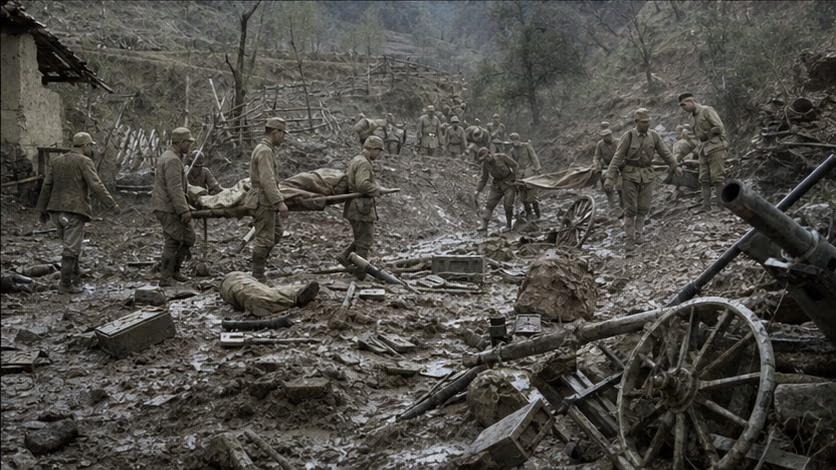
- Japanese side: the Chinese basis claimed more than 10,000 killed and wounded and "almost total annihilation"; the Japanese side acknowledged severe losses but that the division was not completely annihilated -- remnants broke out, the designation remained, and the division was later rebuilt. The two bases are placed side by side, with neither chosen over the other; the word "close" in "close to total annihilation" comes precisely from this (details unrecorded).
- Chinese side: the attacking units also suffered heavy casualties, with figures varying by account.
- Disease: autumn epidemics in Jiangnan were widespread, and both sides had many sick personnel (Japanese war histories recorded their sick personnel, details unrecorded).
Aftermath
- The Japanese offensive on the southern line of the Battle of Wuhan was checked -- the Eleventh Army never again dared to send a single division on such a rash penetration.
- Xue Yue's reputation rose from this point; afterward he presided over the Ninth War Area and the three battles of Changsha (see the Changsha battle articles).
- Wanjialing was named alongside Pingxingguan and Tai'erzhuang as one of the three great victories of the early War of Resistance -- Ye Ting's phrase, "sharing the name of greatness, standing in tripartite balance with Pingxingguan and Tai'erzhuang" (original text and context unverified).
- The remnants of the 106th Division were rebuilt and later used again on the invasion battlefield in China (subsequent movements unverified).
Accounts of Those Present
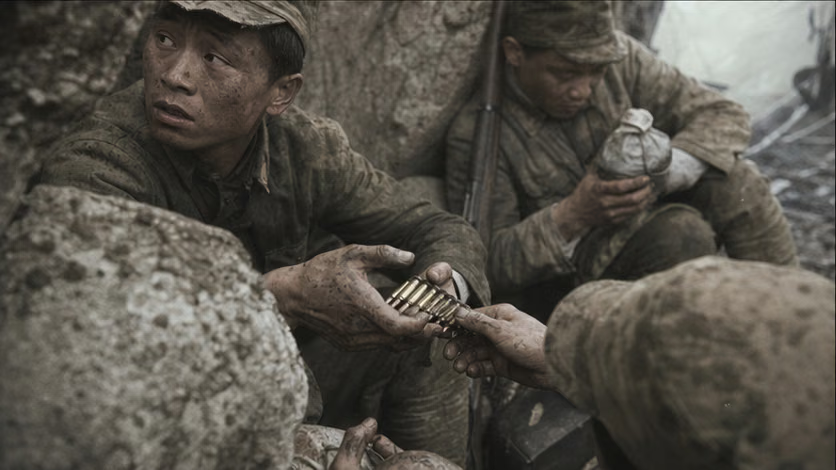
- The airdropped officers: regimental-level officers had been nearly wiped out by casualties, and Japanese forces used transport aircraft to airdrop commanders into the encirclement -- this detail appears in both sides' materials (Japanese war histories and Chinese battle reports cross-reference each other, names unverified), and is the hardest evidence of the surrounding force's distress.
- Zhanggu Mountain: the 51st Division of the 74th Corps assaulted Zhanggu Mountain uphill -- the account that Zhang Lingfu led a shock detachment to climb and seize the mountain in the dark, and was wounded in the leg, is very widely circulated; recent textual studies distinguish his specific role and the place of his wound (level marked, neither magnified nor erased; see the disputes section). Eight years later, the same man at Menglianggu -- as commander of the reorganized 74th Division, defeated and killed -- cross-references *Chinese Civil War · Overview*.
- The drumbeat of the "Double Ten": the general assault was pressed before National Day -- the political date affected the rhythm of the battlefield.
- Those surrounded: recollections by Japanese participants record that inside the encirclement both water and grain were exhausted, with wounded soldiers lacking relief (specific titles unverified) -- extremity belonged to more than one side.
The Ground
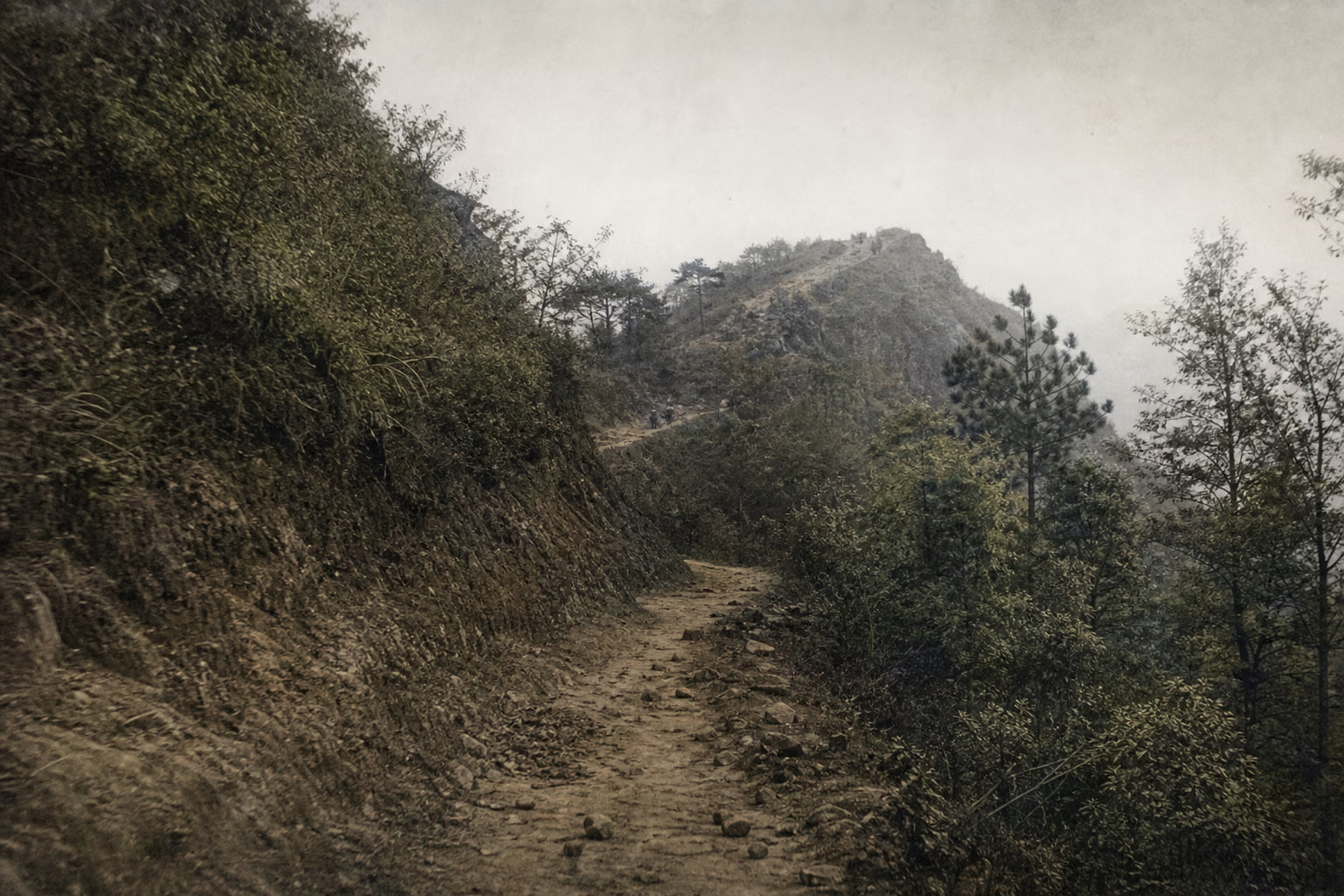
- Wanjialing mountain area: valley-bottom villages (Leimingguliu) were overlooked by a ring of commanding points (Zhanggu Mountain, Biandan Mountain) -- the shape of the "bag" determined the conditions for encirclement.
- Uphill assault on Zhanggu Mountain: climbing steep slopes by night, and the reversal of attack and defense from high ground -- the standard grammar of asymmetric mountain warfare.
- Encirclement ring: gradual tightening over more than ten days, with pressure applied from all directions at once -- the spatial and temporal process of an annihilation battle.
How Each Side Records It
- Chinese side: one of the three great victories, with "De'an Victory" and "Wanjialing Victory" named together; the most widely circulated good news of autumn and winter 1938.
- Japanese side: war histories acknowledge that the 106th Division suffered wording akin to a "destructive" blow (specific wording unverified), but do not acknowledge "total annihilation" -- the continued existence of the designation and the breakout of remnants are their grounds for rejecting it.
- Ye Ting's phrase (original source unverified) placed Wanjialing, Pingxingguan, and Tai'erzhuang in "tripartite balance" -- this battle has a place in both KMT and CPC narratives.
Disputes and Sensitivities
- The basis for "total annihilation": this article consistently uses "close to annihilating an entire division" -- the Chinese basis of "almost total annihilation" and the Japanese statement that it was "not completely annihilated" are placed side by side; the word "close" marks the difference between bases.
- Zhang Lingfu and Zhanggu Mountain: the account that he made a surprise seizure of the mountain and was wounded in action had circulated since the War of Resistance period; recent textual verification has raised corrections concerning the claim that he personally led the shock detachment and the place of his wound -- level marked: the result is real, the personal legend has room for textual revision; neither magnified nor erased.
- Two bases exist for enemy losses inflicted; the two accounts are placed side by side, from different sources.
- The relationship between the "Double Ten presentation of victory" and the sequence of the general assault -- the political date affected military rhythm, but this article does not assert that it determined the result (relationship unverified).
Sources and Open Questions
Known main sources:
- The Wuhan campaign chapter (Wanjialing section) of *Operational Record of the Frontal Battlefield in China's War of Resistance Against Japan*
- Xue Yue's reports and battle reports and memoirs by the participating armies and generals (memoirs from the 74th Corps system)
- Japan Defense Agency War History Office, *War History Series*, relevant volumes on the Battle of Wuhan (106th Division entries)
Open questions: the different bases for both sides' troop strength; names and number of times of the airdropped officers; the sequence of the Zhanggu Mountain fighting and textual studies of Zhang Lingfu's role; the breakout direction of the 106th Division and the number of remnants; the original source of Ye Ting's phrase; casualty figures for Chinese units; the specific wording of the Japanese war histories' "destructive blow"; documentation on the relationship between the "Double Ten" general assault and the political date; Japanese sick personnel figures; formation details of the 106th Division (personnel composition of the special division); Eleventh Army assessment documents on the De'an front and Chinese mountain mobility; telegrams between Xue Yue and the Military Affairs Commission on the encirclement and annihilation and wording of "time-limited concentration for annihilation"; ammunition and supply details for the attacking units; records of whether there was dissent on either side over the turning plan and the decision to annihilate.
All images on this site are AI-generated depictions. They are not historical photographs, not primary sources, and do not depict any real individual.