Engagement Archive · Night Raid on Yangmingbao
When the Xinkou front was being pinned down by Japanese aircraft, a regiment of the Eighth Route Army slipped into Yangmingbao airfield in Daixian and burned more than twenty aircraft in a single night -- infantry took out an airfield, at the cost of one regimental commander and several dozen soldiers.
Engagement Data
| Item | Content |
|---|---|
| Time | Night of 1937.10.19 |
| Place | Yangmingbao airfield, Daixian, Shanxi (north bank of the Hutuo River) |
| Belongs to | Fourteen-Year War of Resistance · Battlefields Behind Enemy Lines (for the overall view, see *Battlefields Behind Enemy Lines · Overview*) |
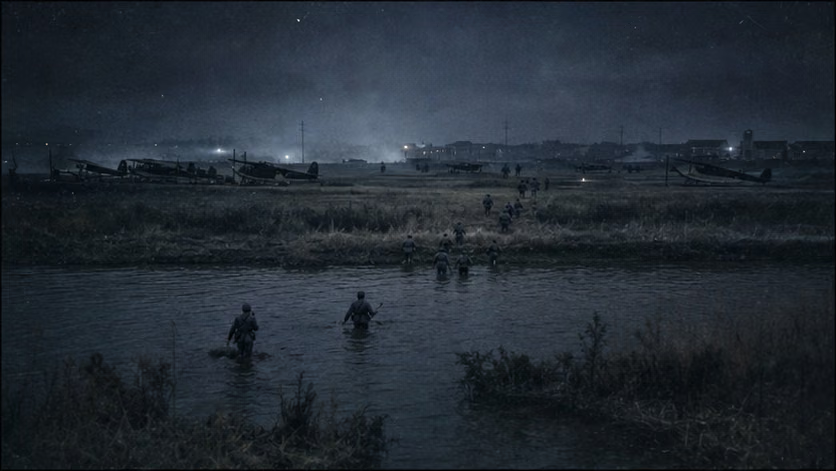
| Raiding side | Eighth Route Army 129th Division, 385th Brigade, 769th Regiment (regimental commander Chen Xilian), with the Third Battalion as the assault force |
| Defending side | More than one hundred men of the Japanese airfield security force (basis varies by account), with twenty-four aircraft parked there (basis varies by account) |
| Result | More than twenty aircraft burned or damaged (the common "twenty-four aircraft" basis varies by account); air raids toward Xinkou dropped sharply |
Belligerents
| Item | Raiding Side | Defending Side |
|---|---|---|
| Strength | One regiment set ambush and security positions; one battalion assaulted | Security strength was thin -- the illusion of an airfield in the "rear" |
| Weapons | Rifles and grenades -- destroying aircraft depended on stuffing grenades into cockpits | Parked aircraft and fuel depots were without cover |
Terrain and Conditions
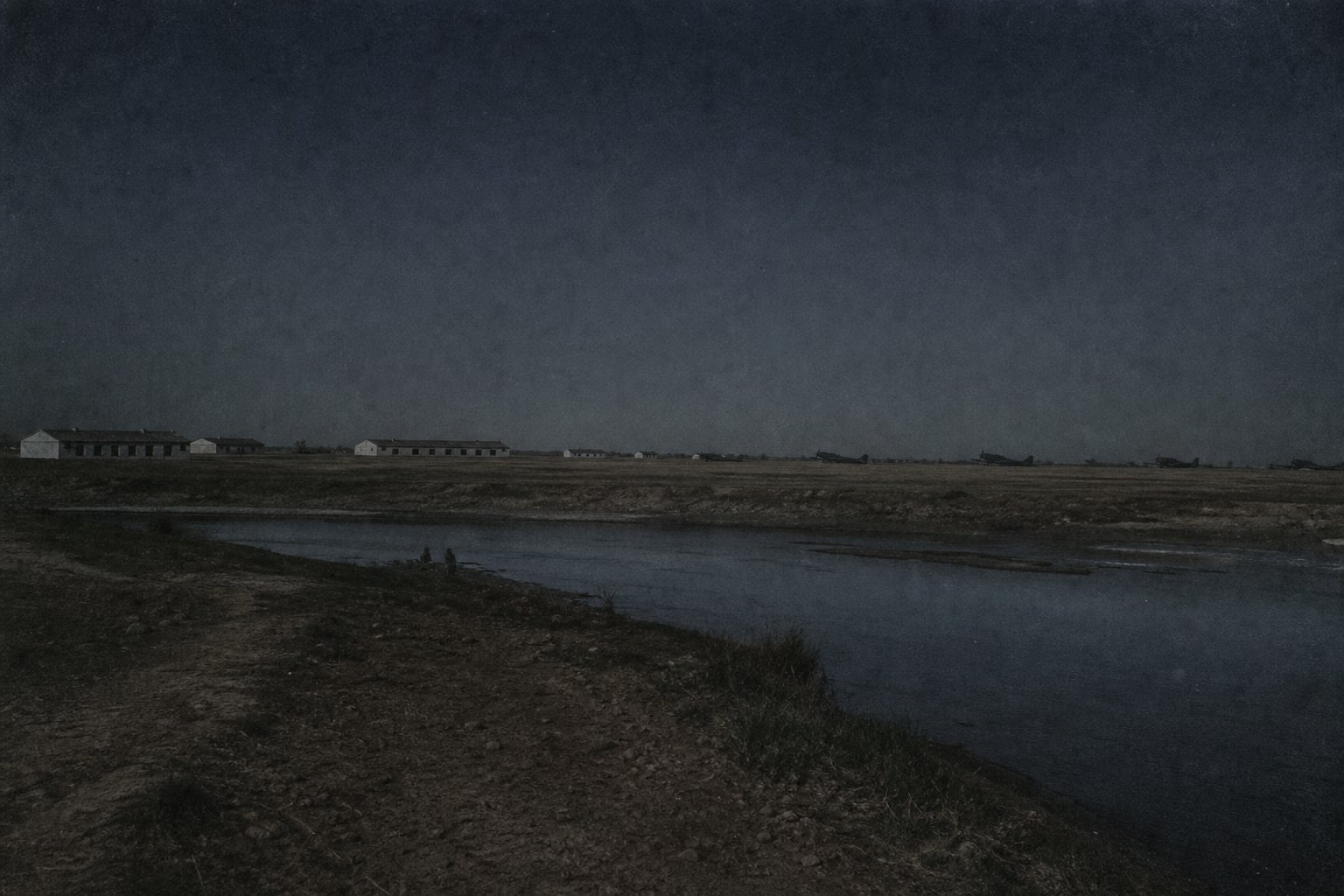
The Battle of Taiyuan was at its height, and the Xinkou defenders were enduring several hundred sorties of bombing each day. The 129th Division, newly arrived in Shanxi, learned through reconnaissance that Yangmingbao airfield was a forward base for air attacks on the front line. It was reachable by crossing the Hutuo River at night -- an airfield holding up the sky over the frontal battlefield had its back door open.
Why It Was Fought
Less than a week after Xinkou opened, the battle had become one in which one side had the sky and the other did not: above the defenders, Japanese aircraft delivered several hundred sorties a day, while Chinese air-control capability was nearly absent. The aircraft of the Fifth Division were not coming from far away -- the 129th Division had just entered Shanxi and learned through reconnaissance that Yangmingbao airfield in Daixian was precisely the forward base for the Xinkou air raids, with more than twenty aircraft parked there and more than one hundred men on security duty (both figures vary by account). In placing the airfield so close to the front, Japanese forces were calculating efficiency: the shorter the round trip, the denser the sorties over Xinkou. What they did not enter into that account was that a forward airfield also meant being closer to the other side's infantry (Japanese-side reviews of the airfield site's selection remain unverified).
The airfield sat in what Japanese forces considered their "rear," and its security was thin; but the Hutuo River could be crossed in one night, and for infantry slipping in, the so-called rear did not exist. The day before, the 120th Division had already ambushed the Japanese motor transport line at Yanmen Pass -- with one supply line cut, Chen Xilian, commander of the 769th Regiment, turned his attention to another node in the system: if they could not hit aircraft in the sky, they would burn the ones on the ground.
The decision to attack was made quickly. Soon after the 769th Regiment reached Daixian, it had already reconnoitered the airfield's real situation -- the number of parked aircraft, sentry shift changes, and places where the Hutuo River could be forded, relying on disguised close-in observation and guidance from local people (sources for guide and reconnaissance recollections unverified). Chen Xilian decided on a night raid and reported it for approval by the brigade and division (level of approval and telegrams unverified). What was lacking in hand when the decision was made was equally concrete: the whole regiment had no artillery, no demolition equipment, and the ammunition issued by table of organization since entering Shanxi was far from what actual need required (issue details unrecorded). The only way to relieve pressure on Xinkou was rifles, grenades, and night -- and this determined what form the battle could take: get in, blow up what could be blown up, and leave, without lingering for even one extra minute. As for whether the regiment had differing views on fighting this battle, no surviving record has been found (no dissenting record found, unverified).
This was a demonstration of the principle of warfare behind enemy lines: do not collide with the enemy at his point of strength; dismantle the nodes in his system. On the night of October 19, the Third Battalion crossed the Hutuo River and moved toward the aircraft.
Course of the Engagement
| Stage | Key Points |
|---|---|
| Reconnaissance | Disguised reconnaissance over several days clarified the parking layout and sentry shift changes (details unrecorded) |
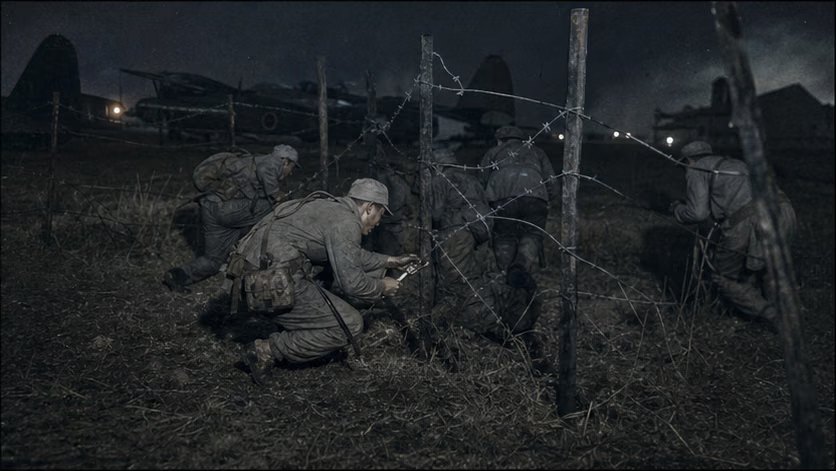
| Night crossing and obstacle breaching | On the night of 10.19, the force waded across the Hutuo River, cut the barbed wire, and infiltrated among the aircraft |
| Demolition | Small groups rushed the aircraft, threw grenades into cockpits, and set fuel tanks on fire; after the airfield caught fire, close combat with blades lasted about an hour |
| Withdrawal | Withdrew before dawn; Zhao Chongde, commander of the Third Battalion, was killed while covering the retreat |
Casualties and Losses
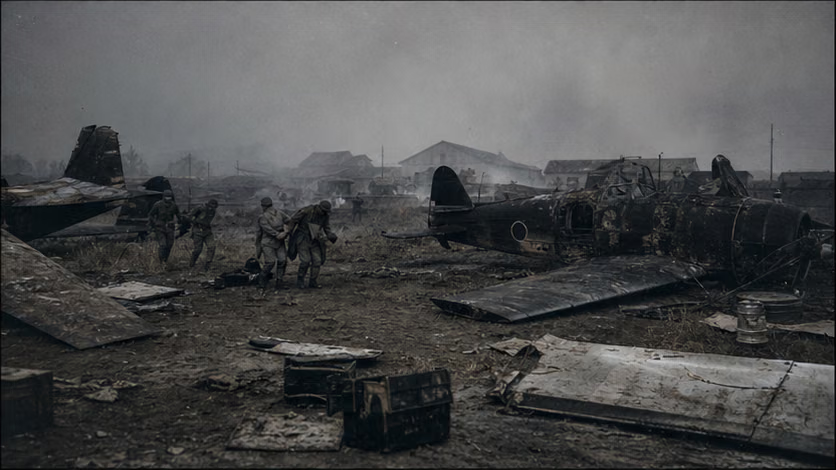
- Japanese forces: more than twenty aircraft destroyed or damaged, and more than one hundred security troops killed or wounded (both figures disputed).
- Eighth Route Army: more than thirty casualties; battalion commander Zhao Chongde was killed (figures vary by account).
- The intensity of air raids on the Xinkou front dropped sharply for several days thereafter (front-line impressions in records unverified).
Aftermath
- Alongside Pingxingguan and the Yanmen Pass ambush, it is listed among the Eighth Route Army's "three battles" after entering Shanxi, directly serving the Xinkou front -- one piece of evidence that the KMT and CPC battlefields meshed and operated together (see *Battle of Taiyuan · Overview*).
- "Infantry burning an airfield" entered military-history textbooks; Chiang also sent a congratulatory telegram (telegram unverified).
Accounts of Those Present
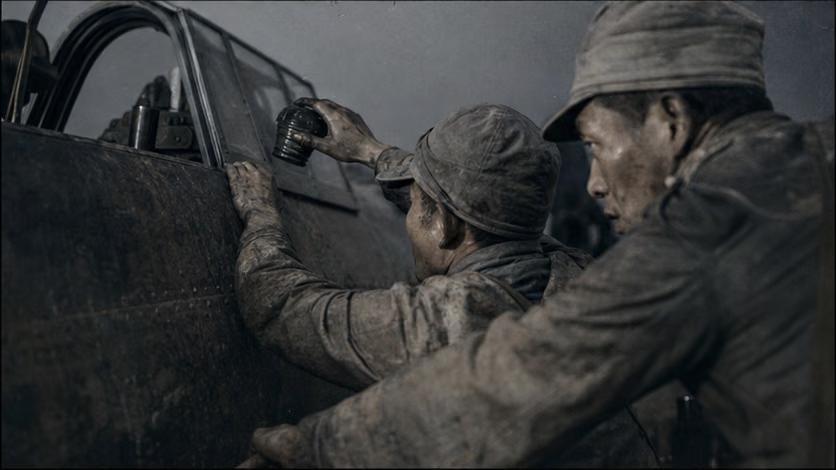
- Zhao Chongde: the assault battalion commander died on the route of withdrawal -- the account for the night raid was settled by a principal officer with his life.
- Grenades and cockpits: the soldiers saw aircraft up close for the first time, studied them for a long while without knowing how to break them, and finally stuffed grenades under the cockpit canopy (participant-recollection layer unverified) -- the first encounter between peasant soldiers and modern weapons is a metaphor for warfare behind enemy lines.
The Ground
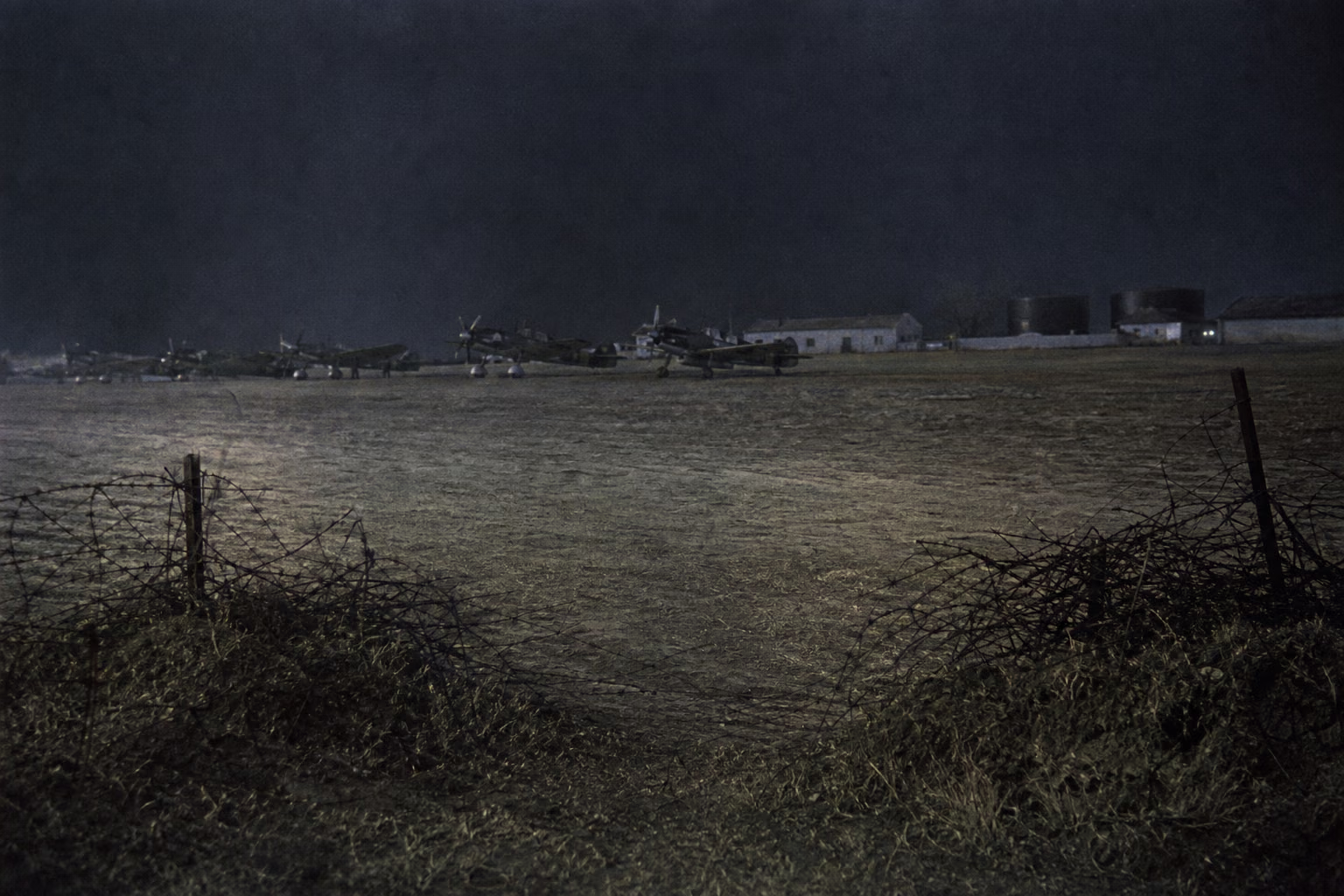
- The airfield as target space: the partition of runway, aircraft group, fuel depot, and barracks, with security thinned by the psychological blind spot of the "rear."
- The four-part infiltration rhythm of night crossing, obstacle breaching, demolition, and withdrawal: the standard spatial script of a special attack behind enemy lines.
How Each Side Records It
- Chinese side: entered the canon and textbooks, one of the Eighth Route Army's first calling cards alongside Pingxingguan.
- Japanese side: its war histories record the losses briefly (basis varies by account) -- an asymmetric representation of a small battle with a large name.
Disputes and Sensitivities
- The number of aircraft burned (the common account of twenty-four aircraft and other bases) remains unverified; the basis for Japanese casualties remains unverified.
Sources and Open Questions
Sources: *War History of the Eighth Route Army*; Chen Xilian's memoirs; relevant passages in the Japanese-side *Public Order Warfare in North China*.
Open questions: the different bases for the number of parked and burned aircraft; defending strength; details of Zhao Chongde's death; text of the congratulatory telegram; the approval level for the night raid (brigade and division) and the telegrams exchanged; sources for participant recollections of the guides and disguised reconnaissance; details of ammunition issued to the 129th Division after entering Shanxi; Japanese-side reviews of the forward airfield's site selection and security.
All images on this site are AI-generated depictions. They are not historical photographs, not primary sources, and do not depict any real individual.