Engagement Archive · Battle of Cheqiao
In spring 1944, the New Fourth Army's First Division assaulted the fortified town of Cheqiao and then struck relief forces in succession, capturing 24 Japanese soldiers in a single action -- the highest number of Japanese forces taken alive in any one engagement behind enemy lines; behind the lines in Central China, the war moved from enduring to striking, and the spring of counteroffensive began in this waterside market town in northern Jiangsu.
Engagement Data
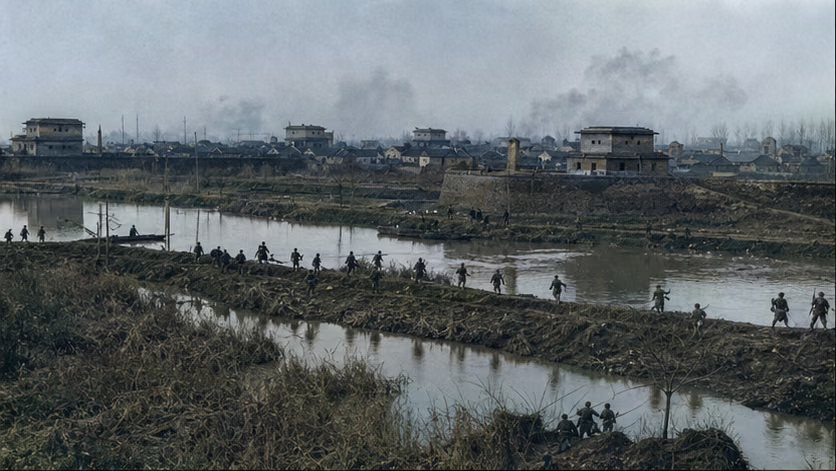
| Item | Content |
|---|---|
| Belongs To | Fourteen-Year War of Resistance · Battlefields Behind Enemy Lines (for the broader situation, see "Battlefields Behind Enemy Lines · Theater Overview") |
| Time | 1944.3.5 - 3.13 (main fighting: one day and night on 3.5; relief forces were then destroyed over several days) |
| Location | Cheqiao town, Huai'an, Jiangsu (on both banks of the Jian River, at the junction of the Central Jiangsu and northern Jiangsu base areas) |
| Attacking Side | New Fourth Army First Division, concurrently the Central Jiangsu Military District (division commander Su Yu in overall coordination, Ye Fei commanding at the front), more than five regiments |
| Defending and Relief Side | Elements of the Japanese 65th Division and puppet troops: several hundred in the Cheqiao garrison, more than a thousand relief troops from Huaiyin and other places |
| Result | Cheqiao was taken; more than 460 Japanese troops were wiped out (including 24 captured), and more than 480 puppet troops were wiped out (counting bases vary by account); the Central Jiangsu and northern Jiangsu base areas were joined into one continuous area |
Belligerents
| Item | New Fourth Army | Japanese-Puppet Forces |
|---|---|---|
| Strength | More than five regiments concentrated -- a rare engagement-level concentration behind enemy lines | Strongpoint garrisons + relief troops arriving in echelons |
| Tactics | Fortified assault (sapper approach + demolition) and relief-force ambush (Lujia Tan ambush) in parallel | Holding points with blockhouse clusters; rushing relief by road |
| Timing | Japanese main forces had been redeployed, leaving Central China thinly held (the troop vacuum on the eve of Operation Ichi-Go; line of judgment unverified) | -- |
Terrain and Conditions
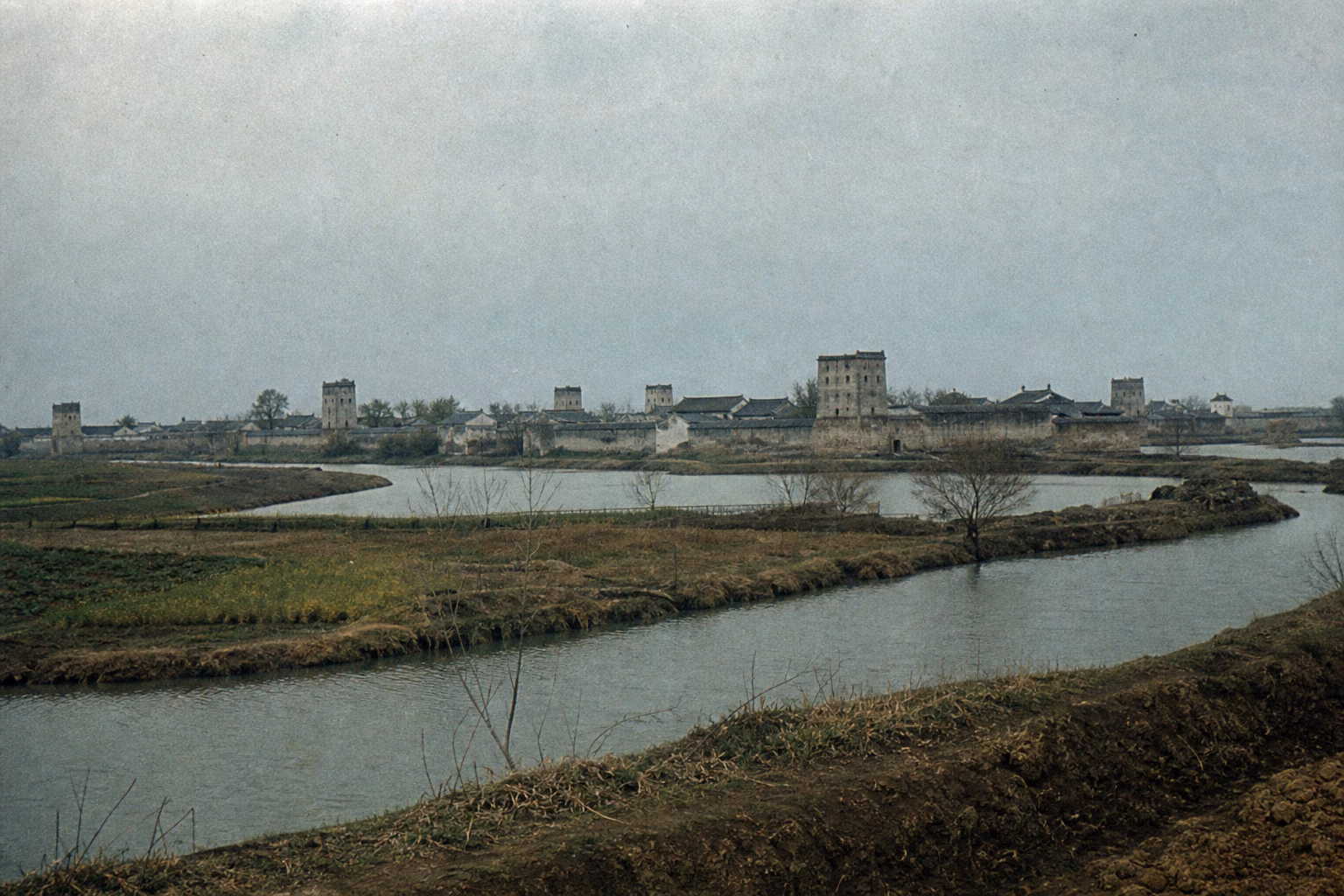
Cheqiao lay in the waterway network southeast of Huai'an. A cluster of 53 blockhouses guarded one town (blockhouse counts vary by account), making it the nail that separated the Central Jiangsu and northern Jiangsu base areas. Central China in 1944: Japanese forces had drawn troops south to launch Operation Ichi-Go, leaving the strongpoint lines thinly held -- Su Yu judged that the counteroffensive window had opened (his engagement-decision telegrams unverified).
Why It Was Fought
The Battle of Changde ended in December 1943: the city fell and was then recovered, and the front line in Hunan more or less returned to where it had been. The front-line battlefield closed that year in stalemate and tug-of-war. In the same winter, life behind enemy lines in Central China was something else -- the New Fourth Army had already endured 7 years in the water networks of Central Jiangsu, raiding, cutting roads, and taking small strongpoints, while hard nails like Cheqiao had always been bypassed.
Cheqiao lay southeast of Huai'an, a waterside market town on both banks of the Jian River. Fifty-three blockhouses guarded one town (blockhouse counts vary by account), wedged into the junction between the Central Jiangsu and northern Jiangsu base areas: the two sides fought separately with Cheqiao between them; remove it, and Central Jiangsu and northern Jiangsu would be linked into one continuous area.
In spring 1944, that nail suddenly became something that could be struck. Japanese forces were drawing troops south from Central China to launch Operation Ichi-Go, leaving only garrison troops on the strongpoint line -- several hundred at Cheqiao, with relief troops far off along the Huaiyin line. Su Yu judged that the counteroffensive window had opened (engagement-decision telegrams unverified).
For this, the New Fourth Army's First Division concentrated more than five regiments -- a rare engagement-level concentration behind enemy lines, with Su Yu coordinating overall and Ye Fei commanding at the front. The method had two hands working together: sapper approaches and repeated demolitions to gnaw through the blockhouses, while positions were laid at Lujia Tan to wait for relief from Huaiyin. The object was not only one town. For troops that had come through 7 years of guerrilla warfare, Cheqiao was an examination in transition: could they fight mobile warfare and fortified assault? The defenders' method opposite them was still the old one -- several hundred men holding 53 blockhouses, and when something went wrong, relief sent by road; for the 7 previous years, that system had been enough.
The starting point of the decision came earlier than the engagement. In 1943, Su Yu had used a trip to make a detour through the Cheqiao area and inspect the terrain on the ground (this account comes from memoir materials; details unrecorded); in spring 1944, the plan to take Cheqiao was formally raised, submitted to the Central China Bureau and the New Fourth Army headquarters, and approved after several rounds of telegrams (approval telegrams unverified). When the decision was made, the hardest piece of intelligence in hand was the Japanese order-of-battle register: Operation Ichi-Go's transfers had emptied out the Central China strongpoint lines, and one could calculate how far the Huaiyin relief troops were from Cheqiao and how many days they would need to march. What could not be calculated was the internal detail of the works inside the blockhouse cluster -- 53 blockhouses could not be counted one by one before the battle.
The household accounts had also been reckoned. The division had not a single heavy gun; shells, like bullets, depended on capture, and hopes for the fortified assault rested on sapper approaches and explosive charges. Concentrating more than five regiments meant that other Central Jiangsu directions had to perform an empty-city act, betting that Japanese forces could not assemble the strength for a counterattack in the short term. Grain and ammunition were secretly stockpiled and moved in advance, while boatmen and stretcher teams from the water country were incorporated into the order of battle (logistical organization details unrecorded).
There had been objections. In these years of the War of Resistance behind enemy lines, there had long been a threshold of "not over-stimulating the enemy," and memoir materials also preserve voices of concern: fortified assault would bring heavy casualties and might invite large-scale retaliatory mopping-up operations. Half the reason for going around the nail during the previous 7 years lay here. These concerns did not alter the decision, because the window itself had a time limit: once Operation Ichi-Go concluded, the troops that had been drawn away would return (the recorded level of the objections is unverified).
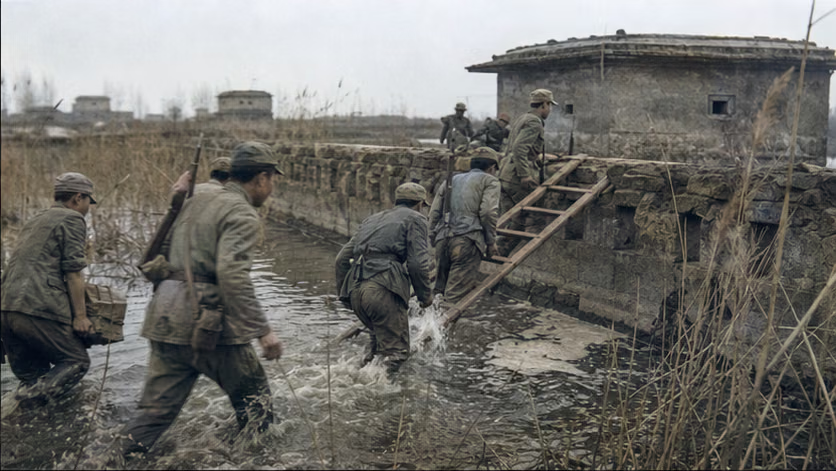
Before dawn on March 5, more than five regiments marched 50 li by night, and scaling ladders had already reached the foot of the embankment wall.
Course of the Engagement
| Stage | Key Points |
|---|---|
| Night Approach and Fortified Assault, dawn 3.5 | A concealed 50-li night approach; ladders climbed the embankment, and the blockhouse cluster was demolished in sequence; most of the strongpoints were retaken that day |
| Lujia Tan Relief-Force Ambush, afternoon-night 3.5 | Japanese forces from Huaiyin arrived in batches and entered the prepared position: minefield + fire pocket + bayonet counterattack, destroying most of them -- Colonel Yamazawa (regimental commander? rank and post unverified) was killed here (this claim unverified) |
| Mopping Up, 3.6-13 | Jingkou, Caodian, and surrounding strongpoint clusters were then taken (individual points unverified); the engagement ended |
Casualties and Losses
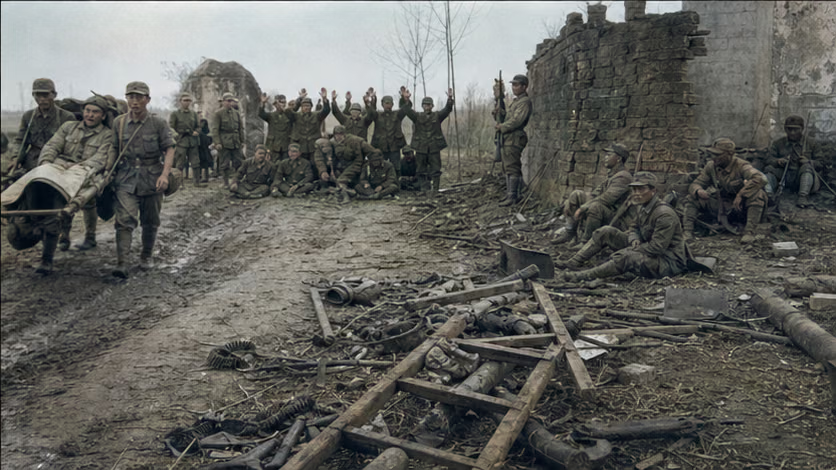
- Japanese-puppet side: as in the Engagement Data counts; the capture of 24 Japanese soldiers alive was the highest for a single engagement behind enemy lines (counting bases vary by account) -- in warfare behind enemy lines, prisoner figures were harder proof of combat capacity than killed-and-wounded figures.
- New Fourth Army: more than 200 casualties (counting bases vary by account).
Aftermath
- The Central Jiangsu, northern Jiangsu, Huainan, and Huaibei base areas became contiguous; behind enemy lines in Central China entered a local counteroffensive phase -- Yan'an recorded Cheqiao as the "signal of counteroffensive in Central China" (Xinhua's contemporary report unverified).
- Through this engagement, Su Yu completed his first rehearsal for large-force fortified assault -- the line of command that would lead to Seven Battles, Seven Victories in Central Jiangsu 2 years later and to Huaihai 4 years later begins at Cheqiao (for the cross-article figure line, see "Chinese Civil War · War Overview").
Accounts of Those Present
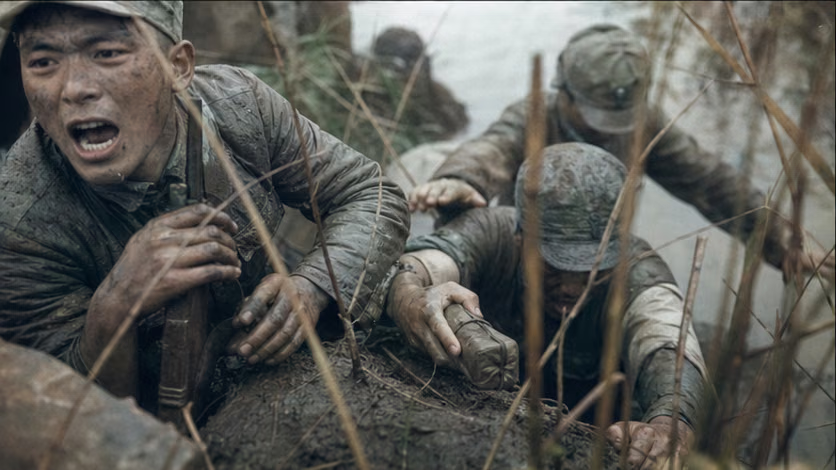
- The 24 prisoners: in 7 years behind enemy lines, Japanese prisoners had been counted in single digits -- capturing 24 at once, the base-area villages took turns "viewing" the prisoners (level of contemporary records unverified): for the first time, ordinary people saw with their own eyes that the "Imperial Army could raise its hands."
- Scaling ladders and water embankments: the local method for fortified assault in water country -- wooden ladders were carried across rivers and set against embankments, while demolition men waited for signals in the early-spring river water (memoir materials; source level unverified).
- Su Yu's map: the coordinator away from the front line -- Cheqiao was an early example of his style of "fighting on the map" (the command division of Ye Fei at the front and Su Yu in overall coordination).
The Ground
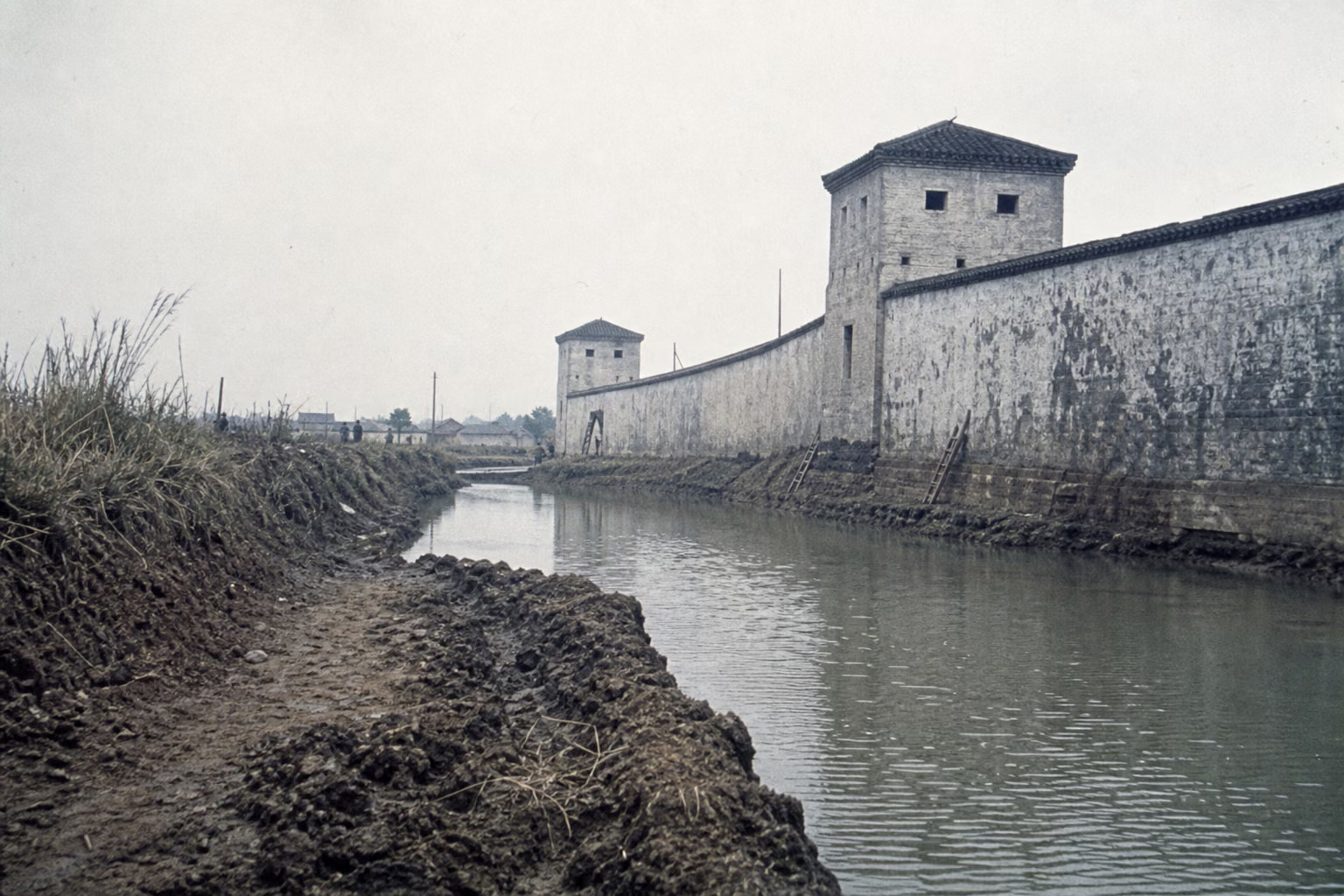
- Fortified assault in a water network: rivers and canals as trenches, embankment walls as ramparts, and blockhouse clusters supporting one another -- the wartime spatial grammar of Jiangnan water country (in contrast to the tunnel plains of North China).
- A two-field structure of fortified assault and relief-force ambush: demolition fighting inside the town and a field ambush outside the town unfolded at the same time -- one engagement, two kinds of tactics.
- A 50-li night march: the concealed channel of a raid (along river levees, avoiding villages).
How Each Side Records It
- Chinese side: the first battle in the counteroffensive chapter of New Fourth Army war history; one of the starting-point battle examples in Su Yu's narrative.
- Japanese side: its war histories record this period in Central China only sparsely (a lost point during a period when troops had been drawn thin, unverified) -- another asymmetry of "our side writes at length, the other side notes briefly."
Disputes and Sensitivities
- Figures for enemies wiped out and prisoners taken vary by counting basis; the account that Colonel Yamazawa was killed is unverified; the number of blockhouses is unverified.
Sources and Open Questions
Sources: *History of the New Fourth Army*; *Su Yu's Memoirs of War*; Central Jiangsu Military District engagement summary (catalog entry unverified); Huai'an local gazetteers.
Open questions: numbers killed and captured; relief-force sequence and Yamazawa's rank and post; number of blockhouses; original Xinhua report; casualty counting basis; source and details for the memoir account of Su Yu inspecting the Cheqiao terrain; approval telegrams for taking Cheqiao; pre-battle reconnaissance materials on the blockhouse-cluster works; engagement logistics organization (grain stockpiling, boat transport, stretchers); the recorded level and source of objections in the fortified-assault decision.
All images on this site are AI-generated depictions. They are not historical photographs, not primary sources, and do not depict any real individual.