Campaign Overview · Battle of Shanghai (1937)
China fed its fighting units into Shanghai batch after batch - 700,000 against 300,000, 3 months, more than 250,000 casualties - and did not hold the city, but held two larger things: Japan's timetable for "settling China in 3 months" was made void, and the provincial armies that had once been a loose plate of sand bled for the first time in the same trench.
Engagement Data
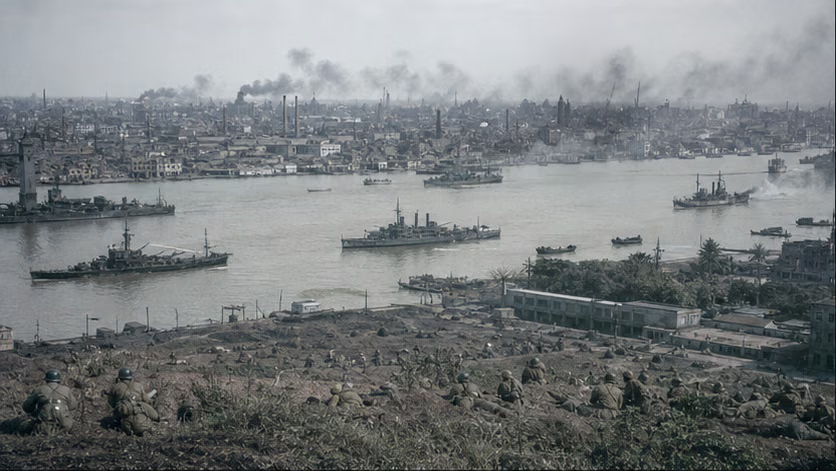
| Item | Content |
|---|---|
| Time | 1937.8.13 – 11.12 (Shanghai fell except for the concessions) |
| Part of | Fourteen-Year War of Resistance (for the larger situation, see *Fourteen-Year War of Resistance · War Overview*; for Baoshan and Luodian, and Sihang Warehouse, see the separate articles) |
| Place | Shanghai urban districts (Zhabei, Hongkou, Yangshupu) and the northern suburbs (Baoshan, Luodian, Dachang), and the northern shore of Hangzhou Bay |
| Chinese side | Third War Area (Feng Yuxiang, soon changed to Chiang Kai-shek holding the post concurrently), eventually committing about 70-plus divisions and 700,000 men (figures vary by statistical basis) - Central Army German-equipped divisions and forces from Sichuan, Guangxi, Hunan, Guangdong, and the Northeast all arrived, a "fairground of the national army" |
| Japanese side | Shanghai Expeditionary Army (Matsui Iwane) + Tenth Army (Yanagawa Heisuke), about 300,000 cumulatively (figures vary by statistical basis), with absolute superiority in naval and air firepower |
| Result | The Chinese general retreat fell into disorder, Shanghai fell, and Japanese forces drove straight toward Nanjing (see *Defense of Nanjing*) |
Belligerents
| Item | Chinese Side | Japanese Side |
|---|---|---|
| Strength | 700,000, committed in sequence and wrecked in sequence | 300,000, reinforced in echelons but always superior in firepower |
| Firepower | The German-equipped divisions were the best in the country but still had no advantage in heavy artillery; assault equipment was lacking | Naval guns (the Third Fleet on the river) + aviation + heavy artillery suppressed the whole course of the battle |
| Air and sea control | Lost after the first several days of fighting | Held throughout |
| Supply | Railways and roads were bombed; transport moved by night and stopped by day | Sea transport reached directly to the battlefield |
Terrain and Conditions
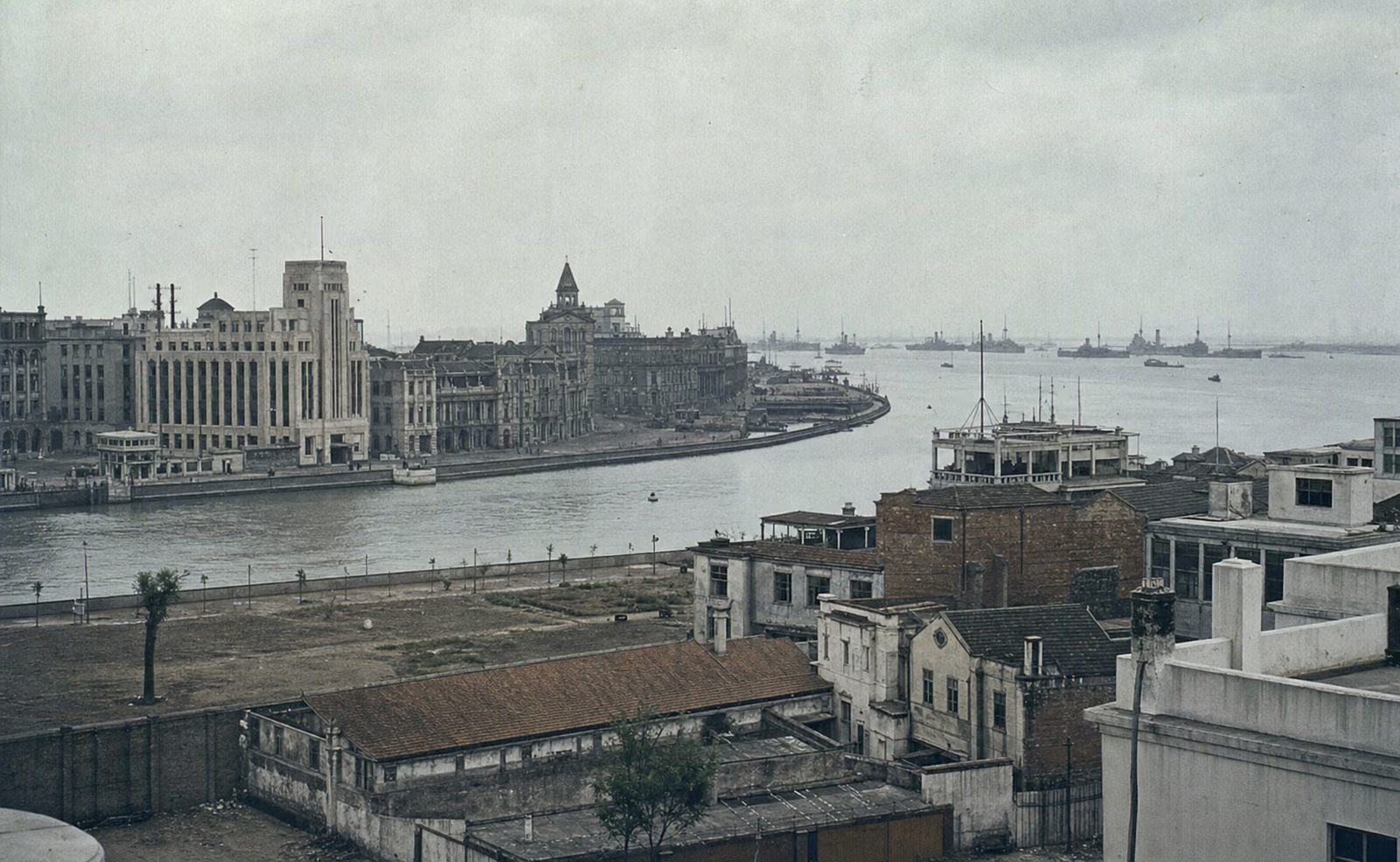
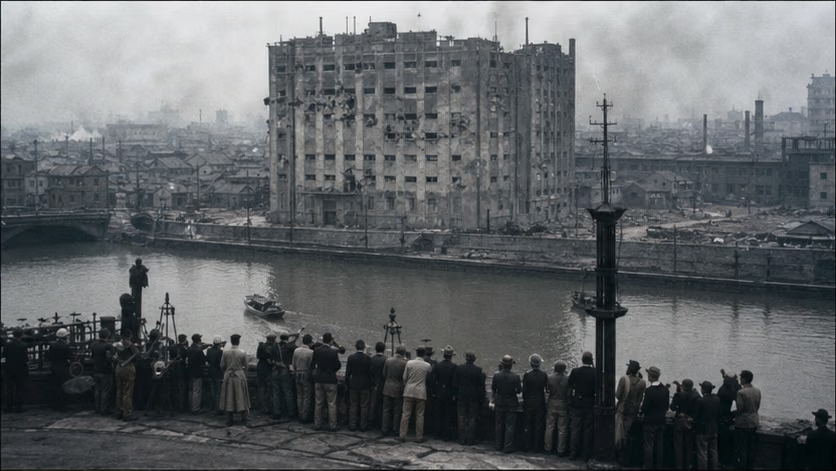
Shanghai: the foremost metropolis of the Far East, dense with concessions - the world watched this battle from the stands (the strange scene of Western reporters and foreign residents watching the fighting from across Suzhou Creek); one consideration behind the Chinese choice to fight a decisive battle here was precisely international visibility (for the debate over the strategic motive, see the disputes section). Terrain: reinforced-concrete urban districts + the waterways and rice fields of the northern suburbs - no defensible natural barrier and nowhere to dig in (the water table was high; trenches filled with water as soon as they were dug), while naval guns covered dozens of li in depth. The 1932 Shanghai Ceasefire Agreement restricted Chinese troop deployment (see *January 28 Incident (Battle of Shanghai, 1932)*) - before the fighting began, Chinese regular forces could not garrison the urban districts, and the first move had already been conceded.
Why It Was Fought
The Beiping-Tianjin Operation ended in only 22 days. On 7.29 (July 29), Beiping was abandoned; the next day Tianjin fell. The gate to North China was wide open, and Japanese reinforcements arrived in an unbroken stream - on that trajectory, the war would grind from north to south along the Pinghan and Jinpu railways, while the North China Plain was exactly the terrain where Japanese tanks and heavy artillery could operate most freely.
Shanghai was another key point on the board: the foremost metropolis of the Far East, ringed by the foreign concessions. If war began here, the world could not pretend not to see it. And the arrangement left by the 1932 Shanghai Ceasefire Agreement was this: Chinese regular forces could not garrison the urban districts, while the Japanese naval landing force had long been entrenched in Hongkou and Yangshupu. The first move had already been conceded.
Scholars give several motives side by side for the Chinese decision to open a second front in Shanghai: to drag the main Japanese axis of attack away from the north-south direction in North China and turn it into an east-west axis along the Yangtze, forcing Japan to chew its way upstream against the river and the Jiangnan water network; to use the prepared positions between Nanjing and Shanghai; to seek foreign aid through international visibility; and to show the Chinese public and the world the determination to resist. Whether this move was a "strategic pivot" or a mistaken strategy of feeding in reinforcements piecemeal is discussed in the final section - both interpretations acknowledge one thing: this battle was fought at the place chosen by the Chinese side. The resolve had a concrete landing point: at the Nanjing national defense conference in early August, commanders from the provinces gathered, and the policy of full-scale resistance was set from there (schedule and list of attendees unverified); the prepared positions in the Nanjing-Shanghai area had already been organized over the previous year under Zhang Zhizhong, commander of the Nanjing-Shanghai Garrison (details unverified). What the Chinese side could see was that the Japanese naval landing force in Shanghai numbered only several thousand; what it did not judge accurately was the speed of Tokyo's reinforcement. At first, the Japanese side did not intend to commit the army's main force in Shanghai, and the navy's asking word was "punishment"; on 8.15 (August 15), the Japanese government issued a statement that elevated this asking price into national policy, deciding to send army troops and form the Shanghai Expeditionary Army, while the plan still assumed a quick decision. Thereafter the stakes were raised step by step, the Tenth Army arrived as well, and Imperial General Headquarters was pulled along by the battlefield (its decision-making chain remains unverified) - Tokyo's timetable for "settling China in 3 months" was dragged down here.
The material boundaries on the two sides were asymmetrical: Chinese ammunition, heavy artillery, and assault equipment could not be replenished as fast as they were consumed, while customs revenue and the tax base of Jiangsu and Zhejiang lay under the guns (wartime fiscal details unverified); the Japanese side supplied itself by sea, steadily, but at the cost of ever-larger mobilization budgets. This layer of the decision has no dissent preserved for the time (no dissenting record found; unverified); systematic criticism came after the war - Li Zongren, in his memoirs, bitterly denounced the mistake of feeding the country's elite units into naval-gun range (original wording unverified).
The fuse came earlier than expected. On 8.9 (August 9), Japanese naval landing force lieutenant Oyama Isao drove through the security line at Hongqiao Airfield and was shot dead by the Chinese security force - the Hongqiao Airfield Incident. The Japanese side demanded the withdrawal of the security force and the dismantling of defensive works; the Chinese side refused. Negotiations had not yet broken up, but troops on both sides were already on the road: on the night of 8.11 (August 11), Zhang Zhizhong's Eighty-Seventh (87th) and Eighty-Eighth (88th) Divisions were ordered to advance toward Shanghai and enter the prepared positions (sequence of advance unverified); warships of the Japanese navy's Third Fleet pressed one after another into the Huangpu River. On 8.13 (August 13), shots rang out in the Zhabei direction.
In truth, the negotiating table had never really been set up. For the Chinese side, waiting longer meant watching Japanese forces eat their fill in North China and then move south at leisure; for the Japanese side, yielding meant the navy losing face in Shanghai under the gaze of the powers. On August 14, the Nationalist Government issued its statement of self-defense and resistance. That same day, the Chinese air force flew toward the Japanese warships on the Huangpu River.
Course of the Engagement
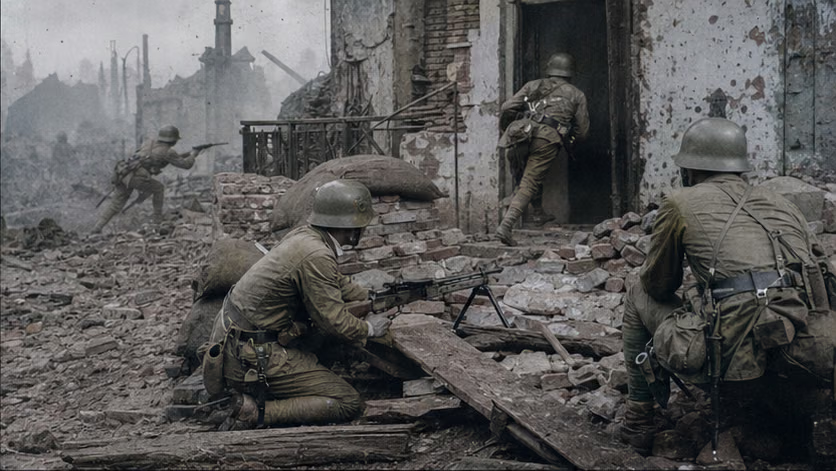
| Phase | Time | Key Points |
|---|---|---|
| Encirclement and assault | 8.13–22 | The Chinese Eighty-Seventh (87th) and Eighty-Eighth (88th) Divisions and others actively besieged the Japanese naval landing force strongpoints in Hongkou and Yangshupu, fighting house by house but failing to take them (lacking heavy artillery and assault training); the 8.14 air sortie and the "August 14" air battle (see *Air War and the Navy*); ※ on the same day, bombs fell by mistake in the crowded Great World district, killing and wounding more than 1,000 - one's own bombs fell on one's own refugees, a tragedy |
| Counter-landing attrition | 8.23–10 (mid-October) | Japanese reinforcements landed at Chuanshakou and Shizilin, and the Baoshan-Luodian-Yunzaobang line became a "mill of flesh and blood" (separate article: *Battles of Baoshan and Luodian*); provincial armies took turns filling the line, and a division could be wrecked within several days after going up |
| Dachang falls | 10.25–26 | The central position at Dachang fell, and the whole line shifted south to Suzhou Creek; the isolated unit at Sihang Warehouse covered the rear (10.26–11.1, separate article: *Defense of Sihang Warehouse*) |
| Jinshanwei landing | 11.5 | The Tenth Army landed at Jinshanwei on the northern shore of Hangzhou Bay and struck into the rear - the defenses toward Hangzhou Bay had already been stripped bare, a repetition of the 1932 Liuhe story on ten times the scale; the whole situation collapsed at once |
| General retreat | 11.8–12 | The order to retreat came late, the armies fought for the roads, and order broke down; the prepared national-defense works on the Wufu Line and Xicheng Line were barely used (the story that "the keys could not be found" belongs to the layer of circulating rumor; the real reason was disorder in the rout and no one available to take over the defenses, requiring further verification); on 11.12, all of Shanghai outside the concessions had fallen |
Casualties and Losses
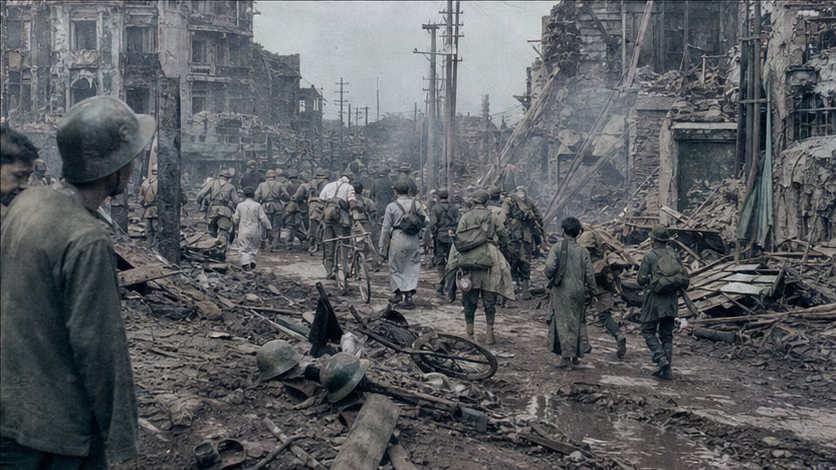
- Chinese side: 250,000 to 300,000 casualties (figures vary by statistical basis); the Central Army's German-equipped divisions and junior officer corps were nearly exhausted - for the next 8 years, the officer quality on the frontal battlefield never recovered to the level of August 1937, a cost dearer than the city.
- Japanese side: more than 40,000 casualties (Japanese battle-report basis) to more than 60,000 (later scholarship), two sets of figures recorded side by side.
- ※ Civilians: urban fighting and bombing left dead and wounded piled up across the city (the Great World, Nanjing Road, and other cases); hundreds of thousands of refugees poured into the concessions; Jacquinot's safety zone (the Nanshi refugee zone, established in 1937.11 - later a precedent for the Nanjing Safety Zone, a cross-reference); factories and schools in Jiangnan rushed their evacuation inland (upstream of the Yichang great evacuation, a cross-reference to the overview).
Aftermath
- The timetable of "conquering China in three months" was made void - three months took only one Shanghai.
- Japanese forces rode the rout straight toward Nanjing, while the Chinese main force was shattered and had no time to reorganize (see *Defense of Nanjing* ※) - the disorder of the retreat from Shanghai was the military premise of the Nanjing tragedy, this causal chain.
- The Nine-Power Treaty Conference in Brussels (November) dissolved in empty words - the ledger return for "fighting for the world to see" was zero; but international sympathy and the damage to Japan's international image were slow variables (assessment layer).
- Provincial armies shared trenches and blood - Sichuan troops left Sichuan, Guangxi troops went north, and the mobilization of "no distinction between north and south in the land" changed from slogan into casualty rolls; the century-old rift between the center and the localities was first glued together by blood in the trenches of Shanghai (see the structural-line conclusions in the related articles on warlord wars).
Accounts of Those Present
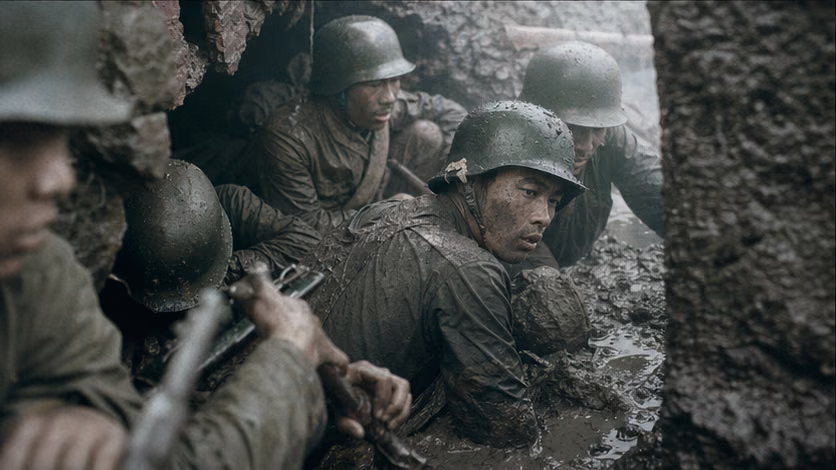
- One division, three days: the average time provincial units held after entering the line was counted in days (figures vary by each army's war-history basis) - the literal meaning of "filling the line." Six Guangxi divisions were wrecked in a single day during the Yunzaobang counterattack (10.21–23, unverified).
- The crater at the Great World: the mistaken bombing of 8.14 - in the first week of the War of Resistance, Shanghai civilians first died from their own air force's error; it belongs in the "experience" of the war.
- Both banks of Suzhou Creek: on the south bank, the concession neon continued as usual; on the north bank, blood and fire - one river separated two worlds, and civilians leaned on railings to watch the war. This spatial spectacle is a narrative asset unique to this battle (the stage for the separate Sihang Warehouse article is built from here).
- The steel helmets of the German-equipped divisions: the Eighty-Seventh and Eighty-Eighth Divisions, with M35 helmets and German-style equipment - the "best household goods" were spent in three months; the men in those photographs became one of the most classic visual memories of the War of Resistance.
- Matsui Iwane: commander-in-chief in the battle, hanged eight years later at the Tokyo Trial for the Nanjing atrocities - from Shanghai to Nanjing to the gallows, this man runs through two articles.
The Ground
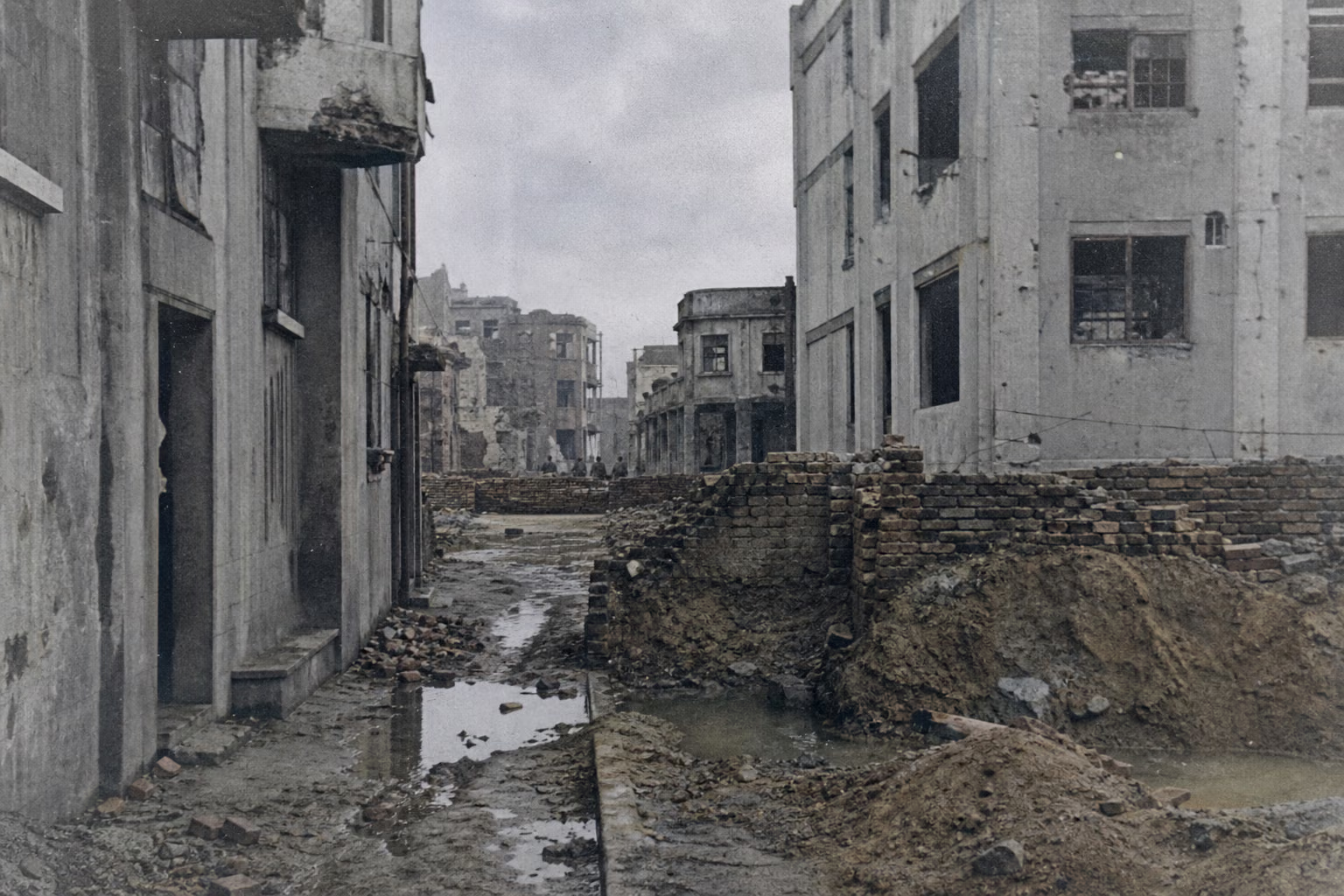
- Three kinds of space are all contained in one battle: urban assault (the Hongkou strongpoint cluster), water-network attrition (Luodian and Yunzaobang), and fortifications plus beachhead (Baoshan and Jinshanwei) - the general grammar of all battlefield spaces in the War of Resistance.
- The shadow of naval guns: everything within dozens of li of the riverbank lay inside naval-gun range - the pressure of "no safe depth" is the spatial undertone of this battle.
- The concessions: "neutral" islands embedded in the middle of the battlefield, with refugees, reporters, diplomats, and defending troops occupying the same map - a battlefield configuration rare in world history.
- The road of retreat: the rout corridor from Suzhou Creek to the Wufu Line - the spatial process of collapsing order, leading straight into *Defense of Nanjing*.
How Each Side Records It
- Chinese side: the prototype battlefield for "every inch of mountains and rivers, every inch of blood"; the Eight Hundred Heroes (separate article) became the peak of national memory; monuments to the "fallen officers and men of Shanghai" in each province and city are spread throughout the south (local-memory layer). Narrative change: after writing on the frontal battlefield recovered, Shanghai's status continued to rise.
- Japanese side: called it the "Second Shanghai Incident"; its war histories acknowledged it as a "bitter battle," with the heaviest casualties since the start of the war; Japanese scholarship has also discussed the connection between the military atmosphere of "punishing Nanjing" after Shanghai and the atrocities (level unverified).
- Third parties: reporting by Western correspondents present on the scene (the "Bloody Saturday" photograph - Wang Xiaoting's image of a baby in the ruins of Shanghai South Station, a landmark in the history of transmission, with the evidentiary level of the authenticity debate still to be distinguished) shaped the world's first impression of the Sino-Japanese War.
Disputes and Sensitivities
- The debate over strategic decision-making: whether actively opening the Shanghai front was a brilliant "pivot" or a needless consumption of elite forces - both schools of historical argument are recorded side by side; discussion of Chiang Kai-shek's responsibility for incremental reinforcement and delayed withdrawal is placed with it.
- The Great World mistaken bombing and the disorderly retreat - self-inflicted harm and command errors are not concealed because the fighting was tragic.
- Textual verification of the number and details of the "Eight Hundred Heroes" (see the separate article).
- Divergence over casualty figures remains.
Contents
There will be a separate article on Sihang Warehouse.
Sources and Open Questions
Sources: the Shanghai chapter of *Operational Record of the Frontal Battlefield in China's War of Resistance Against Japan*; *Collected Historical Materials on the Battle of Shanghai* (volume list unverified); the Japan Defense Agency War History Office's relevant volumes of *Army Operations in the China Incident*; materials from the Shanghai Songhu Memorial Hall for the War of Resistance Against Japan; reports by Western correspondents present on the scene (*The China Weekly Review*, etc.).
Open questions: the different statistical bases for strength and casualties on both sides; the sequence of the Guangxi Army's Yunzaobang counterattack; how the Jinshanwei defenses were stripped bare; verification of the actual circumstances in which the national-defense lines went unused; data on Jacquinot's refugee zone; literature on the debate over the "Bloody Saturday" photograph; the schedule and attendee list of the Nanjing national defense conference in early August; the full process by which Zhang Zhizhong directed construction of the Nanjing-Shanghai field positions; wartime fiscal details after the loss of customs revenue and the Jiangsu-Zhejiang tax base once the fighting began; the source text of Li Zongren's memoir criticism of the Shanghai decisive battle.
All images on this site are AI-generated depictions. They are not historical photographs, not primary sources, and do not depict any real individual.