Engagement Archive · Battle of Tai'erzhuang
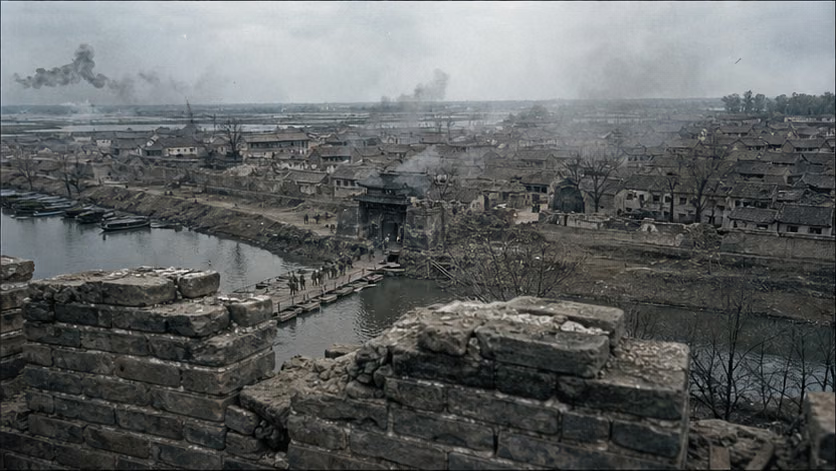
Sun Lianzhong's old Northwestern Army troops held house by house for two weeks in a walled town beside the canal, while Tang Enbo's corps looped back along the outer line and attacked from inside and outside, driving back the Seya Detachment of Isogai's Tenth Division - the first major victory on the frontal battlefield since the full-scale War of Resistance began, and the country went almost mad with joy.
Engagement Data
| Item | Content |
|---|---|
| Time | 1938.3.23 - 4.7 |
| Location | Tai'erzhuang, Yixian, Shandong (today Tai'erzhuang District, Zaozhuang), a walled town on the north bank of the canal |
| Part of | Fourteen-Year War of Resistance · Battle of Xuzhou (1938) (for the whole campaign, see *Battle of Xuzhou · Campaign Overview*; for the larger situation, see *Fourteen-Year War of Resistance · War Overview*) |
| Defending / enveloping side | Fifth War Area: Sun Lianzhong's Second Group Army (old Northwestern Army troops, with Chi Fengcheng's 31st Division holding the walled town) defended Tai'erzhuang; Tang Enbo's 20th Corps maneuvered and enveloped along the outer line |
| Attacking side | Japanese Tenth Division (Isogai Rensuke), Seya Detachment; part of Itagaki's Fifth Division was blocked in the Linyi direction by Pang Bingxun's and Zhang Zizhong's forces and failed to join it |
| Result | 4.7, Japanese forces routed toward Yixian, and the Chinese side recovered Tai'erzhuang - a major victory |
Belligerents
| Item | Chinese Side | Japanese Side |
|---|---|---|
| Strength | The Second Group Army had more than 20,000 men in the Tai'erzhuang direction (mainly the 31st Division defending the walled town); Tang Enbo's corps had several tens of thousands on the outer line (figures vary by account) | The Seya Detachment numbered from several thousand to more than 10,000, with tanks and heavy artillery (figures vary by account) |
| Firepower | No heavy-artillery advantage; depended on hand grenades and broadswords in close combat; Tang's corps artillery was the elite of the war area | Field artillery and heavy artillery + tanks + aviation |
| Use of Terrain | Deployed with the canal at their backs and no route of retreat; brick-and-stone walls and streets served as works | The Seya Detachment underestimated the enemy and advanced rashly, driving alone into the Zaozhuang-Tai'erzhuang line |
| Coordination | The cooperation between holding to the death inside the walled town and the outer-line maneuver was the key to victory or defeat (the two systems' accounts attack each other over the timing of cooperation; see the disputes section) | The Fifth and Tenth Divisions did not coordinate with each other; after Linyi was blocked, Seya became an isolated force |
Terrain and Conditions
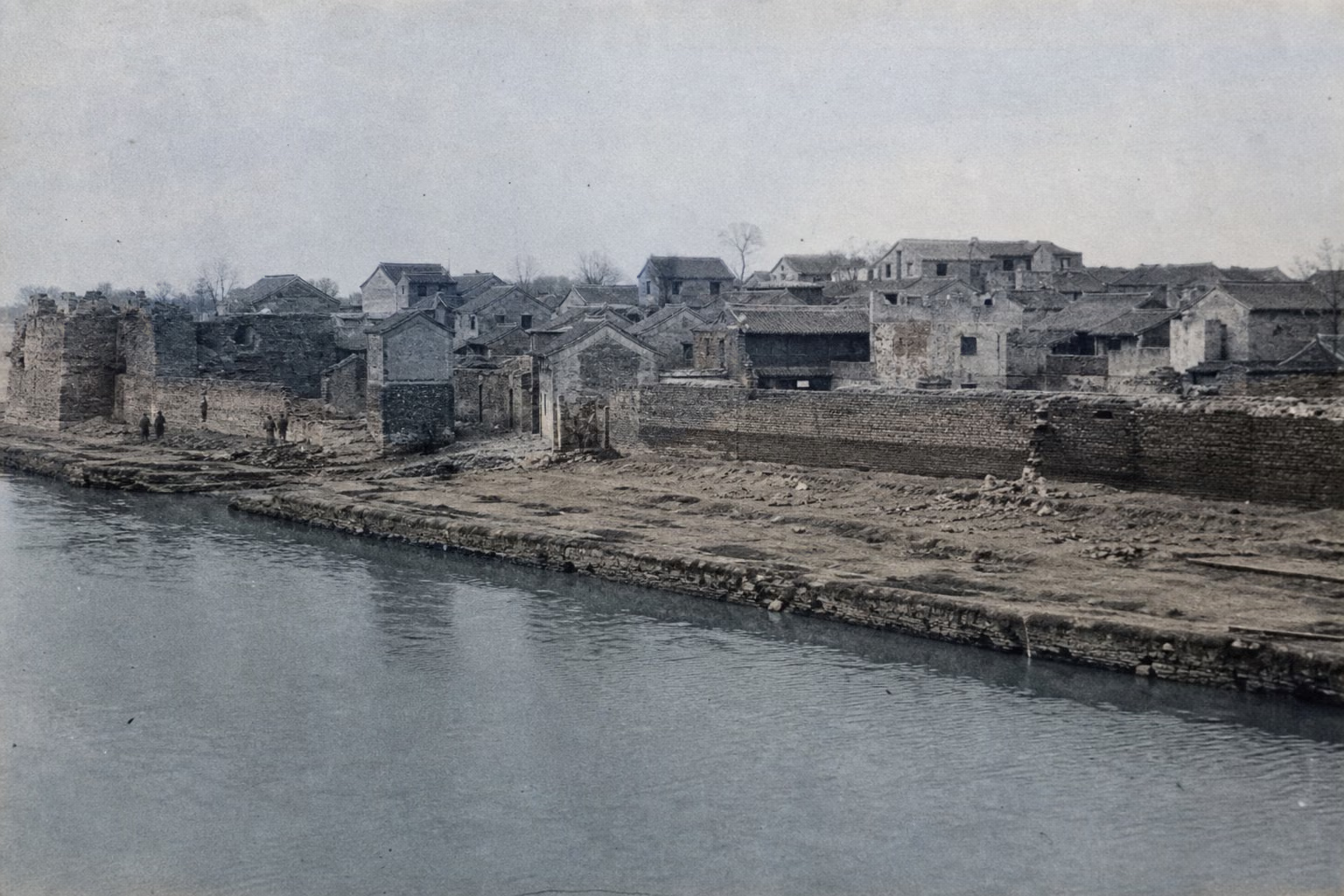
Tai'erzhuang: a water-and-land transport town on the north bank of the canal, with brick-and-stone walls and dense streets, the last gate northeast of Xuzhou. The defenders under Sun Lianzhong were old Northwestern Army troops - after the Central Plains War, the Northwestern Army had broken apart, and Sun's force had submitted to the central authorities but was still seen as a miscellaneous army; when they held this walled town, the canal was behind them, Isogai's division was before them, and *Defense of Tengxian* in the same campaign (separate article) had just bought them time to enter and deploy, with the lives of one Sichuan division.
Why It Was Fought
One day after the gunfire of the Shentouling ambush, on the Jinpu Railway, Tengxian fell (3.17). The time that Wang Mingzhang and his 3,000 Sichuan troops had bought with their lives had already become a position: Sun Lianzhong's Second Group Army rushed into Tai'erzhuang, and Chi Fengcheng's 31st Division entered the walled town to deploy, with the canal directly behind them.
Tai'erzhuang was a water-and-land transport town on the north bank of the canal, with brick-and-stone walls and dense streets, the last gate northeast of Xuzhou - once it was passed, Xuzhou lay open ahead. After breaking Tengxian, the Seya Detachment rode the momentum south and drove straight at this walled town, intending to knock open Xuzhou's northeastern gate in one stroke and then join Itagaki's Fifth Division coming from the Linyi direction.
But the other half of the rendezvous did not arrive: Itagaki's division was held fast at Linyi by Pang Bingxun's troops, and Zhang Zizhong's 59th Army force-marched to reinforce them, twice driving it back. The Seya Detachment could not wait for friendly forces, and would not wait - it underestimated the enemy and advanced rashly, driving alone into the Zaozhuang-Tai'erzhuang line. The Fifth and Tenth Divisions each fought their own battle; after Linyi was blocked, Seya was in reality already isolated.
Li Zongren's answer was a method of drawing the net closed: Sun Lianzhong's force would hold the walled town and pin the enemy under its hard walls; Tang Enbo's 20th Corps would yield the front, insert itself behind the enemy, and, once the enemy was stalled below the town, strike from inside and outside. The old Northwestern Army troops holding the town had submitted to the central authorities after the Central Plains War but were still treated as miscellaneous forces; now they deployed with water at their backs, and one step back meant the canal - using miscellaneous troops to hold the point and mobile troops to draw the net shut, the whole method of the Battle of Xuzhou was compressed into this one engagement.
This method was not one man's idea: Bai Chongxi brought a staff team to Xuzhou to assist, and the high command approved the plan of luring the enemy deep, gathering it, and destroying it (telegrams on the formation and approval of the plan unverified). When the decision was made, what the Chinese side could see was that the Seya Detachment hung alone and Itagaki's division was pinned at Linyi; what it could not fully see was whether there was a second echelon behind Seya, and whether Tang Enbo's corps could loop around into position on time - the latter later became the greatest unresolved question of the whole engagement (see the disputes section). The Japanese decision on the other side was much looser: after breaking Tengxian, the Seya Detachment moved south on the basis of a limited pursuit approved by the Second Army, not a campaign order for a single combined attack on Xuzhou (its mission boundary and approval level unverified) - the appetite of the army in the field had run ahead of Imperial General Headquarters' calculations. Isogai had not calculated where Tang's corps had gone: the best-equipped Chinese formation had yielded the front before his eyes and inserted itself toward his flank and rear (Japanese intelligence records on Tang's position unverified).
The material margins were narrow on both sides. The old Northwestern Army troops holding the town had no heavy artillery, and all ammunition supply had to be carried over the pontoon bridge behind them; if the bridge was cut, the town was cut off. Although the Seya Detachment had tanks and heavy artillery, its supply line had stretched all the way from Tengxian, and by the time it reached the town it was an isolated force that could no longer be replenished. Nor were there no other voices in the Chinese camp: when the defenders' casualties passed half, the front line once requested a shift of position, but Li Zongren held it down (correspondence telegrams unverified); the strict orders urging Tang Enbo to attack were sent several times with increasing urgency, each wording heavier than the last (original telegrams unverified). The objections did not go through - the net had already been spread, and the men drawing it shut would not loosen their grip first.
On March 23, the Japanese advance guard exchanged fire with the defenders' security troops; the next day, heavy artillery began bombarding the town. Behind the 31st Division was the canal, and the pontoon bridge was its only route of retreat and supply line - "with water at their backs" was not rhetoric here, but a fact on the deployment map.
Course of the Engagement
| Phase | Time | Key Points |
|---|---|---|
| Contact | 3.23-24 | The Japanese advance guard exchanged fire with the defenders' security troops; from 3.24, artillery bombarded the walled town, the area around the north gate was first breached, and the defenders counterattacked and retook it |
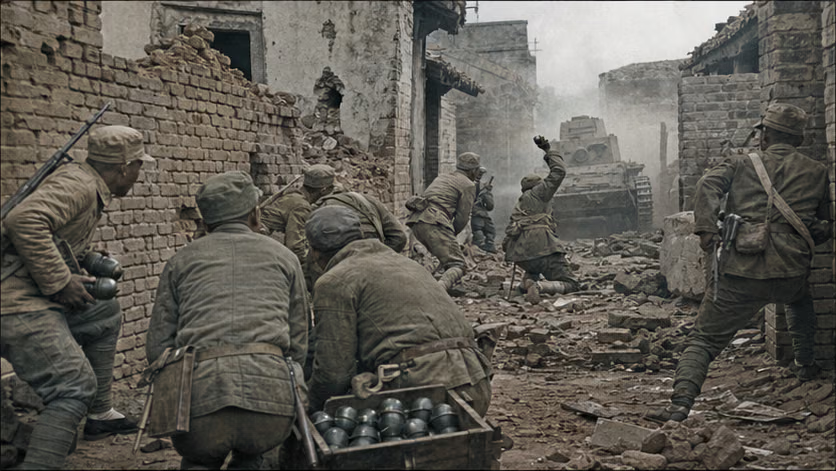
| Seesaw inside the town | 3.25-4.2 | Fighting street by street and house by house; more than half of the walled town was lost for a time, and the defenders were compressed into one corner at Nanguan but still held to the death; Sun Lianzhong ordered Chi Fengcheng, "when the soldiers are used up, put yourself in" (original wording and command level unverified), and Chi's phrase "fill it with living men" also circulated (level unverified); suicide squads made night attacks and retook street blocks, while broadsword teams fought at night in close quarters (details and level unverified); the defenders organized a suicide squad of several dozen men to seize Wenchang Pavilion and other points by night (few members survived; figure disputed) |
| Outer line closes | Late March-4.3 | Tang Enbo's corps maneuvered around the enemy flank and rear, captured key points near Yixian, and cut the enemy's supply and retreat routes; in the Linyi direction, Itagaki's division was blocked by Pang's and Zhang's forces and never arrived |
| Attack from inside and outside | 4.3-7 | On 4.3, the Chinese side counterattacked along the whole line, while the defenders inside the town counterattacked at the same time; Japanese casualties were heavy and supplies were cut off. On the night of 4.6, they began to break out and withdraw; on 4.7, they routed toward Yixian, and Tai'erzhuang was recovered |
Casualties and Losses
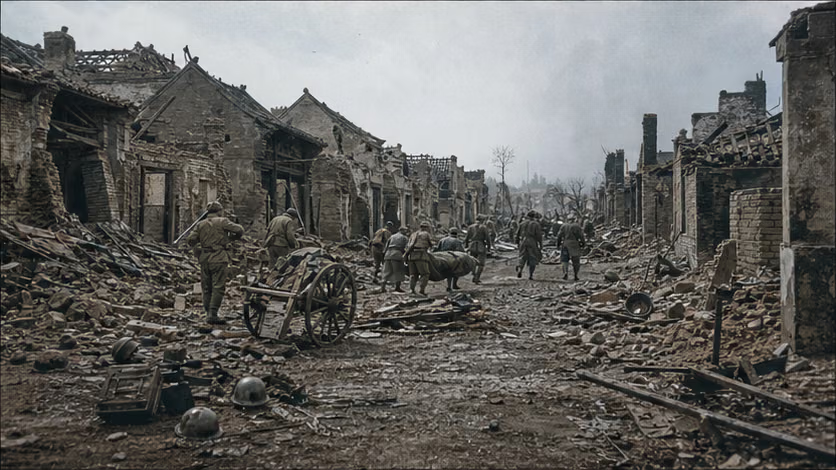
- Chinese side: casualties among all participating forces were around 20,000 (figures vary by account); the 31st Division holding the walled town suffered especially heavily, and almost every front-line company and platoon was replaced several times.
- Japanese side: two bases are recorded side by side - Chinese battle reports said more than 10,000 Japanese troops were killed and wounded (numbers vary by version); the Japanese side acknowledged several thousand casualties (this figure in the Senshi Sosho is disputed). Whichever basis is used: the Seya Detachment was battered and driven back, the first organized defeat and retreat suffered by Japanese forces on the frontal battlefield since the war began.
- ※ Civilians: the walled town and surrounding villages were destroyed by the fighting, with casualties among residents who had not had time to flee (local-gazetteer and investigation-material entries unverified).
Aftermath
- The country went almost mad with joy: 100,000 people in Wuhan marched with torches, and celebrations of victory broke out across the country - the first concrete proof since the full-scale War of Resistance began that "we can win"; the morale effect was the greatest result of this major victory.
- The remnants of Isogai's division withdrew to Yixian to await reinforcement; stimulated by this defeat, Imperial General Headquarters reinforced for a north-south encirclement, and one month later Xuzhou was abandoned (see the overview) - the major victory did not change the strategic passivity.
- "Tai'erzhuang" from then on became a symbol of the spirit of the War of Resistance, and the place name itself entered national memory.
- Layer of contemporary memory: in 1986, the mainland film *The Bloody Battle of Tai'erzhuang* was released, the first positive screen presentation of the Nationalist Army's War of Resistance on the frontal battlefield. It shook audiences at home and abroad and has been seen as one node in the thawing of War of Resistance narratives across the Taiwan Strait, and even cross-strait relations (the evaluative level of its ice-breaking effect unverified).
Accounts of Those Present
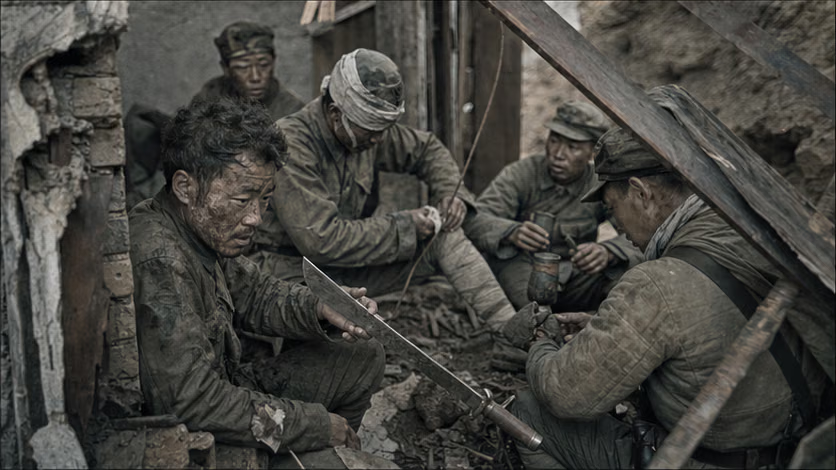
- "Put yourself in": Sun Lianzhong's order to Chi Fengcheng - "when the soldiers are used up, put yourself in; after you have gone in, I will come in and fill it" (versions vary, level unverified). The weight of this sentence lies in its literal meaning: inside the walled town there were no troops left to rotate in.
- Suicide-squad night attack: the defenders organized a suicide squad of several dozen men to grope forward in the dark and seize streets by night; there is a circulated saying about a reward in silver dollars, "those who come back alive should return the money" (circulating layer, source unverified). Night fighting by broadsword teams was the old skill of the Northwestern Army - by day, artillery inferiority; by night, close-quarters blades leveled the field.
- Deployed with the canal at their backs: the defenders had the canal directly behind them and no retreat - "with water at their backs" was not rhetoric, but a fact on the deployment map.
- Cooks and stretcher-bearers went into the firing line: by the end of the fighting inside the town, cooks, grooms, and clerks were all put into the positions (recollection layer, source unverified).
- Chi Fengcheng: the main commander holding the walled town, whose postwar fate was rough (he died in prison in the 1960s and was later rehabilitated - details unverified) - the second half of a hero's life is another article.
The Ground
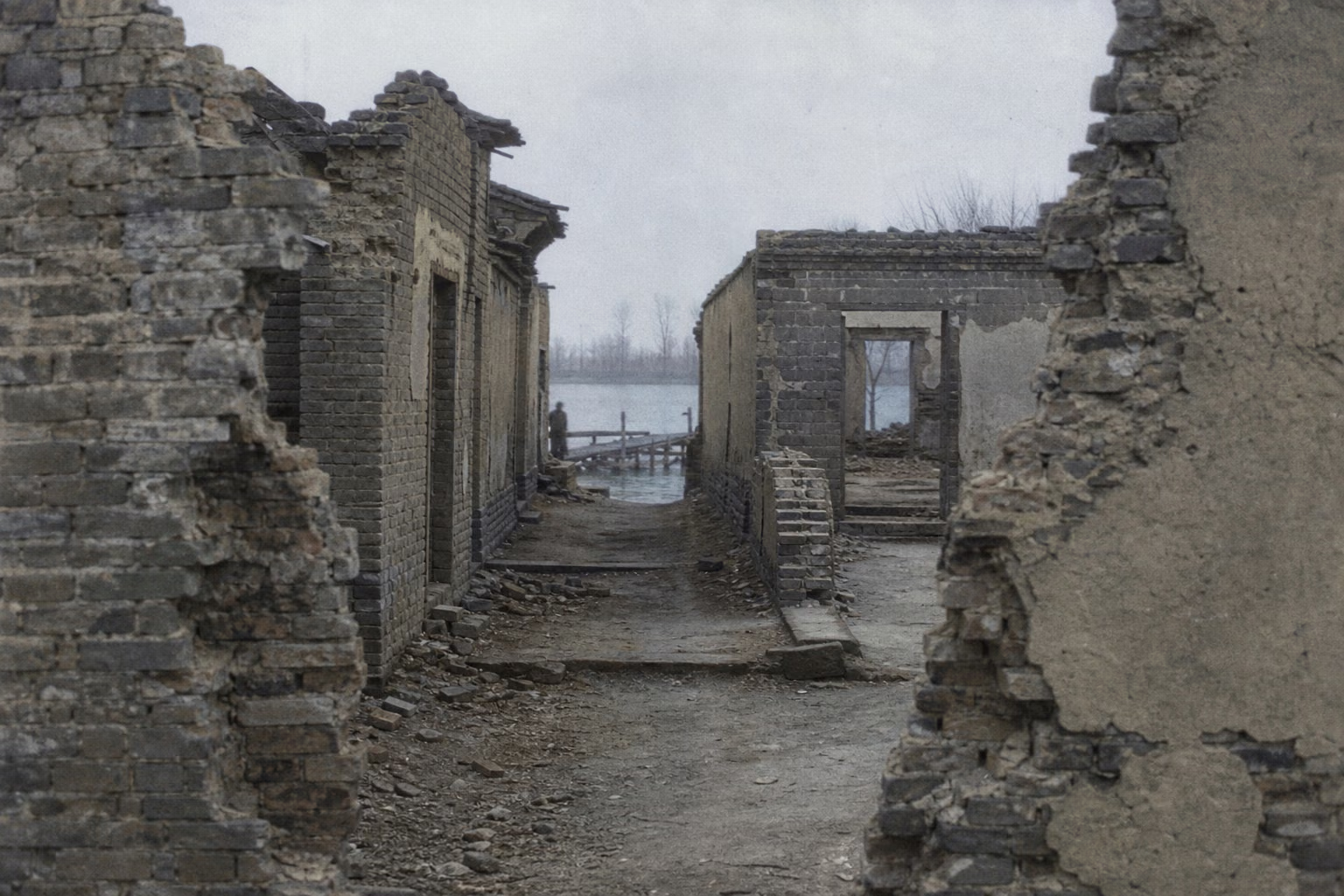
- Street fighting in the walled town: brick walls, streets, and courtyards fought over house by house - a longer and larger-scale sample of urban close combat than Tengxian; Wenchang Pavilion, the mosque (inside the west gate), and other points became landmarks of the street fighting.
- Space with water at the back: the canal was behind them, and the pontoon bridge was the only route of retreat and supply line - to hold the bridge was to hold life.
- Outer-line space: Tang's corps' enveloping route (toward Yixian) - two layers of space on the same battlefield, defense and attack making each other possible.
- The Memorial Hall of the Great Battle of Tai'erzhuang and surviving battlefield remains exist today (exhibition and site conditions unverified).
How Each Side Records It
- Chinese side: the first major victory on the frontal battlefield, and "Tai'erzhuang" became a synonym for the spirit of the War of Resistance; narratives on both sides of the Taiwan Strait are broadly in tune, and the 1986 film is a landmark event in shared memory.
- Japanese side: the official war history's way of recording this defeat and retreat is "line adjustment" - not calling it defeat and retreat, but calling it a redeployment adjustment (original text unverified). Wording is itself standpoint: for the same withdrawal, the Chinese side records "rout," while the Japanese side records "line adjustment," and the two layers are placed side by side. Japanese war histories also acknowledge that the Seya Detachment suffered major losses and had to be "rebuilt" (original text unverified).
- Third parties: Western correspondents in China reported the victory at once (*Ta Kung Pao*'s Fan Changjiang and other Chinese reporters, and dispatches from world news agencies; article titles unverified), and "Chinese army wins" became an international headline for the first time.
Disputes and Sensitivities
- The debate over Tang Enbo: was the outer-line maneuver "intentional watching and preserving strength," or "drawing the net shut behind the enemy according to plan"? The Sun Lianzhong-line and Li Zongren-line narratives and the Tang-line narrative have long attacked one another; after distinguishing the level of the materials, the two accounts are recorded side by side.
- Casualty basis: Chinese figure of more than 10,000 vs Japanese figure of several thousand; the two accounts coexist. The Japanese "line adjustment" wording is itself a sensitive point, and this article records both accounts side by side.
- Circulating-layer narratives such as the silver dollars for the suicide squad and details of the broadsword teams are all distinguished by evidentiary level.
- If Chi Fengcheng's later life enters the "experience" layer, it belongs to a sensitive area of contemporary history and must be handled carefully.
Sources and Open Questions
Sources: the Tai'erzhuang chapter of *Operational Record of the Frontal Battlefield in China's War of Resistance Against Japan*; Li Zongren's memoirs; war histories of Sun Lianzhong's and Chi Fengcheng's units and memoir collections by participants (volume list unverified); materials from the Memorial Hall of the Great Battle of Tai'erzhuang; the relevant volumes of *Army Operations in the China Incident* by the War History Office of Japan's Defense Agency; unit histories of the Seya Detachment and the Tenth Division; the 1986 film *The Bloody Battle of Tai'erzhuang* and studies of its impact.
Open questions: each basis for the two sides' troop strength and casualties; versions and sources of "put yourself in"; number of suicide-squad members and survivors; original source of the Japanese "line adjustment" wording; original telegrams on the timing of Tang Enbo's movements; titles of Western correspondents' reports; local-gazetteer entries on civilian casualties; documentary level for the cross-strait effect of *The Bloody Battle of Tai'erzhuang*; the details of Chi Fengcheng's later life; telegrams on the formation and approval of the Fifth War Area operational plan; the mission boundary and approval level for the Seya Detachment's southward advance; Japanese intelligence records on Tang Enbo's corps movements; correspondence telegrams on Sun Lianzhong's request to shift position and Li Zongren's order holding it down; original telegrams urging Tang Enbo to attack.
All images on this site are AI-generated depictions. They are not historical photographs, not primary sources, and do not depict any real individual.