Engagement Archive · Battle of Western Hubei
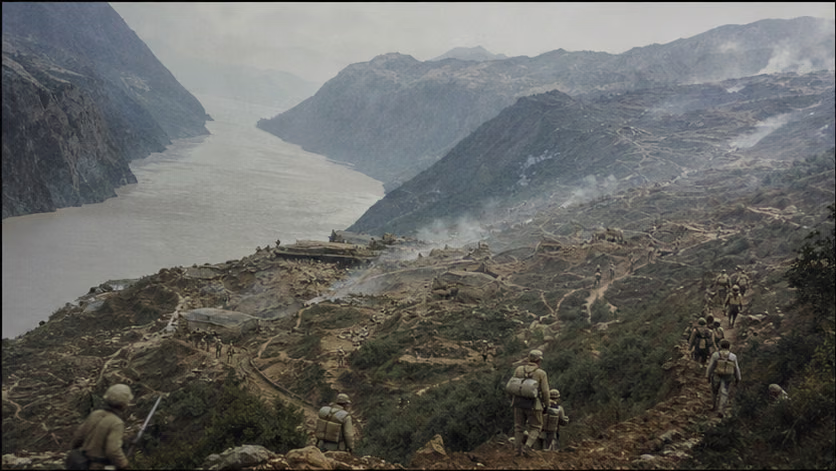
In the early summer of 1943, the Japanese Eleventh Army drove west into the Qingjiang River basin and reached Shipai Fortress at the mouth of the Three Gorges, the last river-defense gate shielding Chongqing; Hu Lien's Eleventh Division held Shipai, and after the Japanese offensive stalled, the whole line withdrew. The Chinese side called it the "Great Victory of Western Hubei"; the Japanese side recorded it as a turn back after objectives had been achieved -- two ways of remembering the same battle remain side by side.
Engagement Data
| Item | Content |
|---|---|
| Time | Early 1943.5 – mid-6; Defense of Shipai 5.28–5.31 |
| Location | Western Hubei: south bank of the Yangtze, Qingjiang River basin — Yidu — Changyang — Shipai (south bank at the mouth of Xiling Gorge in the Three Gorges) |
| Part of | Fourteen-Year War of Resistance · stalemate phase on the frontal battlefield |
| Chinese side | Sixth War Area (commander-in-chief Chen Cheng; the wartime chain of command included an episode in which Sun Lianzhong acted on his behalf, unverified); Shipai was held by the Eleventh Division, 18th Army (division commander Hu Lien) |
| Japanese side | Eleventh Army (commanding officer Isamu Yokoyama) |
| Result | Japanese forces began withdrawing along the whole line from 5.31; Chinese pursuit broadly restored the previous situation |
Belligerents
| Item | Chinese side | Japanese side |
|---|---|---|
| Strength | Sixth War Area: more than 10 armies (orders of battle vary by basis, with the often-cited figures of "about 150,000" and "about 410,000" commonly listed side by side, unverified); Shipai garrison: Eleventh Division, about 11,000 men | Eleventh Army: based on about 3 divisions plus detachments, about 100,000 men (Japanese-side figures vary by account) |
| Firepower | River-defense fortress guns + divisional artillery; the Shipai works had been built up for years | Divisional artillery + aviation + Yangtze River fleet support upriver |
| Terrain | Mountain and river defile at the mouth of the Three Gorges, with prepared defensive positions | Attacking uphill into mountain passes, with little room to deploy forces |
Terrain and Conditions
(For the broader situation -- the reversal in the Pacific War, Japan's calculations for opening continental lines of communication, and Chongqing's rear area -- see *Fourteen-Year War of Resistance · War Overview*; this article covers only Western Hubei.)
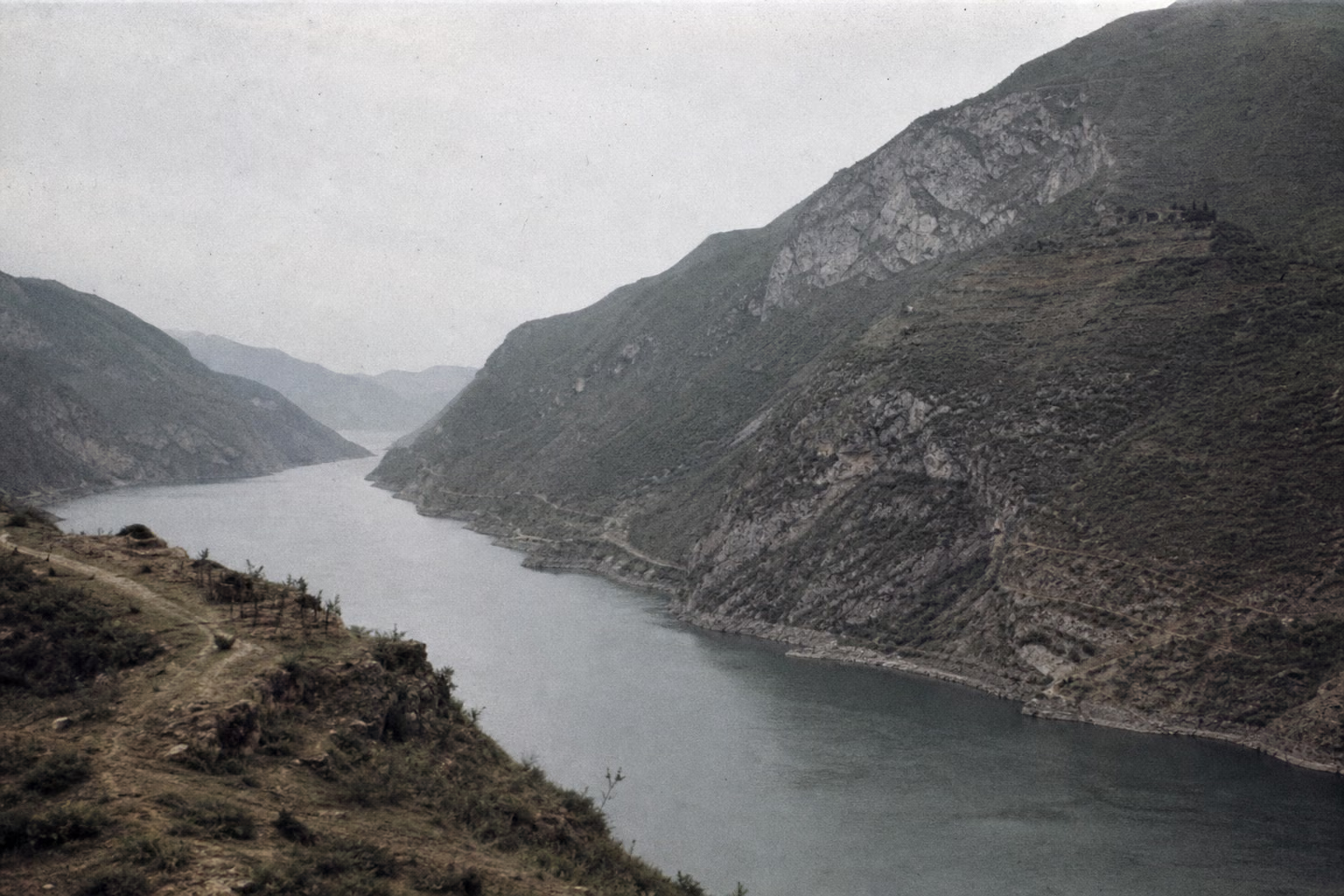
After Yichang fell in 1940, Japanese forces held Yichang, blocked the eastern mouth of the Three Gorges, and faced the Sixth War Area across the river for three years. Shipai lay about twenty kilometers upstream from Yichang, where the Yangtze turns into Xiling Gorge and the river narrows between steep mountains -- the first lock on the river-defense line above Yichang. Once Shipai was passed, in theory no fortress remained to guard the Three Gorges waterway, and the river-defense system from Yichang to Chongqing would be opened from behind. The Sixth War Area command and the river-defense forces had worked this place for years; local people called it "Shipai Fortress."
Why It Was Fought
The siege of Qinyuan had just entered its first year; behind enemy lines, war was measured by the year. On the frontal battlefield, the timetable still moved by campaigns -- in the early summer of 1943, the turn came to the Yangtze.
Yichang had been lost in the 1940 Battle of Zaoyang–Yichang. From then on, Japanese forces held Yichang, blocked the eastern mouth of the Three Gorges, and faced the Sixth War Area across the river for three years. About twenty kilometers upstream from Yichang was Shipai: here the Yangtze turns into Xiling Gorge, the river is narrow and the mountains steep, and fortress guns overlooked the shipping channel -- the first lock on the river-defense line above Yichang. Once Shipai was passed, no fortress remained to guard the Three Gorges waterway, and the four-hundred-kilometer river-defense system from Yichang to Chongqing would be opened from behind. The Chinese side's public formulation therefore had only six characters: if Shipai stands, Chongqing is safe.
The Japanese Eleventh Army launched its Western Hubei operation in May. In the terms used by Japanese war histories, the objective was not especially grand: large numbers of evacuated inland vessels and stores were gathered along the river in Western Hubei, and the campaign was intended to seize vessels, destroy the effective strength of the river defenses, tie down Chinese forces, and threaten Enshi and Badong if the opportunity arose -- the operational orders did not originally include long-term occupation of Shipai or a direct drive on Chongqing (the original wording of the Japanese mission statement is unverified). But the opposite bank read it differently: Japanese forces broke through point after point along the Qingjiang, and their spearhead pointed straight at Shipai. In Chongqing's eyes, this was a knock at the door of the Three Gorges. The defenders could not gamble that "the enemy is only here to take ships" -- behind Shipai there was no second Shipai. The Military Commission ordered the Eleventh Division of the 18th Army to hold Shipai to the death, with Chen Cheng in direct command.
Yokoyama Isamu's resolve also had a deadline. By 1943, the Eleventh Army was being drained by the Pacific War; manpower, vessels, and fuel were all tight. From the moment the plan was drafted, it already contained the word "turn back" -- go in, seize the vessels, disrupt the river defenses, then withdraw (the time-limit wording in the Japanese operational plan is unverified). That material boundary was precisely the origin of the postwar dispute over "great victory" versus "planned turn back."
On Chongqing's side, the boundary belonged to another ledger: prices in the rear area had soared year after year, all war areas were generally short of pay and grain, and what the Sixth War Area could count on were fortifications built over years and ammunition stored before the battle. The real capital of the river defense was that behind Shipai there was no second Shipai. Chen Cheng, who was concurrently commander-in-chief of the Expeditionary Force, returned from Yunnan to direct the battle (the timing of his return to Hubei and the command handover are unverified). Several rounds of cables passed between the Military Commission and the war area, and the decision finally landed on one sentence: the Eleventh Division would hold Shipai. When this resolve was made, Chongqing lacked the most crucial piece of intelligence -- the line in the Japanese mission order saying "withdraw once achieved" could not be read from across the river, and the defenders could only defend according to the worst reading. Existing records have left no trace of dissent over whether to hold or not (unverified).
In early May, Japanese forces crossed the Yangtze from Yidu and Zhijiang and advanced west; the Qingjiang line fell back point by point. In late May, about eleven thousand men of the Eleventh Division entered the core Shipai positions that had been prepared for years. Division commander Hu Lien replied by telegram to Chen Cheng in words later repeated across the country: success was not assured, but the resolve to die for the cause was certain (telegram versions unverified). Before the fighting had even begun, the defenders had already written the word "death" in front of themselves.
Course of the Engagement
| Phase | Time | Key Points |
|---|---|---|
| Westward drive into Qingjiang | Early to mid-5 | Japanese forces crossed the Yangtze from Yidu and Zhijiang, advanced west, broke the defenders along the Qingjiang, and took Yuyangguan and other places in succession (the sequence in which each point fell is unverified); the Chinese side resisted step by step and fell back step by step |
| Closing on Shipai | 5.25–5.27 | Japanese forces advanced by separate routes toward Shipai's perimeter; part of the 18th Army delayed them step by step, while the entire Eleventh Division entered the core Shipai positions; other river-defense units and reinforcing armies drew in toward the two flanks |
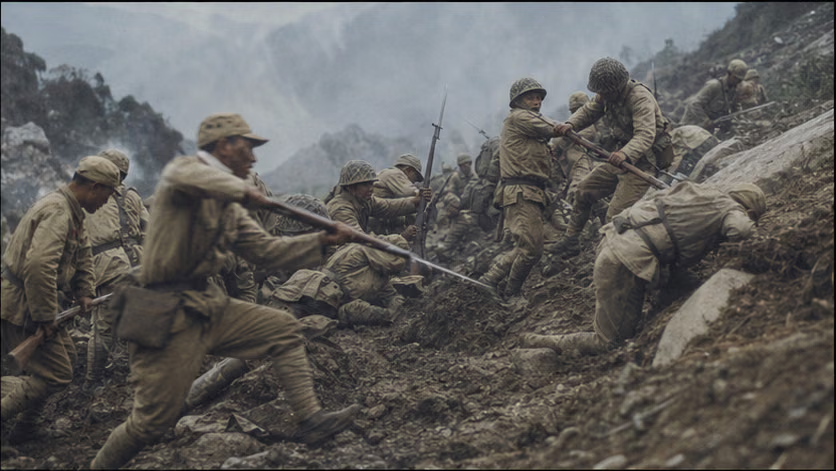
| Defense of Shipai | 5.28–5.31 | Elements including the Japanese 39th Division made strong attacks along the Caojiafan and Greater and Lesser Zhujiaping line (position details unrecorded). Around 5.28, large-scale close combat with blades occurred in the Caojiafan sector -- the saying that "for three hours no gunfire could be heard" became widely circulated (Level note: this account comes from later recollections and literary narratives; no corresponding record has been found in contemporary battle reports, unverified). Japanese forces attacked uphill into the mountain passes for days, supplies gradually ran short, and their flanks and rear were threatened by Chinese reinforcements; the offensive stalled |
| Whole-line turn back | 5.31–mid-6 | Japanese forces began withdrawing from 5.31; Chinese units pursued and intercepted them, and by mid-6 the general previous situation had been restored. Whether Japanese forces carried away plundered vessels when they withdrew (one of their operational objectives) differs between Chinese battle reports and Japanese records (this claim is unverified) |
Casualties and Losses
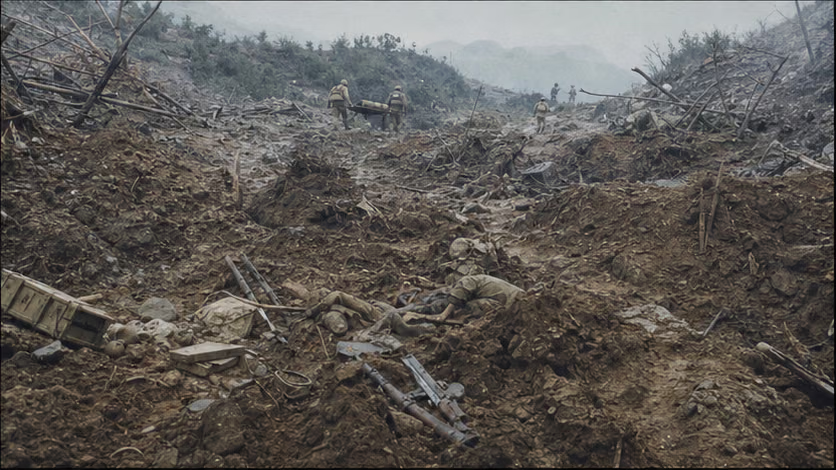
- Chinese side: about 15,000 casualties (Chinese-side figures vary by account; statistical boundaries unverified); the Eleventh Division suffered several thousand casualties in the Shipai positions.
- Japanese side: Japanese war histories record about 3,500 killed and wounded (figures vary by account); Chinese battle reports claimed more than ten thousand Japanese killed and wounded (the propaganda figures for the "Great Victory of Western Hubei" vary by account, with higher versions unverified). The two sets of figures are listed side by side; no choice is made between them.
Aftermath
- Chinese propaganda called it the "Great Victory of Western Hubei"; Hu Lien and the Eleventh Division became famous, and received the Order of Blue Sky and White Sun (decoration list unverified).
- The debate over the substance of the "great victory" is listed with both accounts side by side: the Chinese-side account is that the gate was held and the enemy offensive was frustrated; the Japanese-side account is that the objectives of seizure and containment had been achieved and the army turned back according to plan -- the same type as the "two victories" in the First and Second Battles of Changsha, with no definitive judgment made here.
- Militarily: the success of the defense is not in dispute; the enemy-loss figures remain contested. Psychologically: the meaning of "Chongqing's gate was held" for the interior outweighed the battlefield result itself -- the breath that had been held for three years after Yichang fell could finally be released.
- Contemporary commentary compared it to the "Stalingrad of the East" (1943 was just after the Battle of Stalingrad) -- Level note: a comparison made in newspaper commentary, not a settled historiographical judgment; not written here as fact.
- Japanese forces did not knock at the Three Gorges again afterward: Western Hubei was the last large-scale Japanese ground offensive toward Chongqing (the scope of this statement is unverified).
Accounts of Those Present
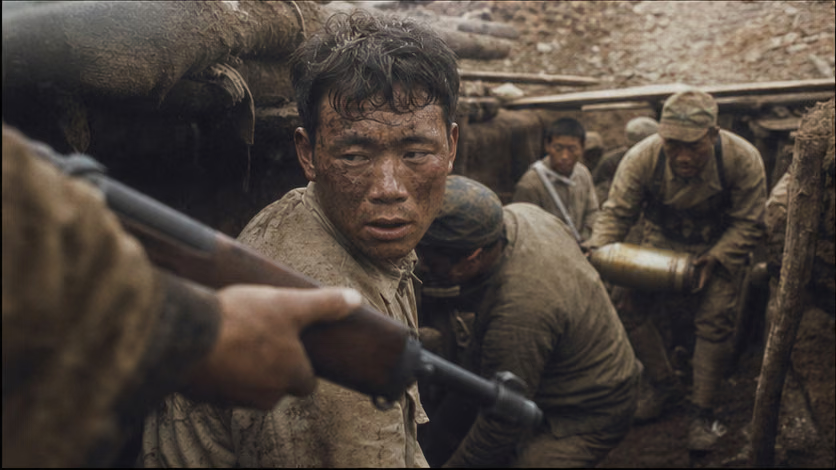
- Hu Lien's telegram and farewell letters: before the battle, Chen Cheng telegraphed to ask whether holding Shipai was assured, and Hu Lien replied: "Success is not assured, but the resolve to die for the cause is certain." (the telegram text has been cited in many places; versions differ slightly in wording, and the original is unverified ✓) There are also farewell letters to his father and wife, arranging affairs after his death and entrusting his children to his wife (the original text and survival of the letters are unverified).
- The farewell rites: before entering the positions, Hu Lien led the whole division in offerings to Heaven and ancestors, bathing and changing clothes -- guarding the fortress with the ritual of "certain death" (the source level for the ritual details is unverified).
- The blades at Caojiafan: in the narrow mountain ground, the two sides were tangled together; artillery and machine guns could not open up, and the fighting fell back to cold weapons and stones -- from this came the circulated version that "for three hours no gunfire could be heard." Whatever the truth of the number, Shipai in those days was filled with human lives.
- Farmers in the fortress: most civilians of Shipai had been evacuated before the battle; the young and able-bodied who remained helped the army carry ammunition and lift the wounded (details unrecorded).
The Ground
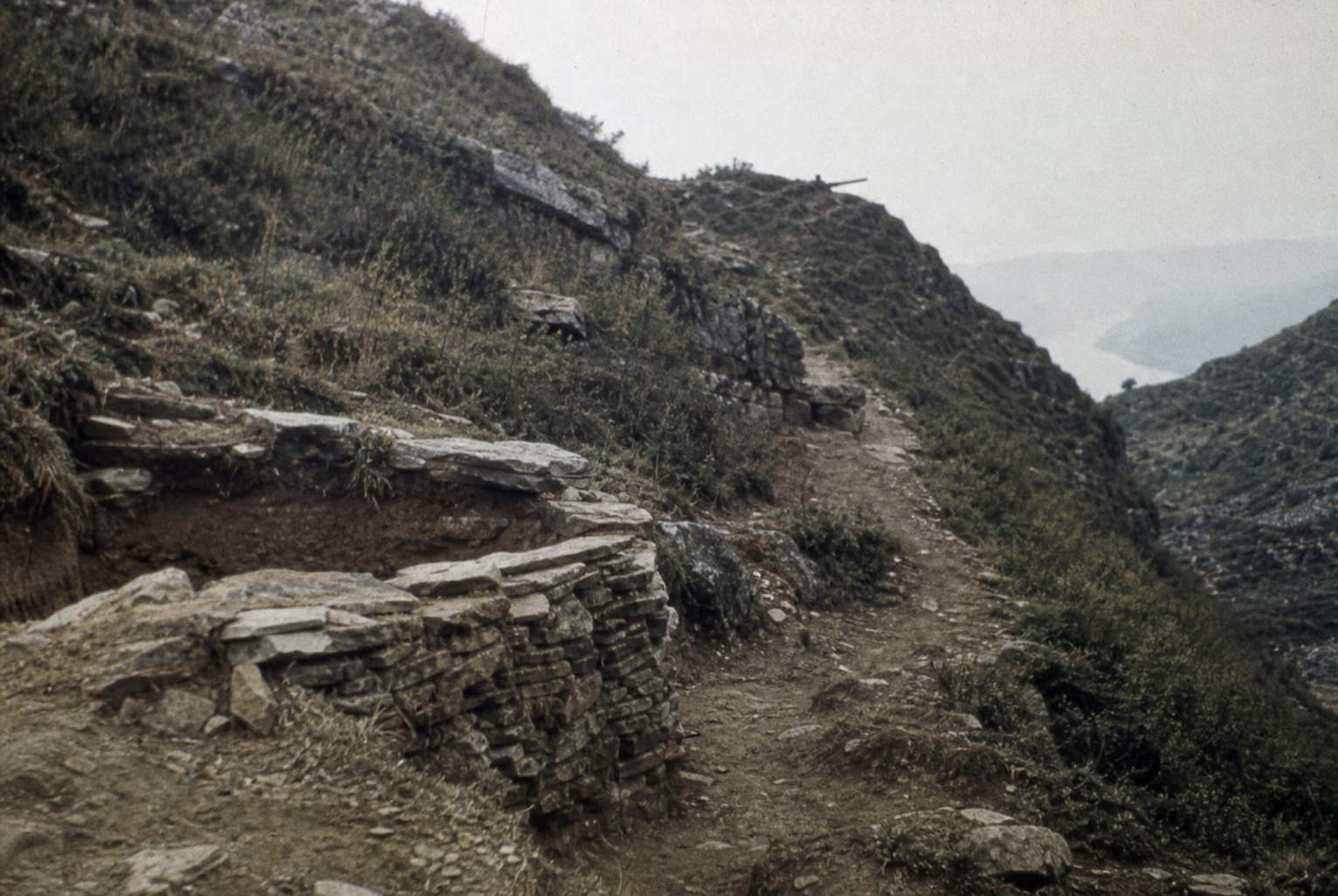
- Shipai was the "bottom of the pocket": the Yangtze narrows and bends here, the mountains on the south bank look down from above, and Japanese forces could only attack uphill along a few mountain passes, with no room to deploy.
- The Caojiafan — Greater and Lesser Zhujiaping — Tiantaiguan line: a group of outlying hill positions contested point by point, on the scale of battalion- and company-level hills.
- River-defense fortress guns: fixed gun positions blocked the shipping channel on the river -- the defenders' real source of confidence, and the Japanese fleet did not dare steam upstream past Shipai (the actual combat record of the fortress guns is unverified).
- The geographic logic of the whole battle: Yichang to Shipai, twenty kilometers; Shipai to Badong to Chongqing, four hundred kilometers of river-defense depth -- Shipai was the "last door bolt."
How Each Side Records It
- Chinese side: the "Great Victory of Western Hubei," with Shipai as a landmark defensive victory in the later stalemate phase of the frontal battlefield; Hu Lien's "die for the cause" telegram became a famous line in the War of Resistance narrative.
- Japanese side: war histories record it as a turn back after achieving the objectives of seizing vessels and tying down Chinese forces, not as a "frustration" (Japanese accounts of the assault toward Shipai and loss figures vary by account).
- Contemporary commentary: Chongqing newspapers compared it to Stalingrad (for the level note, see above).
Disputes and Sensitivities
- The substance of the "great victory": the Japanese objectives already included "seizure and containment, withdraw once achieved"; the Chinese narrative of "great victory" and the Japanese narrative of "turn back" each have archival support -- the two accounts are listed side by side.
- "For three hours no gunfire could be heard": widely circulated, but without support in contemporary archives -- not treated as fact.
- "Stalingrad of the East": a contemporary commentary comparison, not written as fact.
- Hu Lien later became a formidable opponent of the People's Liberation Army in the civil war (Kinmen); his War of Resistance narrative and his civil-war image belong to two separate evaluative systems, and the context should be kept in mind when citing him.
Sources and Open Questions
Known main sources:
- Detailed battle report of the Sixth War Area on the Battle of Western Hubei (inclusion in Taiwan-published war histories unverified)
- Japanese Defense Agency War History Office, *Senshi Sosho*, volumes on the China Expeditionary Army in Showa 17 and 18 (Japanese official history)
- Hu Lien's memoirs and recollections by participants from the Eleventh Division (level: recollection)
Open questions: original text of the Japanese operational mission order (wording on seizing vessels and containment); orders of battle on both sides and the statistical boundaries behind the "150,000/410,000" figures; Chen Cheng/Sun Lianzhong command sequence; sequence of the fall and contestation of the outlying Shipai positions; whether contemporary records exist for the close combat at Caojiafan; original Hu Lien telegram and collation of its versions; original text and survival of the farewell letters to his father and wife; combat records of the fortress guns; whether Japanese forces succeeded in taking plundered vessels when they withdrew; statistical boundaries for Japanese self-recorded casualties; different versions of the propaganda battle results for the "Great Victory of Western Hubei"; earliest newspaper source for the "Stalingrad of the East" comparison; time limits in the Japanese operational plan and its wording for "turn back"; timing of Chen Cheng's return to Hubei and the command handover; cables between the Military Commission and the Sixth War Area; Chinese assessments of Japanese operational objectives; records of any dissent over the decision to hold Shipai.
All images on this site are AI-generated depictions. They are not historical photographs, not primary sources, and do not depict any real individual.