Campaign Overview · Battle of Taiyuan (1937)
The largest campaign in North China: Yan Xishan's Jin-Sui Army, the Central Army moving south, and the Eighth Route Army, only recently reorganized, fought on the same map in Shanxi as three separate systems; at the front, Xinkou held for more than twenty days and did not let the Japanese forces through, but once Niangzi Pass broke on the flank, the whole line collapsed, and Taiyuan fell on 11.9. Before the smoke of the frontal campaign had cleared, the Eighth Route Army's three divisions had already remained in the mountains of Shanxi: the end of this battle was the opening of the battlefields behind enemy lines.
Engagement Data
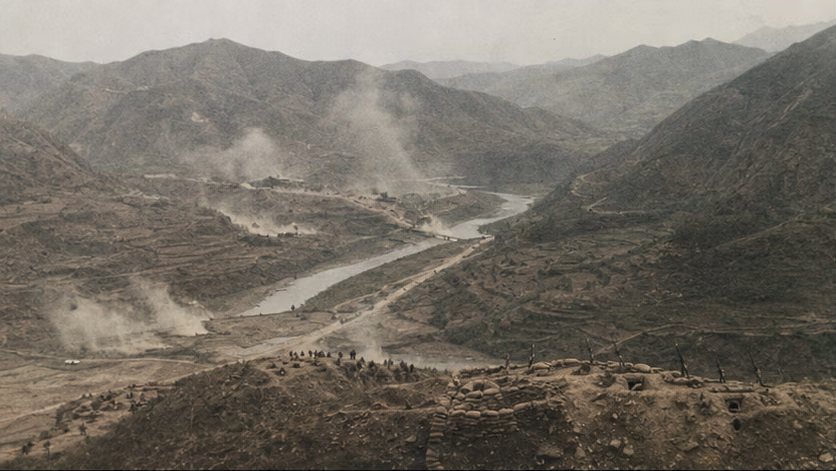
| Item | Content |
|---|---|
| Time | 1937.9 – 11.9 (fall of Taiyuan) |
| Belongs To | the Fourteen-Year War of Resistance (for the broader situation, see "the Fourteen-Year War of Resistance · War Overview"; for Pingxingguan, Xinkou, and Niangzi Pass, see the separate entries) |
| Location | Shanxi Province: northern line Tianzhen–Datong–Pingxingguan–Yanmen Pass–Xinkou; eastern line Zhengtai Railway, Jiuguan–Niangzi Pass; final point Taiyuan |
| Chinese Side | Second War Zone (commander-in-chief Yan Xishan): Jin-Sui Army, Central Army (Wei Lihuang's 14th Group Army and others), Sichuan Army, Shaanxi Army, and the Eighth Route Army (Zhu De, Peng Dehuai; 115th, 120th, and 129th Divisions), total strength about 280,000 (troop figures vary by account) |
| Japanese Side | North China Area Army's Fifth Division (Itagaki Seishiro) + Kwantung Army Chahar Expeditionary Force (commander Tojo Hideki, later prime minister and Class-A war criminal; this man was here at this moment) + 20th Division (Kawagishi Bunzaburo) and others, cumulative strength about 140,000 (troop figures vary by account) |
| Result | Taiyuan fell on 11.9; Shanxi's major cities and transport lines were largely lost; the Nationalist Army withdrew south, while the Eighth Route Army remained in Shanxi to open base areas behind enemy lines |
Belligerents
| Item | Chinese Side | Japanese Side |
|---|---|---|
| Strength | About 280,000, with dozens of designations, divided among three systems (Jin-Sui, Central, Eighth Route), and with highly uneven equipment | About 140,000; the Fifth Division was an elite Japanese formation with a high degree of mechanization |
| Firepower | The Jin-Sui Army had the resources of the Taiyuan Arsenal behind it and acceptable artillery; the Eighth Route Army had extremely poor weapons and a severe ammunition shortage | Division artillery + tanks + aviation held the advantage throughout |
| Air Control | None (Japanese airfields were later hit by a night raid; see below) | Held by the Japanese forces, though badly struck by the Night Raid on Yangmingbao in late October |
| Supply | The Taiyuan Arsenal could still support the Jin-Sui Army; the Eighth Route Army relied heavily on captured materiel | Before the Tongpu and Zhengtai Railways were open, supply lines were long and repeatedly hit by attacks behind enemy lines |
Terrain and Conditions
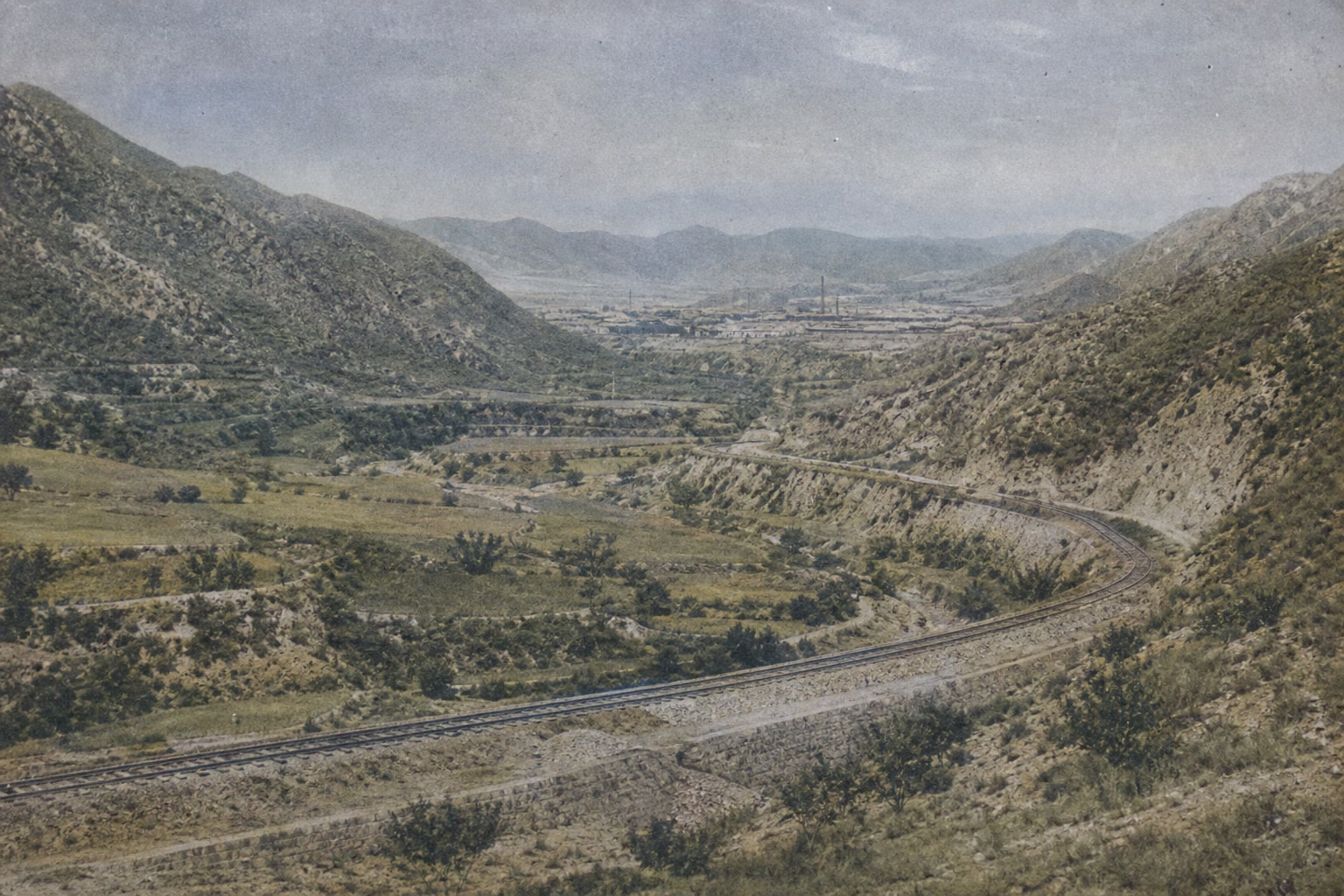
Shanxi: mountains and rivers inside and out. The Taihang and Luliang ranges press in from either side; Yanmen, Pingxing, Niangzi, and other passes control the corridors; since antiquity, whoever held Shanxi could control North China. Yan Xishan had governed Shanxi for more than twenty years, building a self-contained system of narrow-gauge railways, arsenals, and baojia organization, and the territory of the "King of Shanxi" had now become a battlefield. After the July 7 Incident, Beiping and Tianjin were lost within ten days, and the Japanese forces advanced west along the Pingsui Railway. Shanxi was the next place in North China they had to take: once Shanxi was taken, the flank and rear of the Japanese forces in North China would be secure, and they would overlook Henan while screening the northwest. For the broader situation (the world after July 7 and the decision-making levels in China and Japan), see "the Fourteen-Year War of Resistance · War Overview."
Why It Was Fought
While Shanghai was locked in a back-and-forth struggle on the beaches of Baoshan and Luodian, the war in North China did not stop. After the Beiping–Tianjin Operation ended, the newly formed North China Area Army began its southward advance along the Pingsui, Pinghan, and Jinpu railways; in August, Nankou fell after bitter fighting, Zhangjiakou fell soon afterward, and all of Chahar entered enemy hands. Farther west along the Pingsui Railway lay Shanxi.
Shanxi was worth a dedicated campaign for the Japanese forces. Mountains and rivers inside and out: the Taihang and Luliang ranges pressing in, the passes at Yanmen, Pingxing, Niangzi, and elsewhere guarding the corridors; since antiquity, whoever held Shanxi could control North China. If this high ground was not taken, the flank and rear of the Japanese forces on the plains would remain exposed; if it was taken, they could overlook Henan, screen the northwest, and join the Tongpu and Zhengtai railways into a network. Taiyuan also had the arsenal and accumulated resources that Yan Xishan had built over more than twenty years. The territory of the "King of Shanxi" had become North China's last hard bone.
In early September, the Japanese forces entered Shanxi by two routes: Tojo Hideki's Chahar Expeditionary Force struck northern Shanxi along the Pingsui Railway; Itagaki Seishiro's Fifth Division drove straight from the mountains of southern Chahar toward the Pingxingguan line. The target was the same: Taiyuan. On September 12, Tianzhen fell; the next day, Datong was abandoned without a fight, and the gate to northern Shanxi lay open. Yan Xishan had originally planned to base a campaign on Datong, but that plan collapsed, and he could only fall back step by step, moving his wager to Xinkou north of Taiyuan. The Japanese side calculated that it could push one step farther at the tempo of Beiping and Tianjin, and the easy taking of Tianzhen and Datong only confirmed that expectation. What it had not calculated was that Xinkou would hold the Fifth Division in place for more than twenty days, an obstruction of a length unseen since the southward advance began.
The Chinese camp now had a new army. In late August, the CPC Central Committee met at Luochuan and set the policy for taking the field: cross the Yellow River eastward, persist in independent mountain guerrilla warfare, and avoid positional attrition (original meeting records unverified). In August, the Red Army was reorganized as the National Revolutionary Army's Eighth Route Army, and Zhu De and Peng Dehuai led the 115th, 120th, and 129th Divisions into Shanxi. In early September, Zhou Enlai and Peng Dehuai went to Taiyuan to confer with Yan Xishan on operations (meeting details unverified). After ten years of civil war, the KMT and CPC armies stood side by side for the first time in the same campaign. The Jin-Sui Army, the Central Army, and the Eighth Route Army, three systems crowded onto one map, had clearly different material bases: behind the Jin-Sui Army stood the Taiyuan Arsenal, so ammunition could still be supplied; the Eighth Route Army was extremely short of firearms and ammunition, the portion issued by the National Government according to establishment was far from what was actually needed, and much depended on captures (allocation details unverified); the Japanese Fifth Division was highly mechanized, but when the Tongpu Railway was not open, all supplies had to move by road. This created the later opportunities for successive strikes at Yanmen Pass and Yangmingbao. Their calculations also differed: Yan Xishan wanted to protect Shanxi, his fundamental base; Chiang Kai-shek wanted North China not to be lost without a sound; the Eighth Route Army wanted to coordinate with the front while not exhausting its capital. How much force to concentrate for a regular battle was discussed several times in telegrams between Yan'an and the divisions (original texts unverified). As for whether there was dissent inside the Jin-Sui Army when the plan for a Datong campaign collapsed, no surviving record has been found (no record of dissent found; unverified).
On the map in mid-September, Xinkou was still only the name of a pass north of Taiyuan.
Course of the Engagement
| Stage | Time | Key Points |
|---|---|---|
| Northern Shanxi Lost | Early to mid-September | Tianzhen fell on 9.12. The defending commander, Li Fuying, commander of the 61st Army, was executed by Yan Xishan in October, the "first case of killing a general in the War of Resistance" (for dispute over responsibility, see the final section); on 9.13, Datong was abandoned without a fight |
| Pingxingguan | 9.25 | The Eighth Route Army's 115th Division set an ambush at Qiaogou and wiped out more than a thousand men from Japanese transport troops and vehicle columns (separate entry: "Battle of Pingxingguan"); the originally agreed simultaneous Jin-Sui Army attack in support did not materialize (level unverified) |
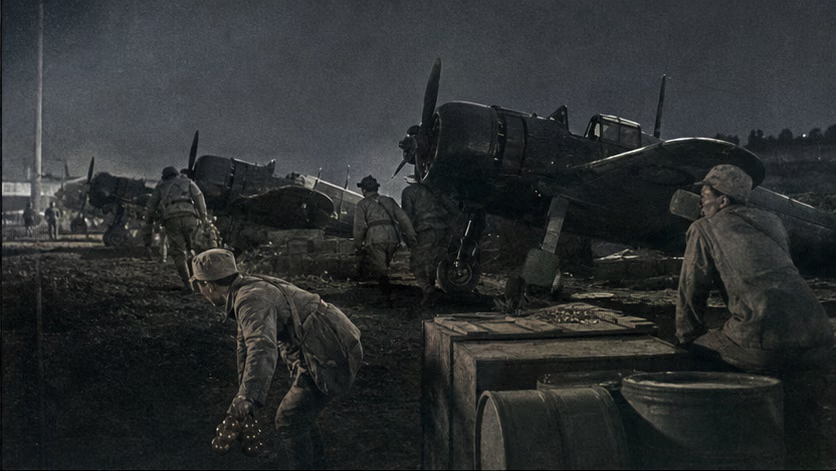
| Attacks Behind Enemy Lines | Late September–October | Ambush at Yanmen Pass (120th Division, 716th Regiment, 10.18, He Long's force); night raid on Yangmingbao airfield (129th Division, 769th Regiment, 10.19, damaging or destroying more than twenty Japanese aircraft; Japanese aircraft over Xinkou suddenly decreased; cross-reference "Battlefields Behind Enemy Lines · Theater Overview") |
| Stalemate at Xinkou | 10.13–11.2 | Wei Lihuang served as front-line commander-in-chief; about 80,000 men defended Xinkou and held against the Japanese forces for more than twenty days, with the front never broken (separate entry: "Battles of Xinkou and Niangzi Pass") |
| Niangzi Pass Lost | 10.12–26 | The Japanese 20th Division attacked the Zhengtai Railway; Jiuguan–Niangzi Pass fell on 10.26, opening Xinkou's flank and rear (same separate entry) |
| Retreat and Fall of Taiyuan | 11.2–11.9 | The defenders of Xinkou withdrew south under orders; Fu Zuoyi led the 35th Army in defending the isolated city of Taiyuan for several days, broke out on the night of 11.8, and Taiyuan fell on 11.9 |
Casualties and Losses
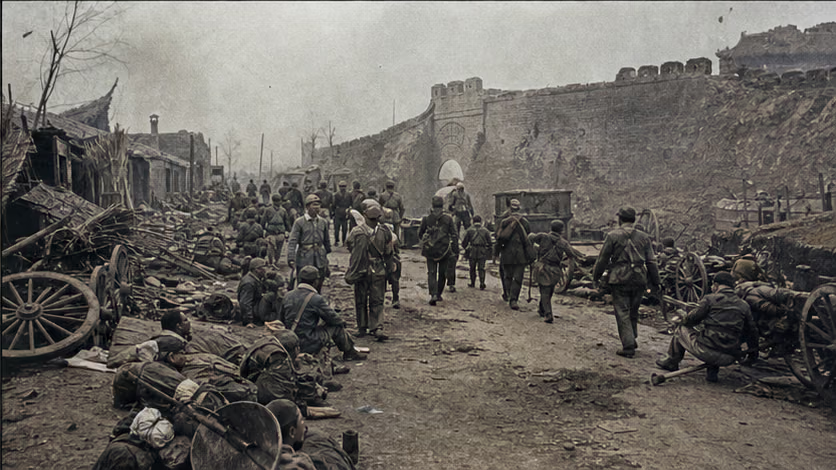
- Chinese side: roughly 100,000 casualties across the whole line (figures vary by account, including the northern Shanxi, Xinkou, and Niangzi Pass sectors); many officers, including army commander Hao Mengling, were killed in action (separate entries).
- Japanese side: about 20,000 to 30,000 casualties (Chinese battle-report basis; Japanese records unverified, two accounts presented side by side); the Fifth Division was blocked at Xinkou for more than half a month, something unseen since the southward advance began.
- ※ Civilians: towns and villages along the northern and eastern Shanxi lines suffered from the fighting and retaliatory killings by Japanese forces (Guoxian, Yuanping, and other cases; scale unverified); Japanese atrocities after the fall of Taiyuan (scale unclear).
Aftermath
- The end of the frontal campaign was the opening of the battlefields behind enemy lines: the largest consequence of this campaign was that most of Shanxi fell, the main Nationalist forces withdrew south to southern and western Shanxi, yet the Eighth Route Army's three main divisions remained in Shanxi. Part of the 115th Division entered Mount Wutai (Shanxi-Chahar-Hebei), the 120th Division stayed in northwestern Shanxi, and the 129th Division stayed in southeastern Shanxi; from this, base areas behind enemy lines began (see the entries on the battlefields behind enemy lines). The Japanese forces occupied points and lines, but the area would never again be quiet; the shape North China would take over the following eight years had already been drafted in the month Taiyuan fell.
- A sample of how the two battlefields meshed: Xinkou held firm at the front, Pingxingguan and Yanmen Pass cut supply, and Yangmingbao struck air support. The frontal battlefield and the rear-area battlefield worked together within the same campaign. This was the high point of KMT-CPC military cooperation; afterward there would be no second Battle of Taiyuan.
- Yan Xishan withdrew to western Shanxi (the Kenanpo era); the Second War Zone remained in name, and from then on Shanxi became a three-sided contest among Japan, Yan, and the CPC. The later Incident in Western Shanxi (1939) had its foreshadowing here.
- The southward relocation of Taiyuan Arsenal equipment, and the losses from what could not be moved (actual situation unverified).
- After occupying Taiyuan, the Japanese forces continued pushing south along the Tongpu Railway, and by early 1938 southern Shanxi was entirely lost (tempo unverified).
Accounts of Those Present
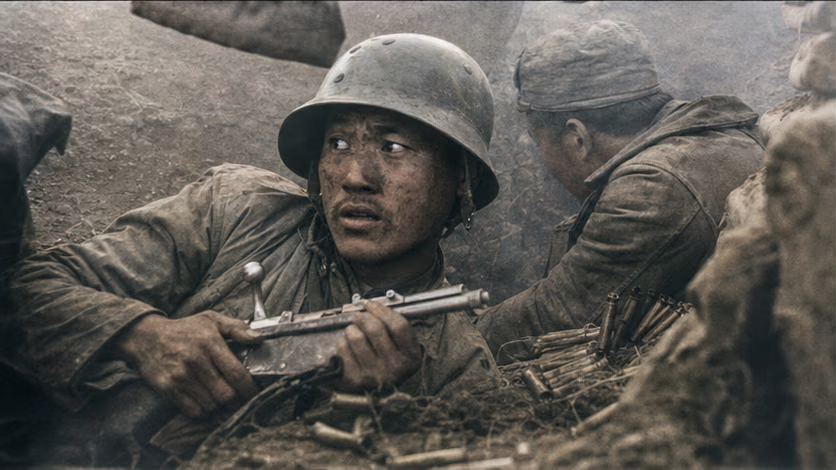
- The "first case of killing a general in the War of Resistance": Li Fuying, commander of the 61st Army, was shot by Yan Xishan in Taiyuan in October after the fall of Tianzhen. He was the first army-command level officer executed since the War of Resistance began. Whether this was "unauthorized abandonment of a position" or "withdrawal under orders while fighting, then being made to bear the blame and killed to answer the public" remains disputed; details of the execution (circulating layer) remain unverified.
- Tojo Hideki in Shanxi: the later prime minister who launched the Pacific War was at this time leading the Chahar Expeditionary Force in the attack on Datong.
- Hao Mengling: killed at Xinkou on 10.16, the first army commander to die for the country in the War of Resistance. He had once taken part in the Third Counter-"Encirclement" Campaign as an enemy of the Red Army; six years later, he died on the anti-Japanese battlefield (see details in the separate entry).
- Fu Zuoyi defending Taiyuan: a noted commander from the Suiyuan Resistance, he took over a city that already had no hope. He defended it for several days and broke out; his intention to "fight in the field from the city" and the details of the hasty breakout are treated in the separate entry.
- The first meeting of the two armies: the Eighth Route Army stood on the same line as the Central Army and the Jin-Sui Army. On the Xinkou front, Wei Lihuang had exchanges with the Eighth Route Army side, and Zhou Enlai took part in operational meetings (level unverified).
The Ground
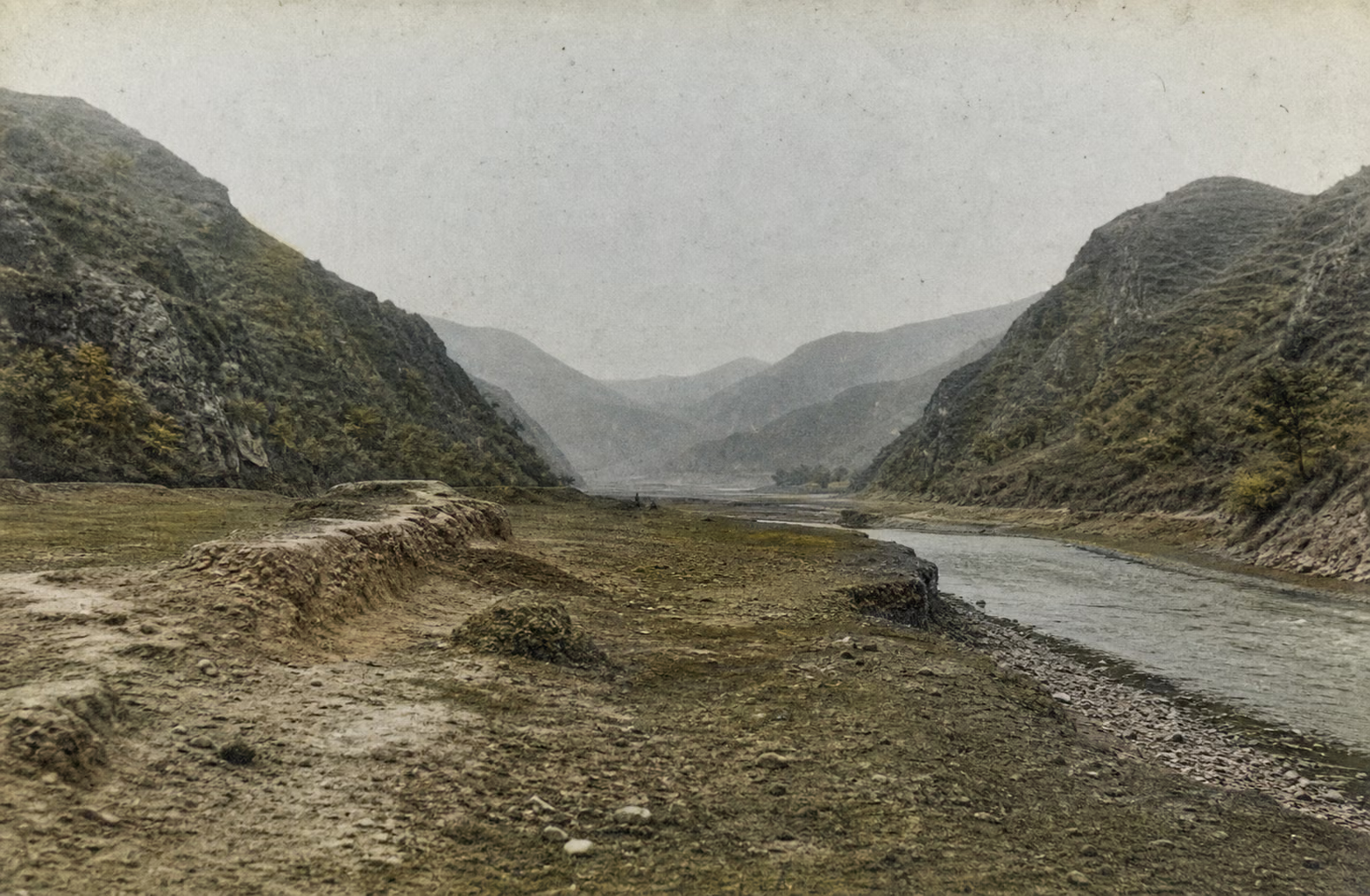
- Shanxi's geography determined the form of the campaign: a string of passes on the northern line (Pingxingguan, Yanmen Pass, Xinkou) were the locks on the Tongpu Railway corridor; Niangzi Pass on the eastern line was the lock on the Zhengtai Railway. Two locks: one held, one did not.
- Xinkou: a pass more than ten li wide between the Yunzhong River and the Hutuo River, with a river valley pinched between mountains on both sides. It was a natural defensive front, and the Japanese forces could only strike it head-on.
- Space behind enemy lines: the Yanmen Pass road and Yangmingbao airfield, nodes of Japanese supply and air support, became the stages for ambush and night raid (see "Battlefields Behind Enemy Lines · Theater Overview").
- Taiyuan: the provincial capital at the end of the Fen River valley, with its city walls intact but isolated. After three sides had been lost, defending the city was already a rearguard action and a symbol.
How Each Side Records It
- Chinese side (Nationalist): Xinkou is regarded as the most tenacious frontal battle in the North China theater, and "Xinkou did not fail; the defeat came at Niangzi Pass" is the commonly accepted judgment. Yan Xishan's killing of Li Fuying and the Jin army's collapse have long been debated.
- Chinese side (CPC): Pingxingguan was the Eighth Route Army's first victory after taking the field, while Yanmen Pass and Yangmingbao are paired as the opening success of the battlefields behind enemy lines. The narrative center lies in "coordination between the two battlefields": the front held, and the rear cut support.
- Japanese side: called it the Taiyuan Offensive (formal name unverified); Japanese war histories acknowledge Xinkou as an unusual hard stand since the opening of the war; assessments of the Eighth Route Army shifted from contempt to specialized study (level unverified).
- One point both sides recognize: this was the high point of KMT-CPC military cooperation.
Disputes and Sensitivities
- The level of the Li Fuying case: regarding the loss of Tianzhen, was Li Fuying "withdrawing without authorization," or did he "fight and retreat under Yan's orders, only to be made by Yan to carry the blame and killed to pacify public anger"? Both accounts coexist. Yan's motives (accountability for lost territory, calming public opinion, giving an explanation to the Central Army) are each the subject of speculation (level unverified). This case is a sample of wartime military law entangled with factional politics.
- The actual state of KMT-CPC cooperation and each side's narrative: the extent of cooperation (operational meetings, flanking support actions, the Jin-Sui Army's promised attack at Pingxingguan) remains unverified at the level of detail; the two sides place their narrative emphasis differently.
- The textual and evidentiary examination of enemy losses inflicted at Pingxingguan is handled in the separate entry, with no prejudgment here.
- Differences over casualty figures remain.
Contents
Sources and Open Questions
Sources: the Taiyuan campaign chapter in Zhongguo Kangri Zhanzheng Zhengmian Zhanchang Zuozhan Ji; the first volume of Shina Jihen Rikugun Sakusen by the War History Office of Japan's Defense Agency; Second War Zone and Eighth Route Army war-history materials (volume details unverified).
Open questions: the various bases for both sides' troop strength and casualty figures; original orders and trial records in the Li Fuying case; the course of the abandonment of Datong; figures for the results of Yangmingbao; specific records of Zhou Enlai's participation in Xinkou operational meetings; the actual circumstances of moving the Taiyuan Arsenal; the scale of Japanese atrocities after the fall of Taiyuan; civilian victimization cases along the Guoxian and Yuanping lines; original records from the Luochuan Conference on the policy for the Eighth Route Army's entry into Shanxi; details of Zhou Enlai and Peng Dehuai's Taiyuan consultations with Yan Xishan; telegrams between Yan'an and the divisions on concentrating forces for a regular battle; whether there was dissent inside the Jin-Sui Army when the plan for a Datong campaign collapsed; details of ammunition allocations to the Eighth Route Army.
All images on this site are AI-generated depictions. They are not historical photographs, not primary sources, and do not depict any real individual.