Engagement Archive · Second Battle of Changsha (1941)
In the autumn of 1941, the Japanese Eleventh Army, roughly 100,000 strong, attacked Changsha again. Because the Ninth War Area's command communications had been decrypted and its armies were committed one after another only to be defeated in detail, Changsha fell for several days; afterward, both sides nevertheless declared "victory": the Chinese side called it the "Second Great Victory of Changsha," while the Japanese side called it the "completion of the objective of Operation Ka."
Engagement Data
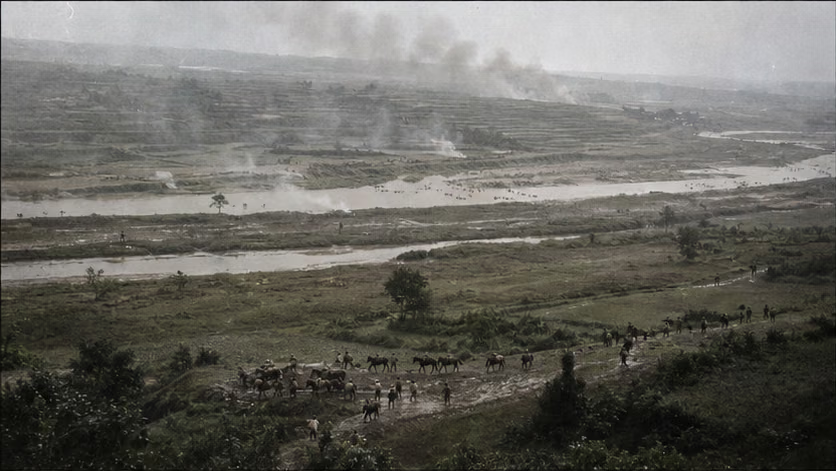
| Item | Content |
|---|---|
| Time | 1941.9.7 - 10.9 (Japanese "Operation Ka"; starting and ending bases vary by account) |
| Place | Northern Hunan: Xinqiang River-Miluo River-Laodao River-Changsha |
| Belongs to | Fourteen-Year War of Resistance · stalemate phase on the frontal battlefield |
| Chinese side | Ninth War Area (commander-in-chief Xue Yue) |
| Japanese side | Eleventh Army (commander Anami Korechika, appointed in April of that year) |
| Result | Japanese forces briefly broke into Changsha in late September, then withdrew north on their own several days later; the Chinese side pursued them and restored the original Xinqiang River line |
Belligerents
| Item | Chinese Side | Japanese Side |
|---|---|---|
| Strength | About 370,000 under the Ninth War Area (the statistical basis for the participating order of battle varies by account) | The Eleventh Army committed the main forces of the Third, Fourth, Sixth, and Fortieth Divisions, together with several detachments, about 115,000 men (statistical bases vary by account, with both 100,000 and 120,000 given) |
| Firepower | Army- and division-level artillery, with inferior firepower | Divisional artillery + field heavy artillery + aviation |
| Air | No reliable air superiority | Support from the First Air Brigade and other units (unit designations unrecorded) |
| Intelligence | Chinese command communications were intercepted and decrypted by Japanese forces (see "Why It Was Fought") | Decrypted the Ninth War Area's deployments and movement orders |
Terrain and Conditions
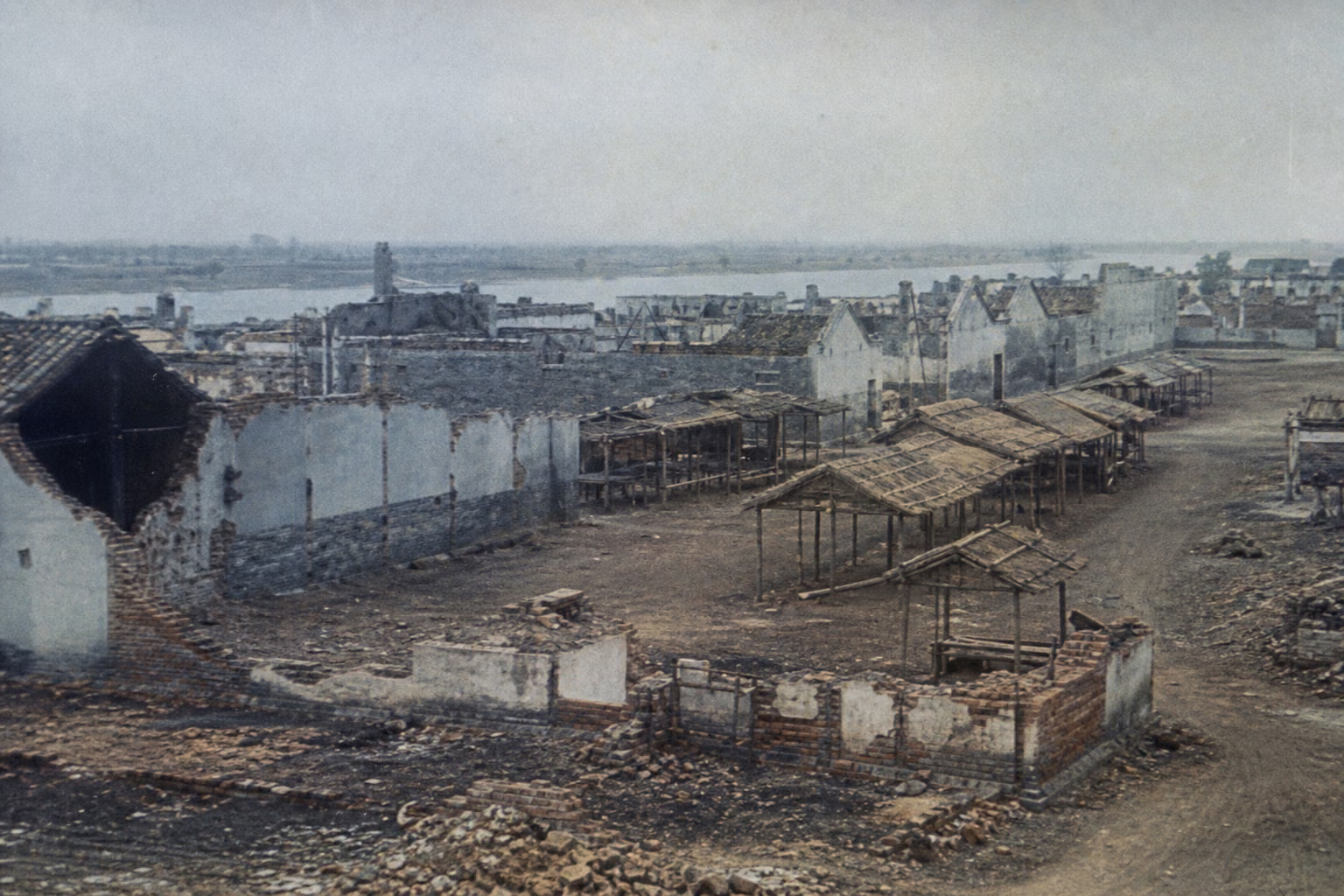
(For the larger situation--the outbreak of the German-Soviet War, Japan's decision to advance south, and the stalemate on the China battlefield--see *Fourteen-Year War of Resistance · War Overview*; here only Hunan is treated.)
Hunan was under the Ninth War Area. In the First Battle of Changsha in 1939, the Japanese probe had failed, and Changsha therefore became the frontal battlefield's signboard for "holding firm." The confrontation along the Xinqiang River line had already lasted nearly two years. Changsha city had not yet recovered from the 1938 Wenxi Fire; inside and outside the city, the markets had been rebuilt on scorched earth.
Why It Was Fought
Only three months had passed since the crushing defeat in the Battle of the Zhongtiao Mountains, and the center of gravity on the frontal battlefield returned to northern Hunan. In Central China, the Eleventh Army had already changed hands: after the setback at Shanggao, Sonobe Waichiro left office, and in April 1941 Anami Korechika became commander (the personnel causal chain unverified). Over the summer, the world board also turned over: in June the German-Soviet War began, Japan's decision to advance south was fixed, and Imperial General Headquarters shifted its attention toward operations in the south. Even while preparing for the southern operations, Imperial General Headquarters approved the Eleventh Army's launch of "Operation Ka": to strike the main forces of the Ninth War Area and pin them down so they could not be transferred south (the original wording of the Japanese statement of purpose unverified). The logic remained the same: not to occupy Changsha, but to hit people.
Northern Hunan was chosen because the opponent was still the same opponent: Xue Yue's Ninth War Area, one of the largest heavy troop groupings on the frontal battlefield, with more than 300,000 men facing the Japanese across the Xinqiang River for nearly two years. After Changsha had held in the first battle, it became the frontal battlefield's signboard for "holding firm"; the signboard itself had value as a target.
Operation Ka was the first battle Anami Korechika strongly advocated after taking office. That spring, in the Battle of Shanggao, the Eleventh Army had suffered a setback. The new commander needed an offensive to establish authority, and he also needed to act before his army's troops were drawn away for the southern operations (this judgment comes from Japanese military histories and staff memoirs, unverified). The plan was drafted at army headquarters in August, forwarded through the China Expeditionary Army headquarters in Nanjing, and approved by Imperial General Headquarters at the end of the month (document number unverified). The plan also stated its material boundary: ammunition and fuel were to be supplied first to the south, and what this offensive received was enough only for a battle measured in ten-day periods. It therefore explicitly stipulated that after defeating the enemy to the front, the force would reverse course. The general northward withdrawal in early October did not mean that the attack could not continue; it had been planned that way from the beginning (plan text unverified).
The Chinese side's judgment was wrong precisely on the larger situation. The high command concluded that the Japanese southward advance was imminent and that they had no capacity to attack northward. The Ninth War Area therefore deployed according to the old plan from the first battle: successive resistance at the Xinqiang River and Miluo River, drawing the enemy to the Laodao River for the decisive battle. The old plan was not necessarily fatal. What was fatal was that it was no longer secret. Japanese forces had broken the Ninth War Area's cipher; the assembly positions, routes of advance, and timing of commitment of the Chinese armies were largely in Japanese hands. This was the key to the Chinese side's passive position throughout the battle (this account comes from Chinese postwar reviews and recollections from the Ninth War Area staff system; the level of evidence is memoir and review material, while matching Japanese archival records remain to be checked). The method that had worn down the opponent two years earlier through successive commitment, on a board transparent in only one direction, amounted to sending each army into the opponent's fire net according to a timetable.
The Chinese side's boundary lay in supply. In April, the Soviet-Japanese Neutrality Pact was signed, Soviet aid effectively ceased, the Hump route did not yet exist, and the Yunnan-Burma Road was the only remaining line of foreign aid. Beneath the paper total of more than 300,000 men, shortages were common across the armies and divisions, and ammunition was only enough to support the old plan of successive attrition (stockpile figures unverified). Whether the old plan should still be followed in deployment left no recorded objection in the pre-battle telegram traffic (unverified); review came after defeat.
On September 7, Japanese forces first used a feint in the direction of Dayunshan to hold the Chinese side's attention. On September 18, the main forces of four divisions forced a crossing of the Xinqiang River. The same river, the same autumn, and a battle fought two years earlier opened again; only this time, the people on the far bank were holding the telegrams from this bank.
Course of the Engagement
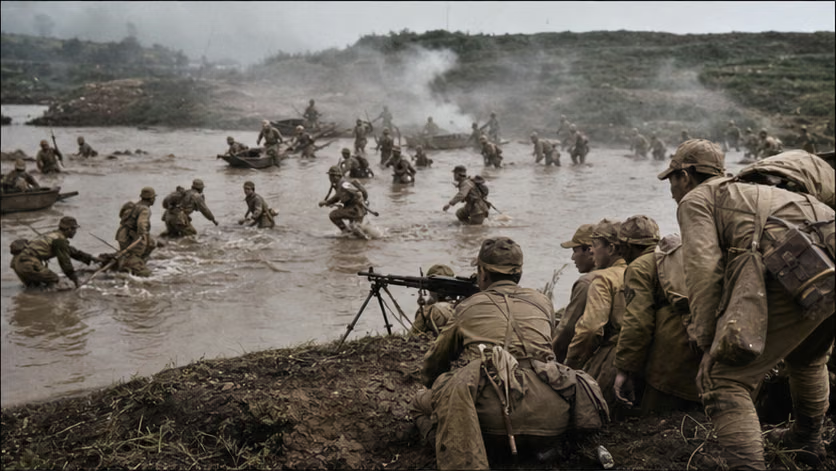
| Phase | Time | Main points |
|---|---|---|
| Xinqiang River | 9.7-9.18 | Japanese forces first used a feint at Dayunshan to hold the Chinese side's attention; on 9.18, the main force forced a crossing of the Xinqiang River, and the frontal defenders were quickly crushed (sequence of each army's positions being lost unverified) |
| Miluo River | 9.19-9.25 | The Chinese side, following the old plan, committed the Thirty-Seventh, Twenty-Sixth, and Tenth Armies in succession on the south bank of the Miluo River. Because their deployments had been decrypted, each army was divided and defeated before it had secured its footing; the Tenth Army and 26th Army were badly mauled (Li Yutang's Tenth Army suffered losses in this battle; after the battle Li Yutang was dismissed, and only three months later, before the third battle, was he reinstated--unverified) |
| Chunhuashan | 9.25-9.27 | The 74th Army (Wang Yaowu) was ordered to rush from northern Jiangxi to reinforce the front. Its route of advance was decrypted, and at Chunhuashan by the Laodao River it was intercepted by the Third and Sixth Divisions, suffering rare heavy losses since the beginning of the war: Li Hanqing, infantry commander of the 57th Division, was killed in action; Liao Lingqi, commander of the 58th Division, was shot after the battle for "fleeing before the enemy" (whether this case was wrongful has been reviewed by historians, unverified). The 74th Army, whose name had been made at the Battle of Shanggao, had its wings broken in this battle--two circumstances for the same unit, set against each other (casualty details for each division unrecorded) |
| Changsha | 9.27-10.1 | The Japanese Hayabuchi Detachment entered the city from Changsha's northeastern corner on 9.27, and the Fourth Division followed up afterward (accounts give both 9.27 and 9.28 as the date of entry, unverified); Japanese forces remained in Changsha for several days |
| Reversal and pursuit | 10.1-10.9 | Japanese forces withdrew north along the entire line on the grounds that the striking objective had been achieved, their flank and rear were threatened, and supplies were nearly exhausted; the Chinese side pursued, and around 10.9 restored the original confrontation line at the Xinqiang River |
Casualties and Losses
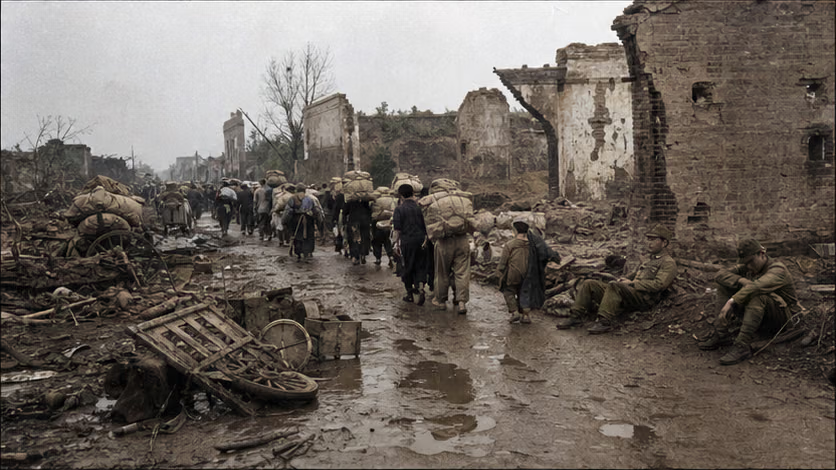
- Chinese side: killed, wounded, and captured together totaled about 70,000 (postwar Chinese statistical bases vary by account, and whether the Dayunshan phase is included remains unverified); the 74th Army, Tenth Army, and 26th Army each lost more than half their strength.
- Japanese side: Japanese military history self-recorded casualties of about 6,800 (about 1,600 killed--figures require source-by-source checking); Chinese battle reports claimed more than 48,000 Japanese killed and wounded. The two statistical bases differ enormously; both accounts are listed side by side, and neither is adopted alone.
- Changsha city was entered and exited twice within several days, and civilians fled once again.
Aftermath
- The Military Affairs Commission convened the Nanyue Military Conference for review; Liao Lingqi, commander of the 58th Division, was executed, and Li Yutang, commander of the Tenth Army, was dismissed (course of reinstatement unverified).
- The Chinese side publicized it as the "Second Great Victory of Changsha," while the Japanese side publicized "completion of the objective of Operation Ka": two "victories" in the same battle; see "How Each Side Records It."
- Three months later, Japanese forces attacked Changsha for the third time. The Ninth War Area revised the old plan into a new method, the "Heavenly Furnace tactics"; cross-reference *Third Battle of Changsha*.
Accounts of Those Present
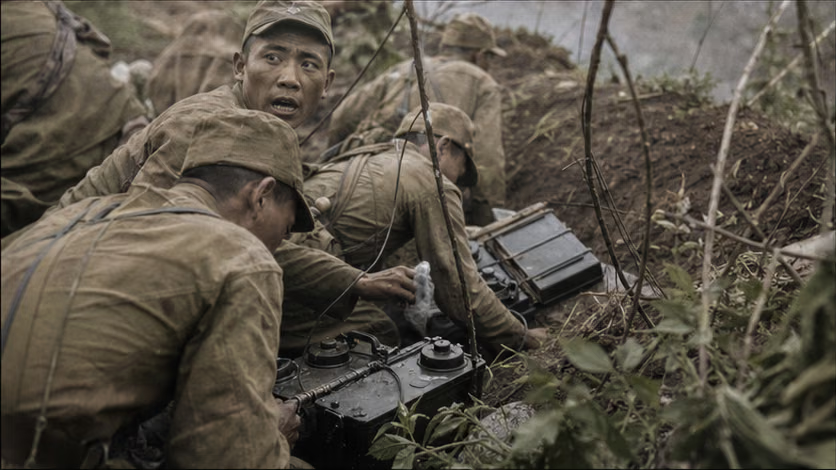
- The 74th Army at Chunhuashan: The "Iron Army Against Japan," fresh from the Battle of Shanggao in the spring of 1941, was caught in a pocket set by Japanese forces according to decrypted telegrams while rushing to reinforce the front. Li Hanqing, infantry commander of the 57th Division, was killed in action while leading his troops in a breakout, making him one of the highest-ranking Chinese officers killed in this battle.
- The death of Liao Lingqi: Liao Lingqi, commander of the 58th Division, was executed after the battle for "fleeing before the enemy." There was the fact that he had taken leave and left the unit to visit family, and there was also the question of responsibility boundaries for the collapse of the entire division. Whether killing a commander before the enemy was an enforcement of military discipline or shifting blame onto one man has been revisited in later writings (evidence level unverified).
- Xue Yue's review: The Ninth War Area's internal review afterward acknowledged the error of "using forces successively." Successive commitment was precisely the old method from the first battle; after the cipher was broken, the old method meant sending men to die according to a timetable.
The Ground
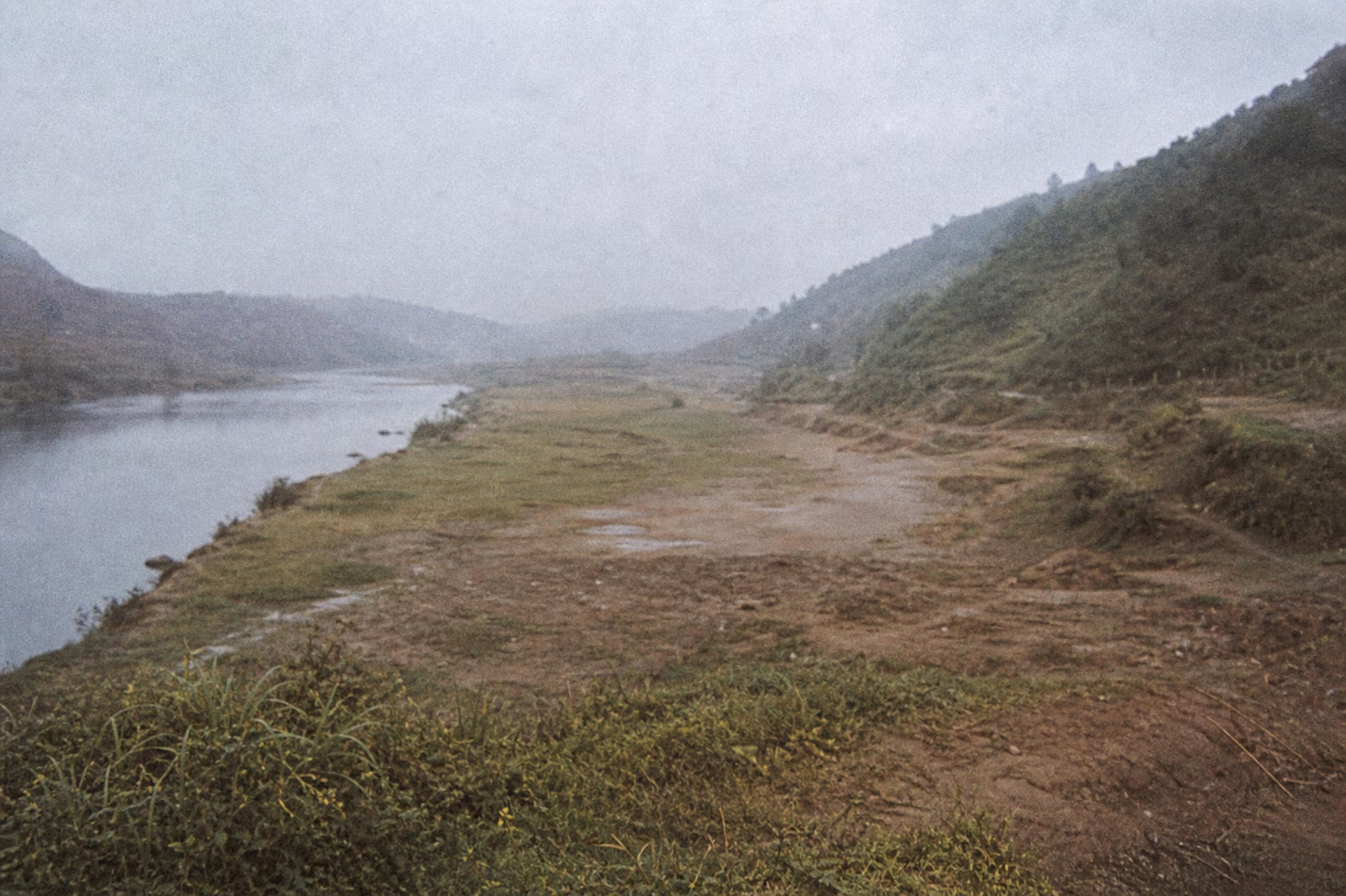
- Four water lines in the northern Hunan corridor: Xinqiang River-Miluo River-Laodao River-Liuyang River, peeled open layer by layer from north to south. The defender's advantage should have lain in "successive resistance"; in this battle, because of one-way transparency, it became "being destroyed successively."
- The Chunhuashan-Huanghuashi area: the Laodao River valley, an open corridor that reinforcing troops had to pass through, and a preset position for the intercepting side.
- Changsha city itself saw almost no urban defense battle to speak of: Japanese entry and withdrawal were measured in days.
How Each Side Records It
- Chinese side: externally publicized the "Second Great Victory of Changsha," while internal review characterized it as a crushing defeat. The propaganda basis and the review basis coexisted within the same archival system: the distinction between propaganda and actual situation.
- Japanese side: stated that "Operation Ka" actively reversed course after achieving the striking objective, and military history used this battle as evidence of a "decline in the combat power of the Chongqing army." But some Japanese staff memoirs also held that the main force of the Ninth War Area had not been caught and annihilated, so the effect was limited (source of recollection unverified).
- A more typical case of "two victories" than the First Battle of Changsha: in the first battle one could still argue that "Japanese forces did not achieve their objective"; this time Changsha had plainly been lost for several days, making the name "great victory" still less consistent with the facts.
Disputes and Sensitivities
- The weight of cipher decryption: how much the Chinese defeat should be attributed to leaked communications, and how much to the tactical inertia of successive commitment, differs by the level of material (memoirs vs. archives) and by source.
- The long circulation of the "great victory" narrative: early military histories on both sides of the Taiwan Strait largely followed the "great victory" basis, and systematic review has appeared only in the last thirty years.
- The Liao Lingqi case involves military law and human life; the levels of material are complex, so this entry makes no conclusive reversal of the case.
Sources and Open Questions
Known main sources:
- Detailed battle reports of the Ninth War Area and postwar reviews (inclusion in Taiwan-edition military histories unverified)
- Japan Defense Agency War History Office, *Senshi Sosho · Changsha Operations* (Japanese official history)
- Recollections by Zhao Zili and others from the Ninth War Area staff system (historical-literary materials; level: memoir)
Open questions: Japanese committed strength and detachment organization; Chinese participating order of battle and the boundary of the "370,000" statistical basis; corresponding Japanese archival records for "communications were intercepted and decrypted"; the sequence in which each army lost its positions at the Xinqiang River and Miluo River; casualty details for each division of the 74th Army and the circumstances of Li Hanqing's death in action; the military-law file of the Liao Lingqi case; the course of Li Yutang's dismissal and reinstatement; the date when Japanese forces entered Changsha (two accounts, 9.27/9.28); the statistical boundary of Japanese self-recorded casualties; the original Japanese statement of purpose for "Operation Ka"; the approval procedure and document number for Operation Ka; Japanese records for Anami Korechika's advocacy of this operation; the original text of the "reversal" clause in the Japanese operational plan; ammunition stockpile figures for the Ninth War Area before the battle; records of whether there were objections before the battle to deploying according to the old plan.
All images on this site are AI-generated depictions. They are not historical photographs, not primary sources, and do not depict any real individual.