Engagement Archive · Defense of Toungoo
The first battle fought by Chinese troops after crossing the national border: in a small city on the Burmese plain, the nine thousand men of the 200th Division held off a Japanese division for twelve days, covered the British withdrawal and the deployment of the main force, and then withdrew as an intact formation on the eve before the encirclement closed. The first battle already demonstrated that this army could fight with method on foreign ground.
Engagement Data
| Item | Content |
|---|---|
| Part of | Fourteen-Year War of Resistance · Yunnan–Burma Theater (for the overall picture, see *Yunnan–Burma Theater · Overview*) |
| Time | 1942.3.19 – 3.30 (twelve days) |
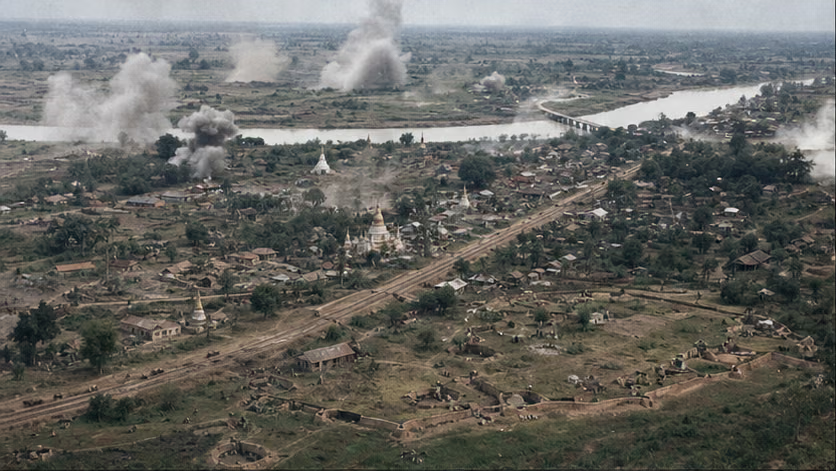
| Location | Toungoo, Burma (Dongyu, on the Rangoon–Mandalay railway, north bank of the Pyu River) |
| Defender | Fifth Army, 200th Division (division commander Dai Anlan), about nine thousand men, with an attached cavalry regiment and other units (order of battle unverified) |
| Attacker | Japanese 55th Division (later joined by advance elements of the 56th Division; order of battle unverified) |
| Result | Ordered to break out on the night of 3.29–30; the entire division withdrew with its formation intact. Toungoo was lost, but Japanese forces were delayed for nearly two weeks |
Belligerents
| Item | Defender | Attacker |
|---|---|---|
| Strength | One reinforced division, isolated (the main force of the following army had not yet deployed) | Division-level force, with complete superiority in air and artillery |
| Air | None (Allied air power in Burma had already been destroyed) | Bombing throughout |
| Fieldworks | Circular fieldworks hastily built in ten days + converted strongpoints inside the city | — |
Terrain and Conditions
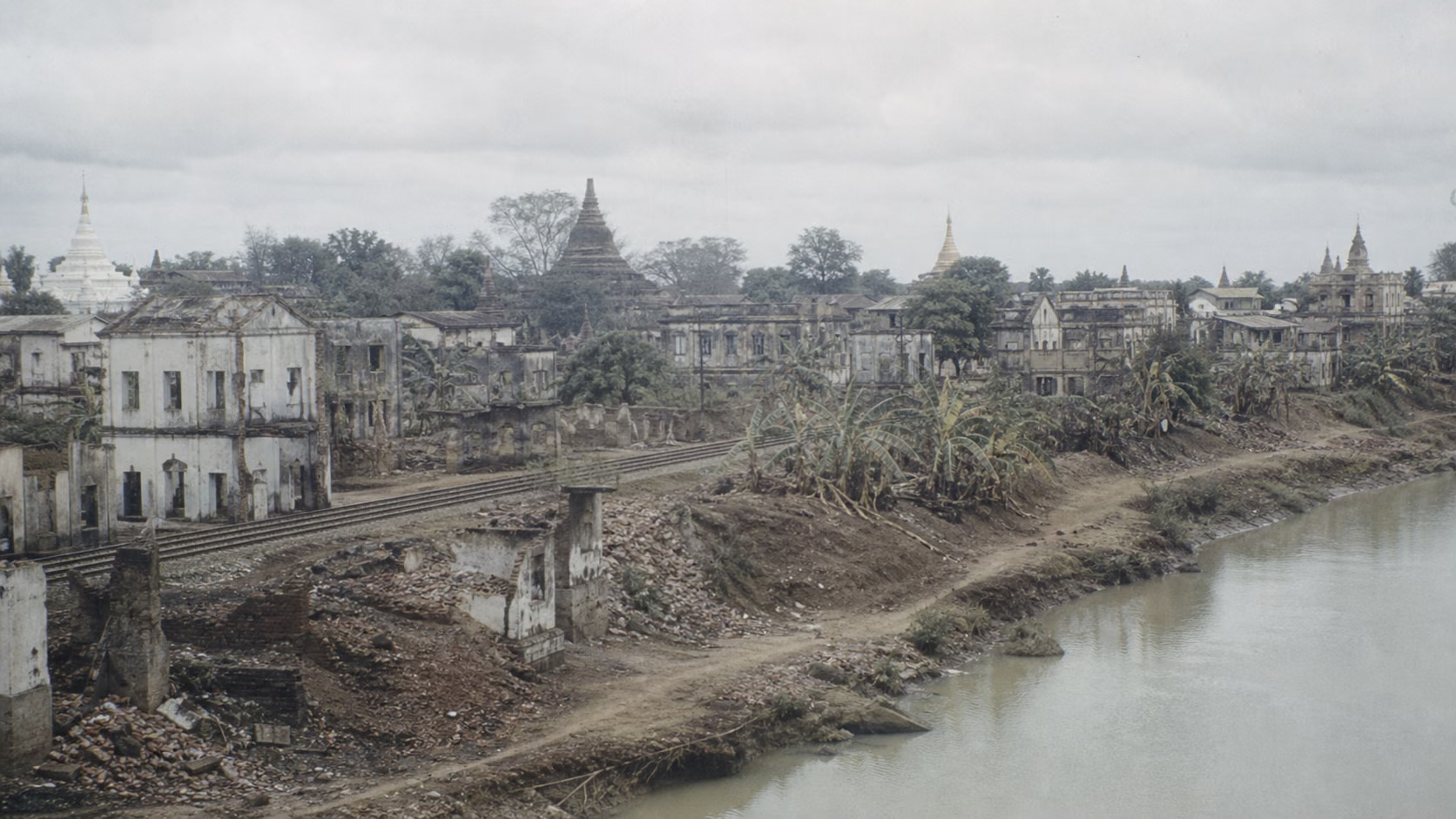
Rangoon had fallen (3.8), the British Burma Army was withdrawing west, and Toungoo was both a southern gateway and the pivot of the Pyu River defense line. The 200th Division was then China's only mechanized division (under the Fifth Army), and also the vanguard of the expeditionary force: the first organized Chinese military formation to step beyond the national border. Behind it was the main force, not yet fully arrived; beside it were Allied troops fighting as they retreated.
Why It Was Fought
The Yunnan–Burma Theater opened from the loss of its starting point: on March 8, Rangoon fell, and the Yunnan–Burma Road lost its outlet to the sea. The expeditionary force's mission changed from "protecting the road" to "recovering the road." But one hundred thousand men were still on the way: the main force of the Fifth Army was moving in batches along the Yunnan–Burma Road, and the only vanguard already on the Burmese plain was Dai Anlan's 200th Division, nine thousand men, at that time China's only mechanized division.
Toungoo lay on the main line of the Rangoon–Mandalay railway, on the north bank of the Pyu River; after Rangoon was lost, this was the southern gate into Burma's interior. The expeditionary force's plan was to take over the defenses of the British troops withdrawing west along the Toungoo–Pyinmana line, wait for the main force to arrive, and seek a chance for a set-piece battle. For that plan to stand, someone first had to hold the gate. The 200th Division was ordered to hold Toungoo and cover the deployment of the main force behind it: from the beginning, the nature of the mission was written as an isolated rearguard action.
Before the plan reached paper, there had been two months of delay. In December 1941, China and Britain signed an agreement for the joint defense of the Yunnan–Burma Road, and Chongqing immediately organized the expeditionary force; the British side, however, repeatedly hesitated over the entry of a large army into Burma, and only when Rangoon was in urgent danger did it turn back and urgently request reinforcement, by which time the opportunity had already been missed (the course of the delayed negotiations is unverified). In early March 1942, Chiang Kai-shek flew to Lashio and assembled expeditionary-force commanders to arrange the plan: the 200th Division would hold Toungoo as an outpost, and the main force would seek a set-piece battle after deployment (movements and meeting details unverified). That same month, Stilwell arrived in China to take office as chief of staff for the China Theater. How much command authority he had over the expeditionary force was never made clear from the beginning; afterward, every order at Toungoo had to pass through the adjustment between Du Yuming's and Stilwell's two sets of command channels.
What was lacking when the decision was made was not courage, but information: the battle report that Rangoon had fallen reached Chongqing only several days later; for the strength of the Japanese forces to the front and the speed of the British westward withdrawal, the expeditionary force could only wait for British reports, which were both slow and sparse (the condition of Sino-British intelligence coordination is unverified). The 200th Division entered Toungoo under the name of a mechanized division, but most of its tanks and heavy artillery could not deploy with it, and the fieldworks had to be hacked out by infantry shovels and picks over ten days (details of heavy equipment arrival unverified). The advance of one hundred thousand men depended on trucks on a single road, and transport capacity determined that the main force could not all arrive: the assumption that "the main force can get there" was already untenable on the transport tables (this is an inference, with no direct record, unverified).
After taking Rangoon, the Japanese 55th Division advanced north along the railway, pursuing the collapse of the British Burma Army. In its timetable, Toungoo was a stop to be taken in passing during the march, not a ring of fieldworks to be besieged for twelve days (its war history later described Toungoo as "stubborn resistance"; wording unverified). The Chinese calculation rested on two assumptions: the main force could arrive, and the British flank could hold. Looking back twelve days later, neither assumption had held.
The disagreement over how long to hold emerged at the end of the month: after the New 22nd Division was blocked while trying to relieve the position, Stilwell advocated holding out and awaiting relief, while Du Yuming judged that both flanks were already empty and that holding longer would destroy the whole division. On the night of March 29, he ordered a breakout: the conclusion to the dispute was written onto the timetable (the sequence of exchanged orders is unverified).
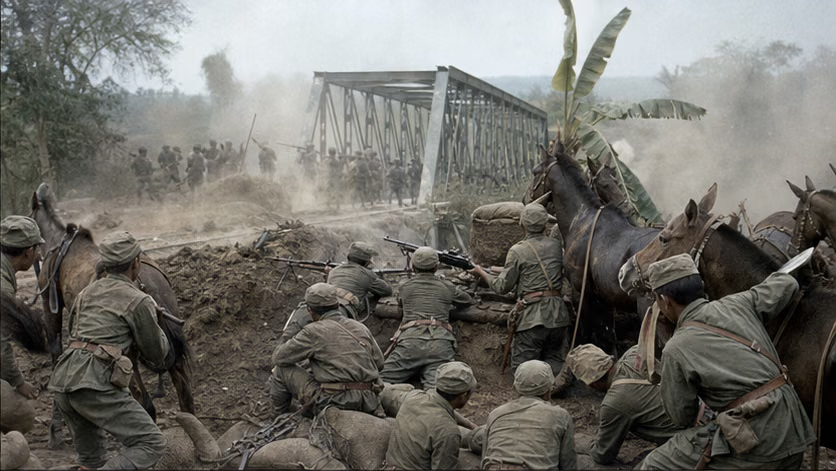
On March 19, at the Pyu River bridge, the 200th Division's cavalry regiment ambushed the Japanese advance party: the first shot fired by Chinese troops beyond the national border. When the shot rang out, behind the nine thousand men, the main force had not yet fully arrived.
Course of the Engagement
| Phase | Main points |
|---|---|
| Pyu River outpost, 3.19 | The cavalry regiment ambushed the Japanese advance party at the Pyu River bridge, killing and wounding several dozen: the expeditionary force's first battle beyond the border (battle results unverified) |
| Circular defense, 3.21–28 | Japanese forces attacked from three sides: air bombing + artillery shelling + repeated infantry assaults; the defenders lost ground by day and counterattacked by night, fighting house by house in the city; records say Japanese forces released poison gas ※ (this claim is unverified); Dai Anlan made a will to state his resolve ("If this division commander dies in battle, the deputy division commander shall replace him..." original text of the will chain unverified) |
| Northern relief blocked | The New 22nd Division's southward relief was blocked at Nanyang Station (relief-line fighting unverified): the siege could not be broken, and breakout was put on the agenda |
| Breakout, night of 3.29–30 | Crossing the Sittaung River on the eastern line, the whole division brought its formation, wounded, and some equipment across by night and withdrew; Japanese forces only realized the next morning (details of withdrawal organization unverified) |
Casualties and Losses
- Defender: more than 2,500 casualties (statistical bases vary by account).
- Attacker: Japanese casualties were roughly equal to or greater than the defenders' (Chinese figures give 5,000 Japanese killed and wounded, while Japanese figures are far lower; listed side by side and still unverified). The 55th Division acknowledged a hard fight (wording in its war history unverified).
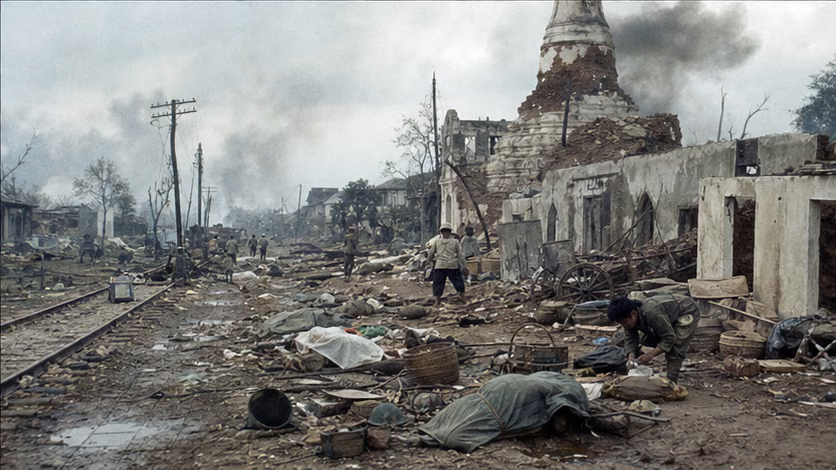
- City: Toungoo's urban area was destroyed by battle, and Burmese civilians fled earlier (limited records; noted here).
Aftermath
- The battle value of delaying Japanese forces for nearly two weeks was soon swallowed by the ruined larger situation: Lashio was outflanked, and the great retreat began (see *Retreat Through the Savage Mountains*); the brilliance of the first battle and the futility of the campaign sit in the same frame.
- The 200th Division withdrew north with the army. In May, Dai Anlan died of severe wounds in the Langke area (Maobang village): Toungoo's division commander did not leave Burma alive (for the line after his death, see the personal details in the overview).
- The battle of Toungoo was witnessed by the Allies: British and American battle reports offered their respects (Stilwell's evaluation unverified). The Chinese army's first appearance abroad established a professional image.
Accounts of Those Present
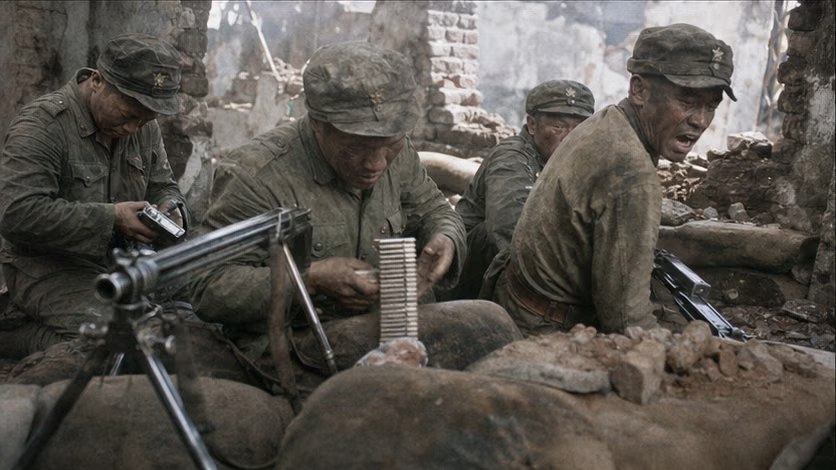
- The will chain: Before the battle, Dai Anlan ordered the whole division to make "succession wills" level by level: if the division commander died, the deputy division commander would take over; if a regimental commander died, the deputy regimental commander would take over (system details unverified). Writing "death" into the command sequence was the disciplinary ground tone of this isolated force.
- The first shot at the Pyu River: The first battle abroad was opened by the cavalry regiment at the bridgehead: a mounted unit opened the scene for a mechanized division (an organizational irony).
- A city in another country: Soldiers built fieldworks among pagodas and banana groves, unable to speak the language and using inaccurate maps (recollection material; evidence level unverified): "defending one's own lifeline on someone else's soil" held the absurdity and solemnity of expeditionary warfare together.
The Ground
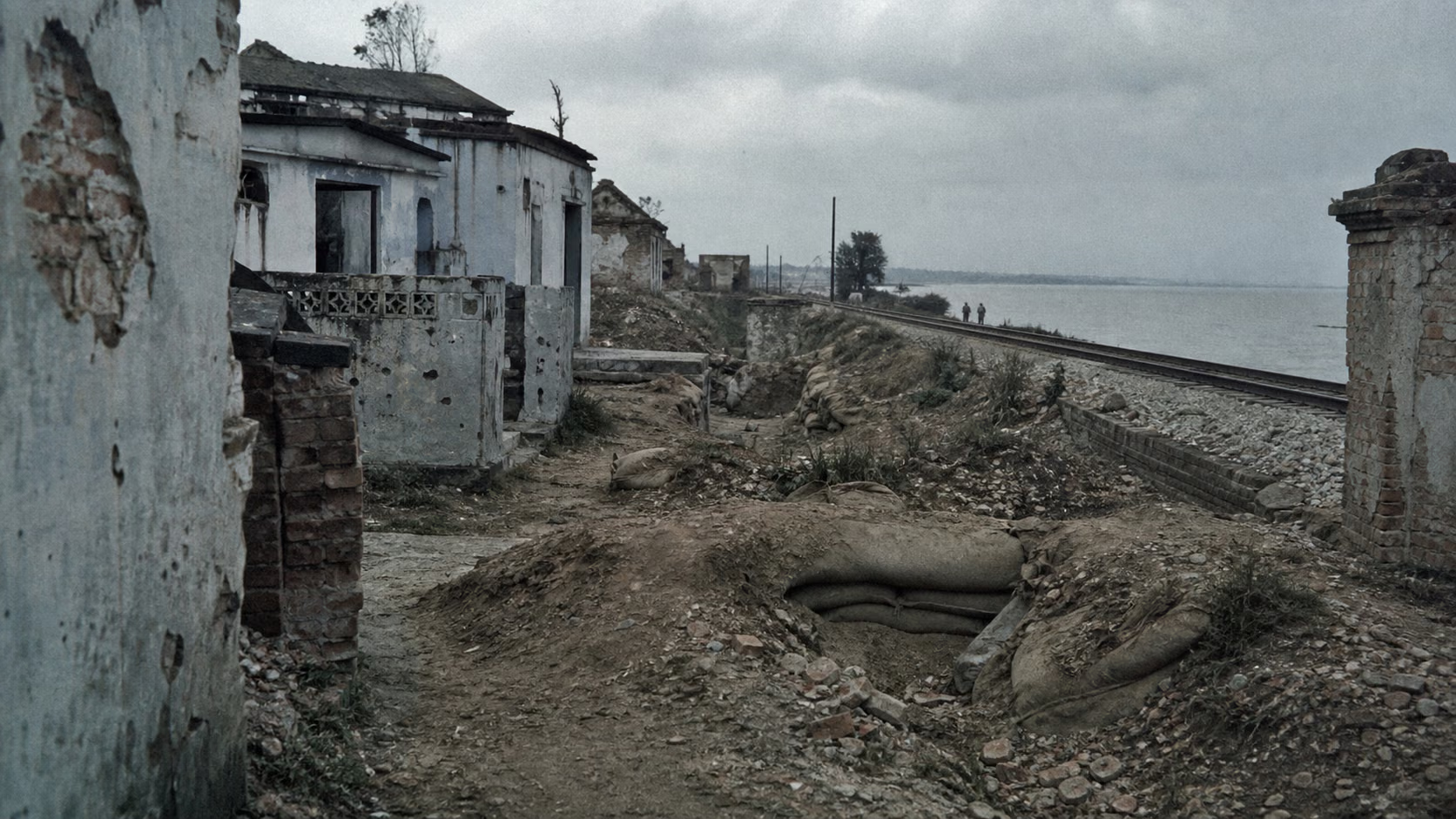
- The isolated city of circular defense: the railway ran through it, enemies pressed on three sides, and the river lay on the fourth. The presetting and secrecy of the retreat route were the key to this battle's success or failure.
- Pyu River bridge: the bridgehead space of the outpost ambush.
- Night crossing of the Sittaung River: the organizational space of an entire division disengaging at night: "retreat as the hardest battle" reappears (cross-reference with the Xiang River and Shanghai).
How Each Side Records It
- Chinese side: the canonical first battle of the expeditionary force; the starting point of the Dai Anlan narrative.
- Japanese side: the war history of the 55th Division recorded Toungoo as "stubborn resistance" (wording unverified): another piece of testimony from the opponent.
- British side: records in its Burma campaign accounts of the Chinese army's defense of Toungoo (samples of sharply divided evaluations unverified).
Disputes and Sensitivities
- Two statistical bases for enemy losses inflicted; poison-gas records unverified; the upper and lower decision chain over the timing of the breakout (the opening note in the dispute between Du Yuming and Stilwell; cross-reference the overview).
Sources and Open Questions
Sources: *History of the Chinese Expeditionary Force*; Dai Anlan's diary and biographical materials; the Japanese *Burma Offensive Operations*; Stilwell papers.
Open questions: casualty figures on both sides; original text of the will; Pyu River battle results; poison-gas records; the New 22nd Division's relief fighting; original British and American evaluations; the signing date and text of the Sino-British agreement for the joint defense of the Yunnan–Burma Road; the course of British negotiations delaying the expeditionary force's entry into Burma; the date and arrangement contents of Chiang Kai-shek's trip to Lashio; the state of Sino-British intelligence coordination; details of the 200th Division's tanks and heavy artillery arriving; the sequence of exchanged orders between Du Yuming and Stilwell over holding or withdrawing.
All images on this site are AI-generated depictions. They are not historical photographs, not primary sources, and do not depict any real individual.