Engagement Archive · [Foreign war on Chinese soil] Soviet August Storm Offensive (1945)
Three days after the atomic bombing of Hiroshima, 1.5 million Soviet troops poured into China's Northeast from three directions and crushed the Kwantung Army in little more than ten days -- the last great battle between foreign powers fought on Chinese soil. It ended fourteen years of occupation, and also emptied the Northeast's factories and decided the first chessboard of the civil war. Liberation and new trouble came from the same army.
Engagement Data
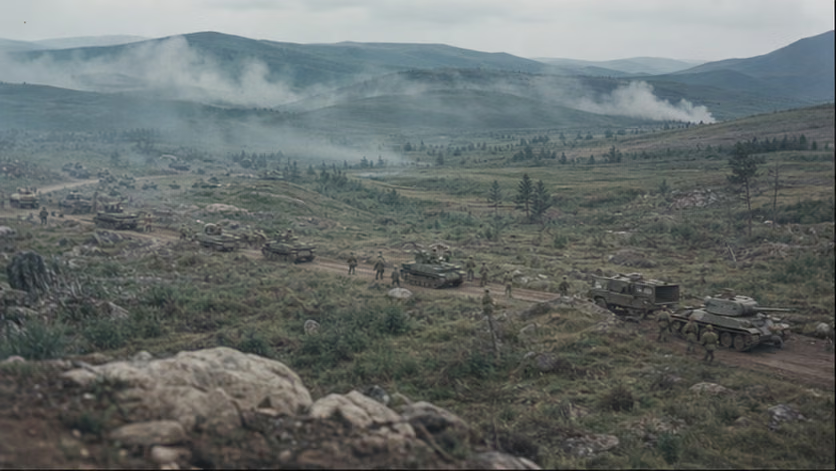
| Item | Content |
|---|---|
| Time | Launched before dawn on 1945.8.9 - major resistance ended around 8.20 (remnants into early September; Japanese surrender accepted 9.2) |
| Location | The whole of China's Northeast and eastern Inner Mongolia; also northern Korea, southern Sakhalin, and the Kurils (the parts outside China are noted only briefly) |
| Attacking side | About 1.5 million Soviet troops in three Far Eastern fronts (overall commander: Vasilevsky): Transbaikal (Malinovsky), First Far Eastern (Meretskov), and Second Far Eastern Fronts |
| Defending side | Japan's Kwantung Army, about 700,000 men (Yamada Otozo) -- the gap between paper strength and actual combat power is the military point of this article (elite units had long since been transferred south; half were newly formed troops and mobilized settlers, with statistical bases varying by account) |
| Result | The Kwantung Army collapsed and surrendered: about 600,000 captured; "Manchukuo" fell, and Puyi was captured (8.19, Shenyang airport) |
Belligerents
| Item | Soviet Troops | Kwantung Army |
|---|---|---|
| Strength and equipment | 1.5 million men, 5,500 tanks, 26,000 artillery pieces, and 3,900 aircraft (figures vary by account) -- an army that had just finished fighting in Berlin | 700,000 on paper, with tanks and aircraft depleted and almost no antitank capability |
| Tactics | Deep operations: armored groupings crossed the "impassable" Greater Khingan Range and desert (the Transbaikal Front's maneuver is a classic case in the Second World War) | Existing fortress complexes (Hutou, Dongning, and other "Eastern Maginot" positions) + gyokusai-style resistance |
| Intelligence | Full grasp of the situation | Misjudged the Soviet main axis of attack and the timing |
Terrain and Conditions
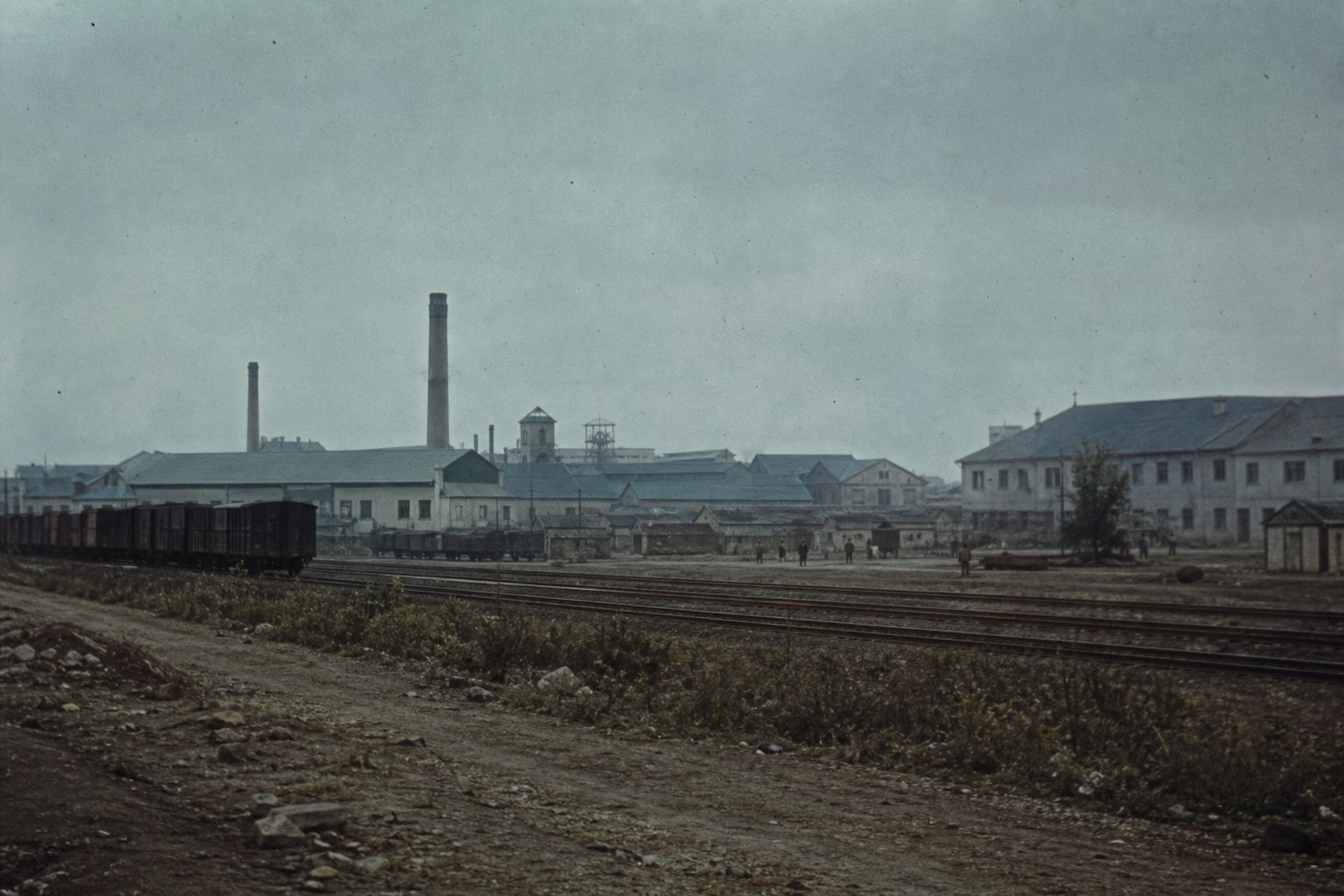
The Northeast in 1945.8: the final stage of thirteen years of "Manchukuo" rule -- one million Japanese settler immigrants in the settler groups were scattered across northern Manchuria; the industrial system ("Mangyo") was one of the largest in Asia; thirty million Chinese people had been "citizens of Manchukuo" for fourteen years. The Yalta secret agreement (1945.2) had already fixed the Soviet Union's price for entering the war: Dalian and Port Arthur, and rights in the Chinese Eastern Railway -- China's things were used to pay the Soviet Union's appearance fee, and China was not at the table (the Sino-Soviet treaty of 8.14 was a forced retrospective recognition -- a replay of the structure of Portsmouth 1905; see also the related articles on the Russo-Japanese War).
Why It Was Fought
After Xuefengshan pushed back the Japanese forces' last offensive, the China theater fell quiet: the Battle of Western Hunan was over, Japanese forces in China no longer had the strength to attack, the front shifted into stalemate, and Chongqing began planning counteroffensives and surrender reception. But the forces that would close this war were no longer on the front lines inside the passes -- they were in the Pacific, in the sky, and behind the northern border.
In May 1945, Germany surrendered, and Japan faced the whole world alone. On July 26, the Potsdam Proclamation demanded its unconditional surrender; Tokyo did not accept. It still kept one road it thought it could take: asking Moscow to mediate. That road had in fact already been shut in February. At Yalta, Stalin promised to enter the war against Japan within three months after victory over Germany, and the price was spelled out clearly: rights in Dalian, Port Arthur, and the Chinese Eastern Railway -- China's things were used to pay the Soviet Union's appearance fee, and China was not at the negotiating table.
On the two sides of the northern Manchurian border, the quality of the two armies was worlds apart. What the Soviet Union sent to the Far East was 1.5 million men who had just finished fighting in Berlin, under Vasilevsky's overall command, in three fronts, with 5,500 tanks (figures vary by account). Its method was deep operations, and even the "impassable" Greater Khingan Range was built into the axes of attack. Opposite it, the Kwantung Army still carried a paper figure of 700,000, but its elite had long since been transferred south, and half were newly formed units and settler-group mobilized soldiers (statistical bases vary by account); its hopes rested on the existing fortress complexes along the Hutou-Dongning line, and on one judgment -- it got both the direction of the Soviet main attack and the timing wrong.
Moscow's determination came down concretely and early. The Yalta promise was to enter the war against Japan within three months after victory over Germany -- that sentence in effect circled the calendar in advance: Germany surrendered in May, and the move would come in August. In late spring and early summer, Vasilevsky was ordered to take unified command of Soviet forces in the Far East (the dates of his appointment and of operational-plan approval are unverified). Over the next several months, troops, tanks, artillery, and fuel coming from Europe were shipped east along the single line of the Trans-Siberian Railway -- that single-track railway was the real timetable of August Storm: transport capacity decided the date of action, and also decided how deep the thrust could go. Tanks needed fuel, men needed water, and the Transbaikal Front's axis across the Greater Khingan Range and the Gobi was held up by engineers, water trucks, and supply tables reaching to the sky (details unrecorded). On the Kwantung Army side, Imperial General Headquarters' policy was to contract, hold, and resist in stages (policy document number unverified). It judged that the Soviets would move no earlier than after the beginning of autumn (this account unverified), so reorganization, redeployment, and fortress repairs were all scheduled into the autumn -- what it lacked was not channels of intelligence, but time; the fortresses were heavily designed, but shells and antitank weapons could not sustain the consumption implied by that design (statistical basis unverified). As for dissent: no opposition to the decision to enter the war has been found in published Soviet military histories; nor has any record been found of whether anyone inside the Kwantung Army offered a different view of the judgment that "the Soviet Army would not move until autumn" (no record of dissent found; unverified).
August 6: Hiroshima. August 8: Moscow declared war on Japan -- precisely between Hiroshima and Nagasaki; Japan's fantasy of hoping for Soviet mediation collapsed that same night. August Storm and the two atomic bombs together formed the direct pressure driving Japan's surrender. Which weighed more remains a famous question in international historiography; here the two accounts are placed side by side, without assigning weight.
Before dawn on August 9, the three fronts crossed the border from three directions and poured into the Northeast. Fourteen years earlier, this war had begun with an explosion outside Shenyang; now what rolled across this land was its last great battle -- once again, neither side fighting was Chinese, but the battlefield was still Chinese soil.
Course of the Engagement
| Phase | Time | Key Points |
|---|---|---|
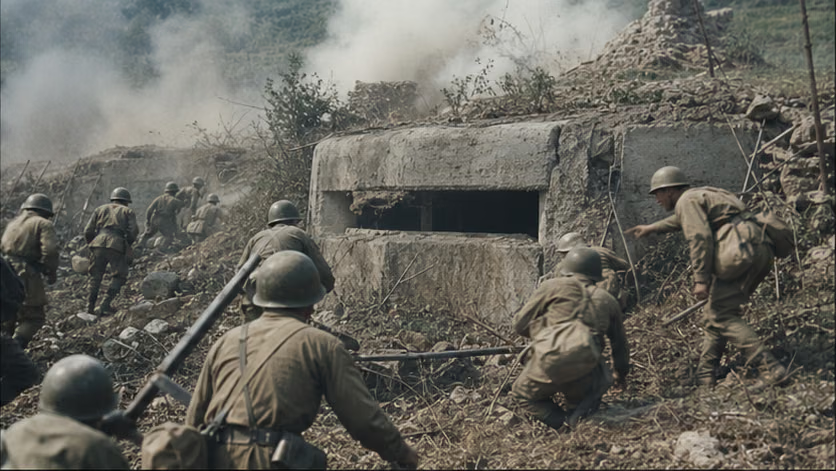
| Three-sided entry | Before dawn, 8.9 | West: the Transbaikal Front crossed the Greater Khingan Range and drove straight toward Shenyang and Changchun; east: the First Far Eastern Front broke the Dongning-Suifenhe fortress line; north: forces crossed the Heilongjiang and Songhua Rivers and moved south |
| Fortress gyokusai | 8.9-26 | Hutou Fortress ("the last place where the war ended": the defenders refused to believe the ceasefire order and fought until 8.26, when they were wiped out -- a battle still being fought after the emperor's Jewel Voice Broadcast, details unverified), and the battles around Dongning Fortress |
| Deep collapse | 8.11-18 | Kwantung Army command collapsed; 8.15 Jewel Voice Broadcast, 8.18 formal surrender of the Kwantung Army; airborne detachments seized Shenyang, Changchun, Harbin, Dalian, and other cities |
| Closing | 8.19-early 9 | Puyi was captured (8.19); the Anti-Japanese United Army Training Brigade returned to the Northeast with Soviet troops to take over (see the closing line in *Northeast Volunteer Army and the Anti-Japanese United Army*); Port Arthur and Dalian again passed into Soviet hands -- a forty-year cycle: what was lost to Japan in 1905 returned to Russian hands in 1945 |
Casualties and Losses
- Soviet troops: 32,000 battle casualties (12,000 killed; Soviet figures vary by account).
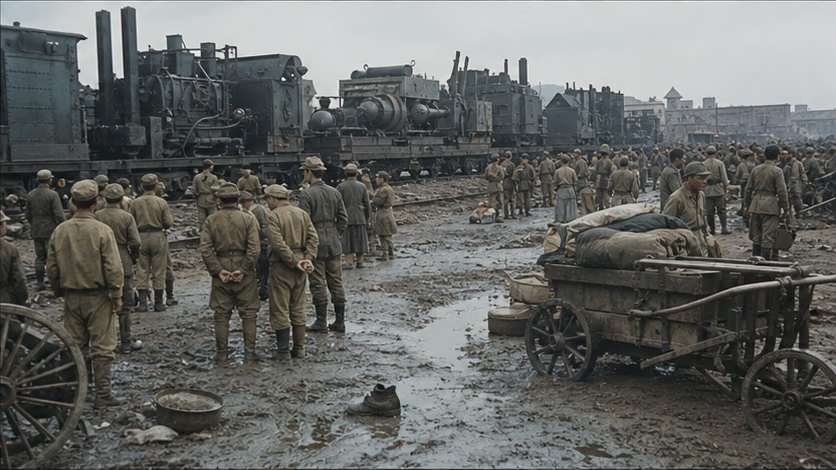
- Japanese forces: about 80,000 killed and about 600,000 captured -- Siberian internment: prisoners of war were sent to the Soviet Union for labor, and about 60,000 died of cold and hunger (Japanese figures vary by account) -- the atrocity dimension of postwar handling (when the victims were Japanese prisoners of war, ※ this too is stated plainly; the discipline is consistent).
- Japanese civilians: the flight of one million settler-group refugees -- deaths on the road in incidents such as the Gegenmiao Incident ※, and several thousand orphans left with Chinese families ("remaining orphans" -- the Chinese adoptive-parents line: the invaded taking in the children of the invaders, a human node); figures vary and remain unverified.
- Chinese ※: northeastern civilians caught in the fighting; Soviet discipline problems (atrocities against civilians and looting during the occupation -- recorded in Shenyang, Harbin, and other cities, not avoided here, with accounts varying by statistical basis); removal of industrial equipment: Soviet troops dismantled and took away industrial and mining equipment from the Northeast in the name of "war trophies" (valued at 800 million to 2 billion U.S. dollars, figures varying by account) -- "the liberator's bill."
Aftermath
- Fourteen years of occupation ended -- the exhilaration of the Northeast's recovery and the disillusion that immediately followed (Soviet atrocities, factory dismantling, and delayed withdrawal) are written together: a complicated liberation.
- The first chessboard of the civil war: Soviet troops tacitly allowed CPC forces to enter Manchuria first and receive weapons (the flow of the Kwantung Army arsenals -- the differing accounts from each side remain to be examined), and then handed the major cities to the National Government in accordance with the Sino-Soviet treaty. This two-sided occupation policy directly shaped the opening of the civil war in the Northeast (links to *Chinese Civil War · Overview* -- the foreign-war-on-Chinese-soil sequence merges here with the civil-war main line).
- Soviet troops remained stationed in Port Arthur and Dalian until 1955; the Chinese Changchun Railway was jointly managed until 1952 -- the account of 1905 was kept for another ten years in another form.
- "August Storm" became a world military-studies classic of deep operations (a Chinese-perspective supplement to its canonization: textbooks speak of the miraculous speed of maneuver, and say less about whose home the battlefield was -- this asymmetry).
Accounts of Those Present
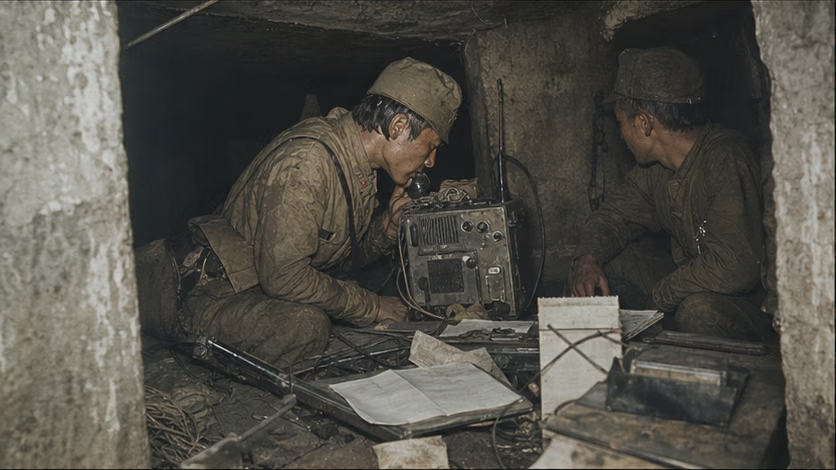
- The radio at Hutou Fortress: after the 8.15 Jewel Voice Broadcast, the defenders judged it to be a deception broadcast and continued resisting for eleven days -- people who did not believe the war had ended, an extreme sample of the inertia of war.
- The children of Gegenmiao: orphans on the flight route of the settler groups were carried home by Chinese peasants -- decades later, in the television era of "remaining orphans" visiting China to search for relatives (1980s) -- the most unexpected link in the chain of hatred.
- The soldiers dismantling machines: Anshan Iron and Steel equipment was loaded onto trains heading north (eyewitness oral materials, evidentiary level unverified) -- in the first year of "recovery," workers watched the machines leave.
- The return of the Anti-Japanese United Army: Zhou Baozhong and others returned with Soviet troops to the land where they had fought guerrilla war for fourteen years (see *Northeast Volunteer Army and the Anti-Japanese United Army*) -- the first Chinese armed force to enter the Northeast was that almost-fought-out unit, one item of historical settling of accounts.
The Ground
- Crossing the Greater Khingan Range: armored groupings traversed "impossible terrain" -- maneuver itself as the engagement (forming the attacking-side mirror image of the Savage Mountains' "environment as enemy").
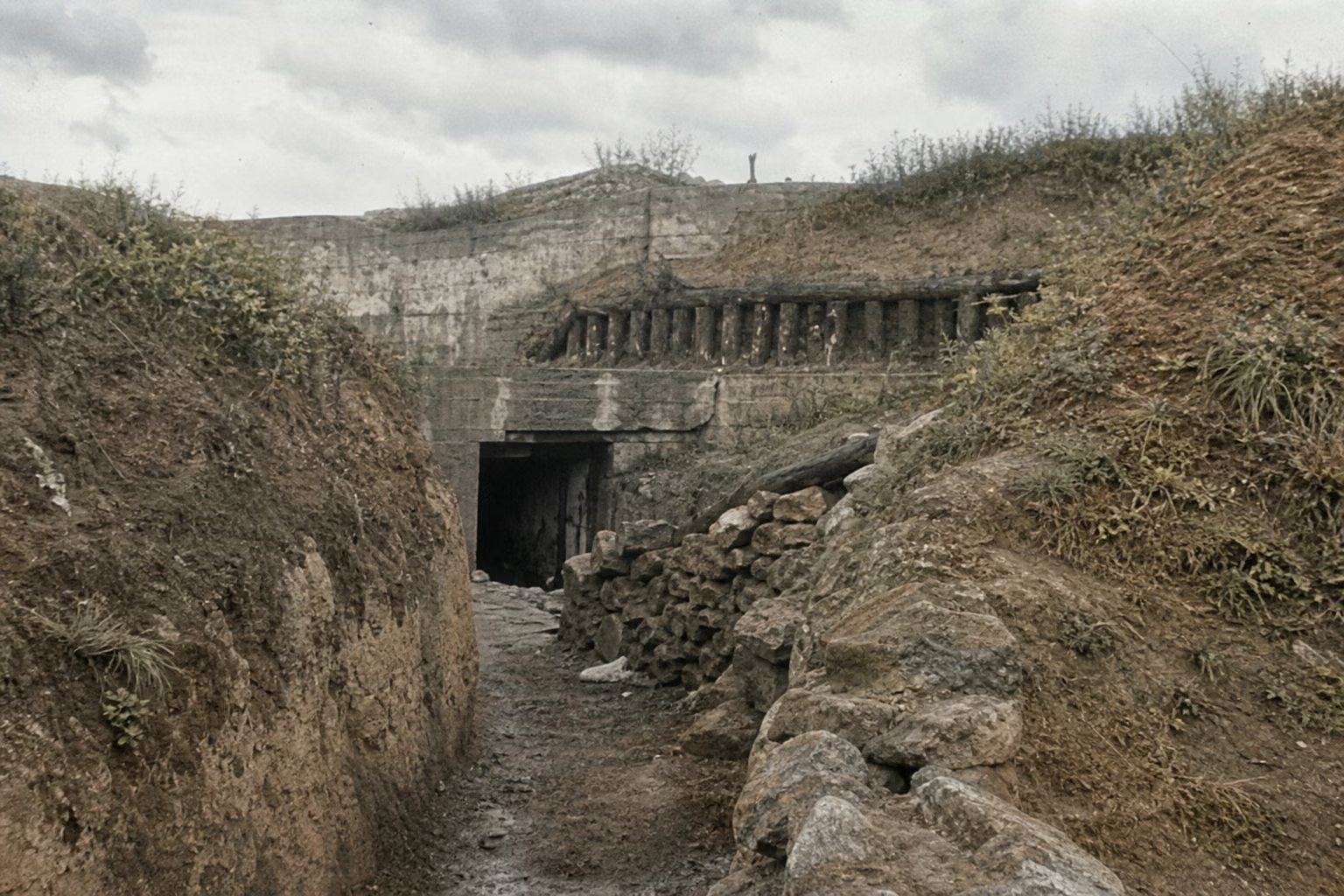
- Border fortress complexes: the underground fortresses of Hutou and Dongning (surviving site clusters today) -- the space of "battle after the Jewel Voice Broadcast."
- The multi-sided chessboard of urban reception: in the same city of Shenyang were Soviet troops, the CPC, the National Government, Japanese prisoners, and refugees -- the northeastern cities of autumn 1945 were the most complicated "reception space" in the whole series.
How Each Side Records It
- Soviet/Russian: the Far Eastern final chapter of the Great Patriotic War, with 9.3 as its Victory over Japan Day; the narrative center of gravity lies in military art.
- Japanese side: the end of "Manchuria" -- the settler-group tragedy and Siberian internment are its two major themes in postwar memory (a strong victim narrative, with the colonial premise softened -- structurally the same as its home-islands narrative).
- Chinese side: "the Soviet Union sent troops into the Northeast," passed over in one line in textbooks -- the joy of recovery, the pain of atrocities and dismantling, and the change in the civil-war chessboard are three layers that long did not receive equal writing (recent research has gradually become fuller); in northeastern popular oral memory, the complicated voices around the memory of "laomaozi."
Disputes and Sensitivities
- The debate over the relative weight of the atomic bombs and August Storm in Japan's surrender -- placed side by side in international historiography.
- Accounts of Soviet atrocities and dismantling vary by statistical basis; atrocities, dismantling, and Cold War narrative need to be separated.
- The flow of weapons and the opening of the civil war -- the materials of each side are placed side by side by their accounting basis (this is the interface issue for *Chinese Civil War · Overview*).
- The dual identity of the settler groups (colonial vanguard / war refugees) -- both layers are written together.
Sources and Open Questions
Sources: the Soviet official military history *Far Eastern Campaign*; Japanese war-history volumes on the *Kwantung Army* and settler-group materials; Chinese archives and oral histories on the reception of the Northeast; the Hutou and Dongning fortress sites; recent Chinese, Japanese, and Russian research.
Open questions: both sides' troop-strength and casualty bases; details of Hutou; differing estimates of the value of dismantled equipment; each side's account of the flow of weapons; figures for Gegenmiao and the remaining orphans; statistical bases for records of Soviet atrocities; dates and document numbers for Vasilevsky's appointment and approval of the Far Eastern operational plan; original materials on the Kwantung Army's judgment of the timing of the Soviet offensive; details of Trans-Siberian Railway transport and the concentration of forces in the Far East; details of fuel and water-supply support for the Transbaikal Front; statistical bases for Kwantung Army ammunition and antitank-weapon reserves; whether records exist of internal dissent on either side over decision-making.
All images on this site are AI-generated depictions. They are not historical photographs, not primary sources, and do not depict any real individual.