Engagement Archive · Battle of Nanchang (1939)
The first major battle at the opening of the stalemate phase: Japanese forces used gas shells to cover a forced crossing of the Xiu River and opened the road with massed tanks, taking Nanchang in ten days; the Chinese side then counterattacked for more than a month, entered the city's outskirts, and fell short at the last step, while Chen Anbao, commander of the 29th Army, was killed in action.
Engagement Data
| Item | Details |
|---|---|
| Time | 1939.3.17 – 5.9: Japanese offensive in mid-to-late March; Nanchang fell on 3.27; Chinese counteroffensive from late April to 5.9 (dates vary by account) |
| Place | Nanchang, Jiangxi, and the basins of the Xiu River, Gan River, and Fu River |
| Part of | Fourteen-Year War of Resistance · opening battle of the stalemate phase (after the Battle of Wuhan (1938)) |
| Chinese side | Ninth War Area (commander-in-chief Chen Cheng; forward command including Luo Zhuoying's 19th Group Army and other units; details of the War Area command subordination are unrecorded) |
| Japanese side | Eleventh Army (commander Okamura Yasuji), with the 101st and 106th Divisions and other units as the main force (full order of battle unrecorded) |
| Result | Nanchang fell on 3.27; the Chinese counteroffensive in April–May failed, and the counteroffensive was halted in early May |
Belligerents
| Item | Chinese side | Japanese side |
|---|---|---|
| Strength | During the defensive phase, more than 200,000 troops of the Ninth War Area in northern Jiangxi (statistical basis varies by account); about ten divisions committed during the counteroffensive phase | Several tens of thousands in the offensive force, mainly the 101st and 106th Divisions (specific personnel figures vary by account) |
| Firepower | Weak artillery and insufficient firepower for assaults on fortified positions, exposed plainly during the counteroffensive phase | Divisional artillery + heavy artillery + aviation, with massed tanks and gas units attached |
| Special arms | — | Gas shells ※ (recorded in Japanese archives as "special smoke"; details unrecorded); tanks used in concentration (order of battle unrecorded) |
| Supply | Local requisition and supplementation, with limited ammunition | Based on Yangtze River–Poyang Lake water transport, with short supply lines |
Terrain and Conditions
(For the larger situation in 1939 — the Chinese theater entering stalemate after the fall of Wuhan and Guangzhou, Japan's attempt to "feed war with war," and the imminence of war in Europe — see Fourteen-Year War of Resistance · War Overview; here the focus is only northern Jiangxi and Nanchang.)
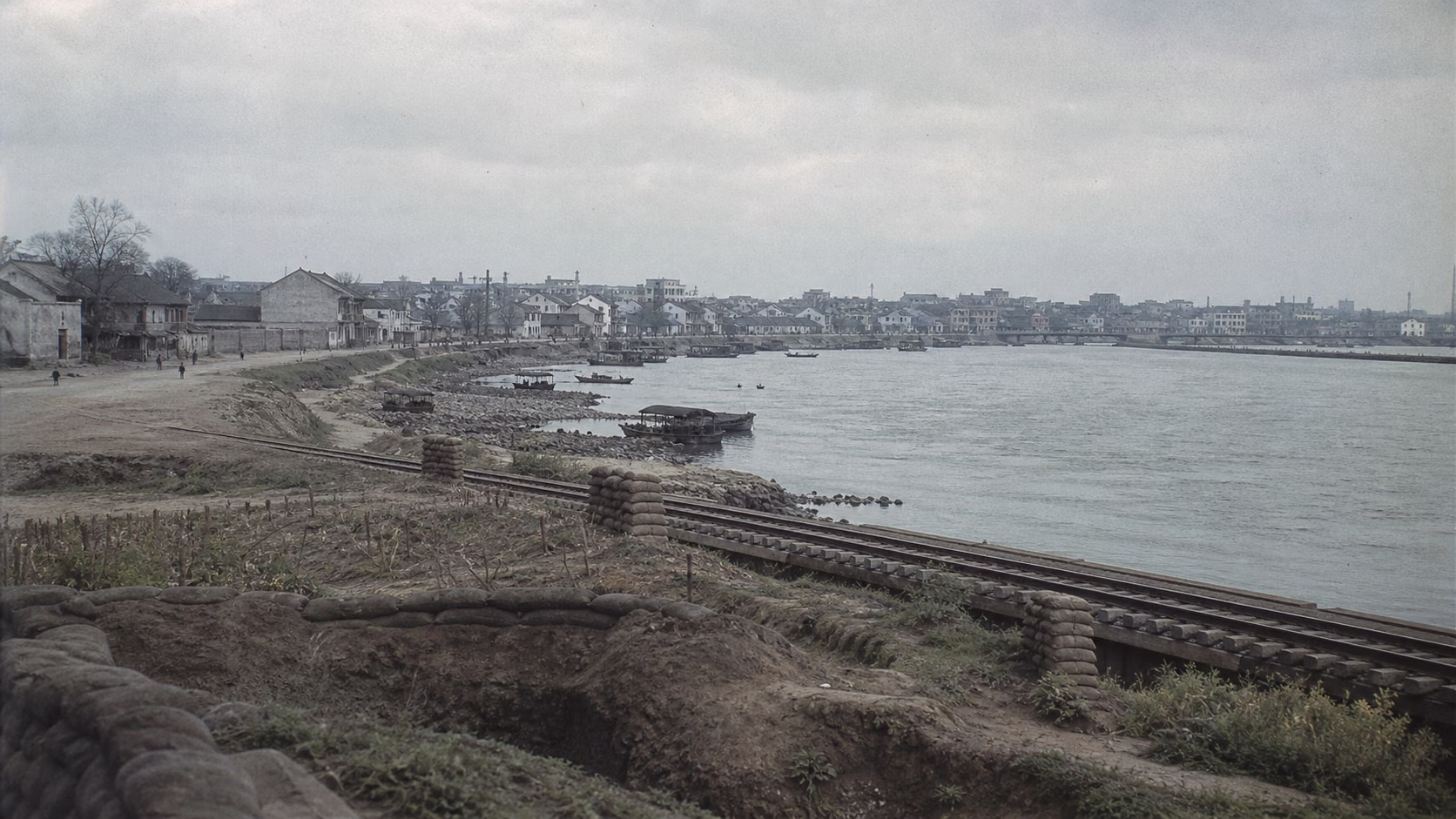
Northern Jiangxi situation: After the Battle of Wuhan (1938), the main forces of the Ninth War Area withdrew into Hunan and Jiangxi and faced the Japanese Eleventh Army across the Xiu River. Nanchang was the capital of Jiangxi Province, where the Zhejiang–Jiangxi Railway and Gan River water transport met, with an airfield southeast of the city. It was a forward position from which the Chinese army could threaten the Japanese Wuhan–Jiujiang supply line south of the Yangtze, and, in reverse, a thorn the Japanese forces believed they had to remove.
The city: Before the war, Nanchang was Jiangxi's political and economic center; after the war began, part of the civilian population was evacuated (figure disputed). The city's defenses were laid out along the Xiu River and Gan River, but the riverine terrain favored the attacker in dividing the defense: the front was wide and the depth was thin.
Why It Was Fought
The way the Battle of Wuhan (1938) ended determined how the Battle of Nanchang (1939) began. In October 1938, the three towns of Wuhan were abandoned; Guangzhou fell in the same month; the Japanese occupied zone had reached its limit; "quick victory" had collapsed; and the war entered stalemate. The main forces of the Ninth War Area withdrew into Hunan and Jiangxi and faced Okamura Yasuji's Eleventh Army across the Xiu River. Half a year earlier, at Wanjialing, the 106th Division had been encircled so tightly that officers had to be airdropped into the pocket. Its remnants withdrew and were rebuilt; now it had returned to the north bank of the Xiu River. Okamura placed it, together with the 101st Division, in the main attack sequence, then added heavy artillery, massed tanks, and gas units, using firepower to make up for the condition of two divisions that had already been badly mauled.
For the Japanese forces, Nanchang was a thorn in Wuhan's flank and rear: the capital of Jiangxi Province, the junction of the Zhejiang–Jiangxi Railway and Gan River water transport, and a city with an airfield to its southeast, from which the Chinese army could threaten the Yangtze route between Wuhan and Jiujiang. Taking Nanchang would both remove this forward base and cut the Zhejiang–Jiangxi Railway, separating the Third and Ninth War Areas by land. For Chongqing, defending Nanchang meant defending exactly these two things: the Zhejiang–Jiangxi corridor and the integrity of the battlefield south of the Yangtze.
Both sides were also calculating time. Each side spent the winter refitting, and Chongqing was likewise planning to shift to an offensive posture after spring began (details of the pre-battle offensive plan unrecorded). Okamura moved first, placing the first major battle of the stalemate phase in March and on the middle reach of the Xiu River, a section where the Chinese defensive front was wide and its depth thin.
Each side's calculation had a gap. The Chinese side treated the river as a barrier, expecting the Xiu River network to delay the offensive. It had not anticipated that Japanese forces would blanket the river-defense positions with gas shells to cover a forced crossing, and it had even fewer means to deal with tanks breaking through in groups after the crossing. The infantry lacked anti-tank weapons; once the river defense broke, the armored columns had almost open ground behind it. The Japanese forces, meanwhile, treated the battle as the removal of a thorn: once the city was taken, the operation should have closed. A month later, the Chinese side counterattacked with roughly ten divisions and at one point fought into the outskirts, dragging the battle on for another month and a half. That was the unwritten next act when the campaign opened.
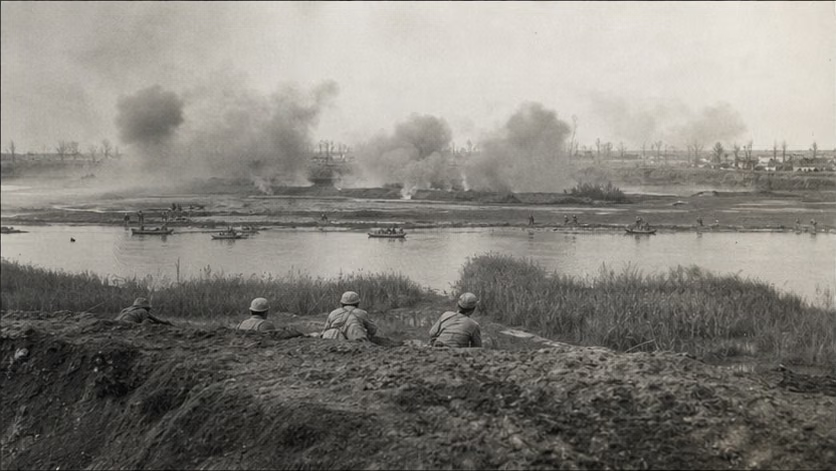
On 17 March, part of the Japanese force first attacked toward Wucheng on the lower Xiu River to draw the defenders' attention apart; on 20 March, artillery fire and gas smoke on the middle Xiu River covered the south-bank positions at the same time, and the main forced crossing began.
Course of the Engagement
| Phase | Time | Main points |
|---|---|---|
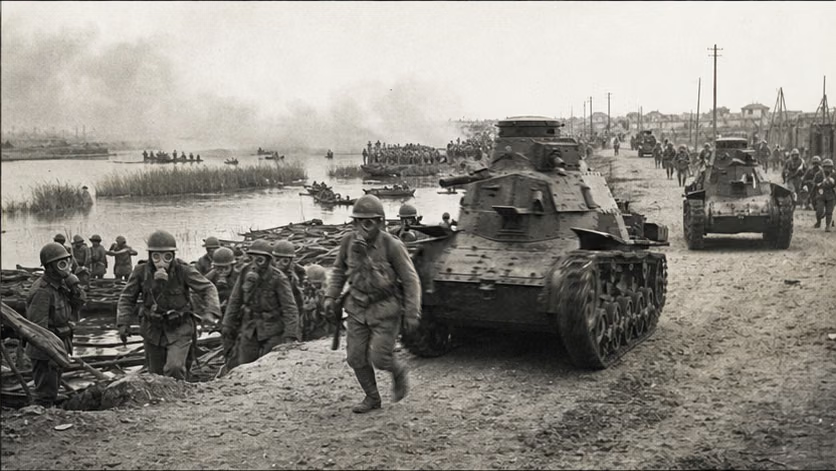
| Diversion and breakthrough | 3.17–3.20 | Part of the Japanese force first attacked toward Wucheng on the lower Xiu River as a diversion; on 3.20 the main force made a forced crossing on the middle Xiu River, using gas shells to cover Chinese positions and screen the crossing ※, after which massed tanks broke through into the depth |
| Drive on Nanchang | 3.21–3.27 | After the Chinese river defense was broken, the Chinese side organized successive resistance; Japanese forces advanced rapidly along the roads, and Nanchang fell on 3.27 |
| Chinese counteroffensive | Late April–5.9 | The Ninth War Area was ordered to counterattack, with Luo Zhuoying's forces as the main attack and multiple columns pointed toward Nanchang; they at one point entered the outskirts (toward the airfield and railway station; details unrecorded), but with insufficient firepower for fortified assault, they were checked before Japanese firepower and reinforcements |
| Counteroffensive halted | 5.6–5.9 | On 5.6, Chen Anbao, commander of the 29th Army, was hit at the front and killed in action; in early May, Supreme Headquarters ordered the counteroffensive halted (wording of the order unverified) |
Casualties and Losses
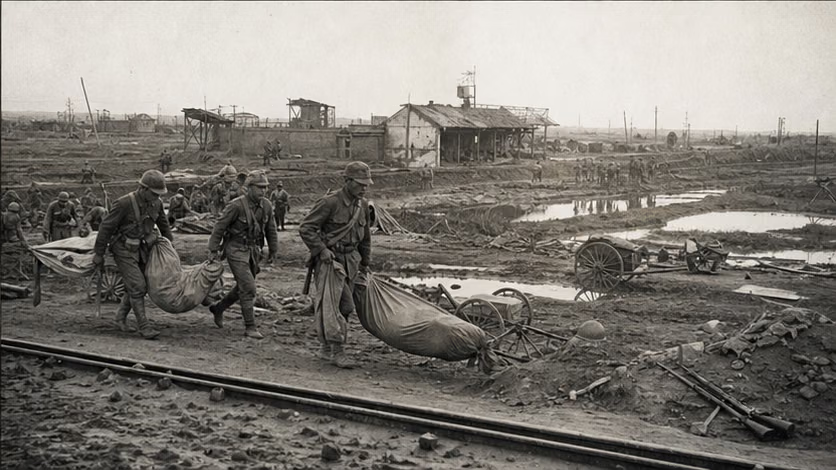
- Chinese side: In the battle as a whole, including the counteroffensive, casualties were on the order of several tens of thousands; common Chinese materials record roughly around 50,000 (statistical boundary unverified). Casualties in assaults on fortified positions were especially heavy during the counteroffensive phase. Chen Anbao, commander of the 29th Army, was killed in action, another army commander in the line of those who died in the War of Resistance.
- Japanese side: Japanese military histories self-report casualties in the several thousands (figures and statistical basis vary by account). Chinese battle reports give Japanese killed and wounded figures higher than the Japanese self-reports; the two statistical bases are presented side by side, without arbitrary selection.
- Civilians: Records of civilian victims in villages along the front affected by the use of gas shells are scattered (record unverified).
Aftermath
- Nanchang fell, the Zhejiang–Jiangxi line was cut, and the land connection between the Third and Ninth War Areas was forced to detour.
- Although the Chinese counteroffensive failed, the act of "daring to counterattack" itself was entered into public opinion at the time: the stalemate phase did not mean only taking blows. That was one side of contemporary opinion; the other was that the casualties caused by attacking a fortified city with inferior firepower also brought criticism of the counteroffensive decision.
- Japanese forces used Nanchang as a base, and the northern Jiangxi front was fixed from then on for several years (through later operations such as the Battle of Shanggao in 1941).
Accounts of Those Present
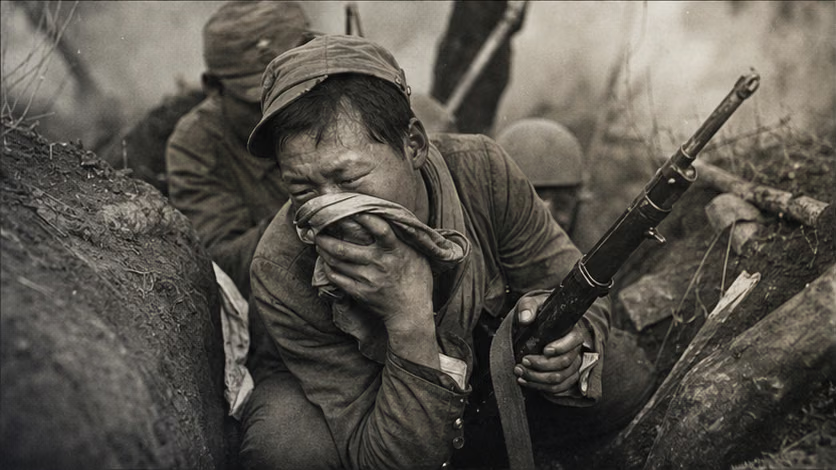
- The Xiu River under gas ※: In the 3.20 crossing battle, Chinese records state that frontline officers and soldiers lost combat effectiveness in gas smoke, while Japanese forces advanced through the smoke wearing masks; Japanese archives record the firing of "special smoke." This is one of the emblematic scenes of large-scale Japanese field gas warfare during the War of Resistance. The records from both sides are presented side by side; details remain unverified.
- Tanks opening the road: In this battle, Japanese forces concentrated tanks for the river-crossing breakthrough, an early example of their use of massed tank tactics in China. Chinese infantry lacked anti-tank weapons, and after the river defense was torn open, they had almost no means to delay the advance of armored columns.
- Chen Anbao: During the counteroffensive phase he went personally to the front to command; on 5.6 he was hit and killed in action near the outskirts of Nanchang, and his body was recovered by his subordinates. He was later posthumously awarded the rank of army general (details of the bereavement honors unrecorded).
- The soldiers of the counteroffensive: Firepower for fortified assault was insufficient, and the troops that reached the city walls filled the gap with their bodies. Behind the eight words "entered the outskirts and fell short at the last step" were casualties by whole battalions and companies.
The Ground
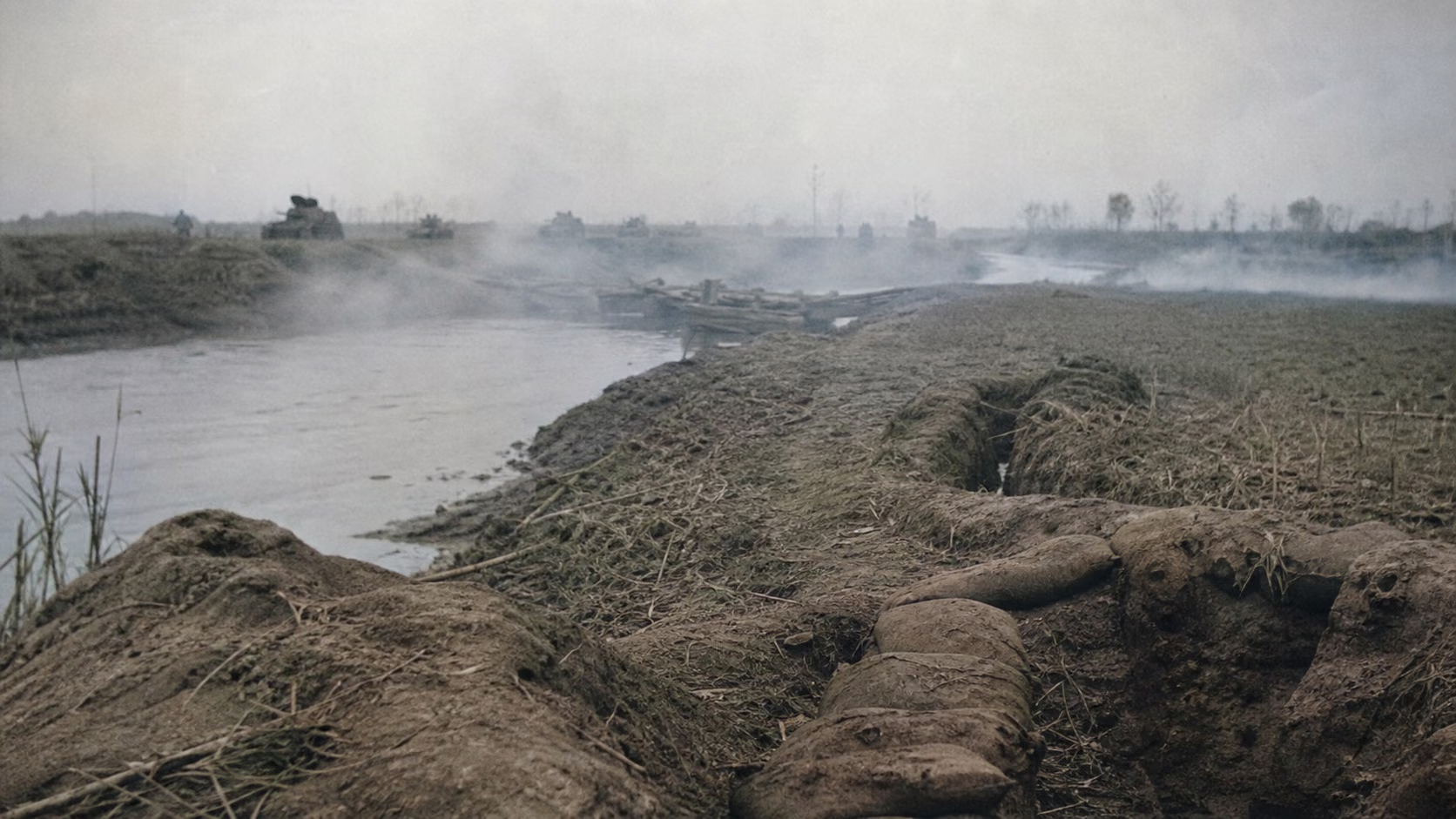
- The Xiu River was the first and decisive line: river network, embankments, and ferry points; under the added force of gas and tanks, the crossing points became one-way killing channels.
- The outskirts of Nanchang were flat, crisscrossed with ponds and polders. During the counteroffensive phase, the closer the Chinese side came to the urban area, the more exposed it was to Japanese fortified firepower.
- The airfield and railway station were emblematic terrain features in the struggle for the outskirts, changing hands repeatedly (specific sequence by feature unverified).
- The Zhejiang–Jiangxi Railway and the Gan River formed the logistical axis: when Japanese forces occupied the city, they occupied the line; when the Chinese side lost the city, the road was cut.
How Each Side Records It
- Chinese side: Records "Battle of Nanchang (1939)" as the opening defeat of the stalemate phase, while also keeping a separate account for the counteroffensive. Contemporary judgments of the sort "though the counteroffensive did not recover the city, its spirit was commendable" are common; Chen Anbao's death in action is included in narratives of loyal sacrifice.
- Japanese side: Records it as the capture of Nanchang and a successful operation that achieved its operational objective. The use of "special smoke" (gas) during the crossing is described in technical terms in the archives, and after the war it became one link in the evidentiary chain for Japanese chemical warfare in the Tokyo Trial and related investigations of war-crimes evidence (specific archival file numbers unverified).
Disputes and Sensitivities
- The gas issue ※: Chinese records state that Japanese forces used gas shells on a large scale in this battle to cover the river crossing. Japanese archives often record this in technical language such as "special smoke," and the Japanese side long avoided direct characterization. The records from both sides are presented side by side; the types and quantities of gas shells and the range affected await document-by-document verification.
- The counteroffensive decision: Launching a large-scale counteroffensive when firepower for fortified assault was clearly insufficient has long drawn differing evaluations: was it a "political necessity" or a military misjudgment?
- Casualty figures differ sharply between the two statistical bases, with a large gap between the two sides' numbers; this article presents both accounts side by side.
Sources and Open Questions
Known principal materials:
- Relevant battle reports in the Second Historical Archives of China, and detailed combat reports of the Ninth War Area (archival file numbers unverified)
- Relevant volumes of the Senshi Sosho by the War History Office of the Japanese Defense Agency (official Japanese history; volume titles unverified)
- Memoir materials by Luo Zhuoying and other participating generals (specific titles unverified)
Open questions: the complete order of battle of participating Japanese divisions, tanks, and gas units; the Chinese order of battle in the defensive and counteroffensive phases; the types of gas shells and quantities fired, cross-checked between Chinese and Japanese archives; the dates of each point in the fall of Nanchang and the counteroffensive; the statistical boundaries of both sides' casualty figures; the original wording of the order halting the counteroffensive; Chen Anbao's place of death and details of his bereavement honors; records of civilian victims related to gas use.
All images on this site are AI-generated depictions. They are not historical photographs, not primary sources, and do not depict any real individual.