Engagement Archive · Battle of Pingxingguan
The Eighth Route Army's first battle after taking the field: the 115th Division laid an ambush in the ravine of Qiaogou at Pingxingguan, trapped more than a thousand men of the Itagaki Division's baggage train and motor convoy, and suffered more than six hundred casualties of its own; the battle was not large, but its echo was enormous -- on this day, the myth that the "Imperial Army could not be defeated" publicly collapsed for the first time, and that asymmetry itself is something this archive has to record.
Engagement Data
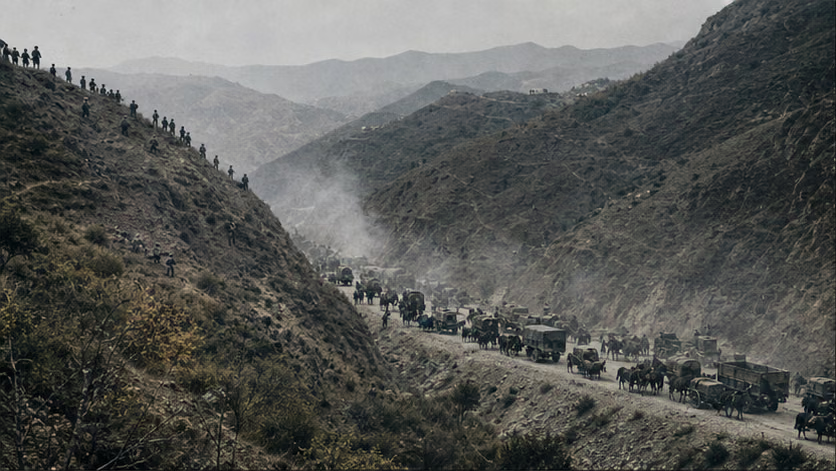
| Item | Content |
|---|---|
| Time | 1937.9.25, from dawn to afternoon, one day |
| Place | Qiaogou between Lingqiu and Pingxingguan, Shanxi (the road section from Donghenan Town to Caijiayu), with the main battlefield a ravine road about ten li long |
| Belongs to | Fourteen-Year War of Resistance · Battle of Taiyuan (1937) (see *Battle of Taiyuan · Overview*) |
| Ambushing side | Eighth Route Army 115th Division (division commander Lin Biao, deputy division commander Nie Rongzhen); the main force, the 343rd Brigade (685th and 686th Regiments), set the ambush, while the 687th Regiment, the divisional Independent Regiment, and the cavalry battalion undertook supporting attacks and blocking of reinforcements |
| Ambushed side | The baggage units and motor convoys of the 21st Brigade (Miura Toshiwaza), Fifth Division (Itagaki Seishiro), Japanese forces -- two columns moving toward each other entered the ravine on the same day (for textual verification of the composition, see the disputes section) |
| Result | The ambush succeeded, inflicting about a thousand enemy losses (parallel figures by basis are listed in the casualties section); the 115th Division withdrew from the battlefield that day |
Belligerents
| Item | Ambushing Side | Ambushed Side |
|---|---|---|
| Strength | The division's main force was pre-positioned; about three regiments were actually committed to the fighting inside the ravine (figures for committed strength vary by account) | The two columns inside the ravine together numbered about a thousand men (parallel figures by basis are listed in the disputes section) |
| Firepower | Mainly rifles, with small numbers of machine guns and mortars, extremely short of ammunition, no artillery | Light weapons accompanying the columns; reinforcements outside the ravine (part of the 21st Brigade) had artillery |
| Terrain | Occupied the heights on both sides in advance, attacking from above | Column movement inside the ravine, unable to deploy |
| Intelligence | The Japanese transport route had been grasped by the Chinese side; this was the Eighth Route Army's first battle against Japan, and it underestimated the enemy's tenacity | Unaware of the ambush |
Terrain and Conditions
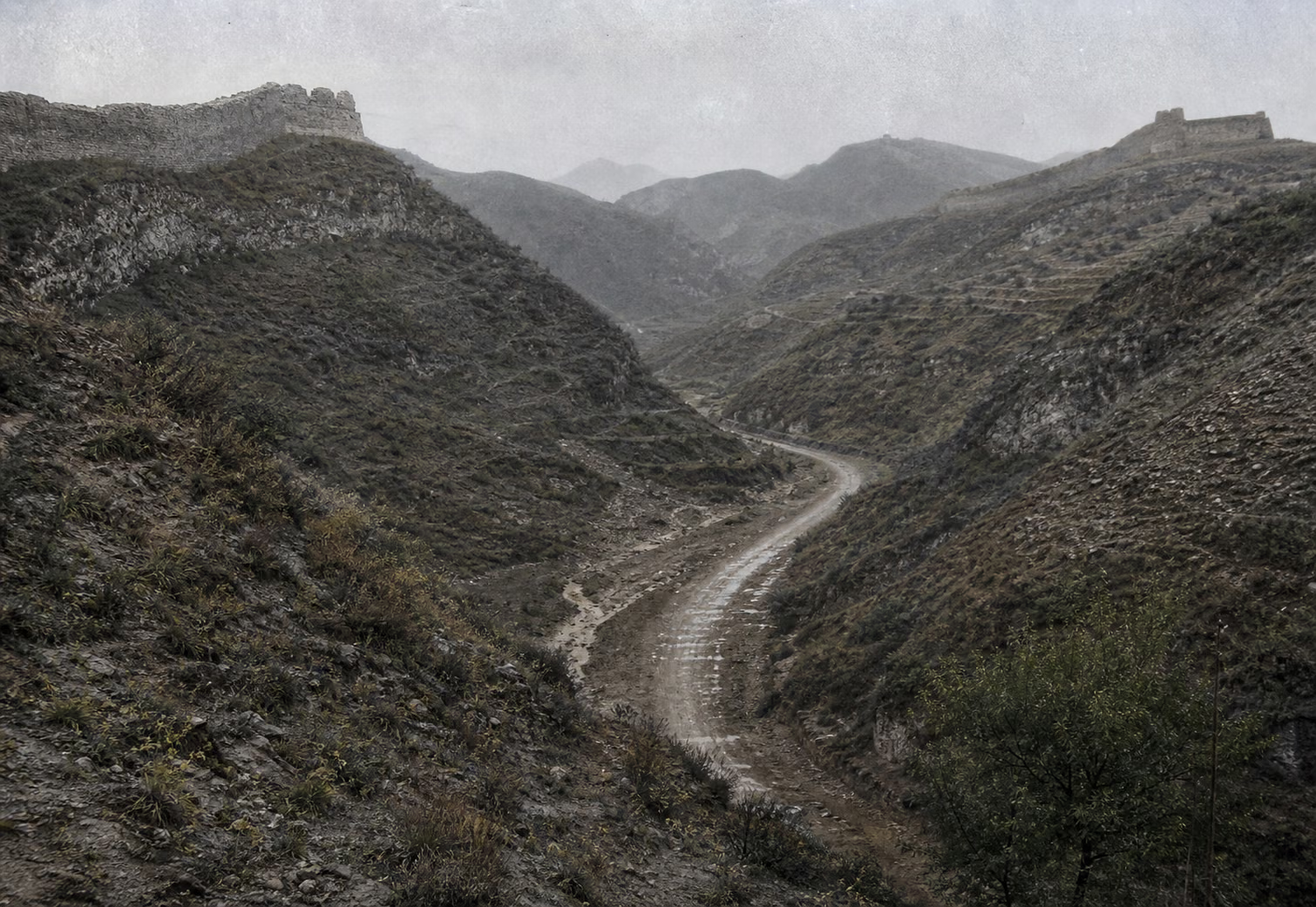
Pingxingguan: a pass of the Inner Great Wall and a key route from Lingqiu to Taiyuan; Qiaogou is a road ravine before the pass, enclosed by heights on both sides, dozens of meters deep, and at its narrowest allowing only one vehicle through -- a natural ambush ground. In North China in September 1937, Japanese forces had suffered almost no defeats since July 7: Beiping and Tianjin fell within days, Tianzhen and Datong in northern Shanxi were lost one after another, the Second War Area retreated along the whole line, and national opinion was filled with despondency -- this battle was fought in an atmosphere where the word "defeat" appeared line after line. For the larger situation, see *Fourteen-Year War of Resistance · War Overview*.
Why It Was Fought
After Tianzhen and Datong were lost one after another, the defensive line of the Battle of Taiyuan drew back to the Inner Great Wall, and Pingxingguan was the lock on the eastern section of that line: outside the pass, a road ran from Lingqiu toward Taiyuan, and Itagaki's Fifth Division was advancing along it. If it broke through this pass, it could join Japanese forces in northern Shanxi in a converging attack on Taiyuan. The Eighth Route Army 115th Division, which had just crossed the Yellow River eastward into Shanxi, was ordered to cooperate with the Second War Area by striking the flank here -- by prior agreement, the Jin-Sui Army was to attack from the front at the same time (the level of the action taken and its failure remain to be verified; see the disputes section). The measure of this "cooperation" came from the policy set at the Luochuan Conference more than a month earlier: independent mountain guerrilla warfare, cooperating with friendly forces without coming under their command (the conference is an accepted historical fact; the direct telegrams and orders connecting it to the Pingxingguan deployment remain unverified). In mid-to-late September, Eighth Route Army headquarters and the 115th Division exchanged telegrams several times and settled on a flanking strike toward Pingxingguan (telegram dates and wording unverified). What they had in hand when making this decision was reconnaissance knowledge of the Japanese transport pattern; what they did not have was whether the Jin-Sui Army's attack would be fulfilled, or how far away the next Japanese echelon was.
The battlefield chosen by the 115th Division was Qiaogou. This road ravine before the pass is hemmed in by heights on both sides, dozens of meters deep, and at its narrowest allows only one vehicle through -- once a convoy entered the ravine, cutting off head and tail would leave it unable to deploy. Division headquarters learned through reconnaissance that Japanese baggage transport used this road, and after Lin Biao inspected the ground several times in person, he fixed the ambush plan: pre-position the main force on the heights on both sides and strike specifically at the transport column. This army was desperately short of ammunition, with old firearms; attacking the baggage train was both a way to cut off enemy supply and a way to replenish its own guns and cartridges. Its family resources drew the boundary around this battle: the whole division had more than fifteen thousand men, mixed rifle calibers, extremely limited bullets per man (basis unverified), and no artillery. Ammunition was enough only for a battle of one night in ambush and half a day to resolve it; it could not sustain a second day's standoff. The decision to withdraw immediately after the battle had already been made before the ambush was laid.
Each side misread the other. Since July 7, Japanese forces had suffered almost no defeats in North China; Beiping and Tianjin had fallen within days, the advance through northern Shanxi had proceeded smoothly, and transport columns took mountain roads without guard -- unaware of the ambush. The Eighth Route Army, in its first battle against Japan, likewise underestimated this enemy's tenacity -- Lin Biao recorded this point in his post-battle review.
There was also the surrounding air. In late September 1937, the Second War Area was retreating along the whole line, and national opinion was filled with the word "defeat" -- everyone needed a visible victory, even if not a large one.
Before the battle, no record of dissent within the 115th Division over fighting it has been found (no dissenting record found). The divergence surfaced after the battle: the six hundred casualties included regimental and battalion cadres, and that account entered the post-battle summaries; in the subsequent exchanges of telegrams between Yan'an and the front over whether to concentrate for large battles or disperse to mobilize the masses, Pingxingguan became a repeatedly cited example (telegram dates unverified).
On the night of September 24, the troops entered their positions in the rain; at dawn on the 25th, two Japanese columns moving toward each other drove into Qiaogou, and the ambush ring closed.
Course of the Engagement
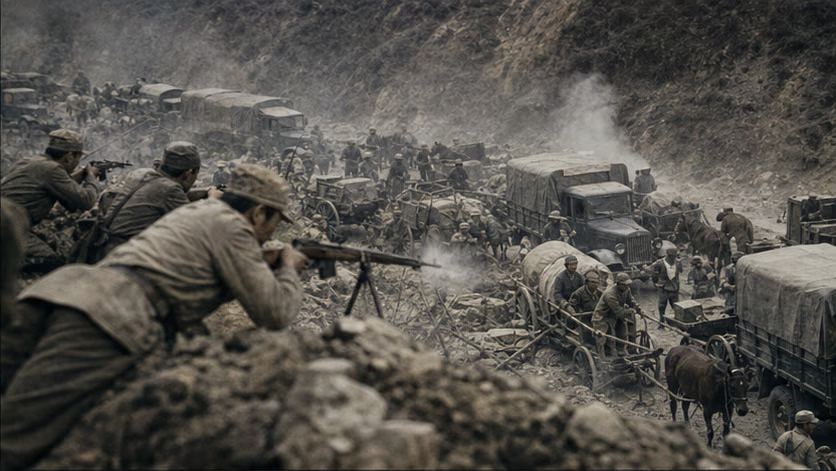
| Stage | Time | Key Points |
|---|---|---|
| Entering the ambush | Dawn | The Japanese motor convoy (from west to east) and baggage train (from east to west) entered Qiaogou from opposite directions, and men, horses, and vehicles were squeezed together inside the ravine |
| Opening fire | Morning (time unverified) | The heights on both sides opened fire simultaneously, cutting off head and tail; Japanese forces inside the ravine resisted from behind vehicles, and the ambushing side immediately charged into close combat |
| Laoyemiao | Morning to before noon | The commanding height north of the ravine, Laoyemiao Height, was repeatedly contested with bayonets -- Japanese forces seized it for a time, and the 686th Regiment retook it; it was the bloodiest point of the day |
| Blocking reinforcements and ending | Afternoon | Japanese reinforcements attacking the ravine mouths from east and west were blocked; concerned that enemy reinforcements would encircle them, the 115th Division counted the battlefield and withdrew that day; not a single Japanese soldier inside the ravine was captured |
Casualties and Losses
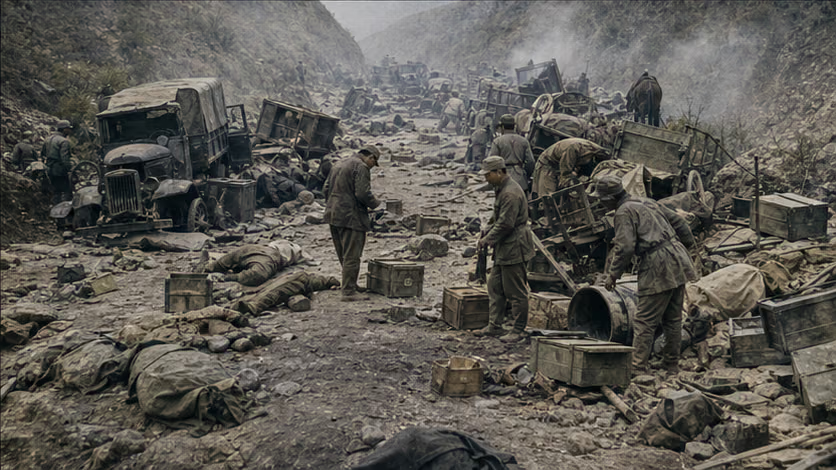
- Ambushed side: about one thousand enemy losses inflicted -- the standard figure in common circulation (Chinese military histories and textbooks); Japanese records are far lower (several hundred, figures vary by account). More than a hundred motor vehicles and more than two hundred carts were destroyed, and large quantities of guns, ammunition, and supplies were captured (figure disputed).
- Ambushing side: the 115th Division suffered more than six hundred casualties (figures vary by account; other accounts give more than four hundred or eight to nine hundred, listed side by side) -- many fell during charges, close combat, and the bayonet phase, including regimental- and battalion-level cadres.
- Textual verification of the composition of enemy losses: the older propaganda figure, "annihilating more than a thousand men of the Itagaki Division's main force" -- those destroyed were in fact the baggage train and motor convoy of the 21st Brigade (logistics troops and motor troops), not its combat main force; but the logistics unit still resisted to the death, and not a single man surrendered. The propaganda figure and the historical-factual figure are placed side by side, without one replacing the other.
Aftermath
- National morale was lifted: the first annihilating victory in an atmosphere of repeated defeat brought telegrams, condolences, and reports like falling snow; Chiang Kai-shek and Yan Xishan both sent commendatory telegrams (original texts unverified). The Eighth Route Army established its authority in a single battle, and "Pingxingguan" became the first calling card of the CPC army in the entire War of Resistance.
- Two layers of meaning recorded together: tactically, this was a cleanly successful ambush -- terrain, intelligence, and timing were all in hand; in propaganda and psychological terms, the myth that the "Imperial Army could not be defeated" publicly collapsed for the first time -- about a thousand enemy losses was not a large number in the account book of the Battle of Taiyuan, but it fell in a September of retreat along the whole line, and its echo far exceeded its scale. The asymmetry between scale and echo is recorded together.
- The 115th Division did not remain long: it soon divided its forces, with Nie Rongzhen leading one part to stay in the Wutai Mountains and open the Jin-Cha-Ji base area (see *Battlefields Behind Enemy Lines · Overview*) -- Pingxingguan was both the first battle and one of the starting points of the battlefield behind enemy lines.
- Japanese side: histories of the Fifth Division mostly record this as "motor convoy and baggage train ambushed" (volume unverified); study of Eighth Route Army tactics began from this point (level unverified).
Accounts of Those Present
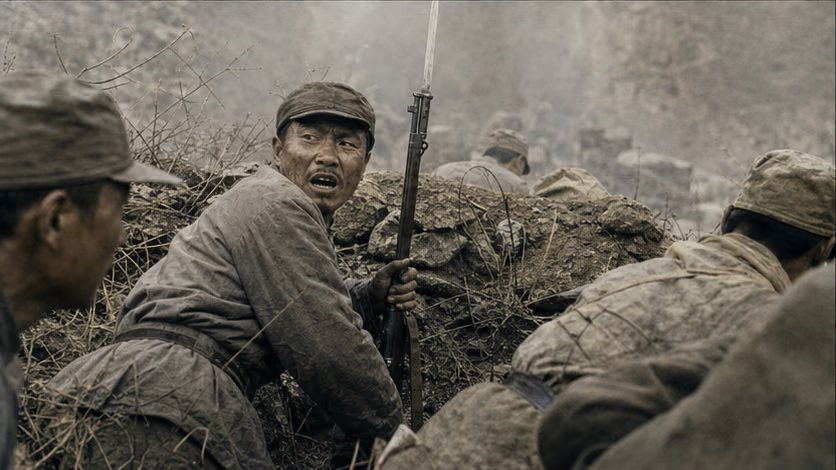
- "The first time we met an enemy who would not raise his hands even at death": participants recalled that Japanese wounded inside the ravine refused to disarm, feigned death and opened fire, and pulled grenade pins to die together with their opponents; not a single man was captured (memoir layer, source unverified) -- the Eighth Route Army received its first lesson in the opponent's stubborn resistance, and this also set the tone for the cruelty of later warfare behind enemy lines.
- Laoyemiao: the 686th Regiment and Japanese forces fought with bayonets for the commanding height, and company- and platoon-level cadres fell one after another (names and levels unverified) -- possession of this height determined whether Japanese forces inside the ravine could break out.
- Lin Biao reading the terrain: before the battle, he inspected Qiaogou in person several times (memoir layer unverified); the meticulous deployment is recorded together with Lin Biao's later post-battle self-criticism over "underestimating Japanese combat power."
- The captured goods, shabby and useful: greatcoats, rations, guns and ammunition -- the short-clothed, ammunition-poor Eighth Route Army for the first time changed into Japanese equipment in batches.
The Ground
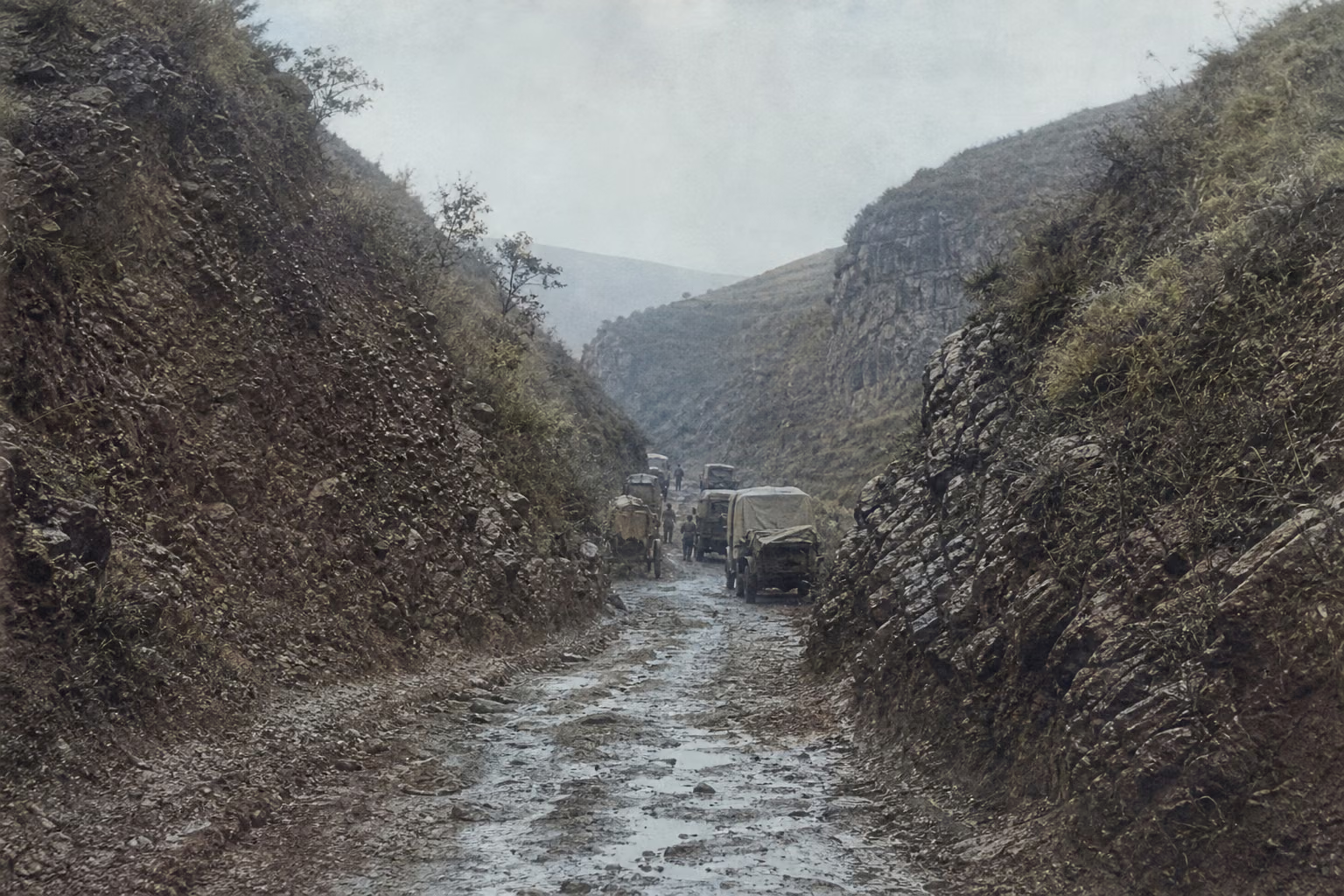
- Qiaogou: a ravine about ten li long, hemmed in by heights on both sides -- textbook ambush terrain where cutting off one end could mean total annihilation.
- Laoyemiao Height: the only commanding height north of the ravine capable of controlling the whole ravine, the decisive point in terrain terms.
- Inside the ravine was the "meat grinder," and the ravine mouths were the "reinforcement-blocking line": the battle unfolded simultaneously at two scales (ambush ring plus reinforcement-blocking positions).
- One ravine, two fights (annihilation plus blocking reinforcements), one time window (before reinforcements arrived) -- the spatial and temporal structure of the Pingxingguan ambush.
How Each Side Records It
- Chinese side (CPC): the Eighth Route Army's first victory after taking the field, one of the origins of the War of Resistance narrative, a heavyweight entry in textbooks and memorial halls.
- Chinese side (KMT): acknowledges the victory; the traditional account emphasizes that it was a limited local victory and that the Jin-Sui Army contributed through cooperation (level of cooperation unverified); in recent years, narratives on both sides of the Taiwan Strait have gradually tended toward parallel presentation.
- Japanese side: military histories record it in understated terms as a baggage unit ambushed; veterans' memoirs and battle accounts contain descriptions of the wretched scene (source unverified).
Disputes and Sensitivities
- Composition and figures of enemy losses inflicted: the gap between the older propaganda phrase "annihilating the main force of the Itagaki Division" and the actual destruction of its baggage rear guard -- this entry places them side by side; the common figure of more than a thousand enemy losses and Japanese records of several hundred are set together; whether the ambushed columns included non-combatants (motor convoy employees, etc.) remains to be verified by level.
- Casualty figures for the 115th Division: more than six hundred (common figure) is placed alongside the accounts of more than four hundred and eight to nine hundred, pending article-by-article checking.
- The question of Jin-Sui Army cooperation: the originally agreed simultaneous attack was not realized (one account says it was partially realized); responsibility and course remain unverified.
- The narrative that "not one was captured" derives from participant memoirs, with its level unverified -- it does not affect the conclusion, but it affects quotation of details.
Sources and Open Questions
Known main sources:
- The war history of the 115th Division and memoirs of participants (Lin Biao's post-battle summary, memoirs by Li Tianyou and others -- editions unverified)
- *Complete History of China's War of Resistance Against Japan* and the Battle of Taiyuan chapter in *Operational Record of the Frontal Battlefield in China's War of Resistance Against Japan*
- Japan Defense Agency War History Office, *Army Operations in the China Incident*, Vol. 1, and Fifth Division war-history materials (Japanese official compilation)
- Materials from the Pingxingguan Victory Memorial Hall
Open questions: original sources for each basis of enemy-loss figures; unit designations and personnel composition of the ambushed units; competing accounts of 115th Division casualties; details and names in the Laoyemiao fighting; the agreement and actual circumstances of Jin-Sui Army cooperation; the specific source of the "would not raise his hands even at death" recollection; original texts of Chiang's and Yan's commendatory telegrams.
All images on this site are AI-generated depictions. They are not historical photographs, not primary sources, and do not depict any real individual.