Engagement Archive · Battles of Baoshan and Luodian
At Baoshan, six hundred men held a small city for three days; the whole battalion died there, and even the opposing side's battle reports recorded the name of battalion commander Yao Ziqing. At Luodian, a town of only a few streets changed hands more than ten times, with both sides feeding in thousands of lives each day - the four words "mill of flesh and blood" were first called out from here.
Engagement Data
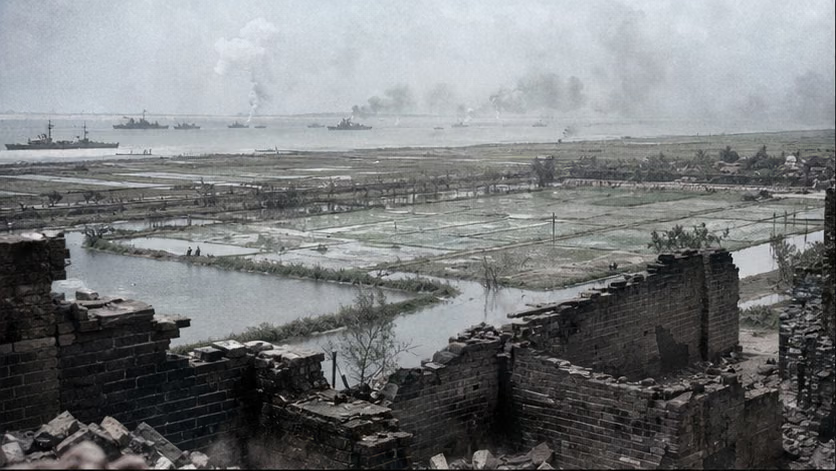
| Item | Content |
|---|---|
| Time | Baoshan 1937.9.5–7; Luodian fighting back and forth 1937.8.25 – mid-to-late September |
| Place | Northern outskirts of Shanghai: Baoshan county seat (south bank of the Yangtze estuary); Luodian town (southwest of Baoshan, the hub linking the landing ground to the urban districts) |
| Belongs to | Fourteen-Year War of Resistance · Battle of Shanghai (1937) (for the campaign as a whole, see *Battle of Shanghai (1937) · Campaign Overview*) |
| Defending side | Baoshan: Third Battalion, 583rd Regiment, 98th Division (battalion commander Yao Ziqing, about six hundred men); Luodian: 18th Army (Eleventh Division, 67th Division, 98th Division, and others in rotating combat) and various reinforcing units |
| Attacking side | Japanese Third and Eleventh Divisions (the enemy landed at Chuanshakou and Shizilin), supported throughout by naval guns and aviation |
| Result | Baoshan city fell and the defending battalion died there; after more than a month of seesaw fighting, Luodian was lost - but the landing enemy's advance toward the urban districts was held up for several weeks |
Belligerents
| Item | Defending side | Attacking side |
|---|---|---|
| Strength | A rotation system in which units were committed in sequence and wrecked in sequence | Two divisions landed in echelons, with steady firepower |
| Firepower | Rifles, machine guns, and a small number of mountain guns; no depth could be built within naval-gun range | Naval guns on the river + carrier aircraft + tanks in coordination |
| Fortifications | In water-network ground, trenches filled with water as soon as they were dug; defense relied on broken house walls and shallow trenches | The attacking side had no need of fortifications |
Terrain and Conditions
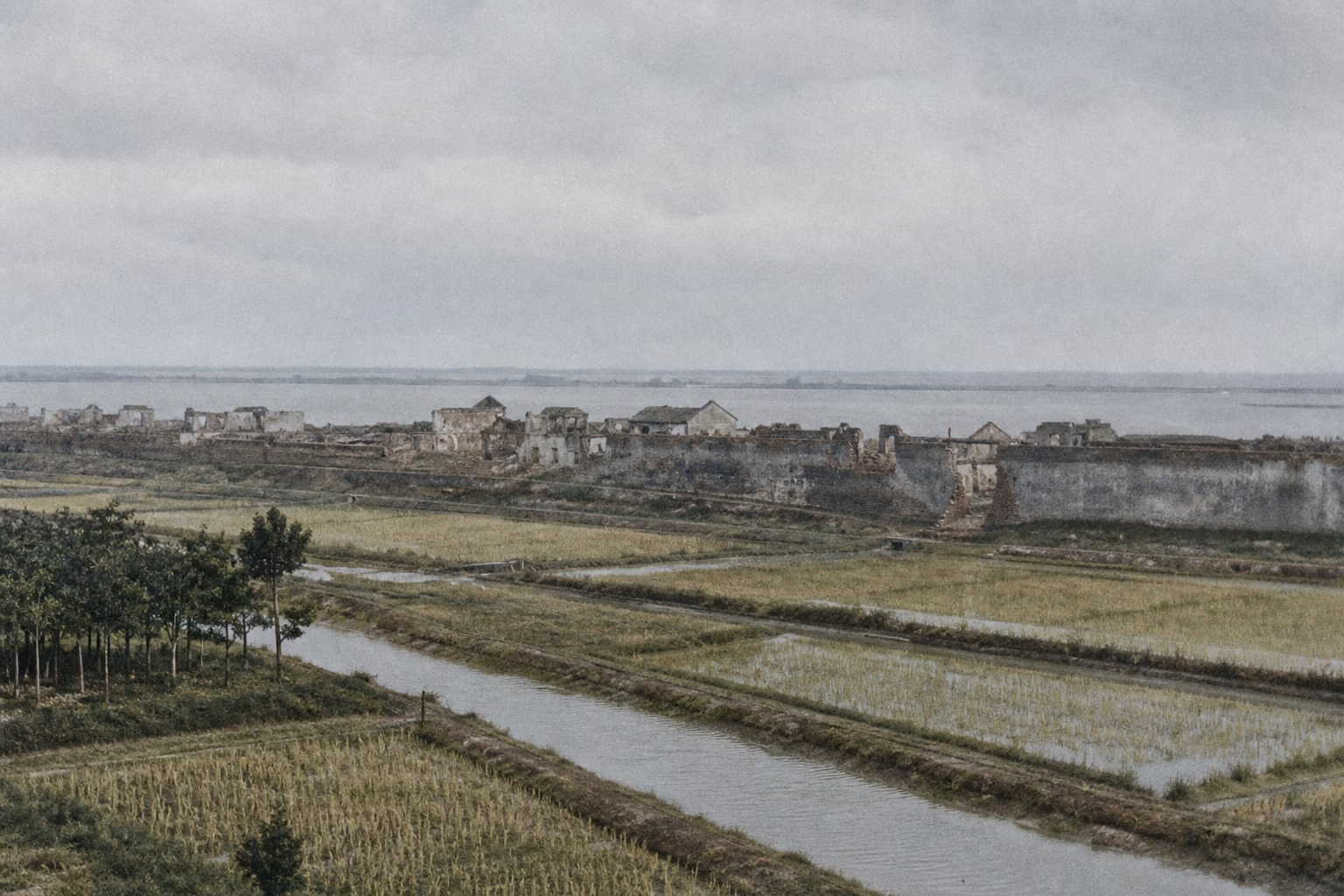
The riverside plain on the south bank of the Yangtze estuary: Baoshan city stood by the river, its city wall under direct naval-gun fire; Luodian was the crossroads hub on the Jiading-urban road, the necessary gate for Japanese forces moving south from the landing ground. Waterways and rice fields, the heat of August and September, and the rapid decay of bodies - the miserable state of battlefield sanitation appears in records from both sides (record unverified).
Why It Was Fought
Since August 14, the battles in the sky and on the river had each begun in their own way; the ground situation, however, turned over within ten days. Beginning on August 13, the Chinese Eighty-Seventh and Eighty-Eighth Divisions attacked the Japanese naval landing force strongpoints at Hongkou and Yangshupu. Lacking heavy artillery and assault training, they fought house by house for ten days and still could not take them; before the strongpoints had been chewed down, Tokyo's army main force had arrived first - at dawn on August 23, the Third and Eleventh Divisions of Matsui Iwane's Shanghai Expeditionary Army landed at Chuanshakou and Shizilin, opening the way with naval gunfire and aiming straight at the flank and rear of the besieging troops.
The landing sites had been chosen at vital points. The riverside plain on the south bank of the Yangtze estuary offered no defensible barrier, and the distance from the beachhead to the urban districts was only several dozen li; Baoshan city stood by the river and controlled the riverbank gate; Luodian was the crossroads hub on the road from Jiading to the urban districts, the necessary gate for the landing enemy moving south. If both points were lost, the landing force could insert itself behind the urban districts within days, and the Chinese main force attacking Hongkou would itself be encircled - the whole Battle of Shanghai would be decided at once.
The Japanese calculation was quick decision: once the beachhead was broken open, sweep across the plain, relieve the naval landing force, cut the defenders' rear road, and settle Shanghai in one stroke. What it did not reckon with was the ground underfoot - waterways and rice fields, trenches filling with water as soon as they were dug, tanks hard to deploy, and every village and house having to be bought with lives; the Eleventh Division's later losses in the Luodian direction were its heaviest since landing (its war-history statistical basis varies by account). The Chinese calculation was to trade lives for time: pin the landing enemy in the depth beyond the beachhead and win time for the whole situation to adjust. With no decent fortifications in hand, the line could only be held by rotating organized units into it - whether this was piecemeal reinforcement or the only choice left is examined in the disputes section.
Tokyo's decision had a documented line of origin: once the August 13 battle reports arrived, Imperial General Headquarters decided to send reinforcements; on August 15, the Konoe cabinet issued its "punishment" statement; the Third and Eleventh Divisions were organized into the Shanghai Expeditionary Army and crossed eastward, with Matsui Iwane as commander (formation and mobilization dates unverified). It was not that the General Staff had no other voices: the faction advocating "non-expansion" held that forces should be prepared for the north and that the Shanghai incident should be settled locally; its leading figure was removed from the General Staff one month later and posted out to the Kwantung Army (the whole course of this case remains unverified). The dissent did not get through - the naval landing force strongpoints were under attack, treaty interests and the "face of the Imperial Army" both left Tokyo no room to retreat; the hardest intelligence in its hand was precisely the battle report that the Chinese side had failed to take the strongpoints after ten days of assault - the opponent's inability to storm fortified positions instead padded the courage to send reinforcements.
The Chinese decision fell into troop-transfer orders: since the fighting began, divisions of every designation entered Shanghai from across the country, taking trains where there were trains and marching where there were none (arrival sequence unverified); in September, Chiang Kai-shek concurrently took the post of commander-in-chief of the Third War Area, and Shanghai became a front watched personally by the supreme commander (handover process unverified). The command structure for filling the line and holding it to the death was the account book of material: fortifications could not be built under direct naval-gun fire; in water-network ground, trenches filled with water as soon as they were dug; firepower could not match the enemy; the only thing available was manpower. And the manpower account was equally ugly - the German-equipped elite had already been cut down in the ten-day assault on Hongkou, and many of the replacements were new recruits. Whether the Chinese decision-making level had any formal dissent at the time over "piecemeal reinforcement" is not visible in the records now at hand; what exists is mostly postwar criticism (unverified).
Thus Baoshan had to be held even though it was known it could not be held, and Luodian had to be filled even though it was known to be a mill. Around August 25, Luodian changed hands for the first time, and the 18th Army retook it that night; on September 5, naval guns began shelling Baoshan's city wall, and Yao Ziqing's battalion of six hundred men was already inside the city.
Course of the Engagement
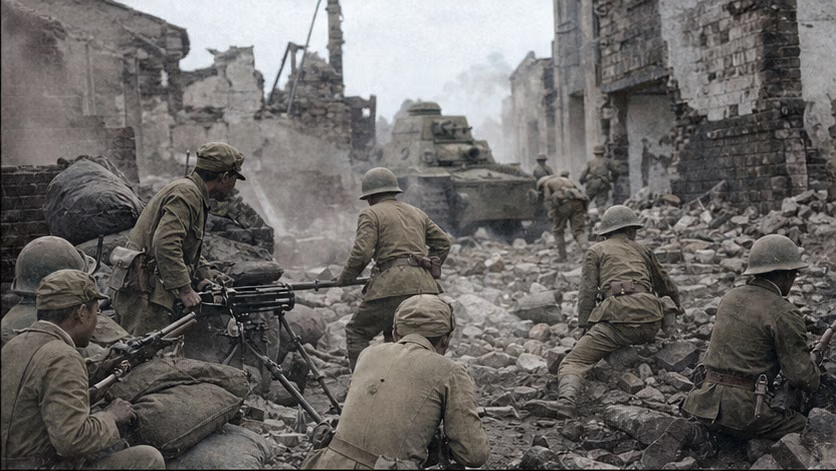
Baoshan (9.5–7)
| Node | Key Points |
|---|---|
| Ordered in | Yao Ziqing's battalion was ordered to "defend Baoshan to the death," and the whole battalion, about six hundred men, entered the city |
| 9.5–6 | Naval guns and aerial bombs shelled the city, and the city wall collapsed in many sections; the defenders resisted section by section from the ruins and counterattacked at night to retake breaches (battle details unrecorded) |
| 9.7 | Japanese tanks broke in, and street fighting continued until dusk; the whole battalion died there. Yao Ziqing was killed in the city, age twenty-eight. Before the city fell, he sent a telegram: "I swear to live or die with the city" (wording of final telegram unverified) |
| After death | Japanese battle reports also recorded the defenders' courage (source of this record unverified); the Nationalist Government issued an explicit commendation, and Yao Ziqing was posthumously promoted to major general |
Luodian (8.25–mid-to-late September)
| Node | Key Points |
|---|---|
| First recapture | Around 8.25, Japanese forces occupied Luodian, and the Eleventh Division of the 18th Army counterattacked that night and retook it - thereafter the town passed back and forth between the two sides more than ten times (the number of times it changed hands differs among books; figure disputed) |
| 8.27 | Cai Bingyan, brigade commander of the 201st Brigade, 67th Division, was killed in action while leading a counterattack (the order "This brigade commander is here; those who advance will live" is unverified) - one of the first generals to die for their country at Shanghai |
| Seesaw fighting | By day, Japanese forces pushed forward under naval guns and aerial bombs; by night, the Chinese side took it back with bayonet night attacks. A regiment could be wrecked after one or two days in the line, and both sides suffered daily casualties counted in the thousands (statistical basis varies by account) |
| Lost | In mid-to-late September, the Chinese side shifted to defending the line south of Luodian, and the town district was reduced to ruins |
Casualties and Losses
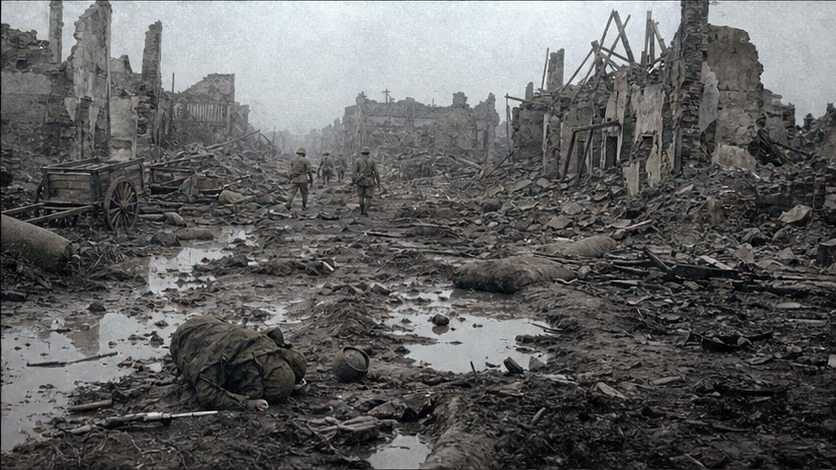
- Baoshan: the defending battalion of six hundred men almost entirely died (only a very small number broke out and survived; number disputed).
- Luodian: Chinese casualties accumulated to more than 10,000 (casualty statistical bases for the 18th Army's divisions vary by account); the Japanese Eleventh Division's losses here were its heaviest since landing (its war-history statistical basis varies by account).
- ※ Civilians: the townspeople of Baoshan and Luodian fled early, and the town districts were flattened; those who could not leave died under shellfire in uncounted numbers (record unverified).
Aftermath
- The landed Japanese forces were held in the depth beyond the beachhead for nearly a month - in Shanghai's account book of "trading lives for time," Luodian was the largest entry.
- Yao Ziqing's battalion entered the national rites and textbooks; today Baoshan has a memorial at the place where Yao Ziqing's battalion fell (facility name unverified).
- Through Luodian, the 18th Army became the starting point of an "ace army" narrative, and also left behind the dispute over "one general's success" (an entry in the history of the Chen Cheng system's expansion, assessment layer).
Accounts of Those Present
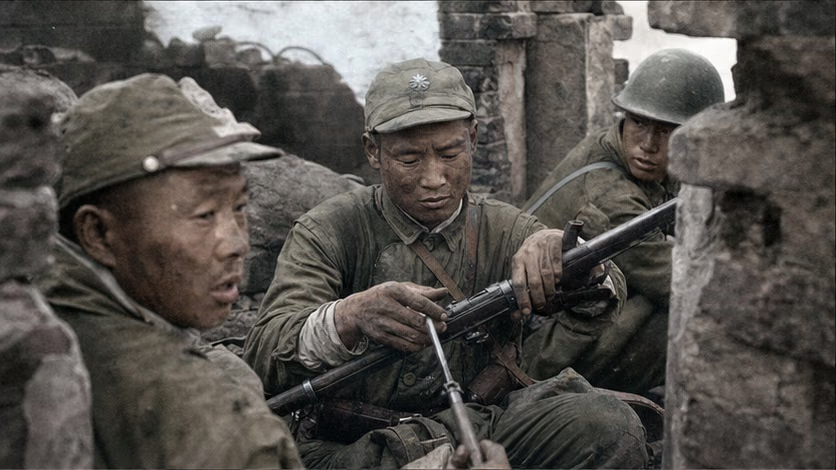
- Yao Ziqing's three telegrams: the telegrams exchanged from entry into the city to the city's fall (catalogued item, unverified) - the official-document tone of a battalion commander inside certain death is the War of Resistance version of the "knowing it cannot be done" narrative (in intertext across a century with Yao Huaixiang at the First Battle of Dinghai - two Yaos, the same law of defense).
- Cai Bingyan's military order: "This brigade commander is here; those who advance will live" (original wording unverified) - an order that reverses the order of life and death.
- Night and day: Luodian's rhythm of day and night - lost in the day, retaken at night; soldiers said Luodian's moon was more reliable than the sun (memoir layer, unverified).
- Unit designations in the mill: the list of division designations wrecked at Luodian itself (sequence unverified) - the roster of organized units eaten by one town is the coldest way to write "mill of flesh and blood."
The Ground
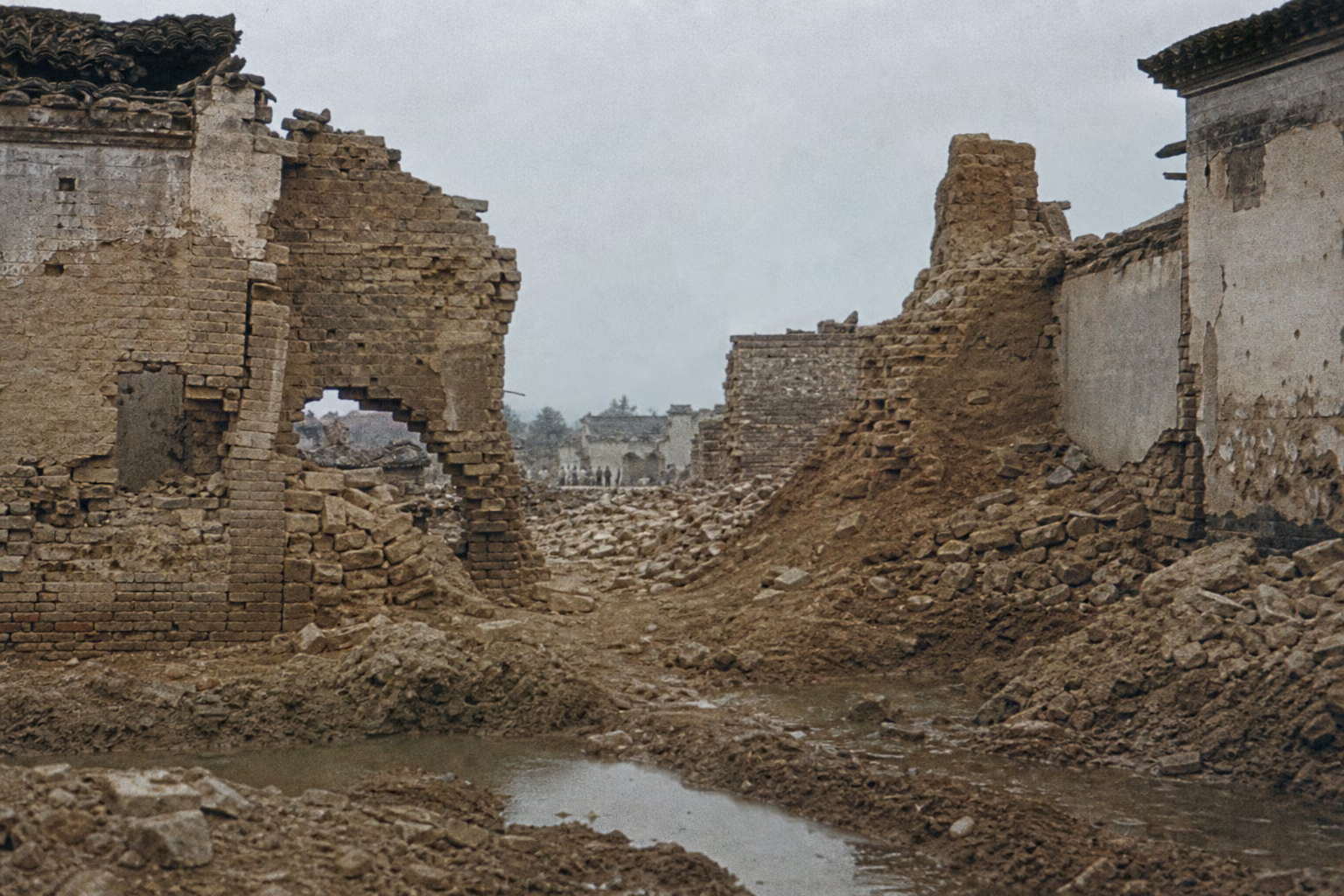
- Baoshan city: circular ruin defense under direct naval-gun fire - when the wall collapsed, defend the breach; when houses collapsed, defend the broken walls: "defending a city that was disappearing."
- Luodian Crossroads: a town district only several hundred meters square changed hands again and again - attacking and defending units could be as small as a street corner or a wall; the rhythm mechanism of day-and-night attack and defense naturally held.
- Beachhead depth: the advance axis from landing ground to Luodian to Jiading, with the defenders using the town as a barrier and the rice fields as a morass.
How Each Side Records It
- Chinese side: Yao Ziqing and the "six hundred brave men" entered the canon; Luodian's "mill of flesh and blood" became a synonym for the severity of Shanghai.
- Japanese side: its war histories record the Luodian direction as a "bitter battle," with heavy casualties in the Eleventh Division; the courage of the Baoshan defenders appears in its records (source unverified) - enemy testimony is the third-party endorsement of the weight of these two fights.
- Local: local gazetteers and memorial facilities in Baoshan and Luodian (today Luodian town has a memorial place for the Battle of Shanghai in the War of Resistance, name unverified).
Disputes and Sensitivities
- The number of times Luodian changed hands and the statistical basis for daily casualties differ sharply across sources.
- Criticism of the "filling the line" method of fighting (the two views of piecemeal reinforcement and no other choice are recorded side by side).
- The textual level of famous lines such as Yao Ziqing's final telegram and Cai Bingyan's military order.
Sources and Open Questions
Sources: the Shanghai chapter of *Operational Record of the Frontal Battlefield in China's War of Resistance Against Japan*; war-history materials of the 18th Army and 98th Division; the relevant volumes of the Japanese *Army Operations in the China Incident*; Shanghai Songhu Memorial Hall for the War of Resistance Against Japan.
Open questions: the number of Baoshan defenders and survivors; Yao Ziqing's telegram texts; the number of times Luodian changed hands and each division's casualties; the source of Cai Bingyan's military order; Japanese casualties and the source for "recording the defenders' courage"; names of memorial facilities; the exact dates for the organization and mobilization of the Shanghai Expeditionary Army; the claims of the General Staff's "non-expansion" faction and the course by which its leader was posted out; the date and process of the handover of the Third War Area commander-in-chief post; the arrival sequence of each division entering Shanghai; whether the Chinese decision-making level had any formal dissent at the time over the "piecemeal reinforcement" method of fighting.
All images on this site are AI-generated depictions. They are not historical photographs, not primary sources, and do not depict any real individual.