Engagement Archive · Defense of Tengxian
One Sichuan force, the worst equipped and wanted by no one - the roughly three thousand men of the 122nd Division holding the city - held Isogai's Tenth Division at Tengxian for three days; divisional commander Wang Mingzhang died with the city, the division was fought out, and time was bought for the defense of Tai'erzhuang.
Engagement Data
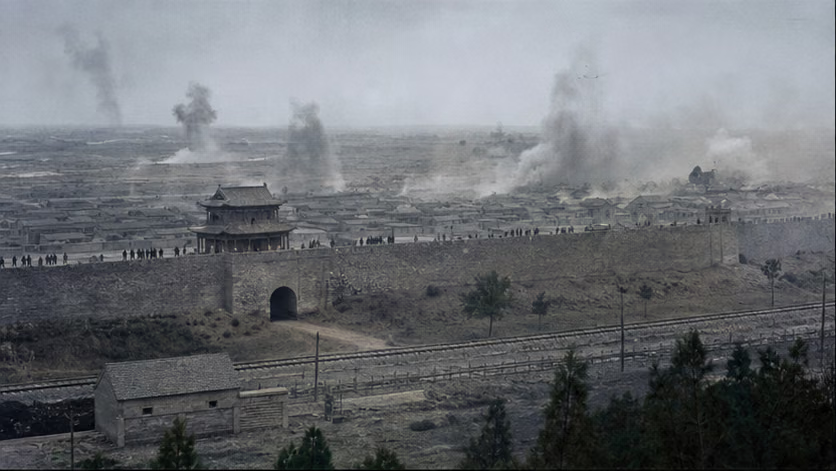
| Item | Content |
|---|---|
| Time | 1938.3.14 - 3.17 |
| Location | Tengxian, Shandong (today Tengzhou), the county seat and its outer approaches |
| Part of | Fourteen-Year War of Resistance · Battle of Xuzhou (northern Jinpu sector); see *Battle of Xuzhou · Overview* (see *Fourteen-Year War of Resistance · War Overview*) |
| Defending side | 22nd Group Army (Sun Zhen, Sichuan troops), 122nd Division, division commander Wang Mingzhang (also front-line commander-in-chief) |
| Attacking side | Japanese forces: the main body of the Seya Detachment of the Tenth Division (Isogai Rensuke), with artillery, tanks, and aviation |
| Result | On 3.17 the city fell, Wang Mingzhang was killed in action, the remnants fought street by street until exhausted, and Tengxian was lost |
Belligerents
| Item | Defending Side | Attacking Side |
|---|---|---|
| Strength | Division headquarters and city-defense troops, about three thousand (figures differ for the full division and the group army's outer forces; figure disputed) | Several thousand to more than ten thousand in the main detachment force (figures vary by account) |
| Firepower | Sichuan-made rifles, light and heavy machine guns, no heavy artillery; rifles were old, and hand grenades were the main close-combat weapon | Field artillery and heavy artillery + tanks + aerial bombing; firepower was overwhelming across the board |
| Works | The county-seat wall (an old brick-and-stone city wall), no permanent fortifications | - |
| Reinforcements | Reinforcements from Tang Enbo's corps were blocked in the direction of Lincheng and did not arrive (process unverified) | Follow-on echelons of the detachment joined continuously |
Terrain and Conditions
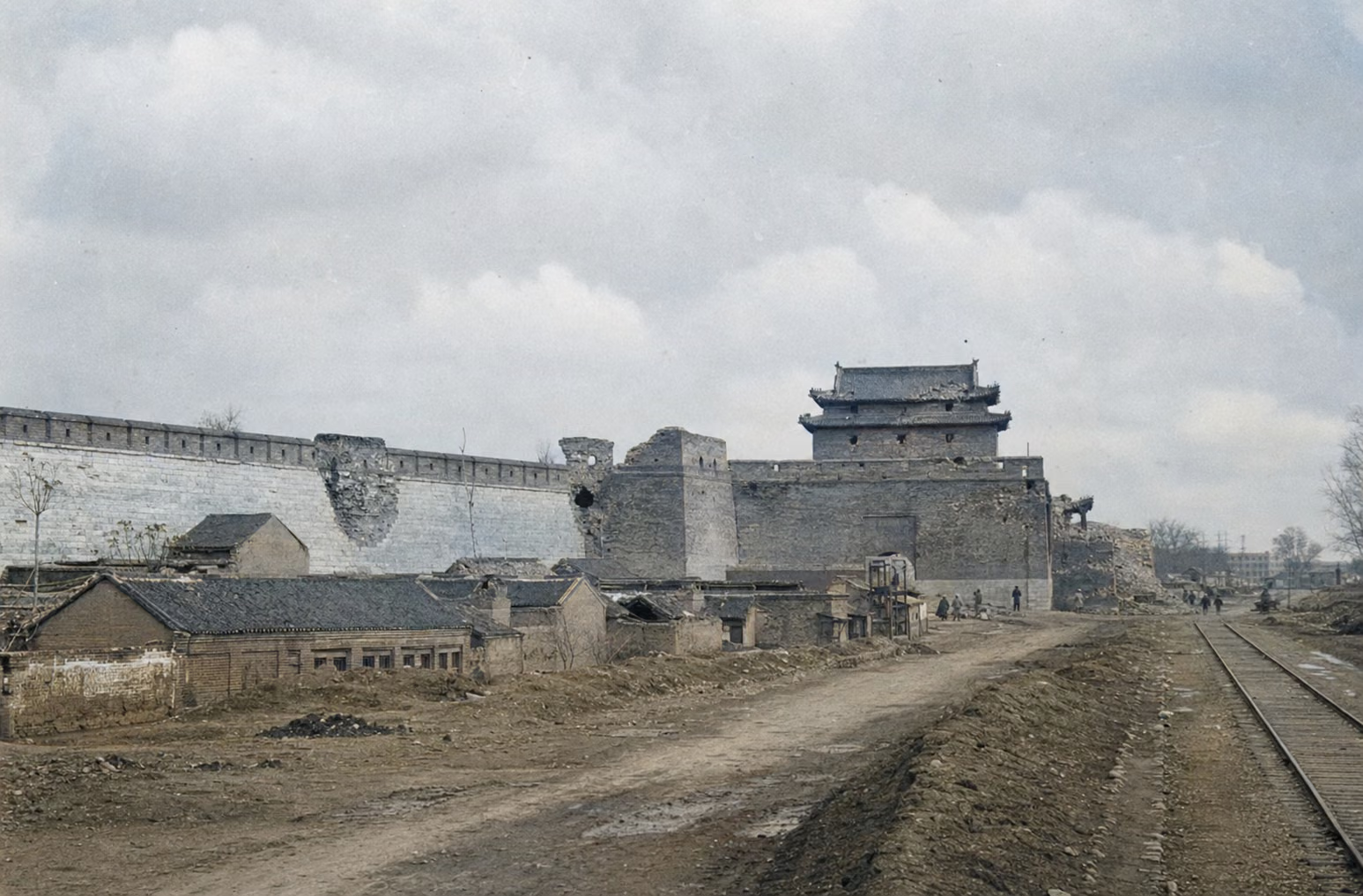
Tengxian: a county seat on the Jinpu line between Jining and Xuzhou, with brick-and-stone walls, and an unavoidable gate for Japanese forces advancing south along the railway toward Xuzhou. Background to the Sichuan troops' departure from Sichuan: in autumn 1937, the 22nd Group Army left Sichuan on foot, in unlined clothing and straw sandals; it first entered the Shanxi battlefield, was worn down, then was pushed from war area to war area before Li Zongren finally took it into the Fifth War Area. The saying "No Sichuan, no army" circulated among the people (source and time of formulation unverified). The force brought with it the "death-character flag" - a flag bearing the large character "death," with side text reading "wipe blood when wounded; wrap the body after death" (the physical flag was given by the father of Wang Jiantang of the Sichuan troops; whether it was used at Tengxian with the 122nd Division, and at what level, remains unverified; here it is treated as a spiritual symbol of the Sichuan troops as a whole).
Why It Was Fought
The air-raid alarms over Chongqing had only sounded a few times before the fighting on the Jinpu line had reached its tightest stretch. At the opening of the Battle of Xuzhou, the Japanese forces on the southern route were pushed back south of the Huai River by Yu Xuezhong, Zhang Zizhong, and other units; the "south" in the north-south advance had been cut off. In March 1938, the North China Area Army ordered Isogai Rensuke's Tenth Division to move south along the Jinpu line and open the gate to Xuzhou alone - with the southern route already cut, this was now a lone force driving deep (Japanese war histories later recorded a "failure of cooperation"; original wording unverified). In the gap left by Han Fuju's abandonment of Shandong, this southward route had almost no natural defenses to hold. The next gate was Tengxian.
Tengxian was the county seat on the railway line between Jining and Xuzhou, an old brick-and-stone walled city and a necessary point on the Japanese southward advance along the line. Past Tengxian lay Lincheng; farther south, Tai'erzhuang and Xuzhou opened out onto the plain. But in the Fifth War Area in mid-March, the forces had not yet been gathered in: Sun Lianzhong's units had not yet rushed into Tai'erzhuang, and the Tai'erzhuang line was empty. Someone had to nail Isogai's division down at Tengxian and drag out time for the defenses to be laid. Li Zongren gave this death order to the poorest force in his hand.
The 22nd Group Army was a Sichuan force that had left Sichuan on foot in autumn 1937: unlined clothing, straw sandals, Sichuan-made rifles whose barrels turned red after several dozen shots. It first went to the Shanxi battlefield, was worn down, then was pushed from war area to war area because no one wanted it, until Li Zongren finally took the whole force into the Fifth War Area. In early March, the war area ordered Sun Zhen's force to hold the Tengxian line (original order and date unverified). The unit defending Tengxian was the 122nd Division; division commander Wang Mingzhang also served as front-line commander-in-chief. The city-defense force numbered about three thousand (figures vary by account), with no heavy artillery; its ammunition depended on the stock it had carried out of Sichuan and the limited supplies obtained along the way (ammunition details unverified), while close combat depended on hand grenades. Opposite it, the Seya Detachment had field artillery, heavy artillery, tanks, and aircraft, and held an overwhelming firepower advantage; before the battle, the Japanese side had learned that the defenders before them were the worst-equipped Sichuan troops (Japanese assessment record unverified), and the smoothness of this advance encouraged rash movement. From the moment the order was issued, this battle was not about holding the city - the defenders' mission was to pin the enemy down, for however many days they could. Whether Tang Enbo's corps could arrive as reinforcement was something no one dared guarantee: this Central Army force was the only mobile main force in the war area's hand, and Li Zongren and Tang Enbo exchanged several telegrams over when to commit it and where to send it (original text unverified). The reinforcements were later blocked in the direction of Lincheng and did not arrive (process unverified). As for whether there had been internal dissent when the 122nd Division received the order to hold to the death, no surviving record of dissent has been found (no dissenting record found, unverified).
On March 14, Japanese forces attacked the outer positions at Jiehe and Longshan, and Tengxian entered combat. Wang Mingzhang contracted the troops outside the city back inside and resolved to defend it to the death. What Li Zongren needed was time; time would have to be bought with these three thousand men.
Course of the Engagement
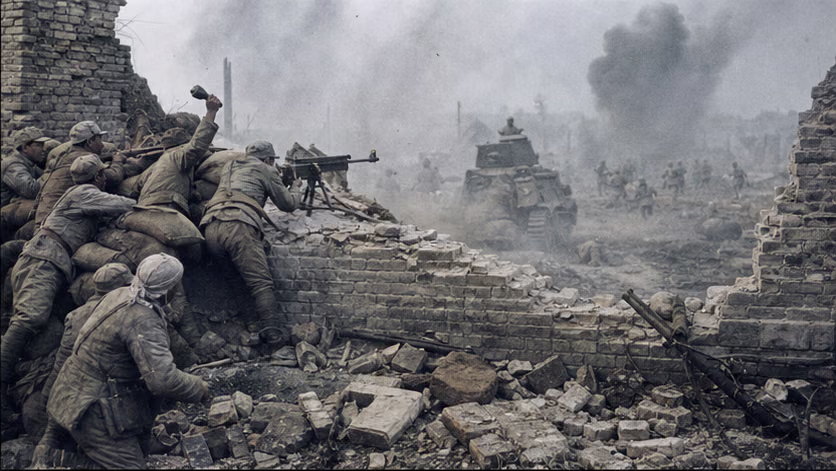
| Stage | Time | Key Points |
|---|---|---|
| Outer fighting | 3.14–15 | Japanese forces attacked the outer positions at Jiehe, Longshan, and elsewhere; after resisting step by step, the defenders withdrew into the county seat. Wang Mingzhang contracted the troops outside the city back inside and resolved to defend it to the death |
| Siege | 3.16 | Japanese artillery shelled the city and aircraft bombed it; several sections of the Dongguan city wall were blasted open, and the defenders blocked the breaches with sandbags and bodies (the body-blocked breaches belong to the recollection layer, unverified); several assaults in one day were all frustrated |
| City falls | 3.17 | Japanese forces concentrated artillery fire and tanks for another assault; Dongguan and the southern city wall were breached in sequence, and the defenders shifted into street fighting. In the afternoon, Wang Mingzhang was hit and killed near the central crossroads of the city (some accounts say Xiguan, others the city center; this version remains unverified). The remnants resisted house by house until night; after ammunition ran out, many fought with blades and hand grenades |
| Coda | Night of 3.17 | The city-defense troops were almost entirely killed or wounded, with only a few breaking out; ※ many wounded soldiers unable to break out killed themselves with hand grenades, and many refused capture (this section appears scattered in recollections and local materials, unverified) |
Casualties and Losses
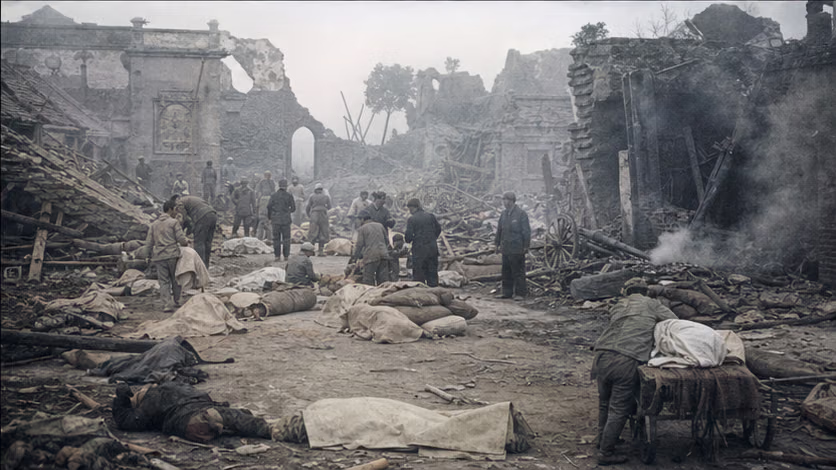
- Defending side: the roughly three thousand city-defense troops of the 122nd Division were almost entirely killed or wounded, and most officers from Wang Mingzhang downward were killed in action (exact killed-in-action figures vary by account).
- Attacking side: Japanese-side casualties numbered in the hundreds (figures vary by account; specific figures appear scattered in Japanese unit histories).
- ※ Civilians: during the siege, residents inside the city who had not escaped in time were struck by artillery fire and then killed after the city was breached; local gazetteers record this (entries unverified).
Aftermath
- Japanese forces were nailed down at Tengxian for three days, allowing Sun Lianzhong's units to rush into Tai'erzhuang and lay defenses - in Li Zongren's words, "Without Tengxian's bitter defense, how could there have been the great victory at Tai'erzhuang?" (original wording unverified).
- Wang Mingzhang's coffin was transported back to Sichuan, with public memorials along the route; the Nationalist Government posthumously conferred on him the rank of army general, and Mao Zedong and other CPC leaders sent a mourning couplet (the text and source of the "fought hard to defend a lone city..." couplet remain unverified).
- The name of the Sichuan troops was cleansed from then on: when they left Sichuan they had been despised as a "beggar army"; after Tengxian, whenever the whole country spoke of the Sichuan troops, it spoke of Tengxian.
- Tengxian is now an important site for commemorating the Sichuan troops in the War of Resistance, and memorial facilities for Wang Mingzhang survive (current condition unverified).
Accounts of Those Present
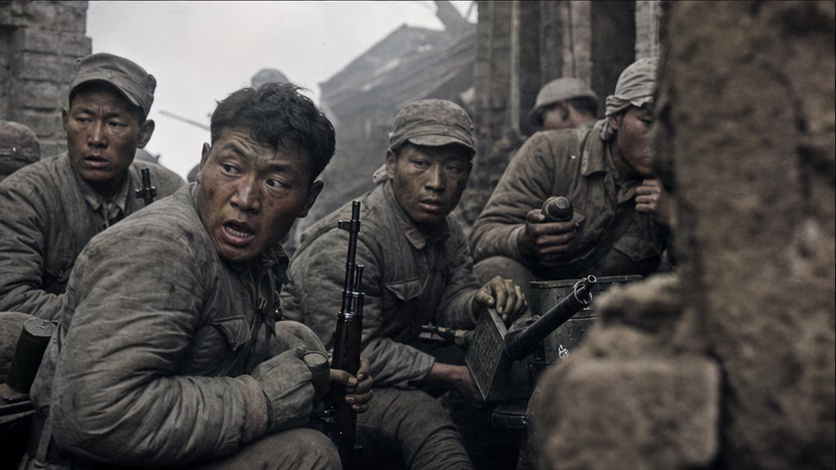
- Wang Mingzhang: before leaving Sichuan, his parting words were "repay the country with death"; as the city was about to fall, he said to those around him, in effect, "After I die, if the city survives, survive with it; if the city falls, fall with it" (quotations belong to the circulating layer, unverified). After he was killed, civilians risked death to collect and bury his body (details unrecorded).
- Death-character flag: "wipe blood when wounded; wrap the body after death" - a flag with which elders in central Sichuan sent sons to war. Even if the flag was not with the 122nd Division, it was still the spiritual bundle carried by all the Sichuan troops who left the province (the physical object is now held by the Jianchuan Museum; acquisition process unverified).
- The poverty of the equipment: Sichuan-made rifles whose barrels turned red after several dozen shots, with self-made cartridges of differing calibers; set against the Japanese artillery and tanks opposite them, the tragic force of this battle begins with an unequal industrial gap, not with ornament.
- Who defended the city: the officers were mostly men risen from the ranks, the soldiers mostly farm sons from Sichuan; after half a year and several thousand li of campaigning since leaving Sichuan, many never returned.
- The weight of three days: in ordinary times, three days is the time for one relief of the line; on the Jinpu line in March 1938, it was the whole foundation of the victory at Tai'erzhuang.
The Ground
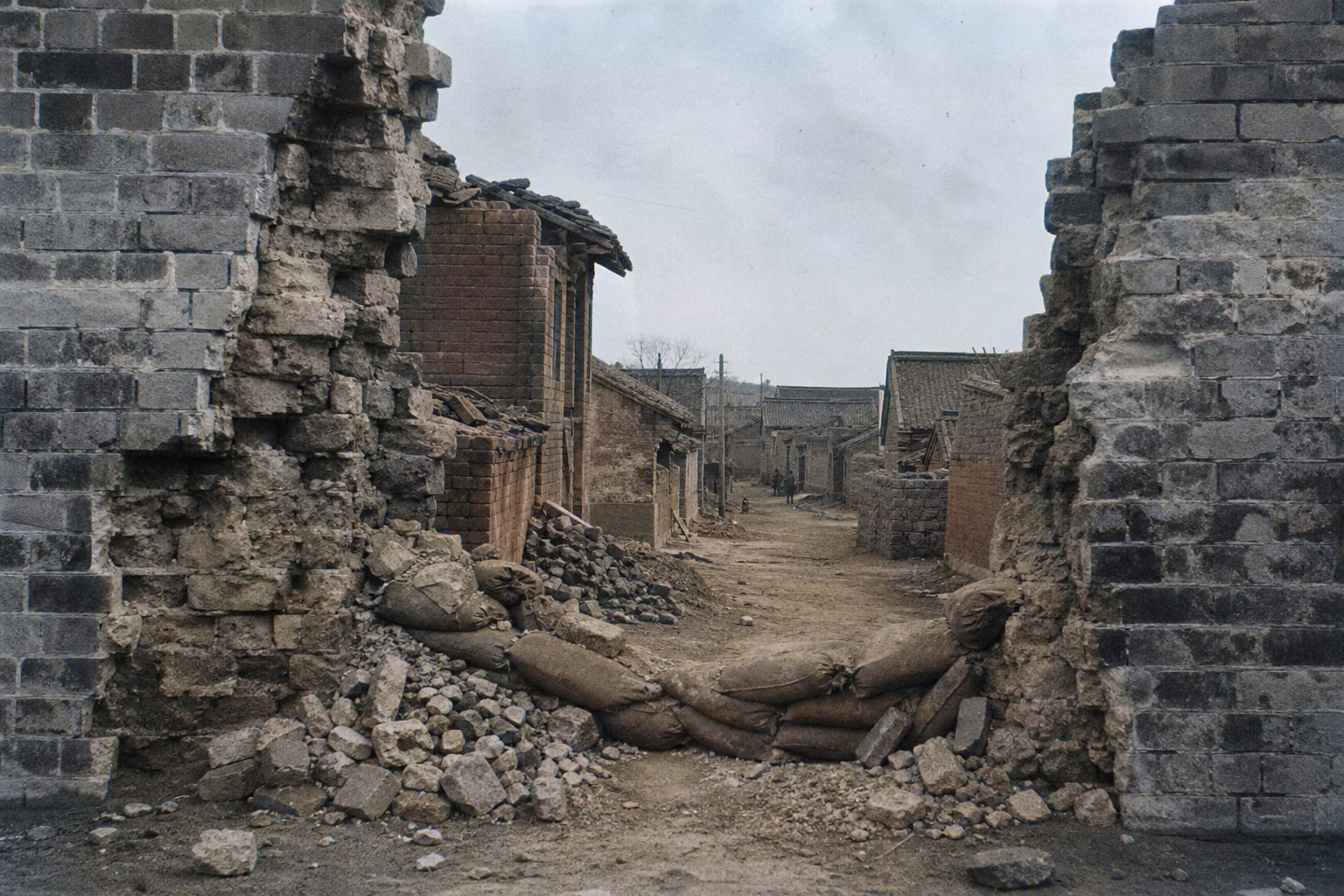
- Old county-seat defense: brick-and-stone city walls, the four gates, the crossroads - a complete sample of a premodern urban defensive space facing modern artillery.
- Attack and defense of wall breaches: shell the breach - block the breach - the breach is lost - shift to street fighting; the battlefield space compressed layer by layer.
- The end state of street fighting: retreating from the city wall into the blocks, resisting house by house until the final moment - the spatialization of "fall with the city."
How Each Side Records It
- Chinese side: the foremost landmark in the narrative of Sichuan troops in the War of Resistance; Wang Mingzhang is listed among the famous martyrs of the War of Resistance; "martyrdom at Tengxian" and the great victory at Tai'erzhuang are bound together in the narrative ("using martyrdom to buy time").
- Japanese side: the Tenth Division's unit history records Tengxian as one example of a siege, at far shorter length than Chinese accounts (specific account in Japanese unit history unverified); opponent-perspective records describe the defenders' fight to the death with phrases such as "not one surrendered" (source unverified).
- Taiwan and mainland narratives are basically consistent, a rare point of overlap in War of Resistance narratives across the Taiwan Strait (level unverified).
Disputes and Sensitivities
- The strength of the city-defense force and the location and details of Wang Mingzhang's death differ among recollection materials, and all remain disputed.
- Responsibility for the reinforcements' failure to arrive (the speed of Tang Enbo's unit's movements) is handled together in *Battle of Tai'erzhuang*; see the relevant separate article.
- Harsh details such as "wounded soldiers killed themselves" and "bodies blocked breaches" belong to the recollection layer; when they enter "Accounts," the level marking is retained.
Sources and Open Questions
Sources: the Tengxian section of *Operational Record of the Frontal Battlefield in China's War of Resistance Against Japan*; memoir collections on the 22nd Group Army and the Sichuan troops in the War of Resistance (volume list unverified); Tengxian local gazetteers and materials from the Defense of Tengxian Memorial Hall; historical materials on martyr Wang Mingzhang; Japanese unit histories of the Tenth Division and the Seya Detachment.
Open questions: the different statistical bases for city-defense and outer forces; the location and process of Wang Mingzhang's death; the original wording of Li Zongren's "without Tengxian's bitter defense" statement; the physical ownership of the death-character flag and its relation to the 122nd Division; the source for records of wounded soldiers killing themselves; the original text and source of Mao Zedong's mourning couplet; Japanese unit-history accounts of Tengxian; local-gazetteer entries on civilian casualties; the original order and date by which the Fifth War Area ordered Sun Zhen's force to hold the Tengxian line; details of ammunition supply for the 122nd Division; Japanese pre-battle assessment records of the Sichuan troops' combat power; telegrams exchanged between Li Zongren and Tang Enbo over the commitment of mobile forces.
All images on this site are AI-generated depictions. They are not historical photographs, not primary sources, and do not depict any real individual.