Engagement Archive · Battle of Southern Guangxi and Kunlun Pass
Japanese forces landed at Qinzhou Bay and drove straight toward Nanning, aiming to sever the Guangxi-Vietnam international transport line; Du Yuming's Fifth Army, China's only mechanized army, forced three assaults to take Kunlun Pass, killed the enemy brigade commander Nakamura Masao, and won a costly victory; but after the turn of the year came the defeat at Binyang, Kunlun Pass was won and then lost again, and the overall campaign was still lost: local triumph, overall failure.
Engagement Data
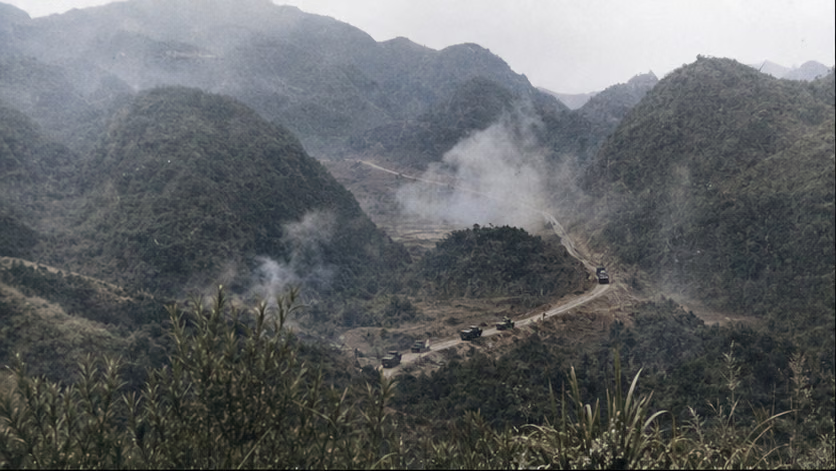
| Item | Content |
|---|---|
| Time | 1939.11.15 (landing at Qinzhou Bay) – 1940.2 (defeat at Binyang and Liuzhou Military Conference); assault on Kunlun Pass 12.18–12.31 |
| Location | Southern Guangxi: Qinzhou Bay – Nanning – Kunlun Pass – Binyang |
| Part of | Fourteen-Year War of Resistance · stalemate-phase campaign |
| Chinese side | Directed by the Guilin Field Headquarters (director Bai Chongxi), with the Fourth War Area (Zhang Fakui) and other units; the main assault at Kunlun Pass was carried out by the Fifth Army (army commander Du Yuming) |
| Japanese side | 21st Army (commander Ando Rikichi), with the Fifth Division (division commander Imamura Hitoshi) and the Taiwan Mixed Brigade as the main force; enemy defending Kunlun Pass was the 21st Brigade (brigade commander Nakamura Masao); in early 1940 reinforced by the 18th Division, Guards Mixed Brigade, and other units (order of battle unverified) |
| Result | Chinese costly victory at Kunlun Pass (recaptured 12.31); in 1940.1–2 Japanese forces counterattacked, Binyang fell, Kunlun Pass was lost again, and the campaign as a whole failed; the Guangxi-Vietnam international transport line was cut |
Belligerents
| Item | Chinese Side | Japanese Side |
|---|---|---|
| Strength | During the counteroffensive phase, more than one hundred thousand troops were committed in the southern Guangxi direction (figures vary by statistical basis); the frontal main assault at Kunlun Pass was by the Fifth Army | Several tens of thousands in landing and garrison forces; in the Kunlun Pass direction, the 21st Brigade had several thousand troops (figures vary by statistical basis) |
| Equipment | The Fifth Army was China's only mechanized army: tanks, heavy artillery, and trucks all present; the country's elite force was concentrated here | The Fifth Division was a Category A Japanese elite formation with extensive mountain-warfare experience; it had aviation support |
| Assault capability | Heavy artillery and tanks were available, but infantry-tank and infantry-artillery coordination were inexperienced | Fortifications were strong, and the defenders relied on the natural barrier of Kunlun Pass to hold out to the death while awaiting reinforcement |
| Supply | Rear-area road supply; transshipment through the mountains of northern Guangxi was difficult | Based on the Qinzhou Bay – Nanning road, likewise threatened by Chinese flank attacks |
Terrain and Conditions
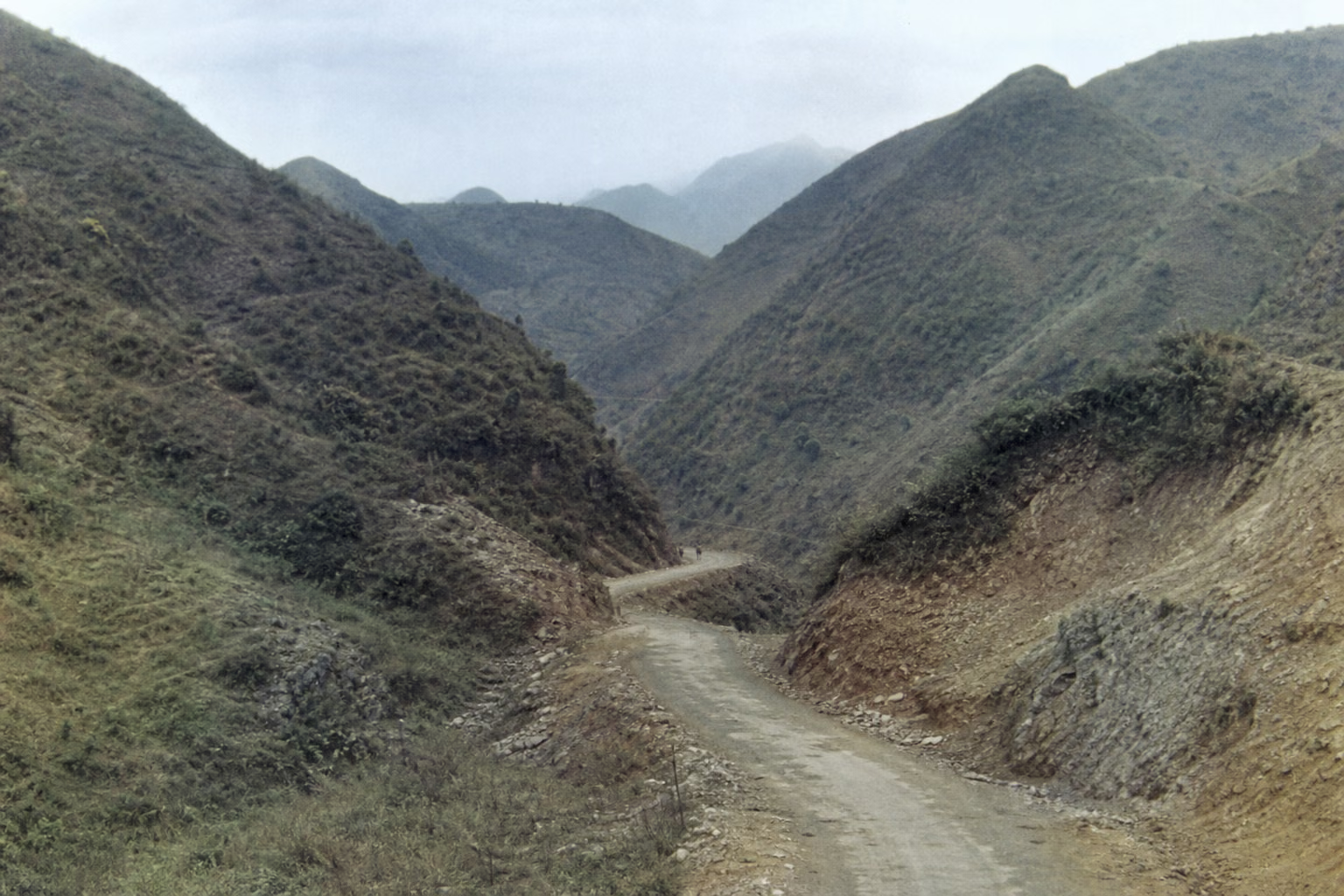
(For the larger situation in 1939–40 — war in Europe already begun, Britain and France too preoccupied to look east, and Vietnam still French-controlled — see *Fourteen-Year War of Resistance · War Overview*; here only southern Guangxi is treated.)
Southern Guangxi situation: After the coastal ports had all been lost, the Guangxi-Vietnam road (Nanning – Zhennan Pass – Haiphong, Vietnam) was one of China's most important international supply routes, along which foreign-aid materials flowed continuously into the great rear. Japanese forces landed at Qinzhou Bay with the objective of cutting this blood vessel in a single stroke.
Kunlun Pass: About fifty kilometers northeast of Nanning, a key point on the Yong-Bin road, a pass set between facing mountains: one man could hold the gate. Whoever held Kunlun Pass held the gateway to Nanning. After Japanese forces occupied Nanning, the 21st Brigade held this position. If the Chinese side wanted to recover Nanning, it first had to pull out this pass.
Why It Was Fought
A week after the guns in the Taihang Mountains fell silent, the war changed direction on the edge of the South China Sea, returning to the southernmost end of the frontal battlefield. On November 15, 1939, the Japanese 21st Army landed at Qinzhou Bay. The reason for striking here was visible at a glance on the map: Guangzhou and the coastal ports had long since been lost, the sea routes were completely sealed, and China's foreign-aid materials came in by land. The Guangxi-Vietnam road was one of the most critical routes: Nanning, Zhennan Pass, Haiphong in Vietnam, a single blood vessel running through southern Guangxi. Japanese forces fought in southern Guangxi not to occupy land, but to cut the road: choke off the inflow of foreign aid and force Chongqing to yield.
The timing had also been chosen. The European war had been under way for more than two months; Britain and France were too preoccupied to look east; French Indochina had little confidence in the face of Japanese pressure. The campaign in northern Hunan had returned without result in October. Since the Ninth War Area could not be broken head-on, the knife was shifted to the supply line: if a campaign could not beat you, first make you bleed.
Nine days after the landing, Nanning fell on November 24. The thinness of the southern Guangxi defense was exposed completely: before the battle, the Chinese side had underestimated the possibility of a Japanese landing from Qinzhou Bay (basis for the prewar judgment unverified). But in Chongqing's account book, this line was a lifeline: once it was cut, the entire national battlefield would lose blood. Chiang Kai-shek sent the army's only mechanized army, Du Yuming's Fifth Army, to southern Guangxi, while Bai Chongxi sat at the Guilin Field Headquarters to supervise the battle: take the hardest fist and strike the hardest nail.
Both sides made their decisions amid incomplete intelligence. Tokyo approved the southern Guangxi landing chiefly on the basis that war had begun in Europe, Britain and France were too preoccupied to look east, and French Indochina would not dare obstruct Japan. What was missing was an assessment of Chongqing's response. The Japanese side bet that "once the supply line is cut, someone will advocate peace," and did not expect the counteroffensive to come so quickly, with a mechanized army committed to it (source for the Japanese prewar judgment review unverified). Chongqing's decision came after Nanning had fallen: the Guilin Field Headquarters unified command, telegrams went back and forth several times, and the order for the counteroffensive was issued in mid-December (specific date and document number unverified). Sending the Fifth Army was not a choice; it was the only card in hand. There was only this one mechanized army in the whole army, and the heavy artillery and tanks needed for fortified assault were all with it. Material conditions fixed the tempo: the Fifth Army's tanks and guns had been built up over two years with Soviet aid, then had to drive a long distance through the mountain roads of northern Guangxi, men and equipment wearing down as they hurried forward. Japanese reinforcements, meanwhile, were arriving continuously by sea. The Chinese side had to take Kunlun Pass before the 18th Division landed; the 21st Brigade holding the pass had to hold on until the reinforcements arrived. Both sides were fighting the same race against transport capacity. Whether there had been objections in the army to using a mechanized army for an uphill attack in mountain terrain, or to wagering the army's overall elite force on a single pass, has no systematic record (unverified). The claim that the Fifth Army was committed to the counteroffensive before it had finished assembling appears only in participants' recollections (source unverified).
The nail was Kunlun Pass. Fifty kilometers northeast of Nanning, the Yong-Bin road ran through the pass, with mountains pressing in on both sides and heights overlooking the road. The Japanese Fifth Division's 21st Brigade held the pass, built fortifications, and waited for reinforcements. If the Chinese side wanted to recover Nanning, it first had to pull out this pass. The men defending the pass had not expected what was being brought up against them: the widely circulated lament in brigade commander Nakamura Masao's field diary (original source and textual level of the source material unverified) later became the footnote to this surprise.
On December 18, the Fifth Army's tanks and heavy artillery moved toward Kunlun Pass, and the assault began.
Course of the Engagement
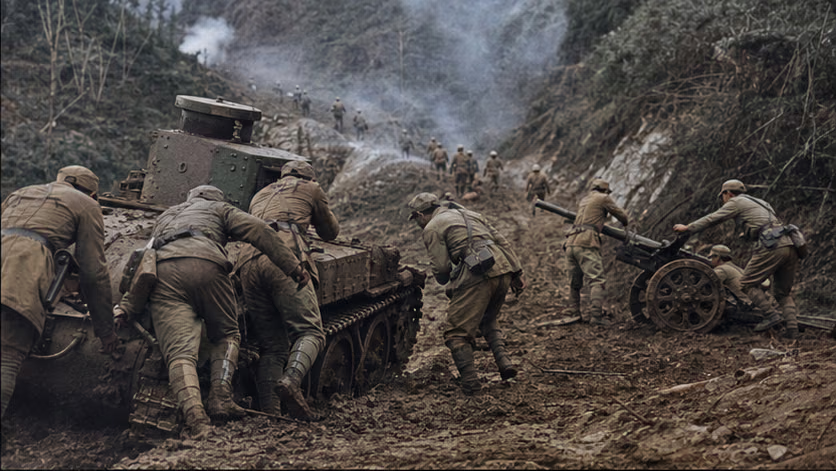
| Stage | Time | Key Points |
|---|---|---|
| Landing and fall of Yong | 11.15–11.24 | Japanese forces landed at Qinzhou Bay, advanced north along the Yong-Qin road, and took Nanning on 11.24 |
| Holding the pass | Late 11 – early 12 | The Japanese 21st Brigade held Kunlun Pass (date of occupation varies by account) and built strong fortifications |
| Assault | 12.18–12.31 | The Fifth Army made the main assault on Kunlun Pass: Zheng Dongguo's Honor First Division attacked uphill frontally, while Dai Anlan's 200th Division and Qiu Qingquan's New 22nd Division made separate enveloping moves to block enemy reinforcements; positions were taken and lost three times, brigade commander Nakamura Masao was killed on 12.25, and Kunlun Pass was recovered on 12.31 |
| Japanese counterattack | 1940.1 | Japanese reinforcements, including the 18th Division and Guards Mixed Brigade, counterattacked toward Binyang |
| Defeat at Binyang | Early 1940.2 | Binyang fell, and Kunlun Pass was won and then lost again (dates for each point vary by account); the Chinese side withdrew along the whole line, and the campaign as a whole failed |
| Accountability | Late 1940.2 | The Liuzhou Military Conference reviewed the campaign, and generals including Bai Chongxi and Chen Cheng received punishments (punishment list and wording unverified) |
Casualties and Losses
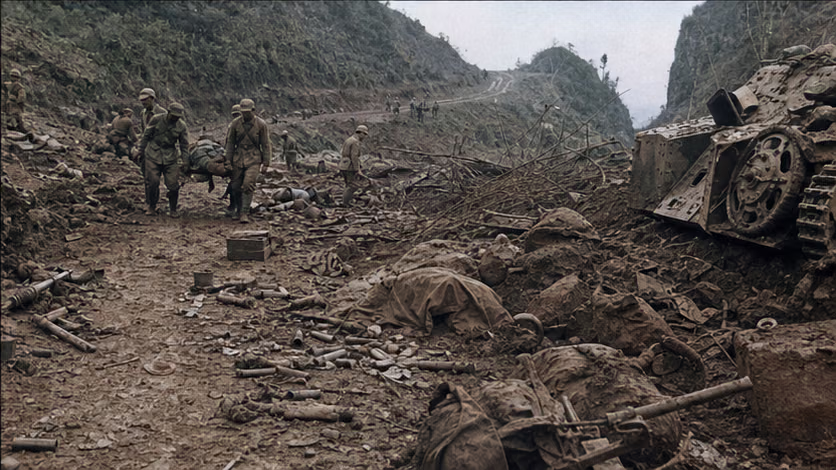
- Assault on Kunlun Pass: Chinese casualties were roughly more than fourteen thousand; the Japanese 21st Brigade suffered roughly four to five thousand casualties, with almost all its core personnel below the brigade commander wiped out. The two statistical bases each come from their own side; both are listed side by side and remain unverified. Whichever basis is used, the attacker suffered several times the defender's casualties, and the four words costly assault victory are literal description.
- The Chinese side's total casualties across the whole campaign, including the defeat at Binyang, were larger still (figures and statistical boundaries unverified).
- Civilians: villages and towns along the southern Guangxi line suffered twice, during the Japanese landing and again during the counterattack; records are scattered (this claim unverified).
Aftermath
- The Guangxi-Vietnam international transport line was cut; afterward foreign aid was rerouted along the Burma Road until that too was cut in 1942. The chain reaction from the defeat in southern Guangxi dragged on for five years.
- The structure of "local triumph, overall failure": Kunlun Pass was one of the rare victories in fortified assault on the frontal battlefield, but it could not save the whole campaign. Local courage could not fill the overall hole.
- The Liuzhou Military Conference assigned responsibility, and Bai Chongxi, Chen Cheng, and others were punished: a rare concentrated accountability proceeding against senior generals during the War of Resistance (punishment list unverified).
- After the Battle of Kunlun Pass, a cemetery and memorial stele were built there; it remains an important War of Resistance memorial site in Guangxi today (institutional history unverified).
Accounts of Those Present
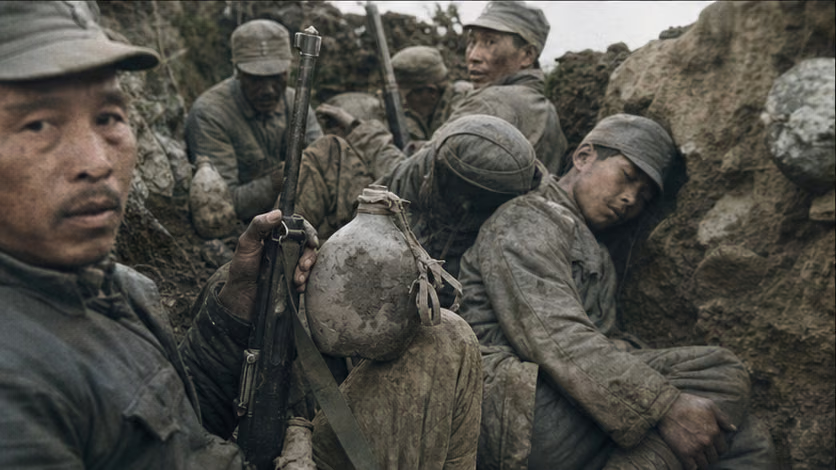
- Nakamura Masao's diary: this Japanese brigade commander, killed in action, left a sentence in his field diary that has circulated widely. Its gist is that "the Imperial Army's strongest brigade encountered an army stronger than itself." The statement appears in many Chinese writings; the Japanese original source and textual level remain unverified.
- Honor First Division: formed from veterans who had recovered from wounds and returned to the ranks, the word "Honor" meant exactly that: a group of men who had already been wounded once were placed at the very front of the assault.
- Taking Kunlun Pass three times: the pass positions were taken and lost three times. When one set of troops was fought out, another was sent up. The Fifth Army's core strength was worn thin in this battle.
- Du Yuming and the three division commanders: Dai Anlan (200th Division), Zheng Dongguo (Honor First Division), and Qiu Qingquan (New 22nd Division). All three would later have major biographies of their own: Dai Anlan died for his country in Burma in 1942 (see *Retreat Through the Savage Mountains*), while Zheng Dongguo's and Qiu Qingquan's fates extended into the next war.
- Liuzhou Military Conference: Chiang Kai-shek presided in person, and the meeting was filled with voices of review and self-criticism. One pass had been won, one campaign lost; someone had to accept that account.
The Ground
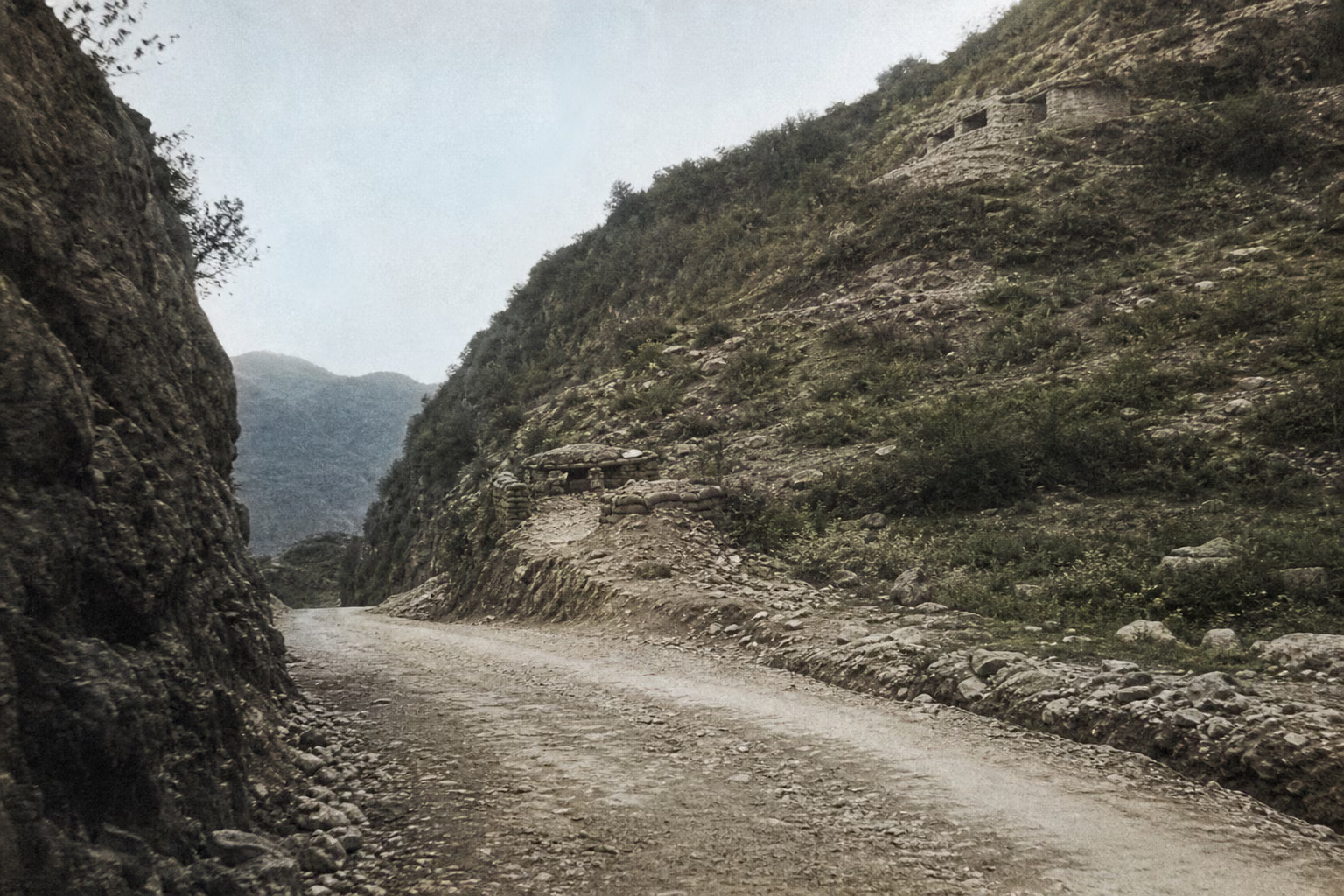
- Kunlun Pass itself is a natural defile: the Yong-Bin road runs through the pass, mountains press in on both sides, and the pass heights overlook the road. The attacker had to assault uphill, while the defender's fire covered everything.
- The assault advanced by taking height after height: Jieshou, Luotang, and other outer heights (place names and sequence unverified) were ground through one by one before the pass itself could be reached.
- Nanning – Kunlun Pass – Binyang formed a single road axis: attack and defense seesawed along the axis, while the mountain ground on the flanks provided space for envelopment and blocking actions.
- The landing corridor from Qinzhou Bay to Nanning was the Japanese seaborne supply line, and also the target for Chinese flank attacks.
How Each Side Records It
- Chinese side: records a "Great Victory of Kunlun Pass," one of the rare victories in fortified assault on the frontal battlefield, and its propaganda and commemoration continue to this day. The defeat at Binyang and the overall campaign failure are mentioned comparatively less. The narrative weight of great victory and defeat has long been asymmetrical.
- Japanese side: war histories acknowledge that the 21st Brigade suffered extremely heavy losses and that its brigade commander was killed, but record the southern Guangxi operation as having achieved the overall objective of cutting the transport line, and record the Binyang counterattack as a success (original text unverified). The Japanese side, too, has its own two account books of "local" and "overall."
- One thing both sides recognize: the battle at Kunlun Pass was hard fought. The defender's diary and the attacker's battle reports unusually corroborate each other on the intensity of the fighting.
Disputes and Sensitivities
- Was the costly victory worth it? With the country's only mechanized army and several times the enemy's strength used to assault a single brigade, while suffering several times the enemy's casualties, it was a tactical victory, but its cost has long been disputed.
- Responsibility for the defeat at Binyang: the Liuzhou Military Conference reached the conclusion of the time (punishment list unverified), but later discussion of responsibility in the command chain has continued.
- The narrative of "local triumph, overall failure": the prominence of Kunlun Pass in commemorative narrative and the relative obscurity of the overall defeat in southern Guangxi are themselves a memory structure worth noting.
- Nakamura Masao's diary phrase is very widely circulated, but its original source remains unverified: the textual level still needs to be distinguished, and a single piece of evidence does not stand by itself.
Sources and Open Questions
Known main sources:
- Detailed battle reports of the Fifth Army and the participating units (file numbers unverified)
- Du Yuming, "Brief Account of the Chinese Expeditionary Force's Entry into Burma and Operations Against Japan," and related memoirs (sections involving Kunlun Pass; titles unverified)
- Relevant volumes of *Senshi Sosho* by the War History Office of Japan's Defense Agency (Japanese official history; volume titles unverified)
- Archives of the former site and cemetery of the Battle of Kunlun Pass (this claim unverified)
Open questions: complete order of battle of the Japanese 21st Army landing force and reinforcement units; place names of each height and sequence of changes of hands during the assault on Kunlun Pass; the exact date of Nakamura Masao's death and the original source of his field diary text; the original sources and statistical boundaries for the Chinese casualty figure of more than fourteen thousand and the Japanese figure of four to five thousand; the exact dates of Binyang's fall and Kunlun Pass's second loss; the punishment list and original wording from the Liuzhou Military Conference; the sequence by which foreign aid was rerouted after the Guangxi-Vietnam line was cut; the institutional history of the Kunlun Pass cemetery and memorial stele; the date and document number of the order for the southern Guangxi counteroffensive; sources for the Japanese side's prewar judgment and postwar review concerning Chongqing's speed of response and will to resist; materials on the Fifth Army's movement and assembly status (original text of Du Yuming's memoirs); records of objections to using a mechanized army for fortified assault in mountain terrain (not found); the Japanese 21st Army's assessment of its ability to supply the brigade defending the pass.
All images on this site are AI-generated depictions. They are not historical photographs, not primary sources, and do not depict any real individual.