Engagement Archive · Battle of Suizhou–Zaoyang
The Japanese Eleventh Army swept northern Hubei in an attempt to catch the main force of the Fifth War Area; Li Zongren avoided the strong points and struck the weak, while Zhang Zizhong led the right-wing corps east across the Xiang River for a flank attack; once Japanese forces had routed the opposition, they withdrew. The standard form of a stalemate-phase campaign appeared here in full for the first time: the Chinese side called it the "Great Victory of Suizhou–Zaoyang," the Japanese side called it "completion of the operational objective," and both sides won.
Engagement Data
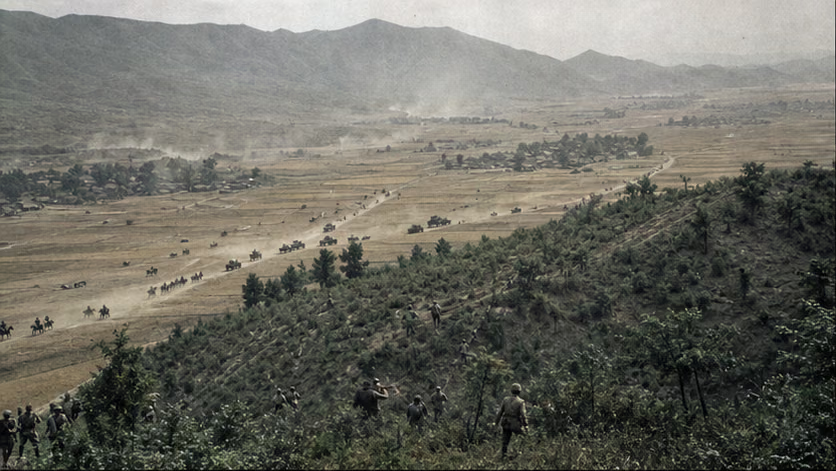
| Item | Content |
|---|---|
| Time | 1939.5.1 – late May (dates vary by account) |
| Location | Suixian and Zaoyang in Hubei, both banks of the Xiang River (Han River), and the area between the Dahong Mountains and the Tongbai Mountains |
| Part of | Fourteen-Year War of Resistance · stalemate-phase campaign (after the Battle of Nanchang (1939), before the First Battle of Changsha (1939)) |
| Chinese side | Fifth War Area (commander-in-chief Li Zongren); Zhang Zizhong's right-wing corps (33rd Army Group system, order-of-battle details unrecorded) |
| Japanese side | Eleventh Army (commander Okamura Yasuji), including the Third, Thirteenth, and Sixteenth Divisions, a cavalry brigade, and other units (order of battle unrecorded) |
| Result | Japanese forces occupied Zaoyang, routed the Chinese forces immediately before them, and then withdrew to their original defenses; the front line was largely restored |
Belligerents
| Item | Chinese Side | Japanese Side |
|---|---|---|
| Strength | The Fifth War Area had roughly two to three hundred thousand men in northern Hubei and southern Henan (figures vary by statistical basis), but they were dispersed across a broad defensive front | The attacking force numbered roughly several tens of thousands (specific figures vary by statistical basis), used in concentration |
| Firepower | Artillery and vehicles were both scarce; mountain terrain was used to compensate | Divisional artillery + fast cavalry columns + aviation |
| Mobility | Mainly on foot, shifting with the support of the Dahong Mountains and Tongbai Mountains | Rapid advance along roads, a "short-cut thrust": fast in, fast striking, fast out |
| Supply | Requisitioned and supplemented locally; supply in the mountains was difficult | Based on the Pinghan Railway and the Xianghua Highway, with short supply lines |
Terrain and Conditions
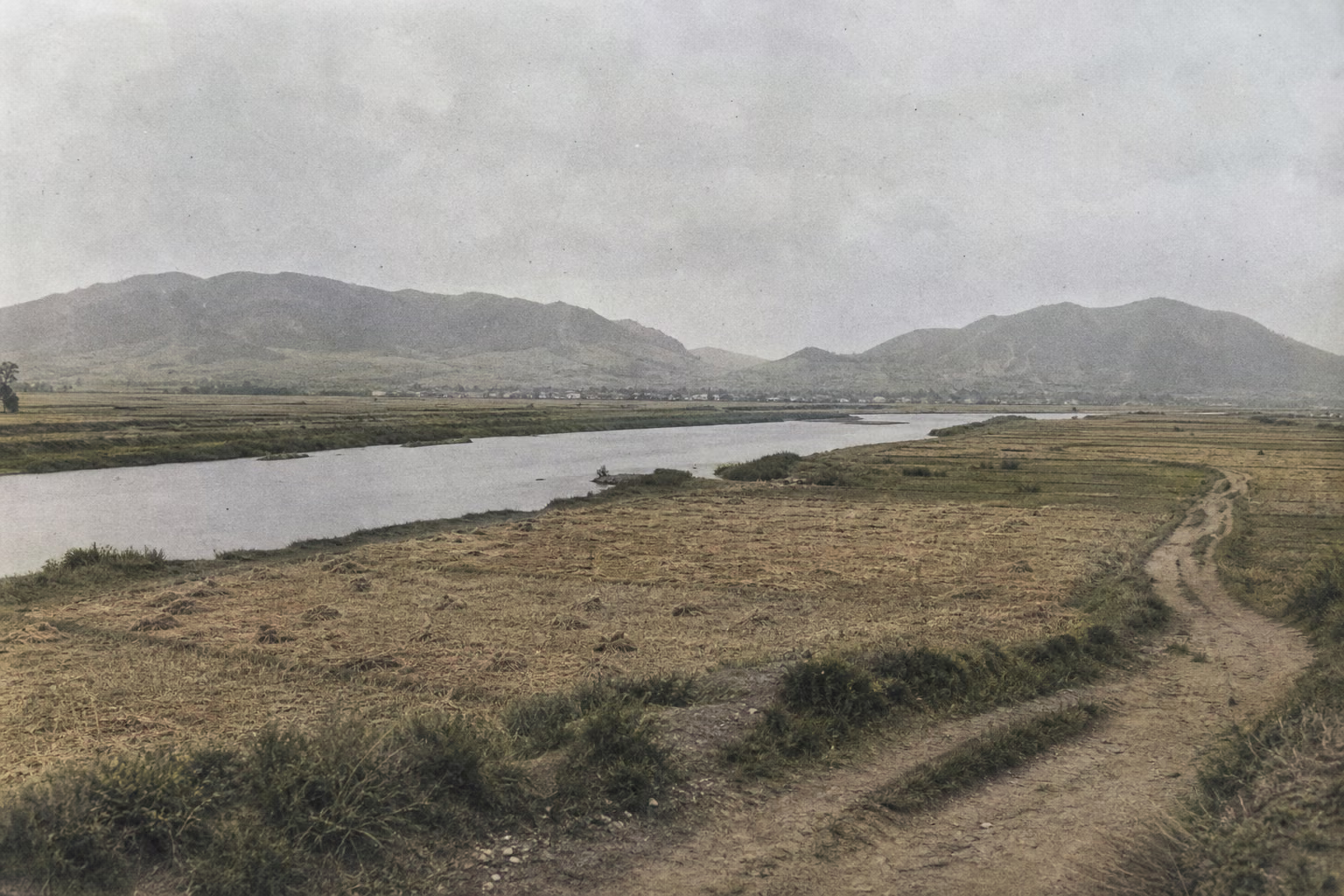
(For the larger situation in 1939, see *Fourteen-Year War of Resistance · War Overview*; here only northern Hubei is treated.)
Northern Hubei situation: After the Battle of Wuhan (1938), the main forces of the Fifth War Area fell back to northern Hubei and southern Henan, relying on the Tongbai Mountains and the Dahong Mountains, like a wedge lodged into the north side of the Japanese occupied zone around Wuhan. Suixian and Zaoyang controlled the Xianghua Highway (Suixian–Zaoyang–Xiangyang), the route by which Japanese forces could advance west toward Xiangyang and Nanyang. This mountain-and-hill country lay between the Pinghan Railway and the Han River; whoever controlled it held one more hand around Wuhan's throat.
This ground: The Xiang River (Han River) ran through the area and split the war zone into eastern and western halves. The plains in wheat-harvest season favored mechanized thrusts, while the two mountain ranges were the defender's natural cover for avoiding the strong points and striking the weak.
Why It Was Fought
The counteroffensive below Nanchang had not yet ended when Okamura Yasuji was already looking at the other side of Wuhan. In March 1939, his Eleventh Army crossed the Xiushui, occupied Nanchang, and pulled out the nail southeast of Wuhan; but Wuhan was held between two sides. Press the southeast down, and the northwest still rose. Since the Battle of Wuhan, Li Zongren's Fifth War Area had withdrawn to northern Hubei, relying on the Tongbai Mountains and Dahong Mountains, like a wedge lodged into the north side of the occupied zone. Suixian and Zaoyang held the Xianghua Highway, and that hand still rested on Wuhan's throat.
For the Eleventh Army, the purpose of this battle differed from Nanchang: not to take ground, but to annihilate. Before the Fifth War Area had settled its footing, fast columns would encircle its main force on the Suizhou–Zaoyang plain, rout it, and then withdraw. For Li Zongren, the account was just as clear: if the northern Hubei position remained, Japanese forces in Wuhan could not sleep easily; as long as the main force survived, lost ground could be recovered. So from the beginning, his method was set: avoid the strong points and strike the weak, and do not brace head-on against the pincers.
Why May: in the wheat-harvest season, the Suizhou–Zaoyang plain was dry, hard, and open, precisely the season in which cavalry brigades and vehicle columns could run. Okamura's own stores could rotate as well. Nanchang had used the 101st and 106th Divisions; this time he switched to the Third, Thirteenth, and Sixteenth Divisions plus a cavalry brigade, opening one battle on each wing of Wuhan within two months, while the Fifth War Area opposite had not yet recovered from the Battle of Wuhan.
Both sides reached their decisions early. Okamura Yasuji's Eleventh Army had already proposed to the expeditionary army and Tokyo in early 1939 that, while the Fifth War Area had not yet stabilized, another battle be fought northwest of Wuhan, to follow the Battle of Nanchang in sequence (Japanese operational name and approval sequence unverified). The Chinese side had set its tone even earlier: the Nanyue Military Conference in November 1938 established the policy of protracted attrition and avoiding decisive battle. The Fifth War Area's mission in withdrawing to northern Hubei was to maintain a threat, not seek a decisive battle. Li Zongren's method of avoiding the strong points and striking the weak was not an on-the-spot improvisation; it was this general policy written into northern Hubei. The Chinese side had also detected the Japanese concentration in the Suixian direction beforehand (basis found only in Li Zongren's memoirs, unverified), which gave it the composure to enter the mountains first. The material account fixed both sides' methods in place: after the Battle of Wuhan, the Fifth War Area had not yet fully replenished personnel or ammunition, and had little artillery or transport, so it could only use mountains against firepower, with supply dependent on long-distance transport from the Sichuan-Hubei rear. The Eleventh Army had to hold the enormous occupied zone around Wuhan; it could draw out three divisions and a cavalry brigade to fight for ten-odd days, but it could not draw out enough troops to remain in Suizhou–Zaoyang for long. "Rout and withdraw" was not Okamura's choice; it was the only solution his force structure allowed. There is no record of disagreement between the war area and Chongqing over the line of avoiding the strong points and striking the weak (unverified); Japanese materials likewise show no record of any dispute inside the Eleventh Army over the scale of the operation (unverified).
The calculations of the two sides missed each other at the same point. Japanese forces thought that once the pincer movement closed, they could pin the Fifth War Area's main force on the plain. Li Zongren, however, did not want the plain: the main force had already shifted first into the Dahong Mountains and Tongbai Mountains, leaving only necessary troops on the front to resist step by step. Japanese forces gambled on speed; the Chinese side gambled that Japanese forces would not dare remain long in the mountains. What later happened was this: Zaoyang changed hands (around 5.8, dates vary by account), the encirclement closed, and the ring was empty.
On May 1, Japanese forces on all routes began moving at the same time, with their spearheads pointed toward Suixian and Zaoyang.
Course of the Engagement
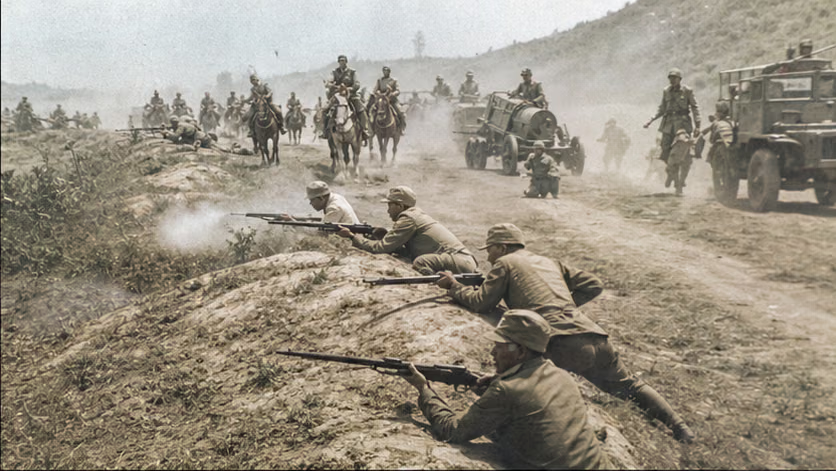
| Stage | Time | Key Points |
|---|---|---|
| Japanese offensive | From 5.1 | Japanese forces attacked along several routes toward Suixian and Zaoyang, attempting to encircle the Chinese main force with a pincer movement (designations of each route unverified, directions of attack disputed) |
| Chinese avoidance | Early May | Li Zongren shifted the main force toward the Dahong Mountains and Tongbai Mountains, avoiding the sharp edge, while leaving necessary troops on the front to resist step by step |
| Zaoyang falls | Around 5.8 | Japanese forces occupied Zaoyang (dates vary by account), but the encirclement caught nothing: the main force had already escaped the planned ring |
| Flank attack | Mid-May | Zhang Zizhong led the right-wing corps east across the Xiang River and struck the Japanese rear lines of communication from the flank (crossing point and battle details unrecorded) |
| Japanese withdrawal | Late May | After "achieving the objective of routing the enemy," Japanese forces withdrew to their original defenses; the Chinese side followed up and recovered lost ground, restoring the front |
Casualties and Losses
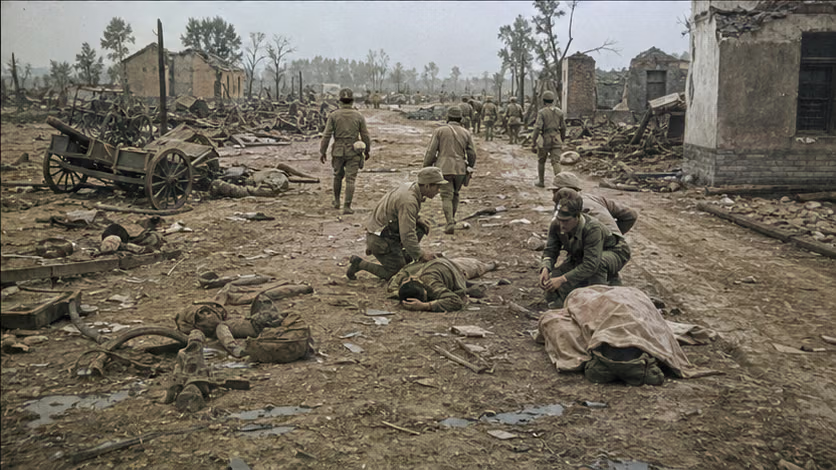
- Chinese side: about several tens of thousands killed and wounded (a common basis in Chinese sources; statistical boundary unverified).
- Japanese side: Chinese battle reports claimed more than ten thousand Japanese killed and wounded; Japanese self-reported casualties were far smaller (specific figures disputed). The two bases are recorded side by side, without making an unauthorized choice.
- Whichever basis is used, Japanese forces failed to achieve the core objective of "annihilating the main force of the Fifth War Area." This is a fact neither side's war history can get around.
Aftermath
- The front line was largely restored to its original state, and the Fifth War Area's presence in northern Hubei was preserved.
- This battle established one standard form of the stalemate-phase campaign: Japanese forces made a "short-cut thrust, withdrawing once achieved," while the Chinese side treated "holding on as victory." Campaigns of this kind would be repeated again and again afterward (Shanggao, the Second Battle of Changsha (1941), western Hubei, and others).
- The Chinese side promoted the "Great Victory of Suizhou–Zaoyang" as one of the rare pieces of positive news from the frontal battlefield during the stalemate phase; Japanese war histories recorded "completion of the operational objective." One battle, two victories: this itself was a feature of the stalemate phase.
- Zhang Zizhong's eastward crossing of the Xiang River for a flank attack laid a cross-referencing foreshadowing for the Battle of Zaoyang–Yichang one year later: in May 1940, he died for his country at Nanguadian in the same direction (see *Battle of Zaoyang–Yichang*).
Accounts of Those Present
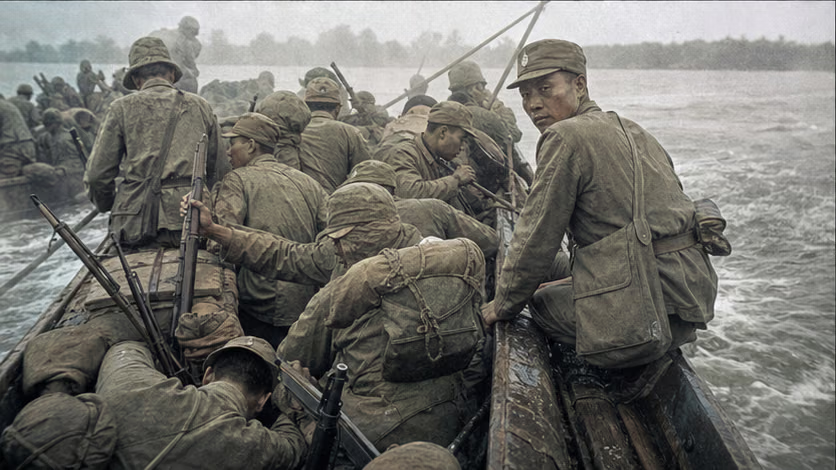
- Zhang Zizhong crosses the river: the right-wing corps crossed east over the Xiang River for a flank attack, a counterattack he led across the river in person. At this point, exactly one year remained before his death for the country. The tactical choice of "crossing the river for a flank attack" forms a sharp intertext between the Suizhou–Zaoyang and Zaoyang–Yichang campaigns.
- The empty encirclement: when the Japanese pincer movement closed, the ring was empty: the main force had already entered the mountains. Japanese official war history has a technical expression of frustration about this (original text unverified).
- Li Zongren's account: Li Zongren's memoirs devote considerable space to this battle, and he regarded his own command as proper (original text unverified): a sample of "holding on as victory" written by the war-area commander-in-chief himself.
The Ground
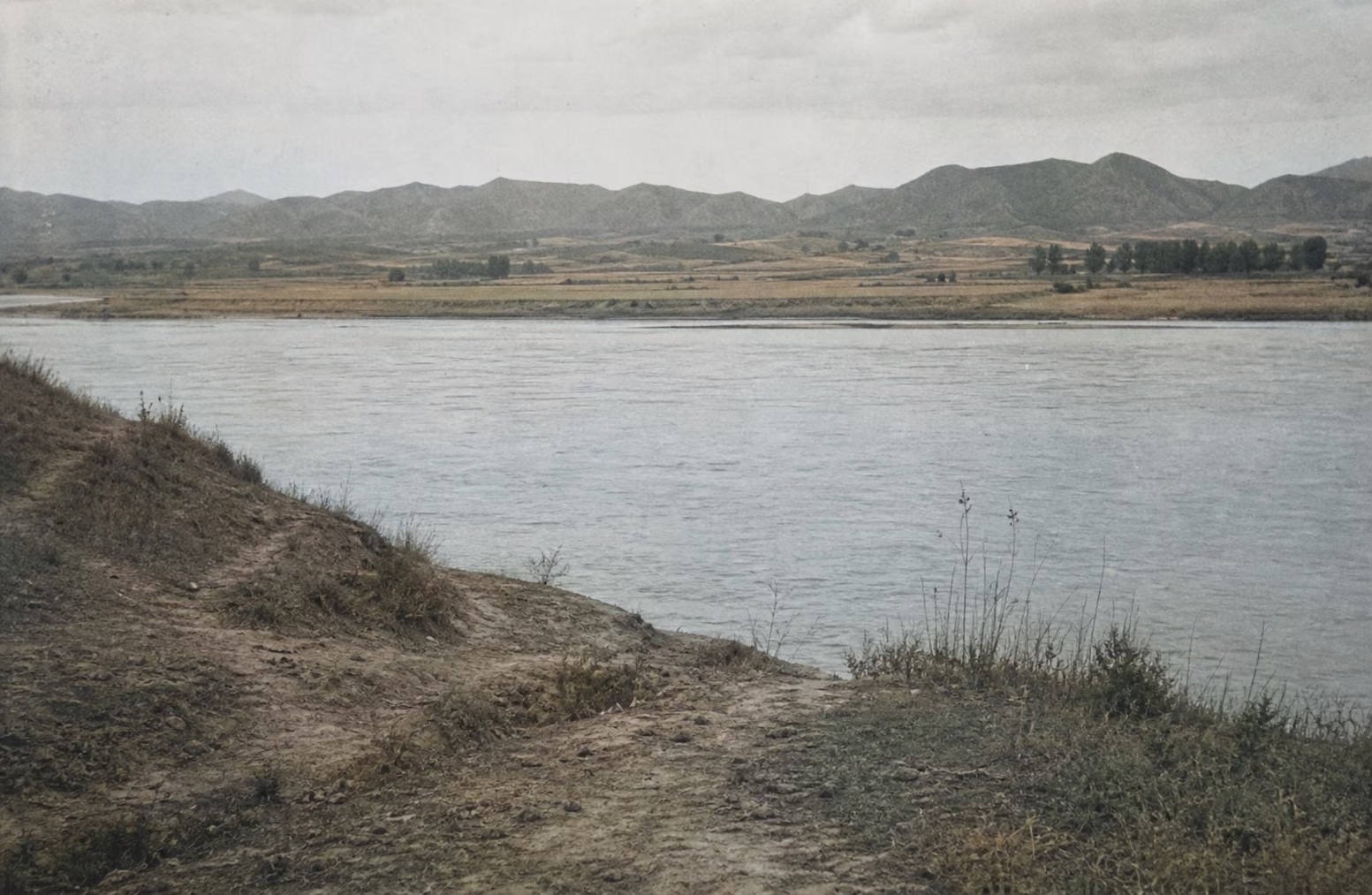
- The Suizhou–Zaoyang plain was the corridor for Japanese mechanized thrusts; the Dahong Mountains and Tongbai Mountains were the Chinese cover for avoiding the strong points and striking the weak. The boundary between plain and mountain was the line where attack and defense changed places.
- The Xiang River (Han River) split the war zone into east and west: the Japanese sweep was in the west, and Zhang Zizhong's flank attack came from the east bank. The crossing point was therefore the tactical hinge.
- Zaoyang city itself was not the objective; it was the "bottom" of the encirclement. It could be taken or abandoned. The Japanese side took it and left; the Chinese side lost it and retook it.
How Each Side Records It
- Chinese side: recorded as the "Great Victory of Suizhou–Zaoyang," included in propaganda for frontal-battlefield achievements during the stalemate phase; the commands of Li Zongren and Zhang Zizhong were written as highlights.
- Japanese side: official war history recorded it as a limited operation that achieved the objective of "routing" the enemy, with a technical summary of the failure to catch the Chinese main force (original text unverified).
- Two victories side by side: the Chinese side won because "the main force was not caught, and the positions were restored"; the Japanese side won because "the enemy in front was routed, and withdrawal followed achievement." Two definitions of victory in the same campaign: this phenomenon recurs throughout the stalemate phase, and this article lists it for the first time.
Disputes and Sensitivities
- The substance of a "great victory": Japanese forces neither held newly occupied ground nor annihilated the main force, but they did inflict heavy damage on some Chinese units. The two characterizations, "great victory" and "rout and withdraw," coexist because the battle reports came from different sides.
- The casualty bases on the two sides differ greatly, and the Japanese self-reported figures especially require checking against the original volume of *Senshi Sosho* (source unverified).
- Zhang Zizhong holds a high place in narratives on both sides of the Taiwan Strait, and the specific details of his command are often softened; memoir materials need cross-checking before citation.
Sources and Open Questions
Known main sources:
- Li Zongren's memoirs (Chinese war-area commander's perspective)
- Fifth War Area detailed battle report (file number unverified)
- Relevant volumes of *Senshi Sosho* by the War History Office of Japan's Defense Agency (Japanese official history, volume title unverified)
Open questions: the full order of battle and strength of the Japanese participating forces; each route's axis of attack and objectives; the exact dates of Zaoyang's fall and recovery; the crossing point of Zhang Zizhong's force and battle details of the flank attack; the original sources and statistical boundaries for both sides' casualty figures; the original Japanese war-history wording for "completion of the operational objective"; the original relevant passages in Li Zongren's memoirs; the Japanese operational name and approval sequence; the basis on which the Chinese side detected the Japanese concentration beforehand (original text of Li Zongren's memoirs); telegrams between the Military Commission and the Fifth War Area concerning the policy of avoiding the strong points and striking the weak; records of disagreement inside the war area over the method of fighting (not found); records of dispute inside the Eleventh Army over the scale of the operation (not found).
All images on this site are AI-generated depictions. They are not historical photographs, not primary sources, and do not depict any real individual.