Engagement Archive · Third Battle of Changsha (1941–42)
After the outbreak of the Pacific War, Japanese forces attacked Changsha for a third time in support of the Hong Kong operation; Xue Yue used the "Heavenly Furnace tactics" to lure the enemy into stalling below the city walls and then encircle it from all sides, and Japanese forces retreated in collapse after exhausting their ammunition and food--amid the Allies' line-wide defeats after Pearl Harbor, Changsha was the first victory.
Engagement Data
| Item | Content |
|---|---|
| Time | 1941.12.24 - 1942.1.15 |
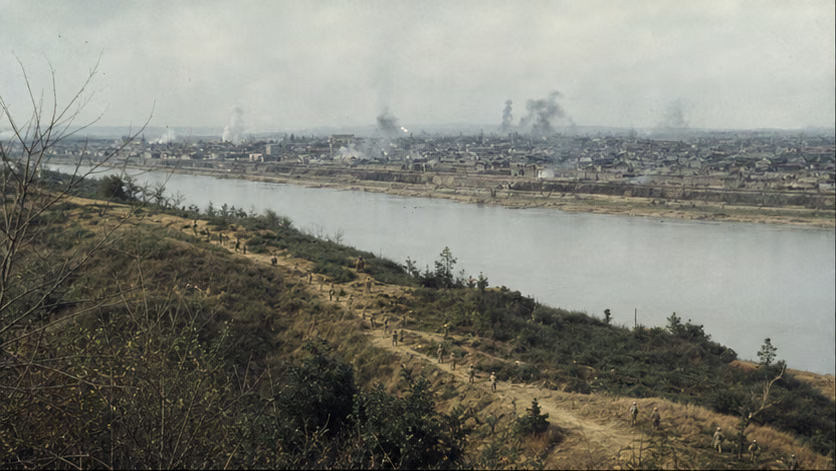
| Location | Northern Hunan: Xinqiang River-Miluo River-Laodao River-Changsha city proper and Yuelu Mountain |
| Part of | Fourteen-Year War of Resistance · stalemate phase on the frontal battlefield |
| Chinese side | Ninth War Area (commander-in-chief Xue Yue); city defense by the Tenth Army (army commander Li Yutang) |
| Japanese side | Eleventh Army (commander Anan Korechika) |
| Result | Japanese forces failed to take the city from 1.1 to 1.4; on the night of 1.4 the order for general withdrawal was issued; around 1.15 the Chinese side restored the original Xinqiang River line |
Belligerents
| Item | Chinese Side | Japanese Side |
|---|---|---|
| Strength | Ninth War Area, more than 300,000 men (basis varies by account); about 30,000 men in the Tenth Army defending the city | Main forces of the Third, Sixth, and Fortieth Divisions and other units, about 60,000 men (Japanese-side basis varies by account; Chinese battle reports claimed 120,000 enemy troops--the two sets of figures are listed side by side, both varying by account, unverified) |
| Firepower | Yuelu Mountain heavy artillery group overlooked and controlled the whole city (artillery command details unrecorded) | Divisional artillery; the city assault lacked heavy artillery and depth in ammunition supply |
| Air | None | Limited support from the First Air Brigade (designation unverified) |
| Supply | War-area pre-positioning and rear depth | Lightly equipped rapid advance; food and ammunition carried for a "short operation," with supply lines exposed inside the encirclement after the advance deepened |
Terrain and Conditions
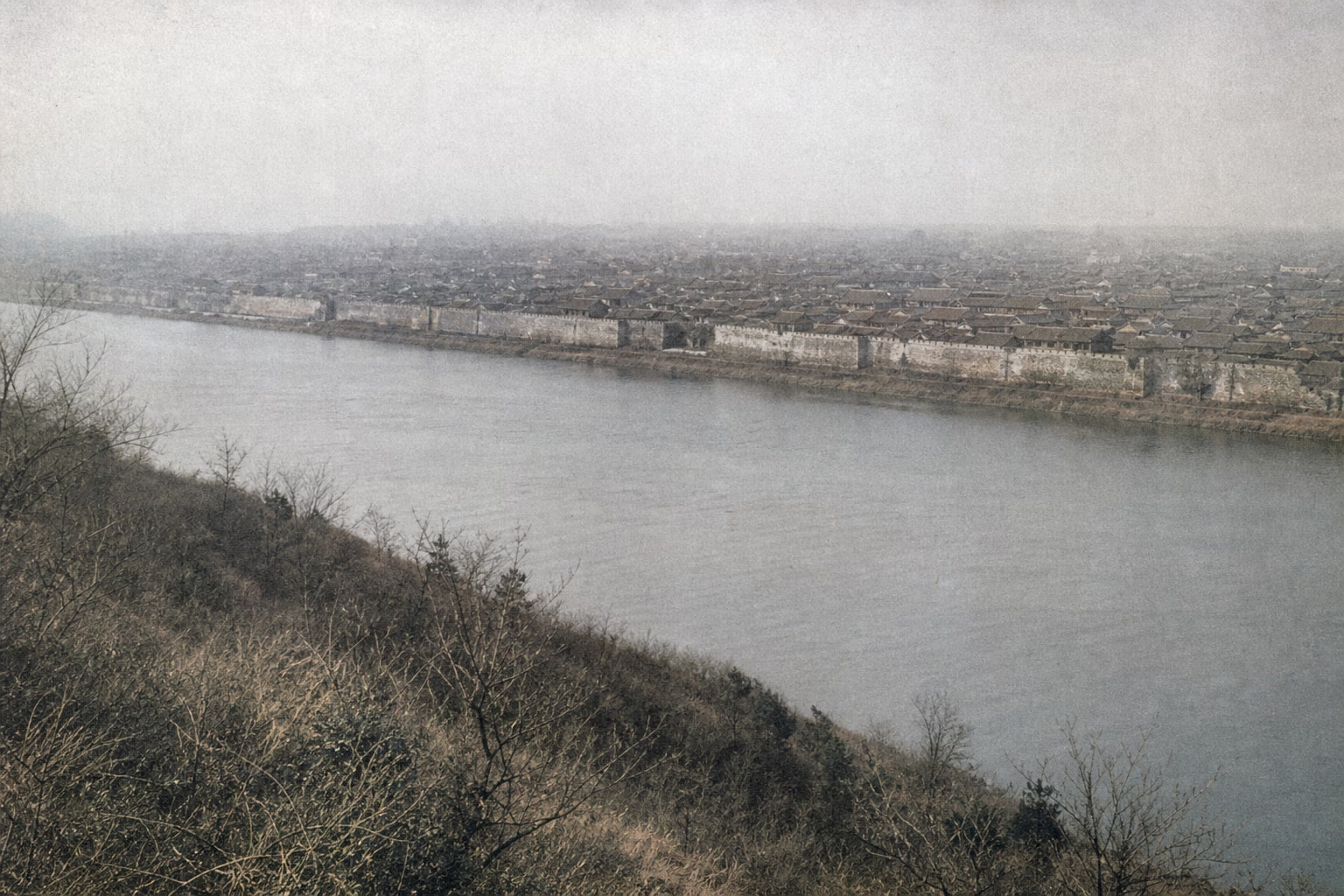
(For the larger situation--the outbreak of the Pacific War, the Hong Kong operation, and repeated Allied defeats--see *Fourteen-Year War of Resistance · War Overview*; here only Hunan is treated.)
Three months earlier, the Second Battle of Changsha had just been lost for a round; Changsha city had been lost and retaken, and public confidence was unsettled. The Ninth War Area revised a new deployment from the old plan: no longer commit the main force in succession to decisive battles along the river lines, but use successive resistance along those lines to wear the enemy down, let the enemy come below Changsha city, and pre-position the outer main forces on both flanks, waiting until the enemy's city assault stalled before converging inward to encircle it. Xue Yue called this the "Heavenly Furnace tactics": Changsha was the furnace bottom, and the ambushing troops on the two flanks were the furnace walls.
Why It Was Fought
Less than three months had passed since the smoke of the Second Battle of Changsha dispersed, and neither side had fully recovered from the previous fight. The Ninth War Area had not completed refitting; beneath the propaganda language of "great victory," the internal review was unsparing--the old method of committing forces in succession had been pinned down by Japanese code-breaking and firepower, Changsha city had been lost and retaken, and public confidence was unsettled. Xue Yue dismantled the old plan and rebuilt it: the river lines would only wear the enemy down, not seek a decisive battle; the enemy would be allowed to come below Changsha city; the defenders would hold; the outer main forces would be pre-positioned on both flanks; and when the enemy's assault on the city stalled, they would converge inward and encircle it. A method accumulated through three battles in two years was now fixed as the "Heavenly Furnace": Changsha was the furnace bottom, and the ambushing troops on the two flanks were the furnace walls. The furnace had just been built when the chance to use it arrived.
On 8 December 1941, Pearl Harbor. The Pacific War broke out; the Japanese 23rd Army attacked Hong Kong on the same day, and the southern fronts opened at the same time. The task received by the Eleventh Army was originally a supporting role: apply pressure in northern Hunan and pin down Ninth War Area troops so they could not be transferred south to aid Hong Kong. But Anan Korechika did not want merely to play a supporting role--he judged that the defenders in northern Hunan had already been drawn south and that an opportunity could be exploited, upgrading a containment operation into the third attack on Changsha (whether the escalation decision was formally approved by Imperial General Headquarters is recorded differently in Japanese accounts, unverified). Three months earlier, on the ledger of "Operation Ka-Go," he had been the winner; this time, the troops carried food and ammunition for a "short operation" and advanced rapidly in light order.
Xue Yue's judgment was exactly the opposite of Anan's: once Japanese forces advanced deep, they would inevitably become vulnerable because of supply--the deeper they went, the more vulnerable they became. Although refitting was not yet complete, he resolved to use Changsha as bait and fight an encirclement. For the first time, the calculations on the two sides matched without a gap: one wanted to move in and out quickly, while the other was waiting precisely for him to come in.
On 24 December, Japanese forces forced a crossing of the Xinqiang River, the third time in three years. The next day, Hong Kong fell--the "supporting" rationale for this battle disappeared on the second day after it began, but the battle continued under its own momentum.
Course of the Engagement
| Stage | Time | Key Points |
|---|---|---|
| Successive resistance at the Xinqiang River | 12.24-12.27 | The 20th Army and other units resisted along the Xinqiang River line, then shifted toward the two flanks without seeking a decisive battle with the enemy (defensive order of battle unverified) |
| Successive resistance at the Miluo River | 12.28-12.31 | The Thirty-Seventh and Ninety-Ninth Armies and other units likewise shifted toward the two flanks after second-line resistance; Japanese forces moved south "smoothly," and the front stretched longer and longer |
| At Changsha's gates | 12.31-1.1 | The Japanese Third and Sixth Divisions reached the suburbs of Changsha; the Tenth Army (Third Division, Provisional Tenth Division, and 190th Division) held the city walls and the core positions on the east bank of the Xiang River, while Yuelu Mountain artillery overlooked and controlled the ground outside the city |
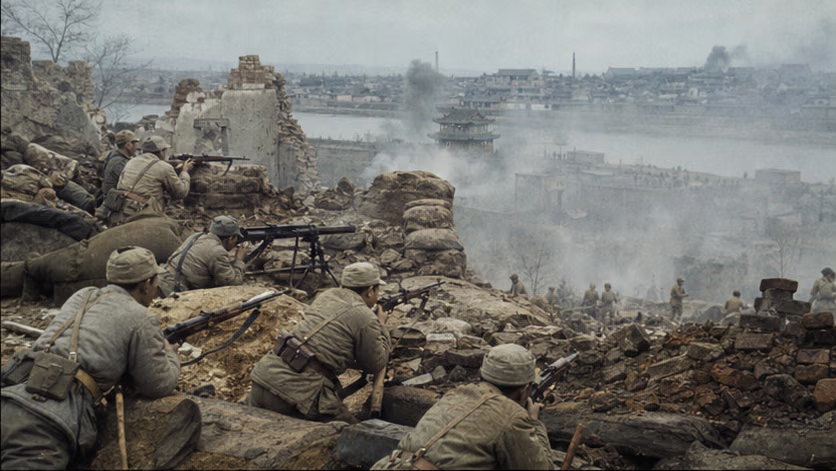
| Bloody fighting below the city | 1.1-1.4 | Japanese forces launched strong attacks for several days; the line from Dongtundu to Tianxin Pavilion held by the Provisional Tenth Division changed hands repeatedly (position details unrecorded); Japanese forces, having advanced rapidly in light order, were nearly out of food and ammunition, and airdrops were insufficient; outer Chinese armies began closing the encirclement |
| General withdrawal | 1.4-1.5 | On the night of 1.4, Anan ordered a general withdrawal (the Japanese side called it a "turnaround") |
| Encirclement, pursuit, blocking, and interception | 1.5-1.15 | Japanese forces were intercepted layer by layer between the Laodao River and the Miluo River; hungry and exhausted troops fought as they moved, and the Ninth Mixed Brigade's southward relief effort was also blocked (details unrecorded); around 1.15 the original Xinqiang River situation was restored |
Casualties and Losses
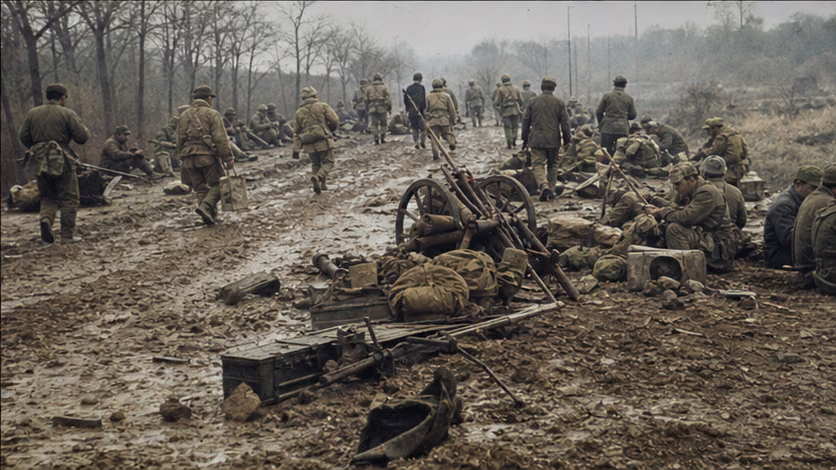
- Chinese side: about 28,000 casualties (Chinese-side bases vary by account; statistical boundaries unverified).
- Japanese side: Chinese battle reports claimed 56,900 enemy losses inflicted--a debated overstatement; Japanese war histories self-recorded about 6,000 killed and wounded (about 1,500 killed--details remain to be checked article by article); later research mostly estimates Japanese casualties from several thousand to more than 10,000. Bases listed side by side, without choosing between them.
- Whichever set of figures is used: Japanese forces stalled in their city assault, withdrew in disorder, and fought hard as units tried to support one another; these points are self-recorded in Japanese military history, and the two sets of figures do not contradict them.
Aftermath
- The three Changsha victories (1939, the 1941.9 propaganda framing, and 1941.12) brought Xue Yue's prestige to its peak, and "Hunan does not fall" sustained morale in the rear.
- The international response was real: after the Pacific War began, the Allies suffered repeated defeats in every theater, and Changsha was the first victory in the Allied camp. Newspapers including London's *The Times* gave it high praise in dedicated articles, and senior Allied figures in the United States and Britain sent congratulatory telegrams (original newspaper texts and telegram wording unverified). Contemporary commentary called it "amid the Allies' blanket of crushing defeats, Changsha was the only lamp still lit"--the casualty figures can be disputed, but this international response cannot.
- By comparison: two and a half years later, in the Fourth Battle of Changsha in 1944, the "Heavenly Furnace" was smashed straight through by the depth artillery fire and troop strength of Japanese Operation Ichi-Go, and Changsha collapsed within several days--see also *Battle of Henan-Hunan-Guangxi · Overview*.
- Hong Kong had already fallen on 12.25, so the "supporting" purpose of this Japanese operation had itself become an empty text.
Accounts of Those Present
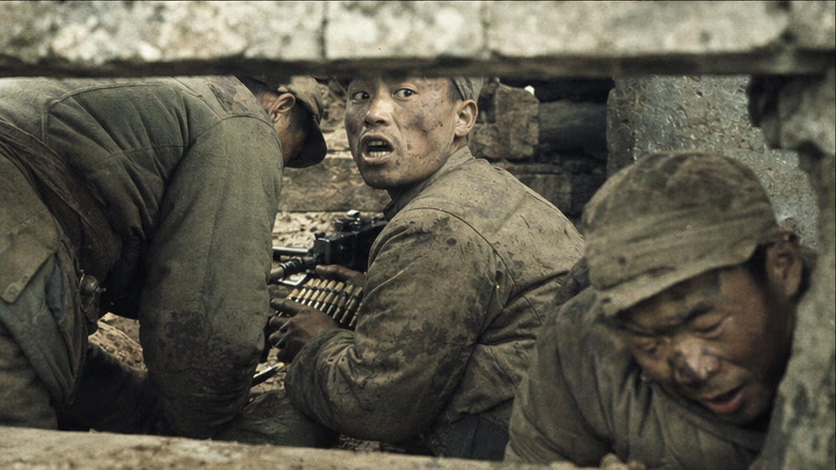
- The Tenth Army and the Provisional Tenth Division: Li Yutang's Tenth Army defended Changsha, and Fang Xianjue commanded the Provisional Tenth Division. Three years later, the force and the men who held Hengyang for forty-seven days were precisely these troops and these people--the victorious army below Changsha city became, at Hengyang, an isolated force in a brutal dead end; for the prequel relationship, see also *Defense of Hengyang*.
- Li Yutang's reinstatement: In the Second Battle of Changsha, the Tenth Army had been broken and Li Yutang dismissed; before the Third Battle of Changsha, with the military situation urgent, Li Yutang was reinstated to defend the city while still under a burden of fault, and he won this battle (formal wording of the reinstatement unverified).
- Yuelu Mountain artillery: Yuelu Mountain on the west bank of the Xiang River overlooked the whole city; Chinese artillery observation posts on the mountain directed the artillery battle inside and outside the city, and Japanese forces tried several times to seize Yuelu Mountain first but failed (artillery command details unverified).
- The hungry and exhausted force opposite: During the Japanese retreat, food ran out; troops relied on plunder along the route and scraps from airdrops, and frontline Japanese soldiers often described it in memoirs as a "starving-ghost march" (Japanese memoir sources unverified).
The Ground
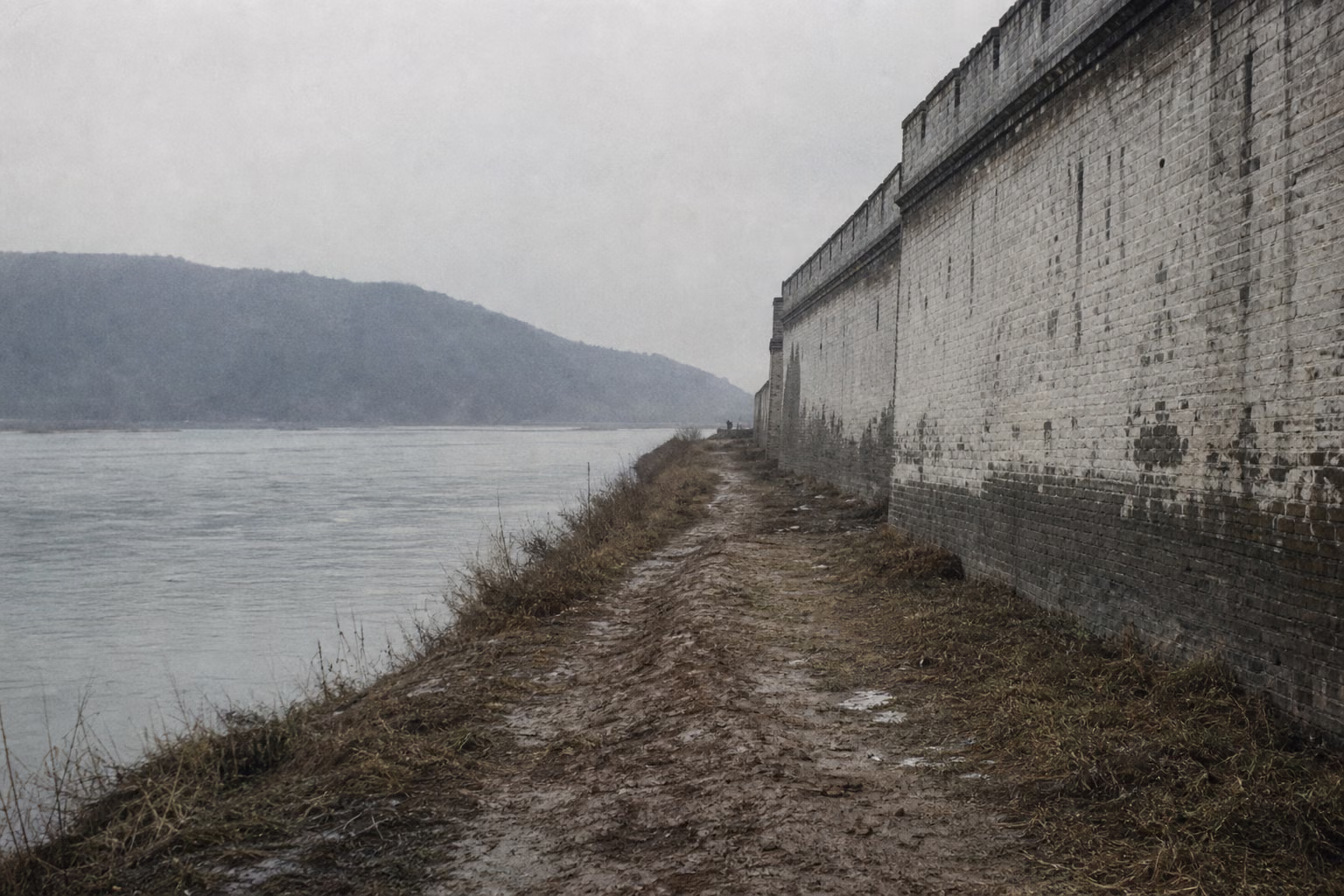
- The spatial grammar of the "Heavenly Furnace": the two river lines (Xinqiang River and Miluo River) were used only for attrition, not for decisive battle; the furnace bottom was Changsha's city walls and the east-bank positions on the Xiang River; the furnace walls were the field armies pre-positioned on the two flanks; the lid was the Yuelu Mountain artillery.
- Changsha city proper: the Xiang River runs from north to south, the city lies east of the river, and the mountain lies west of the river--the attackers had water at their backs, while the defenders had artillery at theirs.
- Axis of retreat: from Changsha to the Laodao River, the Miluo River, and the Xinqiang River is about 150 kilometers; throughout the Japanese turnaround, they moved between pre-positioned Chinese forces, so the route of retreat became an ambush corridor.
How Each Side Records It
- Chinese side: the Third Great Victory of Changsha, the peak of the three Changsha victories; propaganda claimed more than 50,000 enemy losses.
- Japanese side: military histories set the basic tone as "turning around after the objective had been achieved," but do not conceal the failure to take the city and the wretchedness of the retreat; memoirs by participants often call this campaign the Eleventh Army's most disappointing fight in Hunan (memoir sources unverified).
- International: the Allied camp broadly treated this victory on the China battlefield as the first good news since the war began--see "Aftermath."
Disputes and Sensitivities
- Overstated battle results listed beside real international response: the battle-report figure of 56,900 cannot be taken as historical fact, but the international response to "the Allies' first victory after the Pacific War began" was real--the two lines coexist.
- Evaluation of the "Heavenly Furnace tactics": this campaign's success had the background of Japanese underestimation of the enemy and short-carried supplies; in 1944 the same method was ineffective against the troop strength of Operation Ichi-Go--do not mythologize it.
- The dispute between the Japanese force of 60,000 and the Chinese-reported 120,000 affects whether the narrative becomes "many against few" or "few against many"; the bases differ.
Sources and Open Questions
Known main sources:
- Detailed battle report of the Ninth War Area on the Third Battle of Changsha (inclusion in the Taiwan-edition war histories unverified)
- Japanese Defense Agency War History Office, *Senshi Sosho · Changsha Operations* (Japanese official history)
- Ge Xiancai, *Personal Account of the Bloody Battles of Changsha, Changde, and Hengyang* (memoir from the Provisional Tenth Division system, cross-referenced across articles)
Open questions: original sources for the two bases of Japanese troop strength; Chinese order of battle; earliest documentary source for the term "Heavenly Furnace tactics"; approval process for Anan's escalation of the operation; details of the Provisional Tenth Division's fighting for each position; organization and command details of the Yuelu Mountain artillery; details of Japanese relief operations during the retreat; statistical boundaries of Japanese self-recorded casualties; original texts of newspaper articles such as those in *The Times* and Allied congratulatory telegrams; wording of Li Yutang's reinstatement.
All images on this site are AI-generated depictions. They are not historical photographs, not primary sources, and do not depict any real individual.