Engagement Archive · Battle of Central Henan (1944)
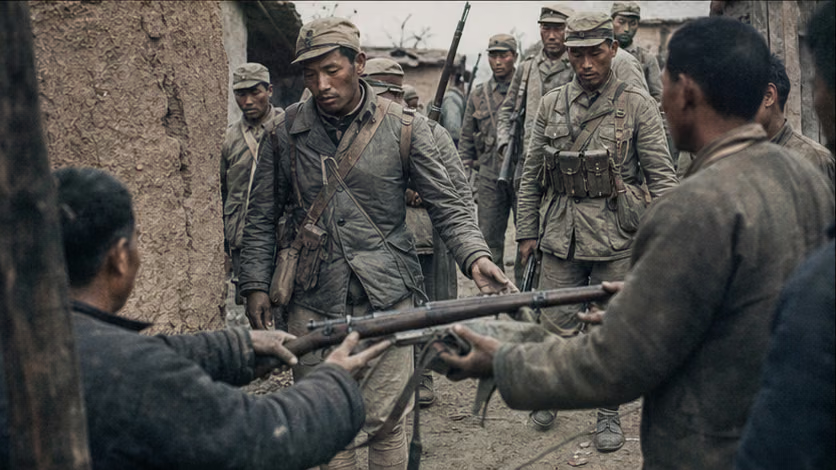
Henan was lost in thirty-seven days -- in some places, civilians did not help the Nationalist Army, but instead took guns from routed soldiers. The account of popular allegiance had already filled up before the military collapse arrived.
Engagement Data
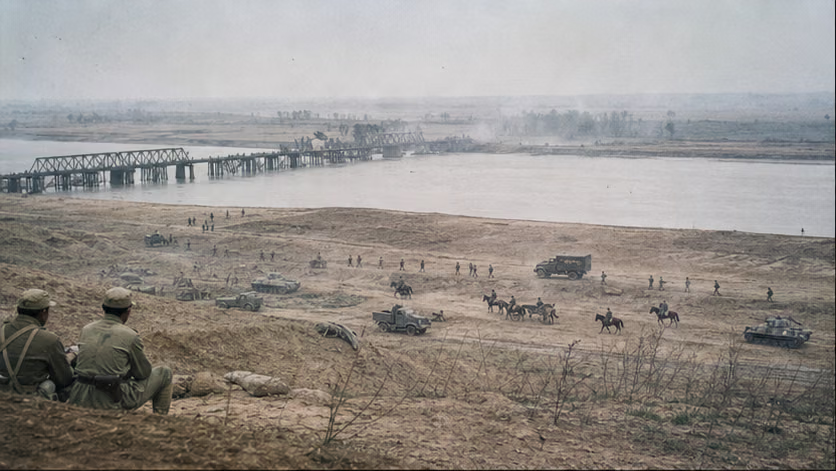
| Item | Content |
|---|---|
| Time | 1944.4.17/18 - 5.25 as the main phase; fighting in western Henan continued into June |
| Location | Henan (the Central Henan plain south of the Yellow River, and the mountains of western Henan) |
| Part of | Fourteen-Year War of Resistance · opening stage of the Battle of Henan–Hunan–Guangxi (Japanese "Operation Ichi-Go"), Pinghan Railway sector |
| Chinese side | First War Area (commander-in-chief Jiang Dingwen, deputy commander-in-chief Tang Enbo) |
| Japanese side | North China Area Army (commander Okamura Yasuji), with the Twelfth Army (commander Uchiyama Eitaro) as the main force |
| Result | Japanese forces opened the southern section of the Pinghan Railway, taking Zhengzhou, Xuchang, Luoyang, and more than 30 other cities in succession; Jiang Dingwen and Tang Enbo were removed from their posts |
Belligerents
| Item | Chinese side | Japanese side |
|---|---|---|
| Strength | About 400,000, with serious shortages common across units (figures vary widely by basis and account) | About 150,000 |
| Equipment | Short of weapons, ammunition, grain, and supplies after long confinement in Henan | Mobile forces including a tank division, with trucks and cavalry; long prepared |
| Morale | After the great famine, relations between army and civilians were close to rupture | Opening stage of Operation Ichi-Go, fully prepared |
Terrain and Conditions
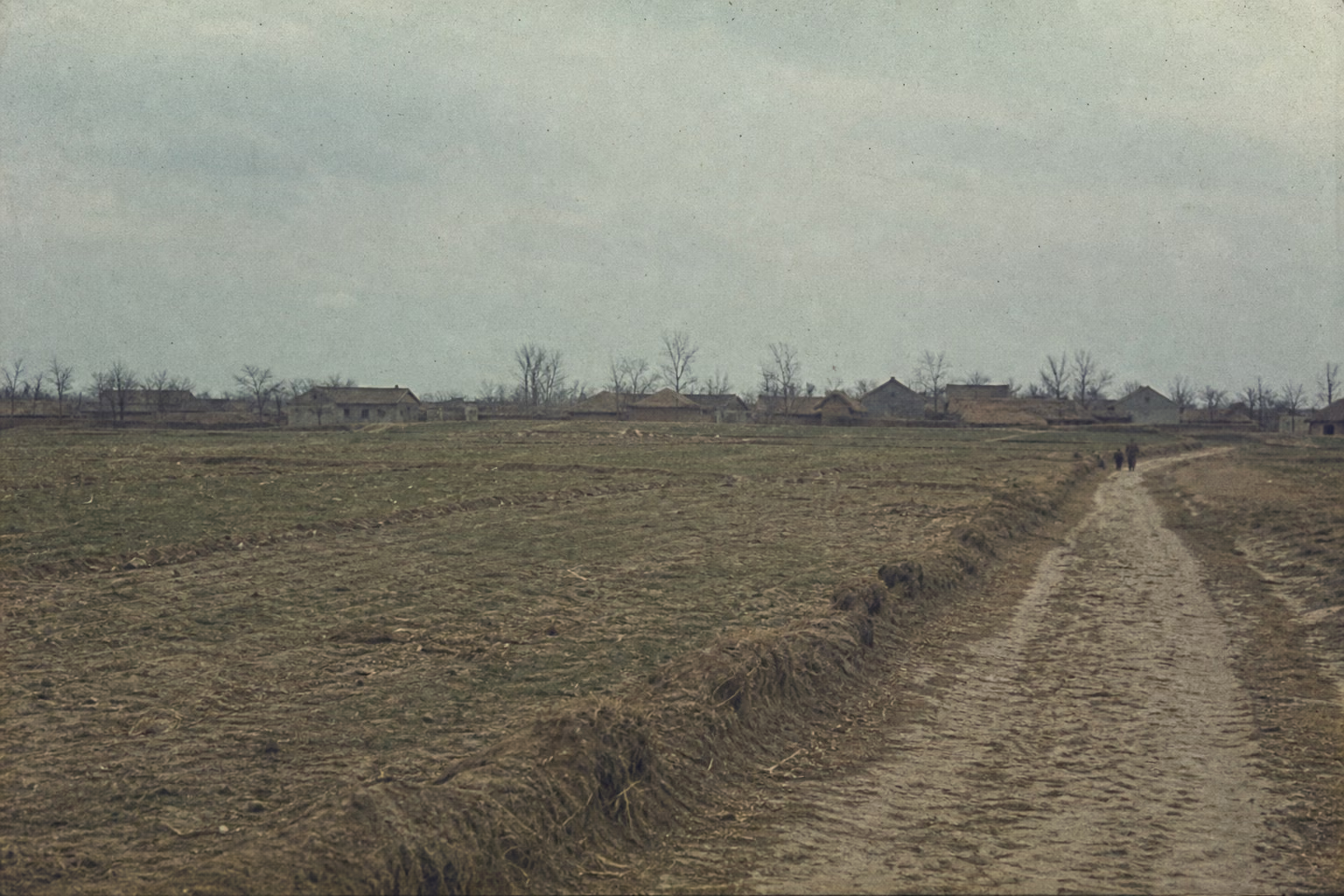
(For the larger situation in 1944 -- world counteroffensives, China's retreat, and Japan's all-or-nothing gamble -- see *Battle of Henan–Hunan–Guangxi · Campaign Overview*; here only Henan is covered.)
Henan: a province that had just crawled out of a great famine. In 1942-43, severe drought and locusts caused deaths by hunger in Henan to number in the millions (figures vary sharply by basis; accounts differ; unverified), while reductions in grain levies and taxes by the garrison forces were not seen. "Water, drought, locusts, Tang -- Henan's four scourges" -- "Tang" meant Tang Enbo's troops -- the folk rhyme placed the garrison army alongside natural disasters (whether the rhyme already existed at the time or took shape afterward is disputed in scholarship; the items are listed in parallel here, still unverified). Before the battle was even fought, popular allegiance was already the thinnest link on the battlefield.
Why It Was Fought
That the Cheqiao action in March could succeed depended on Japanese forces having thinned out their strongpoint lines in Central China; where those troops had gone became clear by the Yellow River in April. The Japanese Army mobilized more than 500,000 men and launched the largest offensive in its history, code-named "Operation Ichi-Go": to open a continental line of communication made up of the Pinghan, Yuehan, and Hunan-Guangxi railways, and to destroy the Chinese-American air bases along the Hunan-Guangxi line that could bomb the Japanese home islands. The first stage was the Pinghan line; the first province was Henan.
What forced out this gamble was defeat at sea. The Absolute National Defense Sphere had been punched through in the Pacific, sea routes were being cut one after another, and resources from the south could not be carried back to the home islands -- the Army wanted to open a railway corridor on the continent as a substitute for sea transport. Even winning the wager could not reverse defeat at sea, and not everyone in Imperial General Headquarters failed to understand this (disagreements in Japanese decision-making unverified); but the battle was still fixed for this year -- if they waited, the situation at sea would only worsen.
Standing in the way of the southern section of the Pinghan Railway was Jiang Dingwen and Tang Enbo's First War Area, about 400,000 men on paper. These 400,000 stood in a province that had just crawled out of a great famine: in 1942-43, deaths by hunger in Henan numbered in the millions (figures vary sharply by basis; accounts differ; unverified), reductions in garrison grain levies were not seen, and folk rhyme listed "Tang" together with water, drought, and locusts as the four scourges (the origin and transmission are disputed in scholarship, unverified). Unit shortages were widespread, and weapons, ammunition, grain, and supplies were all lacking. The most exhausted province, the most exhausted soldiers, had to take the first punch of Operation Ichi-Go.
The two sides' calculations were completely asymmetrical. Okamura Yasuji's North China Area Army used the Twelfth Army, about 150,000 men, as its main force, with a tank division, trucks, and cavalry, long prepared; its aim was to drive straight down the Pinghan Railway and join North China with Wuhan. The Chinese high command, by contrast, judged that Japanese forces had no capacity left to launch a large-scale offensive, and treated the Henan direction as a local diversion (postwar review accounts vary widely by basis and account). As for popular allegiance, before the battle was even fought, it was already the thinnest link on the battlefield.
Japanese forces first repaired the Yellow River railway bridge north of Zhengzhou and sent tanks across the river (the sequence of the bridge repair is unverified). On the night of April 17, advance units crossed the Yellow River from the Zhongmu area.
Course of the Engagement
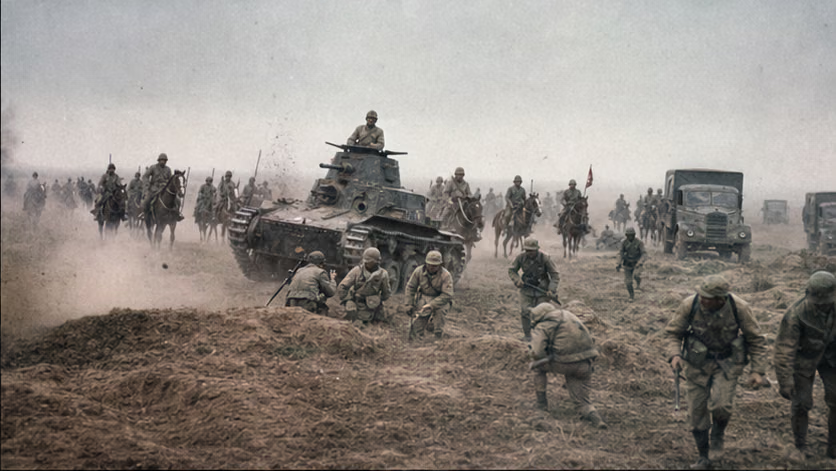
| Stage | Time | Key Points |
|---|---|---|
| River crossing and breakthrough | From 4.17/18 | Japanese forces crossed the Yellow River from the Zhongmu area; the river defense was quickly broken |
| Straight drive down the center | Late April - 4.30 | Zhengzhou and other places fell in succession; on 4.30, in the Defense of Xuchang, Lu Gongliang, commander of the Newly Organized 29th Division, died with the city (course of events unverified) -- one of the exceptions of a fight to the death amid collapse |
| Sweeping across Central Henan | Early and mid-May | The main forces under Tang Enbo retreated step by step toward the mountains of western Henan; in some areas civilians and local armed groups disarmed routed soldiers (records and later textual criticism are listed in parallel) |
| Defense of Luoyang | Mid-May - 5.25 | Wu Tinglin's 15th Army held Luoyang alone for 14 days; on 5.25 the city fell -- another exception of a fight to the death |
| Western Henan coda | Late May - June | Japanese forces advanced west toward Lingbao, then contracted after being checked (beginning and end unverified) |
From the river crossing on 4.18 to the fall of Luoyang on 5.25: thirty-seven days.
Casualties and Losses
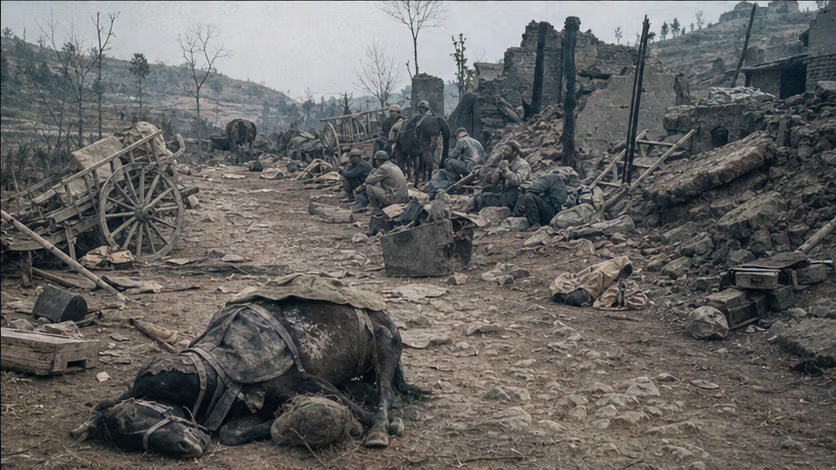
- Chinese side: troop losses range from tens of thousands to 200,000, with the different bases varying widely (this claim unverified); more than 30 cities were lost (claims such as "38 cities in 38 days"; numbers and sequence unverified).
- Japanese side: several thousand casualties (Japanese war-history figures vary by account).
- Civilians ※: refugees died amid retreat and pursuit; mutual harm in army-civilian conflict -- routed soldiers seized grain, and civilians killed routed soldiers, with fragmentary records (this claim unverified).
Aftermath
- Jiang Dingwen and Tang Enbo were removed from their posts (the severity of the punishment and the course of reassignment are unverified).
- More than half of Henan was occupied, and remnants of the First War Area withdrew into western Henan and Shaanxi.
- The issue of "popular allegiance" was placed on the table: both Chongqing and the American side began to reassess the internal condition of the Nationalist-controlled areas (related documents unverified).
- Operation Ichi-Go opened with a major victory, and the Japanese spearhead immediately turned toward Hunan -- leading into *Fourth Battle of Changsha (1944)*.
Accounts of Those Present
- Lu Gongliang: when Xuchang fell, he led the remnants in a breakout and died for the country after being hit by gunfire (specific course of events unverified) -- one of the few generals in the great collapse who died at his post.
- Wu Tinglin and the 15th Army: Luoyang was held alone for 14 days; when the city fell, several hundred survivors broke out (number unrecorded).
- Farmers who took guns: in parts of western Henan, local armed groups and civilians intercepted routed soldiers and confiscated weapons; there are also records of routed soldiers seizing grain and being surrounded and killed -- neither avoided nor enlarged: accounts differ over the scale, motives, and organization of the incidents (textual criticism listed in parallel).
- Several versions of the folk rhyme: besides "water, drought, locusts, Tang," popular resentment over garrison requisitions appears repeatedly in memoirs and reports (collection unverified).
The Ground
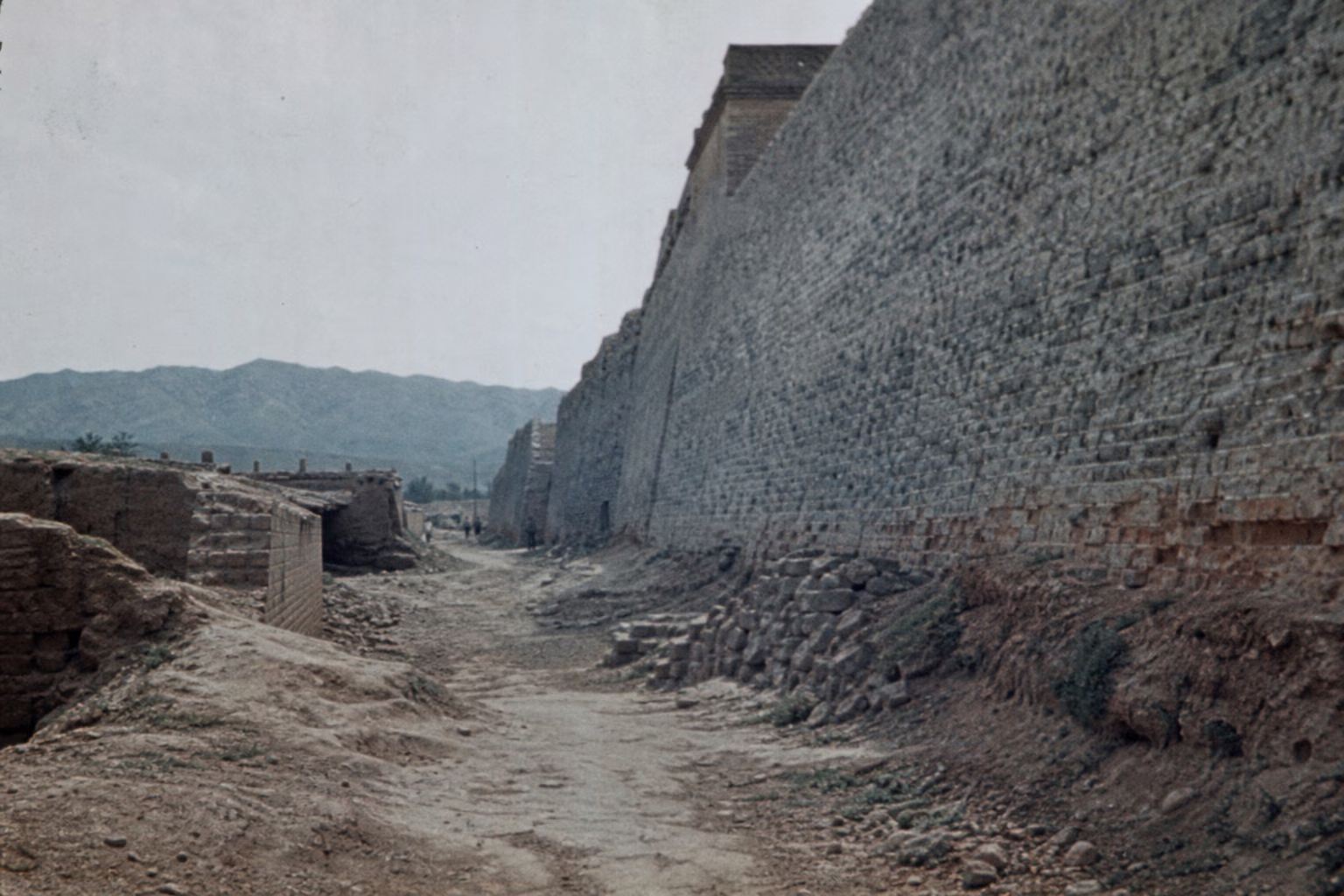
- The south bank of the Yellow River is the flat Central Henan plain, with no natural barrier to defend and well suited to mechanized and cavalry deployment -- the defender's terrain ledger was almost empty.
- The Funiu Mountains of western Henan were the main stage of retreat and army-civilian conflict: mountain roads, villages, and passes, where routed soldiers and local armed groups met in narrow spaces.
- Luoyang: an ancient capital and key point on the Longhai Railway, with the city defense relying on the city wall and the Mangshan line (deployment details unverified) -- the solitary city that held for 14 days was the only serious defensive space in this battle.
How Each Side Records It
- Chinese side: official war histories avoid speaking plainly about the details of the rout; popular memory and later scholarship use "water, drought, locusts, Tang" as a keyword. Taiwanese war histories call it the "Battle of the Central Plains."
- Japanese side: war histories call it the "Henan Campaign" (first phase of Operation Ichi-Go), recording the smoothness of the advance and the speed with which Chinese resistance collapsed (wording unverified).
- American side: reporting by Theodore White and other journalists on the Henan famine and collapse deeply shaped American public opinion's view of the Nationalist Government (specific articles unverified).
Disputes and Sensitivities
- The scale and characterization of "civilians disarming routed soldiers": the interpretation as "popular unrest" and the interpretation as "self-protection by local armed groups" coexist; this has long been a point of divergence in narratives across the Taiwan Strait -- records and later textual criticism are listed in parallel, neither avoided nor enlarged.
- Origin and transmission of the "water, drought, locusts, Tang" folk rhyme: whether it already existed at the time or took shape afterward is disputed in scholarship.
- Loss figures vary widely by basis.
- The causal chain between famine and defeat: both occurred in the same province in the same year in succession, but historians consider the single-line explanation that "famine caused defeat" too simple (research disagreements unverified).
Sources and Open Questions
Known main sources:
- Japan Defense Agency War History Office, *Senshi Sosho*, Operation Ichi-Go volume (Japanese official history)
- Theodore White, *Thunder Out of China* (American journalist's perspective)
- First War Area and Tang Enbo-related archives and memoirs, and Taiwanese war histories (details unrecorded)
Open questions: number and sequence of cities falling; statistical boundaries for casualties on both sides; course of Lu Gongliang's death with the city; Luoyang defenders' order of battle and number of breakout survivors; origin and transmission of the "water, drought, locusts, Tang" folk rhyme; scale of the civilian disarmament incidents and mutually corroborating historical materials; original text of the punishments of Jiang and Tang; beginning and end of the Lingbao fighting; research literature on the relationship between famine and defeat.
All images on this site are AI-generated depictions. They are not historical photographs, not primary sources, and do not depict any real individual.