Engagement Archive · Battle of Songshan
A mountain on the west bank of the Nu River; an underground fortress Japanese forces had spent two years building; one thousand three hundred defenders. The Chinese Expeditionary Force fought for ninety-five days and suffered 7,700 casualties, and in the end used three tons of explosives to blow the main peak, men and works together, into the sky -- ten battles for Songshan, and the defenders wiped out to the last. For the first time, Chinese troops reduced a Japanese strongpoint to "gyokusai"; for the first time, too, they learned what it meant to buy meters with lives in a fortified assault.
Engagement Data
| Item | Content |
|---|---|
| Part of | Fourteen-Year War of Resistance · Yunnan–Burma Theater (for the larger situation, see *Yunnan–Burma Theater · Overview*) |
| Time | 1944.6.4 – 9.7, ninety-five days (the common division into "ten battles for Songshan" remains unverified) |
| Location | Songshan, Longling, Yunnan (Lameng Township, commanding height on the west bank of the Nu River at Huitong Bridge, throat of the Yunnan-Burma Road) |
| Attacking side | The New 28th Division of the 71st Army of the Western Yunnan Expeditionary Force attacked first; later the Eighth Army (army commander He Shaozhou, deputy army commander Li Mi at the front) took the main assault |
| Defending side | The Lameng Garrison of the Japanese 56th Division (Major Kanemitsu Keijiro and others), about 1,300 men (figures vary by account, 1,260–1,340, unverified) |
| Result | On 9.7 the garrison was annihilated (single-digit prisoners taken; figures vary by account); the key to the Yunnan-Burma Road was opened |
Belligerents
| Item | Expeditionary Force | Japanese Garrison |
|---|---|---|
| Strength | About 20,000 committed in succession (figures vary by account), more than one hundred artillery pieces + U.S. air support | About 1,300, with several dozen artillery pieces inside permanent works |
| Works | — | Two years of construction: bunker clusters mutually covering one another's flanks, tunnels connecting them, several layers of earth and timber overhead, direct hits by U.S.-supplied mountain guns ineffective (U.S. assessment of the works' strength unverified); stores sufficient for several months |
| Air control | Complete | None -- but the works offset the artillery and air advantage |
Terrain and Conditions
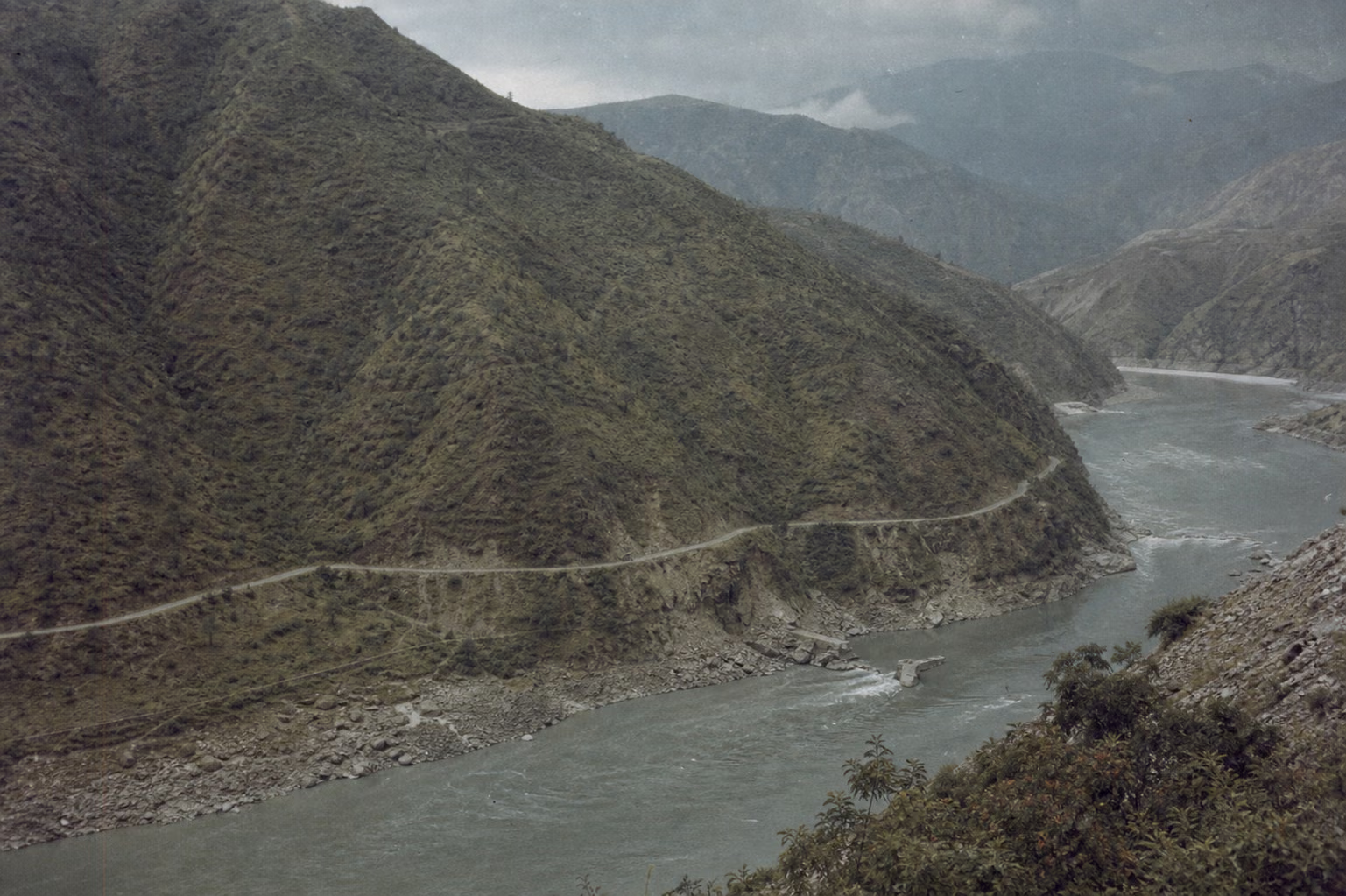
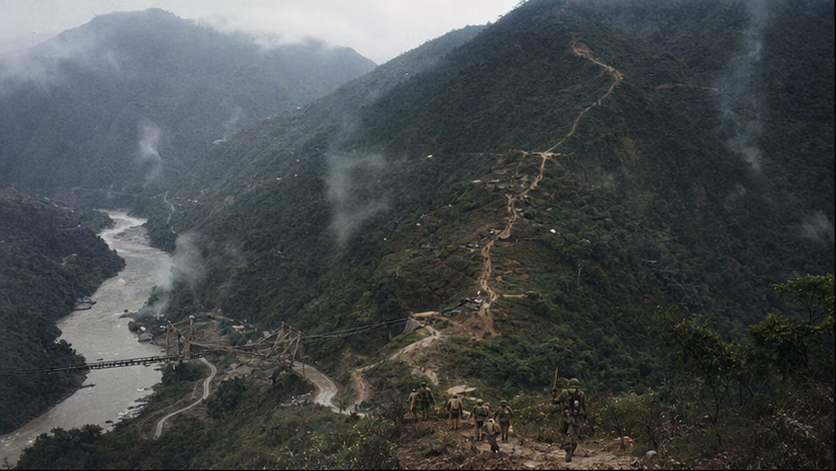
Songshan overlooked Huitong Bridge and the Nu River section of the Yunnan-Burma Road -- whether the road could pass depended on this mountain. Once Huitong Bridge was blown in 1942, the two armies faced each other across the river for two years, and Japanese forces turned Songshan into the "Gibraltar of the East" (an analogy, with level marked); below the mountain, by the river, was the bridge site that had stopped the enemy then -- two years earlier, the bridge was blown for self-preservation; two years later, the mountain was taken to open the road: spatial cause and effect closed into a loop.
Why It Was Fought
The Fourth Battle of Changsha was reaching its middle phase, and Yokoyama Isamu's columns were already driving toward Changsha itself. In the same June, the western Yunnan counteroffensive had reached the second threshold on the west bank of the Nu River. On the northern wing, the 20th Group Army was still fighting bitterly at the Gaoligong Mountains passes and around Tengchong; on the southern wing, the Eleventh Group Army crossed the river and pressed frontally toward the Yunnan-Burma Road -- and across the junction on the southern wing lay a mountain.
Songshan stood at Lameng in Longling, overlooking Huitong Bridge and the Nu River section of the Yunnan-Burma Road: whether the road could pass depended on this mountain. In May 1942, Chinese defenders blew Huitong Bridge to stop Japanese forces, and the two armies had faced each other across the river ever since. Over those two years, the Japanese 56th Division turned the mountain into an underground fortress -- bunker clusters mutually covering one another's flanks, tunnels connecting them, several layers of earth and timber overhead, direct hits by U.S.-supplied mountain guns ineffective (U.S. assessment of the works' strength unverified), grain and ammunition stores sufficient for several months, known as the "Gibraltar of the East" (an analogy, with level marked). Holding the mountain was the Lameng Garrison, about one thousand three hundred men under Major Kanemitsu Keijiro (figures vary by account): one mountain to lock one road, two years of works to buy time.
The Expeditionary Force could not wait. The shells, grain, and fodder for the armies that had crossed the river were, at that moment, all being carried over the mountains by civilian laborers and pack trains. If Songshan did not fall, the road would not open; the supply lines for the Tengchong and Longling wings would both remain choked, and the logistics of the whole counteroffensive would have no main line. The terrain offered no way around it, and time offered no room to wait. It could only be gnawed through.
The first to go up was the New 28th Division of the 71st Army. The pre-battle estimate was that it could be taken in three days. The later reality was ninety-five days.
On June 4, the New 28th Division launched the first attack on Songshan.
Course of the Engagement
| Phase | Time | Key Points |
|---|---|---|
| Initial attacks checked | 6.4–7.1 | The New 28th Division was repeatedly checked in conventional fortified assaults (misjudgment of the works' strength -- the pre-battle estimate of "three days to take it" set against the reality of ninety-five days), with more than one thousand casualties and no progress |
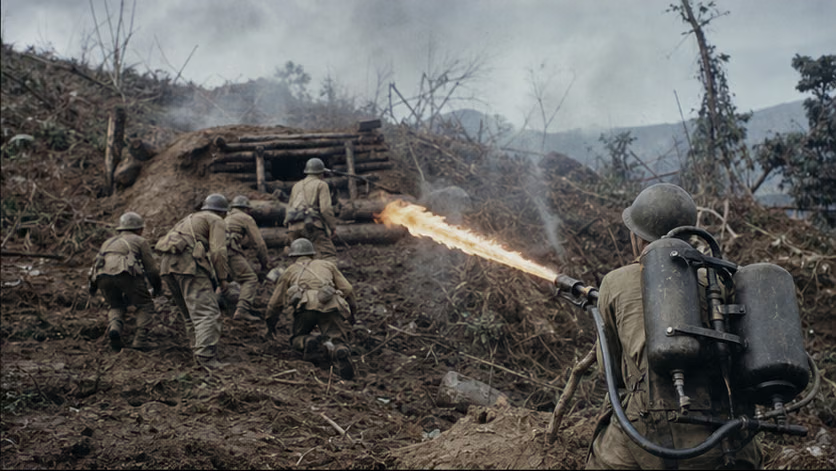
| Eighth Army takes over | July | Shift to a method of "blowing up each fortress one by one": flamethrowers (first large-scale use of U.S. equipment in fortified assaults against Japan, unverified), direct-fire guns pushed close, engineer demolition teams |
| Grinding through each bunker | July–August | Sub-heights changed hands one by one, with repeated back-and-forth fighting; Japanese night counterattacks and dense sniper networks; the Expeditionary Force's daily gains were measured in meters (the common phrasing of "twenty meters a day" remains unverified) |
| Tunnel demolition | Mid-August–8.20 | Two tunnels were dug toward the sub-heights of the main peak until they reached beneath the fortress, then filled with about three tons of TNT (120 boxes, figures vary by account); detonated on 8.20 -- the main-peak works were overturned as a whole, and most of the defenders died at once (details of the demolition work unrecorded) |
| Mopping up and annihilation | 8.21–9.7 | Remaining bunker clusters were cleared one by one; on 9.7 the fighting ended, and the garrison was destroyed in full -- Kanemitsu Keijiro was killed in action (details of his death unverified) |
Casualties and Losses
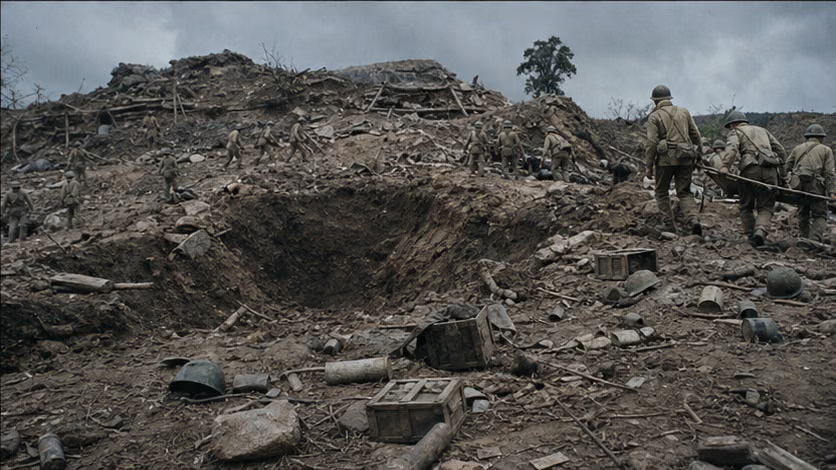
- Expeditionary Force: 7,763 casualties (about 4,000 killed -- common figures vary by account); against 1,300 defenders, an exchange ratio of about 6:1 -- the price list of fortified assault.
- Japanese forces: the garrison was annihilated ("gyokusai" announcement -- the claim that this was the first "gyokusai" communique issued by Imperial General Headquarters for a garrison on the Chinese battlefield remains unverified); single-digit prisoners taken.
- ※ Civilian laborers: casualties among western Yunnan civilians who supported the front by transport and carrying the wounded (local figures vary by account) -- the second account book at the foot of Songshan.
- The boy soldiers brought in as replacements: in the later phase of the battle, large numbers of minors were among the replacement troops (preserved in U.S. military footage -- image verification unverified; cross-reference "accounts of those present" in the overview).
Aftermath
- The Nu River section of the Yunnan-Burma Road opened to traffic, and the logistics bottleneck for the battles of Tengchong and Longling was broken (see the two separate articles) -- once Songshan opened, the whole line came alive.
- The "Songshan method" (tunnel demolition + clearing fortresses one by one) became a model for assaults on permanent Japanese works, and was then used at Tengchong.
- The Songshan battlefield site is preserved intact (shell craters, tunnels, and shelter clusters can still be identified -- one of China's most complete surviving battlefield sites from the War of Resistance); in 2013 the Chinese Expeditionary Force sculpture group was erected (402 statues -- including a formation of boy soldiers, a contemporary memorial).
Accounts of Those Present
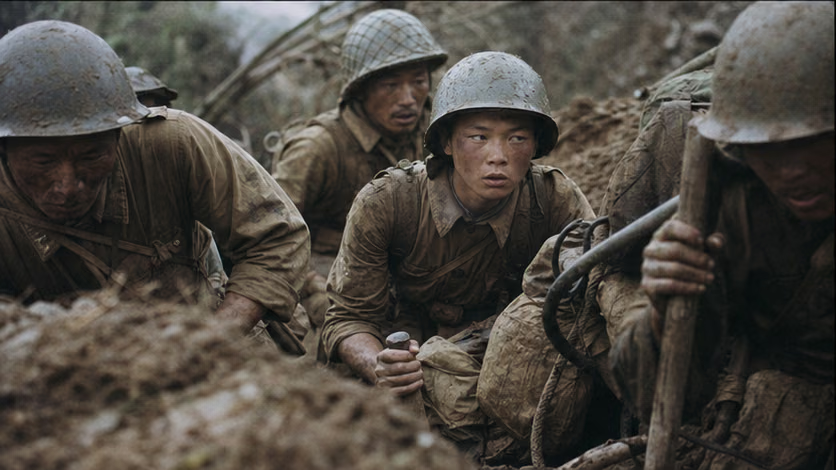
- The engineers in the demolition tunnels: underground digging only several meters from enemy bunkers, close enough to hear Japanese troops speaking overhead (memoir materials, evidentiary level unverified) -- the quietest fortified assault, digging through the dark toward the enemy's feet.
- The flamethrower operators: operators of the new weapon suffered extremely high casualty rates (unit sequence and casualty figures unrecorded) -- a branch of service that "charged with gasoline tanks on their backs."
- Kanemitsu Keijiro: an artillery major who held until annihilation -- another specimen of the Japanese "gyokusai" narrative; his farewell telegram to the division (Japanese records unverified) came at the same moment as the Expeditionary Force's final general assault.
- The boy soldier's helmet: replacement soldiers aged nine or ten in the lens of U.S. military reporters, their helmets down to their brows (image verification unverified) -- the age structure atop the mountain of bodies.
- Twenty meters a day: war measured by soldiers with a ruler -- making "advance" concrete down to the number of steps is this battle's most direct scale of fortified assault.
The Ground
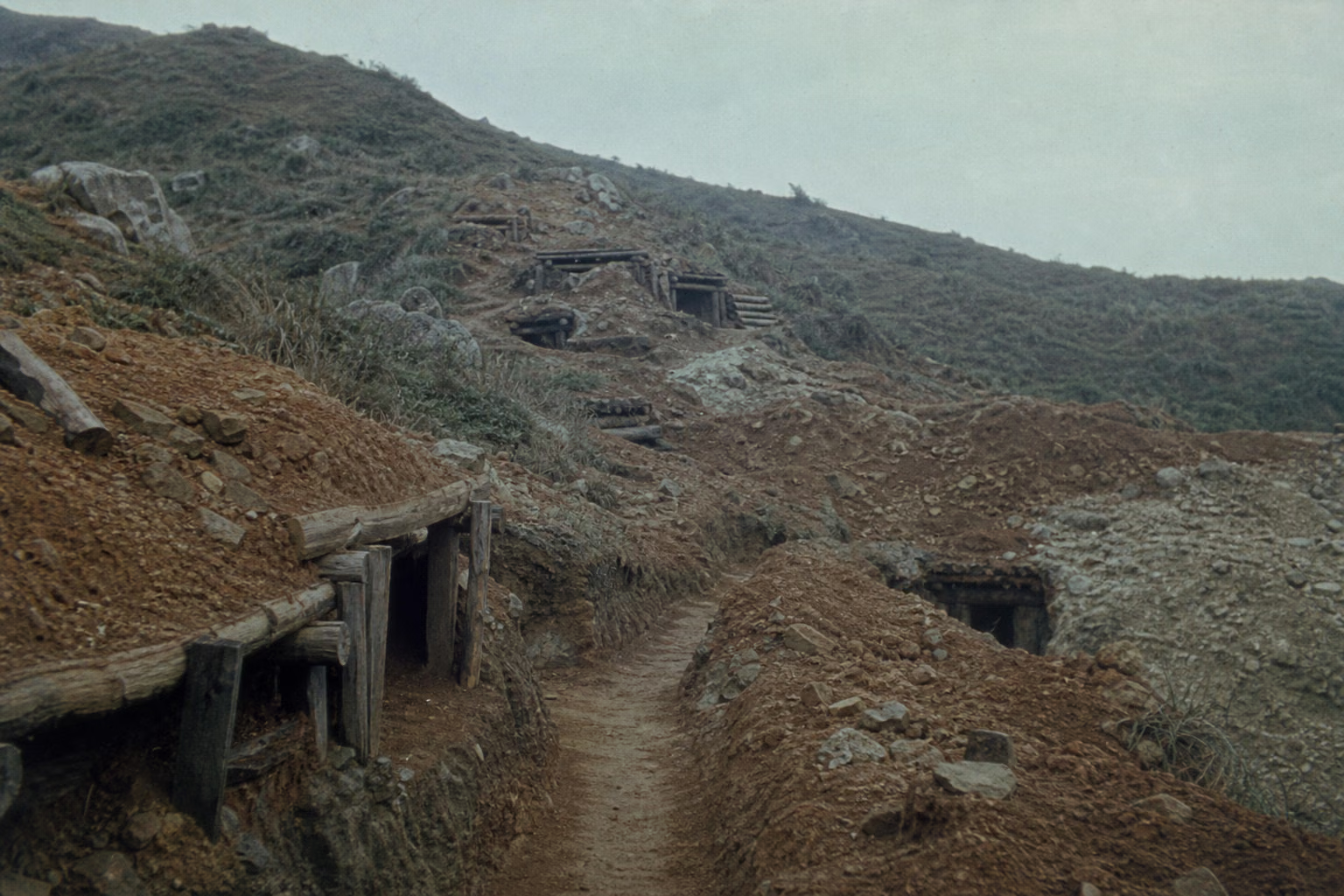
- Anatomy of the permanent works cluster: a three-dimensional network of main bunkers, flanking bunkers, communication trenches, and sniper positions (verifiable by field measurement of the site -- the most complete walkable battlefield in the entire series).
- The vertical space of tunnel demolition: a two-layer time of surface deadlock and underground digging.
- The larger background of the Nu River gorge: a strategic spatial model in which river, bridge, road, and mountain form one system.
- Shell-crater terrain: the huge blast crater on the main peak still looks like a meteor crater today -- the space itself is the monument.
How Each Side Records It
- Chinese side: the first of the three great battles in the western Yunnan counteroffensive; Yu Ge's *1944: Notes on the Battle of Songshan* uses a "micro-level military history" method to reconstruct the battle day by day -- a companion work to this series' own method of making articles, listed as a methodological reference.
- Japanese side: the Lameng (Songshan) Garrison's "gyokusai" entered its mournful war-history record; postwar testimony from survivors (single digits) (this claim unverified).
- American side: liaison-group and air-support records; technical assessment reports on the works and the fortified assault (this claim unverified).
Disputes and Sensitivities
- Casualty and exchange-ratio figures; review of early command misjudgment (the distinction between He Shaozhou and the front-line command chain remains unverified).
- The issue of boy soldiers -- replacement soldiers aged nine or ten in the lens of U.S. military reporters, with image verification unverified.
- The "gyokusai" narrative may be recorded as fact, but its tragic rhetoric must not be allowed to rehabilitate the aggressor.
Sources and Open Questions
Sources: Yu Ge, *1944: Notes on the Battle of Songshan* (a micro-level military history model); *History of the Eighth Army's Siege of Songshan* (wartime military history, unverified); the Lameng section and garrison records in the Japanese *Army Operations in the Burma Area*; field measurements of the Songshan site.
Open questions: division into ten battles; strength and casualty figures by different bases; amount of TNT used; the gyokusai communique; Kanemitsu's farewell telegram; verification of the boy-soldier footage; He Shaozhou's command chain.
All images on this site are AI-generated depictions. They are not historical photographs, not primary sources, and do not depict any real individual.